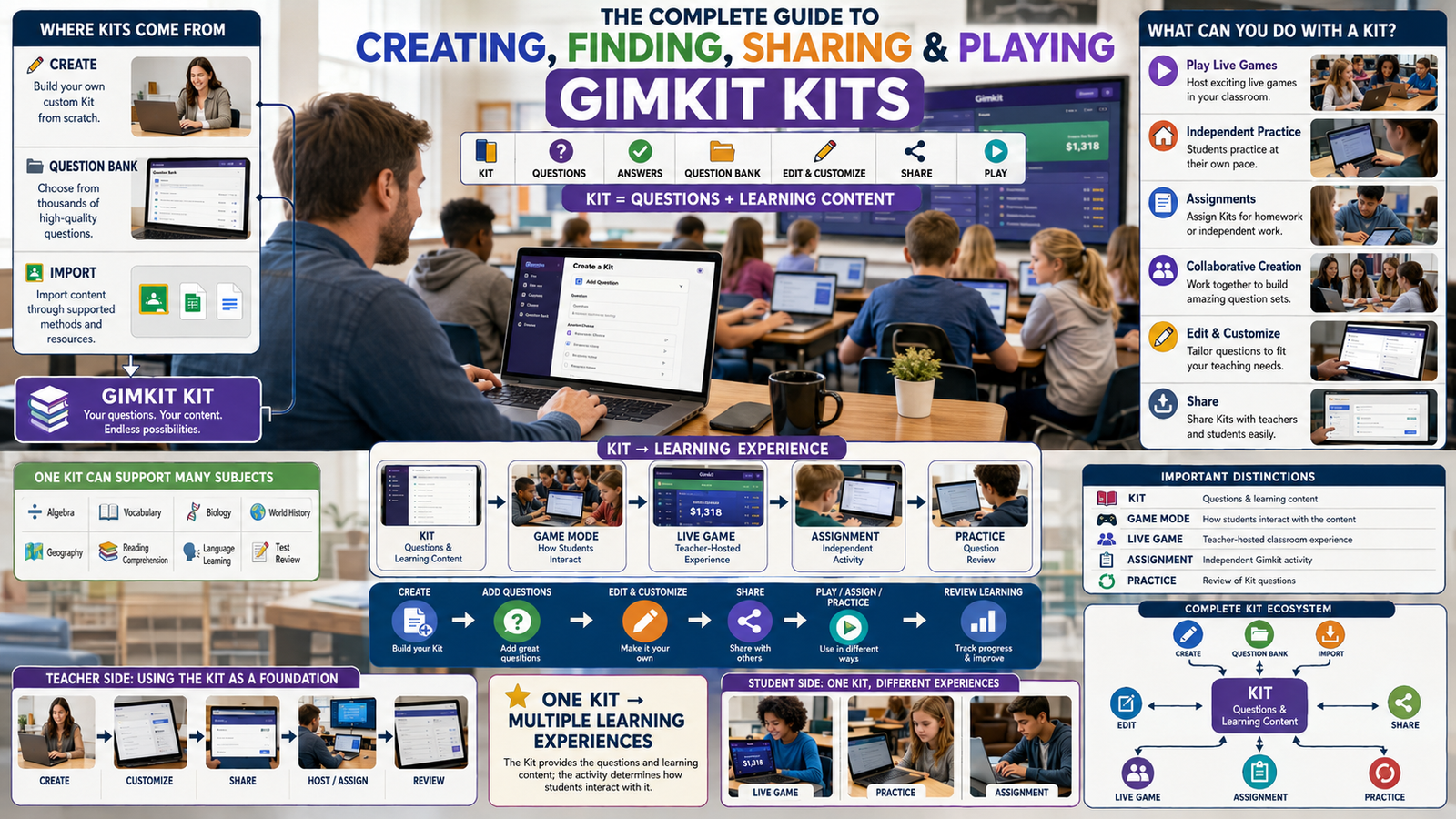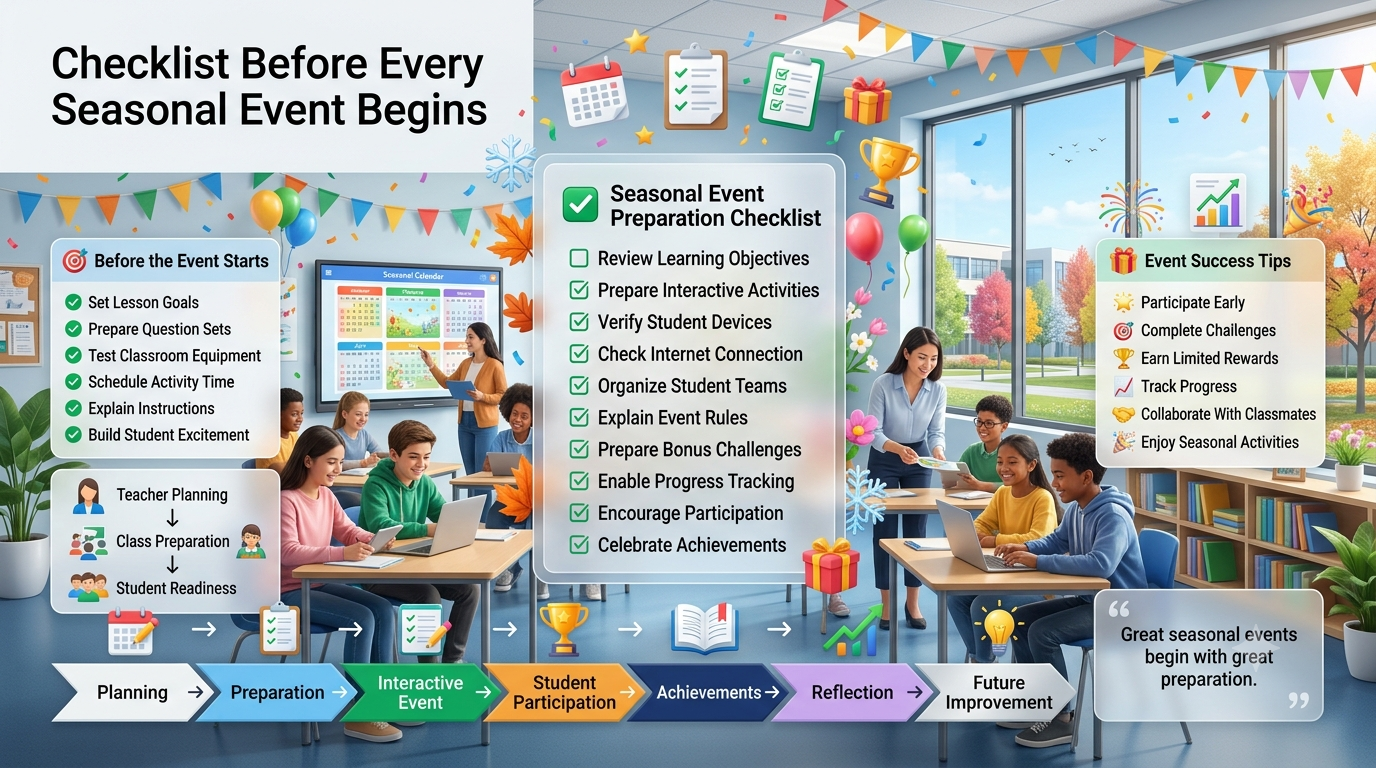
2026 editorial review: This is a teacher’s preparation checklist for seasonal-themed Gimkit activities, not an official event schedule or a guarantee of special quests, limited-time maps or reward campaigns. Verified product details are sourced below. Any Halloween, winter, spring, anniversary or holiday scenario in the older material is an illustrative planning example unless linked to a specific official announcement. GimkitApp.com is independent and is not affiliated with Gimkit.
The safest approach is to confirm the current Mode Picker, item availability, school policies and learning objective before planning a themed session. Teachers can run a seasonal lesson with ordinary Kits and supported modes even when no promotion is active.
Start here: distinguish verified Gimkit features from teacher-designed themes
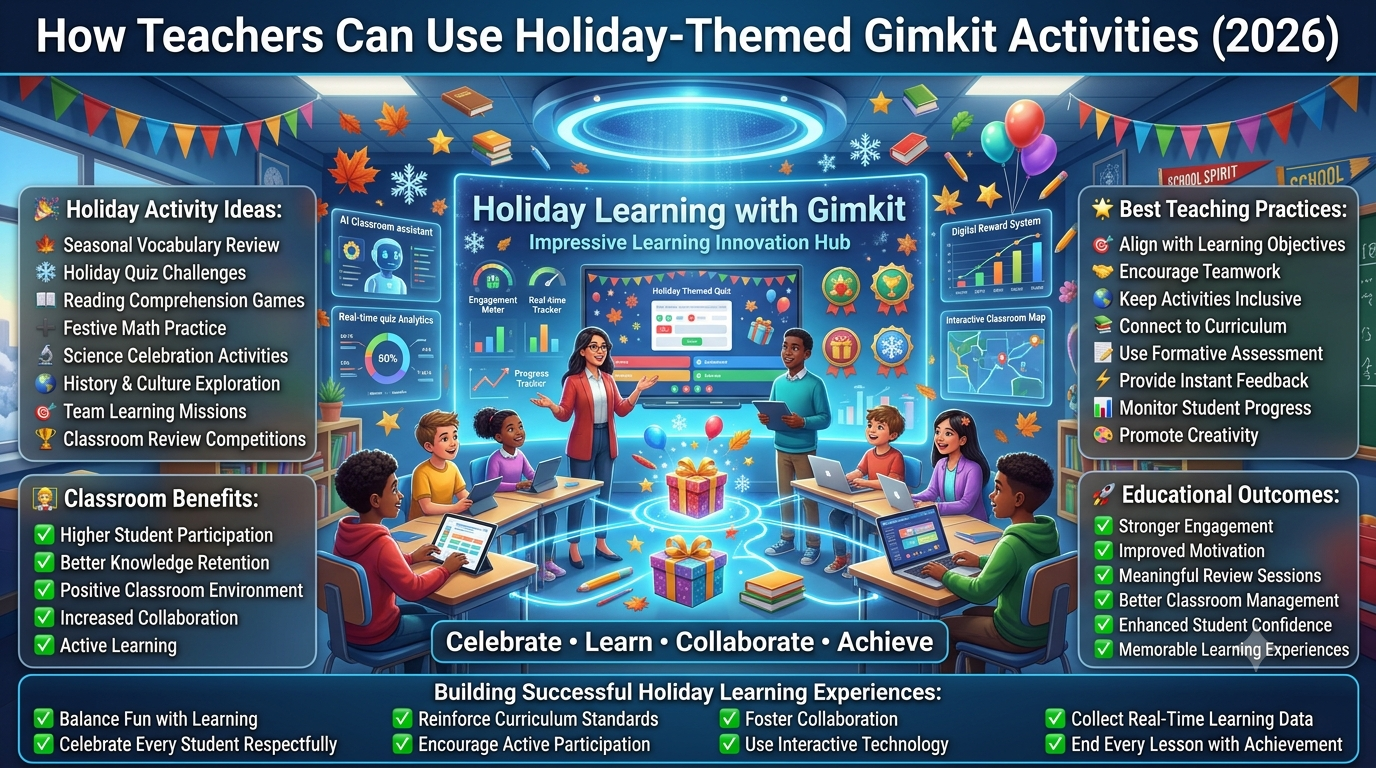
Before a holiday or seasonal classroom session, check the actual product rather than relying on a calendar of supposed special events. Gimkit’s official documentation confirms a rotating Item Shop, occasional limited-time seasonal holiday packs, 2D game modes, cosmetics and teacher-controlled live game settings. That does not establish that a particular Halloween quest, Valentine’s badge, anniversary competition, map, daily challenge, or reward campaign will exist on any given date. Many seasonal examples discussed below are illustrative lesson ideas, not a verified record of official events. An instructor can run a winter-themed vocabulary review even when Gimkit has announced no winter promotion. A student should never assume a limited item will return, a reward will be offered, or a purchase is required to participate.
Official documentation also makes an important distinction between gameplay and cosmetics. The Item Shop rotates, while special holiday packs may be time limited; cosmetics change appearance rather than providing a competitive advantage. XP is associated with supported 2D gameplay and weekly limits. A classroom learning target should therefore be defined in terms of questions, explanations, accuracy, reasoning and reflection, not item ownership or speculative rewards. These distinctions protect both lesson quality and student expectations.
A practical 48-hour pre-event verification sequence
Two days before the lesson: open the official Gimkit dashboard, select the intended Kit and examine the live Mode Picker. Check that the mode you plan to use is actually available to the host account and is appropriate for the group. Read its current mode description and labels. A teacher who wants a quiet vocabulary review should not choose a high-intensity competitive mode simply because it has a winter aesthetic. Confirm the objective, accessibility needs, device readiness and whether learners can participate without unnecessary account creation.
One day before: test five to ten representative questions with a colleague or a small sample group. Look for ambiguous distractors, spelling issues, culturally narrow references and questions that depend on a student’s familiarity with a holiday. Prepare a nonseasonal alternative for students who do not celebrate the theme. If your activity includes a fictional winter story, ensure the story is a wrapper for curricular content rather than an extra reading barrier. Use a neutral nickname policy, decide how late arrivals will be handled, and avoid publishing personally identifying class information.
Just before the session: confirm the network, projected display, input devices and current joining instructions. The host should share a live game code, QR code or joining link generated for that session, not an old code copied from a lesson plan. Keep an offline fallback ready: a short printed quiz, paired oral questioning or a teacher-led board activity can preserve the learning goal if the game cannot load. Verify the current product interface rather than treating screenshots from earlier years as authoritative.
Define success without inventing event mechanics
A seasonal theme succeeds educationally when it helps learners practise a specific objective and gives the teacher interpretable evidence. For a science class reviewing energy transfer, an illustrative winter scenario could involve heat loss from a house. For mathematics, a fictional market can create proportional-reasoning problems. For language learning, a seasonal narrative can support sentence construction and inference. None of these scenarios requires a special Gimkit event, a paid seasonal pack or a particular character. Teachers control the learning design by selecting appropriate questions and a currently supported mode.
Write the success criterion before selecting a game: for example, ‘Students will explain two reasons why an answer is correct’ or ‘Students will solve four proportional relationships without hints.’ The criterion should remain meaningful if the platform changes its theme, if the session ends early, or if one learner never reaches the top of a leaderboard. Competitive rank, in-game currency and cosmetic progression may contribute to engagement but do not substitute for a defensible academic measure. Compare responses against the objective and follow up with a brief explanation task.
Fairness, access and student choice
Holiday imagery can be enjoyable but may be inappropriate as a required cultural reference. Offer a neutral version of the same question set, avoid assumptions about family celebrations, and explain the activity’s purpose in ordinary academic language. When choosing a game mode, account for students who have limited motor control, need more processing time, are sensitive to sound or animation, or cannot reliably use the same device as classmates. Where needed, provide an equivalent low-pressure response pathway. A lesson should not penalize students for declining a cosmetic or being unfamiliar with a seasonal custom.
Student accounts, classroom groups and reporting settings should be handled according to the school’s privacy policies. Do not ask students to disclose passwords, purchase cosmetics, or share personal data to participate in a seasonal challenge. The independent planner on this page operates locally in the browser; it is not an official Gimkit feature, does not connect to Gimkit accounts and does not send student records to this website. Teachers should use aggregated or fictional numbers in demonstrations, then consult their approved systems for any student-level records.
Five classroom-ready examples with different instructional purposes
Primary grades, vocabulary retrieval: create a six-minute set of eight familiar words and short definitions. Add two distractors that reveal a common misconception, such as confusing ‘evaporation’ with ‘condensation’. Present a neutral seasonal picture only as a discussion prompt. After the activity, ask each learner to use one word correctly in a sentence. The learning evidence comes from the sentence and question responses, not a holiday reward.
Middle school, mathematical reasoning: use a hypothetical seasonal market to practise unit rates and discounts. Students first predict an answer, then explain the operation. Choose a game mode that does not make speed the sole valued outcome, and ask pairs to compare methods after the round. If a student earns many game resources while repeatedly misunderstanding percentages, reteach the concept rather than congratulating the score as mastery.
High school, evidence evaluation: provide short statements about a fictional community event and ask students to distinguish observation, inference and unsupported claim. The final discussion should explain why a headline does not establish a fact. This example is especially useful when reviewing social media rumors about supposed limited-time in-game events. Students can practise checking the primary source, publication date and precise scope of a claim.
Multilingual class, accessible reading: keep question language concise and avoid slang that depends on one culture’s celebrations. Preview terms, supply an alternative text version for decorative images and allow a short rehearsal before the live session. After play, invite students to describe the same idea in their own words. A festive theme should lower the barrier to engagement rather than increase the amount of background knowledge required.
Mixed-ability group, collaborative review: assign roles such as reader, reasoning checker and explanation summarizer. Rotate roles between rounds so confident players do not monopolize participation. Give teams a shared accuracy target rather than rewarding only the fastest individual. Conclude by inviting each group to identify one misconception it corrected and one question it would rewrite. This turns the theme into a structure for cooperation rather than an informal popularity contest.
After the session: interpret the evidence
Use Gimkit’s documented game reports where available to inspect class-level and question-level response patterns. Identify questions with a high error rate, then distinguish difficult content from unclear wording. A wrong answer can reflect a misconception, accidental input, device difficulty or ambiguous phrasing. Do not infer permanent understanding from one correct response or assume that a student’s game rank is a validated achievement score. When a lesson is primarily for review, a short exit explanation often gives more useful information than the total number of cosmetic items earned.
Record a concise follow-up note: the objective, the mode used, whether the theme helped or distracted, two common errors, and one instructional action. This small record makes next year’s planning easier without inventing a historical list of official Gimkit events. If the shop rotates or a mode becomes unavailable, the instructional objective and question set can still be reused. Review the current product documentation whenever a feature matters to the lesson.
Primary sources and related guides
For current functionality, see Gimkit’s official Item Shop explanation, cosmetics and XP documentation, the Mode Picker guide, live hosting instructions, and game report documentation. For separate classroom planning perspectives, consult holiday-themed activity ideas, seasonal mode selection, reusable lesson templates, the game-mode directory, and assessment report interpretation.
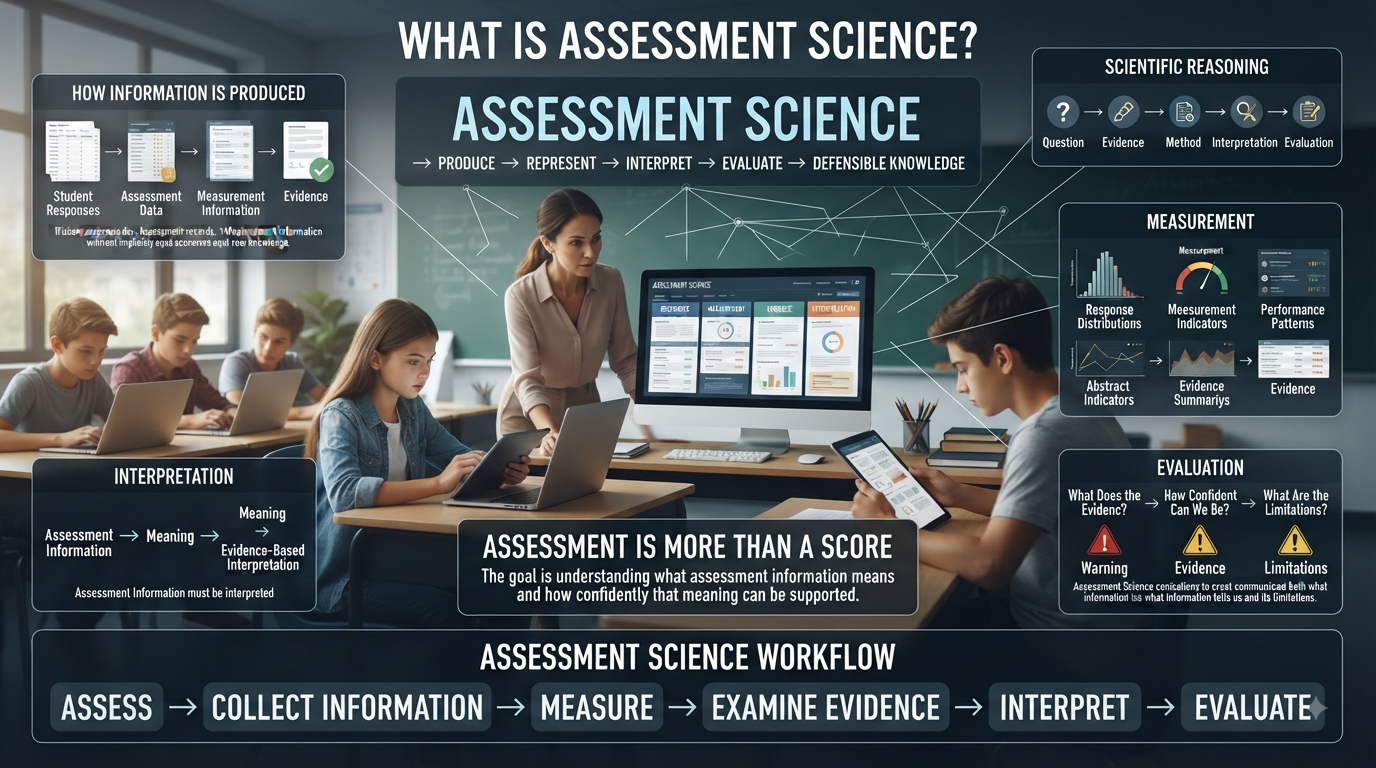
Seasonal Lesson Readiness Checker
This independent checklist evaluates planning steps only; it does not check Gimkit’s servers or confirm an official event.
Illustrative planning scenario: What Are Seasonal Events in Gimkit?
Some limited-time Gimkit offerings and teacher-created seasonal activities may introduce themed content, exclusive rewards, temporary objectives, and special activities available only during a specific period. Unlike permanent game modes or classroom features, these events are designed to celebrate holidays, seasonal occasions, community milestones, or special updates while encouraging players to participate before the event concludes.
Seasonal lesson themes can influence the teacher’s question wording, examples and classroom presentation; they do not necessarily change Gimkit’s interface or rewards. The official shop may occasionally feature limited-time packs, while teachers can separately create classroom challenges; these should not be confused with a verified Gimkit quest system. These temporary additions help keep the platform feeling fresh throughout the academic year while giving returning players something new to experience beyond traditional classroom review sessions.
Although the rewards often receive the most attention, The educational purpose of a seasonal classroom theme should extend beyond cosmetic customization. By introducing time-limited objectives, a well-designed teacher activity may encourage students to stay engaged over multiple classroom sessions instead of viewing each game as an isolated activity. This approach strengthens long-term participation while maintaining the educational focus that distinguishes Gimkit from entertainment-focused gaming platforms.
Expert Insight: The strongest seasonal events balance educational engagement with meaningful progression. Students remain motivated by exclusive rewards, while teachers continue delivering curriculum-aligned learning activities without disrupting classroom workflows.
Illustrative planning scenario: Why seasonal themes can support review lessons
Seasonal classroom activities can create recurring moments of interest that encourage students to return to the platform throughout the school year. Educational games often face the challenge of maintaining engagement after the initial novelty wears off, and limited-time events provide an effective solution by regularly introducing fresh objectives without changing the core learning experience.
Another important goal is to reward consistent participation. Gimkit’s official Item Shop documentation confirms rotating inventory and some limited-time holiday packs, but does not establish a general classroom quest calendar. This exclusivity creates anticipation within the community and gives students additional motivation to complete assignments, participate in classroom games, and return for future events.
From a teacher’s perspective, seasonal events also reduce the need to constantly search for new engagement strategies. A holiday-themed challenge or limited-time quest naturally increases student interest while allowing educators to continue using the same question sets, assignments, and instructional methods they already rely on. The educational objectives remain unchanged, but the presentation feels fresh and more engaging.
Illustrative planning scenario: How Seasonal Events Work
Teacher-designed seasonal activities can follow a simple structure, making them easy for both new and experienced players to understand. If a teacher runs a themed lesson, participants work through the selected Kit and the mode’s currently available objectives; any additional class challenge is optional and teacher-created. Participation usually occurs through normal gameplay, allowing students to continue learning while simultaneously progressing through seasonal content.
Teachers may optionally set daily or weekly practice goals, without claiming these are built-in seasonal quests instead of requiring long play sessions in a single day. This progression model supports classroom schedules because students can gradually unlock rewards across multiple lessons rather than needing extended gaming sessions.
An imagined event may use fictional tokens or milestones, but the existence of such mechanics should never be attributed to Gimkit without an official source. These mechanics create a sense of urgency while preserving the exclusivity of seasonal content. Players who actively participate during the event often earn cosmetics or collectibles that become unavailable once the celebration ends.
Illustrative planning scenario: How Seasonal Events Differ from Regular Updates
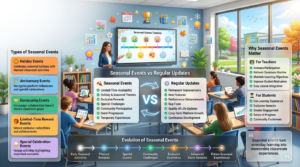
Although both seasonal events and regular updates introduce new content, they serve very different purposes within the Gimkit ecosystem. Regular updates primarily focus on improving the platform by adding new features, fixing bugs, enhancing performance, or expanding existing game modes. These changes are generally permanent and continue benefiting users long after their release.
Seasonal events, in contrast, are intentionally temporary. Their purpose is to create excitement during a specific time of year through themed activities, limited-time rewards, and special objectives. Once an event ends, most of its exclusive content is removed or archived until a future celebration, if it returns at all.
| Seasonal Events | Regular Updates |
|---|---|
| Limited-time availability | Permanent platform improvements |
| Holiday or themed content | Feature enhancements and bug fixes |
| Exclusive rewards | Long-term gameplay improvements |
| Teacher-designed challenges | New tools and quality-of-life updates |
| Focus on engagement | Focus on platform development |
Understanding this distinction helps players appreciate why seasonal rewards often become highly valued within the community. Their temporary nature makes participation during the event especially rewarding.
Illustrative planning scenario: Types of Seasonal Events in Gimkit
While each event has its own theme and objectives, most seasonal content can be grouped into several broad categories based on its purpose and design.
| Event Type | Purpose |
|---|---|
| Holiday Events | Celebrate occasions such as Halloween or winter holidays with themed content. |
| Anniversary Events | Recognize important milestones in Gimkit’s development. |
| Community Events | Encourage players to work together toward shared goals and rewards. |
| Limited-Time Reward Events | Focus on earning exclusive cosmetics, collectibles, or progression rewards. |
| Special Celebration Events | Highlight unique moments, updates, or community achievements through temporary activities. |
These categories demonstrate that seasonal events are more than simple cosmetic updates. They represent recurring engagement opportunities that combine learning, progression, and community participation in ways that keep the Gimkit experience feeling fresh throughout the year.
Illustrative planning scenario: Why Seasonal Events Matter for Teachers and Students
For teachers, seasonal events provide an effective way to maintain classroom enthusiasm without redesigning lesson plans. Students naturally become more motivated when learning activities include exclusive rewards or limited-time objectives, making review sessions feel less repetitive. Because the educational content remains teacher-created, instructors retain full control over learning outcomes while benefiting from the additional excitement generated by the event.
Students also experience a stronger sense of progression during seasonal events. Completing quizzes contributes not only to academic review but also toward event milestones, collectibles, or cosmetic rewards. This combination of educational achievement and in-game progression encourages consistent participation across multiple lessons rather than one-time engagement.
Beyond individual classrooms, seasonal events strengthen the broader Gimkit community by giving players shared experiences to discuss, compare, and anticipate. This ongoing cycle of limited-time content helps explain why seasonal events remain among the platform’s most anticipated updates each year.
Illustrative planning scenario: Illustrative seasonal teaching calendar, not an official event archive
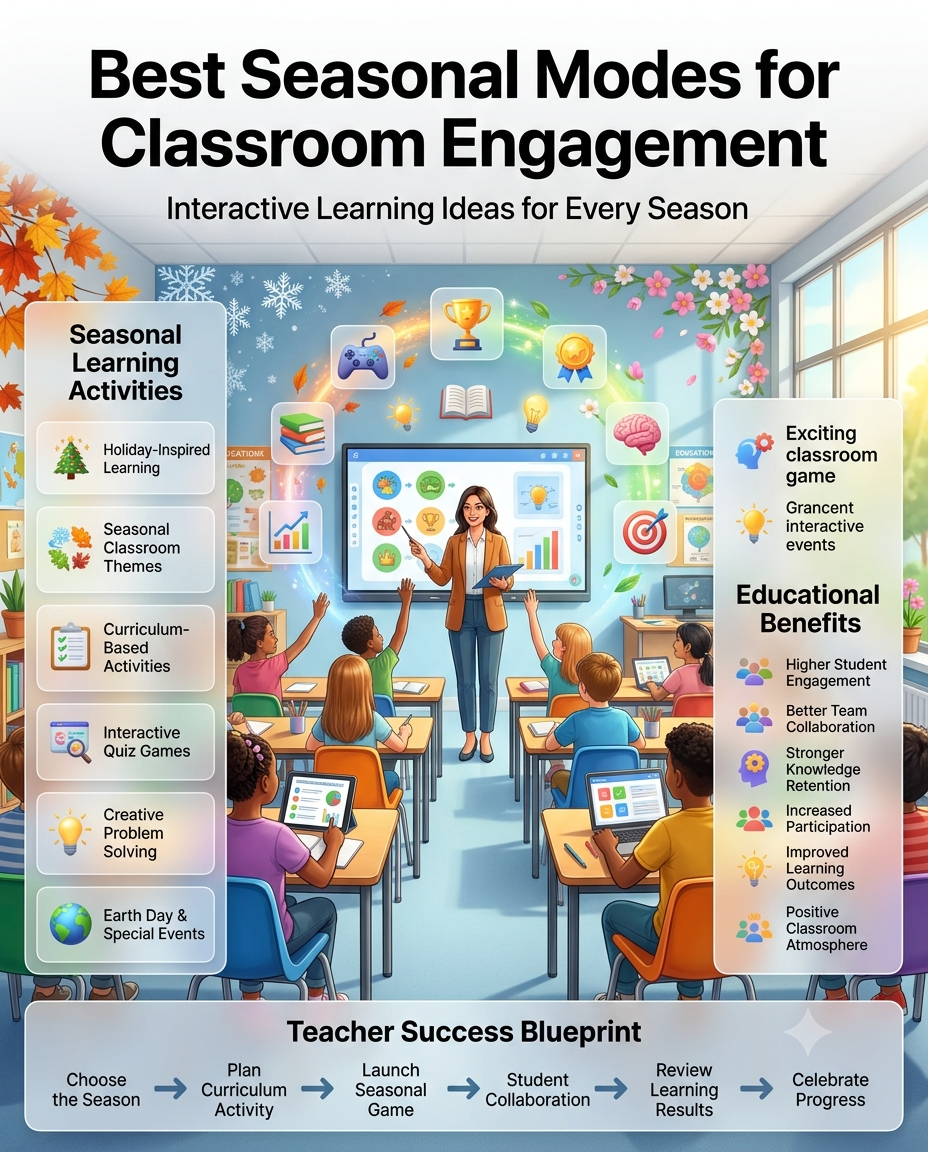
Before exploring each event in detail, it helps to understand how seasonal content has evolved over time. Teachers can imagine activities with themed questions, optional goals and group challenges; this is a planning framework rather than evidence of an official historical sequence.
The following section contains hypothetical classroom examples, not a verified history of Gimkit events.
Illustrative planning scenario: Exploring seasonal classroom activity Experiences and Limited-Time Celebrations
Seasonal content has become one of the most recognizable ways educational games maintain long-term engagement without changing their core learning objectives. In Gimkit, limited-time celebrations introduce fresh visual themes, exclusive rewards, temporary challenges, and special objectives that encourage students to participate consistently throughout the school year. While every event has its own identity, they all follow the same philosophy: make learning feel different for a limited time while preserving the classroom experience teachers already know.
Rather than permanently altering gameplay, seasonal events create memorable moments that students anticipate each year. Exclusive cosmetics, themed interfaces, collectible items, and event-based progression transform ordinary review sessions into experiences that feel unique. This balance between education and entertainment is one reason seasonal content continues attracting attention whenever new celebrations appear.
Possible classroom themes across a school year
| Seasonal Theme | Typical Release Period | Main Focus | Common Rewards |
|---|---|---|---|
| Halloween Celebration | October | Spooky visuals, themed challenges | Limited cosmetics, collectibles |
| Winter Holiday Celebration | December | Festive decorations, seasonal quests | Holiday-themed rewards |
| Valentine’s Celebration | February | Friendship and collaboration | Decorative items and themed collectibles |
| Spring Celebration | March–April | Nature-inspired visuals | Event cosmetics and progression rewards |
| Summer Celebration | June–August | Bright seasonal themes | Limited accessories and exclusive items |
| Anniversary Celebration | Platform milestone | Community participation | Special commemorative rewards |
| Hypothetical community challenge activities | Various | Shared player objectives | Unlockable event bonuses |
Expert Perspective: Rather than treating seasonal events as isolated updates, teachers may use themed lessons to create recurring review opportunities that encourage students to return regularly without disrupting classroom learning.
Illustrative planning scenario: Halloween-Themed Seasonal Events
Halloween naturally lends itself to game-based learning because it introduces recognizable visuals that students immediately associate with excitement and exploration. A teacher can design a Halloween-themed lesson using a themed question set; this does not mean Gimkit’s interface changes automatically. These visual updates help distinguish the event from everyday gameplay without requiring teachers to modify lesson content.
Limited-time Halloween rewards typically become the primary motivation for participation. Students often complete additional review sessions simply to unlock exclusive cosmetics or collectibles before the event concludes. Because these rewards usually remain available only during the celebration, participation tends to increase throughout the event period.
Teachers also benefit from Halloween events because themed gameplay can make revision sessions feel less repetitive. Instead of introducing entirely new classroom activities, educators continue using familiar Kits while students enjoy a refreshed presentation that increases engagement naturally.
Illustrative planning scenario: Winter Holiday Celebrations
Winter-themed events often emphasize celebration, community participation, and end-of-year classroom activities. Seasonal artwork, festive decorations, snowy environments, and holiday-inspired customization help create a welcoming atmosphere during one of the busiest periods of the academic calendar.
A teacher-created winter review plan may encourage consistent participation through optional daily objectives rather than requiring long gaming sessions. Students can revisit questions across several lessons without needing any special seasonal reward, making the event suitable for schools operating on different schedules before winter breaks.
From an instructional standpoint, winter celebrations also provide teachers with an opportunity to conclude semesters using highly engaging review activities. Instead of traditional revision worksheets, students remain motivated through interactive gameplay combined with seasonal progression.
Illustrative planning scenario: Valentine’s-Themed Celebrations
Seasonal events inspired by Valentine’s Day generally focus less on competition and more on participation, collaboration, and classroom positivity. Bright color schemes, themed decorations, and lighthearted cosmetic rewards create an atmosphere that feels different from the rest of the academic year without distracting from educational objectives.
These celebrations can also encourage teamwork by emphasizing cooperative gameplay and shared classroom achievements. Rather than rewarding only top-performing players, participation-based objectives allow more students to experience success, making the event accessible across different learning levels.
Teachers often appreciate these events because they naturally promote positive classroom interactions while maintaining curriculum-focused activities. Students continue answering academic questions, but the seasonal presentation encourages greater enthusiasm throughout each session.
Illustrative planning scenario: Spring-Themed Seasonal Events
Spring celebrations usually represent renewal, growth, and fresh beginnings. Nature-inspired artwork, vibrant environments, and colorful seasonal themes help refresh the visual experience after months of regular classroom gameplay.
Many students experience increased motivation during spring events because the rewards often coincide with the latter half of the school year, when maintaining engagement becomes increasingly important. Limited-time objectives encourage regular participation while preventing gameplay from becoming repetitive.
For teachers, spring events provide another opportunity to introduce excitement without rebuilding existing lesson plans. Familiar question sets become part of a refreshed seasonal experience, allowing educators to maintain instructional consistency while students enjoy something that feels completely new.
Accessing your classroom begins with Gimkit Login, where teachers and students can securely enter their accounts to create Kits, review assignments, monitor progress, and join learning activities. Understanding the login process also helps prevent common access issues and ensures every session starts without unnecessary delays.
Illustrative planning scenario: Summer Celebration Events
Summer-themed events often adopt brighter visual designs, energetic soundtracks, and vacation-inspired aesthetics that create a relaxed yet engaging atmosphere. These celebrations may coincide with summer learning programs, enrichment activities, or independent review, helping students remain connected to educational content outside traditional classroom schedules.
Seasonal rewards associated with summer events frequently emphasize customization, giving players new ways to personalize their profiles while celebrating participation. Collecting these limited-time items encourages continued engagement even when regular academic routines become less structured.
Summer-themed activities also highlight Gimkit’s flexibility as both a classroom platform and an independent learning tool. Students can continue reviewing knowledge while experiencing content that feels appropriate for the season.
Illustrative planning scenario: Anniversary Celebrations
Anniversary events recognize important milestones in Gimkit’s ongoing development and provide opportunities for the community to celebrate the platform’s growth. Unlike holiday events tied to the calendar, anniversary celebrations focus on reflecting the evolution of the platform and rewarding long-term participation.
A hypothetical anniversary-themed lesson could invite learners to reflect on how digital learning activities change over time. A teacher-created anniversary review could recognize student effort through ordinary feedback and reflection rather than relying on undocumented official collectibles.
For educators, anniversary celebrations also reinforce the sense that Gimkit continues evolving in response to classroom needs. Rather than remaining static, the platform regularly introduces fresh experiences while preserving the educational principles that made it successful.
Illustrative planning scenario: Hypothetical community challenge activities
Community-focused celebrations differ from traditional seasonal events because they encourage collective participation instead of individual progression. Rather than asking players to complete objectives independently, these events often revolve around shared milestones that unite classrooms around common goals.
Community challenges promote collaboration by making every participant’s contribution valuable. Whether students complete quizzes, participate in games, or accomplish event objectives, their progress contributes toward larger achievements that benefit the entire community. This shared sense of accomplishment strengthens engagement while encouraging teamwork rather than competition alone.
From an educational perspective, community events demonstrate how collaborative learning can be integrated into gamified classrooms. Students recognize that consistent participation benefits everyone, reinforcing cooperation alongside academic review.
Illustrative planning scenario: Limited-Time Reward Events
Not every seasonal celebration revolves around a major holiday. Some events focus primarily on introducing exclusive rewards available only for a short period. These celebrations often highlight new cosmetic collections, collectible items, or customization options that encourage players to remain active throughout the event window.
The appeal of limited-time rewards lies in their exclusivity. Students understand that once the event concludes, those cosmetics may become unavailable, making participation feel meaningful beyond individual gameplay sessions. This scarcity creates anticipation whenever future seasonal events are announced.
Teachers also benefit because limited-time progression encourages regular classroom attendance and consistent participation without requiring additional instructional planning. Students remain motivated by both educational achievement and collectible rewards, creating a balanced learning experience that supports long-term engagement.
Illustrative planning scenario: Exclusive Rewards, Seasonal Items, and Event Mechanics
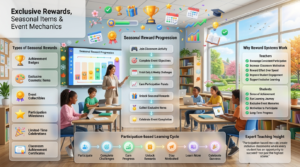
Seasonal events become memorable not only because of their themes but also because of the exclusive content attached to them. Limited-time rewards give students a reason to return throughout an event instead of participating only once. While classroom learning remains the primary objective, progression systems, collectible items, and cosmetic customization create additional motivation that keeps engagement high over multiple sessions. This balance between education and game progression is one of Gimkit’s strongest design philosophies.
Unlike permanent unlockables, seasonal rewards create lasting memories because they represent participation during a specific celebration. Players who earn exclusive items often view them as digital souvenirs that reflect their involvement in unique classroom experiences. Even simple cosmetic rewards can become highly desirable when they are available only for a short period.
Illustrative planning scenario: How Seasonal Event Rewards Work
A teacher-created recognition system could follow a simple progression model. Instead of rewarding only the highest-scoring players, events encourage consistent participation by allowing students to unlock items gradually through normal gameplay. This approach makes seasonal content accessible to students with different learning speeds while maintaining healthy classroom competition.
Reward progression typically encourages students to:
- Participate in classroom games regularly.
- Complete event objectives.
- Finish daily or weekly challenges.
- Reach specific participation milestones.
- Stay active until the event concludes.
Because progress builds over time, students remain motivated throughout the event rather than losing interest after a single session.
Expert Tip: Participation-based rewards are generally more effective in classrooms than score-based rewards because every student has an opportunity to unlock seasonal content regardless of academic ability.
Illustrative planning scenario: Hypothetical classroom progression example
Most successful live-service games rely on progression systems rather than one-time rewards, and educational platforms increasingly adopt the same philosophy. Instead of receiving every reward immediately, players unlock cosmetics, collectibles, and recognition through continued participation.
A typical progression flow looks like this:
Play Classroom Games
          │
          ▼
Complete Event Objectives
          │
          ▼
Earn Seasonal Progress
          │
          ▼
Unlock Exclusive Rewards
          │
          ▼
Finish Event Before Deadline
This structure encourages repeated classroom participation while keeping educational objectives at the center of the experience.
Using Gimkit Join is the fastest way for students to enter a live learning session without creating confusion in the classroom. By entering the correct game code, participants can instantly connect to teacher-hosted activities and begin answering questions within seconds.
Illustrative planning scenario: Event Challenges and Seasonal Objectives
Challenges provide clear goals beyond simply answering quiz questions. Rather than asking students to play endlessly, events often divide progression into smaller achievements that feel attainable within normal classroom schedules.
Examples of seasonal objectives include:
| Objective Type | Purpose |
|---|---|
| Daily Challenges | Encourage consistent participation |
| Weekly Challenges | Reward long-term engagement |
| Classroom Milestones | Promote regular learning sessions |
| Participation Goals | Motivate all students equally |
| Community Objectives | Encourage collective progress |
Breaking progression into manageable goals prevents students from feeling overwhelmed while maintaining excitement throughout the event.
Illustrative planning scenario: Optional teacher-created daily challenges
Daily objectives give students a reason to return every time their class uses Gimkit. These short-term tasks often require only normal participation, making them easy to complete without disrupting classroom instruction.
Daily challenges are particularly effective because they establish regular habits. Instead of viewing Gimkit as an occasional activity, students begin expecting fresh objectives whenever they log in during an active event.
Teachers also appreciate daily challenges because they naturally increase participation without requiring additional lesson preparation.
Illustrative planning scenario: Optional teacher-created weekly challenges
Weekly objectives extend engagement beyond individual classroom sessions by rewarding consistency over several days. Rather than encouraging marathon gameplay, they promote gradual progress that aligns well with educational schedules.
Weekly challenges often represent larger milestones than daily objectives. Students may need to participate across multiple lessons before unlocking special rewards, creating anticipation that lasts throughout the event.
This long-term progression model supports classroom learning because educational review continues alongside seasonal progression rather than competing with it.
Illustrative planning scenario: Limited-Time Seasonal Cosmetics
Cosmetic customization has become one of the defining characteristics of modern online games, and seasonal events often introduce exclusive appearances that celebrate a particular theme. These items do not provide gameplay advantages but allow players to personalize their in-game identity.
Common seasonal cosmetic categories include:
- Character accessories
- Profile decorations
- Seasonal icons
- Animated effects
- Special visual themes
- Celebration badges
Because these cosmetics are earned rather than purchased during events, students often value them as recognition of their participation.
Illustrative planning scenario: Seasonal Badges and Achievement Recognition
Achievement badges represent another layer of seasonal progression. Unlike cosmetic items, badges often symbolize accomplishments completed during specific celebrations.
These recognitions may commemorate:
- Completing every event objective.
- Participating throughout the entire event.
- Reaching important progression milestones.
- Contributing to community goals.
- Finishing difficult seasonal challenges.
Badges also encourage students to pursue completion rather than stopping once they unlock a single reward.
Illustrative planning scenario: Event Collectibles
Collectibles create an additional reason to explore seasonal content. Instead of unlocking only one final prize, players gradually build a collection that reflects their participation throughout the event.
Collectible systems are effective because they appeal to completionists who enjoy earning every available reward before the event concludes. Even students who normally participate only occasionally may become more active when they see a collection nearing completion.
Illustrative planning scenario: Exclusive Seasonal Customization
Personalization plays an important role in keeping educational games engaging over long periods. Seasonal customization allows students to express themselves while celebrating different times of the year.
Common customization opportunities include:
| Customization | Purpose |
|---|---|
| Profile Themes | Seasonal appearance |
| Event Icons | Limited-time identity |
| Decorative Effects | Celebrate achievements |
| Collectible Accessories | Personal expression |
| Special Backgrounds | Event-exclusive customization |
Although cosmetic customization does not affect gameplay, it strengthens students’ emotional connection to the platform.
Illustrative planning scenario: Why Limited-Time Rewards Increase Engagement
Scarcity is one of the strongest motivational principles in game design. When students know that an event reward will disappear after a specific date, participation naturally increases. Rather than delaying progress indefinitely, players prioritize completing objectives before the opportunity ends.
Educational platforms benefit from this design because it encourages regular learning sessions without relying solely on grades or external incentives. Students participate because they enjoy progressing through the event while simultaneously reviewing classroom material.
Importantly, limited-time rewards remain most effective when they complement learning rather than replacing it. The educational experience always comes first, while seasonal progression serves as an additional layer of motivation.
Balancing Rewards Without Affecting Learning
One of Gimkit’s greatest strengths is that seasonal rewards remain primarily cosmetic. Unlike competitive games where exclusive items can create gameplay advantages, educational rewards focus on recognition and personalization instead of power.
This approach creates a balanced classroom environment where:
- Learning remains the primary objective.
- Every student has an opportunity to participate.
- Rewards recognize engagement rather than academic ranking.
- Seasonal progression complements existing lessons.
- Teachers retain full control over classroom activities.
By separating cosmetic progression from educational outcomes, seasonal events encourage participation without compromising fairness or instructional quality.
Illustrative planning scenario: Best Practices for Maximizing Seasonal Rewards
Students who consistently earn the most event rewards usually follow a structured approach instead of relying on long play sessions at the end of an event.
Recommended strategy checklist:
- ✔ Join classroom games whenever seasonal events are active.
- ✔ Complete daily objectives before they reset.
- ✔ Track weekly milestones to avoid falling behind.
- ✔ Prioritize limited-time challenges over repeatable tasks.
- ✔ Stay informed about event deadlines.
- ✔ Finish progression before the celebration officially ends.
- ✔ Avoid waiting until the final days, when missed objectives may no longer be recoverable.
Professional Insight: The most rewarding seasonal experiences come from steady participation rather than intensive last-minute play. A consistent routine allows students to enjoy both the educational benefits and the exclusive rewards without feeling pressured as the event draws to a close.
Every successful classroom game starts with Gimkit Host, giving educators complete control over game settings, question pacing, player management, and scoring options. Learning how hosting works allows teachers to create more engaging and organized review sessions.
Strategies, Classroom Implementation, and Expert Analysis
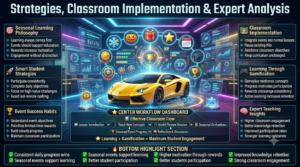
Seasonal events are most successful when they enhance learning instead of distracting from it. While students are naturally attracted to exclusive rewards and limited-time challenges, teachers measure success by participation, knowledge retention, and classroom engagement. The most effective classrooms treat seasonal events as an extension of everyday learning rather than a separate gaming activity. When implemented thoughtfully, these celebrations can increase motivation without sacrificing educational quality.
Unlike traditional review sessions that often feel repetitive, seasonal events introduce a sense of progression. Students return not only to answer questions but also to complete objectives, unlock rewards, and contribute toward event milestones. This combination of academic practice and game-based progression creates a learning environment that remains engaging over longer periods.
Illustrative planning scenario: Best Strategies for Completing Seasonal Events Efficiently
Students who consistently finish seasonal events rarely depend on long gaming sessions. Instead, they progress steadily by participating whenever classroom opportunities arise. Consistency almost always produces better results than trying to complete an entire event during its final days.
An effective strategy begins by understanding the event’s objectives. Players should identify which challenges provide the greatest progress, prioritize limited-time tasks, and avoid wasting effort on activities that contribute little toward seasonal rewards. Small daily improvements accumulate quickly and reduce pressure as the event approaches its deadline.
Another important habit is maintaining regular participation throughout the event. Missing several classroom sessions often means missing valuable progression opportunities that cannot always be recovered later. Treating seasonal objectives as part of normal classroom routines usually results in the highest completion rates.
Illustrative planning scenario: How Teachers Can Integrate Seasonal Events Into Lessons
Teachers do not need to redesign their curriculum every time a seasonal celebration begins. Instead, existing Kits, assignments, and review activities can be combined with event participation to create lessons that feel new without requiring additional preparation.
A practical classroom workflow might look like this:
| Lesson Stage | Classroom Activity | Student Benefit |
|---|---|---|
| Lesson Introduction | Explain learning objective | Clear academic focus |
| Guided Instruction | Teach new concepts | Build understanding |
| Gimkit Review Session | Reinforce lesson through gameplay | Immediate knowledge practice |
| Seasonal Event Progress | Complete event objectives naturally | Increased motivation |
| Reflection | Discuss mistakes and key concepts | Stronger retention |
This structure keeps learning at the center while allowing seasonal content to increase enthusiasm rather than distract from instructional goals.
Encouraging Healthy Competition
Competition has always been part of educational games, but seasonal events work best when they reward participation alongside performance. If only the highest-scoring students receive recognition, less confident learners may lose motivation over time.
Teachers can create healthier classroom competition by celebrating multiple forms of achievement rather than focusing exclusively on leaderboard positions. Participation streaks, personal improvement, teamwork, and consistent effort deserve recognition alongside high scores.
This balanced approach encourages students of varying ability levels to remain engaged throughout the event instead of assuming that only top performers can succeed.
Illustrative planning scenario: Using Seasonal Events to Improve Student Engagement
One of the biggest challenges in education is maintaining attention during repeated review sessions. Seasonal events help solve this problem by changing the learning environment without changing the educational objectives.
Students often experience renewed enthusiasm when:
- Classroom activities include limited-time progression.
- Lessons feature seasonal visual themes.
- Exclusive rewards recognize consistent participation.
- Event objectives provide clear short-term goals.
- Learning feels connected to a larger community celebration.
These motivational elements encourage students to participate voluntarily rather than viewing review sessions as routine assignments.
Classroom Benefits Beyond Entertainment
Although seasonal celebrations appear playful on the surface, they can also strengthen important educational habits. Students gradually develop consistency, persistence, and goal-setting skills while progressing through event challenges.
Some of the most valuable classroom outcomes include:
- Increased participation rates.
- Better attendance during review sessions.
- Higher willingness to answer questions.
- Improved classroom energy.
- Greater collaboration among students.
- Stronger long-term engagement with educational content.
These benefits demonstrate that seasonal events can support meaningful learning outcomes when implemented thoughtfully.
Illustrative planning scenario: Common Mistakes Students Make During Seasonal Events
Many students unintentionally reduce their progress by misunderstanding how limited-time events work. Instead of participating consistently, they often wait until the final days before attempting to complete every challenge at once.
Common mistakes include:
| Mistake | Better Approach |
|---|---|
| Waiting until the last week | Begin progressing immediately |
| Ignoring daily objectives | Complete them consistently |
| Focusing only on rewards | Prioritize learning first |
| Skipping classroom sessions | Participate regularly |
| Forgetting event deadlines | Monitor the remaining time |
Avoiding these simple mistakes usually leads to a more enjoyable and less stressful seasonal experience.
Advanced Tips for Students
Experienced players often maximize event progression without increasing total playtime. Rather than playing longer, they play more consistently and make smarter decisions throughout the event.
Advanced recommendations include:
- Complete smaller objectives before larger milestones.
- Monitor event announcements for new challenges.
- Participate whenever teachers host review sessions.
- Track progression regularly instead of guessing.
- Finish objectives early to avoid deadline pressure.
- Focus on consistency rather than leaderboard positions.
Small improvements repeated throughout the event often outperform last-minute efforts.
Best Practices for Teachers
Teachers can significantly improve the effectiveness of seasonal events by treating them as instructional tools instead of classroom rewards. The most successful implementations integrate event participation directly into existing lesson plans rather than replacing educational content.
Professional recommendations include:
✔ Continue using curriculum-aligned question sets.
✔ Encourage participation instead of score comparisons.
✔ Celebrate improvement as well as achievement.
✔ Explain the educational purpose behind gameplay.
✔ Rotate different game modes to maintain variety.
✔ Allow students to reflect on what they learned after each session.
This balanced approach preserves educational value while maximizing student engagement.
Illustrative planning scenario: Seasonal Events vs Regular Game Modes
Although seasonal events and regular game modes share the same educational foundation, they provide different experiences.
| Seasonal Events | Regular Game Modes |
|---|---|
| Limited-time availability | Available year-round |
| Exclusive progression | Standard gameplay progression |
| Themed rewards | Permanent features |
| Temporary objectives | Consistent learning activities |
| Increased excitement | Familiar classroom experience |
Rather than replacing regular game modes, seasonal events add variety that encourages students to revisit familiar learning activities with renewed enthusiasm.
Illustrative planning scenario: Seasonal Events vs Gimkit Creative
Gimkit Creative allows educators and players to build original experiences, while seasonal events provide officially themed celebrations available for a limited period.
| Seasonal Events | Gimkit Creative |
|---|---|
| Official limited-time experiences | User-created content |
| Shared community participation | Personalized classroom activities |
| Exclusive seasonal rewards | Custom educational worlds |
| Temporary progression | Unlimited creative flexibility |
Both approaches complement one another. Seasonal events generate community excitement, while Creative empowers teachers to design learning experiences tailored to their own classrooms.
Illustrative planning scenario: Future of Seasonal Events in Gimkit
As educational technology continues evolving, seasonal events are likely to become more interactive and personalized. Future celebrations may introduce adaptive challenges, classroom-specific objectives, collaborative milestones, and deeper integration with teacher-created activities.
Artificial intelligence, personalized learning paths, and real-time classroom analytics could also influence how future events reward participation. Instead of identical objectives for every player, future seasonal celebrations may adapt challenges based on student progress, making events more inclusive across different ability levels.
Regardless of how the platform evolves, the core purpose of seasonal events is unlikely to change. Their greatest strength lies in making classroom learning feel fresh, motivating students to return regularly while supporting teachers with engaging educational experiences rather than replacing sound instructional practice.
Illustrative planning scenario: Comparison of Seasonal Event Types
The following table summarizes the major categories of seasonal events and how each contributes to the overall Gimkit experience.
| Event Type | Primary Goal | Student Benefit | Teacher Benefit | Engagement Level |
|---|---|---|---|---|
| Halloween Celebrations | Themed gameplay | Fun visual experience | Refreshes review sessions | ⭐⭐⭐⭐⭐ |
| Winter Holiday Events | End-of-year participation | Exclusive seasonal rewards | Holiday classroom activities | ⭐⭐⭐⭐⭐ |
| Spring Celebrations | Mid-year motivation | New progression opportunities | Increased classroom energy | ⭐⭐⭐⭐☆ |
| Summer Events | Continued participation | Seasonal customization | Supports enrichment programs | ⭐⭐⭐⭐☆ |
| Anniversary Events | Celebrate platform milestones | Community excitement | Highlights platform growth | ⭐⭐⭐⭐☆ |
| Community Challenges | Shared objectives | Teamwork and collaboration | Encourages participation | ⭐⭐⭐⭐⭐ |
Each event type serves a slightly different purpose, but together they create a yearly cycle that keeps the platform feeling active and rewarding.
Interactive classroom competition reaches another level with Gimkit Live, where students answer questions in real time while competing through dynamic game modes. Live sessions encourage participation, immediate feedback, and collaborative learning in an exciting environment.
Illustrative planning scenario: Seasonal Events: Pros and Cons
Like any educational feature, seasonal events offer significant advantages while also presenting a few limitations. Understanding both sides helps teachers decide how to integrate them effectively.
| Pros | Cons |
|---|---|
| Increases classroom engagement | Available only for a limited time |
| Encourages consistent participation | Students who miss events may miss exclusive rewards |
| Makes review sessions more enjoyable | Event progression depends on participation |
| Supports long-term student motivation | Some students may focus more on rewards than learning |
| Creates memorable classroom experiences | Requires teachers to balance gameplay with instruction |
The strengths generally outweigh the limitations when seasonal content is used to support learning rather than replace it.
Illustrative planning scenario: Which Seasonal Event Style Is Most Effective?
Different classrooms respond differently to seasonal content, but some event styles consistently generate stronger engagement than others.
Best for Student Excitement
Holiday-themed celebrations tend to create the highest level of enthusiasm because students immediately recognize the seasonal atmosphere and enjoy the limited-time rewards.
Best for Classroom Learning
Participation-based community events often produce the greatest educational value because they encourage every student to contribute instead of rewarding only top performers.
Best for Long-Term Motivation
Events that combine multiple objectives, gradual progression, and exclusive cosmetics generally keep students engaged over longer periods than single-day celebrations.
Best for Teacher Implementation
Simple seasonal events that integrate directly into existing classroom workflows require minimal preparation while still increasing participation.
Expert Recommendations
After examining how seasonal events function within educational environments, several best practices consistently emerge.
For Teachers
- Plan seasonal activities around learning objectives rather than rewards.
- Continue using curriculum-focused Kits during event periods.
- Encourage participation from every student, not only competitive players.
- Celebrate progress, teamwork, and improvement alongside high scores.
- Use seasonal events as review opportunities before assessments.
For Students
- Participate regularly throughout the event instead of waiting until the final days.
- Complete daily objectives whenever possible.
- Focus on learning first and rewards second.
- Track event progress to avoid missing limited-time opportunities.
- Enjoy the seasonal experience without sacrificing academic performance.
These recommendations help maximize both educational outcomes and overall enjoyment.
Seasonal Event Participation Checklist
Before every seasonal event ends, players can use this checklist to ensure they have completed everything possible.
✅ Complete all available event challenges.
✅ Check for any unfinished daily or weekly objectives.
✅ Claim every unlocked reward before the deadline.
✅ Verify that exclusive cosmetics have been collected.
✅ Participate in any remaining community milestones.
✅ Review event announcements for last-minute activities.
✅ Finish progression before the event officially closes.
Completing these steps minimizes the chance of missing exclusive content.
Frequently Asked Questions
Illustrative planning scenario: Why Are Seasonal Events So Popular?
Seasonal events transform Gimkit from a routine classroom review platform into an experience students genuinely anticipate. Instead of simply answering another set of questions, learners suddenly enter an environment filled with limited-time maps, themed artwork, exclusive cosmetics, special mechanics, and community excitement. That feeling of “this won’t be here forever” naturally increases participation.
From an educational perspective, seasonal events also refresh motivation. Students who have already completed dozens of review sessions become curious again because the environment feels different even though the learning objective remains the same.
Why students become more engaged
| Factor | Educational Impact |
|---|---|
| Limited-time availability | Creates urgency to participate |
| New visual themes | Prevents classroom fatigue |
| Exclusive rewards | Encourages consistent attendance |
| Community excitement | Builds classroom discussions |
| Unique gameplay mechanics | Makes familiar content feel new |
Teachers often notice several classroom improvements during seasonal events:
- Higher voluntary participation
- Better attendance during review days
- Increased collaboration
- More positive classroom energy
- Longer sustained focus
The popularity isn’t just about collecting cosmetics. It’s about giving students a fresh reason to return to learning activities that might otherwise become repetitive.
Illustrative planning scenario: Are Seasonal Events Permanent in Gimkit?
No. Seasonal events are intentionally temporary.
Each event is designed around a specific theme, holiday, or celebration and typically remains available only for a limited period. Once the event concludes, its dedicated maps, challenges, cosmetic rewards, and event shop usually disappear.
This temporary structure serves several purposes.
First, it keeps the game feeling fresh throughout the school year.
Second, it encourages students to participate while the content is available.
Third, developers can continuously experiment with new mechanics without permanently changing the core experience.
What usually happens after an event ends
| Feature | Usually Available After Event? |
|---|---|
| Seasonal map | No |
| Event challenges | No |
| Limited cosmetics | Usually unavailable |
| Core gameplay modes | Yes |
| Existing Kits | Yes |
| Classroom assignments | Yes |
Teachers should avoid planning lessons that depend entirely on seasonal-exclusive content because future availability cannot be guaranteed.
Illustrative planning scenario: Do Seasonal Events Affect Classroom Learning?
They certainly can—but mostly in positive ways when managed properly.
A seasonal event does not automatically improve learning outcomes. Instead, it creates stronger motivation, which teachers can redirect toward academic objectives.
For example, instead of using a normal vocabulary review, an instructor can host the same content during a Halloween-themed event. Students experience the excitement of the event while still answering curriculum-based questions.
Academic benefits
- Increased participation
- Better classroom morale
- Reduced review fatigue
- Higher completion rates
- Improved willingness to retry difficult questions
Possible challenges
| Challenge | Teacher Solution |
|---|---|
| Students focus only on cosmetics | Tie participation to learning goals |
| Excitement becomes distracting | Set gameplay expectations beforehand |
| Competitive behavior | Reward improvement instead of rankings |
| Students rush questions | Review incorrect answers afterward |
The seasonal content should support instruction rather than replace it.
Illustrative planning scenario: Can New Players Participate in Seasonal Events?
Yes. Seasonal events are generally designed so both experienced and brand-new players can join.
New players do not need years of experience to enjoy the event. Most seasonal activities emphasize participation instead of mastery.
However, experienced players may understand mechanics more quickly because they already know movement, objectives, and game systems.
Tips for helping new students
- Demonstrate the event before starting.
- Explain new mechanics.
- Pair beginners with experienced classmates.
- Allow a practice round.
- Focus on learning before competition.
Beginner preparation checklist
| Before Joining | Why It Matters |
|---|---|
| Learn basic controls | Prevents confusion |
| Understand event objectives | Improves confidence |
| Join practice sessions | Reduces mistakes |
| Ask questions early | Builds independence |
Teachers who introduce seasonal events gradually often see better engagement from first-time participants.
Illustrative planning scenario: Do Seasonal Rewards Provide Gameplay Advantages?
Generally, no.
Most seasonal rewards are cosmetic rather than performance-enhancing. Their purpose is personalization rather than competitive advantage.
Examples include:
- Character skins
- Hats
- Visual effects
- Badges
- Decorative items
These rewards help students express themselves without changing academic fairness.
Cosmetic vs Competitive
| Cosmetic Reward | Gameplay Advantage |
|---|---|
| Outfit | No |
| Badge | No |
| Avatar effect | No |
| Profile decoration | No |
This approach keeps classroom competition balanced because success continues to depend on answering questions accurately rather than owning rare items.
Illustrative planning scenario: What Makes a Successful Seasonal Event?
Successful events combine entertainment with meaningful classroom usability.
A well-designed seasonal event does much more than introduce attractive graphics.
It should encourage participation without distracting from educational goals.
Illustrative planning scenario: Characteristics of excellent seasonal events
- Clear objectives
- Simple rules
- Fair rewards
- Stable performance
- Creative visuals
- Balanced difficulty
- Strong replay value
- Classroom compatibility
Event quality evaluation
| Component | Why It Matters |
|---|---|
| Performance stability | Prevents classroom interruptions |
| Balanced mechanics | Keeps competition fair |
| Attractive design | Increases motivation |
| Short learning curve | Reduces teacher explanation time |
| Replayability | Supports multiple review sessions |
The best seasonal events enhance learning rather than overshadow it.
Illustrative planning scenario: How Do I Verify My Network Infrastructure Is Ready for the Seasonal Traffic Spike?
Large seasonal events often attract significantly more simultaneous users. Schools should ensure their network can comfortably support an entire class before beginning an important review session.
Network readiness checklist
| Item | Recommended Action |
|---|---|
| Wi-Fi coverage | Test every classroom area |
| Internet speed | Verify upload and download performance |
| Device connectivity | Confirm all student devices connect successfully |
| Firewall policies | Ensure required services are accessible |
| Bandwidth usage | Avoid large downloads during gameplay |
Technical preparation steps
- Run a practice game one day before the lesson.
- Test with the same number of student devices.
- Restart access points if performance has declined.
- Update browsers beforehand.
- Close unnecessary applications.
- Ensure students use reliable Wi-Fi instead of unstable hotspots.
- Prepare an offline backup activity in case of connectivity issues.
Signs your network is struggling
- Long loading screens
- Frequent disconnects
- Delayed answer submissions
- Students joining at different times
- Browser timeout messages
Proactive testing minimizes disruptions during high-traffic seasonal periods.
Illustrative planning scenario: What Must Teachers Do to Adapt Their Custom “Kits” to Unique Seasonal Game Modes?
A Kit that works well in a standard review session may need adjustments for a seasonal mode with different pacing or objectives.
Areas to review before launching
| Kit Element | Recommended Adjustment |
|---|---|
| Question length | Keep prompts concise |
| Difficulty | Match the event’s pace |
| Answer choices | Avoid overly long options |
| Images | Ensure they load quickly |
| Timing | Allow enough reading time |
| Learning objective | Keep it clearly aligned with the lesson |
Best practices
- Remove unnecessary complexity.
- Mix easy and challenging questions.
- Include visual questions where appropriate.
- Test the Kit yourself before class.
- Keep instructions brief and visible.
- Consider shorter rounds if the seasonal mode is fast-paced.
A well-adapted Kit helps students focus on learning instead of struggling with the game’s tempo.
Illustrative planning scenario: How Should Players Manage Their saved GimBucks when the rotating Item Shop changes?
Seasonal shops often feature limited-time cosmetic items, so thoughtful resource management is important.
Rather than spending GimBucks immediately, players can plan purchases based on priorities.
Smart spending strategy
| Priority | Recommendation |
|---|---|
| Must-have seasonal items | Purchase first |
| Favorite cosmetics | Buy if affordable |
| Impulse purchases | Delay briefly |
| Duplicate items | Avoid if unnecessary |
| Future savings | Keep a reserve if possible |
Budgeting tips
- Review the entire shop before buying.
- Compare all available items.
- Decide on a spending limit.
- Avoid purchasing solely because an item is rare.
- Save enough currency for future releases if uncertainty exists.
Planning purchases helps players enjoy seasonal content without regretting impulsive decisions.
Illustrative planning scenario: How Can Teachers Balance the Chaotic Seasonal Hype with Strict Academic Accountability?
Seasonal excitement can energize a classroom, but it also requires thoughtful classroom management to ensure learning remains the priority.
Establish expectations before gameplay
- Explain the academic objective.
- Define acceptable classroom behavior.
- Clarify how participation will be assessed.
- Outline consequences for disruptive conduct.
Maintain accountability during the session
| Strategy | Classroom Benefit |
|---|---|
| Participation rubrics | Encourages active involvement |
| Reflection questions | Reinforces learning |
| Review incorrect answers | Promotes understanding |
| Small-group discussions | Deepens comprehension |
| Exit tickets | Measures individual progress |
After gameplay, transition students back to instruction by discussing common misconceptions and highlighting key concepts. This reflection phase connects the excitement of the event to measurable learning outcomes and ensures the activity serves its educational purpose.
Illustrative planning scenario: What Is the Elite Player’s Blueprint for Tackling a Brand-New Seasonal Map Layout?
Experienced players approach a new seasonal map methodically rather than rushing in. Their focus is on observation, adaptation, and continuous improvement.
Phase 1 – Explore Before Competing
Spend the first round identifying:
- Spawn locations
- Key pathways
- Resource-rich areas
- Objective locations
- Potential hazards
- High-traffic zones
Phase 2 – Build Map Knowledge
| Observation | Competitive Value |
|---|---|
| Shortest routes | Faster objective completion |
| Safe movement paths | Fewer unnecessary risks |
| Objective timing | Better decision-making |
| Resource locations | More efficient planning |
| Choke points | Improved positioning |
Phase 3 – Optimize Performance
Elite players typically:
- Stay aware of changing objectives.
- Adapt to new mechanics quickly.
- Avoid predictable movement patterns.
- Learn from each completed round.
- Analyze mistakes instead of blaming luck.
- Refine strategies based on experience.
For teachers, encouraging this mindset can also strengthen transferable skills such as critical thinking, spatial reasoning, problem-solving, and reflective learning. Students learn to observe, evaluate, adapt, and improve—abilities that extend well beyond the game itself.
Final Verdict
Well-planned seasonal classroom activities can be engaging because they combine educational review with the excitement of limited-time experiences. Instead of changing the platform’s core purpose, these celebrations enhance familiar classroom activities through themed visuals, exclusive rewards, progression systems, and community participation. The result is a learning environment that feels fresh throughout the school year while remaining firmly focused on academic outcomes.
For teachers, seasonal events offer an easy way to increase participation without redesigning lessons or creating additional assignments. Existing Kits continue to drive learning, while event challenges provide students with extra motivation to stay involved. This balance allows educators to preserve instructional quality while making review sessions feel more interactive and memorable.
Students benefit from a stronger sense of progression because each classroom game contributes toward seasonal objectives as well as academic practice. Limited-time rewards, collectible cosmetics, and milestone-based achievements encourage consistent participation across multiple sessions rather than one-off gameplay. More importantly, these incentives complement learning instead of replacing it, ensuring that educational value remains at the center of every event.
As gamified learning platforms continue evolving, seasonal events are likely to become even more personalized, collaborative, and integrated into classroom workflows. Future celebrations may introduce adaptive challenges, richer community objectives, and deeper customization while continuing to support teachers with engaging educational experiences. Regardless of how they develop, Seasonal themes may offer one useful approach to classroom review, helping transform routine classroom review into experiences that students genuinely look forward to throughout the academic year.