Which Gimkit Subscription Plan Should You Choose ? Choosing the right Gimkit subscription plan depends on how you use the platform, how frequently you host games, and which features are most important for your classroom. While the free version offers a good introduction to game-based learning, paid plans unlock advanced game modes, stronger classroom management tools, more assignment options, and greater customization that can improve both teaching and student engagement.
Many teachers and schools find it difficult to decide whether upgrading is worth the cost. Some only need occasional live quizzes, while others use Gimkit daily for:
Homework assignments
Formative assessments
Exam review sessions
Interactive classroom activities
Student practice and engagement
Choosing the wrong plan can either limit your classroom experience or leave you paying for features you rarely use.
This guide makes the decision easier by covering everything you need to know, including:
Every major Gimkit subscription plan
Key features included in each option
Strengths and limitations of every plan
Practical recommendations for different users
Which plan delivers the best value for your needs
Whether you’re a teacher exploring Gimkit for the first time, a school comparing subscription options, or a student wanting to understand how the platform works, this guide will help you choose the most suitable plan with confidence.
Instead of focusing only on pricing, we’ll also compare how each subscription affects:
Classroom engagement
Assignment flexibility
Game hosting capabilities
Student progress reporting
Long-term educational value
By the end of this guide, you’ll have a clear understanding of which Gimkit subscription plan best matches your teaching style, budget, and classroom goals, helping you invest in the features that provide the greatest learning benefits.
Which Gimkit Subscription Plan Should You Choose? (Quick Answer)
If you’re wondering which Gimkit subscription plan is right for you, the answer depends primarily on how often you use Gimkit, how many students you teach, and which classroom features you need.
As a general guideline:
If You Are…
Recommended Choice
Why
Trying Gimkit for the first time
Free Plan
Learn the platform before investing.
An occasional classroom user
Free Plan
Suitable for basic game sessions and limited use.
A teacher using Gimkit every week
Paid Subscription
Additional teaching tools often justify the upgrade.
Managing multiple classes
Paid Subscription
Better classroom organization and workflow.
Looking for long-term instructional value
Paid Subscription
More flexibility, customization, and assignment options.
Unsure whether you’ll use it regularly
Start Free
Upgrade only after identifying your classroom needs.
The free plan is an excellent starting point because it lets educators experience Gimkit’s teaching style without an upfront commitment. However, teachers who rely on the platform as part of their regular instructional routine often find that the additional features available through a subscription provide greater flexibility and save valuable classroom preparation time.
💡 Pro Tip: Instead of asking whether the paid plan has more features, ask whether those features solve real challenges in your classroom. That perspective usually leads to a better decision.
Understanding Gimkit Subscription Plans
Before comparing plans, it’s helpful to understand the purpose behind Gimkit’s subscription model.
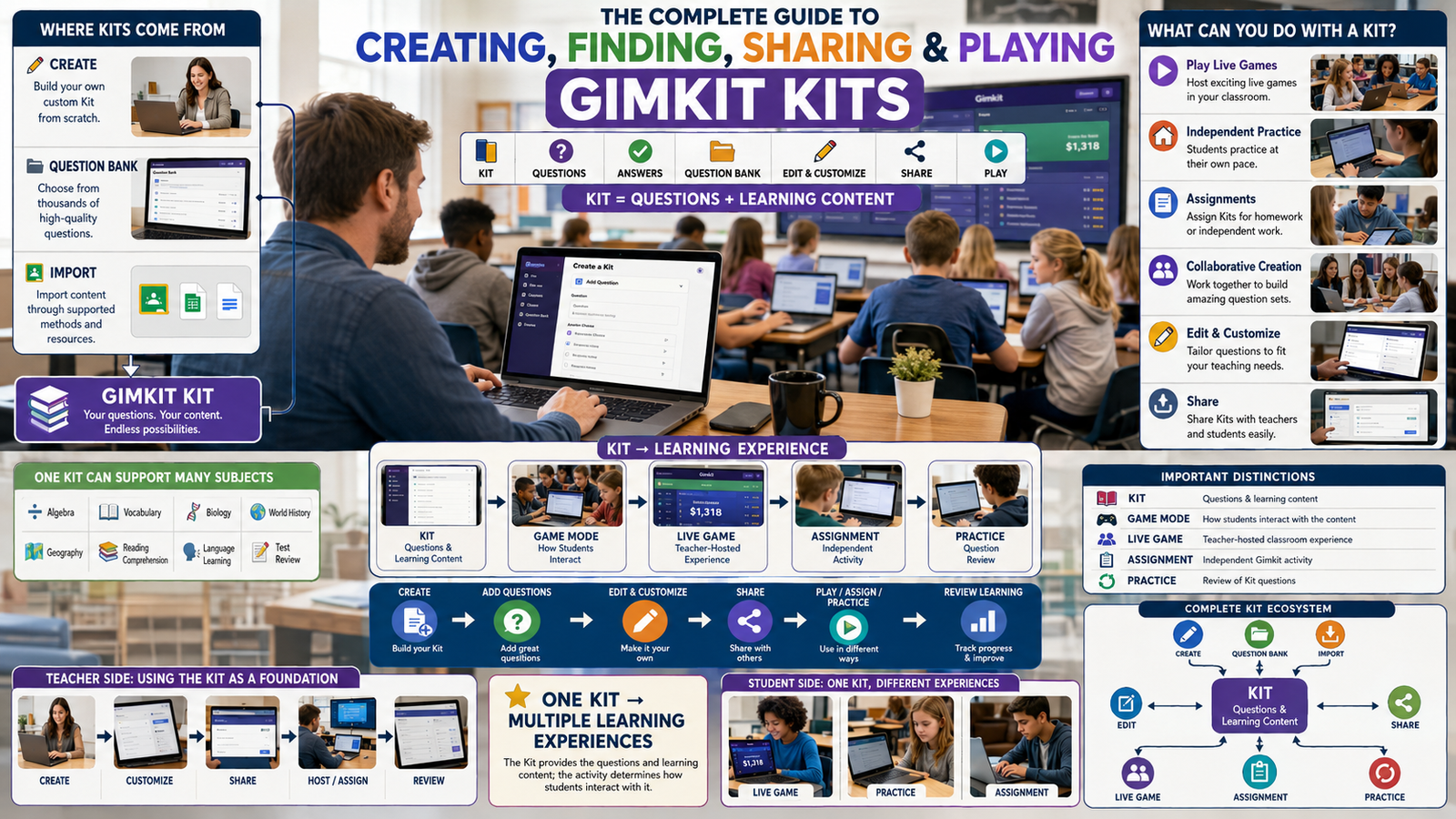
Gimkit is designed around interactive learning rather than static quizzes. Teachers create or import question sets, students answer questions during live or assigned games, and gameplay mechanics encourage participation through rewards, upgrades, and friendly competition. Because classrooms vary significantly in size, teaching methods, and instructional goals, Gimkit offers different levels of access to accommodate a broad range of users.
At its core, the subscription model balances accessibility with advanced functionality. The free version introduces educators to the platform and supports basic classroom activities, while paid access expands the available teaching tools, customization options, and management capabilities for more frequent or advanced use.
It’s important to recognize that the difference between plans is not simply “more features.” In practice, the distinction often comes down to workflow efficiency, lesson flexibility, and how deeply Gimkit becomes integrated into everyday instruction.
Why Gimkit Offers Different Subscription Options
Educational technology serves many types of users, each with unique goals and constraints. Some teachers explore new platforms cautiously before making a financial commitment, while others need advanced capabilities to support daily instruction across several classes.
Offering multiple subscription levels allows Gimkit to serve both groups effectively.
Common reasons for providing different plans include:
Allowing new educators to explore the platform without financial risk.
Supporting teachers with varying classroom needs and teaching frequencies.
Providing advanced instructional tools for educators who rely heavily on game-based learning.
Enabling schools and organizations to scale usage according to their requirements.
This flexible approach ensures that educators can begin using the platform immediately and upgrade only if additional functionality becomes valuable over time.
Understanding the Difference Between the Free and Paid Experience
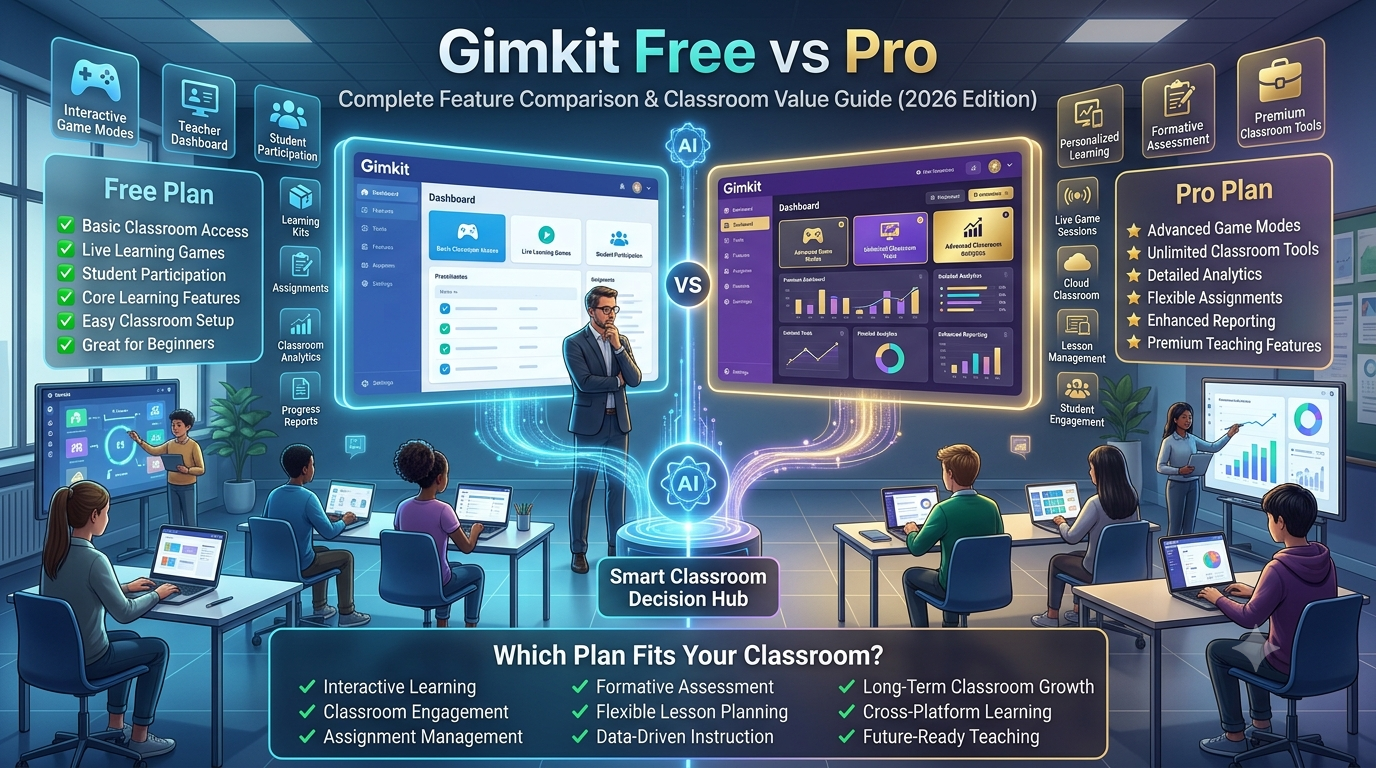
Compare the free and paid Gimkit experience to understand which features best support your classroom, lesson planning, and long-term teaching goals.
One of the biggest misconceptions is that the free version exists only as a trial. In reality, many teachers successfully use it for classroom activities, review sessions, and occasional formative assessments.
The paid subscription, however, is intended for educators who want greater control over how they design, deliver, and manage learning experiences.
Generally speaking, upgrading provides access to a broader set of instructional tools that can support:
More classroom flexibility
Additional game experiences
Enhanced lesson planning
Better classroom organization
Richer customization
Expanded assignment capabilities
Improved long-term teaching workflows
Rather than replacing good teaching, these additional tools are designed to reduce administrative effort so educators can focus more on student learning.
Who Should Consider the Free Plan?
The free plan is often the best starting point for educators who are still exploring whether Gimkit fits their instructional style.
It may be particularly suitable for:
Teachers using Gimkit for occasional review activities.
Educators experimenting with game-based learning.
Small classrooms with straightforward instructional needs.
Student teachers.
Tutors introducing interactive practice sessions.
Homeschool educators testing digital learning tools.
Anyone evaluating the platform before making a purchase.
For these users, the free version often provides enough functionality to understand how Gimkit works while identifying whether premium capabilities would meaningfully improve their teaching.
Example Classroom Scenario
A middle school history teacher hosts one review game before each unit test. Since the platform is used only a few times each month, the free plan may provide sufficient value without requiring an immediate subscription.
Who Benefits Most From the Paid Subscription?
Teachers who incorporate Gimkit into their regular instructional routine generally benefit more from a paid subscription.
Educators who may find additional value include:
Teachers hosting games multiple times each week.
Instructors managing several classrooms.
Schools adopting game-based learning across departments.
Teachers assigning independent practice outside class.
Professionals building long-term digital learning workflows.
For these users, premium features can streamline lesson preparation, reduce repetitive tasks, and create a more consistent learning experience throughout the school year.
Example Classroom Scenario
A mathematics teacher uses Gimkit during warm-up activities, weekly reviews, homework assignments, and end-of-unit assessments. In this situation, expanded teaching tools may save preparation time while supporting more varied instructional approaches.
⭐ Expert Insight: Frequency of use is often the strongest indicator of whether a subscription offers good value. The more regularly Gimkit becomes part of classroom instruction, the more beneficial advanced workflow features tend to become.
Free Plan vs Paid Subscription at a Glance
The following table summarizes the general differences educators typically consider when evaluating Gimkit subscription options. Because features and availability can evolve over time, always verify the latest details before making a purchasing decision.
Area
Free Plan
Paid Subscription
Initial Cost
No subscription required
Recurring subscription
Learning the Platform
Excellent
Excellent
Classroom Flexibility
Basic
Expanded
Teaching Tools
Core functionality
Additional instructional tools
Lesson Customization
Limited
Greater flexibility
Assignment Options
Basic availability
Expanded capabilities
Classroom Management
Standard
More comprehensive
Long-Term Daily Teaching
May feel limiting for heavy users
Better suited for frequent classroom use
Best For
New and occasional users
Regular classroom integration
The most significant difference is not simply the number of available features but how efficiently teachers can manage lessons, organize activities, and adapt the platform to different learning objectives.
Factors to Consider Before Choosing a Plan
Selecting the right subscription involves more than comparing feature lists. The best choice depends on how the platform fits into your teaching environment.
1. How Frequently Will You Use Gimkit?
Teachers who use Gimkit only a few times each semester may find that the free version adequately supports their instructional goals.
On the other hand, educators incorporating Gimkit into weekly or daily lessons often appreciate the additional flexibility provided by a subscription.
2. How Many Classes Do You Teach?
Managing one classroom differs significantly from managing several.
As the number of students and class sections increases, organizational tools and efficient lesson management become increasingly valuable.
3. What Are Your Teaching Goals?
Ask yourself:
Is Gimkit mainly for review?
Will students complete assignments independently?
Do you want varied game experiences?
Will it become a regular assessment tool?
Do you plan to integrate it throughout the school year?
Your answers help determine whether basic functionality is enough or whether advanced teaching features justify upgrading.
4. What Is Your Available Budget?
Educational technology should provide measurable value.
Instead of asking whether the subscription is inexpensive or expensive, consider questions such as:
Will it save lesson preparation time?
Will students remain more engaged?
Will it support better classroom participation?
Will it replace multiple other teaching tools?
Will you use it consistently?
Thinking in terms of educational return rather than subscription cost often leads to a more practical decision.
5. Do You Need Advanced Classroom Flexibility?
Some educators prefer simple review games with minimal setup. Others regularly modify lessons, differentiate instruction, and experiment with different learning strategies.
The more customized your teaching approach becomes, the more valuable advanced platform capabilities may become.
Common Mistakes When Choosing a Gimkit Subscription
Many educators focus only on pricing without considering how they actually teach.
Some of the most common decision-making mistakes include:
Upgrading before understanding the free version.
Choosing based solely on feature lists.
Ignoring classroom workflow needs.
Assuming paid automatically means better learning outcomes.
Underestimating how frequently the platform will be used.
Forgetting to consider future instructional goals.
Avoiding these mistakes makes it easier to select a plan that aligns with both your teaching style and budget.
⚠ Common Mistake: Purchasing a subscription because of one attractive feature often leads to disappointment if the rest of the platform isn’t used regularly. Evaluate the complete teaching experience instead.
Best Practice for First-Time Users
If you’re completely new to Gimkit, a gradual approach usually works best.
A practical strategy is to:
Explore the free plan.
Host several classroom sessions.
Observe student engagement.
Identify any workflow limitations.
Decide whether premium features solve those specific challenges.
This method allows educators to base their decision on actual classroom experience rather than assumptions or marketing claims.
What Does the Gimkit Paid Subscription Actually Offer?
The Gimkit paid subscription is designed for educators who want to move beyond occasional classroom games and integrate interactive learning into their regular teaching routine. Rather than simply unlocking additional features, the subscription focuses on improving lesson flexibility, classroom organization, and long-term instructional efficiency.
For teachers who use Gimkit several times each week, premium capabilities often reduce preparation time while creating more engaging learning experiences. Instead of rebuilding activities from scratch or working around feature limitations, educators can spend more time focusing on student learning and less time managing technology.
It is worth remembering that subscription features may evolve as the platform continues to develop. Before making a purchasing decision, always verify the latest plan details if a specific feature is essential to your teaching workflow.
📌 Quick Note: If you want to stay informed about newly released functionality, improvements, and platform changes, exploring the latest Gimkit Games & Updatescan help you understand how the platform continues to evolve throughout the school year.
Why Many Teachers Decide to Upgrade
For some educators, the free plan remains sufficient throughout the year. Others eventually reach a point where classroom demands make additional flexibility increasingly valuable.
Common reasons teachers upgrade include:
Using Gimkit multiple times each week.
Teaching several classes every day.
Creating differentiated learning activities.
Assigning work outside normal classroom hours.
Wanting greater lesson customization.
Managing larger groups of students.
Building a consistent digital learning routine.
The decision is rarely about having “more features.” Instead, it is about whether those features solve genuine classroom challenges and improve teaching efficiency.
Real Classroom Example
Imagine an eighth-grade science teacher preparing review sessions for five different classes. Each class progresses at a slightly different pace, and students require varying levels of practice before assessments.
With a more flexible teaching workflow, the teacher can organize lessons more efficiently, adapt activities to different learning needs, and spend less time repeating administrative tasks.
Premium Features That Can Improve Everyday Teaching
Although individual features may change over time, premium subscriptions generally focus on giving educators greater instructional flexibility rather than simply increasing the number of available options.
Some of the areas that often become more powerful include:
Lesson organization
Classroom management
Student assignments
Activity customization
Game variety
Teaching workflows
Long-term planning
These improvements become especially valuable when Gimkit forms part of a teacher’s regular instructional strategy instead of being used only for occasional revision sessions.
⭐ Expert Insight: Teachers often discover that workflow improvements save more time over an entire semester than any individual premium feature.
Expanded Classroom Management
Streamline classroom organization with smarter lesson planning, student management, and efficient teaching workflows.
Managing a classroom involves much more than hosting games.
Teachers regularly organize multiple classes, monitor participation, prepare review activities, and ensure every student receives appropriate learning opportunities.
As classroom responsibilities increase, efficient management tools become increasingly important.
Premium functionality may help educators:
Keep classroom activities organized.
Prepare lessons more efficiently.
Reduce repetitive setup.
Maintain consistency between classes.
Simplify ongoing lesson management.
Instead of constantly adjusting the platform for each lesson, teachers can build smoother classroom routines that support both instruction and student engagement.
Greater Lesson Customization
Every classroom is different.
Some lessons require fast-paced competition, while others focus on collaboration, revision, independent practice, or homework.
One advantage of premium access is the ability to adapt learning experiences to different educational situations rather than relying on identical activities every time.
For example:
A language arts teacher may prefer collaborative review before a writing assessment, while a mathematics teacher might emphasize repeated problem-solving during exam preparation.
Having greater flexibility allows educators to align classroom activities with instructional objectives instead of changing teaching methods to fit software limitations.
If you’re still learning how different teaching options work, comprehensive Gimkit Guides & Tutorialscan provide practical walkthroughs that help educators make better use of the platform without feeling overwhelmed.
More Learning Opportunities Beyond Live Games
Many teachers initially associate Gimkit with live classroom competitions.
However, effective teaching often extends beyond a single class period.
Students benefit from opportunities to review material independently, reinforce difficult concepts, and continue practicing outside scheduled lessons.
For educators who regularly assign additional learning activities, premium capabilities may provide greater flexibility in supporting both classroom instruction and independent study.
This creates a more continuous learning experience instead of limiting practice to live sessions alone.
A Better Workflow for Multiple Classes
Teaching one class differs significantly from teaching six or seven every day.
As workloads increase, organization becomes just as important as instructional quality.
Teachers managing multiple classrooms often value systems that reduce repetitive preparation and help maintain consistency across different student groups.
This structured workflow becomes increasingly beneficial throughout an academic year.
Understanding Game Variety
One reason many educators continue using Gimkit is that students rarely feel they are repeating exactly the same activity.
Different learning experiences can improve engagement while allowing teachers to match classroom activities to different instructional objectives.
For example:
Quick revision sessions
Vocabulary practice
Test preparation
Team collaboration
Independent review
Homework reinforcement
Rather than selecting activities randomly, experienced educators choose learning experiences that match the lesson’s objectives.
Teachers interested in exploring how different experiences support different learning outcomes may find theGimkit Features & Game Modescollection especially helpful when planning future lessons.
Classroom Engagement Beyond Entertainment
Student engagement should never be confused with simple entertainment.
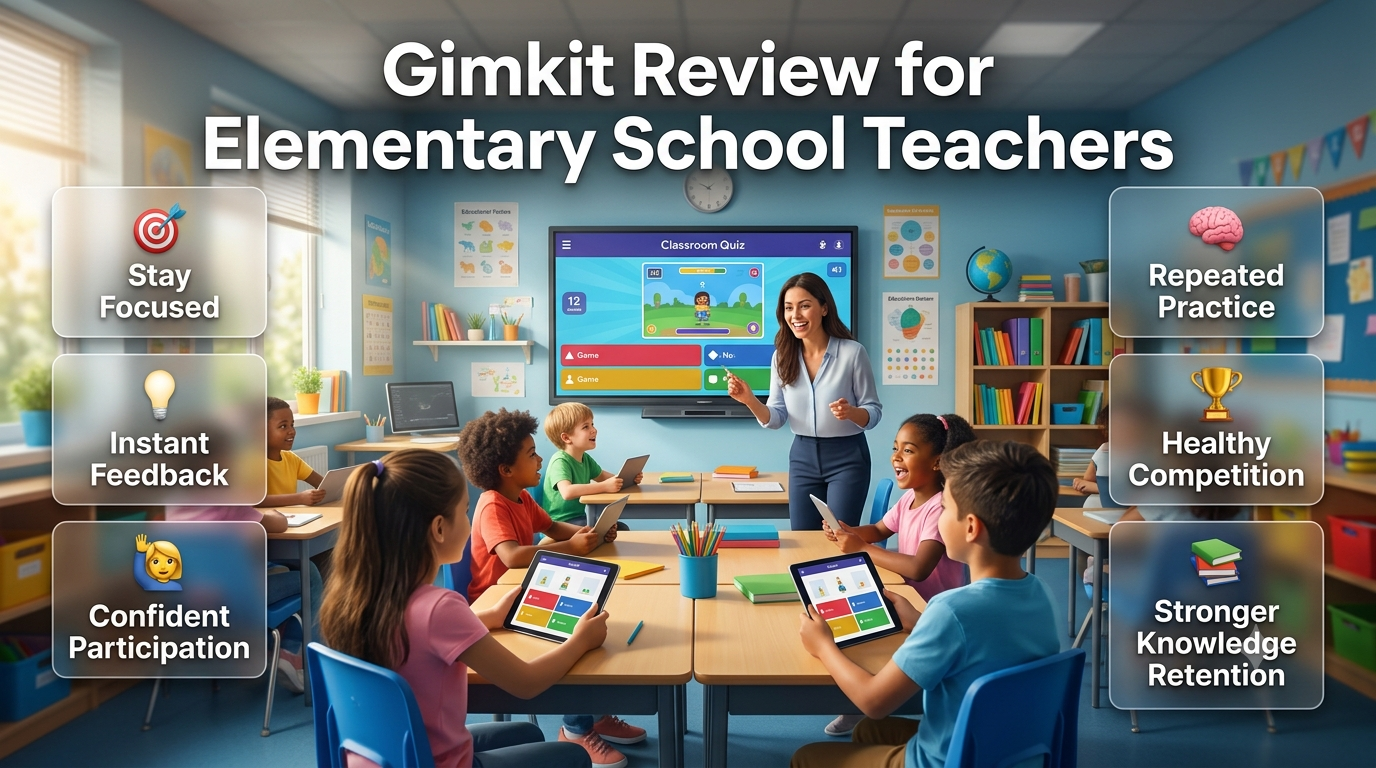
Well-designed educational games encourage:
Active participation
Faster recall
Immediate feedback
Healthy classroom competition
Repeated practice
Increased confidence
When used thoughtfully, interactive learning supports educational goals rather than distracting from them.
The most successful teachers treat Gimkit as one instructional strategy among many instead of relying on it exclusively.
Assignments and Independent Learning
Learning does not always happen during scheduled classroom hours.
Students often benefit from reviewing concepts independently before quizzes, unit tests, or examinations.
Teachers who regularly assign additional practice generally look for platforms that make independent learning simple to manage.
Interactive assignments can help students:
Practice difficult concepts.
Build confidence.
Review mistakes.
Learn at their own pace.
Prepare before assessments.
When assigning work outside class, it is also important that students can access activities without unnecessary technical interruptions. If learners experience account access issues, invalid game codes, or joining problems, referring them to Gimkit Login & Join Troubleshooting resources can help resolve common issues quickly and keep learning on track.
Using Data to Improve Instruction
Effective teaching depends on more than observing classroom participation.
Educators also need meaningful information about student understanding.
Reviewing student performance allows teachers to:
Identify common misconceptions.
Adjust future lessons.
Provide targeted support.
Monitor class progress.
Reinforce challenging concepts.
Instead of viewing reports as grades alone, experienced teachers use classroom data to guide future instruction.
Is the Paid Plan Worth the Cost?
This is perhaps the most common question educators ask.
The answer depends less on the subscription price and more on educational value.
Consider these questions:
Will you use Gimkit every week?
Will additional flexibility improve your lessons?
Will premium tools save preparation time?
Will students receive more opportunities to practice?
Will it become a regular part of your teaching strategy?
If most answers are “yes,” upgrading often provides meaningful long-term value.
For educators comparing costs, features, and long-term educational benefits before making a decision, reviewing detailed Gimkit Reviews & Pricing resources alongside this guide can provide additional context and help evaluate which option best fits their classroom needs.
💡 Pro Tip: Evaluate subscriptions based on cost per lesson rather than cost per month. A tool used dozens of times throughout a semester often delivers far greater educational value than its subscription price alone suggests.
Building Confidence Before Upgrading
New users sometimes feel pressured to purchase a subscription immediately.
In reality, there is no disadvantage to spending time understanding how the platform fits your teaching style first.
Many experienced educators recommend the following progression:
Learn the platform.
Host several classroom games.
Observe student engagement.
Identify classroom limitations.
Upgrade only if additional functionality solves those specific challenges.
If you’re still exploring best practices, classroom ideas, and practical implementation techniques, browsing curated Gimkit Resources for Teachers and Gimkit Tips & Strategies can provide inspiration for making the most of both the free and paid experiences.
Free Plan vs Paid Subscription: Which One Is Right for You?
Compare the Free Plan and Paid Subscription to choose the best Gimkit experience for your teaching style, classroom needs, and educational goals.
After understanding what each subscription level offers, the next step is deciding which option best fits your teaching style, classroom needs, and long-term goals.
There isn’t a single subscription that works for every educator. The best choice depends on how frequently you use Gimkit, how you structure your lessons, and whether additional teaching tools would genuinely improve your classroom workflow.
The following decision framework can help simplify that choice.
Your Situation
Recommended Choice
Why
You’re exploring Gimkit for the first time
Free Plan
Learn the platform before making a financial commitment.
You use Gimkit only a few times each month
Free Plan
Basic functionality is often sufficient for occasional classroom review.
You teach several classes every week
Paid Subscription
Additional flexibility can improve lesson management and organization.
You regularly assign independent practice
Paid Subscription
Premium capabilities can better support ongoing learning outside class.
Your school is adopting game-based learning across departments
Paid Subscription
Better suited for long-term instructional integration.
You’re still unsure how often you’ll use the platform
Start Free
Upgrade later if classroom needs expand.
The goal isn’t simply to choose the plan with the most features—it is to choose the one that delivers the greatest educational value for your specific teaching environment.
When the Free Plan Is More Than Enough
Many educators assume that a paid subscription is automatically the better option. In reality, the free plan can be an excellent long-term solution for teachers whose instructional needs remain relatively straightforward.
The free version may be ideal if you:
Teach with Gimkit occasionally.
Use it primarily for review sessions.
Want to introduce students to game-based learning.
Are working within a limited classroom budget.
Prefer testing new educational technology before committing to a subscription.
For these educators, the free plan often provides everything needed to create engaging review activities without adding unnecessary costs.
📌 Quick Note: New teachers can also strengthen their understanding of the platform by exploring broader General Gimkit Resources, where foundational topics, classroom ideas, and platform basics are explained in greater detail.
When Upgrading Makes Sense
A subscription becomes easier to justify when Gimkit evolves from an occasional classroom activity into an essential part of everyday teaching.
Teachers often benefit most from upgrading when they:
Use Gimkit several times each week.
Teach multiple subjects or class sections.
Need greater lesson flexibility.
Regularly assign student practice.
Want to streamline lesson preparation.
Rely on interactive learning throughout the academic year.
Rather than asking whether premium features are “worth paying for,” consider whether they solve recurring classroom challenges that consume valuable teaching time.
Thinking Beyond Subscription Cost
One of the biggest mistakes educators make is evaluating a subscription solely by its monthly or annual price.
Educational technology should be viewed as an investment in teaching efficiency and student engagement.
Instead of focusing only on cost, consider questions like:
Does it reduce lesson preparation time?
Will students participate more consistently?
Can it simplify classroom management?
Does it replace other digital teaching tools?
Will it be used throughout the school year?
If the answer to several of these questions is “yes,” the overall value may significantly outweigh the subscription cost.
💡 Pro Tip: Calculate value based on cost per lesson instead of cost per month. A platform used dozens of times during a semester often delivers far greater educational value than its subscription fee suggests.
Comparing Gimkit With Other Classroom Learning Platforms
Choosing a subscription sometimes means comparing Gimkit with other educational platforms rather than evaluating it in isolation.
Different tools emphasize different teaching approaches. Some focus on quick quizzes, others on formal assessments, while some specialize in collaborative classroom activities or gamified learning experiences.
Instead of searching for a universal winner, compare platforms based on factors such as:
Student engagement
Ease of lesson creation
Assessment flexibility
Classroom management
Reporting capabilities
Assignment options
Teaching objectives
Educators who are still deciding between different classroom platforms may find dedicated Gimkit Comparisons & Alternativesguides useful for understanding which solution aligns best with their instructional goals.
Choosing the Right Tool for Different Teaching Styles
Every educator teaches differently.
For example:
Teacher A prefers short review games before quizzes.
Teacher B incorporates game-based learning into nearly every lesson.
Teacher C focuses heavily on homework, revision, and independent practice.
Although all three teachers use the same platform, their subscription needs differ considerably.
The most effective choice is always the one that complements your teaching style rather than forcing you to adapt your classroom around software limitations.
Building a Sustainable Classroom Workflow
Successful educators rarely rely on a single activity for every lesson.
Instead, they combine different teaching strategies to keep students engaged while reinforcing learning objectives.
A balanced classroom workflow may include:
Interactive discussions
Traditional instruction
Collaborative activities
Practical exercises
Digital review sessions
Short formative assessments
Independent revision
Gimkit works best when integrated into this broader teaching strategy rather than replacing every other instructional method.
Teachers looking for fresh lesson ideas can also explore collections of interactive quiz activities, which demonstrate how quiz-based learning can complement classroom discussions, homework, and review sessions throughout the academic year.
Common Mistakes to Avoid Before Purchasing
Avoid common purchasing mistakes by evaluating classroom needs, teaching goals, and long-term educational value before choosing a subscription.
Making an informed decision requires looking beyond marketing features.
Avoid these common mistakes:
1. Upgrading Too Early
Spend time understanding how the free version fits your classroom before purchasing a subscription.
2. Buying Features You Will Never Use
Additional functionality only creates value if it becomes part of your regular teaching workflow.
3. Ignoring Student Needs
The best subscription is the one that supports better learning outcomes—not necessarily the one with the longest feature list.
4. Focusing Only on Price
Educational value depends on classroom impact, not simply subscription cost.
5. Expecting Technology to Replace Good Teaching
Interactive learning tools support effective instruction—they do not replace thoughtful lesson planning or teacher expertise.
Best Practices Before You Subscribe
Use this checklist before making your decision.
✅ Have you used the free version in a real classroom?
✅ Have your students responded positively?
✅ Will you use Gimkit regularly throughout the year?
✅ Do premium capabilities solve actual teaching challenges?
✅ Does the subscription fit your classroom budget?
✅ Have you compared Gimkit with other available options?
✅ Will the additional features improve learning outcomes rather than simply adding complexity?
If you answer “yes” to most of these questions, upgrading may be a worthwhile investment.
Professional Recommendations & Expert Reviews
Which Gimkit Subscription Plan Should You Choose depends on how often you use the platform in your classroom.
Which Gimkit Subscription Plan Should You Choose starts by identifying your teaching goals and lesson frequency.
Which Gimkit Subscription Plan Should You Choose depends on whether you need basic or advanced classroom features.
Which Gimkit Subscription Plan Should You Choose should match your classroom size and teaching style.
Which Gimkit Subscription Plan Should You Choose becomes easier after comparing the available features.
Which Gimkit Subscription Plan Should You Choose depends on how frequently students participate in live games.
Which Gimkit Subscription Plan Should You Choose should reflect your long-term classroom needs.
Which Gimkit Subscription Plan Should You Choose is influenced by how much lesson customization you require.
Which Gimkit Subscription Plan Should You Choose depends on whether advanced game modes are important to your lessons.
Which Gimkit Subscription Plan Should You Choose should support both engagement and instructional goals.
Which Gimkit Subscription Plan Should You Choose becomes clearer after trying the available free features.
Which Gimkit Subscription Plan Should You Choose depends on how often you assign independent student activities.
Which Gimkit Subscription Plan Should You Choose should balance classroom value with your available budget.
Which Gimkit Subscription Plan Should You Choose depends on the level of classroom management you need.
Which Gimkit Subscription Plan Should You Choose should align with your curriculum planning throughout the year.
Which Gimkit Subscription Plan Should You Choose depends on how much flexibility you expect from the platform.
Which Gimkit Subscription Plan Should You Choose becomes easier after evaluating your daily teaching routine.
Which Gimkit Subscription Plan Should You Choose should support both classroom instruction and student review.
Which Gimkit Subscription Plan Should You Choose depends on how important progress tracking is for your lessons.
Which Gimkit Subscription Plan Should You Choose should fit naturally into your existing teaching methods.
Which Gimkit Subscription Plan Should You Choose depends on whether you regularly host classroom competitions.
Which Gimkit Subscription Plan Should You Choose should improve learning without adding unnecessary complexity.
Which Gimkit Subscription Plan Should You Choose depends on your classroom’s technology requirements.
Which Gimkit Subscription Plan Should You Choose should provide the tools you use most frequently.
Which Gimkit Subscription Plan Should You Choose depends on your preference for simple or advanced lesson customization.
Which Gimkit Subscription Plan Should You Choose should help maintain long-term student engagement.
Which Gimkit Subscription Plan Should You Choose depends on how often you create new educational content.
Which Gimkit Subscription Plan Should You Choose should support efficient lesson preparation.
Which Gimkit Subscription Plan Should You Choose depends on your classroom’s learning objectives.
Which Gimkit Subscription Plan Should You Choose should make classroom activities easier to organize.
Which Gimkit Subscription Plan Should You Choose depends on how much interactive learning you include each week.
Which Gimkit Subscription Plan Should You Choose should encourage consistent student participation.
Which Gimkit Subscription Plan Should You Choose depends on whether premium tools improve your teaching workflow.
Which Gimkit Subscription Plan Should You Choose should support effective review before assessments.
Which Gimkit Subscription Plan Should You Choose depends on how much classroom flexibility you need.
Which Gimkit Subscription Plan Should You Choose should provide good value for your educational goals.
Which Gimkit Subscription Plan Should You Choose depends on the features that benefit your students most.
Which Gimkit Subscription Plan Should You Choose should match your preferred classroom teaching style.
Which Gimkit Subscription Plan Should You Choose depends on your need for advanced classroom controls.
Which Gimkit Subscription Plan Should You Choose should help create engaging and organized lessons.
Which Gimkit Subscription Plan Should You Choose depends on how regularly you integrate educational games.
Which Gimkit Subscription Plan Should You Choose should support both individual and collaborative learning.
Which Gimkit Subscription Plan Should You Choose depends on your expectations for long-term classroom use.
Which Gimkit Subscription Plan Should You Choose should simplify lesson management whenever possible.
Which Gimkit Subscription Plan Should You Choose depends on how frequently you review student progress.
Which Gimkit Subscription Plan Should You Choose should strengthen classroom engagement through appropriate features.
Which Gimkit Subscription Plan Should You Choose depends on whether your students benefit from additional learning options.
Which Gimkit Subscription Plan Should You Choose should align with your teaching priorities rather than unnecessary extras.
Which Gimkit Subscription Plan Should You Choose depends on finding the right balance between features and practicality.
Which Gimkit Subscription Plan Should You Choose should support meaningful learning experiences throughout the school year.
Which Gimkit Subscription Plan Should You Choose depends on how much customization enhances your lessons.
Which Gimkit Subscription Plan Should You Choose should encourage efficient classroom organization and planning.
Which Gimkit Subscription Plan Should You Choose depends on your willingness to expand interactive learning opportunities.
Which Gimkit Subscription Plan Should You Choose should make classroom review sessions more effective.
Which Gimkit Subscription Plan Should You Choose depends on selecting features that truly improve instruction.
Which Gimkit Subscription Plan Should You Choose should help teachers maximize both student engagement and learning outcomes.
Which Gimkit Subscription Plan Should You Choose depends on your classroom goals rather than simply choosing the highest-tier option.
Which Gimkit Subscription Plan Should You Choose should provide practical benefits that justify your educational investment.
Which Gimkit Subscription Plan Should You Choose demonstrates that the best choice is the one that matches your teaching needs and classroom usage.
Which Gimkit Subscription Plan Should You Choose depends on choosing the plan that best matches your classroom needs and teaching goals.
Frequently Asked Questions
1. Is the Gimkit free plan good enough for most teachers?
For many teachers, especially those new to Gimkit or using it occasionally, the free plan provides enough functionality to introduce game-based learning into the classroom. It allows educators to create quizzes, host live games, and familiarize students with the platform before deciding whether premium features are necessary. Teachers with smaller class sizes or limited use often find the free version sufficient for regular review activities.
As classroom needs grow, however, some educators benefit from upgrading to access additional game modes, assignments, customization options, and enhanced classroom management tools. The best choice depends on teaching frequency, instructional goals, and the features that support your learning objectives.
The free plan is ideal for:
New Gimkit users.
Occasional classroom reviews.
Small-scale classroom activities.
Exploring the platform before upgrading.
Basic formative assessments.
Individual teachers with limited needs.
2. Should new teachers subscribe immediately?
Not necessarily. New teachers generally benefit from exploring the free version first to understand how Gimkit fits into their teaching style and classroom routines. Using the platform for several lessons allows educators to evaluate student engagement, workflow, and instructional value before investing in a paid subscription.
After gaining practical experience, teachers can determine whether premium features provide enough additional value to justify the cost. This approach leads to more informed purchasing decisions and ensures the subscription aligns with actual classroom needs.
Before subscribing, consider:
How often you’ll use Gimkit.
Your classroom size.
Available school budget.
Features you actually need.
Student engagement levels.
Long-term teaching goals.
3. Does a paid subscription automatically improve student performance?
No. A paid subscription provides additional teaching tools and flexibility, but it does not automatically increase student achievement. Learning outcomes depend primarily on lesson quality, instructional design, meaningful practice, and effective teacher guidance. Gimkit is most successful when it reinforces well-planned instruction rather than replacing it.
Premium features can enhance classroom experiences, but consistent teaching strategies, timely feedback, and active student participation remain the biggest factors influencing academic success.
Student success depends on:
Strong lesson planning.
Clear learning objectives.
Consistent practice.
Effective teacher feedback.
Student motivation.
Appropriate use of technology.
4. How often should I use Gimkit to justify a subscription?
There is no universal answer because value depends on how deeply Gimkit is integrated into your teaching. Teachers who use the platform several times each month for formative assessment, vocabulary review, homework, collaborative activities, or exam preparation are generally more likely to benefit from premium features than those using it only occasionally.
Evaluate your subscription based on instructional impact rather than usage alone. If premium tools regularly save preparation time and improve classroom engagement, they may provide worthwhile long-term value.
A subscription is often worthwhile if you regularly use Gimkit for:
Weekly classroom reviews.
Homework assignments.
Formative assessments.
Exam preparation.
Interactive revision lessons.
Student practice activities.
5. Is Gimkit suitable for every subject?
Yes. Gimkit is flexible enough to support a wide range of academic subjects because teachers create their own question sets based on curriculum objectives. It is commonly used for mathematics, science, English language arts, social studies, history, geography, foreign languages, business, computer science, and many other disciplines.
While some subjects naturally lend themselves to quiz-based review, creative question design allows Gimkit to reinforce both factual knowledge and higher-order thinking across nearly every classroom.
Subjects commonly supported:
Mathematics.
Science.
English Language Arts.
Social Studies.
World Languages.
Computer Science.
6. Can Gimkit support independent learning?
Yes. Gimkit can support independent learning when teachers assign self-paced activities that allow students to review concepts outside the classroom. Independent practice encourages learners to work at their own pace, revisit challenging topics, and strengthen long-term retention through repeated retrieval practice.
For the best results, independent Gimkit activities should be combined with clear learning goals, additional study materials, and teacher feedback to ensure students remain focused on meaningful academic progress.
Independent learning benefits:
Self-paced practice.
Flexible study schedules.
Improved knowledge retention.
Greater learner responsibility.
Convenient review before assessments.
Opportunities for personalized learning.
Final Expert Recommendation
Choosing the right Gimkit subscription plan should never be about purchasing the option with the longest feature list.
Instead, focus on selecting the plan that best supports your teaching goals, classroom workflow, and student learning experience.
If you are still exploring interactive learning, beginning with the free plan is a practical and low-risk approach.
If Gimkit becomes a regular part of your lesson planning, classroom review, and independent practice, a paid subscription may provide meaningful long-term value through improved flexibility and teaching efficiency.
Most importantly, remember that educational technology delivers the greatest results when combined with thoughtful instruction, clear learning objectives, and consistent classroom engagement.
Conclusion
Gimkit has become a valuable classroom platform because it combines interactive learning with engaging gameplay in ways that encourage active student participation. Whether you choose the free version or decide to upgrade, the best subscription is the one that aligns with your instructional needs rather than simply offering the greatest number of features.
As your confidence with the platform grows, your classroom needs may also evolve. Continuing to explore new teaching ideas, platform improvements, and instructional strategies can help you get more value from every lesson. Whether you’re looking for beginner guidance, advanced teaching techniques, feature explanations, pricing insights, or comparisons with other educational platforms, the wider Gimkit knowledge hub provides a helpful starting point for expanding your expertise over time.
Final Thoughts
Rather than asking “Which Gimkit subscription plan has the most features?”, ask a more meaningful question:
“Which plan helps me teach more effectively, saves preparation time, and creates better learning experiences for my students?”
For most educators, the answer to that question leads naturally to the right subscription choice—one that balances classroom needs, budget, and long-term educational value without paying for features they may never use.