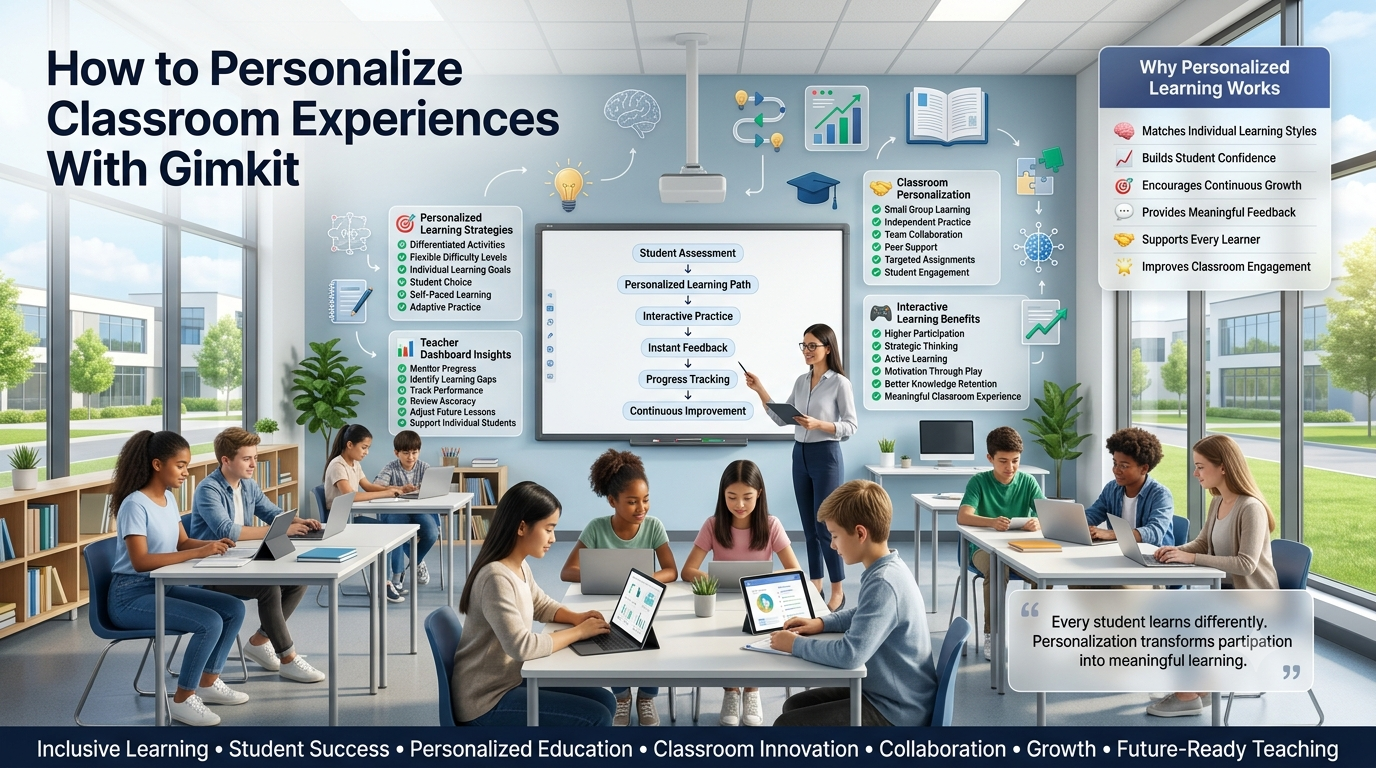
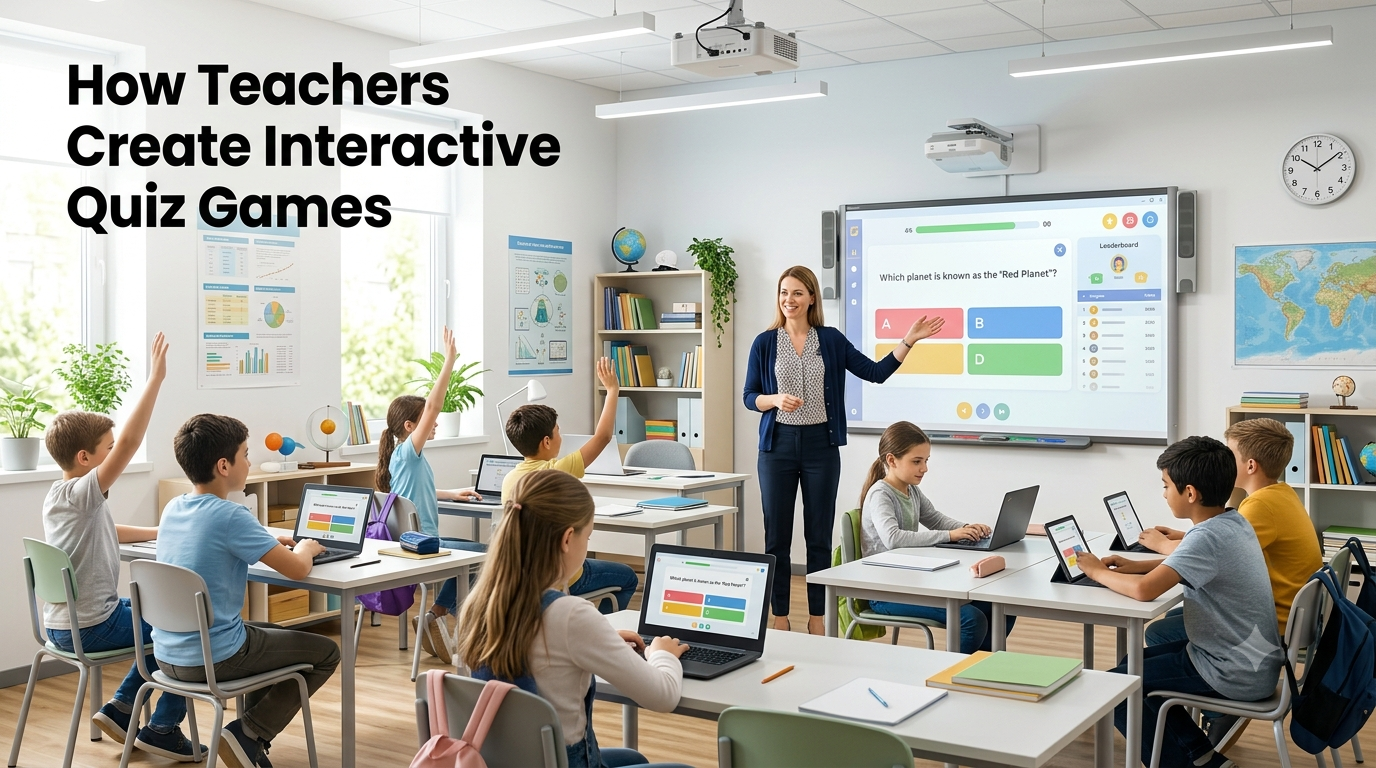
How to Personalize Classroom Experiences With Gimkit-Every classroom includes students with different learning styles, confidence levels, interests, and academic abilities. A single teaching approach rarely keeps every learner engaged for an entire lesson. That’s where personalized learning becomes valuable. Instead of delivering identical experiences to every student, teachers can adapt activities, pacing, challenges, and feedback to help each learner succeed in ways that match their individual needs.
Gimkit has become one of the most flexible platforms for creating personalized classroom experiences because it combines formative assessment with game-based learning. Unlike traditional quizzes that treat every student the same, teachers can adjust question sets, assign differentiated homework, monitor live progress, and select game modes that fit specific instructional goals. Whether you’re teaching elementary students, middle school learners, high school classes, or even adult education, the platform offers multiple ways to make learning feel relevant and engaging.
Modern educators often compare Gimkit, Kahoot, Quizizz, Blooket, Nearpod, Google Classroom, Microsoft Teams for Education, and other digital learning platforms when designing interactive lessons. Each tool has strengths, but Gimkit stands out because students earn in-game currency, make strategic decisions, and remain actively involved throughout the lesson instead of simply answering one question after another. That additional layer of decision-making creates opportunities for meaningful personalization rather than one-size-fits-all instruction.
Personalization also supports many current educational priorities, including differentiated instruction, student agency, formative assessment, competency-based learning, and data-informed teaching. Instead of focusing only on grades, teachers gain insights into student understanding while learners receive immediate opportunities to practice, improve, and stay motivated through gameplay.
This guide explains how teachers can personalize classroom experiences with Gimkit from beginner strategies to advanced classroom workflows. You’ll learn how to adapt games for different ability levels, create engaging assignments, analyze performance data, encourage collaboration, avoid common implementation mistakes, and build a classroom environment where every student feels challenged without becoming overwhelmed.
Why Personalized Learning Matters in Today’s Classroom
Direct answer: Personalized learning helps students learn more effectively by adapting instruction to their readiness, interests, pace, and learning needs rather than expecting everyone to progress identically.
Traditional classrooms often require teachers to move through content at a fixed pace. While some students master concepts quickly, others need additional explanation, examples, or practice. This gap can lead to boredom for advanced learners and frustration for students who require more support. Personalization addresses this challenge by allowing multiple learning pathways within the same classroom.
Technology has made personalized instruction far more practical than it was in the past. Digital learning platforms now help teachers monitor progress in real time, assign targeted activities, and identify misconceptions before they become larger learning problems. Instead of replacing teacher expertise, these tools strengthen instructional decision-making by providing meaningful classroom data.
For many educators, personalization also improves classroom culture. Students who feel challenged appropriately are generally more willing to participate, ask questions, take academic risks, and remain engaged during lessons. Rather than competing only for high scores, learners focus on individual growth and continuous improvement.
Professional Insight
Effective personalization is not about creating a different lesson for every student. It is about providing flexible pathways so more students can successfully reach the same learning objectives.
Why Gimkit Is Well-Suited for Personalized Classroom Experiences
Direct answer: Gimkit supports personalized learning because teachers can customize content, assign targeted practice, monitor individual progress, choose different game modes, and provide immediate feedback based on student performance.
Many classroom quiz platforms primarily focus on reviewing information through fast-paced competitions. Gimkit expands that experience by allowing students to earn virtual currency, purchase upgrades, make strategic decisions, and continue practicing concepts while remaining actively engaged. This combination of learning and strategy naturally accommodates different learning speeds because students remain involved throughout the activity.
Teachers also have significant control over how activities are delivered. They can build original question sets, import existing material, adjust assignments for homework, select game modes that encourage collaboration or independent learning, and monitor student understanding while the activity is taking place. These options make it easier to adapt instruction for individual learners without creating entirely separate lesson plans.
Another advantage is the balance between engagement and assessment. While students enjoy the competitive aspects of gameplay, teachers continue collecting valuable evidence about concept mastery, misconceptions, and question difficulty. This makes Gimkit useful not only for review sessions but also for formative assessment throughout an instructional unit.
Key Personalization Features
Feature
How It Supports Personalized Learning
Custom Question Sets
Align content with specific learning objectives
Homework Assignments
Allow self-paced practice outside class
Live Games
Monitor understanding in real time
Performance Reports
Identify learning gaps quickly
Multiple Game Modes
Match activities to different teaching strategies
Repeat Practice
Reinforce difficult concepts through repetition
Teacher Dashboard
Track individual and class-wide progress
Flexible Difficulty
Adapt instruction for mixed-ability classrooms
Understanding What Personalization Really Means
Many teachers associate personalization only with technology, but effective personalized learning begins with instructional design rather than software. The goal is to create learning experiences that acknowledge student differences while maintaining consistent academic expectations.
Personalization can include adapting question difficulty, varying instructional support, allowing students to choose learning pathways, offering multiple opportunities to demonstrate understanding, and using assessment data to guide future lessons. Gimkit becomes most effective when these instructional principles drive how teachers use the platform instead of relying solely on the game itself.
For example, a science teacher reviewing ecosystems might prepare several question sets that emphasize vocabulary, food webs, real-world case studies, and data interpretation. Students who need additional reinforcement could receive targeted practice on foundational concepts, while advanced learners tackle more analytical questions. Both groups work toward the same learning goals through experiences that better match their current understanding.
This approach transforms Gimkit from a simple review activity into a flexible instructional tool that supports differentiated teaching, ongoing assessment, and continuous student growth.
Setting Clear Learning Objectives Before Building Your Gimkit Activity
Direct answer: The most effective personalized Gimkit lessons begin with clear learning objectives. When teachers define exactly what students should know or be able to do by the end of an activity, every question, game mode, and assessment decision becomes more purposeful.
Many educators make the mistake of opening Gimkit first and then writing questions as ideas come to mind. While this can produce an enjoyable game, it doesn’t always produce meaningful learning. Instead, begin by identifying the curriculum standard, the lesson objective, and the evidence that will demonstrate mastery. Once these are clear, building the Gimkit activity becomes much easier because every question supports a specific instructional outcome.
A strong objective also helps students understand the purpose behind the game. Rather than seeing Gimkit as “free time,” learners recognize that every answer contributes to mastering a concept they’ll use in future lessons, projects, or assessments. This simple shift often increases participation and encourages students to think more carefully before responding.
Professional Insight
Treat Gimkit as an instructional strategy—not the lesson itself. The game should reinforce clear academic goals rather than replace thoughtful teaching.
Match Game Modes to Different Learning Goals
Effective personalization combines the right learning activity with appropriately challenging questions to support every student’s academic growth.
Direct answer: Not every Gimkit game mode supports the same instructional objective. Choosing the right mode based on your lesson goal creates a more personalized and effective classroom experience.
Some lessons focus on introducing new ideas, while others emphasize review, collaboration, or exam preparation. Selecting a game mode simply because it’s popular can reduce learning effectiveness. Instead, think about how students should interact with the content and with one another before deciding which mode to use.
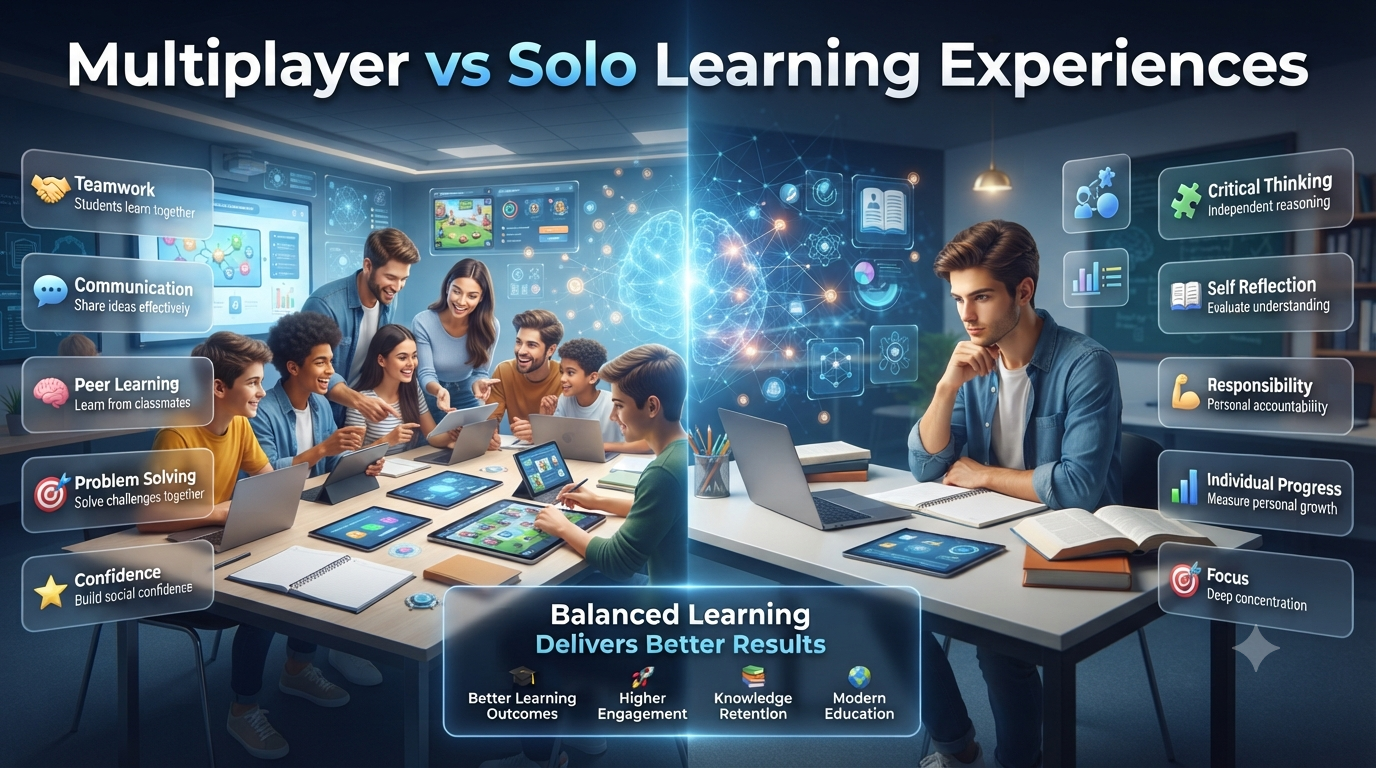
For example, independent modes often work well when students need uninterrupted practice at their own pace. Collaborative experiences encourage peer discussion, shared problem-solving, and communication skills. Competitive modes can energize review sessions when students already have a reasonable understanding of the material. Rotating among these experiences throughout a unit keeps engagement high while accommodating different learner preferences.
Instructional Goal
Recommended Gimkit Approach
Personalization Benefit
Introduce a topic
Short guided activity
Builds confidence before independent practice
Review before a test
Live class game
Identifies misconceptions quickly
Homework reinforcement
Gimkit Homework
Self-paced learning outside class
Mixed-ability practice
Differentiated question sets
Students work at appropriate challenge levels
Team collaboration
Cooperative game mode
Encourages peer support and discussion
Ongoing formative assessment
Teacher-hosted live session
Immediate instructional adjustments
Build Question Sets That Support Different Ability Levels
Direct answer: Personalized learning becomes far more effective when question sets include a balanced mix of foundational, intermediate, and higher-order thinking questions instead of maintaining a single difficulty level.
Students rarely enter a classroom with identical prior knowledge. Some already understand core concepts, while others are encountering them for the first time. If every question is too easy, advanced learners disengage. If every question is too difficult, struggling students lose confidence. A balanced question bank keeps both groups challenged appropriately.
One effective strategy is to organize questions in layers. Begin with simple recall questions that confirm basic understanding. Follow with application questions requiring students to use their knowledge in realistic situations. Finally, include analytical or evaluative questions that encourage deeper thinking and problem-solving. This progression naturally supports differentiation without making students feel separated into different academic groups.
Real-world scenarios also improve personalization because they help students connect classroom learning with authentic experiences. Instead of memorizing isolated facts, learners apply concepts to situations they may encounter outside school, making the content more meaningful and memorable.
Example Question Progression
Level
Example Purpose
Foundation
Recall vocabulary or definitions
Understanding
Explain concepts in your own words
Application
Solve practical classroom problems
Analysis
Compare ideas or identify patterns
Evaluation
Justify decisions using evidence
Extension
Connect learning to real-world situations
Personalize Learning Through Student Choice
Direct answer: Giving students meaningful choices increases motivation because learners feel greater ownership over their educational experience.
Personalization does not always require different content. Sometimes the most effective strategy is allowing students to make decisions about how they learn. Within Gimkit, teachers can encourage choice by offering multiple review activities, allowing students to select practice topics, providing optional extension challenges, or rotating between collaborative and independent learning sessions.
Choice also supports intrinsic motivation. When students have opportunities to influence their learning process, they are generally more invested in completing activities thoughtfully rather than simply earning points. Even small decisions—such as choosing the order of review topics or selecting between two practice sessions—can improve engagement.
Teachers should balance freedom with structure. Too many options can overwhelm students, while carefully designed choices encourage independence without sacrificing instructional consistency. Establishing clear expectations ensures that every learner remains focused on the same academic objective, even if their learning pathway differs slightly.
Using Gimkit Homework to Extend Personalized Learning Beyond the Classroom
Direct answer: Gimkit Homework allows students to continue practicing at their own pace, making it one of the platform’s strongest personalization features.
Classroom time is limited, and students often need different amounts of practice before reaching mastery. Homework assignments provide additional opportunities for reinforcement without requiring every learner to complete identical activities during class. Students who need more repetition can work through concepts gradually, while those with stronger understanding can reinforce their knowledge efficiently.
Homework also reduces classroom pressure. Some students hesitate to participate in competitive live games because they worry about making mistakes in front of classmates. Completing assignments independently allows these learners to focus on understanding rather than performance, often resulting in greater confidence during future classroom discussions.
Teachers can use homework results to plan upcoming lessons more effectively. Instead of reviewing every topic equally, instructional time can focus on concepts where data reveals widespread misconceptions. This targeted approach benefits the entire class while still supporting individual learning needs.
Best Practice
Rather than assigning one large review before an exam, create several shorter Gimkit Homework activities throughout the unit. Frequent, low-pressure practice promotes stronger long-term retention than last-minute cramming and gives teachers continuous insight into student progress.
Use the Gimkit Dashboard to Make Data-Driven Teaching Decisions
Direct answer: The Gimkit Dashboard is most valuable when teachers use its performance data to guide future instruction instead of simply recording scores. Personalized learning improves when classroom decisions are based on evidence rather than assumptions.
Every live game and homework assignment generates information about student performance. Instead of focusing only on who earned the highest score, examine which questions caused the most difficulty, where incorrect answers were concentrated, and which concepts students mastered quickly. These patterns often reveal instructional gaps that may not appear during whole-class discussions.
Over time, the Dashboard becomes a record of learning progress rather than isolated game results. Comparing performance across multiple activities helps teachers identify trends, monitor improvement, and recognize students who may need additional support or greater academic challenge. This ongoing analysis makes differentiation far more intentional than relying on occasional quizzes alone.
Data should always lead to action. If a majority of students struggle with one concept, reteach it using a different instructional strategy. If only a small group needs extra practice, assign targeted Gimkit Homework or create a focused review session while the rest of the class moves forward. This approach ensures instructional time is spent where it has the greatest impact.
Turning Gimkit Data Into Classroom Action
Dashboard Finding
Possible Teacher Response
Personalization Outcome
Many incorrect answers on one concept
Reteach using new examples
Whole-class support
Small group struggling
Assign targeted practice
Focused intervention
Students answering quickly and accurately
Introduce extension activities
Additional challenge
Slow response times
Review prerequisite knowledge
Stronger conceptual understanding
Consistent improvement over time
Increase question complexity
Continuous academic growth
Individual misconceptions
Provide personalized feedback
Faster correction of learning gaps
Personalize Feedback Instead of Only Celebrating Scores
Direct answer: Students grow more when feedback explains why they succeeded or struggled rather than simply showing a final score.
Game-based learning naturally attracts attention to leaderboards, rankings, and rewards, but lasting learning depends on meaningful feedback. After a Gimkit session, spend time discussing common misconceptions, reviewing difficult questions, and explaining the reasoning behind correct answers. This reflection transforms gameplay into genuine learning.
Personalized feedback should acknowledge effort as well as accuracy. A student who improves significantly from previous activities deserves recognition even if they are not at the top of the leaderboard. Highlighting growth encourages persistence and reinforces a learning mindset rather than a purely competitive one.
Whenever possible, encourage students to reflect on their own performance. Ask questions such as:
Which questions felt easiest today?
What concept still feels confusing?
Which mistakes appeared more than once?
What should you review before the next activity?
These conversations help students become active participants in their own learning rather than passive recipients of grades.
Professional Insight
The most effective teachers use Gimkit scores as the beginning of a conversation—not the end of an assessment.
Create Small-Group Learning Experiences With Gimkit
Direct answer: Small-group instruction becomes more effective when Gimkit activities are tailored to the needs of each group instead of expecting every student to complete identical practice.
In many classrooms, students benefit from working in flexible groups based on readiness, current understanding, or instructional goals. After reviewing Gimkit results, teachers can organize targeted learning stations where each group focuses on a specific skill. One group may revisit foundational concepts, another may apply knowledge through problem-solving, while advanced learners explore more complex scenarios.
This strategy also encourages meaningful collaboration. Students explain concepts to one another, discuss reasoning, and solve problems together while the teacher provides focused support where it is needed most. Unlike permanent ability grouping, flexible groups change as students demonstrate progress, ensuring every learner has opportunities to grow.
Rotating groups regularly keeps instruction dynamic and prevents students from feeling permanently labeled. As understanding improves, learners move naturally into new challenges, reinforcing the idea that progress—not fixed ability—is the goal.
Adapt Gimkit for Different Learning Styles Without Teaching Separate Lessons
Effective personalization allows every student to reach the same learning objective through different learning experiences, question types, and personal growth goals.
Direct answer: Personalized classrooms do not require different lessons for every student. Instead, teachers can present the same learning objective through varied experiences that appeal to different ways of learning.
Some students process information best through visuals, while others learn more effectively through discussion, repetition, writing, or practical application. Gimkit supports these differences by allowing teachers to design questions that include images, scenarios, explanations, and context rather than relying exclusively on simple factual recall.
For example, a history lesson could combine historical photographs, primary-source excerpts, vocabulary review, and cause-and-effect questions within a single activity. A mathematics lesson might alternate between computational practice, real-world word problems, and conceptual reasoning. Science teachers can mix diagrams, experimental scenarios, and analytical questions that require students to interpret data rather than memorize definitions.
By varying question formats and instructional approaches, teachers create richer learning experiences without preparing multiple entirely separate lessons. Students encounter the same academic objective from different perspectives, increasing both engagement and long-term understanding.
Personalization Framework
Learning Objective
        │
        ▼
Create Balanced Question Bank
        │
        ├── Foundation Questions
        ├── Application Questions
        ├── Critical Thinking Questions
        │
        ▼
Host or Assign Gimkit Activity
        │
        ▼
Analyze Dashboard Results
        │
        ├── Students Need Support
        ├── Students On Track
        └── Students Ready for Extension
        │
        ▼
Differentiate the Next Lesson
        │
        ▼
Repeat → Assess → Improve → Personalize
Encourage Student Ownership Through Goal Setting
Direct answer: Personalization becomes sustainable when students begin tracking their own learning goals instead of depending entirely on teacher direction.
Before launching a Gimkit activity, ask students to identify one specific objective they want to improve. This might involve answering more accurately, reducing careless mistakes, improving response speed without sacrificing accuracy, or mastering a particular topic. Having a clear goal gives purpose to the activity beyond simply winning the game.
After the session, encourage students to compare their performance with previous attempts rather than with classmates. This growth-focused approach builds confidence and helps learners recognize that improvement is measured over time. Students who consistently reflect on their progress become more independent, more motivated, and better prepared to take responsibility for future learning.
When goal setting becomes a regular classroom routine, Gimkit evolves from an engaging review platform into a personalized learning system that supports continuous improvement for every student, regardless of their starting point.
Differentiate Instruction Without Creating Separate Lesson Plans
Direct answer: You don’t need to create five different lesson plans to personalize learning with Gimkit. Instead, teach the same learning objective while adjusting the level of support, challenge, and practice each student receives.
Differentiation is often misunderstood as preparing completely different content for every learner. In reality, effective differentiation keeps the curriculum consistent while providing flexible learning pathways. Gimkit simplifies this process because teachers can modify question difficulty, assign targeted homework, offer extension activities, and monitor progress without redesigning an entire unit.
A practical example is a mathematics class learning linear equations. Every student works toward solving equations accurately, but beginners may practice one-step equations, intermediate learners tackle multi-step problems, and advanced students analyze real-world applications. Although the questions vary in complexity, everyone is working toward the same curriculum outcome.
This strategy reduces teacher workload while ensuring every student experiences an appropriate level of challenge. Instead of teaching multiple lessons simultaneously, educators spend more time supporting learning and less time managing separate instructional plans.
Personalize Review Sessions Before Tests and Exams
Direct answer: The best exam review sessions focus on each student’s weakest concepts instead of asking the entire class to review everything equally.
Many teachers schedule a single review game before an assessment, but not every student needs the same revision. Some have already mastered certain topics, while others require additional practice. Using Gimkit results from previous lessons allows teachers to identify these differences and personalize review activities accordingly.
One effective approach is to divide revision into topic-based sessions. Students begin with areas where they struggled most and then move toward broader mixed-topic review. This prevents advanced learners from wasting time on concepts they already understand while giving struggling students more opportunities to strengthen essential skills.
Personalized review also reduces test anxiety. Students feel better prepared because they spend more time improving genuine weaknesses instead of repeatedly answering questions they already know. As confidence increases, classroom participation often improves alongside assessment performance.
Example Personalized Review Plan
Student Performance
Recommended Review Strategy
Teacher Goal
High mastery
Extension and application questions
Deepen understanding
Moderate mastery
Mixed-topic reinforcement
Improve consistency
Low mastery
Focused concept review
Build foundational confidence
Frequent misconceptions
Small-group intervention
Correct misunderstandings
Absent students
Self-paced Gimkit Homework
Recover missed learning
Entire class struggles
Whole-class reteaching
Strengthen common knowledge gaps
Support Inclusive Classrooms Through Thoughtful Personalization
Direct answer: Inclusive classrooms benefit when Gimkit activities are designed so every student can participate meaningfully regardless of ability, confidence, language background, or learning preference.
Personalization should never make students feel separated from their classmates. Instead, it should provide equitable opportunities for success while maintaining high academic expectations. Teachers can achieve this by writing clear questions, avoiding unnecessarily complex wording, using supportive visuals where appropriate, and allowing adequate time for thoughtful responses.
Students learning English as an additional language often benefit from simplified language paired with academic vocabulary. Learners with processing differences may appreciate homework assignments that allow them to work at their own pace. Highly capable students can remain engaged through extension questions that require analysis, creativity, and problem-solving rather than simple recall.
An inclusive approach also values multiple forms of success. Some students demonstrate mastery through consistent accuracy, others through noticeable improvement, collaboration, persistence, or thoughtful reasoning. Recognizing these achievements creates a classroom culture where progress matters as much as performance.
Best Practice
Design Gimkit activities that challenge every learner while ensuring no student feels excluded because of their current skill level.
Connect Gimkit With Your Existing Classroom Workflow
Direct answer: Gimkit works best when it complements your existing teaching routine rather than replacing established instructional practices.
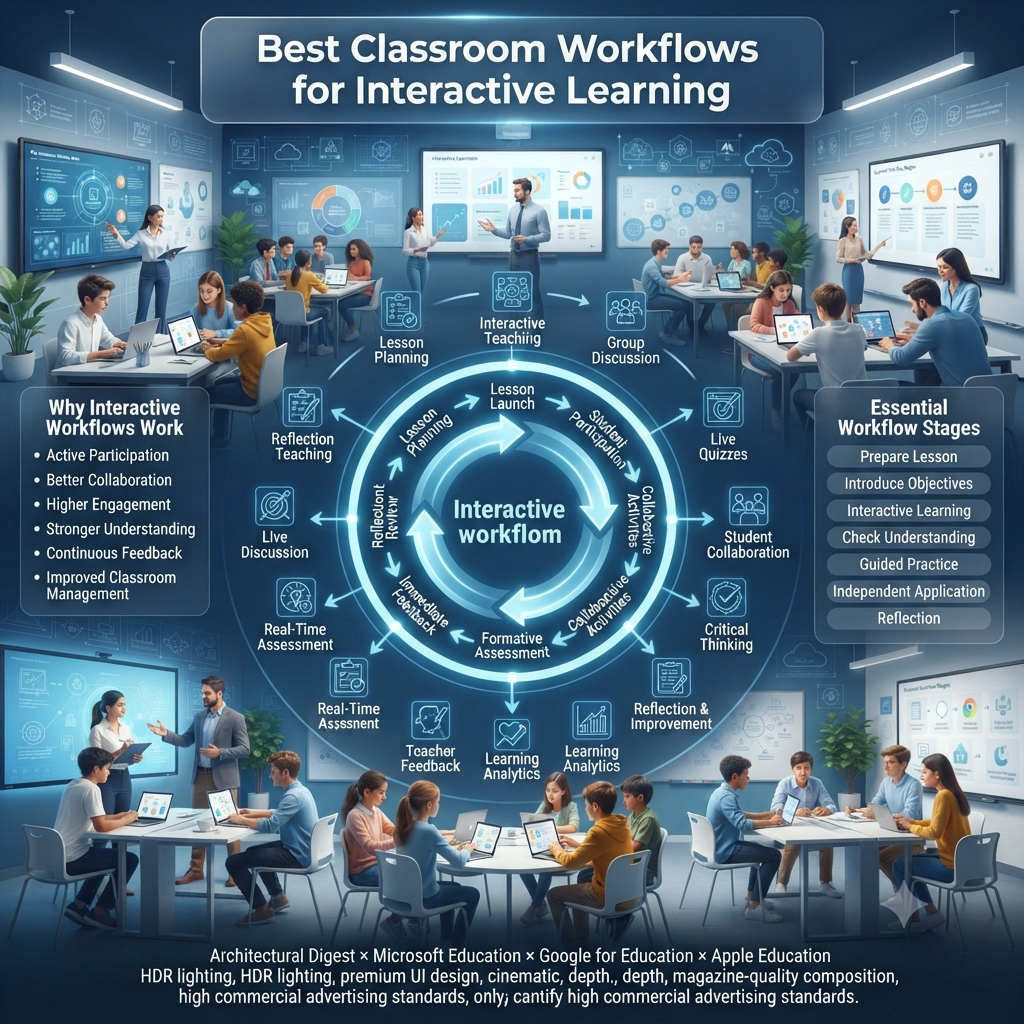
Successful teachers rarely use Gimkit as a standalone solution. Instead, they integrate it into a broader learning cycle that includes direct instruction, guided practice, classroom discussion, collaborative activities, independent work, and formative assessment. This balanced approach ensures that gameplay reinforces learning instead of becoming the lesson’s sole focus.
For example, a teacher might introduce a new concept through direct instruction, facilitate guided practice with worked examples, host a short Gimkit activity to check understanding, analyze Dashboard results, address misconceptions immediately, and finish with reflective discussion. Homework assignments can then reinforce the same concepts before the next lesson.
Many educators also integrate Gimkit with classroom management systems and learning platforms. For instance, teachers using Google Classroom can organize assignments alongside other learning materials, while those using Microsoft Teams for Education can coordinate digital resources in a familiar workflow. Schools frequently compare Gimkit with Quizizz, Kahoot, Nearpod, and Blooket, but many teachers find these platforms work best together because each serves different instructional purposes.
Common Mistakes Teachers Should Avoid When Personalizing With Gimkit
Even experienced educators can unintentionally reduce the effectiveness of personalized learning. Most challenges arise not from the platform itself but from how it is implemented within classroom instruction.
The most common mistake is emphasizing competition over learning. Leaderboards can motivate many students, but when every activity revolves around winning, some learners become discouraged. Balance competition with collaboration, reflection, and opportunities for improvement so every student experiences success.
Another frequent issue is relying on identical question sets throughout an entire semester. Students quickly recognize repeated patterns, reducing both engagement and instructional value. Refreshing question banks with new scenarios, updated examples, and varied cognitive demands keeps activities meaningful while encouraging deeper understanding.
Ignoring assessment data is another missed opportunity. If Dashboard reports consistently reveal misconceptions but future lessons continue unchanged, personalization has little impact. Review results after every activity and adjust instruction accordingly.
Personalization Checklist for Teachers
✅ Define a clear learning objective before creating the activity.
✅ Build questions with multiple difficulty levels.
✅ Mix recall, application, and higher-order thinking questions.
✅ Select the game mode that matches your lesson objective.
✅ Use Dashboard insights to guide future instruction.
✅ Provide feedback focused on improvement, not just scores.
✅ Rotate between individual, collaborative, and homework activities.
✅ Update question sets regularly to maintain engagement.
✅ Celebrate growth alongside achievement.
✅ Reflect after each activity and refine your teaching strategy.
Expert Recommendation: Build a Continuous Personalization Cycle
The most effective classrooms don’t personalize learning only during review week or before major exams. They build personalization into everyday instruction. Short, frequent Gimkit sessions combined with thoughtful analysis, targeted feedback, and differentiated follow-up activities create a continuous improvement cycle that benefits every learner.
Rather than asking, “Who won today’s game?”, experienced teachers ask more meaningful questions:
Which students showed the greatest improvement?
Which concepts still require reteaching?
Who is ready for more advanced challenges?
What instructional adjustments should happen tomorrow?
How can today’s results improve next week’s lesson?
When these questions become part of regular classroom practice, Gimkit evolves from an engaging quiz platform into a powerful instructional tool that supports personalized learning, informed decision-making, and long-term student success.
Gimkit vs Other Classroom Platforms for Personalized Learning
Direct answer: Gimkit excels at sustained engagement and strategy-based review, while other platforms may be stronger for presentations, self-paced lessons, or quick formative assessments. The best choice depends on your instructional objective rather than a single “best” platform.
Teachers frequently compare Gimkit, Kahoot, Quizizz, Blooket, Nearpod, Google Classroom, and Microsoft Teams for Education because each supports interactive learning differently. Instead of replacing one another, these platforms often complement each other within a complete instructional workflow. A teacher might introduce content through Nearpod, manage assignments in Google Classroom, review concepts with Gimkit, and use Quizizz for independent practice.
The biggest advantage of Gimkit is that students remain engaged long after answering each question. They continue making strategic decisions, earning virtual currency, purchasing upgrades, and planning their next moves. This extended engagement creates more opportunities for repetition and reinforcement than traditional quiz-based games.
Comparison Table
Platform
Best For
Personalization Strength
Potential Limitation
Gimkit
Game-based review, formative assessment
Strategy, engagement, differentiated practice
Some game modes require teacher planning
Kahoot
Fast-paced live quizzes
Whole-class energy and participation
Less flexible for individualized practice
Quizizz
Independent and homework learning
Self-paced assignments and detailed reports
Lower emphasis on strategic gameplay
Blooket
Variety of educational games
High student motivation
Gameplay can become the primary focus if overused
Nearpod
Interactive lessons and presentations
Multimedia instruction and live checks
Less game-oriented than Gimkit
Google Classroom
Assignment management
Organizing learning resources
Not designed as a game-based assessment platform
Decision Guide
Use Gimkit when your goal is to combine engagement, repetition, and formative assessment in a personalized learning environment.
Classroom Workflow: A Complete Personalized Lesson Using Gimkit
A personalized classroom workflow helps teachers transform lesson objectives into meaningful learning by combining assessment, real-time analysis, differentiated instruction, and reflective practice.
Seeing personalization in action is often more valuable than reading about individual features. The following workflow demonstrates how an experienced teacher might integrate Gimkit into a complete lesson rather than using it as an isolated activity.
Step 1 – Introduce the Learning Objective
Begin with a short explanation, demonstration, or discussion that establishes the lesson’s purpose. Students should understand what they are expected to learn before gameplay begins.
Step 2 – Assess Prior Knowledge
Launch a brief Gimkit activity with foundational questions. The goal is not grading but identifying existing knowledge and misconceptions.
Step 3 – Analyze Live Responses
Monitor the Teacher Dashboard while students play. Look for patterns rather than isolated mistakes.
Ask yourself:
Which question produced the lowest accuracy?
Which misconception appeared repeatedly?
Are advanced learners ready for more challenging content?
Step 4 – Differentiate Instruction
Use the collected data immediately.
Students may receive:
Additional teacher guidance
Small-group instruction
Extension challenges
Independent review
Targeted Gimkit Homework
This is where personalization truly happens.
Step 5 – Reflect Together
After the activity, discuss:
What surprised students?
Which questions were most challenging?
What strategies helped improve accuracy?
What should everyone review next?
Reflection helps students connect gameplay with genuine learning.
Personalized Learning Cycle
Learning Objective
        │
        ▼
Direct Instruction
        │
        ▼
Gimkit Activity
        │
        ▼
Live Performance Data
        │
        ▼
Teacher Analysis
        │
 ┌──────┼─────────┐
 ▼      ▼         ▼
Support  Practice  Extension
 │        │         │
 └────────┼─────────┘
          ▼
 Reflection
          │
          ▼
 Improved Learning
Best Practices for Long-Term Classroom Success
Teachers who achieve the strongest results with Gimkit rarely rely on a single feature. Instead, they develop consistent classroom routines that balance engagement with instructional purpose.
Rotate between live games and homework assignments throughout the week instead of using the same activity repeatedly. Students appreciate variety, and different formats provide different types of learning evidence. Live sessions encourage energy and discussion, while homework supports self-paced practice and reflection.
Refresh question banks regularly using current examples, real-world scenarios, interdisciplinary connections, and higher-order thinking prompts. Students remain more engaged when questions feel authentic rather than recycled from previous lessons.
Use performance trends instead of one-time scores when making instructional decisions. A student who consistently improves deserves recognition even if they have not yet reached the highest achievement level. Growth over time is a stronger indicator of meaningful learning than a single leaderboard position.
Collaborate with other teachers teaching the same subject. Sharing question banks, classroom strategies, and lesson ideas saves preparation time while exposing students to diverse question styles and instructional approaches.
Common Personalization Challenges and Practical Solutions
Even well-designed Gimkit lessons may present occasional challenges. Understanding these issues beforehand helps teachers respond proactively.
Challenge
Why It Happens
Practical Solution
Students focus only on winning
Competition outweighs learning
Discuss concepts after every game and reward improvement
Large performance gaps
Mixed-ability classrooms
Differentiate practice using targeted question sets
Reduced engagement over time
Repetitive activities
Rotate game modes and refresh content regularly
Teacher overwhelmed by data
Too much information at once
Focus on recurring patterns before individual details
Students rush through questions
Prioritize speed over understanding
Encourage thoughtful responses and review mistakes together
Limited classroom time
Busy lesson schedules
Use short formative activities instead of lengthy sessions
Future Trends in Personalized Learning With Gimkit
Educational technology continues moving toward more adaptive, data-informed instruction, and platforms like Gimkit are increasingly supporting this shift. Rather than treating every learner identically, classrooms are emphasizing continuous formative assessment, flexible instruction, and personalized learning pathways.
Teachers are also integrating digital platforms more intentionally. Instead of asking which tool is “best,” many educators build ecosystems where Gimkit supports engagement, Google Classroom organizes assignments, Nearpod introduces new concepts, and collaborative discussions deepen understanding. This blended approach creates richer learning experiences while giving teachers multiple sources of instructional evidence.
As classrooms continue adopting competency-based learning, mastery tracking, and differentiated instruction, the ability to personalize educational experiences will become even more valuable. Teachers who already use Gimkit strategically are well positioned to adapt to these evolving educational practices while keeping students actively involved in the learning process.
Pros and Cons of Using Gimkit for Personalized Learning
Choosing any educational technology requires balancing its strengths with its limitations. Gimkit offers powerful personalization features, but it delivers the best results when teachers use it intentionally rather than relying on it for every lesson.
Teachers can align activities with specific standards and classroom needs.
Immediate formative assessment
Results help identify misconceptions while learning is still taking place.
Self-paced homework
Students can practice independently without classroom pressure.
Multiple game modes
Different lesson objectives can be supported using different experiences.
Data-driven instruction
Performance reports help teachers make informed instructional decisions.
Encourages repeated practice
Students willingly revisit concepts because learning feels interactive.
Limitations
Challenge
How to Address It
Students may focus more on gameplay than content
Pause regularly to discuss concepts and explain reasoning.
Not every lesson needs gamification
Combine Gimkit with direct instruction, discussion, projects, and written practice.
Question quality determines learning quality
Invest time in creating thoughtful, standards-aligned question banks.
Some learners dislike competition
Rotate between collaborative, independent, and homework-based activities.
Too much data can overwhelm teachers
Focus first on recurring misconceptions and long-term progress trends.
Expert Recommendation
Gimkit should enhance excellent teaching—not replace it. Strong instructional planning always has a greater impact than the technology itself.
Practical Classroom Examples
Understanding personalization becomes easier when viewed through real teaching scenarios.
Example 1: Elementary Vocabulary Lesson
A fourth-grade teacher introduces new science vocabulary before beginning a unit on ecosystems. Students first explore key terms through discussion and images. A short Gimkit activity follows, helping the teacher identify unfamiliar words. Students who demonstrate strong understanding move on to applying vocabulary in context, while others receive additional guided practice before the next lesson.
Example 2: Middle School Mathematics
A mathematics teacher notices through the Gimkit Dashboard that nearly half the class struggles with fractions involving unlike denominators. Instead of reviewing the entire chapter, the next lesson focuses specifically on that concept. Students who already demonstrate mastery complete extension problems involving real-world applications while the teacher provides targeted instruction to the remaining group.
Example 3: High School History
During a unit on world history, students complete a Gimkit review covering major events, historical figures, and cause-and-effect relationships. Rather than ending the activity after announcing winners, the teacher leads a discussion around the most frequently missed questions. Students explain their reasoning, compare interpretations, and correct misconceptions together before moving into document analysis.
Example 4: Language Learning
Students studying a second language practice vocabulary using customized Gimkit question sets. Learners who consistently perform well begin answering questions within complete conversational scenarios, while students needing reinforcement continue practicing pronunciation, spelling, and essential vocabulary until they build confidence.
These examples illustrate an important principle: personalization is driven by instructional decisions, not by the game itself.
Measuring Whether Personalization Is Actually Working
Direct answer: Personalized learning is successful when students demonstrate continuous improvement, increased confidence, and stronger conceptual understanding—not simply higher game scores.
Many teachers evaluate Gimkit sessions by looking only at leaderboards. While competition can motivate students, it provides only a partial picture of learning. More meaningful indicators include consistent improvement over time, reduced misconceptions, stronger classroom discussions, and greater student independence.
Consider tracking progress using multiple measures instead of relying on one activity.
Indicators of Successful Personalization
Indicator
What It Suggests
Fewer repeated mistakes
Students are learning from feedback.
Improved accuracy over several activities
Understanding is becoming more consistent.
Increased classroom participation
Students feel more confident sharing ideas.
Better performance on classroom assessments
Learning transfers beyond the game.
Students setting personal goals
Greater ownership of learning.
More thoughtful explanations
Deeper conceptual understanding rather than memorization.
The most valuable evidence often appears outside Gimkit. Students who confidently explain concepts, solve unfamiliar problems, and apply knowledge in new contexts demonstrate that personalized learning is producing lasting results.
60+ Expert reviews for your Instant & Advance Knowledge
How to Personalize Classroom Experiences With Gimkit begins with recognizing that every classroom contains students with different learning styles, abilities, and academic goals. Personalization helps each learner participate in ways that match their individual needs.
How to Personalize Classroom Experiences With Gimkit encourages teachers to align every activity with specific curriculum objectives instead of using identical review games for every lesson.
How to Personalize Classroom Experiences With Gimkit demonstrates that customizing question sets for individual units helps students focus on the concepts they are currently studying.
How to Personalize Classroom Experiences With Gimkit highlights the importance of adjusting question difficulty so every student experiences an appropriate level of academic challenge.
How to Personalize Classroom Experiences With Gimkit recommends organizing activities by subject, chapter, or learning objective, making classroom review more structured and effective.
How to Personalize Classroom Experiences With Gimkit encourages teachers to create differentiated question sets that support advanced learners while providing additional practice for students who need reinforcement.
How to Personalize Classroom Experiences With Gimkit demonstrates that personalized review sessions improve engagement because students encounter content that directly relates to their classroom learning.
How to Personalize Classroom Experiences With Gimkit emphasizes using formative assessment data to identify learning gaps before creating future review activities.
How to Personalize Classroom Experiences With Gimkit highlights that self-paced assignments allow students to review difficult concepts independently while progressing at a comfortable learning speed.
How to Personalize Classroom Experiences With Gimkit encourages teachers to combine live classroom games with independent practice, creating a balanced and flexible instructional approach.
How to Personalize Classroom Experiences With Gimkit demonstrates that regular feedback helps students recognize strengths, improve weaknesses, and monitor their academic progress throughout the semester.
How to Personalize Classroom Experiences With Gimkit recommends updating question sets regularly so examples remain relevant to current classroom discussions and curriculum standards.
How to Personalize Classroom Experiences With Gimkit encourages collaborative learning by incorporating team-based activities that strengthen communication and peer-supported problem-solving.
How to Personalize Classroom Experiences With Gimkit encourages teachers to begin each unit with a diagnostic review activity to understand students’ existing knowledge before introducing new concepts.
How to Personalize Classroom Experiences With Gimkit demonstrates that grouping questions by learning objectives makes it easier to target specific academic skills without overwhelming students.
How to Personalize Classroom Experiences With Gimkit highlights that personalized learning becomes more effective when teachers regularly adjust activities based on classroom performance data.
How to Personalize Classroom Experiences With Gimkit recommends designing review sessions that focus on recently taught concepts before expanding into cumulative unit revision.
How to Personalize Classroom Experiences With Gimkit encourages educators to create separate activities for enrichment, reinforcement, and assessment so every student receives appropriate instructional support.
How to Personalize Classroom Experiences With Gimkit demonstrates that personalized feedback motivates students by showing exactly where improvement is needed instead of simply displaying scores.
How to Personalize Classroom Experiences With Gimkit highlights the value of incorporating real-world examples into question sets, helping students connect classroom concepts with everyday situations.
How to Personalize Classroom Experiences With Gimkit recommends alternating between individual practice and collaborative activities to support both independent learning and teamwork.
How to Personalize Classroom Experiences With Gimkit encourages teachers to revisit challenging topics using fresh question formats, preventing repetition while reinforcing essential concepts.
How to Personalize Classroom Experiences With Gimkit demonstrates that regular progress monitoring helps identify students who may require additional instruction before major assessments.
How to Personalize Classroom Experiences With Gimkit highlights that personalized classroom experiences should encourage confidence by recognizing improvement as well as academic achievement.
How to Personalize Classroom Experiences With Gimkit recommends creating review activities that gradually increase in difficulty as students develop stronger understanding of the subject.
How to Personalize Classroom Experiences With Gimkit encourages educators to schedule short review sessions throughout the week instead of relying only on end-of-unit revision.
How to Personalize Classroom Experiences With Gimkit demonstrates that flexible pacing allows students to spend additional time practicing concepts they find most difficult.
How to Personalize Classroom Experiences With Gimkit highlights that classroom personalization becomes more meaningful when students actively participate in monitoring their own learning progress.
How to Personalize Classroom Experiences With Gimkit recommends using performance reports to refine future lesson plans rather than viewing analytics as simple score summaries.
How to Personalize Classroom Experiences With Gimkit encourages teachers to customize activities according to classroom interests while maintaining strong curriculum alignment and educational purpose.
How to Personalize Classroom Experiences With Gimkit demonstrates that consistent formative assessment supports timely instructional adjustments before learning gaps become significant challenges.
How to Personalize Classroom Experiences With Gimkit highlights that effective personalization values meaningful learning over excessive competition, creating a more supportive classroom environment.
How to Personalize Classroom Experiences With Gimkit recommends combining digital review with classroom discussions so students can explain reasoning and strengthen conceptual understanding.
How to Personalize Classroom Experiences With Gimkit encourages educators to refresh existing question banks periodically by updating examples, terminology, and curriculum references.
How to Personalize Classroom Experiences With Gimkit demonstrates that personalized learning experiences remain effective across multiple subjects, grade levels, and instructional settings.
How to Personalize Classroom Experiences With Gimkit highlights that teachers achieve the best results when technology complements their professional expertise instead of directing classroom instruction.
How to Personalize Classroom Experiences With Gimkit recommends building a long-term personalization strategy that evolves with student progress, assessment data, and changing learning objectives.
How to Personalize Classroom Experiences With Gimkit highlights that classroom personalization extends beyond questions by selecting game modes that match instructional goals and student needs.
How to Personalize Classroom Experiences With Gimkit demonstrates that varying activity formats throughout the semester helps maintain student motivation and prevents learning from becoming repetitive.
How to Personalize Classroom Experiences With Gimkit recommends reviewing classroom analytics after each activity to make informed instructional adjustments for future lessons.
How to Personalize Classroom Experiences With Gimkit encourages teachers to use performance trends over several weeks instead of relying on a single game, making it easier to identify long-term learning patterns and adjust instruction to support continuous student improvement.
How to Personalize Classroom Experiences With Gimkit ultimately reinforces that personalization is most successful when technology complements effective teaching rather than replacing it.
How to Personalize Classroom Experiences With Gimkit encourages teachers to recognize student improvement through constructive feedback that focuses on progress rather than only final scores.
How to Personalize Classroom Experiences With Gimkit demonstrates that connecting review activities with ongoing classroom discussions strengthens conceptual understanding and knowledge retention.
How to Personalize Classroom Experiences With Gimkit highlights the importance of encouraging students to reflect on their own learning by identifying topics that require additional practice.
How to Personalize Classroom Experiences With Gimkit recommends creating reusable question banks categorized by subject and learning objective to simplify future lesson preparation.
How to Personalize Classroom Experiences With Gimkit encourages flexibility by allowing instructional strategies to evolve according to classroom performance and changing educational needs.
How to Personalize Classroom Experiences With Gimkit demonstrates that meaningful personalization supports both classroom engagement and measurable academic growth throughout the school year.
How to Personalize Classroom Experiences With Gimkit highlights that technology becomes more valuable when it adapts to teaching goals instead of requiring teachers to adapt their instruction around the platform.
How to Personalize Classroom Experiences With Gimkit encourages educators to combine personalized digital activities with classroom discussions, practical exercises, and collaborative learning for well-rounded instruction.
How to Personalize Classroom Experiences With Gimkit encourages teachers to create separate review activities for visual, analytical, and collaborative learners, allowing every student to participate more effectively.
How to Personalize Classroom Experiences With Gimkit demonstrates that assigning targeted practice after formative assessments helps students strengthen specific concepts before moving to new material.
How to Personalize Classroom Experiences With Gimkit highlights that personalization becomes more effective when teachers use classroom observations alongside performance reports to guide instructional decisions.
How to Personalize Classroom Experiences With Gimkit recommends introducing personalized review goals so students can measure their own academic growth throughout the semester.
How to Personalize Classroom Experiences With Gimkit encourages educators to organize question banks by learning standards, making future lesson preparation faster and more consistent.
How to Personalize Classroom Experiences With Gimkit demonstrates that small instructional adjustments based on student performance often produce meaningful long-term improvements in classroom achievement.
How to Personalize Classroom Experiences With Gimkit highlights the importance of allowing students multiple opportunities to revisit challenging concepts until they demonstrate mastery.
How to Personalize Classroom Experiences With Gimkit recommends balancing review activities with new learning experiences to maintain curiosity while reinforcing previously taught concepts.
How to Personalize Classroom Experiences With Gimkit encourages teachers to use classroom data to identify patterns affecting the entire class as well as individual student performance.
How to Personalize Classroom Experiences With Gimkit demonstrates that personalized learning becomes more meaningful when students understand the purpose behind every review activity.
How to Personalize Classroom Experiences With Gimkit highlights that interactive learning experiences should encourage confidence, persistence, and continuous improvement rather than focusing exclusively on competition.
How to Personalize Classroom Experiences With Gimkit recommends scheduling periodic cumulative reviews so students continue reinforcing earlier units throughout the academic year.
How to Personalize Classroom Experiences With Gimkit encourages educators to adapt activity formats according to classroom energy levels, lesson objectives, and available instructional time.
How to Personalize Classroom Experiences With Gimkit demonstrates that personalization extends beyond content by selecting game modes that best support collaboration, independent practice, or formative assessment.
How to Personalize Classroom Experiences With Gimkit highlights that effective classroom personalization depends on regular communication between teachers and students about learning progress and academic goals.
How to Personalize Classroom Experiences With Gimkit recommends celebrating individual improvement alongside classroom achievement to encourage long-term motivation and positive learning habits.
How to Personalize Classroom Experiences With Gimkit encourages teachers to review personalization strategies regularly, ensuring instructional methods continue meeting evolving classroom needs.
How to Personalize Classroom Experiences With Gimkit demonstrates that combining personalized technology with teacher guidance creates stronger educational outcomes than relying on either approach independently.
How to Personalize Classroom Experiences With Gimkit highlights that consistent personalization helps students feel supported, increases classroom participation, and strengthens confidence across different subjects.
How to Personalize Classroom Experiences With Gimkit encourages teachers to begin each lesson with a short review activity that targets concepts students found difficult in previous classes.
How to Personalize Classroom Experiences With Gimkit demonstrates that assigning different review tasks to small learning groups helps address individual strengths while supporting students who require additional practice.
How to Personalize Classroom Experiences With Gimkit highlights that meaningful personalization involves adjusting instructional strategies according to both assessment data and daily classroom observations.
How to Personalize Classroom Experiences With Gimkit recommends providing students with regular opportunities to reflect on their learning progress and identify personal academic goals.
How to Personalize Classroom Experiences With Gimkit encourages educators to rotate activity formats throughout the semester, ensuring students remain engaged while experiencing different learning approaches.
How to Personalize Classroom Experiences With Gimkit demonstrates that personalized review activities become more effective when connected directly to upcoming assignments, projects, and classroom assessments.
How to Personalize Classroom Experiences With Gimkit highlights that flexible learning experiences allow students to revisit challenging concepts without feeling pressured by classroom competition.
How to Personalize Classroom Experiences With Gimkit recommends combining teacher feedback with platform analytics to create more informed and responsive instructional plans.
How to Personalize Classroom Experiences With Gimkit encourages teachers to update classroom activities based on changing curriculum requirements, ensuring review sessions remain accurate and relevant.
How to Personalize Classroom Experiences With Gimkit demonstrates that personalized learning supports stronger classroom participation by giving every student opportunities to contribute according to their abilities.
How to Personalize Classroom Experiences With Gimkit highlights that effective personalization promotes independent thinking while still encouraging collaboration and peer-supported learning.
How to Personalize Classroom Experiences With Gimkit recommends reviewing classroom engagement regularly to determine which personalized strategies consistently improve student participation and academic performance.
How to Personalize Classroom Experiences With Gimkit encourages educators to treat personalization as a continuous process of observation, assessment, adaptation, and instructional improvement.
How to Personalize Classroom Experiences With Gimkit demonstrates that thoughtful personalization helps create an inclusive classroom where students feel supported, challenged, and motivated to achieve their learning goals.
Frequently Asked Questions
How Do I Use Gimkit to Differentiate for Varying Student Learning Speeds?
The best way to differentiate with Gimkit is to keep the same learning objective while adjusting the level of support each student receives. Create separate Kits or question sets for review, practice, and extension activities based on recent assessment results. Students who need reinforcement can focus on core concepts, while advanced learners tackle more analytical or application-based questions. This approach supports every learner without changing the curriculum or creating unnecessary workload for the teacher.
What Is the Best Way to Give Students Voice and Choice in How They Review?
Student choice becomes meaningful when it supports learning rather than replacing teacher guidance. Allow students to choose between different Gimkit game modes, review topics, or team-based versus individual play while keeping the lesson objective consistent. Giving learners controlled choices increases ownership, motivation, and participation because they feel involved in the learning process without compromising academic goals.
How Can I Use KitCollab to Let Students Personalize the Actual Curriculum?
KitCollab is most effective when students help create the review material instead of only answering teacher-written questions. After introducing a lesson, invite students to submit their own questions based on key concepts, then review and approve the best ones before launching the game. This transforms students from passive participants into content contributors while ensuring the teacher maintains curriculum accuracy and learning standards.
Can I Create Individualized Homework Assignments Tailored to Specific Student Needs?
Yes. Gimkit allows teachers to assign different Kits based on student performance and learning gaps. Instead of giving identical homework to every learner, assign targeted practice that reinforces specific skills each student needs to improve. This personalized approach makes homework more efficient because students spend time practicing concepts that directly support their academic growth rather than reviewing material they have already mastered.
How Can Students Personalize Their In-Game Experience Without Using Real Money?
Students can personalize their Gimkit experience by earning in-game cash through correct answers and using it to unlock upgrades, improve strategies, and make different gameplay decisions. These customizations are based on classroom participation and performance rather than real-money purchases. This system encourages strategic thinking and gives students a sense of ownership while keeping the focus on learning and fair classroom competition.
Summary
Personalizing classroom experiences with Gimkit goes far beyond choosing an engaging game mode. It begins with clear instructional objectives, thoughtful question design, meaningful formative assessment, and a commitment to using classroom data to improve future learning. When teachers analyze performance, provide targeted feedback, differentiate instruction, and encourage student reflection, Gimkit becomes much more than a review platform—it becomes a tool for continuous learning growth.
The most successful educators remember that personalization is an ongoing process rather than a single strategy. Small adjustments made consistently—whether through differentiated homework, flexible grouping, targeted feedback, or data-informed lesson planning—create classrooms where every student has an opportunity to succeed.
Conclusion
Personalized learning is most effective when technology supports sound teaching practices, and Gimkit offers educators the flexibility to make that happen. Its combination of interactive gameplay, customizable question sets, self-paced homework, live formative assessment, and actionable classroom data enables teachers to adapt instruction without dramatically increasing planning time.
Rather than asking every student to learn in exactly the same way, teachers can create experiences that acknowledge different strengths, learning preferences, and readiness levels while maintaining shared academic expectations. When used alongside thoughtful instruction, reflection, and continuous assessment, Gimkit helps transform classroom review into a meaningful, student-centered learning experience that promotes engagement, confidence, and long-term academic success.