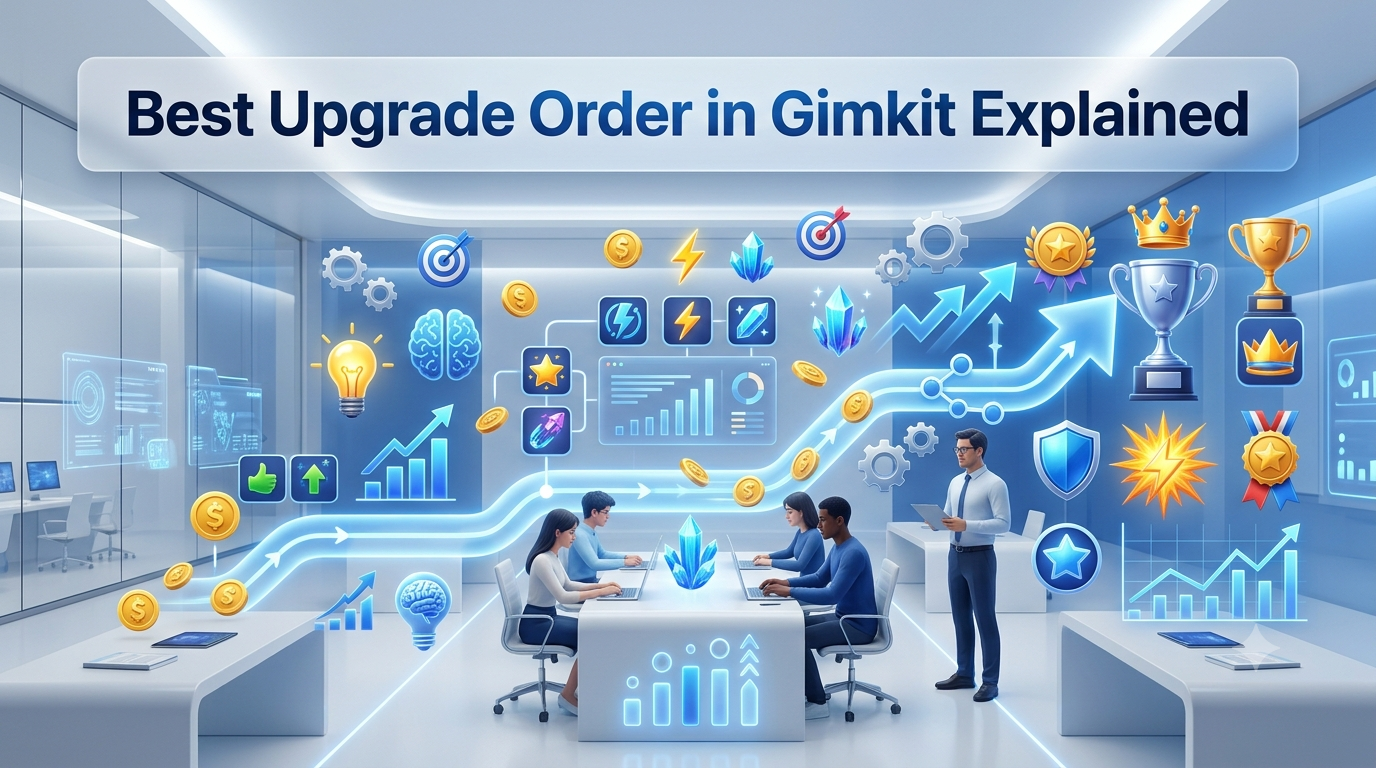
Best Upgrade Order in Gimkit Explained | Choosing the right upgrade order in Gimkit is less about following a universal formula and more about building an efficient progression that matches the conditions of each game.
🎯 There Isn’t One Perfect Build – Many players search for a single “best build,” but experienced users know that upgrade priorities change based on game length, classroom objectives, question difficulty, and how quickly the match develops.
🧠 Think Beyond Individual Upgrades – Instead of viewing upgrades as isolated purchases, treat them as a sequence of connected decisions that work together throughout the game.
💰 Every Early Investment Matters – Your first upgrades influence your earning potential, purchasing power, and flexibility later in the match.
🚀 Build Steady Progress – A well-planned upgrade order helps you maintain consistent growth throughout the game instead of relying on one expensive upgrade to recover lost ground.
This guide focuses on how to create an effective upgrade sequence, why certain decisions work better at different stages of the game, and how to avoid common upgrade-order mistakes. Rather than recommending one fixed path, you’ll learn the principles behind building an upgrade plan that adapts to different classroom situations and game modes.
Looking for comprehensive classroom resources and educational technology insights? Explore GimkitApp for expert guides, teaching strategies, game modes, and the latest updates to enhance student engagement.
Why Upgrade Order Matters More Than Individual Upgrades
Many players spend time comparing individual power-ups while overlooking the importance of purchase order.
Two players may buy the exact same upgrades during a match but finish with completely different scores because they purchased them in a different sequence.
Upgrade order affects:
Overall earning efficiency
Resource availability
Future purchasing options
Recovery after mistakes
Long-term progression
End-game flexibility
This means success depends not only on what you buy but also when you buy it.
💡 Pro Tip: Think of your upgrades as building blocks. A strong foundation usually creates better results than buying the most expensive option first.
The Goal of an Efficient Upgrade Path
The purpose of a good upgrade order is not to unlock every available upgrade as quickly as possible.
Instead, the objective is to maximize the value of every dollar earned throughout the match.
An efficient progression should help you:
Generate resources consistently.
Unlock future opportunities faster.
Avoid unnecessary delays.
Maintain flexibility as conditions change.
Continue improving from beginning to end.
Players who understand this principle often outperform others without needing dramatically faster answer speeds.
There Is No Universal Upgrade Order
One of the biggest misconceptions in Gimkit is that every player should follow the same build.
In reality, the ideal sequence depends on several variables.
Match Condition
Upgrade Priority Changes Because…
Short games
There is less time to recover long-term investments.
Long games
Early investments have more opportunities to generate value.
Easy question sets
Faster progression encourages earlier expansion.
Difficult quizzes
Consistent earning becomes more important than aggressive upgrades.
Competitive classrooms
Flexibility often becomes more valuable than fixed planning.
Understanding these conditions helps you build an upgrade order that matches the environment instead of copying another player’s strategy.
Build Your Upgrade Order Around Objectives
A premium educational gaming illustration showing how successful Gimkit players choose upgrade paths based on clear objectives, efficient sequencing, and long-term strategic planning.
Before buying anything, identify your primary objective for the match.
Different objectives naturally lead to different upgrade priorities.
For example:
Maximizing long-term growth.
Maintaining consistent performance.
Recovering after an early setback.
Protecting a strong position.
Preparing for a close finish.
Once your objective is clear, your purchasing decisions become much more consistent because every upgrade supports the same overall direction.
Choosing the right learning platform can significantly improve classroom outcomes. Compare leading educational tools in Gimkit Comparisons & Alternatives to find the best solution for your teaching style.
Upgrade Sequencing Is About Efficiency, Not Speed
A common beginner mistake is rushing to purchase upgrades as soon as enough money becomes available.
Will this purchase increase future earning potential?
Is waiting a little longer likely to unlock a stronger option?
Does this investment fit my overall plan?
Will this decision remain valuable later in the game?
Thinking ahead often produces stronger upgrade sequences than reacting to every opportunity as it appears.
Understanding Upgrade Dependencies
Some upgrades provide greater value when combined with previous investments.
Because of this, upgrade order is often influenced by dependency rather than individual strength.
Instead of viewing upgrades independently, experienced players think in progression chains.
Example concept:
Foundation Upgrade
        ↓
Income Improvement
        ↓
Resource Stability
        ↓
Advanced Investment
        ↓
Late-Game Optimization
This layered approach creates a more stable progression than purchasing unrelated upgrades whenever they become available.
Common Signs of a Poor Upgrade Order
An inefficient sequence often creates problems long before the player realizes something is wrong.
Warning signs include:
Frequently running out of resources.
Waiting long periods before the next upgrade.
Falling behind despite answering correctly.
Purchasing upgrades that provide little immediate or future value.
Constantly changing direction without a clear reason.
Recognizing these patterns helps players adjust their strategy before small mistakes become larger disadvantages.
How to Prioritize Your First Few Upgrades
The opening minutes of a Gimkit match have the greatest influence on your overall upgrade path. Early purchases determine how quickly you unlock future opportunities, so every decision should support sustainable progress instead of short-lived gains.
Rather than asking, “What’s the strongest upgrade available?” ask, “Which upgrade will improve my next five decisions?”
This mindset encourages long-term efficiency instead of impulsive spending.
During the opening stage, focus on upgrades that strengthen your overall progression rather than solving temporary problems.
Interactive learning becomes more effective when students experience different gameplay formats. Discover engaging classroom activities in Gimkit Features & Game Modes and keep every lesson fresh.
Build an Upgrade Roadmap Instead of Buying Randomly
Successful players rarely purchase upgrades without a plan.
Before the match develops, create a simple mental roadmap.
Starting Resources
        ↓
First Priority
        ↓
Second Investment
        ↓
Growth Phase
        ↓
Performance Optimization
        ↓
Final Adjustments
This roadmap doesn’t lock you into a fixed sequence. Instead, it provides direction while leaving enough flexibility to respond to changing conditions.
Players who follow a roadmap generally waste fewer resources than those making isolated decisions throughout the game.
Separate Essential Upgrades from Optional Ones
Not every available upgrade deserves immediate attention.
One helpful habit is dividing upgrades into two categories:
Category
Purpose
Essential Upgrades
Support consistent progress and improve future purchasing opportunities.
Situational Upgrades
Become valuable only under certain game conditions or classroom objectives.
Thinking this way prevents unnecessary purchases and helps maintain a more efficient upgrade sequence.
Use Decision Checkpoints Before Every Major Purchase
Instead of purchasing automatically, pause briefly and evaluate the situation.
A simple decision checkpoint includes questions such as:
Is this purchase solving my biggest current limitation?
Will this upgrade remain useful for the rest of the match?
Does buying now reduce my future flexibility?
Would waiting produce a better opportunity?
Am I purchasing because of strategy or because I feel pressured?
These short evaluations improve decision quality without slowing gameplay significantly.
✅ Best Practice: A five-second evaluation often saves several minutes of inefficient progression later in the game.
For the latest gaming news, expert reviews, and walkthroughs, readers can also visit IGN, one of the world’s leading gaming websites.
Recognize When an Upgrade Has Reached Its Maximum Value
Every upgrade eventually reaches a point where additional investment produces smaller improvements.
This concept, often called diminishing returns, is important when planning your upgrade order.
Instead of continuously improving one area, experienced players recognize when it’s time to diversify their investments.
Signs it may be time to move on include:
Future upgrades provide only small improvements.
Another category now offers greater overall value.
Your current strategy has become stable.
Match conditions have changed.
Knowing when to stop upgrading can be just as important as knowing when to begin.
Don’t Let Upgrade Availability Control Your Strategy
A common mistake is purchasing an upgrade simply because it becomes available.
Availability doesn’t automatically mean necessity.
Strong players evaluate each opportunity based on:
Current objectives.
Remaining game time.
Existing upgrade balance.
Overall match progression.
By separating opportunity from necessity, players make more disciplined decisions throughout the game.
Balance Immediate Progress with Future Flexibility
Every upgrade order involves compromise.
Spending aggressively may improve short-term performance but reduce future options.
Saving too much can delay important improvements.
The goal is finding a balance between current efficiency and future adaptability.
Decision Style
Short-Term Effect
Long-Term Effect
Spend Immediately
Faster early progression
Reduced flexibility later
Save Excessively
More future options
Slower current development
Balanced Spending
Steady improvement
Strong adaptability throughout the match
Most experienced players naturally shift between these approaches instead of relying on only one.
Whether you’re a beginner or an experienced educator, practical guidance makes implementation easier. Follow our Gimkit Guides & Tutorials for step-by-step instructions and classroom best practices.
Avoid Building Around a Single Upgrade
Some players organize their entire strategy around unlocking one powerful upgrade.
While this approach occasionally works, it also creates unnecessary risk.
If your entire progression depends on reaching one purchase, unexpected changes can easily disrupt your plan.
Instead, build an upgrade order where each purchase contributes value independently.
This creates a progression that remains effective even when the match develops differently than expected.
Adjust Your Upgrade Order as Your Skills Improve
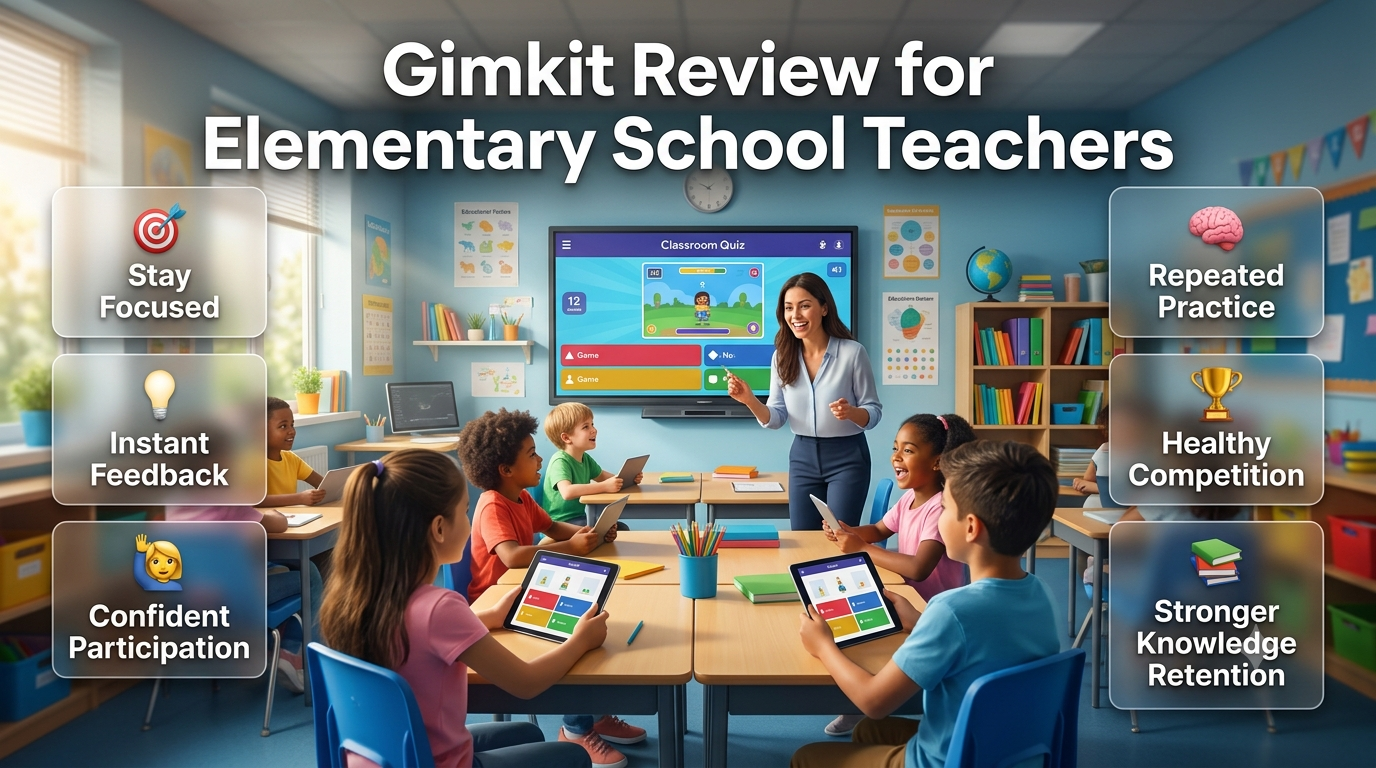
A premium educational gaming illustration showing how Gimkit players continuously improve their upgrade order as they gain experience, refine decision-making, and develop advanced strategic thinking.
The best upgrade sequence for a beginner is rarely the best sequence for an experienced player.
As your understanding of Gimkit grows, you’ll naturally become better at:
Predicting future opportunities.
Evaluating upgrade efficiency.
Managing available resources.
Adapting to changing match conditions.
Recognizing inefficient spending habits.
Because your decision-making improves over time, your ideal upgrade order should evolve as well rather than remaining fixed.
Upgrade Order Is a Learning Process
Many players expect to discover one perfect sequence that guarantees success.
In reality, building an effective upgrade order is an ongoing learning process.
Each match provides new information about:
Which decisions created the greatest value.
Which purchases slowed progression.
How different classroom environments affect planning.
When adjustments became necessary.
Which habits consistently improved results.
Players who review these patterns after every game steadily develop better upgrade sequences than those who simply repeat the same approach. Over time, this process creates a personalized system that fits both your playing style and the unique conditions of each Gimkit match.
How Match Length Changes the Best Upgrade Order
One of the biggest factors affecting upgrade order is the total length of the match. A sequence that performs exceptionally well in a 20-minute game may produce disappointing results in a short classroom review.
Instead of memorizing one build, experienced players first estimate how much time they have available and then adjust their priorities accordingly.
Longer matches reward gradual progression, while shorter sessions place greater value on upgrades that produce faster results.
Planning around match duration helps ensure that every investment has enough time to deliver meaningful value before the game ends.
Create Milestones Instead of Following a Fixed Build
Rather than aiming for specific upgrades at specific times, experienced players create progress milestones.
A milestone is a checkpoint that helps measure whether your strategy is developing efficiently.
For example, your milestones might include:
Establishing a stable resource flow.
Unlocking your first major improvement.
Maintaining consistent purchasing opportunities.
Preparing for the final stage of the match.
These checkpoints are much more flexible than memorizing an exact purchase sequence because they work across different game modes and classroom activities.
Every teacher benefits from proven instructional ideas that increase participation and motivation. Explore Gimkit Resources for Teachers for practical classroom-ready solutions.
Learn When to Pause Before Buying
Not every earning opportunity requires an immediate purchase.
Sometimes the smartest decision is to pause briefly, continue answering questions, and reassess your options a few moments later.
Waiting can be beneficial when:
Multiple upgrade options are close to becoming available.
The game is changing rapidly.
You haven’t yet identified the most valuable investment.
Your current strategy is still performing efficiently.
Patience helps prevent unnecessary purchases that provide only limited long-term value.
⭐ Expert Insight: Strategic waiting is an active decision, not a missed opportunity.
Upgrade Order Should Match Your Confidence Level
Your confidence in the quiz subject should influence how you approach upgrades.
Students who are confident in the material can usually follow a more growth-oriented progression because they expect to answer consistently.
Players who are less familiar with the topic may benefit from a more cautious upgrade path that allows room for occasional mistakes.
The objective isn’t to copy someone else’s approach but to create a progression that reflects your own strengths.
Recognize Inefficient Spending Patterns
Many players lose valuable resources without realizing it.
Common patterns include:
Purchasing upgrades simply because enough money is available.
Frequently changing priorities.
Investing heavily in one area while neglecting overall progression.
Ignoring whether previous purchases are actually improving performance.
Developing awareness of these habits makes future upgrade decisions much more effective.
Evaluate Progress Instead of Counting Upgrades
A larger number of upgrades doesn’t always mean you’re performing better.
Instead of measuring success by how many upgrades you’ve purchased, evaluate the results those purchases are producing.
Useful questions include:
Evaluation Question
Why It Matters
Am I progressing more smoothly than before?
Measures overall efficiency.
Are my purchases creating future opportunities?
Evaluates long-term planning.
Have my recent decisions improved performance?
Identifies successful adjustments.
Am I maintaining flexibility?
Prevents overcommitting to one approach.
This performance-focused mindset leads to stronger upgrade orders than simply unlocking as many upgrades as possible.
Understanding pricing and premium features helps educators make informed decisions. Read detailed comparisons and expert evaluations in Gimkit Reviews & Pricing before selecting a subscription.
Understand Opportunity Cost Before Every Purchase
Every purchase comes with an opportunity cost.
Choosing one upgrade means delaying another.
For that reason, experienced players compare options rather than evaluating upgrades individually.
Before spending your resources, consider:
What am I giving up by buying this now?
Would another investment create greater overall value?
Is delaying this purchase likely to improve my future options?
Does this decision support my long-term objective?
Viewing purchases as trade-offs encourages smarter planning throughout the match.
Adapt Your Upgrade Order to Classroom Goals
Not every Gimkit session has the same purpose.
Teachers often use the platform for different learning activities, and your upgrade order should reflect those objectives.
Classroom Activity
Upgrade Planning Focus
Daily review
Steady progression throughout the lesson.
Unit assessment
Consistency and careful decision-making.
Friendly competition
Balanced growth with room for adaptation.
Practice session
Experimenting with different upgrade sequences.
Revision before exams
Reliable progression over unnecessary risks.
Matching your strategy to the classroom objective often produces better learning outcomes than focusing exclusively on finishing first.
Small instructional improvements often lead to better classroom results. Discover practical teaching methods and winning techniques in Gimkit Tips & Strategies to maximize student engagement.
Build Your Own Upgrade Framework
A strategic planning framework helps Gimkit players make smarter upgrade decisions throughout every stage of a match.
The strongest Gimkit players eventually stop searching for the “perfect” upgrade order and begin creating their own decision framework.
A personal framework might include:
Identify the match conditions.
Set a clear objective.
Make purchases that support that objective.
Review performance after each major decision.
Adjust only when new information justifies a change.
This structured approach works across different game modes because it focuses on the quality of decisions rather than memorizing a fixed sequence.
Long-Term Improvement Comes From Better Planning
The best upgrade order isn’t something you discover once and use forever. It develops gradually as you gain experience, recognize successful patterns, and refine your decision-making.
Every Gimkit match provides an opportunity to improve your planning skills. By evaluating your choices, understanding why certain sequences worked, and adapting to different classroom situations, you’ll gradually build an upgrade order that feels natural, flexible, and effective.
Ultimately, consistent success comes from thoughtful planning rather than perfect predictions. Players who continuously improve their decision-making process are far more likely to achieve reliable results than those who rely on the same upgrade sequence in every match.
Stay informed about the newest platform improvements, educational trends, and feature releases through Games Updates so you never miss important changes.
Professional Recommendations & Expert Reviews
Best Upgrade Order in Gimkit Explained begins with building a strategy before spending your first resources.
Best Upgrade Order in Gimkit Explained helps players prioritize upgrades that provide lasting value.
Best Upgrade Order in Gimkit Explained encourages investing in long-term growth before expensive upgrades.
Best Upgrade Order in Gimkit Explained shows that smart planning usually outperforms random purchases.
Best Upgrade Order in Gimkit Explained helps players maximize every correct answer throughout the match.
Best Upgrade Order in Gimkit Explained encourages choosing upgrades that improve overall efficiency.
Best Upgrade Order in Gimkit Explained rewards players who spend resources with a clear purpose.
Best Upgrade Order in Gimkit Explained helps maintain steady progress from beginning to end.
Best Upgrade Order in Gimkit Explained encourages balancing early growth with future advantages.
Best Upgrade Order in Gimkit Explained shows why timing matters when purchasing upgrades.
Best Upgrade Order in Gimkit Explained helps players avoid spending valuable resources too quickly.
Best Upgrade Order in Gimkit Explained encourages building a strong foundation before advanced upgrades.
Best Upgrade Order in Gimkit Explained helps players improve long-term earning potential.
Best Upgrade Order in Gimkit Explained encourages reviewing upgrade priorities during every match.
Best Upgrade Order in Gimkit Explained shows that patience often leads to better overall performance.
Best Upgrade Order in Gimkit Explained helps players recognize high-value upgrade opportunities.
Best Upgrade Order in Gimkit Explained encourages making informed decisions instead of impulsive ones.
Best Upgrade Order in Gimkit Explained helps create a consistent path toward stronger gameplay.
Best Upgrade Order in Gimkit Explained encourages efficient resource management throughout the game.
Best Upgrade Order in Gimkit Explained helps players adapt upgrade priorities as matches progress.
Best Upgrade Order in Gimkit Explained rewards careful planning during competitive gameplay.
Best Upgrade Order in Gimkit Explained helps strengthen overall game strategy.
Best Upgrade Order in Gimkit Explained encourages players to focus on sustainable growth.
Best Upgrade Order in Gimkit Explained helps maximize the impact of every upgrade purchase.
Best Upgrade Order in Gimkit Explained encourages balancing short-term rewards with long-term success.
Best Upgrade Order in Gimkit Explained helps players improve consistency through smarter investments.
Best Upgrade Order in Gimkit Explained encourages selecting upgrades that support your playstyle.
Best Upgrade Order in Gimkit Explained helps reduce unnecessary spending during important stages.
Best Upgrade Order in Gimkit Explained encourages evaluating every upgrade before purchasing it.
Best Upgrade Order in Gimkit Explained helps players stay competitive throughout longer matches.
Best Upgrade Order in Gimkit Explained encourages learning from previous upgrade decisions.
Best Upgrade Order in Gimkit Explained helps players identify which upgrades provide the greatest value.
Best Upgrade Order in Gimkit Explained encourages adapting strategies for different game situations.
Best Upgrade Order in Gimkit Explained helps improve performance through better planning.
Best Upgrade Order in Gimkit Explained encourages maintaining steady progress instead of chasing quick rewards.
Best Upgrade Order in Gimkit Explained helps players refine their upgrade strategy with experience.
Best Upgrade Order in Gimkit Explained encourages making every purchase contribute to your overall objective.
Best Upgrade Order in Gimkit Explained helps build confidence through smarter gameplay decisions.
Best Upgrade Order in Gimkit Explained encourages careful resource allocation during every stage.
Best Upgrade Order in Gimkit Explained helps players avoid common upgrade mistakes.
Best Upgrade Order in Gimkit Explained encourages long-term thinking over immediate gains.
Best Upgrade Order in Gimkit Explained helps strengthen decision-making during competitive matches.
Best Upgrade Order in Gimkit Explained encourages experimenting with different upgrade paths during practice.
Best Upgrade Order in Gimkit Explained helps players improve efficiency with every completed game.
Best Upgrade Order in Gimkit Explained encourages balancing earning potential with strategic upgrades.
Best Upgrade Order in Gimkit Explained helps players remain flexible as game conditions change.
Best Upgrade Order in Gimkit Explained encourages continuous improvement through regular gameplay.
Best Upgrade Order in Gimkit Explained helps create reliable strategies for consistent results.
Best Upgrade Order in Gimkit Explained encourages players to review and refine their upgrade priorities.
Best Upgrade Order in Gimkit Explained demonstrates that thoughtful upgrade sequencing often leads to stronger overall performance.
Frequently Asked Questions (FAQs)
1. What is the best upgrade order in Gimkit for beginners?
There isn’t one upgrade order that works perfectly in every game, but beginners generally achieve better results by following a progression that builds steady growth before focusing on expensive or situational upgrades. New players often make the mistake of purchasing upgrades based on excitement rather than long-term value, which can leave them short on resources later in the match.
A beginner-friendly approach should focus on:
Building a reliable source of income first.
Avoiding unnecessary spending in the opening minutes.
Purchasing upgrades that provide value throughout the match.
Keeping enough resources available for future opportunities.
Adapting if the game pace changes unexpectedly.
As players become more familiar with Gimkit, they’ll naturally learn which upgrade sequences fit their own playing style. Instead of memorizing someone else’s build, beginners should understand why each purchase is made. This creates stronger decision-making skills that remain effective across different game modes, classroom activities, and quiz subjects.
2. Does the best upgrade order change depending on the Gimkit game mode?
Yes. Different Gimkit game modes reward different types of decision-making, which means the ideal upgrade order can change significantly from one match to another. A strategy that performs well in a long classroom review may not be effective in a faster or more competitive mode.
Several factors influence upgrade priorities, including:
Match duration.
Classroom objectives.
Question difficulty.
Competitive versus cooperative gameplay.
Available game mechanics.
Experienced players evaluate these conditions before committing to an upgrade path. Rather than following the same sequence every time, they build a flexible progression that supports the current game environment. This ability to adjust is one of the biggest differences between average and advanced players.
3. Should I spend my money immediately or save it for better upgrades?
Both approaches have advantages, and the best choice depends on the situation. Spending too early can limit future options, while saving for too long may slow your overall progress. The goal is to balance immediate improvement with future flexibility.
Before making a purchase, consider the following questions:
Will this upgrade improve my next several decisions?
Is there a stronger opportunity likely to appear soon?
Does buying now support my overall strategy?
Will I still have enough resources for future adjustments?
Does this investment match the remaining game time?
Players who ask these questions before every major purchase usually make more consistent decisions than those who spend resources automatically whenever they become available.
4. Why do experienced Gimkit players use different upgrade orders instead of one fixed strategy?
Experienced players understand that every Gimkit match develops differently. Classroom size, quiz topic, player skill levels, and game duration all influence which upgrade sequence provides the greatest value. Because these conditions constantly change, a fixed strategy rarely remains effective for every situation.
Advanced players typically:
Observe how quickly the game is progressing.
Evaluate their own earning speed.
Watch how the leaderboard changes.
Adjust priorities as new opportunities appear.
Change plans when the original strategy becomes less effective.
This flexible mindset allows them to respond to changing conditions instead of forcing the same upgrade order into every match. Their success comes from making informed decisions rather than following a memorized sequence.
5. What are the biggest mistakes players make when choosing an upgrade order in Gimkit?
Most upgrade-order mistakes happen because players focus on short-term excitement instead of long-term efficiency. A poor sequence can slow future progress even if the individual upgrades seem powerful on their own.
The most common mistakes include:
Purchasing upgrades without a clear plan.
Spending every available resource immediately.
Ignoring how match length affects upgrade value.
Following another player’s build without considering current conditions.
Changing strategies too frequently during the game.
Waiting too long before making important investments.
Building around a single upgrade instead of creating balanced progression.
Failing to review what worked after each match.
Avoiding these habits helps players develop stronger resource management skills and more reliable upgrade paths over time. The most successful Gimkit players don’t simply buy good upgrades—they build logical sequences that support consistent improvement from the beginning of the match until the final leaderboard.