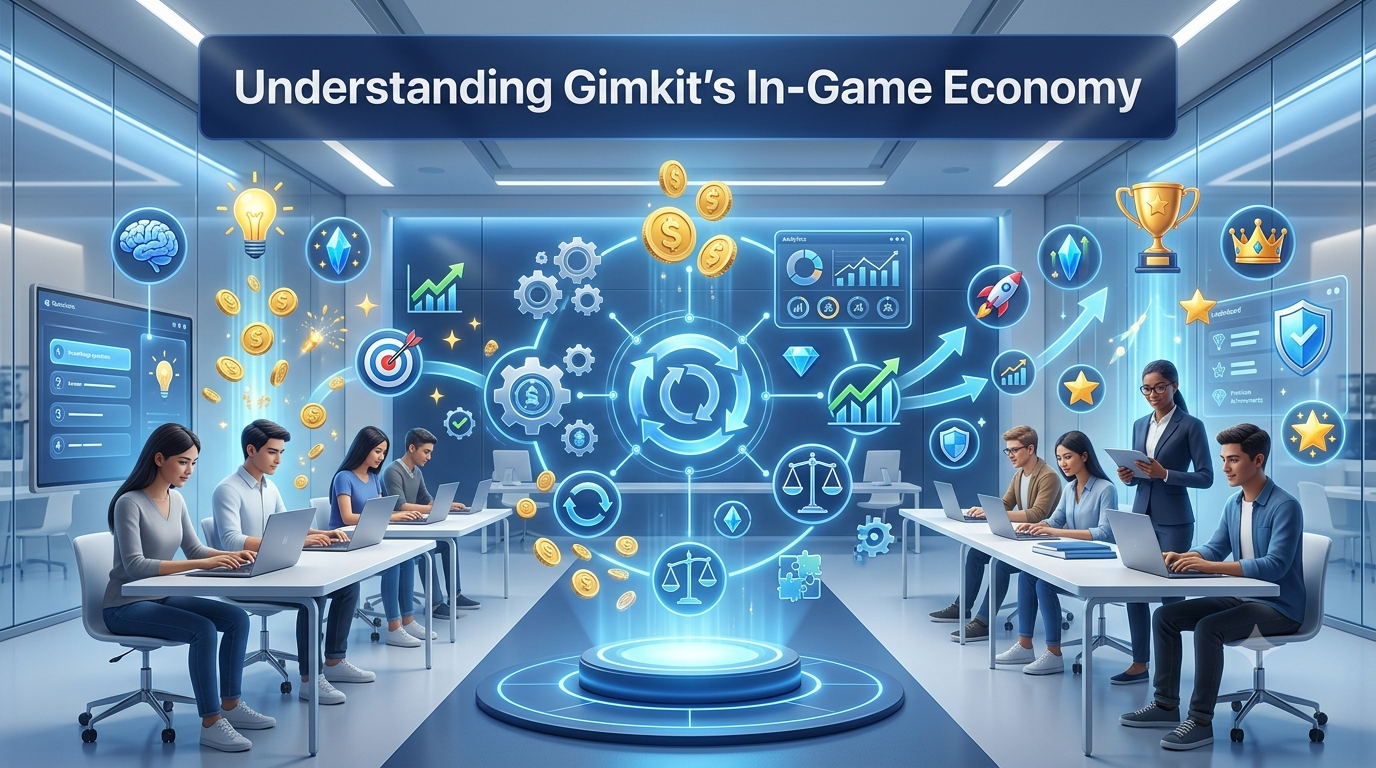
Understanding Gimkit’s In-Game Economy | Winning in Gimkit isn’t just about answering questions correctly—it’s about understanding how the game’s virtual economy operates.
🎯 Every Decision Has Value – Every correct answer, purchase, upgrade, and strategic decision contributes to an economic system where resources are continuously generated, invested, and converted into competitive advantages.
📈 More Than Power-Ups & Upgrades – Unlike guides that focus only on power-ups or upgrade sequences, this approach explores the economic model behind Gimkit gameplay.
🔄 Understand Resource Flow – Learn how virtual wealth moves throughout a match and influences your overall performance.
🌱 Create Sustainable Growth – Discover how experienced players build long-term progress instead of chasing short-term gains.
💡 Master Resource Management – Efficiently managing in-game resources often has a greater impact on success than raw speed alone.
🚀 Make Smarter Strategic Decisions – By understanding the in-game economy, you’ll start making choices based on long-term value creation rather than simply collecting more money.
Looking for comprehensive classroom resources and educational technology insights? Explore GimkitApp for expert guides, teaching strategies, game modes, and the latest updates to enhance student engagement.
What Is the Gimkit Economy?
The Gimkit economy is the complete system that controls how players earn, manage, spend, preserve, and reinvest in-game money during a match.
Every action belongs to one of five economic stages:
Economic Stage
Purpose
Income Creation
Generating money through gameplay.
Resource Collection
Building available spending power.
Investment
Converting money into future advantages.
Value Generation
Increasing long-term earning efficiency.
Resource Preservation
Maintaining progress until the match ends.
Thinking about these stages helps players understand that earning money is only the beginning. Success depends on how efficiently that money moves through the entire economic cycle.
Virtual Money Is a Strategic Resource, Not a Score
Many beginners treat money as if it were simply another scoreboard statistic.
Experienced players view it differently.
Money is a working resource that exists to create additional value.
Holding a large balance without using it effectively rarely produces the best results. Likewise, spending everything immediately can limit future opportunities.
The most successful players constantly ask:
How can this resource create more value?
Is my money working for me?
Am I increasing future earning potential?
This investment mindset is the foundation of strong economic play.
Every Match Has Its Own Economy
One important concept that many players overlook is that every Gimkit game creates a unique economic environment.
Several factors influence that environment, including:
Quiz length.
Number of participants.
Classroom rules.
Available game mechanics.
Overall player accuracy.
Match objectives.
Because these conditions vary from one session to another, no two economic systems develop in exactly the same way. Learning to recognize these differences is often more valuable than memorizing fixed strategies.
Choosing the right learning platform can significantly improve classroom outcomes. Compare leading educational tools in Gimkit Comparisons & Alternatives to find the best solution for your teaching style.
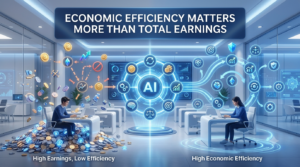
Economic Efficiency Matters More Than Total Earnings
A premium educational gaming illustration demonstrating how economic efficiency and sustainable resource management create stronger long-term success than simply earning the most money in Gimkit.
A player earning the most money at one moment isn’t always using resources most efficiently.
Economic efficiency measures how effectively your available resources are converted into future progress.
Highly efficient players generally:
Waste fewer resources.
Maintain smoother progression.
Reach important milestones consistently.
Adapt spending to changing conditions.
Avoid unnecessary financial stagnation.
This explains why players with similar scores can experience very different levels of long-term success during a match.
For the latest gaming news, expert reviews, and walkthroughs, readers can also visit IGN, one of the world’s leading gaming websites.
The Economy Rewards Sustainable Growth
One of Gimkit’s defining characteristics is that it encourages sustainable growth rather than isolated moments of success.
Instead of relying on one excellent decision, players gradually strengthen their overall economic position through consistent improvement.
Healthy economic growth usually demonstrates several characteristics:
Predictable progression.
Stable resource availability.
Balanced investment decisions.
Continued purchasing opportunities.
Minimal periods of inactivity.
Building sustainable momentum often proves more reliable than chasing dramatic short-term gains.
Economic Awareness Improves Every Decision
Players who understand the in-game economy begin evaluating decisions differently.
Instead of asking:
“Can I afford this?”
they begin asking:
“Is this the best use of my current resources?”
This small shift in thinking changes how every future purchase is evaluated.
Economic awareness encourages players to:
Compare opportunities.
Measure long-term value.
Reduce unnecessary spending.
Think several decisions ahead.
Maintain flexibility.
These habits create stronger overall gameplay regardless of the specific upgrades available.Interactive learning becomes more effective when students experience different gameplay formats. Discover engaging classroom activities in Gimkit Features & Game Modes and keep every lesson fresh.
Why This Understanding Matters
Learning Gimkit’s economic system transforms the game from a simple classroom quiz into an exercise in planning, resource management, and strategic thinking. Players who understand how virtual resources flow through a match make more informed decisions, recover more effectively from setbacks, and consistently improve their overall performance.
In the following sections, we’ll explore how money moves through the Gimkit economy, what influences economic growth, how different spending behaviors affect long-term success, and the practical financial principles that experienced players apply throughout every stage of a match.
How Money Flows Through a Gimkit Match
Every Gimkit game follows a continuous cycle of economic movement. Money doesn’t simply accumulate—it moves through different stages as players answer questions, make purchases, improve earning potential, and continue investing throughout the match.
Understanding this flow helps explain why two players with similar earnings can finish with very different results.
Players who keep this cycle moving smoothly generally experience more consistent progress than those whose economy frequently stalls.
The Difference Between Active and Passive Economic Growth
Not every dollar earned in Gimkit comes from the same type of activity.
The game’s economy can generally be viewed through two forms of growth.
Growth Type
Description
Active Growth
Resources generated directly through answering questions and participating in gameplay.
Passive Growth
Long-term economic improvement created by previous investment decisions that continue producing value over time.
Successful players balance both forms instead of relying entirely on one source of progress.
An economy built only on active effort often becomes unstable, while an economy supported by long-term investments usually develops more smoothly.
Economic Stability Is More Important Than Sudden Growth
Large increases in money may look impressive, but stable economic progress is usually more reliable.
Economic stability means maintaining a consistent ability to make useful decisions throughout the match.
Signs of a stable economy include:
Regular earning opportunities.
Consistent purchasing power.
Few periods of inactivity.
Predictable financial progress.
Balanced investment timing.
Stable economies allow players to respond confidently when game conditions change.Whether you’re a beginner or an experienced educator, practical guidance makes implementation easier. Follow our Gimkit Guides & Tutorials for step-by-step instructions and classroom best practices.
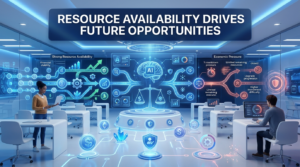
Resource Availability Drives Future Opportunities
A premium educational gaming illustration highlighting how maintaining healthy resources creates greater flexibility, stronger strategic choices, and sustainable long-term growth in Gimkit.
Every economic decision affects the choices available later.
Players with healthy resource availability enjoy greater flexibility because they can respond to new situations without feeling financially restricted.
Poor resource availability often leads to:
Delayed purchases.
Limited strategic options.
Forced decision-making.
Reduced adaptability.
Slower overall progression.
Maintaining available resources doesn’t mean avoiding spending—it means ensuring your economy remains capable of supporting future decisions.
Understanding Economic Pressure
As matches progress, players naturally experience increasing economic pressure.
This pressure comes from factors such as:
Rising upgrade costs.
Faster opponent progression.
Limited remaining time.
Increasing competition.
More complex strategic decisions.
Players who prepare for these pressures early usually make calmer, more rational financial choices than those reacting only after pressure begins to build.
💡 Pro Tip: Strong economies reduce pressure because they provide more options when important decisions appear.
Economic Balance Creates Consistent Performance
Many players unknowingly create imbalanced economies.
Examples include:
Generating resources faster than they invest them.
Spending resources faster than they earn them.
Focusing heavily on one aspect of progression while neglecting others.
Balanced economies avoid these extremes.
Characteristics of balanced economic management include:
Balanced Economy Traits
Why They Matter
Predictable income
Supports steady decision-making.
Controlled spending
Prevents unnecessary shortages.
Continuous reinvestment
Encourages long-term growth.
Flexible planning
Allows adaptation when conditions change.
Sustainable progression
Maintains performance throughout the match.
Balance often produces more reliable outcomes than aggressive financial behavior.
Small Financial Decisions Compound Over Time
One overlooked feature of Gimkit’s economy is the cumulative effect of small decisions.
Individual choices may seem insignificant when viewed independently.
However, dozens of efficient decisions made throughout a match gradually produce a noticeable advantage.
Examples include:
Spending resources at appropriate moments.
Avoiding unnecessary purchases.
Maintaining consistent financial discipline.
Preserving flexibility.
Evaluating every investment carefully.
Over an entire game, these small improvements often become more influential than one exceptionally successful purchase.
Every teacher benefits from proven instructional ideas that increase participation and motivation. Explore Gimkit Resources for Teachers for practical classroom-ready solutions.
Recognizing Economic Bottlenecks
An economic bottleneck occurs when progress slows because one part of your financial system can no longer support continued growth.
Common bottlenecks include:
Resources accumulating without meaningful investment.
Investment opportunities appearing before sufficient funds are available.
Progress slowing despite continued correct answers.
Recognizing these bottlenecks early allows players to adjust their economic approach before they significantly affect overall performance.
Economic Discipline Builds Long-Term Success
The strongest Gimkit economies are not created through luck or unusually high earnings. They are built through disciplined financial management repeated over many small decisions.
Players who consistently monitor how resources flow, maintain economic balance, and recognize when adjustments are needed usually outperform those who focus only on earning more money. Over time, disciplined resource management transforms the in-game economy from a simple scoring system into a strategic advantage that supports smarter gameplay in every type of Gimkit match.
How Resource Allocation Shapes Your Entire Economy
One of the least understood aspects of Gimkit is resource allocation. Earning money is only one part of the economy—the real challenge is deciding where each dollar should go throughout the match.
Resource allocation is the process of distributing your available money across different priorities while maintaining enough flexibility to respond as the game evolves.
Players who allocate resources effectively rarely experience long periods where progress slows because every investment serves a clear purpose within their overall economic plan.
Every Purchase Has an Economic Trade-Off
In Gimkit, spending money is never an isolated action.
Every purchase automatically creates two outcomes:
You gain the benefit of the investment.
You give up the opportunity to spend those same resources elsewhere.
This concept is known as an economic trade-off.
Before making any purchase, experienced players naturally compare alternatives rather than evaluating only one option.
Useful questions include:
What future opportunity will I delay?
Is this purchase solving my biggest current limitation?
Could these resources create greater value later?
Does this investment improve my overall economy?
Thinking in trade-offs leads to stronger financial decisions than simply buying whatever becomes available first.
Understanding pricing and premium features helps educators make informed decisions. Read detailed comparisons and expert evaluations in Gimkit Reviews & Pricing before selecting a subscription.
Avoid Creating Idle Resources
Money that sits unused for long periods contributes very little to economic growth.
At the same time, spending every available resource immediately can leave you with no flexibility.
The objective is to maintain productive resources, meaning your money is always either:
Supporting current performance.
Preparing for future opportunities.
Remaining available for important decisions.
Healthy economies rarely leave resources idle without a strategic reason.
✅ Best Practice: Resources should always have a purpose—even when you’re intentionally saving them.
Build an Economy That Can Recover From Mistakes
No player answers every question correctly.
A resilient economy is designed to continue functioning even after occasional setbacks.
Characteristics of economic resilience include:
Economic Characteristic
Benefit
Stable earning capacity
Reduces the impact of individual mistakes.
Flexible resource reserves
Supports recovery after unexpected setbacks.
Balanced investments
Prevents dependence on one decision.
Consistent financial planning
Maintains long-term progression.
Players with resilient economies usually recover faster because one mistake doesn’t disrupt their entire financial system.
Recognize the Difference Between Growth and Expansion
Although these terms sound similar, they describe different economic concepts.
Growth refers to improving the efficiency of your economy.
Expansion refers to increasing the size of your economic activity.
For example:
Growth makes your existing economy perform better.
Expansion increases the number of opportunities your economy can support.
Understanding this difference helps players avoid expanding too quickly before building a stable financial foundation.
Efficient Economies Minimize Financial Waste
Economic waste occurs whenever resources fail to generate meaningful progress.
Examples include:
Delaying useful investments without reason.
Purchasing upgrades that no longer match the current game conditions.
Frequently replacing one financial plan with another.
Making purchases based on emotion instead of analysis.
Reducing financial waste improves overall efficiency even if total earnings remain unchanged.
Small instructional improvements often lead to better classroom results. Discover practical teaching methods and winning techniques in Gimkit Tips & Strategies to maximize student engagement.
Economic Awareness Improves Prediction Skills
Strong players don’t simply react to the current situation—they anticipate future economic needs.
As a match develops, experienced players begin predicting:
When they’ll need additional resources.
Which future investments may become valuable.
How quickly their economy is progressing.
Whether current spending can be sustained.
When financial priorities are likely to change.
This forward-looking approach allows them to prepare before important decisions become urgent.
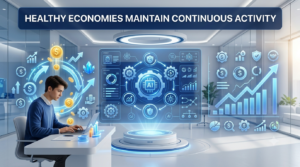
Healthy Economies Maintain Continuous Activity
A premium educational gaming hero banner illustrating how continuous resource generation, strategic investments, and consistent financial progress build a healthy in-game economy in Gimkit.
One characteristic shared by successful Gimkit players is continuous economic movement.
Their economy rarely experiences long periods where nothing meaningful happens.
Continuous activity usually includes:
Regular resource generation.
Planned investments.
Ongoing evaluation.
Small strategic adjustments.
Consistent financial progress.
Rather than making one major decision and waiting, they keep improving their economy throughout the entire match.
Think Like a Resource Manager, Not Just a Player
The most advanced Gimkit players eventually stop thinking only about answering questions and begin thinking like resource managers.
Instead of viewing money as something to collect, they see it as a system that must be directed efficiently from beginning to end.
This mindset changes every financial decision because players begin evaluating value, sustainability, flexibility, and long-term efficiency instead of short-term rewards. As a result, their economy becomes more stable, their decisions become more consistent, and their overall performance improves regardless of the specific game mode or classroom activity.
Stay informed about the newest platform improvements, educational trends, and feature releases through Games Updates so you never miss important changes.
Professional Recommendations & Expert Reviews
Understanding Gimkit’s In-Game Economy begins with learning how resources are earned during gameplay.
Understanding Gimkit’s In-Game Economy helps players make smarter financial decisions throughout each match.
Understanding Gimkit’s In-Game Economy explains why every correct answer contributes to future progress.
1. How does the in-game economy affect your overall performance in Gimkit?
The in-game economy is the system that determines how efficiently you generate, manage, and reinvest virtual money throughout a match. Players who understand this system usually perform more consistently because they treat money as a strategic resource instead of something to collect and spend immediately.
A strong in-game economy helps players:
Maintain steady financial growth throughout the match.
Unlock future opportunities without unnecessary delays.
Recover more effectively after incorrect answers or setbacks.
Make smarter investment decisions instead of emotional purchases.
Stay flexible when classroom conditions or game pace change.
Build long-term advantages through continuous reinvestment.
Rather than focusing only on earning the highest amount of money, experienced players evaluate how effectively every dollar contributes to future progress. This economic mindset often produces better results than simply answering questions as quickly as possible.
2. What is the biggest economic mistake new Gimkit players make?
The most common mistake is treating every dollar as something that should be spent immediately. New players often believe that buying upgrades as soon as possible automatically leads to better performance, but this approach frequently limits future opportunities and creates an unstable economy.
Some of the biggest beginner mistakes include:
Spending resources without a long-term objective.
Ignoring future investment opportunities.
Making purchases based on leaderboard pressure.
Allowing resources to remain idle for too long without purpose.
Changing financial plans repeatedly during the same match.
Focusing on one area of progression while neglecting overall balance.
Successful players develop financial discipline. Every purchase has a reason, every investment supports a broader objective, and every decision contributes to maintaining a healthy economic system from the beginning of the game until the final results.
If you experience sign-in problems or game access issues, visit Gimkit Login, Join & Troubleshooting for reliable solutions and step-by-step troubleshooting guides.
3. Why is resource management more important than simply earning more money?
Generating large amounts of money doesn’t automatically create a strong economy. What matters is how efficiently those resources are converted into long-term advantages. Two players can earn similar amounts during a match yet finish with very different results because one manages resources more effectively.
Good resource management includes:
Allocating money where it creates the greatest long-term value.
Maintaining financial flexibility throughout the game.
Avoiding unnecessary or low-impact spending.
Preparing for future opportunities instead of reacting to current situations.
Keeping the economic cycle moving without long periods of inactivity.
Players who consistently manage resources well often outperform players who simply focus on increasing their income because efficient economies continue generating value throughout the entire match.
4. Can understanding Gimkit’s economy improve strategic decision-making?
Yes. Understanding the in-game economy changes how players evaluate every decision they make. Instead of asking whether they can afford a purchase, they begin asking whether the purchase improves the overall efficiency of their economic system.
Economic thinking encourages players to:
Compare multiple investment opportunities.
Think several decisions ahead.
Recognize financial trade-offs.
Predict future resource requirements.
Build sustainable progression instead of chasing immediate rewards.
Adapt economic plans as match conditions change.
This approach develops stronger planning skills and helps players make logical decisions under pressure rather than reacting emotionally to temporary changes on the leaderboard.
5. How can players build a stronger in-game economy over time?
Building a strong economy is a gradual learning process rather than a single strategy. Every match provides opportunities to refine financial habits, identify inefficient spending, and improve resource allocation.
To strengthen your in-game economy over time:
Review your financial decisions after each match.
Identify purchases that created the greatest long-term value.
Learn from investments that produced limited results.
Practice maintaining balanced resource allocation.
Develop patience before making major spending decisions.
Build a flexible financial system that can adapt to different game modes and classroom objectives.
Focus on consistency instead of chasing short-term gains.
As these habits become routine, players naturally develop stronger economic awareness. Over multiple matches, they begin making faster, more confident financial decisions that support sustainable growth, improve adaptability, and create a competitive advantage regardless of the classroom setting or Gimkit game mode.