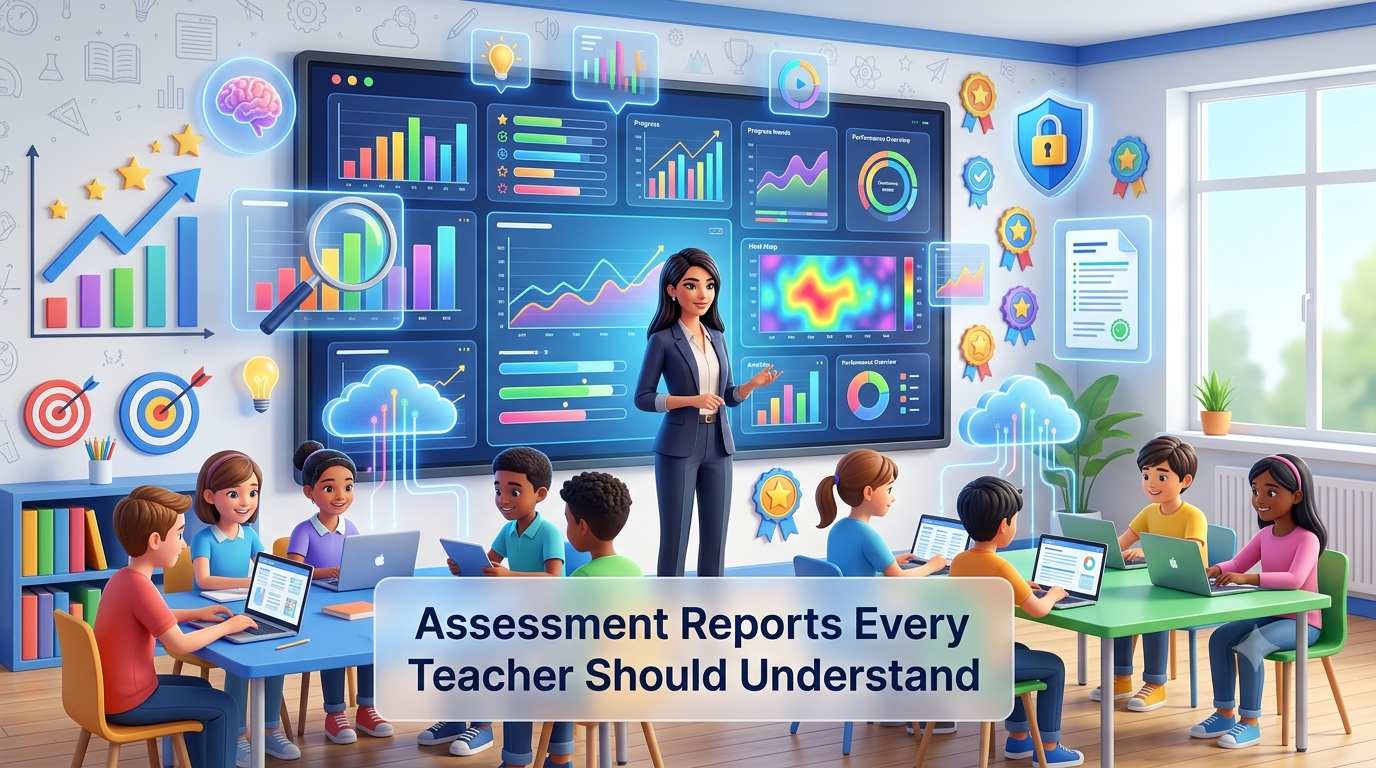
Assessment Reports Every Teacher Should Understand | are one of the most valuable tools available to educators. They provide more than just scores—they reveal how students learn, where they struggle, and which teaching strategies are making a measurable impact.
📊 Use assessment reports to make informed teaching decisions instead of relying on assumptions.
📝 Analyze results from quizzes, exams, and digital learning platforms together.
🎯 Identify learning gaps quickly through detailed performance data.
📈 Track individual and class progress over time.
👨🏫 Personalize instruction based on each student’s learning needs.
💡 Use insights from platforms like Gimkit, Kahoot, and Quizizz to improve lesson planning.
🔍 Monitor strengths and weaknesses to provide targeted support.
🚀 Turn assessment data into actionable strategies that improve student outcomes.
However, the usefulness of these reports depends on how well teachers understand and apply the information. Educators looking to explore more classroom strategies and platform resources can also visit the Gimkit homepage for additional teaching materials and updates.
This guide explains the essential assessment reports every teacher should understand, what each report measures, and how to use the data to improve student learning outcomes.
What Are Assessment Reports?
Assessment reports are structured summaries of student performance collected through quizzes, assignments, classroom activities, projects, standardized tests, or digital learning platforms. Rather than simply displaying grades, these reports organize performance data into meaningful insights that help teachers evaluate learning progress.
A comprehensive assessment report may include:
Overall class performance
Individual student scores
Question-by-question analysis
Learning objective mastery
Growth over time
Participation data
Time spent answering questions
Common misconceptions
Modern educational platforms automatically generate these reports, making it easier for teachers to identify patterns without manually analyzing spreadsheets.
💡 Pro Tip: The most effective teachers focus on trends rather than isolated scores. One poor quiz result rarely tells the whole story, but recurring patterns often reveal where instructional adjustments are needed.
Why Every Teacher Should Understand Assessment Reports
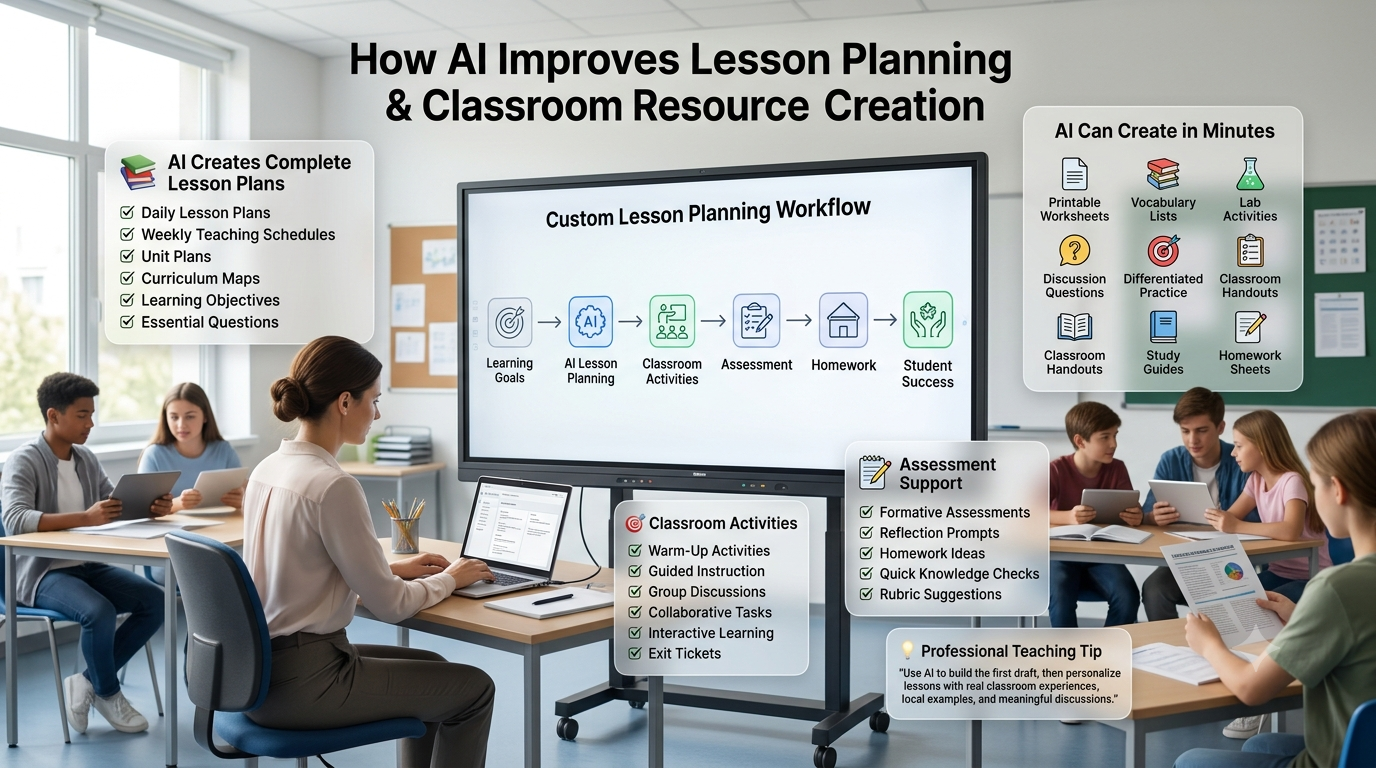
A premium educational illustration demonstrating how teachers transform assessment reports into actionable teaching strategies through learning analytics, progress monitoring, and personalized instruction.
Understanding assessment reports transforms raw data into actionable teaching strategies. Instead of asking, “Who failed the quiz?” teachers can ask more meaningful questions:
Which concepts confused most students?
Which students need additional support?
Which instructional methods produced the strongest results?
Are learning objectives being achieved consistently?
Is the class improving over time?
These insights support evidence-based teaching decisions and reduce guesswork.
Benefits of Understanding Assessment Reports
Benefit
Classroom Impact
Identify learning gaps
Target weak concepts before moving forward
Monitor student growth
Measure progress throughout the school year
Personalize instruction
Create differentiated learning plans
Improve lesson planning
Focus on concepts needing reinforcement
Communicate with parents
Share objective progress data
Support intervention programs
Identify students needing additional assistance
Rather than treating assessments as the end of learning, experienced educators use them as the starting point for instructional improvement.
Why Assessment Data Matters More Than Test Scores
A student’s final score only answers one question:
How many questions were answered correctly?
Assessment reports answer many more important questions.
For example:
A student scores 75% on a science quiz.
Without detailed reporting, that’s all the teacher knows.
A detailed assessment report might reveal:
Incorrect answers came only from genetics questions.
The student completed the quiz faster than average.
Confidence decreased on multi-step questions.
Performance improved compared to previous assessments.
Vocabulary questions were answered perfectly.
These insights help teachers decide whether additional instruction, practice, or enrichment is needed.
This is why modern educational assessment focuses on learning evidence rather than grades alone.
The Main Types of Assessment Reports Every Teacher Should Know
Different assessment reports serve different purposes. Understanding when to use each type helps teachers collect meaningful data throughout the learning process.
1. Formative Assessment Reports
Formative assessment reports measure learning during instruction.
Their primary goal is to monitor progress and provide immediate feedback rather than assign final grades.
Examples include:
Exit tickets
Classroom quizzes
Interactive games
Quick polls
Weekly practice assessments
Digital classroom platforms have made formative assessment more engaging by combining learning with game-based activities.
Teachers using educational games often review instant performance reports after each session to determine whether students are ready to move forward or need additional review. For ideas on creating engaging classroom quizzes that also generate useful assessment data, explore these classroom quiz ideas and resources.
What Formative Reports Usually Include
Student participation
Accuracy percentages
Question-level analysis
Completion rates
Learning objective mastery
Time spent per question
Practical Classroom Example
Imagine a Grade 6 math teacher introducing fractions.
Instead of waiting until the unit exam, students complete a five-minute digital review game.
The assessment report immediately reveals:
90% understand equivalent fractions.
Only 48% understand improper fractions.
One-third of the class struggles with mixed numbers.
Rather than continuing with the planned lesson, the teacher revisits improper fractions the next day.
This is formative assessment at its best.
✅ Best Practice: Use formative reports frequently because small adjustments during instruction often prevent larger learning gaps later. Teachers interested in maximizing game-based assessments can also explore practical Gimkit tips and strategies for improving student engagement and performance.
2. Summative Assessment Reports
Summative assessment reports evaluate learning after instruction has been completed.
These reports measure how well students achieved the intended learning outcomes.
Common examples include:
Final exams
End-of-unit tests
Semester assessments
Standardized examinations
Final projects
Unlike formative reports, summative reports focus more on overall achievement than ongoing improvement.
Typical Information Included
Final score
Grade distribution
Performance by learning standard
Overall class average
Individual student ranking (where applicable)
Pass/fail rates
Although summative reports provide valuable information, they should not be the only data source teachers rely on throughout the school year.
Formative vs. Summative Assessment Reports
Feature
Formative Reports
Summative Reports
Purpose
Improve learning during instruction
Evaluate learning after instruction
Frequency
Frequent
Periodic
Feedback
Immediate
Usually after completion
Grading
Often low stakes
High stakes
Instructional Use
Modify teaching
Measure achievement
Student Focus
Growth
Performance
The strongest classrooms use both report types together. Formative assessments guide daily teaching decisions, while summative assessments measure long-term learning outcomes.
3. Diagnostic Assessment Reports
Diagnostic assessments identify students’ existing knowledge before new instruction begins.
These reports answer questions such as:
What do students already know?
Which prerequisite skills are missing?
Where should instruction begin?
Which students require intervention?
Teachers commonly use diagnostic assessments at:
The beginning of the school year
Before starting a new unit
Prior to intervention programs
During placement evaluations
Example
Before teaching algebra, a teacher administers a diagnostic assessment covering:
Basic arithmetic
Fractions
Decimals
Integers
The resulting report shows that most students struggle with integer operations. Instead of beginning algebra immediately, the teacher reviews prerequisite skills first.
This proactive approach helps reduce frustration and improves later learning outcomes.
4. Benchmark Assessment Reports
Benchmark assessments measure student progress against expected learning standards at specific points during the academic year.
Schools often conduct benchmark testing:
Beginning of term
Mid-year
End of term
These reports help educators determine whether students are progressing toward curriculum goals.
Benchmark reports typically compare:
Student performance
Classroom averages
School averages
District averages
Curriculum standards
Unlike daily quizzes, benchmark reports provide a broader picture of academic growth over time.
The Most Important Metrics Teachers Should Understand
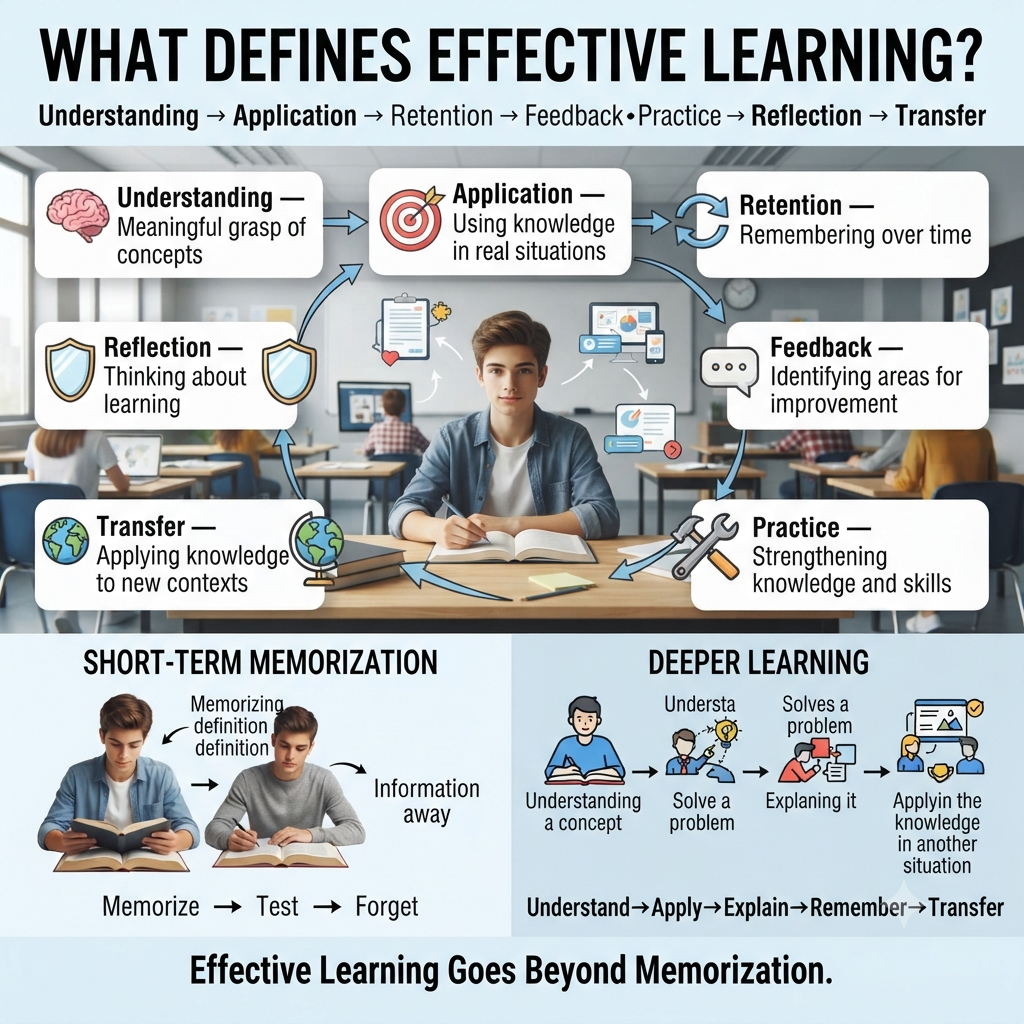
A premium educational illustration demonstrating how teachers use assessment metrics and digital reports to identify learning gaps, monitor student progress, improve instruction, and make evidence-based classroom decisions.
Assessment reports often contain dozens of statistics, but not every metric deserves equal attention.
The following indicators consistently provide the most actionable insights.
Metric
What It Tells You
Accuracy Rate
Percentage of correct answers
Mastery Level
Understanding of specific standards or objectives
Growth Trend
Improvement across multiple assessments
Question Analysis
Which questions caused difficulty
Time on Task
Student engagement and pacing
Completion Rate
Whether students finished the assessment
Participation Rate
Class involvement in the activity
Standard Alignment
Performance by curriculum objective
Looking beyond overall percentages allows teachers to identify patterns that would otherwise remain hidden.
How Digital Assessment Platforms Have Changed Classroom Reporting
Traditional paper tests often required hours of grading before teachers could analyze results. Today, digital assessment platforms generate reports within seconds, giving educators immediate access to performance data that can inform the very next lesson.
Platforms such as Gimkit provide interactive assessments that combine student engagement with detailed reporting. Teachers can review participation, question accuracy, and learning trends without manually compiling results. Those looking to better understand these classroom tools can explore detailed Gimkit guides and tutorials, learn more about different Gimkit features and game modes, or browse resources designed specifically for teachers to strengthen classroom implementation.
Likewise, educators interested in broader teaching ideas, educational discussions, and classroom technology trends can browse the General Education category, while those wanting to stay informed about the latest platform improvements can follow Gimkit game updates.
⭐ Expert Insight: Technology doesn’t replace teacher judgment—it enhances it. The most effective educators use digital reports as evidence to support professional decisions, not as substitutes for observation and classroom interaction. If technical issues ever prevent students from accessing online assessments, reviewing common Gimkit login and join troubleshooting resources can help minimize classroom disruptions.
How to Read Assessment Reports Effectively
Reading an assessment report involves more than checking who passed or failed. Every report tells a story about student learning, classroom instruction, and curriculum effectiveness.
Instead of focusing solely on overall scores, evaluate the report from multiple perspectives.
Ask yourself:
Which learning objectives had the lowest mastery?
Did most students struggle with the same questions?
Are mistakes caused by misconceptions or careless errors?
Which students are consistently improving?
Which students have stopped making progress?
Were there any unexpected performance patterns?
Looking for these trends allows teachers to make instructional decisions based on evidence rather than assumptions.
💡 Pro Tip: Review reports within 24 hours of an assessment whenever possible. Fresh data makes it easier to adjust upcoming lessons while concepts are still relevant.
Start with the Big Picture Before Examining Individual Students
One common mistake is immediately focusing on individual scores. Instead, begin by analyzing overall class performance.
Ask questions such as:
What was the class average?
Which standards showed the strongest understanding?
Which concepts created widespread confusion?
Was the assessment appropriately challenging?
If nearly every student answered a question incorrectly, the issue may not be student ability—it could indicate unclear instruction, confusing wording, or insufficient practice opportunities.
Conversely, if nearly every student answered correctly, the concept may already be mastered, allowing instructional time to shift toward more challenging material.
Analyze Learning Objectives Instead of Total Scores
Modern assessment platforms often organize results according to learning objectives or curriculum standards.
This information is significantly more valuable than a single percentage.
For example:
Learning Objective
Class Mastery
Identify Main Idea
92%
Infer Author’s Purpose
67%
Analyze Supporting Evidence
54%
Vocabulary in Context
89%
Although the overall class average may appear acceptable, the report clearly identifies one area requiring additional instruction.
Teachers who plan lessons around objective mastery are generally better positioned to close learning gaps than those relying only on final grades.
Look for Patterns, Not Isolated Mistakes
Every student makes occasional errors.
Assessment reports become meaningful when similar mistakes appear repeatedly.
Examples include:
Students consistently missing multi-step problems.
Low performance whenever higher-order thinking is required.
Strong recall but weak application skills.
Declining performance during longer assessments.
Vocabulary-related misunderstandings across multiple subjects.
Patterns help distinguish temporary mistakes from genuine learning needs.
Practical Classroom Example
Suppose three weekly science quizzes reveal the following:
Quiz
Average Score
Quiz 1
72%
Quiz 2
74%
Quiz 3
73%
At first glance, performance seems stable.
However, question-level reports reveal that students consistently struggle with interpreting graphs.
Rather than reteaching the entire unit, the teacher dedicates one lesson specifically to graph analysis.
A small adjustment based on assessment evidence often produces larger learning gains than repeating entire chapters.
Individual Student Reports vs. Class Reports
Both report types serve different instructional purposes.
Lesson planning, curriculum adjustments, identifying common misconceptions
Group Reports
Small-group instruction and collaborative learning
Standard Reports
Measuring curriculum mastery
Growth Reports
Monitoring long-term academic progress
Effective teachers move between these reports rather than relying exclusively on one.
Using Assessment Reports to Differentiate Instruction
Differentiated instruction becomes far more effective when supported by assessment data.
Instead of assigning identical review work to every student, reports help teachers create learning experiences based on actual needs.
For example:
Group A: Advanced Learners
Characteristics:
Consistently high mastery
Fast completion times
Strong conceptual understanding
Recommended Instruction:
Enrichment activities
Extension projects
Peer mentoring opportunities
Higher-order thinking tasks
Group B: Developing Learners
Characteristics:
Moderate understanding
Occasional misconceptions
Inconsistent accuracy
Recommended Instruction:
Guided practice
Additional examples
Small-group instruction
Frequent formative checks
Group C: Students Needing Intervention
Characteristics:
Persistent misconceptions
Low mastery across objectives
Difficulty applying concepts
Recommended Instruction:
Targeted intervention
Scaffolded instruction
One-on-one support
Frequent progress monitoring
Assessment reports make these groupings objective rather than subjective.
Understanding Question-Level Analysis
Question-level reports often provide the most actionable classroom insights.
Instead of asking:
“Who scored 80%?”
Ask:
“Which questions challenged the greatest number of students, and why?”
Possible reasons include:
Misleading wording
Vocabulary difficulty
Weak prerequisite knowledge
Complex reasoning requirements
Multiple correct-looking answer choices
Reviewing incorrect responses also helps identify common misconceptions that may otherwise remain hidden.
What Time-on-Task Data Can Reveal
Many digital assessment platforms measure how long students spend answering each question.
Although time should never be interpreted in isolation, it can reveal useful patterns.
Observation
Possible Interpretation
Very fast + incorrect
Guessing
Slow + correct
Careful reasoning
Slow + incorrect
Confusion or uncertainty
Very fast + correct
Strong mastery
Time increases throughout assessment
Fatigue or increased difficulty
Teachers should always combine timing data with accuracy and classroom observations before drawing conclusions.
Measuring Student Growth Over Time
One assessment provides a snapshot.
Multiple assessments reveal progress.
Growth reports help answer questions such as:
Is the student improving?
Has learning plateaued?
Are interventions working?
Which objectives continue causing difficulty?
Example:
Assessment
Score
Diagnostic
48%
Quiz 1
59%
Quiz 2
67%
Quiz 3
76%
Unit Test
84%
Although early scores appear low, the growth trend demonstrates successful learning.
Focusing only on the first assessment would overlook meaningful progress.
⭐ Expert Insight: Celebrate improvement, not just high achievement. Growth builds confidence and encourages continued effort.
Using Assessment Reports During Lesson Planning
Assessment reports should directly influence instructional planning.
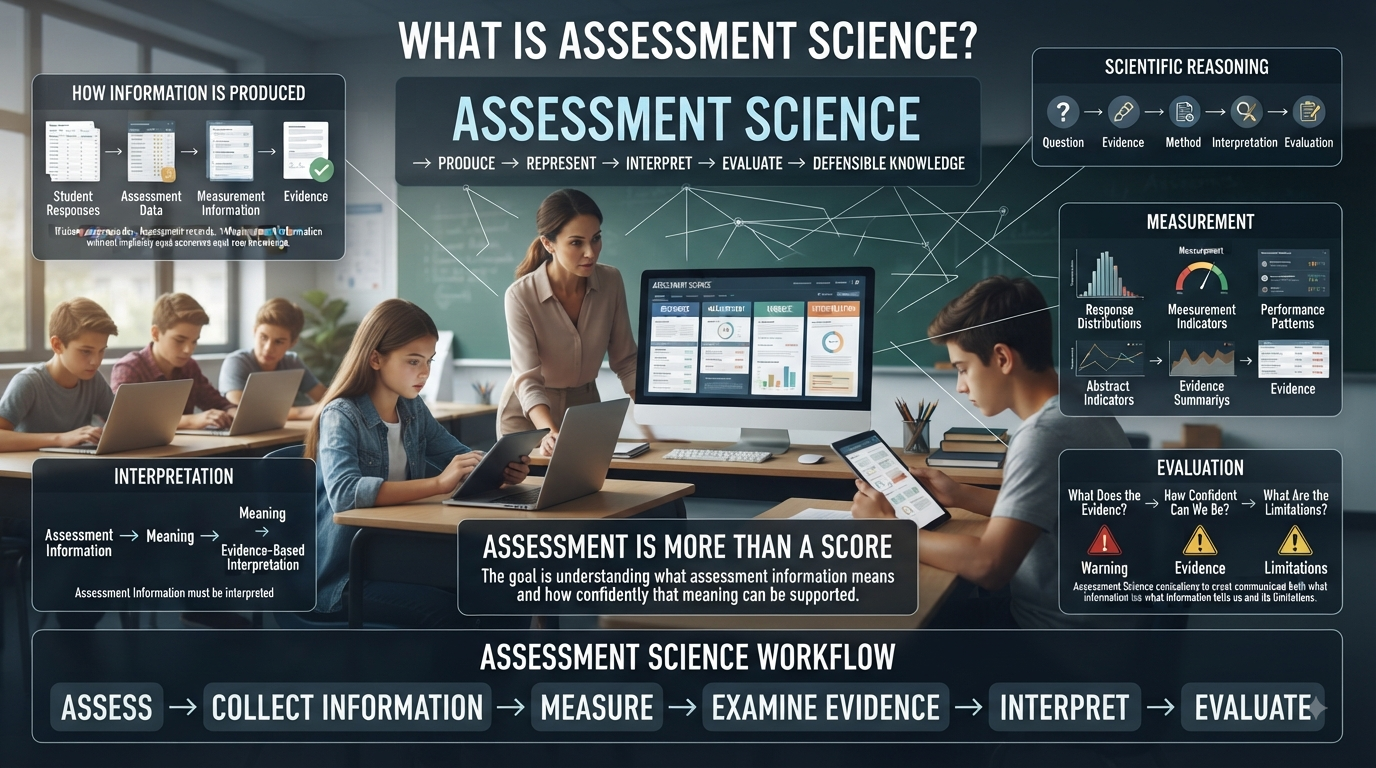
A practical workflow looks like this:
Assessment Completed
          │
          ▼
Review Class Report
          │
          ▼
Identify Weak Standards
          │
          ▼
Plan Targeted Review
          │
          ▼
Provide Guided Practice
          │
          ▼
Reassess Student Understanding
This continuous cycle creates a responsive learning environment where instruction adapts to student needs.
Supporting Small-Group Instruction with Data
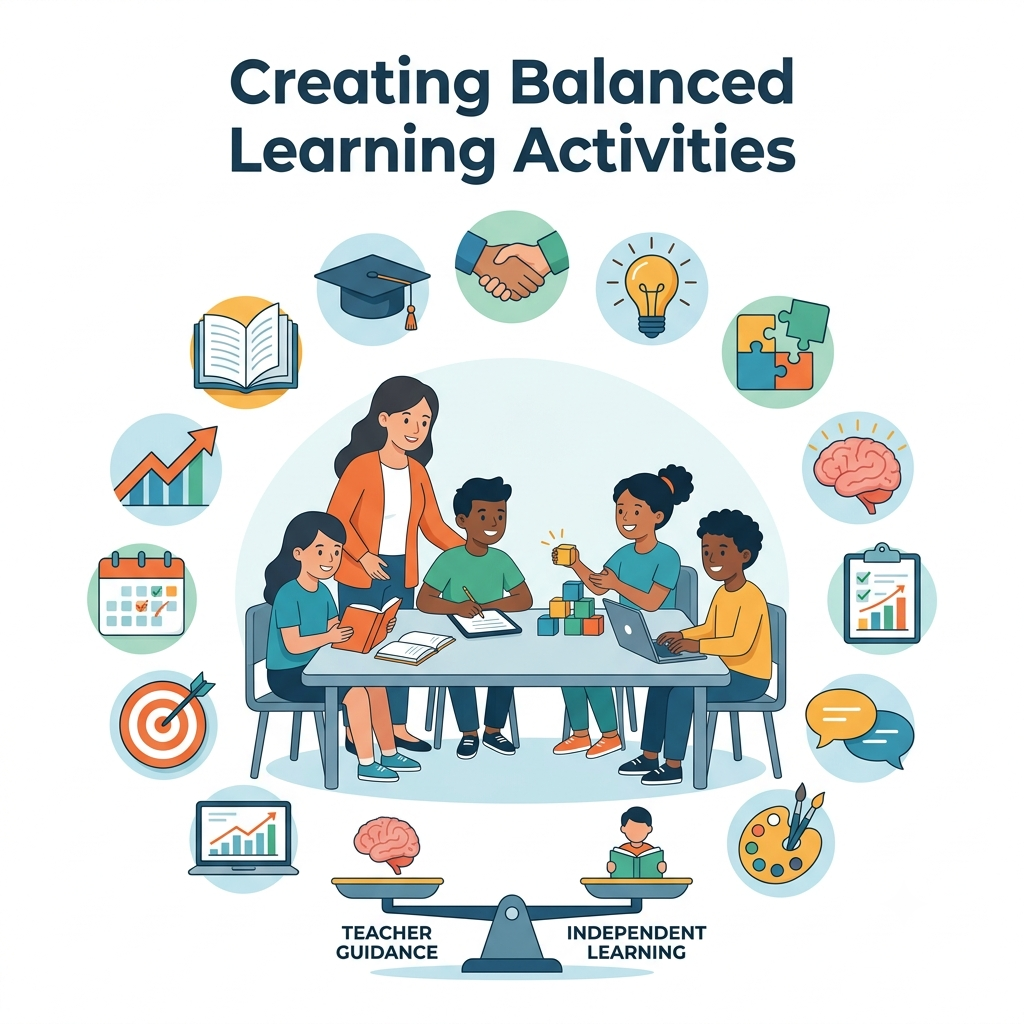
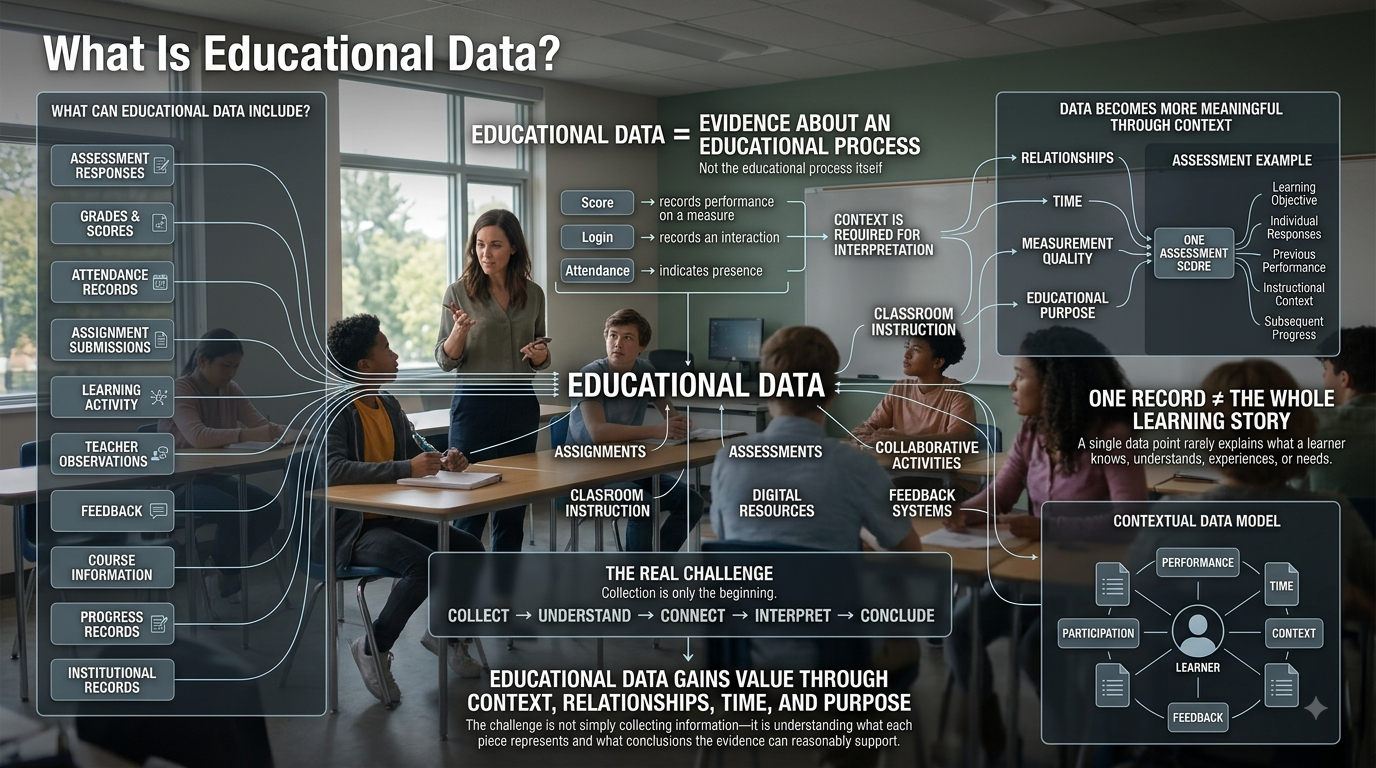
A premium educational illustration demonstrating how assessment reports help teachers create targeted small-group instruction, personalize learning, and avoid common data interpretation mistakes.
Assessment reports make small-group instruction far more intentional.
Instead of grouping students randomly, teachers can organize groups according to similar learning needs.
Examples include:
Group 1
Students needing foundational review.
Group 2
Students requiring additional guided practice.
Group 3
Students ready for enrichment.
Because each group works on appropriately challenging material, classroom instruction becomes more efficient and engaging.
Common Mistakes Teachers Make When Reading Assessment Reports
Even experienced educators can misinterpret assessment data.
Being aware of these mistakes helps ensure reports are used effectively.
1. Focusing Only on Grades
Grades summarize performance but rarely explain why students performed as they did.
Always examine objective mastery and question analysis alongside overall scores.
2. Ignoring Long-Term Trends
One disappointing assessment should not define student ability.
Repeated evidence across multiple assessments provides a much clearer picture of learning.
3. Overlooking High-Performing Students
Students who consistently perform well still benefit from meaningful feedback and academic challenges.
Assessment reports help identify opportunities for enrichment—not just intervention.
4. Assuming Every Incorrect Answer Reflects Lack of Understanding
Students may answer incorrectly because of:
Misreading questions
Running out of time
Careless mistakes
Test anxiety
Technology issues
Assessment data should always be interpreted alongside classroom observations and professional judgment.
5. Waiting Too Long to Respond
Assessment reports lose instructional value when teachers wait several weeks before acting on the results.
Immediate adjustments often produce the greatest improvement.
Best Practices for Using Assessment Reports
Teachers who consistently improve student outcomes often follow similar habits.
✅ Review reports after every meaningful assessment.
Regular analysis prevents small misunderstandings from becoming larger learning gaps.
✅ Focus on learning objectives rather than percentages.
Objective-level mastery provides more useful instructional information.
✅ Combine multiple data sources.
Assessment reports should complement classroom participation, assignments, observations, and discussions.
✅ Share meaningful feedback with students.
Students benefit when they understand what they need to improve and how to improve it.
✅ Reassess after intervention.
Instructional adjustments should always be followed by another assessment to measure effectiveness.
Preparing for Data-Driven Teaching
By this stage, assessment reports have evolved from simple grading tools into powerful instructional resources. When teachers interpret assessment data thoughtfully, they can personalize learning, strengthen lesson planning, provide timely interventions, and monitor student growth with greater confidence.
In the final part of this guide, we’ll explore how assessment reports support parent-teacher conferences, school-wide decision-making, and long-term instructional planning. We’ll also examine emerging trends such as AI-powered assessment analytics, predictive learning insights, frequently asked questions, and a practical checklist teachers can use to maximize the value of every assessment report.
For the latest gaming news, expert reviews, and walkthroughs, readers can also visit IGN, one of the world’s leading gaming websites.
Professional Recommendations & Expert Reviews
Assessment Reports Every Teacher Should Understand help identify student strengths and learning gaps.
Assessment Reports Every Teacher Should Understand provide valuable information for improving classroom instruction.
Assessment Reports Every Teacher Should Understand support informed decisions based on student performance.
Assessment Reports Every Teacher Should Understand help monitor academic progress throughout the school year.
Assessment Reports Every Teacher Should Understand reveal patterns in classroom achievement.
Assessment Reports Every Teacher Should Understand support personalized instruction for different learners.
Assessment Reports Every Teacher Should Understand help teachers identify concepts that require additional review.
Assessment Reports Every Teacher Should Understand provide evidence for measuring learning outcomes.
Assessment Reports Every Teacher Should Understand support effective lesson planning with real classroom data.
Assessment Reports Every Teacher Should Understand help track student improvement over time.
Assessment Reports Every Teacher Should Understand encourage timely instructional adjustments.
Assessment Reports Every Teacher Should Understand highlight areas where students need additional practice.
Assessment Reports Every Teacher Should Understand support balanced classroom evaluation.
Assessment Reports Every Teacher Should Understand help teachers recognize high-performing students.
Assessment Reports Every Teacher Should Understand identify students who may benefit from extra support.
Assessment Reports Every Teacher Should Understand support meaningful classroom discussions about progress.
Assessment Reports Every Teacher Should Understand improve instructional planning with measurable results.
Assessment Reports Every Teacher Should Understand help evaluate the effectiveness of teaching strategies.
Assessment Reports Every Teacher Should Understand support continuous classroom improvement.
Assessment Reports Every Teacher Should Understand encourage data-informed educational decisions.
Assessment Reports Every Teacher Should Understand help compare learning progress across different topics.
Assessment Reports Every Teacher Should Understand support accurate performance monitoring.
Assessment Reports Every Teacher Should Understand help identify common classroom misconceptions.
Assessment Reports Every Teacher Should Understand provide useful insights before future assessments.
Assessment Reports Every Teacher Should Understand support better classroom organization.
Assessment Reports Every Teacher Should Understand help teachers evaluate student participation.
Assessment Reports Every Teacher Should Understand improve long-term curriculum planning.
Assessment Reports Every Teacher Should Understand support differentiated learning strategies.
Assessment Reports Every Teacher Should Understand help prioritize important learning objectives.
Assessment Reports Every Teacher Should Understand support regular academic reflection.
Assessment Reports Every Teacher Should Understand help measure classroom growth consistently.
Assessment Reports Every Teacher Should Understand support effective communication with students.
Assessment Reports Every Teacher Should Understand help identify successful instructional practices.
Assessment Reports Every Teacher Should Understand improve confidence when making educational decisions.
Assessment Reports Every Teacher Should Understand support classroom interventions based on evidence.
Assessment Reports Every Teacher Should Understand help teachers monitor learning trends.
Assessment Reports Every Teacher Should Understand support consistent academic progress tracking.
Assessment Reports Every Teacher Should Understand help organize future review sessions.
Assessment Reports Every Teacher Should Understand improve lesson effectiveness through performance analysis.
Assessment Reports Every Teacher Should Understand support balanced classroom assessment methods.
Assessment Reports Every Teacher Should Understand help evaluate student readiness for upcoming topics.
Assessment Reports Every Teacher Should Understand support targeted review activities.
Assessment Reports Every Teacher Should Understand help reduce learning gaps through timely intervention.
Assessment Reports Every Teacher Should Understand improve instructional flexibility throughout the year.
Assessment Reports Every Teacher Should Understand support objective classroom evaluation.
Assessment Reports Every Teacher Should Understand help identify strengths across different subjects.
Assessment Reports Every Teacher Should Understand support ongoing student development.
Assessment Reports Every Teacher Should Understand improve classroom efficiency with organized performance data.
Assessment Reports Every Teacher Should Understand help teachers adjust pacing when necessary.
Assessment Reports Every Teacher Should Understand support stronger academic planning.
Assessment Reports Every Teacher Should Understand help monitor class-wide performance trends.
Assessment Reports Every Teacher Should Understand support evidence-based teaching improvements.
Assessment Reports Every Teacher Should Understand help teachers focus on measurable learning outcomes.
Assessment Reports Every Teacher Should Understand support regular instructional reflection.
Assessment Reports Every Teacher Should Understand help improve classroom engagement through informed planning.
Most Frequently Asked Faqs
1. Why are assessment reports important for teachers?
Assessment reports are important because they provide evidence-based insights into student learning rather than relying solely on final grades. They help teachers identify learning gaps, monitor academic progress, evaluate instructional effectiveness, and make informed decisions about future lessons.
Instead of simply showing whether a student passed or failed, a well-designed assessment report answers questions such as:
Which learning objectives have been mastered?
Which concepts require reteaching?
Which students need additional support or enrichment?
How has student performance changed over time?
Are classroom teaching strategies producing the desired results?
For example, if an entire class performs poorly on questions related to fractions but scores highly in other math topics, the issue is likely with conceptual understanding rather than overall ability. The teacher can then revisit that specific concept instead of reteaching the entire unit.
Assessment reports also support:
Personalized learning plans
Data-driven lesson planning
Parent-teacher conferences
Intervention strategies
Curriculum evaluation
School improvement initiatives
Expert Insight: The most effective teachers don’t use assessment reports to label students—they use them to improve learning. The goal is continuous improvement, not simply measuring achievement.
2. What information should teachers look for in an assessment report?
Teachers should look beyond overall percentages and focus on the data that explains why students performed the way they did.
The most valuable assessment reports typically include:
Report Element
Why It Matters
Overall Score
Provides a quick summary of performance.
Learning Objective Mastery
Identifies which standards students understand or struggle with.
Question-Level Analysis
Reveals confusing or frequently missed questions.
Student Growth
Tracks improvement across multiple assessments.
Class Average
Helps compare individual and group performance.
Participation Rate
Indicates student engagement.
Time on Task
Shows whether students rushed, struggled, or worked steadily.
Common Misconceptions
Highlights concepts requiring reteaching.
Rather than asking, “Who scored the highest?”, teachers should ask:
Which objective had the lowest mastery?
Which misconceptions appeared repeatedly?
Did most students struggle with the same concept?
Are certain students consistently improving?
This approach shifts the focus from grades to meaningful instructional improvement.
3. How can teachers use assessment reports to improve student learning?
Assessment reports become truly valuable when they influence classroom decisions.
A practical data-driven teaching cycle looks like this:
Review assessment results.
Identify weak learning objectives.
Determine the cause of misunderstandings.
Adjust lesson plans accordingly.
Provide targeted intervention or enrichment.
Reassess student understanding.
Compare new results with previous reports.
For example, imagine a history teacher notices that students perform well on factual recall but struggle with source analysis questions.
Instead of repeating the entire lesson, the teacher may:
Introduce more document-based activities.
Model historical thinking strategies.
Use collaborative source evaluation exercises.
Provide additional guided practice before the next assessment.
Assessment reports also support differentiated instruction by helping teachers group students according to similar learning needs.
Possible instructional groups include:
Students needing foundational review.
Students requiring additional guided practice.
Students ready for independent or advanced work.
Because these decisions are based on evidence rather than assumptions, instructional time becomes significantly more effective.
4. What is the difference between formative and summative assessment reports?
Although both measure student learning, they serve different educational purposes.
Formative Assessment Reports
Summative Assessment Reports
Used during instruction
Used after instruction
Focus on improving learning
Focus on evaluating learning
Low-stakes assessments
High-stakes assessments
Frequent and ongoing
Periodic
Immediate feedback
Final evaluation
Helps teachers adjust lessons
Measures achievement against standards
Formative Assessment Example
A teacher gives a short quiz after teaching fractions.
The assessment report shows that many students misunderstand improper fractions.
The teacher spends another lesson reviewing the concept before moving on.
Summative Assessment Example
At the end of the unit, students complete a final exam.
The resulting report evaluates whether students successfully mastered the entire unit and provides a final measure of achievement.
The strongest classrooms use both assessment types together.
Formative assessments guide daily teaching decisions, while summative assessments measure long-term learning outcomes and curriculum effectiveness.
5. How often should teachers review assessment reports?
Teachers should review assessment reports after every meaningful assessment, regardless of whether it is a quick classroom quiz, a weekly formative activity, or a major unit test.
Waiting until the end of a grading period often delays important instructional adjustments that could improve student understanding much earlier.
A practical review schedule might look like this:
Assessment Type
Recommended Review Frequency
Exit Tickets
Daily
Classroom Quizzes
After each assessment
Weekly Reviews
Weekly
Unit Tests
Immediately after grading
Benchmark Assessments
Each testing period
Semester Exams
End of term
Growth Reports
Monthly or quarterly
Regular review allows teachers to:
Detect learning gaps before they become significant.
Monitor the effectiveness of interventions.
Adjust pacing when necessary.
Recognize student growth over time.
Provide timely and meaningful feedback.
Remember that assessment reports should not remain stored in a gradebook after scores are recorded. Their greatest value lies in helping teachers continuously refine instruction and support every learner throughout the academic year.