What Defines Effective Learning | Effective learning is not simply the ability to remember information, complete assignments, or score well on a test.
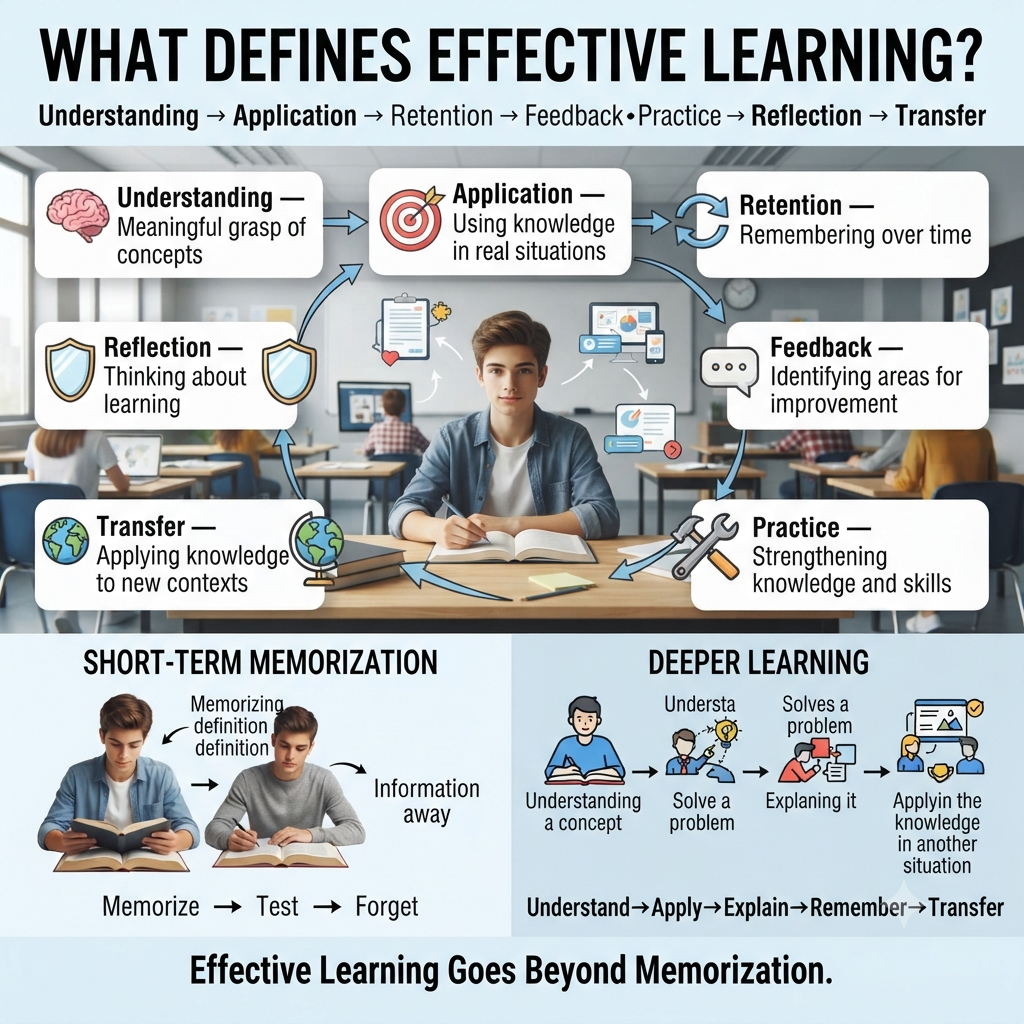
Effective learning occurs when a learner develops understanding, can apply knowledge in meaningful situations, retains it over time, and uses feedback to improve. It combines knowledge, skills, motivation, practice, reflection, and the ability to transfer what has been learned to new contexts.
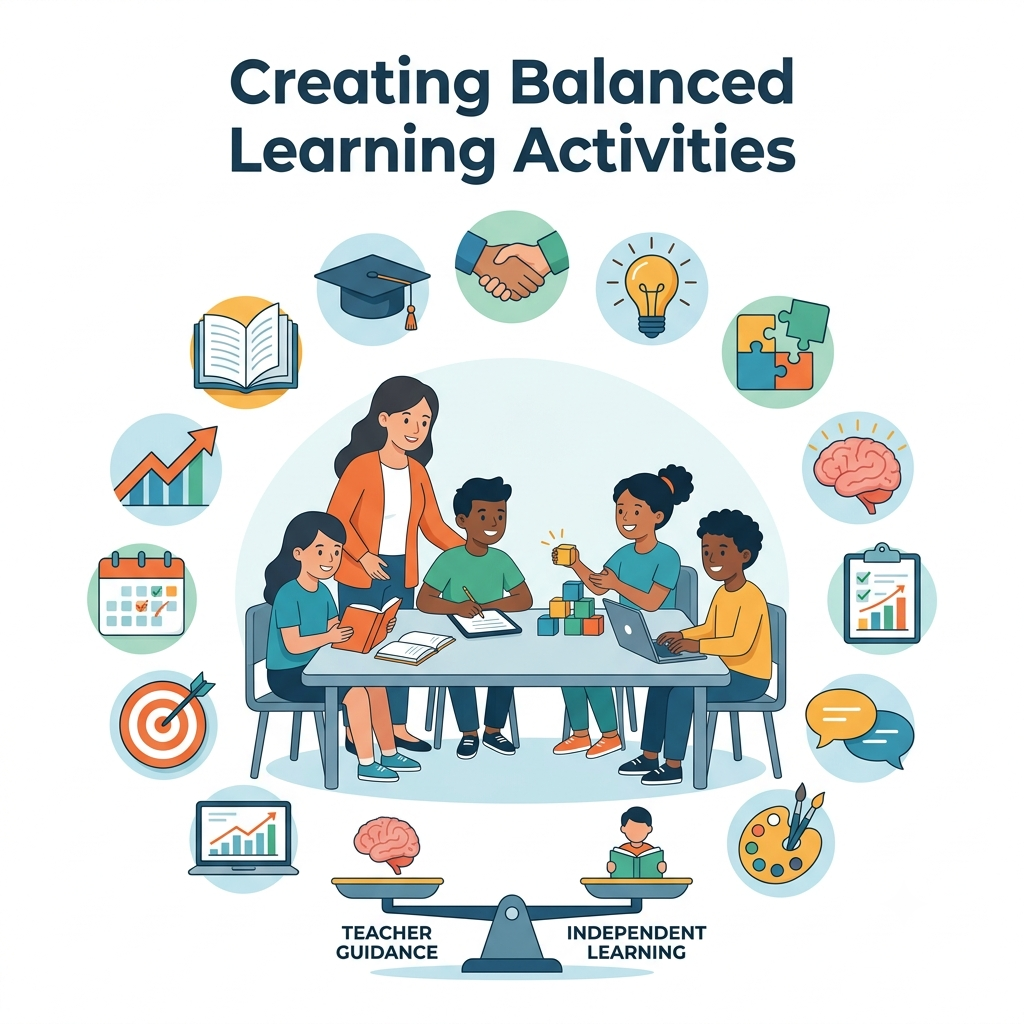
📚 What Effective Learning Involves
🧠 Understanding – Developing a meaningful grasp of the concept.
🎯 Application – Using knowledge in meaningful situations.
🔄 Retention – Remembering what has been learned over time.
💬 Feedback – Using feedback to identify areas for improvement.
🛠️ Practice – Strengthening knowledge and skills through continued practice.
🪞 Reflection – Thinking about learning and understanding.
🌍 Transfer – Applying what has been learned to new contexts.
A student may memorize a definition in five minutes and forget it the following week. Another student may take longer to learn the same concept but understand why it works, use it to solve a new problem, explain it to someone else, and remember it months later. The second situation represents much stronger learning.
Looking for comprehensive classroom resources and educational technology insights? Explore GimkitApp for expert guides, teaching strategies, game modes, and the latest updates to enhance student engagement.
What Makes Learning Effective?
Effective learning generally has several interconnected characteristics:
Understanding — the learner knows what something means, not just what it is called.
Retention — knowledge remains accessible after the initial lesson.
Application — the learner can use knowledge to perform a task or solve a problem.
Transfer — learning can be applied in unfamiliar or different situations.
Practice — learners have opportunities to retrieve and use knowledge.
Feedback — learners discover errors and understand how to improve.
Engagement — learners actively participate rather than merely receive information.
Motivation — learners have sufficient reason and willingness to continue learning.
Metacognition — learners can think about what they know, what they do not know, and how they learn.
Progress — learning produces observable improvement over time.
These elements do not operate independently. For example, practice without feedback can reinforce mistakes, while motivation without effective learning strategies can produce effort without much progress.
Effective Learning Is More Than Memorization
Memorization has a legitimate role in education. Students need to remember vocabulary, mathematical facts, terminology, procedures, historical information, and foundational concepts.
The problem occurs when memorization becomes the entire definition of learning.
A student who remembers that photosynthesis converts light energy into chemical energy has acquired useful knowledge. But deeper learning occurs when the student can also explain the process, identify the conditions required for it, interpret an experiment, and use the concept to reason about what happens when light availability changes.
Not every learning objective requires mastery at the same level. A spelling fact may primarily require accurate recall, while scientific reasoning may require application and transfer.
The appropriate learning outcome therefore depends on what the learner is expected to do with the knowledge.
The Core Components of Effective Learning
1. Clear Learning Objectives
Effective learning begins with knowing what learners are expected to understand or accomplish.
A vague objective such as:
“Learn about ecosystems.”
provides little direction.
A stronger objective might require students to:
identify the components of an ecosystem,
explain relationships between organisms,
interpret a food web,
predict how a population change could affect other organisms.
The second approach makes learning measurable because the expected performance is clearer.
Why objectives matter
Clear objectives help:
Teachers → design appropriate instruction and assessment.
Students → understand what they should focus on.
Learning platforms → connect activities with specific outcomes.
Assessments → measure whether the intended learning actually occurred.
A useful principle is simple:
Teach toward an outcome, not merely toward a topic.
2. Active Engagement
Learning becomes stronger when learners actively process information.
Simply reading a paragraph or watching a video can introduce information, but active engagement requires the learner to do something with it.
That might involve:
answering questions,
solving problems,
explaining a concept,
predicting an outcome,
comparing ideas,
retrieving information from memory,
discussing a topic,
creating something,
practicing a skill,
correcting mistakes.
This is why a classroom activity can sometimes produce deeper learning than passive exposure to the same information.
Example
A teacher explains the rules of fractions for ten minutes.
Students then complete several fraction problems, explain why their answers are correct, compare solutions, and receive feedback.
The second stage creates opportunities for retrieval, application, explanation, and correction.
Those processes give the learner more ways to build and strengthen understanding.
3. Retrieval and Practice
One of the most important characteristics of effective learning is that learners repeatedly retrieve information from memory rather than continually rereading it.
Suppose a student studies ten vocabulary terms.
Reading the list repeatedly creates familiarity. But closing the book and attempting to recall the meanings requires the learner to retrieve the information.
Useful retrieval activities include:
quizzes,
flashcards,
practice questions,
short-answer prompts,
explaining concepts from memory,
classroom games,
self-testing,
practice exercises.
The goal is not simply to test students.
Retrieval itself can support learning.
Practice also reveals weaknesses. A student may feel confident while reading notes but discover gaps when asked to answer questions without looking at the material.
That difference between familiarity and actual recall is important when designing effective learning experiences.
4. Feedback That Leads to Improvement
Feedback becomes useful when it helps learners understand:
the learner knows the answer failed but may not understand the underlying problem.
More useful feedback identifies the issue:
“Your multiplication step is correct, but the negative sign was lost when you simplified the expression.”
Now the learner has information that can guide another attempt.
Effective feedback should be:
specific,
timely,
understandable,
connected to the learning objective,
actionable.
Feedback should not merely evaluate performance. It should help change future performance.
5. Understanding and Meaning
Information becomes more useful when learners can connect new concepts to existing knowledge.
For example, students may struggle with the concept of probability if it is introduced entirely through abstract formulas.
Connecting probability to familiar situations—games, weather forecasts, sports statistics, or everyday decisions—can provide meaningful context.
The learner begins to understand not only:
“What is the formula?”
but also:
“What does this formula represent?”
That distinction is fundamental.
Meaningful learning allows students to build relationships between concepts rather than storing isolated pieces of information.
6. Motivation and Purpose
Motivation influences whether learners begin a task, persist through difficulty, and continue practicing.
But effective learning should not depend entirely on external rewards.
Grades, points, badges, rankings, and competitions can encourage participation, but sustainable learning also benefits from internal motivations such as:
curiosity,
mastery,
confidence,
relevance,
autonomy,
personal goals,
satisfaction from improvement.
A student who understands why a skill matters may be more willing to invest effort in learning it.
For this reason, teachers can strengthen learning by connecting lessons to authentic problems and meaningful outcomes.
7. Appropriate Challenge
Learning requires effort, but excessive difficulty can become counterproductive.
If a task is far below the learner’s current ability, it may provide little growth.
If it is far above the learner’s current knowledge, the learner may become confused or disengaged.
Effective learning therefore often involves manageable challenge.
A useful progression might look like:
Known concepts → Guided practice → Independent practice → More complex application → New situation
The learner receives enough support to understand the task while gradually developing independence.
This is particularly important in classrooms containing students with different levels of prior knowledge.
8. Prior Knowledge
New learning does not occur in isolation.
Students interpret new information through what they already know.
Two students can receive the same explanation and understand it differently because their prior knowledge differs.
For example, a student familiar with basic fractions may understand percentages relatively quickly. A student struggling with fractions may need foundational support before percentage problems become accessible.
This means effective instruction should consider:
existing knowledge,
misconceptions,
prerequisite skills,
vocabulary,
previous experiences.
Expert Insight
When students repeatedly struggle with an advanced concept, the problem may not be the advanced concept itself.
Sometimes the missing piece is an earlier prerequisite that was never fully understood.
9. Spaced Learning and Long-Term Retention
Learning that works today is not necessarily learning that lasts.
A student who performs perfectly immediately after instruction may still forget much of the material later.
Spacing practice across time can help learners revisit important knowledge rather than concentrating all practice into one session.
For example:
Day 1: Introduce the concept Day 2: Short retrieval practice Day 5: Mixed practice Day 10: Review Later: Application in a new context
This approach is different from studying everything immediately before an examination.
The objective is to move knowledge from temporary familiarity toward more durable accessibility.
10. Application and Transfer
A powerful test of learning is whether students can use knowledge beyond the exact situation in which it was taught.
Imagine a student learns a mathematical procedure and successfully completes ten nearly identical textbook questions.
That demonstrates useful practice.
But what happens when the problem is presented differently?
If the learner can identify the relevant concept and apply it to an unfamiliar problem, the learning is more flexible.
This is called transfer.
Transfer can involve:
applying a scientific principle to a new experiment,
using mathematical reasoning in a real-world problem,
applying writing principles to a new type of assignment,
using critical-thinking skills when evaluating unfamiliar information.
Effective learning therefore aims beyond “Can the student reproduce this example?”
It asks:
“Can the student recognize when this knowledge is useful somewhere else?”
How Teachers Can Build Effective Learning Experiences
Effective learning does not require every lesson to use the same teaching method.
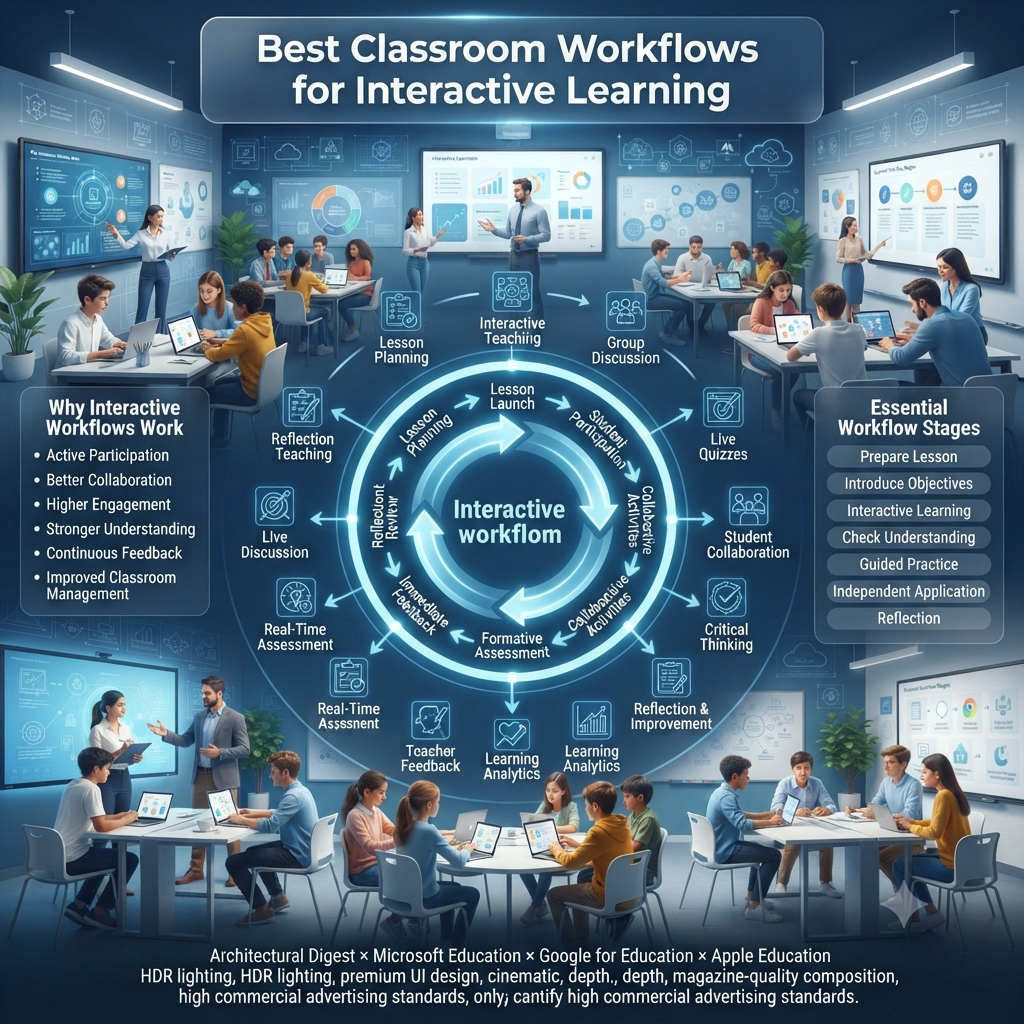
A strong learning experience may combine several stages:
1. Establish the objective
Tell students what they should understand or be able to do.
2. Activate prior knowledge
Ask questions or use a short activity to determine what students already know.
3. Introduce the new concept
Provide clear explanations, demonstrations, examples, or models.
4. Provide guided practice
Allow learners to attempt the skill with appropriate support.
5. Increase independent practice
Gradually reduce assistance as learners become more capable.
6. Provide feedback
Identify misconceptions and help learners correct them.
7. Revisit the concept
Use retrieval or spaced practice later.
8. Apply the learning
Ask learners to use the concept in a different or more realistic situation.
9. Reflect
Encourage students to identify what they understand, what remains difficult, and what strategy helped them.
This creates a complete learning cycle rather than a single instructional event.
Assessment Should Measure Learning, Not Just Completion
Assessment is most useful when it provides information about learning.
A completed worksheet does not automatically mean a student understands the material.
Likewise, a high score on a simple recall quiz does not necessarily demonstrate deep conceptual understanding.
Different assessment approaches answer different questions:
Assessment Type
What It Helps Reveal
Recall questions
Can the learner remember key information?
Short-answer questions
Can the learner explain an idea?
Problem solving
Can the learner apply knowledge?
Projects
Can the learner integrate multiple skills?
Discussions
Can the learner reason and communicate?
Performance tasks
Can the learner demonstrate a skill?
Formative assessment
What needs improvement now?
Summative assessment
What has been learned by the end?
The strongest assessment strategy depends on the intended learning outcome.
Effective Learning vs. Busy Learning
One of the easiest mistakes in education is confusing activity with learning.
A classroom can be extremely busy while producing limited learning.
Students may:
complete worksheets,
answer dozens of questions,
participate in games,
watch educational videos,
create presentations,
copy notes.
None of these activities automatically guarantees learning.
The better question is:
What evidence shows that the learner understands or can perform the intended outcome?
This shifts attention from activity completion toward actual learning.
⚠ Common Mistake
A teacher may assume:
“Students participated, therefore students learned.”
Participation is useful evidence of engagement, but it is not sufficient evidence of learning.
A learner can be highly engaged in an activity without developing the intended knowledge or skill.
The Role of Educational Games and Interactive Learning
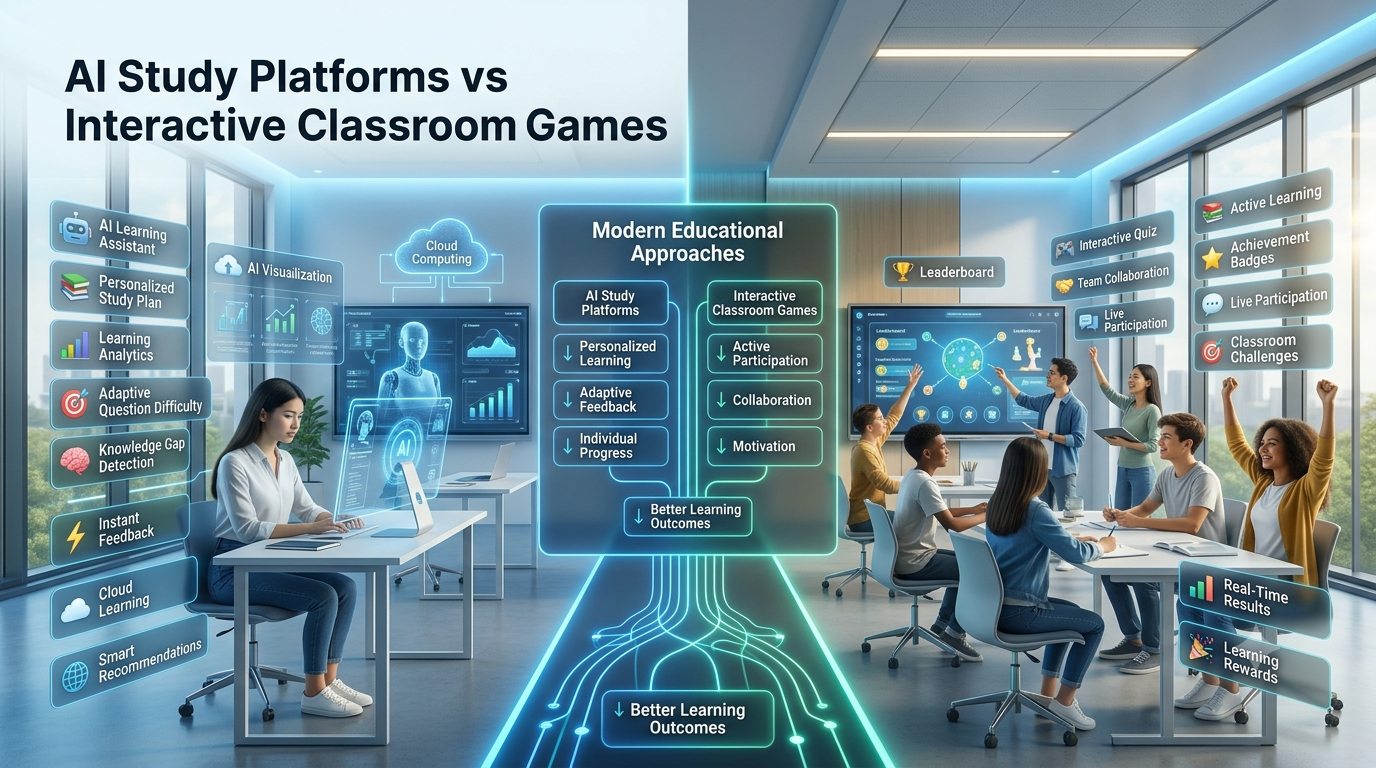
Educational games can contribute to effective learning when the game mechanics support meaningful learning objectives.
A game can provide:
repeated practice,
immediate feedback,
active participation,
motivation,
retrieval opportunities,
social interaction,
visible progress.
However, competition alone does not create learning.
A well-designed educational game should connect its activities to what students actually need to learn.
For example, a classroom review game can be valuable when questions require students to retrieve important concepts and feedback helps them identify weaknesses.
The game is then functioning as part of a broader learning system rather than becoming the learning objective itself.
How Students Can Improve Their Own Learning
Students do not have to depend entirely on teachers to make learning effective.
They can improve learning by changing how they study.
The exact process will vary by subject, learner, age, and learning objective, but the underlying principle remains consistent:
Learning becomes more effective when learners understand knowledge, actively work with it, receive useful feedback, and eventually use it independently in meaningful situations.
How to Know Whether Learning Is Actually Effective
The strongest evidence of effective learning is not simply that students finished the lesson.
Look for changes in what learners can do.
Before learning
A student may:
lack the relevant knowledge,
misunderstand the concept,
require significant support,
struggle to complete the task.
After effective learning
The student may:
explain the concept accurately,
solve related problems,
identify and correct errors,
perform the skill independently,
apply the knowledge in a new context,
retain the knowledge later.
This creates a more meaningful definition of progress:
Effective learning changes capability.
The Difference Between Learning, Performance, and Mastery
These terms are related but not identical.
Performance describes what a learner can do at a particular moment.
Learning refers to a relatively lasting change in knowledge, understanding, or capability.
Mastery represents a stronger level of competence in which the learner can perform reliably and often adapt knowledge to different situations.
A student can perform well because of short-term preparation without having durable learning.
For example, a student might memorize answers the night before an examination and score highly. If the information disappears shortly afterward and cannot be applied elsewhere, the performance may have exceeded the durability of the learning.
This is why effective education should consider retention and transfer, not only immediate scores.
A Teacher’s Effective Learning Checklist
Before finishing a lesson or learning activity, teachers can ask:
Is the learning objective clear?
Does the activity require active thinking?
Do students have the necessary prior knowledge?
Are students practicing the intended skill?
Will they retrieve the information later?
Is feedback specific and useful?
Is the level of challenge appropriate?
Does the assessment match the learning objective?
Can students apply the concept beyond the original example?
Is there evidence that learning—not merely participation—occurred?
If several answers are “no,” the lesson may need redesign rather than simply more content.
What Ultimately Defines Effective Learning?
Effective learning is defined by meaningful and lasting improvement in a learner’s knowledge, understanding, skills, and ability to act independently.
It is not one teaching method, one classroom activity, one educational technology, or one assessment strategy.
Instead, effective learning emerges from the interaction of:
Clear objectives + active engagement + prior knowledge + meaningful practice + retrieval + feedback + appropriate challenge + motivation + reflection + application + transfer + retention
The most effective learning experiences therefore move beyond information delivery.
They help learners understand something, remember it, use it, recognize when it matters, correct their mistakes, and eventually perform without depending on the teacher or learning system.
That is the real measure of educational effectiveness.
And once learning is viewed this way, the central question changes from “Did we teach the content?” to a much more important one:
“What can the learner understand and do now that they could not reliably do before?”
That question provides a much stronger foundation for effective teaching, assessment, educational technology, and long-term learning design.
The Deeper Science Behind Effective Learning
Effective learning becomes easier to understand when it is viewed as a system rather than a single classroom technique. Learning depends on how attention, memory, prior knowledge, practice, motivation, feedback, environment, and application interact.
A student does not learn simply because information was presented. Learning occurs when the learner processes information, connects it with existing knowledge, retrieves it, uses it, receives information about performance, and gradually becomes more capable and independent.
This distinction connects effective learning with several important areas of educational science.
Attention Is the Gateway to Learning
Before information can be meaningfully processed, learners generally need to attend to it.
A distracted learner may technically hear an explanation without developing a usable representation of the concept.
That makes attention an important part of learning design.
Teachers can support attention by:
reducing unnecessary distractions,
presenting information in manageable sections,
changing activities when appropriate,
asking questions during instruction,
connecting new concepts with relevant examples,
giving learners a clear reason to pay attention.
However, attention should not be confused with entertainment.
A highly entertaining activity can capture attention without producing meaningful learning.
The important question is:
What is the learner’s attention being directed toward?
If attention is directed toward the learning objective, engagement can support learning. If it is directed primarily toward points, animations, competition, or unrelated features, engagement may not translate into educational progress.
Working Memory and Cognitive Load
Learners have limited capacity for processing new information at one time.
This is why effective instruction should avoid unnecessarily overwhelming beginners with too many new concepts, instructions, examples, or technical terms simultaneously.
A useful instructional sequence is:
Introduce → Explain → Practice → Check → Extend
Rather than:
Introduce everything → Give a large task → Hope students understand
This connects effective learning with cognitive load theory, which focuses on how the demands placed on working memory affect learning.
Three useful considerations
Intrinsic complexity comes from the material itself.
Extraneous complexity comes from unnecessary difficulty in how information is presented.
Learning-supporting processing occurs when learners organize and connect information in ways that strengthen understanding.
The practical lesson is not that learning should always be easy.
Instead:
Remove unnecessary difficulty while preserving the productive difficulty required for learning.
Memory Turns Practice Into Durable Knowledge
Learning depends heavily on memory because learners cannot continually rediscover everything from the beginning.
A student who has mastered multiplication facts can devote more mental resources to solving a complex mathematics problem because basic calculations require less conscious effort.
This illustrates an important relationship:
Knowledge → Retrieval → Fluency → Available mental capacity → More complex learning
Foundational knowledge therefore matters even in classrooms that emphasize creativity, critical thinking, and problem solving.
Higher-order thinking does not eliminate the need for knowledge.
It often depends on it.
Metacognition: Learning How to Learn
One of the most powerful aspects of effective learning is metacognition—the learner’s ability to think about their own knowledge and learning processes.
A metacognitive learner can ask:
What do I already understand?
What am I confused about?
Which part of the task is difficult?
What strategy am I using?
Is that strategy working?
How can I check my answer?
What should I change next time?
This transforms students from passive recipients into active managers of their learning.
Example
Instead of saying:
“I am bad at mathematics.”
a learner develops a more useful diagnosis:
“I understand the formula, but I am making errors when deciding which values belong in it.”
The second statement identifies a specific learning problem that can be addressed.
Self-Regulated Learning
Metacognition becomes especially powerful when combined with self-regulated learning.
Self-regulated learners manage their learning through a cycle:
Plan → Monitor → Adjust → Evaluate
Planning
The learner identifies the goal and chooses an approach.
Monitoring
The learner checks whether understanding is developing.
Adjustment
The learner changes strategies when the current approach is ineffective.
Evaluation
The learner reviews the outcome and identifies what should happen next.
This framework is valuable for both classroom learning and independent study.
It also explains why simply giving students more resources does not automatically make them better learners.
Students need to understand how to use those resources strategically.
The Learning Environment Matters
Effective learning is influenced by the environment in which learning takes place.
Important environmental factors can include:
classroom structure,
teacher support,
peer interaction,
psychological safety,
accessibility,
noise and distraction,
available technology,
time,
learning materials,
opportunities for practice.
A student who is afraid of making mistakes may avoid participation.
A student who knows mistakes are treated as useful information may be more willing to attempt difficult problems.
This is one reason classroom culture matters alongside curriculum design.
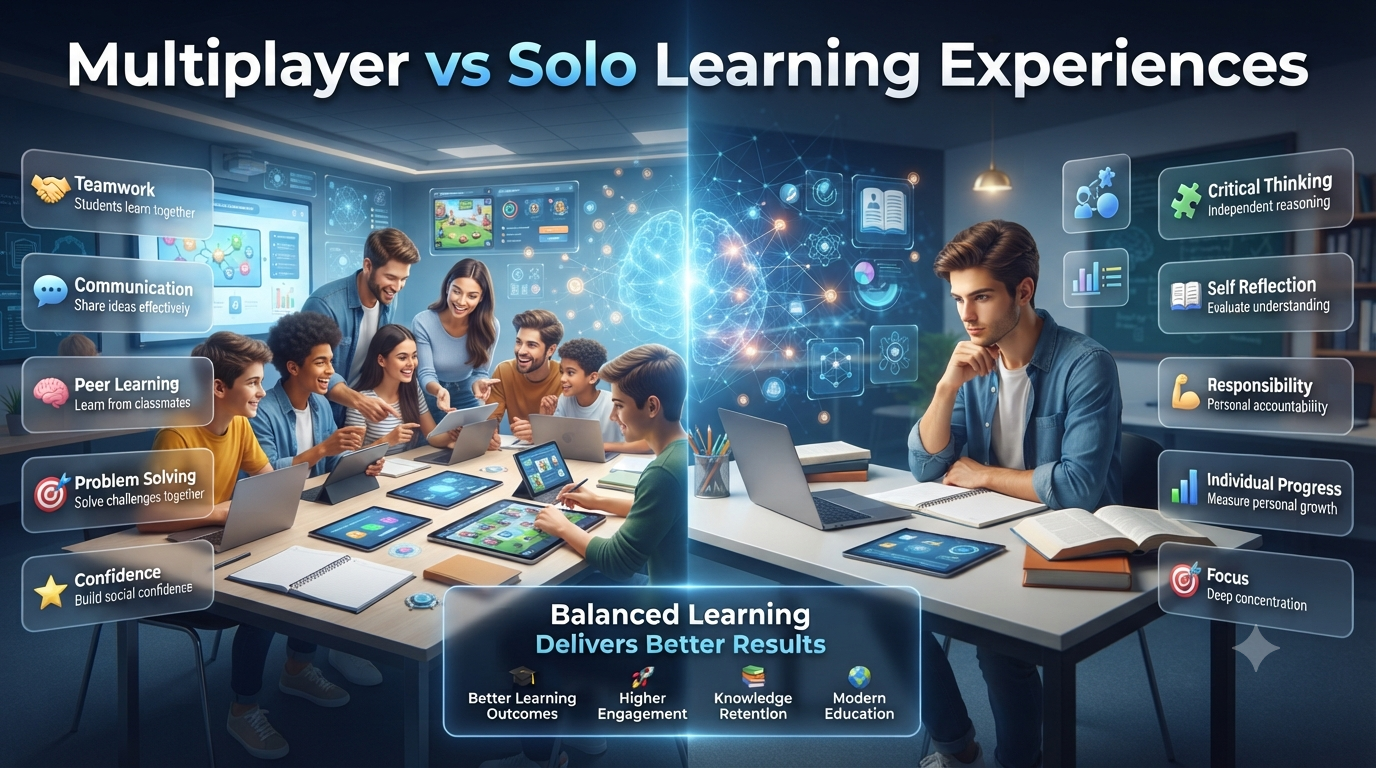
Social Learning and Collaboration
Learning can also occur through interaction with other people.
Students may develop understanding by:
explaining concepts to peers,
debating interpretations,
solving problems collaboratively,
observing different approaches,
asking questions,
teaching another learner.
Explaining an idea to someone else can expose gaps in the explainer’s own understanding.
This makes collaboration valuable when it is structured around genuine learning objectives.
But group work is not automatically effective.
A group activity can fail when:
one student performs all the work,
objectives are unclear,
students copy rather than reason,
assessment rewards completion instead of understanding.
Effective learning therefore benefits from appropriate differentiation.
This does not mean creating a completely separate curriculum for every student.
It can involve:
different levels of scaffolding,
additional examples,
optional challenge,
flexible practice,
alternative explanations,
targeted feedback,
different ways to demonstrate understanding.
The objective is not to make learning easier for everyone.
It is to provide the appropriate support and challenge needed for meaningful progress.
Scaffolding and Gradual Independence
Scaffolding refers to temporary support that helps learners perform tasks they cannot yet perform independently.
A teacher might initially provide:
Model → Guided Example → Partial Support → Independent Attempt
As competence increases, support should gradually decrease.
The ultimate objective of scaffolding is not dependence.
It is independence.
⚠ Common Mistake
If support never decreases, students may become good at completing tasks with assistance without developing the ability to perform independently.
Effective scaffolding therefore includes an exit strategy: reduce support as competence increases.
Assessment, Feedback, and Instruction Form a Continuous Loop
Assessment should not be treated as something that happens only at the end of a unit.
In effective learning systems, assessment continuously informs instruction.
The cycle looks like:
Teach
  ↓
Practice
  ↓
Assess
  ↓
Identify Gap
  ↓
Provide Feedback
  ↓
Adjust Instruction
  ↓
Practice Again
  ↓
Reassess
This is the logic behind formative assessment.
The purpose is not merely to produce a score.
The purpose is to answer:
What does the learner need next?
That makes assessment a learning tool rather than simply a measurement tool.
Learning Analytics and Evidence of Progress
Digital learning environments can provide additional information about learner behavior.
Depending on the system, useful indicators may include:
accuracy,
response patterns,
repeated errors,
completion,
attempts,
response time,
progression,
question difficulty,
areas of improvement.
But behavioral data must be interpreted carefully.
For example, fast completion does not necessarily mean deep understanding.
Likewise, high participation does not necessarily equal mastery.
A strong learning analytics system therefore connects behavioral evidence with learning outcomes rather than treating activity metrics as learning itself.
Technology Should Support Learning, Not Replace Learning Design
Educational technology can improve learning when it strengthens a sound instructional process.
Useful technologies can support:
immediate feedback,
retrieval practice,
collaboration,
adaptive practice,
progress tracking,
simulations,
interactive activities,
accessibility,
remote learning,
assessment.
But technology does not automatically make instruction effective.
A poorly designed digital activity remains poorly designed when placed on a screen.
The important question is not:
“Which technology should we use?”
It is:
“What learning problem should this technology solve?”
That distinction helps teachers avoid technology-first decision making.
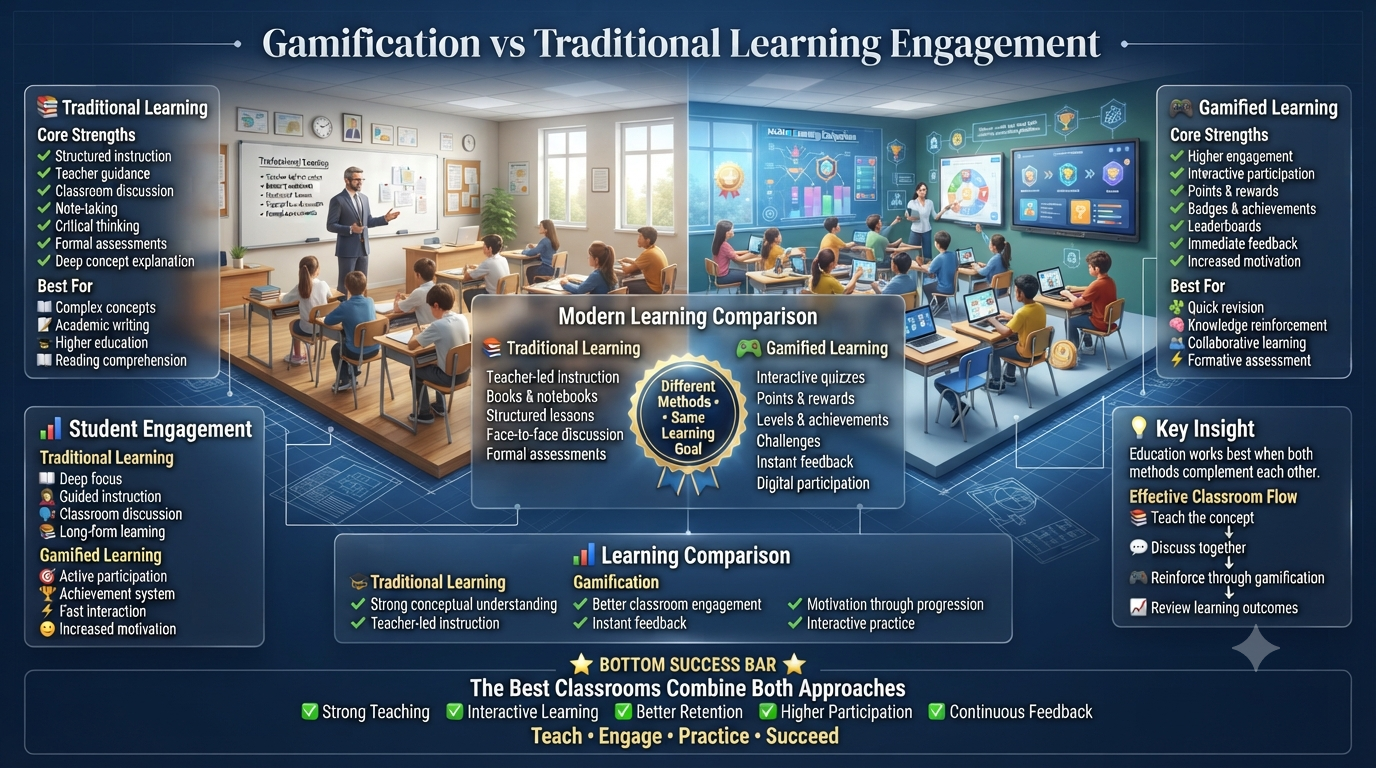
Gamification and Effective Learning
Gamification introduces game-inspired elements such as:
points,
levels,
rewards,
challenges,
competition,
progress indicators,
achievements.
These mechanisms can increase participation, but participation should not be confused with learning.
The educational value depends on the relationship between the game mechanic and the learning objective.
may produce activity without substantial learning.
Best Practice
Use game mechanics to reinforce practice, feedback, motivation, and progression, rather than allowing the game itself to become the main objective.
This distinction is particularly important for classroom platforms such as Gimkit, where game-based interaction can be incorporated into review and practice activities.
Effective Learning in Remote and Hybrid Environments
Online learning introduces additional challenges because learners may have more responsibility for managing their own attention, time, technology, and study environment.
Effective remote learning benefits from:
clear instructions,
predictable lesson structures,
manageable workloads,
frequent interaction,
accessible resources,
timely feedback,
opportunities for retrieval,
progress monitoring,
teacher presence.
A long recorded lecture followed by a high-stakes examination may provide less effective learning support than shorter explanations combined with practice, questions, feedback, and repeated review.
The principle remains the same regardless of delivery format:
Change the learner’s capability, not merely the delivery medium.
Inclusion and Accessibility Are Part of Effective Learning
Learning cannot be considered fully effective if important learners cannot meaningfully access the learning experience.
Inclusive learning may require attention to:
readable materials,
accessible digital interfaces,
clear language,
appropriate accommodations,
multiple ways to interact with information,
reasonable pacing,
supportive classroom practices.
Accessibility is not simply a technical requirement.
It directly affects whether learners can participate, process information, demonstrate understanding, and receive feedback.
Errors Are Part of the Learning Process
Mistakes provide information.
A wrong answer can reveal:
a misconception,
a missing prerequisite,
a procedural mistake,
a misunderstanding of instructions,
careless execution,
incomplete knowledge.
The goal is therefore not to eliminate every error immediately.
The goal is to create a system where errors become diagnostic information.
This is much more valuable than simply marking an answer wrong and moving on.
Productive Struggle vs Unproductive Frustration
Difficulty can support learning, but not all difficulty is useful.
Productive struggle occurs when learners are challenged to think, retrieve, reason, or solve a problem while still having a realistic pathway toward success.
Unproductive frustration occurs when learners lack the knowledge, support, or clarity necessary to make meaningful progress.
Teachers should therefore distinguish between:
“This is difficult because the learner is developing the skill.”
and:
“This is difficult because the learning experience is poorly designed.”
That distinction is central to effective instruction.
How Effective Learning Changes Across Age and Expertise
The principles of effective learning remain broadly relevant, but implementation changes with learners.
Beginners
Need:
clear explanations,
vocabulary support,
examples,
scaffolding,
frequent feedback,
manageable practice.
Intermediate learners
Benefit from:
increasingly independent practice,
comparisons,
problem solving,
mixed practice,
deeper explanation.
Advanced learners
Need:
authentic problems,
ambiguity,
transfer,
independent research,
complex decision-making,
opportunities to create and evaluate.
A strategy that works for a beginner may become unnecessarily restrictive for an advanced learner.
Effective learning therefore requires progressive release of responsibility.
Measuring Mastery Properly
Mastery should not be inferred from one successful attempt.
A learner may answer a question correctly through:
guessing,
memorization,
recognition,
temporary recall,
genuine understanding.
Stronger evidence comes from performance across different conditions.
For example:
Recall → Explain → Apply → Solve → Transfer
If a student can consistently perform across these levels, confidence in genuine understanding increases.
This is why mastery-based approaches often focus on demonstrated competence rather than simply completing a fixed amount of instructional time.
What Makes an Effective Learning Strategy Fail?
Even strong strategies can fail when implemented poorly.
Common causes include:
Too much information
Learners become overloaded.
Too little retrieval
Knowledge remains familiar but difficult to recall independently.
Feedback without explanation
Students know the result but not how to improve.
Practice without variation
Students learn a specific pattern rather than the underlying concept.
Excessive rewards
Students focus on external rewards instead of learning goals.
Poor assessment alignment
Assessment measures something different from what instruction intended to develop.
No transfer
Students can reproduce classroom examples but cannot use the knowledge elsewhere.
No reflection
Students repeat ineffective strategies because they never examine how they learn.
No follow-up
A concept appears once and disappears before it becomes durable.
The solution is not necessarily more instruction. Often it is better alignment between objective, activity, practice, feedback, and assessment.
The Complete Effective Learning Model
All of these relationships can be combined into one broader educational model:
                 LEARNING GOAL
                       ↓
                PRIOR KNOWLEDGE
                       ↓
                    ATTENTION
                       ↓
                 UNDERSTANDING
                       ↓
              ACTIVE ENGAGEMENT
                       ↓
              GUIDED PRACTICE
                       ↓
                  RETRIEVAL
                       ↓
                   FEEDBACK
                       ↓
                  CORRECTION
                       ↓
             INDEPENDENT PRACTICE
                       ↓
                  APPLICATION
                       ↓
                   TRANSFER
                       ↓
                  RETENTION
                       ↓
                   MASTERY
                       ↓
             INDEPENDENT LEARNING
These factors influence how effectively the learning cycle operates.
For the latest gaming news, expert reviews, and walkthroughs, readers can also visit IGN, one of the world’s leading gaming websites.
A Complete Framework for Evaluating Learning Effectiveness
If a teacher, school, instructional designer, or educational platform wants to evaluate whether a learning experience is genuinely effective, the following framework provides a practical starting point.
Dimension
Key Question
Objective
What should learners be able to do?
Prior Knowledge
What must they already understand?
Engagement
Are learners actively processing information?
Practice
Are they repeatedly using the target skill?
Retrieval
Can they recall knowledge without assistance?
Feedback
Do they understand how to improve?
Challenge
Is difficulty appropriate?
Motivation
Do learners have a meaningful reason to continue?
Metacognition
Can learners monitor their own understanding?
Assessment
Does measurement match the learning objective?
Transfer
Can knowledge be used in new situations?
Retention
Does learning remain accessible over time?
Mastery
Can learners perform independently and reliably?
Accessibility
Can different learners meaningfully participate?
Evidence
Is there observable proof of improvement?
The more consistently these dimensions align, the stronger the learning system becomes.
The Most Important Distinction: Activity vs Learning
This entire chapter can ultimately be reduced to one critical distinction.
Activity is what learners do.
Learning is what changes because they did it.
A student can answer 100 questions without developing deep understanding.
A student can participate in a game without mastering the underlying concept.
A student can watch ten educational videos without being able to apply the information.
Likewise, a quiet activity can produce substantial learning if it causes the learner to reason, retrieve, connect, apply, and reflect.
Therefore, educational effectiveness should never be judged solely by how busy the classroom appears.
Final Topical Authority Perspective
“What Defines Effective Learning?” connects to nearly every major component of educational practice: learning science, cognitive psychology, memory, retrieval practice, metacognition, motivation, assessment, feedback, pedagogy, instructional design, educational technology, gamification, learning analytics, collaboration, accessibility, personalization, mastery, transfer, and lifelong learning.
The relationships between these concepts matter more than isolated definitions.
Learning objectives determine what learners should achieve.
Prior knowledge determines the foundation on which new knowledge can be built.
Attention and cognitive processing determine whether information can be meaningfully processed.
Practice and retrieval strengthen accessibility of knowledge.
Feedback identifies gaps and guides correction.
Metacognition helps learners regulate their own progress.
Motivation influences persistence and willingness to invest effort.
Assessment provides evidence about what has actually been learned.
Technology and educational games can strengthen these processes when they are aligned with genuine learning objectives.
Application and transfer demonstrate whether knowledge is flexible rather than restricted to memorized examples.
Retention and repeated performance reveal whether learning lasts.
And mastery represents the point where learners can use knowledge and skills with increasing independence and reliability.
So the most complete definition is this:
Effective learning is a measurable and meaningful change in a learner’s knowledge, understanding, skill, or capability that remains available over time and can be applied appropriately beyond the original learning situation.
That definition moves education away from simply asking whether content was delivered.
It asks whether capability changed.
And that is ultimately the standard that connects good teaching, good assessment, effective learning environments, educational technology, and genuine educational progress.
Professional Recommendations & Expert Reviews
What Defines Effective Learning begins with clear educational goals and measurable outcomes.
What Defines Effective Learning encourages active participation throughout the learning process.
What Defines Effective Learning supports consistent understanding instead of short-term memorization.
What Defines Effective Learning helps learners connect new ideas with existing knowledge.
What Defines Effective Learning encourages meaningful practice that reinforces important concepts.
What Defines Effective Learning supports gradual skill development through regular learning experiences.
What Defines Effective Learning helps students retain knowledge for longer periods.
What Defines Effective Learning encourages critical thinking during classroom activities.
What Defines Effective Learning supports organized lesson progression.
What Defines Effective Learning helps learners apply knowledge in practical situations.
What Defines Effective Learning encourages curiosity and continuous improvement.
What Defines Effective Learning supports deeper conceptual understanding.
What Defines Effective Learning helps students develop independent learning habits.
What Defines Effective Learning encourages active problem-solving instead of passive observation.
What Defines Effective Learning supports regular feedback throughout instruction.
What Defines Effective Learning helps strengthen academic confidence.
What Defines Effective Learning encourages collaboration between teachers and students.
What Defines Effective Learning supports structured classroom discussions.
What Defines Effective Learning helps learners build strong educational foundations.
What Defines Effective Learning encourages regular review of important concepts.
What Defines Effective Learning supports long-term knowledge retention.
What Defines Effective Learning helps students organize information logically.
What Defines Effective Learning encourages thoughtful reflection after learning activities.
What Defines Effective Learning supports balanced instruction and practice.
What Defines Effective Learning helps improve classroom engagement.
What Defines Effective Learning encourages students to ask meaningful questions.
What Defines Effective Learning supports consistent educational progress.
What Defines Effective Learning helps learners recognize their academic strengths.
What Defines Effective Learning encourages continuous skill improvement.
What Defines Effective Learning supports personalized educational experiences.
What Defines Effective Learning helps students gain confidence through achievement.
What Defines Effective Learning encourages active participation in every lesson.
What Defines Effective Learning supports logical curriculum organization.
What Defines Effective Learning helps reinforce classroom learning objectives.
What Defines Effective Learning encourages meaningful educational interactions.
What Defines Effective Learning supports effective classroom communication.
What Defines Effective Learning helps learners remain motivated over time.
What Defines Effective Learning encourages organized study habits.
What Defines Effective Learning supports stronger comprehension through repeated practice.
What Defines Effective Learning helps teachers create engaging educational experiences.
What Defines Effective Learning encourages students to learn from both success and mistakes.
What Defines Effective Learning supports collaborative classroom environments.
What Defines Effective Learning helps improve educational consistency.
What Defines Effective Learning encourages flexible thinking when solving problems.
What Defines Effective Learning supports stronger classroom participation.
What Defines Effective Learning helps learners understand relationships between concepts.
What Defines Effective Learning encourages applying knowledge across different subjects.
What Defines Effective Learning supports continuous academic growth.
What Defines Effective Learning helps students prepare effectively for assessments.
What Defines Effective Learning encourages balanced use of instructional resources.
What Defines Effective Learning supports productive classroom routines.
What Defines Effective Learning helps teachers identify learning progress accurately.
What Defines Effective Learning encourages students to become lifelong learners.
What Defines Effective Learning supports meaningful educational experiences every day.
What Defines Effective Learning helps strengthen communication and collaboration skills.
What Defines Effective Learning encourages consistent effort toward academic improvement.
What Defines Effective Learning supports structured learning pathways.
What Defines Effective Learning helps create positive classroom environments.
What Defines Effective Learning encourages reflective thinking after completing activities.
What Defines Effective Learning supports stronger knowledge integration across lessons.
What Defines Effective Learning helps learners develop confidence through continuous progress.
What Defines Effective Learning encourages meaningful engagement with educational content.
What Defines Effective Learning supports long-term academic success through organized learning.
What Defines Effective Learning helps students build transferable skills for future challenges.
What Defines Effective Learning demonstrates that active participation, regular practice, meaningful feedback, and logical progression improve educational outcomes.
What Defines Effective Learning highlights that understanding, application, collaboration, critical thinking, and continuous improvement are essential elements of successful education.
What Defines Effective Learning ultimately combines clear objectives, structured instruction, active engagement, consistent practice, timely feedback, knowledge application, and reflective learning to create lasting understanding, stronger skills, greater confidence, and long-term academic success.
What Defines Effective Learning encourages learners to build knowledge progressively through connected concepts.
What Defines Effective Learning helps students remain engaged by combining understanding with practical application.
What Defines Effective Learning supports personalized instruction that meets different learning needs and abilities.
What Defines Effective Learning encourages continuous assessment to monitor progress and guide improvement.
What Defines Effective Learning helps teachers create lessons that inspire curiosity, confidence, and active participation.
What Defines Effective Learning supports balanced development of knowledge, critical thinking, communication, and problem-solving skills.
What Defines Effective Learning demonstrates that consistent engagement, structured learning, meaningful practice, and constructive feedback produce stronger educational outcomes.
What Defines Effective Learning ultimately shows that learners achieve the greatest success when clear goals, organized instruction, active participation, continuous improvement, and real-world application work together to create lasting understanding and lifelong learning habits.
Most Frequently Asked Questions About Effective Learning
1. What are the most important characteristics of effective learning?
Effective learning is characterized by understanding, active participation, meaningful practice, retrieval, useful feedback, retention, application, and transfer. A learner should not only remember information but also understand it well enough to use it independently in appropriate situations.
The strongest signs of effective learning include:
The learner can explain the concept in their own words.
The learner can recall important information without constant assistance.
The learner can solve related problems.
The learner can identify and correct mistakes.
The learner can apply knowledge to a new situation.
Learning remains available after time has passed.
The learner gradually requires less external support.
Performance becomes more accurate, flexible, and consistent.
This means a high test score alone is not always sufficient evidence of effective learning. A student may memorize information temporarily and perform well on an immediate assessment without developing durable understanding.
A stronger evaluation asks:
Can the learner understand, remember, apply, and transfer what was learned?
Effective learning therefore represents a change in capability rather than simply completion of a lesson, assignment, video, or activity.
2. What is the difference between effective learning and memorization?
Memorization is one component of learning, but effective learning goes beyond memorizing information.
Memorization allows learners to recall facts, definitions, vocabulary, formulas, or procedures. These forms of knowledge can be essential foundations for more advanced thinking.
However, deeper learning occurs when students can connect that information with meaning and use it appropriately.
For example, a student may memorize the formula for calculating the area of a triangle. That demonstrates recall.
A stronger level of learning occurs when the student can:
Recall the formula.
Explain what each part represents.
Calculate the area correctly.
Recognize when the formula should be used.
Solve an unfamiliar problem involving the concept.
Explain why the solution is correct.
The progression can therefore be understood as:
Memorization → Understanding → Application → Transfer → Mastery
Not every educational objective requires the same depth. Some learning objectives primarily require accurate recall, while others require reasoning, creativity, problem-solving, or performance.
The important principle is to match the depth of learning with the outcome students are expected to achieve.
3. How can teachers measure whether students are actually learning?
Teachers can measure effective learning by collecting evidence of what students understand and can do, rather than relying only on attendance, participation, completion, or immediate test scores.
Useful evidence can include:
retrieval questions,
formative assessments,
short explanations,
practice problems,
demonstrations,
projects,
discussions,
performance tasks,
repeated assessments,
application to unfamiliar situations.
A particularly useful approach is to compare performance across time.
For example:
Initial attempt → Feedback → Practice → Later retrieval → New application
If the student continues to perform accurately and can use the concept in a different context, there is stronger evidence that meaningful learning has occurred.
A practical measurement framework
Evidence
What It Shows
Recall
Can the student retrieve information?
Explanation
Does the student understand the concept?
Practice
Can the student perform the skill?
Correction
Can the student learn from errors?
Application
Can the student use knowledge?
Transfer
Can the student use it in a new context?
Delayed assessment
Has learning been retained?
Independent performance
Can the learner work without excessive support?
The most reliable approach is therefore multiple forms of evidence, because no single assessment captures every dimension of learning.
4. How can students make their learning more effective?
Students can improve learning by becoming more active participants in the learning process.
Instead of depending mainly on rereading notes or watching explanations repeatedly, students can use strategies that require them to retrieve, apply, explain, and evaluate knowledge.
For example, after studying a chapter, a student can close the book and write down everything they remember. They can then compare their answer with the source, identify missing information, correct mistakes, and revisit the material later.
Students can also improve learning by:
breaking complex topics into manageable sections,
practicing without immediately looking at answers,
explaining concepts aloud,
solving different types of problems,
reviewing material across multiple sessions,
keeping track of recurring mistakes,
asking specific questions when confused,
connecting new information with prior knowledge,
testing themselves before an examination,
reflecting on which study strategies actually work.
One of the biggest improvements occurs when students stop asking only:
“How much did I study?”
and start asking:
“What can I actually do without help?”
That shift changes studying from time spent with information into measurable learning.
5. Does technology or educational gaming make learning more effective?
Technology and educational games can make learning more effective, but they do not automatically produce learning. Their value depends on whether they strengthen important learning processes such as active participation, retrieval, practice, feedback, collaboration, and application.
For example, a classroom game can be highly useful when students repeatedly retrieve important concepts, receive immediate information about their answers, identify weaknesses, and attempt similar problems again.
This distinction is especially important when using game-based learning platforms. A platform should be selected according to the learning problem it helps solve.
For example, a teacher might use an interactive game for retrieval practice and formative review, while using discussion, projects, demonstrations, or written assessment for deeper application and evaluation.
Best Practice
Treat technology as a learning-support system, not as a substitute for instructional design.
The most important question is not:
“Is this technology engaging?”
It is:
“Does this technology help students achieve the intended learning outcome better than the available alternatives?”
That question keeps technology aligned with education rather than allowing the technology itself to become the objective.