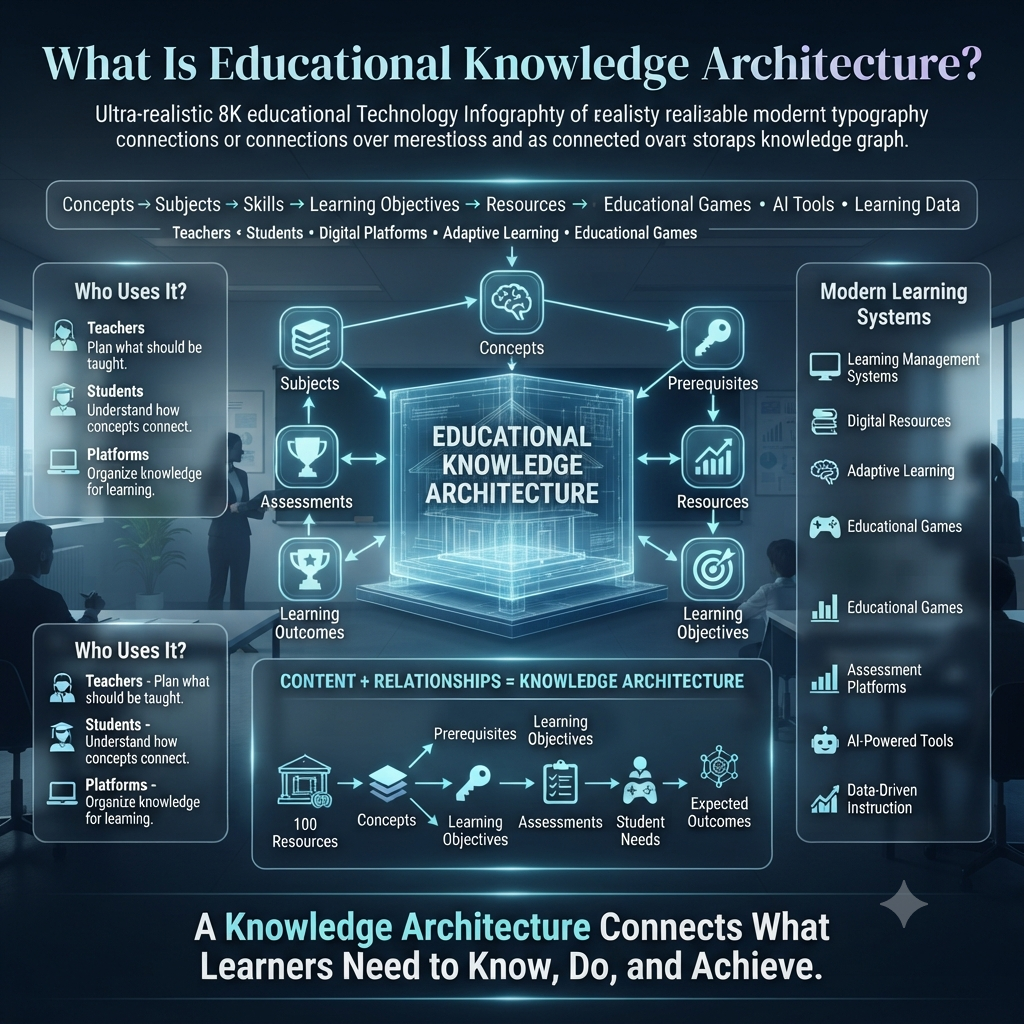
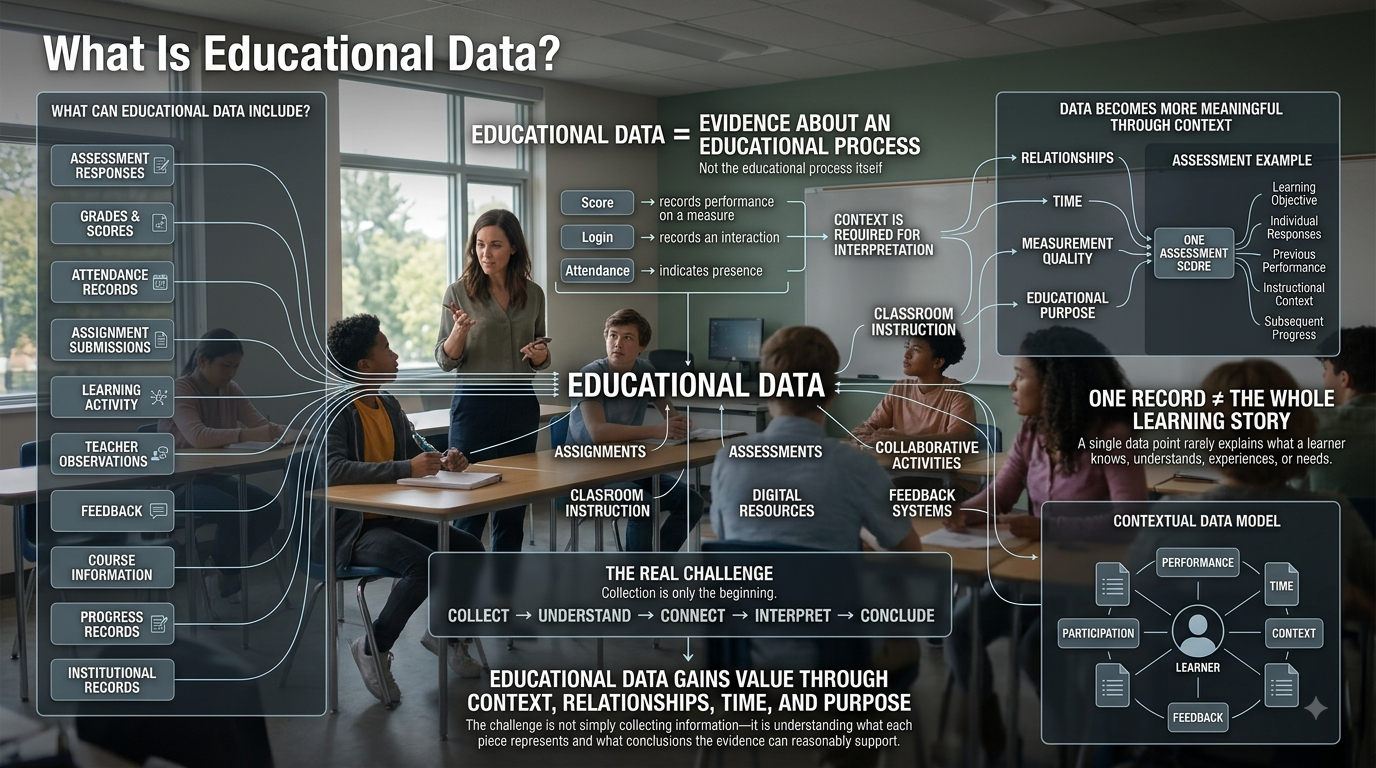
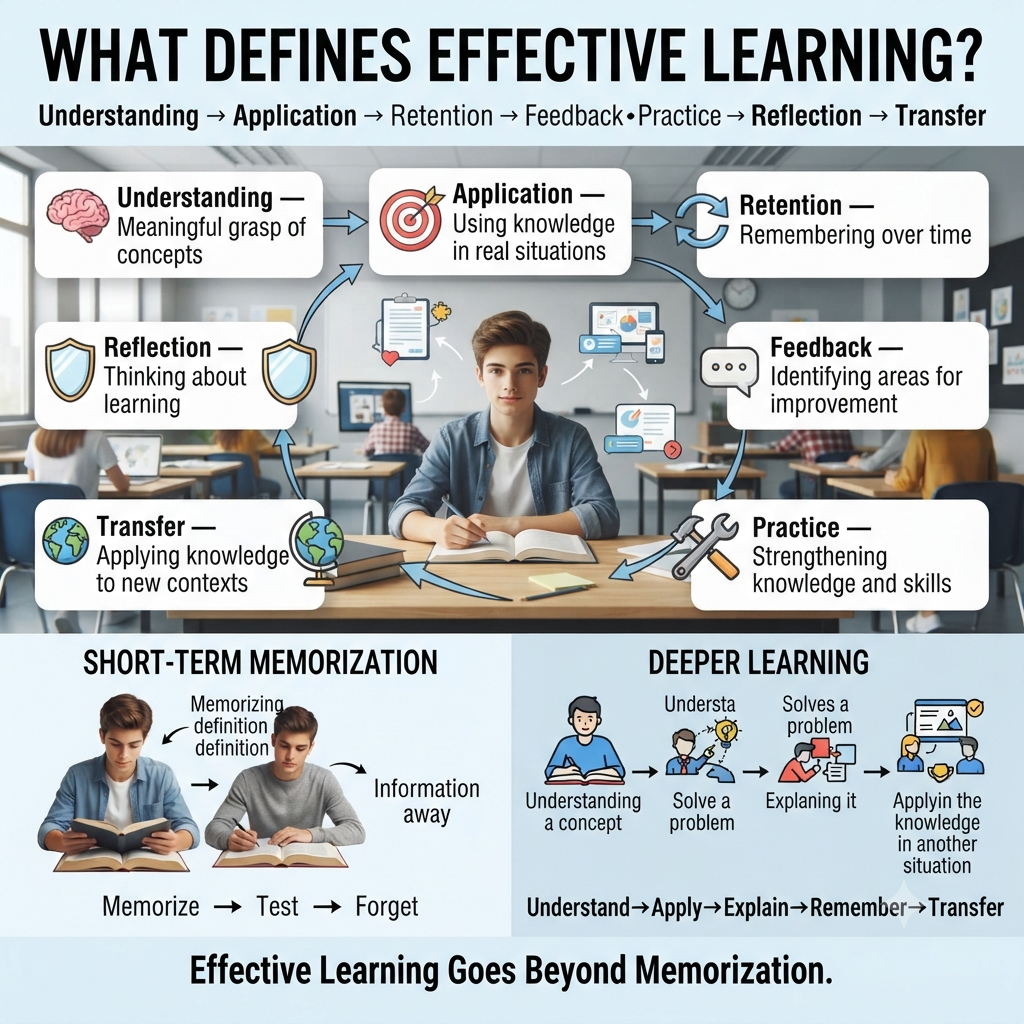
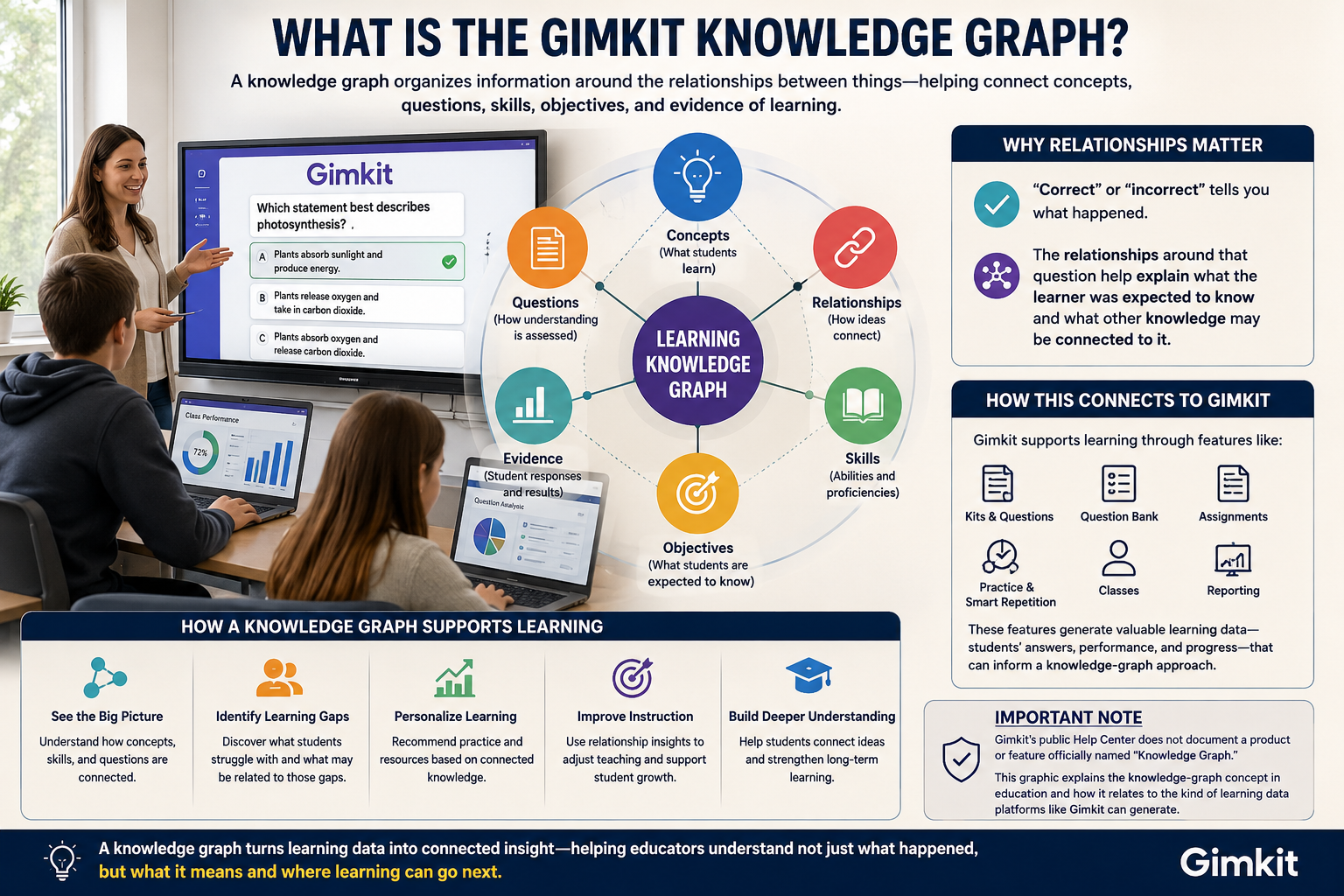
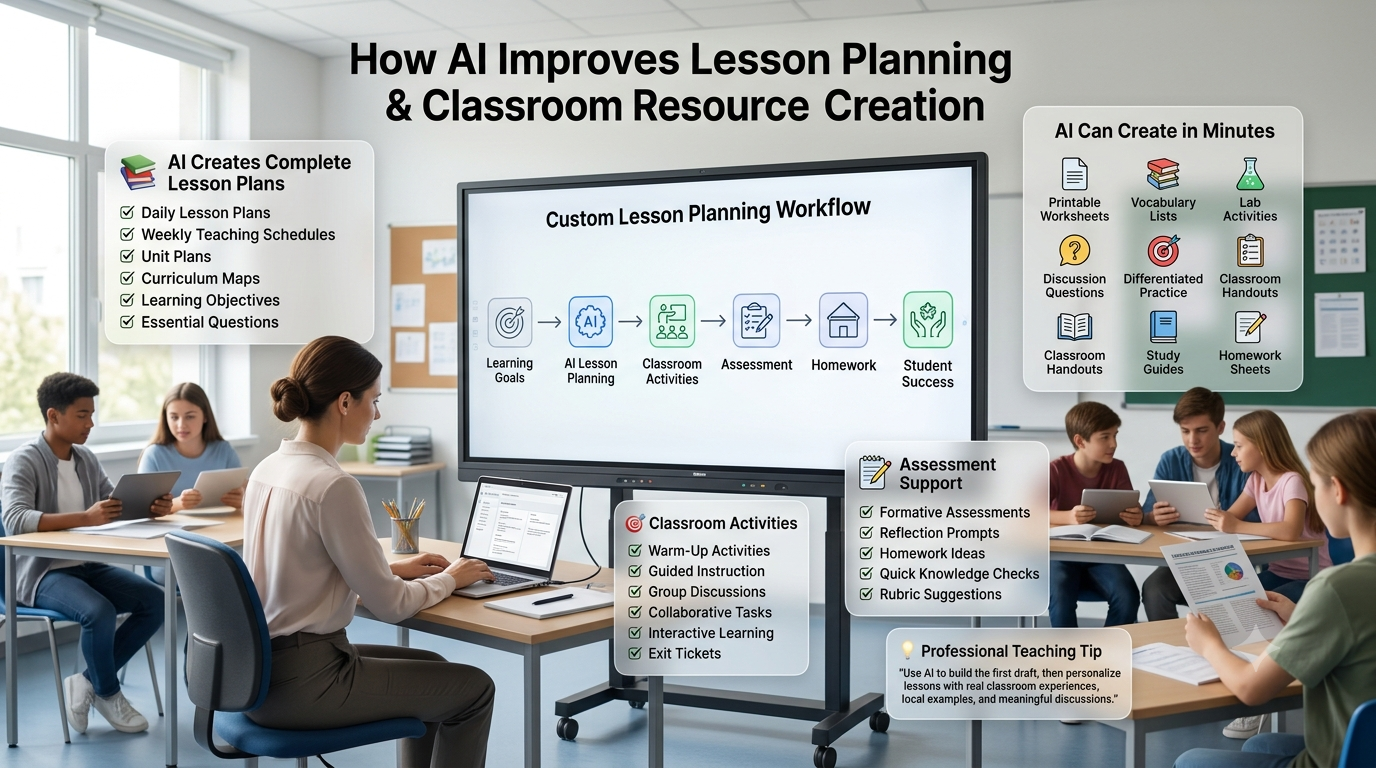
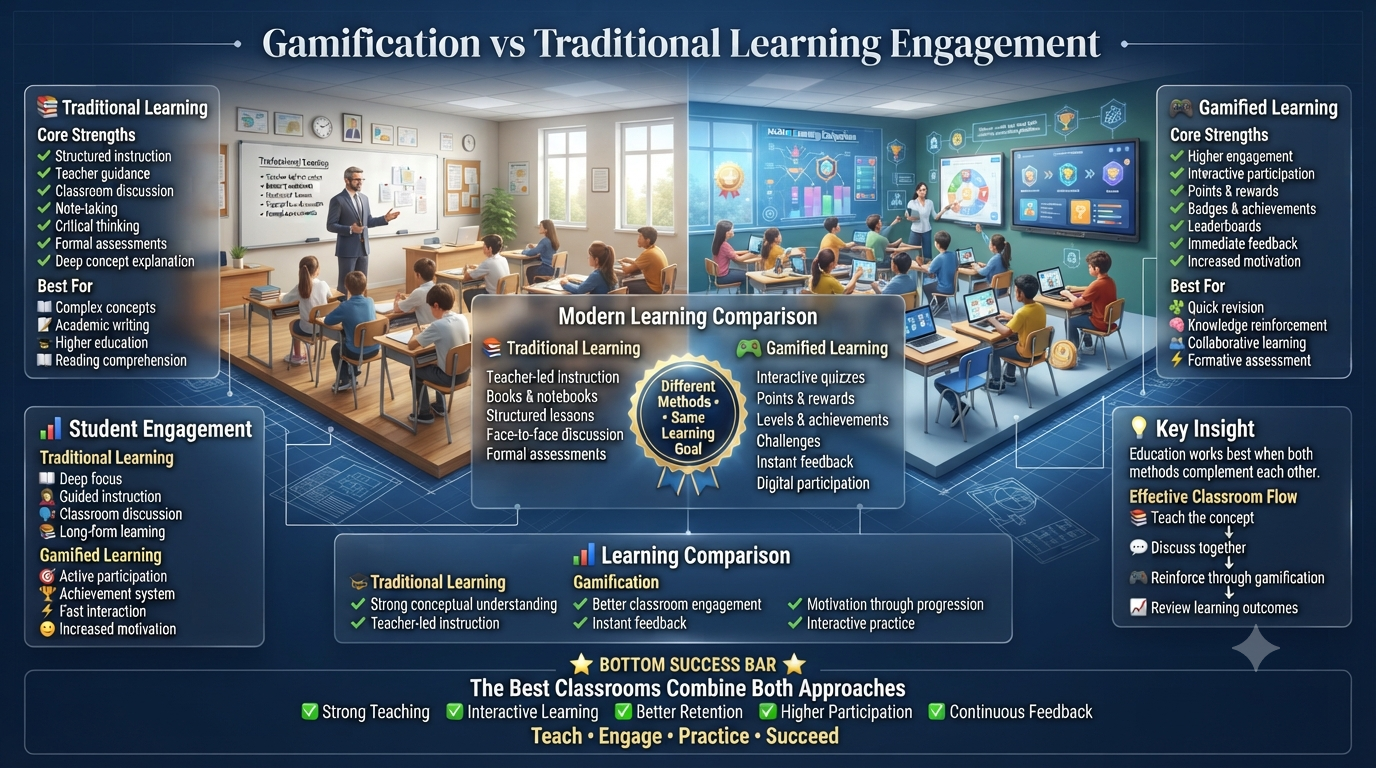
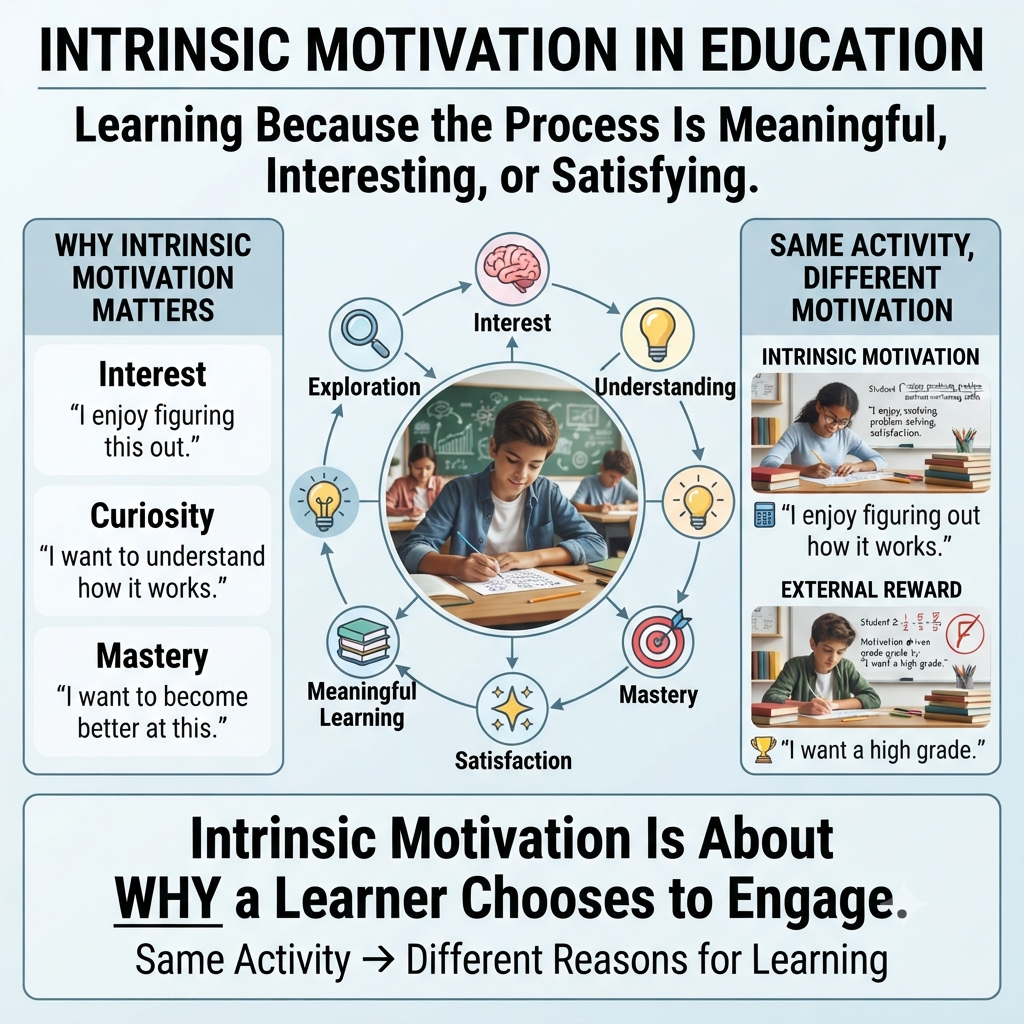
What Is Educational Knowledge Architecture | Educational knowledge architecture is the structured system used to organize, connect, classify, and navigate knowledge within an educational environment. It defines how concepts, subjects, skills, learning objectives, resources, assessments, activities, people, and learning outcomes relate to one another.
📚 In Simple Terms
Educational knowledge architecture is the blueprint of an educational knowledge system.
A well-designed architecture helps:
👨🏫 Teachers understand what should be taught.
👨🎓 Students understand how concepts connect.
💻 Educational platforms organize information in ways that support learning rather than simply storing content.
This becomes especially important as modern education moves beyond textbooks and classrooms into:
🖥️ Learning management systems
📚 Digital resources
🧠 Adaptive learning
🎮 Educational games
📊 Assessment platforms
🤖 AI-powered tools
📈 Data-driven instruction
🔗 The Importance of Relationships
The difference between a collection of educational content and an actual knowledge architecture is relationships.
A folder may contain 100 lesson resources. A knowledge architecture explains how those resources connect to:
📚 Subjects
🧠 Concepts
🔑 Prerequisites
🎯 Learning objectives
📊 Assessments
👨🎓 Student needs
🏆 Expected outcome
Looking for comprehensive classroom resources and educational technology insights? Explore GimkitApp for expert guides, teaching strategies, game modes, and the latest updates to enhance student engagement.
Educational Knowledge Architecture: A Simple Definition
Educational knowledge architecture can be understood as the organized structure that determines what educational knowledge exists, how it is categorized, how different pieces of knowledge relate to each other, and how users can find or apply that knowledge.
A student may first learn a mathematical concept, practice it through an activity, demonstrate the skill through an assessment, and eventually achieve a defined learning outcome.
That chain is part of educational knowledge architecture.
Why Educational Knowledge Architecture Matters
Educational information becomes difficult to use when it grows faster than its structure.
A teacher may have lesson plans, worksheets, videos, quizzes, games, presentations, assessments, textbooks, online resources, and student performance data.
The problem is not necessarily a lack of information.
The problem can be finding the right information, understanding how it connects, and knowing when to use it.
Knowledge architecture addresses this problem by creating structure around information.
Without a clear architecture
A teacher might think:
“I have hundreds of resources, but which one should I use for this learning objective?”
A student might think:
“I understand this topic, but I don’t understand how it connects to the next one.”
A curriculum designer might think:
“These lessons exist, but are we actually covering every required competency?”
A learning platform might face another problem:
“How should these resources, skills, assessments, and learning activities be connected so users can discover the right content?”
A strong knowledge architecture gives each piece of information a meaningful place within the larger educational system.
Educational Knowledge Architecture Is More Than Information Organization
One of the most common misunderstandings is treating knowledge architecture as simple content organization.
It is much broader.
A basic content library might look like:
Math
 ├── Lesson 1
 ├── Lesson 2
 ├── Worksheet
 ├── Quiz
 └── Video
Now the system describes not only where information is located, but also what it means and how it connects.
That distinction is fundamental.
The Core Components of Educational Knowledge Architecture
Although implementations vary between schools, universities, educational publishers, and digital learning platforms, several components appear repeatedly.
1. Knowledge Domains
Knowledge domains represent broad areas of learning.
Examples include:
Mathematics
Science
History
Geography
Language
Computer Science
Arts
Economics
Physical Education
A domain provides the highest-level organizational context.
Without domains, educational knowledge becomes difficult to classify.
However, domains alone are not enough.
A mathematics domain, for example, still contains hundreds of concepts, skills, procedures, and relationships.
That leads to the next layer.
2. Concepts
Concepts represent meaningful units of knowledge.
For example, within mathematics:
Mathematics → Fractions → Equivalent Fractions
Within science:
Science → Biology → Photosynthesis
Within computing:
Computer Science → Programming → Variables
A concept is not simply a page or lesson title.
It represents an idea that learners are expected to understand.
This distinction matters because one concept may appear across multiple resources.
For example, the concept of fractions could appear in:
a textbook chapter,
a classroom explanation,
an interactive activity,
a quiz,
a homework assignment,
a game,
and an assessment.
The resources are different, but the underlying concept can be the same.
3. Skills
Knowledge architecture should distinguish knowing something from being able to do something with that knowledge.
Consider fractions again.
A student might know what a fraction is but still struggle to:
compare fractions,
add fractions,
simplify fractions,
solve fraction problems,
explain reasoning,
or apply fractions to real-world situations.
Therefore, skills create another layer of educational meaning.
This hierarchy gives educational systems a way to connect high-level goals with individual learning experiences.
It can also help educators identify whether classroom activities are actually aligned with intended outcomes.
The Relationship Between Knowledge Architecture and Curriculum
Educational knowledge architecture and curriculum design are closely connected, but they are not the same thing.
Curriculum defines what learners are expected to study and achieve.
Knowledge architecture provides a structured representation of the concepts, skills, resources, objectives, assessments, and relationships that make that curriculum understandable and navigable.
Think of curriculum as the educational plan and knowledge architecture as the structural map that organizes the knowledge behind that plan.
The two disciplines therefore complement each other.
Why Relationships Matter More Than Categories
Categories tell you where something belongs.
Relationships tell you how something works within the system.
This is one of the most important principles in educational knowledge architecture.
Imagine a resource labeled:
“Photosynthesis Worksheet”
The label provides basic classification.
But a richer architecture could connect that worksheet to:
Photosynthesis
   ├── Prerequisite: Plant Cells
   ├── Concept: Chlorophyll
   ├── Concept: Light Energy
   ├── Process: Photosynthesis
   ├── Skill: Explain the Process
   ├── Activity: Diagram Completion
   ├── Assessment: Short-Answer Questions
   └── Outcome: Explain How Plants Produce Energy
Now the resource has educational meaning.
A teacher can understand when to use it.
A student can understand what it supports.
An educational platform can recommend related material.
An assessment system can connect performance to the underlying concept.
That is the real power of architecture.
Knowledge Graph Thinking in Education
Educational knowledge architecture becomes even more powerful when it adopts knowledge graph thinking.
A knowledge graph represents entities and the relationships between them.
For education, entities may include:
Students
Teachers
Subjects
Concepts
Skills
Courses
Lessons
Resources
Activities
Assessments
Learning objectives
Learning outcomes
Relationships might include:
requires
teaches
supports
assesses
prerequisite of
related to
belongs to
demonstrates
reinforces
extends
A simplified educational knowledge graph could look like:
[Fractions]
     │
     ├── requires → [Division]
     │
     ├── includes → [Numerator]
     │
     ├── includes → [Denominator]
     │
     ├── supports → [Ratio Understanding]
     │
     ├── practiced by → [Worksheet]
     │
     ├── reinforced by → [Classroom Activity]
     │
     └── assessed by → [Quiz]
This is much closer to how complex educational knowledge actually behaves.
Knowledge is not a straight line.
It is a network.
How Teachers Benefit From Educational Knowledge Architecture
For teachers, a strong architecture can reduce the friction involved in planning and finding instructional resources.
Instead of starting from a blank page, a teacher can work backward from the learning objective.
For example:
Goal: Students need to understand equivalent fractions.
The teacher can identify:
Required prerequisite knowledge.
Core concept.
Appropriate explanation.
Practice activity.
Reinforcement activity.
Formative assessment.
Remediation resources.
Extension activity.
Evidence of mastery.
This creates a more deliberate instructional workflow.
Teacher Planning Model
What should students learn?
            ↓
What must they already know?
            ↓
What should I teach?
            ↓
How should they practice?
            ↓
How will I check understanding?
            ↓
What should happen next?
That final question is particularly important.
A good educational system should not treat assessment as the end.
Assessment can determine the next appropriate learning path.
How Students Benefit
Students also benefit because knowledge architecture can make learning relationships visible.
Instead of seeing individual lessons as disconnected tasks, students can understand:
“I am learning this because it supports the next skill.”
This progression can make prerequisite relationships easier to understand.
It also helps explain why a student may struggle with an advanced topic.
Sometimes the problem is not the advanced concept itself.
The learner may have an unresolved prerequisite gap.
That is one reason prerequisite relationships are so valuable in educational architecture.
How Educational Platforms Benefit
Digital education platforms can use knowledge architecture to make large collections of content more intelligent.
A platform containing thousands of resources needs more than folders and search boxes.
It needs meaningful relationships.
For example, if a learner struggles with a particular skill, a well-structured system could conceptually connect that difficulty to:
prerequisite concepts,
related lessons,
additional practice,
alternative explanations,
assessments,
remediation,
and extension material.
This does not mean every platform automatically provides personalized learning. The architecture simply creates the structural foundation that makes more sophisticated learning experiences possible.
Educational platforms, learning management systems, assessment tools, and classroom game platforms can all benefit from this type of structured thinking.
For the latest gaming news, expert reviews, and walkthroughs, readers can also visit IGN, one of the world’s leading gaming websites.
A Practical Educational Knowledge Architecture Model
A useful general model can be represented as five connected layers:
This provides a coherent learning pathway instead of a disconnected collection of educational materials.
The Difference Between a Content Library and a Knowledge Architecture
This distinction is worth remembering.
Content Library
Knowledge Architecture
Stores resources
Organizes knowledge and relationships
Primarily location-based
Meaning-based
“Where is the file?”
“What does this support?”
Resource-centered
Learning-centered
Often static
Can represent progression
Limited relationships
Rich relationships
Search-focused
Understanding + navigation focused
A content library is useful.
But a knowledge architecture can turn that library into a usable educational knowledge system.
💡 Expert Insight: Architecture Should Follow Learning, Not File Types
One practical mistake is designing educational systems around file formats.
For example:
PDFs
Videos
PowerPoints
Quizzes
Games
Worksheets
This may be convenient for storage, but it does not represent how people learn.
A learner does not normally think:
“Today I need a PDF.”
They think:
“I don’t understand this concept.”
A teacher similarly thinks:
“My students cannot apply this skill.”
Therefore, educational architecture should usually begin with learning needs and knowledge relationships, while resources become supporting objects within that structure.
The file is not the center of the system.
The learning objective and knowledge relationship are.
Common Problems Caused by Weak Educational Knowledge Architecture
Poor architecture can create problems that look like content problems but are actually structural problems.
1. Duplicate Content
The same concept may be taught repeatedly without recognizing that existing resources already address it.
2. Missing Prerequisites
Advanced lessons may exist without clearly identifying the knowledge students need beforehand.
3. Poor Resource Discovery
Teachers may have excellent resources but struggle to locate the right one at the right moment.
4. Weak Curriculum Alignment
Resources may exist without clear connections to learning objectives or competencies.
5. Disconnected Assessment
Tests may measure information without clearly connecting results to specific concepts or skills.
6. Fragmented Student Experience
Students may complete activities without understanding how those activities contribute to a larger learning pathway.
7. Difficult Content Maintenance
When knowledge changes, educators may struggle to identify every resource affected by that change.
These problems demonstrate why architecture is not simply a technical concern.
It directly influences educational usability.
What Makes a Good Educational Knowledge Architecture?
A strong architecture generally has several characteristics.
It is clear
Users can understand where information belongs and how concepts connect.
It is consistent
Similar concepts are represented using consistent terminology and structures.
It is connected
Important relationships between knowledge, skills, resources, and outcomes are visible.
It is scalable
The system can grow without becoming impossible to navigate.
It is learner-centered
The structure supports actual learning needs rather than only administrative convenience.
It is maintainable
Educators can update content without breaking the entire structure.
It is discoverable
Teachers and students can find relevant information without excessive searching.
It is flexible
Different teaching approaches and learning contexts can be supported without rebuilding the entire system.
A Simple Mental Model
If the concept still feels abstract, remember this:
Educational knowledge architecture is the map behind the learning environment.
The curriculum tells you where learning should go.
The educational content provides what learners interact with.
The assessment provides evidence of what learners understood or can do.
The knowledge architecture connects all of these elements so the system makes sense as a whole.
The architecture is the set of relationships holding this system together.
How to Build an Effective Educational Knowledge Architecture
Understanding educational knowledge architecture is only the first step. The real value appears when an institution, teacher, curriculum team, or educational platform can turn the concept into a usable structure.
A practical educational knowledge architecture should connect knowledge, learners, teaching activities, resources, assessment, and outcomes without creating unnecessary complexity.
The goal is not to build the largest possible structure. The goal is to build a structure that makes educational information easier to understand, discover, maintain, teach, assess, and improve.
The Main Layers of an Educational Knowledge Architecture
A complete architecture can be organized into several connected layers.
If a student struggles with fraction operations, the architecture can help educators investigate earlier dependencies rather than assuming the current lesson is the only problem.
This creates a more intelligent approach to remediation.
Curriculum Mapping
Educational knowledge architecture can also connect learning content with curriculum requirements.
This can reveal whether the problem is concentrated around a particular concept or dependency.
The architecture does not automatically solve the learning problem.
It provides the structure required to investigate it more intelligently.
How Teachers Can Build a Simple Knowledge Architecture
Teachers do not need sophisticated software to begin.
A simple spreadsheet can be enough for a small classroom.
Useful columns might include:
Resource
Subject
Concept
Skill
Objective
Prerequisite
Assessment
Lesson A
Math
Fractions
Identify
Define fractions
Whole numbers
Quiz A
Activity B
Math
Fractions
Compare
Compare fractions
Basic fractions
Exit Ticket
Game C
Math
Equivalent fractions
Apply
Recognize equivalence
Fractions
Practice
The important part is not the software.
It is the relationship structure.
Once those relationships are clear, they can later be implemented in a learning management system, content management system, knowledge base, curriculum platform, or more sophisticated knowledge graph.
A Practical Workflow for Building Educational Knowledge Architecture
A reliable implementation process can be simplified into eight stages.
Step 1: Identify the Educational Domain
Define what the architecture covers.
For example:
Grade 6 Mathematics
Avoid trying to structure an entire educational ecosystem immediately.
Start with a manageable scope.
Step 2: Identify Major Topics
Break the domain into meaningful areas.
For example:
Numbers → Algebra → Geometry → Statistics
Step 3: Define Core Concepts
Identify the knowledge learners need to understand within each topic.
Step 4: Identify Skills and Objectives
Determine what learners should be able to do with that knowledge.
Step 5: Map Prerequisites
Identify which concepts or skills depend on earlier knowledge.
Step 6: Connect Resources and Activities
Map lessons, worksheets, videos, games, projects, and other resources to the appropriate objectives.
Step 7: Connect Assessments
Identify which assessments measure which skills and concepts.
Step 8: Review the Complete Learning Path
Look for:
Missing concepts
Duplicate resources
Broken prerequisite relationships
Unassessed objectives
Unclear terminology
Weak resource coverage
This final review is where the architecture becomes genuinely useful.
Common Mistakes in Educational Knowledge Architecture
A technically sophisticated system can still fail if the underlying structure is poorly designed.
Mistake 1: Organizing Everything Around File Types
Creating categories such as:
PDFs → Videos → Worksheets → Games
may help storage but does not represent learning.
Organize primarily around educational meaning.
Mistake 2: Creating Too Many Categories
Over-classification makes systems difficult to navigate.
Not every small distinction needs its own category.
Mistake 3: Ignoring Prerequisites
Advanced concepts should not appear disconnected from the foundational knowledge they depend upon.
Mistake 4: Using Inconsistent Terminology
If the same concept is called “fractions,” “fraction concepts,” and “fraction basics” without a clear reason, the architecture becomes harder to maintain.
Controlled vocabulary helps.
Mistake 5: Separating Assessment From Learning
An assessment should have meaningful connections to the knowledge and skills it evaluates.
Mistake 6: Building for Search Engines Instead of Users
Educational architecture should improve human understanding and navigation first.
Search visibility should be a consequence of good structure, not the primary reason for creating it.
Controlled Vocabulary and Consistent Naming
Large educational systems need consistent terminology.
For example, an organization should decide whether it uses:
Grade 5
or
Year 5
or
Fifth Grade
and establish when each term applies.
The same principle applies to subjects, skills, resource types, assessment types, and educational concepts.
A controlled vocabulary reduces ambiguity and improves:
Search
Filtering
Content management
Internal linking
Curriculum mapping
Data analysis
Knowledge graph construction
AI retrieval
Consistency becomes increasingly important as the educational knowledge base grows.
Quality Principles for a Strong Architecture
A useful educational knowledge architecture should be:
Clear
Users should understand the structure without needing technical training.
Consistent
Similar entities should follow similar naming and classification rules.
Connected
Important relationships should be represented explicitly.
Scalable
The structure should continue working as content grows.
Flexible
Different instructional methods should fit within the system.
Maintainable
Educators should be able to update information without creating structural chaos.
Learner-Centered
The ultimate purpose should remain learning, not merely organization.
Educational Knowledge Architecture in AI-Powered Learning
AI makes structured educational knowledge even more important.
AI systems can generate answers, recommendations, explanations, questions, summaries, and learning activities. But their usefulness depends heavily on the quality and structure of the information they access.
A well-organized educational knowledge base can provide clearer relationships between:
This can support more context-aware educational experiences.
For example, instead of simply generating:
“Here is a fractions worksheet.”
a structured system can conceptually determine:
“This learner is working on comparing fractions, has already demonstrated basic fraction knowledge, but needs additional practice before moving to fraction operations.”
The architecture provides the context.
AI provides the processing capability.
Neither replaces the other.
The Future of Educational Knowledge Architecture
Educational knowledge architecture is likely to become increasingly important as education becomes more digital, personalized, and data-driven.
Future systems may increasingly connect:
Curriculum standards
Learning objectives
Knowledge graphs
Student competencies
Assessment data
Learning analytics
Digital resources
Adaptive learning
AI tutoring
Educational games
Personalized recommendations
The important shift is from content repositories to connected learning ecosystems.
Instead of asking only:
“What content should we give this learner?”
future systems can increasingly ask:
“What does this learner already understand, what concept comes next, what prerequisite is missing, and which learning experience is most appropriate?”
A strong knowledge architecture provides the structural foundation for those questions.
Educational Knowledge Architecture: A Complete Mental Model
The entire concept can now be reduced to one connected framework:
Every additional component—metadata, taxonomy, ontology, knowledge graphs, analytics, AI, and personalization—can build upon these relationships.
Final Takeaway
Educational Knowledge Architecture is the structured framework that connects educational knowledge with the people, processes, resources, activities, assessments, and outcomes involved in learning.
Its purpose is much deeper than organizing files or creating website categories.
A mature architecture answers questions such as:
What does the learner need to know?
What concepts are connected?
Which knowledge comes first?
What skill should the learner develop?
Which objective does a resource support?
Which activity provides practice?
Which assessment measures the skill?
What evidence demonstrates learning?
What should the learner study next?
That is why educational knowledge architecture sits at the intersection of information architecture, knowledge management, curriculum design, instructional design, assessment, learning analytics, semantic modeling, and increasingly AI-powered education.
The central principle is simple:
Education becomes more understandable when knowledge is not merely stored, but deliberately connected.
A collection of lessons is content.
A collection of organized resources is a content system.
But when concepts, prerequisites, skills, objectives, activities, resources, assessments, and outcomes are connected into a coherent structure, the result becomes an educational knowledge architecture.
And that architecture provides the foundation for a more navigable, maintainable, measurable, and intelligent learning ecosystem.
Why This Concept Matters for Modern Digital Education
Modern education increasingly involves large and diverse collections of information.
A single educational ecosystem may contain:
curriculum standards,
digital lessons,
instructional videos,
interactive activities,
assessment banks,
student performance data,
teacher resources,
educational games,
AI-supported tools,
learning analytics,
and external reference material.
As the volume grows, organization becomes increasingly important.
But simple categorization is not enough.
Modern educational systems need to understand relationships such as:
Most Frequentely Asked Faqs
1. Which concept comes first?
Effective learning begins with foundational concepts before introducing more advanced ideas. Students should first develop essential knowledge, vocabulary, and basic understanding before moving on to higher-order thinking, problem-solving, or application tasks. A well-sequenced curriculum reduces confusion, strengthens knowledge retention, and helps learners build confidence as each new concept naturally connects to previous learning.
Teachers often use learning progressions to organize lessons so that every new topic reinforces earlier instruction while preparing students for future objectives.
Best practices for sequencing concepts:
Start with prerequisite knowledge.
Introduce key vocabulary early.
Move from simple to complex ideas.
Connect new learning to prior knowledge.
Reinforce concepts before advancing.
Review foundational skills regularly.
2. Which skill depends on another skill?
Most academic skills develop in a logical sequence where foundational abilities support more advanced competencies. For example, students must understand basic number operations before solving algebraic equations, or develop reading comprehension before analyzing complex texts. Identifying these dependencies helps teachers plan instruction more effectively and provide timely intervention when learning gaps appear.
Understanding prerequisite relationships also enables differentiated instruction, ensuring every learner has the skills needed to succeed before progressing.
Examples of prerequisite skills:
Phonics before reading fluency.
Reading fluency before text analysis.
Basic arithmetic before algebra.
Observation before scientific investigation.
Sentence construction before essay writing.
Digital literacy before advanced technology projects.
3. Which activity reinforces this objective?
The most effective learning activities directly align with the intended instructional objective. If students are expected to remember information, retrieval practice and quizzes work well. If the goal is applying knowledge, collaborative problem-solving, projects, simulations, discussions, or case studies provide stronger reinforcement. Activities should require students to actively demonstrate the specific skill being taught rather than simply reviewing content.
Choosing purposeful learning experiences increases engagement while helping students transfer knowledge to real-world situations.
High-impact reinforcement activities:
Interactive quizzes.
Collaborative group work.
Problem-solving challenges.
Classroom discussions.
Project-based learning.
Reflection and exit tickets.
4. Which assessment measures this competency?
Assessments should measure the exact competency identified in the learning objective. Foundational knowledge is often assessed through quizzes or short-answer questions, while higher-level competencies may require projects, presentations, written analyses, experiments, or performance tasks. Formative assessments provide ongoing feedback during learning, while summative assessments evaluate overall mastery at the end of instruction.
Using multiple assessment methods creates a more accurate picture of student understanding than relying on a single test format.
Effective assessment options:
Formative quizzes.
Performance tasks.
Project-based assessments.
Classroom presentations.
Written reflections.
Practical demonstrations.
5. Which resource helps students who have not mastered the prerequisite?
Students who struggle with prerequisite skills benefit from targeted intervention resources that revisit foundational concepts before introducing new material. These may include guided practice, instructional videos, worked examples, small-group instruction, graphic organizers, digital learning platforms, and teacher-created review materials. Early support prevents learning gaps from becoming larger obstacles later in the curriculum.
Providing differentiated resources ensures every learner has an opportunity to reach grade-level expectations at an appropriate pace.
Helpful intervention resources:
Review worksheets.
Step-by-step tutorials.
Instructional videos.
Small-group teaching.
Guided practice activities.
Adaptive digital learning tools.
6. Which content extends learning after mastery?
Once students demonstrate mastery, extension activities encourage deeper thinking and continued academic growth. Rather than repeating familiar tasks, learners can explore real-world applications, interdisciplinary projects, research investigations, creative problem-solving, peer mentoring, or independent inquiry. Extension content keeps advanced learners challenged while promoting critical thinking, innovation, and lifelong learning habits.
Well-designed enrichment opportunities transform mastery into meaningful application and prepare students for increasingly complex learning experiences.
Effective extension activities:
Independent research projects.
Real-world case studies.
Advanced problem-solving tasks.
Cross-curricular investigations.
Student-led presentations.
Peer teaching and mentoring.
Those are knowledge-architecture questions.
And answering them well transforms a collection of educational resources into a more coherent learning ecosystem.
Professional Recommendations & Expert Reviews
What Is Educational Knowledge Architecture refers to the structured organization of learning content and educational concepts.
What Is Educational Knowledge Architecture helps learners understand how topics connect with one another.
What Is Educational Knowledge Architecture supports logical progression from basic concepts to advanced skills.
What Is Educational Knowledge Architecture encourages meaningful learning instead of isolated memorization.
What Is Educational Knowledge Architecture helps teachers organize lessons more effectively.
What Is Educational Knowledge Architecture supports clear learning pathways for students.
What Is Educational Knowledge Architecture encourages building knowledge step by step.
What Is Educational Knowledge Architecture helps improve long-term knowledge retention.
What Is Educational Knowledge Architecture supports better curriculum planning.
What Is Educational Knowledge Architecture encourages structured educational experiences.
What Is Educational Knowledge Architecture helps students connect previous learning with new concepts.
What Is Educational Knowledge Architecture supports stronger conceptual understanding.
What Is Educational Knowledge Architecture encourages organized lesson sequencing.
What Is Educational Knowledge Architecture helps reduce learning confusion.
What Is Educational Knowledge Architecture supports efficient classroom instruction.
What Is Educational Knowledge Architecture encourages consistent educational progression.
What Is Educational Knowledge Architecture helps teachers identify prerequisite knowledge.
What Is Educational Knowledge Architecture supports balanced curriculum development.
What Is Educational Knowledge Architecture encourages meaningful educational connections.
What Is Educational Knowledge Architecture helps learners build confidence through structured learning.
What Is Educational Knowledge Architecture supports continuous academic development.
What Is Educational Knowledge Architecture encourages logical organization of educational resources.
What Is Educational Knowledge Architecture helps improve instructional consistency.
What Is Educational Knowledge Architecture supports effective lesson planning.
What Is Educational Knowledge Architecture encourages stronger classroom organization.
What Is Educational Knowledge Architecture helps students understand relationships between concepts.
What Is Educational Knowledge Architecture supports deeper comprehension rather than surface learning.
What Is Educational Knowledge Architecture encourages systematic educational growth.
What Is Educational Knowledge Architecture helps organize assessments around learning objectives.
What Is Educational Knowledge Architecture supports clearer instructional goals.
What Is Educational Knowledge Architecture encourages better educational decision-making.
What Is Educational Knowledge Architecture helps strengthen academic foundations.
What Is Educational Knowledge Architecture supports personalized learning pathways.
What Is Educational Knowledge Architecture encourages thoughtful curriculum design.
What Is Educational Knowledge Architecture helps educators prioritize essential concepts.
What Is Educational Knowledge Architecture supports consistent learning experiences.
What Is Educational Knowledge Architecture encourages stronger knowledge integration.
What Is Educational Knowledge Architecture helps students progress with greater confidence.
What Is Educational Knowledge Architecture supports organized classroom instruction.
What Is Educational Knowledge Architecture encourages efficient educational planning.
What Is Educational Knowledge Architecture helps teachers create logical lesson sequences.
What Is Educational Knowledge Architecture supports improved learning outcomes.
What Is Educational Knowledge Architecture encourages stronger conceptual connections.
What Is Educational Knowledge Architecture helps learners understand educational priorities.
What Is Educational Knowledge Architecture supports effective content organization.
What Is Educational Knowledge Architecture encourages structured revision before assessments.
What Is Educational Knowledge Architecture helps reinforce previously learned concepts.
What Is Educational Knowledge Architecture supports long-term academic success.
What Is Educational Knowledge Architecture encourages organized knowledge building.
What Is Educational Knowledge Architecture helps educators align lessons with learning goals.
What Is Educational Knowledge Architecture supports better instructional consistency across classrooms.
What Is Educational Knowledge Architecture encourages progressive mastery of academic subjects.
What Is Educational Knowledge Architecture helps learners develop stronger study habits.
What Is Educational Knowledge Architecture supports efficient classroom resource organization.
What Is Educational Knowledge Architecture encourages meaningful educational progression.
What Is Educational Knowledge Architecture helps improve communication between teachers and learners.
What Is Educational Knowledge Architecture supports well-structured educational frameworks.
What Is Educational Knowledge Architecture encourages continuous improvement through organized learning.
What Is Educational Knowledge Architecture helps simplify complex educational topics.
What Is Educational Knowledge Architecture supports stronger curriculum alignment.
What Is Educational Knowledge Architecture encourages educators to build connected learning experiences.
What Is Educational Knowledge Architecture helps learners transfer knowledge between subjects.
What Is Educational Knowledge Architecture supports balanced educational development.
What Is Educational Knowledge Architecture encourages thoughtful organization of instructional materials.
What Is Educational Knowledge Architecture helps create meaningful educational experiences.
Quick Takeaway
Educational knowledge architecture is essentially the structural blueprint connecting educational knowledge, concepts, skills, objectives, resources, activities, assessments, and learning outcomes.
Its most important function is not simply organizing information.
Its real value comes from making relationships visible.
A well-designed architecture helps educators plan instruction, helps learners understand progression, helps platforms organize content, and creates a foundation for more intelligent discovery, assessment, personalization, and learning analytics.
The simplest way to remember the concept is:
Content tells learners what to access. Knowledge architecture explains how that knowledge fits together.
And once those relationships are clearly defined, the next challenge becomes even more important: how should an educational knowledge architecture actually be designed and implemented?
That requires looking at its hierarchy, ontology, taxonomy, metadata, semantic relationships, knowledge graphs, curriculum alignment, and practical implementation workflow.