Best Classroom Activities for Multiplayer Learning | Modern classrooms are moving beyond individual worksheets and one-way instruction.
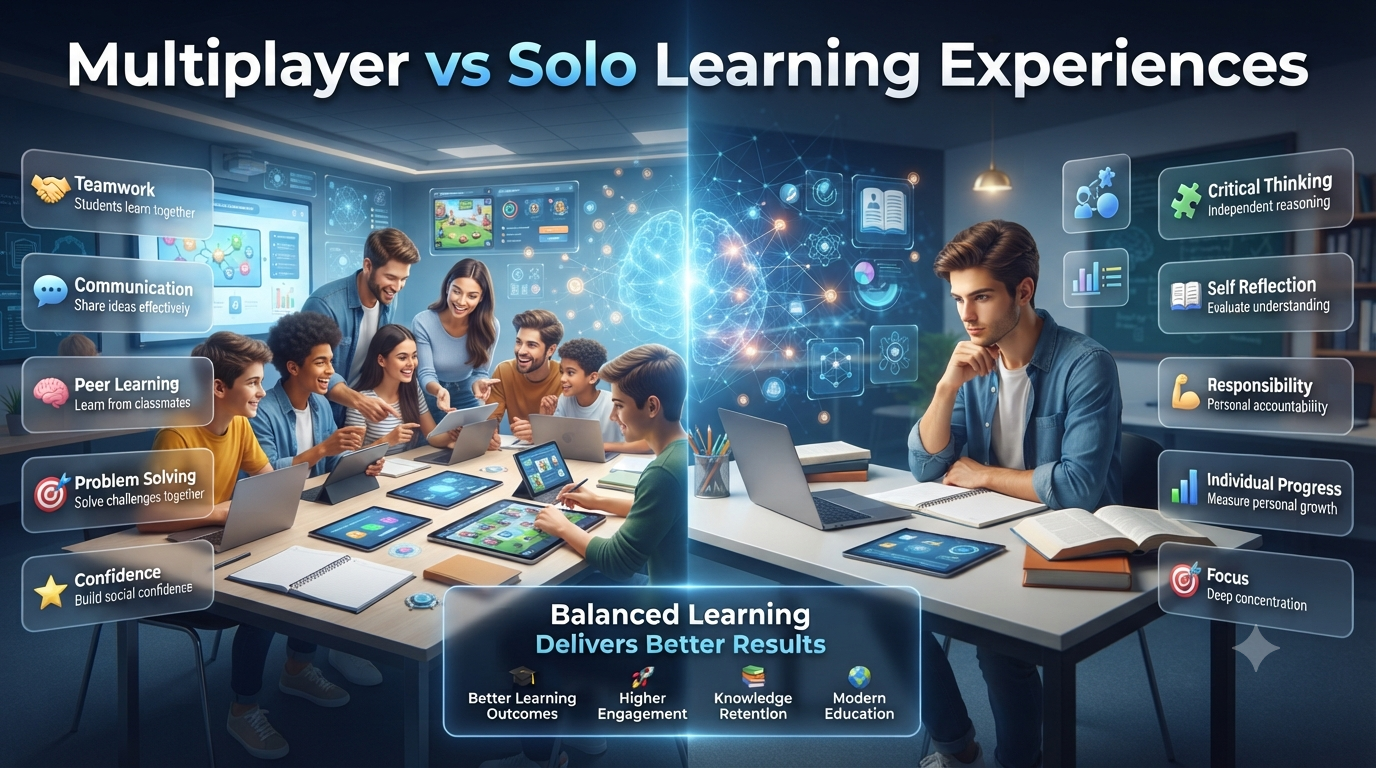
🎯 Encourage Teamwork & Collaboration – Multiplayer learning activities help students solve problems together, communicate effectively, and actively participate in lessons.
💬 Strengthen Communication Skills – Collaborative tasks encourage meaningful discussions, idea sharing, and effective teamwork.
🧠 Promote Active Learning – Students stay engaged by working together to complete challenges and learning activities.
🏫 Suitable for Every Classroom – Whether you’re teaching in elementary school, middle school, high school, or a virtual classroom, multiplayer activities can be adapted to different learning environments.
🌟 Create an Engaging Learning Environment – Interactive group activities make lessons more enjoyable while increasing student participation.
🤝 Develop Social Skills – Students improve cooperation, leadership, communication, and teamwork through shared learning experiences.
📖 Explore Effective Classroom Activities – This guide highlights the best multiplayer learning activities for different classroom settings.
💡 Understand Why They Work – Learn how collaborative activities improve student engagement and learning outcomes.
🚀 Apply Practical Teaching Strategies – Discover easy-to-implement techniques that teachers can use immediately to make multiplayer learning more effective.
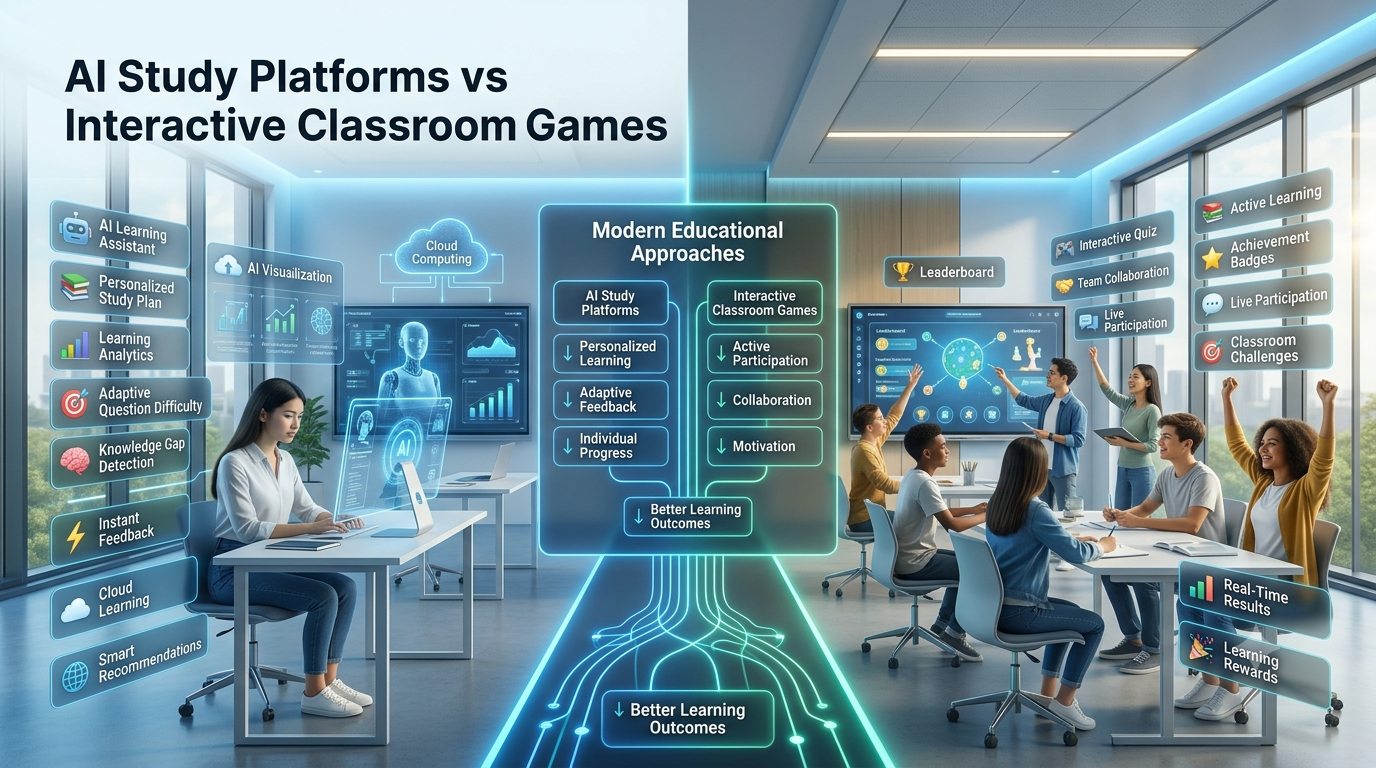
You’ll also discover how digital learning platforms, classroom games, and collaborative teaching methods can support different learning objectives without sacrificing curriculum goals.
Multiplayer classroom activities are collaborative learning experiences where two or more students work together to solve challenges, answer questions, complete projects, or compete in educational games. Unlike traditional individual assignments, multiplayer activities encourage interaction, communication, teamwork, and shared responsibility.
These activities may involve:
Small group discussions
Team-based quizzes
Collaborative problem-solving
Digital educational games
Classroom competitions
Peer teaching sessions
Project-based learning
Escape room challenges
STEM activities
Role-playing exercises
Rather than focusing only on getting the correct answer, multiplayer learning encourages students to explain their thinking, learn from peers, and develop real-world collaboration skills.
Why Multiplayer Learning Works So Well
Research in educational psychology consistently shows that students learn more effectively when they actively engage with content instead of passively receiving information. Multiplayer activities naturally increase participation because students become part of the learning process rather than observers.
Some of the biggest benefits include:
Benefit
Impact on Students
Higher engagement
Students stay focused longer
Better communication
Improves speaking and listening skills
Active participation
Reduces passive learning
Stronger retention
Discussion reinforces understanding
Critical thinking
Encourages reasoning instead of memorization
Teamwork
Builds collaboration skills
Immediate feedback
Students correct mistakes together
Increased motivation
Friendly competition makes learning enjoyable
Expert Insight 💡
Students often remember conversations and collaborative problem-solving experiences longer than lectures because active participation strengthens long-term memory.
Key Characteristics of Effective Multiplayer Classroom Activities
educational illustration showcasing the core principles of successful multiplayer classroom activities, including collaboration, equal participation, clear learning objectives, immediate feedback, and active student engagement.
Not every group activity leads to meaningful learning. The best multiplayer classroom activities share several important characteristics.
Clear Learning Objectives
Students should understand exactly what they are expected to learn—not just what game they are playing.
For example:
Practice multiplication
Improve reading comprehension
Review vocabulary
Strengthen scientific reasoning
Develop persuasive writing
The activity should support curriculum goals rather than distract from them.
Equal Student Participation
Avoid activities where one student completes all the work while others observe.
Instead:
Assign rotating roles.
Encourage equal speaking opportunities.
Include individual accountability.
Design tasks requiring multiple perspectives.
Meaningful Collaboration
True collaboration involves discussion, negotiation, explanation, and shared decision-making.
Students should:
Explain answers
Defend ideas
Listen to teammates
Solve disagreements respectfully
Immediate Feedback
Students benefit when they quickly discover whether their reasoning is correct.
Feedback may come from:
Teachers
Peers
Educational technology
Automated quiz systems
Reflection discussions
Best Classroom Activities for Multiplayer Learning
Below are some of the most effective multiplayer activities used across different grade levels and subject areas.
1. Team Quiz Challenges
One of the easiest multiplayer learning activities involves dividing students into teams and presenting academic questions.
Teams discuss each answer before submitting a final response.
This method works particularly well for:
Math
Science
History
Geography
Language Arts
Vocabulary Review
Best Practice ✅
Limit discussion time to encourage quick thinking while maintaining classroom energy.
2. Classroom Trivia Competitions
Trivia transforms review sessions into exciting competitions.
Students compete in groups rather than individually, reducing anxiety while encouraging collaboration.
Popular trivia categories include:
Historical events
World capitals
Literature
Grammar
Science facts
Current events
Teachers can adjust question difficulty based on grade level.
3. Digital Multiplayer Learning Games
Educational technology has expanded opportunities for multiplayer learning.
Interactive platforms allow teachers to create live classroom competitions where students answer questions individually or as teams.
Benefits include:
Automatic scoring
Real-time leaderboards
Instant feedback
Progress tracking
Increased engagement
Remote learning compatibility
These platforms are especially valuable for formative assessment because they combine gameplay with measurable learning outcomes.
4. Classroom Escape Rooms
Educational escape rooms require students to solve academic puzzles before advancing to the next challenge.
Tasks may include:
Decoding clues
Solving equations
Reading passages
Completing science experiments
Analyzing maps
Interpreting graphs
Every team member contributes unique skills.
Example
A history escape room might require students to identify historical figures, arrange events chronologically, and decode secret messages using historical facts.
5. Think-Pair-Share
Although simple, Think-Pair-Share remains one of the most effective collaborative learning strategies.
The process follows three stages:
Students think independently.
Students discuss ideas with a partner.
Pairs share responses with the entire class.
This structure encourages every student to participate.
6. Peer Teaching Sessions
Students often deepen understanding when explaining concepts to classmates.
Teachers assign topics to small groups.
Each group becomes the classroom “expert” before teaching others.
Benefits include:
Improved confidence
Better communication
Stronger content mastery
Active listening
Higher engagement
7. Collaborative Story Writing
Students create stories together.
One student writes the introduction.
Another develops the conflict.
Others expand the narrative before the final student writes the conclusion.
Students test ideas, evaluate failures, and improve prototypes together.
9. Classroom Debate Teams
Debates teach critical thinking while encouraging respectful discussion.
Students work together to research evidence, prepare arguments, and respond to opposing viewpoints.
Subjects include:
Environmental science
Government
Literature
Ethics
Economics
10. Mystery Problem Solving
Students receive clues related to a fictional mystery.
Working together, they analyze evidence and identify the correct solution.
Teachers can adapt mysteries for nearly every subject.
For example:
Math detectives
Science investigations
Historical mysteries
Grammar detectives
11. Collaborative Concept Mapping
Groups create visual maps connecting important ideas.
Concept maps help students understand relationships between:
Vocabulary terms
Scientific processes
Historical events
Mathematical concepts
Literary themes
This strategy encourages deeper understanding rather than simple memorization.
12. Gallery Walk Activities
Students move around the classroom reviewing different stations.
Each station contains:
Questions
Images
Problems
Documents
Charts
Discussion prompts
Groups rotate together and contribute answers at every station.
13. Jigsaw Learning
Each student becomes responsible for mastering one section of a larger topic.
After meeting with others studying the same section, students return to teach their original groups.
This ensures everyone contributes valuable knowledge.
14. Multiplayer Vocabulary Games
Vocabulary practice becomes far more engaging through collaborative games.
Examples include:
Word matching races
Definition relays
Synonym competitions
Charades
Vocabulary bingo
Students reinforce language skills while interacting socially.
15. Classroom Scavenger Hunts
Teachers hide clues related to lesson objectives around the classroom.
Students solve one clue to locate the next.
This combines movement with academic review and keeps energy levels high.
Choosing the Right Multiplayer Activity
Different activities support different instructional goals.
Classroom Goal
Recommended Activity
Review for exams
Team quizzes
Build communication
Think-Pair-Share
Improve teamwork
Escape rooms
Encourage creativity
Story writing
Strengthen STEM skills
Engineering challenges
Teach collaboration
Jigsaw learning
Practice vocabulary
Vocabulary games
Increase engagement
Digital multiplayer games
The most effective teachers match the activity to the lesson objective rather than selecting a game simply because it is entertaining.
Common Mistakes to Avoid
Even well-designed collaborative activities can lose effectiveness if they are poorly managed.
Avoid these common pitfalls:
Creating groups that are too large
Allowing one student to dominate discussions
Giving unclear instructions
Focusing only on competition instead of learning
Ignoring quieter students
Skipping reflection after activities
Choosing games unrelated to lesson objectives
Common Mistake ⚠
Competition alone does not improve learning. The strongest multiplayer activities require students to explain their reasoning, collaborate effectively, and reflect on what they learned.
Best Practices for Teachers
To maximize the benefits of multiplayer learning:
✔ Keep groups small (3–5 students).
✔ Assign clear responsibilities.
✔ Rotate team members periodically.
✔ Balance competitive and cooperative activities.
✔ Use formative assessments to monitor understanding.
✔ Celebrate teamwork as much as correct answers.
✔ Encourage respectful communication.
✔ Debrief after every activity to reinforce learning.
How to Choose the Right Multiplayer Activity for Different Grade Levels
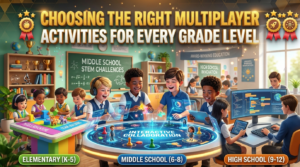
A premium educational illustration highlighting how teachers can choose multiplayer classroom activities based on different grade levels, learning objectives, collaboration, and student development.
Selecting the right multiplayer activity depends on students’ developmental stage, classroom objectives, attention span, and prior knowledge. An activity that excites second graders may feel too simplistic for middle school students, while complex collaborative projects designed for teenagers can overwhelm younger learners.
Instead of using the same strategy across every class, match the activity to students’ cognitive abilities, communication skills, and learning goals.
Young learners thrive in highly structured multiplayer activities with clear instructions and short time frames. Games should include movement, visual elements, and frequent encouragement to maintain attention.
For example, instead of asking students to solve a worksheet individually, divide the class into small teams where each member contributes one step toward solving a math problem. This approach promotes participation without placing excessive pressure on individual students.
Middle School Classrooms
Students in middle school benefit from activities that combine friendly competition with meaningful collaboration. At this stage, they begin developing stronger reasoning skills and enjoy opportunities to defend ideas, solve challenges, and work toward shared goals.
Activities like classroom debates, collaborative science investigations, and digital quiz tournaments encourage deeper engagement while strengthening communication skills.
High School Classrooms
Older students respond best to authentic learning experiences that resemble real-world collaboration. Rather than simple games, consider activities that require planning, research, presentation, and decision-making.
Examples include:
Mock business negotiations
Historical simulations
Collaborative lab investigations
Marketing campaign projects
Engineering design challenges
Case study discussions
These activities help students develop workplace-ready skills while meeting curriculum standards.
⭐ Expert Insight: As students mature, gradually shift the focus from winning games to solving meaningful problems. Collaboration should feel purposeful rather than purely competitive.
Multiplayer Learning Across Different Subjects
One of the greatest strengths of multiplayer learning is its flexibility. Nearly every academic subject can incorporate collaborative activities without compromising educational objectives.
Mathematics
Mathematics becomes significantly more engaging when students solve problems together instead of working silently.
Effective multiplayer math activities include:
Equation relay races
Collaborative logic puzzles
Geometry construction challenges
Budget-planning simulations
Mental math competitions
Rather than simply sharing answers, encourage students to explain how they reached each solution. This promotes mathematical reasoning instead of memorization.
Science
Science naturally supports collaborative exploration because scientific inquiry often involves observation, experimentation, and discussion.
Popular science multiplayer activities include:
Lab investigations
STEM design competitions
Environmental problem-solving
Scientific debates
Hypothesis testing challenges
Working together also helps students understand that scientific discoveries are frequently the result of teamwork rather than individual effort.
Language Arts
Reading and writing activities become more interactive when students collaborate.
Examples include:
Shared reading circles
Collaborative storytelling
Character analysis discussions
Peer editing workshops
Vocabulary competitions
Literature debates
These activities improve comprehension while encouraging students to articulate ideas more confidently.
Social Studies
History and civics provide excellent opportunities for multiplayer learning because many concepts involve multiple perspectives.
Teachers can organize:
Historical role-playing
Government simulations
Geography challenges
Timeline competitions
Primary source investigations
Students gain a deeper understanding when they actively interpret historical events instead of simply memorizing dates.
Foreign Languages
Language acquisition depends heavily on communication, making multiplayer activities particularly valuable.
Effective examples include:
Conversation stations
Vocabulary races
Translation challenges
Role-playing everyday situations
Collaborative storytelling
Frequent interaction builds speaking confidence while reducing anxiety.
For the latest gaming news, expert reviews, and walkthroughs, readers can also visit IGN, one of the world’s leading gaming websites.
How Educational Technology Enhances Multiplayer Learning
Technology has transformed multiplayer learning by making collaboration possible both inside and outside the classroom. Modern educational platforms provide teachers with tools to monitor participation, assess understanding, and personalize instruction without increasing administrative workload.
Common digital multiplayer features include:
Live classroom competitions
Team-based quiz modes
Interactive whiteboards
Shared digital workspaces
Real-time performance analytics
Instant feedback
Adaptive questioning
Collaborative assignments
These features allow teachers to quickly identify misconceptions while keeping students actively engaged.
However, technology should support instructional goals—not replace thoughtful teaching practices. The most effective classrooms combine digital tools with meaningful discussion, reflection, and teacher guidance.
💡 Pro Tip: Choose digital platforms based on instructional outcomes rather than popularity. A simple collaborative activity with strong learning objectives often produces better results than an elaborate game with little educational value.
Building an Inclusive Multiplayer Learning Environment
A premium educational illustration showcasing inclusive multiplayer learning where every student actively participates through collaboration, equal opportunities, respectful communication, and modern classroom technology.
Not every student feels comfortable participating in group activities. Personality differences, learning preferences, language barriers, and varying confidence levels can influence classroom engagement.
Creating an inclusive environment ensures every student has meaningful opportunities to contribute.
Consider these strategies:
Rotate leadership roles regularly.
Mix students with different strengths.
Provide clear expectations before activities begin.
Offer multiple ways to participate, including speaking, writing, drawing, or demonstrating.
Encourage respectful disagreement and active listening.
Recognize collaborative effort—not only correct answers.
Inclusive multiplayer learning helps students feel valued while strengthening classroom relationships.
Measuring the Success of Multiplayer Learning Activities
An engaging activity is not automatically an effective learning experience. Teachers should evaluate whether collaboration actually improved understanding and skill development.
Useful indicators include:
Success Indicator
What to Observe
Student Participation
Most learners actively contribute to discussions and tasks.
Learning Outcomes
Students demonstrate improved understanding after the activity.
Communication Skills
Teams explain ideas clearly and respectfully.
Collaboration
Responsibilities are shared rather than dominated by one student.
Engagement
Students remain focused throughout the lesson.
Reflection
Learners can explain what they learned and how teamwork supported their progress.
Combining observation with quick formative assessments provides a more accurate picture of student learning than competition results alone.
Final Thoughts
Multiplayer classroom activities transform students from passive listeners into active participants. Whether through team quizzes, STEM challenges, collaborative storytelling, classroom debates, digital learning games, or educational escape rooms, these experiences promote deeper understanding while building communication, critical thinking, and teamwork skills.
The most successful multiplayer learning experiences are carefully aligned with instructional goals, encourage equal participation, and provide opportunities for meaningful discussion rather than focusing solely on competition. By combining engaging activities with thoughtful classroom management, teachers can create learning environments where collaboration becomes a powerful tool for academic growth.
Choosing the right learning platform can significantly improve classroom outcomes. Compare leading educational tools in Gimkit Comparisons & Alternatives to find the best solution for your teaching style.
Interactive learning becomes more effective when students experience different gameplay formats. Discover engaging classroom activities in Gimkit Features & Game Modes and keep every lesson fresh.
Whether you’re a beginner or an experienced educator, practical guidance makes implementation easier. Follow our Gimkit Guides & Tutorials for step-by-step instructions and classroom best practices.
Every teacher benefits from proven instructional ideas that increase participation and motivation. Explore Gimkit Resources for Teachers for practical classroom-ready solutions.
Understanding pricing and premium features helps educators make informed decisions. Read detailed comparisons and expert evaluations in Gimkit Reviews & Pricing before selecting a subscription.
Small instructional improvements often lead to better classroom results. Discover practical teaching methods and winning techniques in Gimkit Tips & Strategies to maximize student engagement.
Expand your knowledge with a wide variety of educational content by browsing our General Articles, covering technology, learning, and classroom innovation.
Stay informed about the newest platform improvements, educational trends, and feature releases through Games Updates so you never miss important changes.
Strengthen learning with engaging assessments and interactive activities available in our Quiz Resources collection, designed for teachers and students alike.
If you experience sign-in problems or game access issues, visit Gimkit Login, Join & Troubleshooting for reliable solutions and step-by-step troubleshooting guides.
Professional Recommendations & Expert Reviews
Best Classroom Activities for Multiplayer Learning encourage students to work together toward shared learning goals.
Best Classroom Activities for Multiplayer Learning help improve communication through team-based discussions.
Best Classroom Activities for Multiplayer Learning support active participation from every student.
Best Classroom Activities for Multiplayer Learning encourage collaborative problem-solving during lessons.
Best Classroom Activities for Multiplayer Learning help students learn from different perspectives.
Best Classroom Activities for Multiplayer Learning support stronger teamwork through shared classroom challenges.
Best Classroom Activities for Multiplayer Learning encourage respectful communication during group tasks.
Best Classroom Activities for Multiplayer Learning help increase student engagement throughout the lesson.
Best Classroom Activities for Multiplayer Learning support cooperative learning instead of individual competition alone.
Best Classroom Activities for Multiplayer Learning encourage students to share ideas confidently.
Best Classroom Activities for Multiplayer Learning help strengthen classroom relationships through collaboration.
Best Classroom Activities for Multiplayer Learning support interactive learning with meaningful participation.
Best Classroom Activities for Multiplayer Learning encourage creative thinking during group activities.
Best Classroom Activities for Multiplayer Learning help improve listening and discussion skills.
Best Classroom Activities for Multiplayer Learning support balanced participation among team members.
Best Classroom Activities for Multiplayer Learning encourage students to solve challenges together.
Best Classroom Activities for Multiplayer Learning help develop leadership skills within small groups.
Best Classroom Activities for Multiplayer Learning support stronger knowledge retention through collaboration.
Best Classroom Activities for Multiplayer Learning encourage peer learning during classroom exercises.
Best Classroom Activities for Multiplayer Learning help students remain motivated throughout group activities.
Best Classroom Activities for Multiplayer Learning support engaging classroom review sessions.
Best Classroom Activities for Multiplayer Learning encourage students to contribute unique ideas.
Best Classroom Activities for Multiplayer Learning help improve classroom confidence through teamwork.
Best Classroom Activities for Multiplayer Learning support meaningful collaboration across different subjects.
Best Classroom Activities for Multiplayer Learning encourage active learning instead of passive observation.
Best Classroom Activities for Multiplayer Learning help students practice critical thinking together.
Best Classroom Activities for Multiplayer Learning support inclusive classroom participation.
Best Classroom Activities for Multiplayer Learning encourage positive interaction between classmates.
Best Classroom Activities for Multiplayer Learning help create enjoyable educational experiences.
Best Classroom Activities for Multiplayer Learning support flexible teaching strategies for different lessons.
Best Classroom Activities for Multiplayer Learning encourage collaborative review before assessments.
Best Classroom Activities for Multiplayer Learning help improve classroom communication skills.
Best Classroom Activities for Multiplayer Learning support productive group discussions.
Best Classroom Activities for Multiplayer Learning encourage students to respect different opinions.
Best Classroom Activities for Multiplayer Learning help maintain classroom engagement during longer lessons.
Best Classroom Activities for Multiplayer Learning support stronger classroom communities through shared success.
Best Classroom Activities for Multiplayer Learning encourage cooperative decision-making during activities.
Best Classroom Activities for Multiplayer Learning help teachers observe teamwork and participation.
Best Classroom Activities for Multiplayer Learning support interactive review using educational games.
Best Classroom Activities for Multiplayer Learning encourage every student to contribute meaningfully.
Best Classroom Activities for Multiplayer Learning help reinforce important lesson concepts through collaboration.
Best Classroom Activities for Multiplayer Learning support enjoyable classroom challenges that build confidence.
Best Classroom Activities for Multiplayer Learning encourage students to communicate clearly with teammates.
Best Classroom Activities for Multiplayer Learning help create positive classroom energy through shared activities.
Best Classroom Activities for Multiplayer Learning support balanced learning with both discussion and practice.
Frequently Asked Questions
1. What are multiplayer classroom activities?
Multiplayer classroom activities are collaborative learning experiences where students work together in pairs or small groups to solve problems, answer questions, complete challenges, or participate in educational games that support specific learning objectives. Unlike individual tasks, these activities emphasize teamwork, communication, and shared responsibility, allowing students to learn from one another while developing important academic and interpersonal skills.
Whether conducted in a traditional classroom or through digital platforms, multiplayer activities encourage active participation and create a more engaging learning environment than passive instruction alone.
Common multiplayer activities include:
Team-based quiz games.
Group problem-solving tasks.
Classroom debates.
Collaborative projects.
Peer learning activities.
Educational game challenges.
2. Why are multiplayer learning activities effective?
Multiplayer learning activities improve engagement by encouraging every student to contribute toward a shared goal. Working together helps students exchange ideas, strengthen communication skills, develop critical thinking, and reinforce knowledge through discussion rather than memorization. Collaborative learning also builds confidence by allowing students to learn from their peers in a supportive environment.
Research consistently shows that active participation and teamwork improve knowledge retention while making classroom instruction more meaningful and enjoyable.
Major educational benefits:
Higher student engagement.
Stronger communication skills.
Improved critical thinking.
Better knowledge retention.
Increased classroom participation.
Greater teamwork and collaboration.
3. Which subjects work best with multiplayer learning?
Nearly every academic subject benefits from multiplayer learning because collaborative activities can be adapted to different learning objectives and age groups. Mathematics, science, social studies, English language arts, foreign languages, computer science, and STEM subjects all become more interactive when students work together to solve problems, analyze information, or complete classroom challenges.
Teachers can modify multiplayer activities to reinforce foundational knowledge, encourage discussion, or support higher-order thinking across virtually any curriculum.
Subjects that benefit most:
Mathematics.
Science.
Social Studies.
English Language Arts.
World Languages.
Computer Science and STEM.
4. What is the ideal group size for classroom collaboration?
Most education experts recommend groups of three to five students because this size encourages active participation while remaining easy for teachers to manage. Smaller groups give every learner an opportunity to contribute, reduce off-task behavior, and promote more meaningful discussions. Group size may vary depending on the activity, classroom layout, and learning objectives.
Assigning clear roles within each group further improves accountability and ensures all students participate throughout the lesson.
Best practices for group work:
Form groups of three to five students.
Assign clear responsibilities.
Balance student abilities.
Rotate group membership regularly.
Establish collaboration expectations.
Monitor participation throughout the activity.
5. Can multiplayer activities be used for online learning?
Yes. Multiplayer learning is highly effective in virtual and hybrid classrooms when supported by appropriate digital tools. Teachers can use live quiz platforms, collaborative documents, virtual breakout rooms, interactive whiteboards, and online discussion activities to encourage teamwork even when students are learning remotely. These technologies help maintain communication, engagement, and collaborative problem-solving regardless of location.
Successful online multiplayer lessons combine structured activities with teacher guidance, ensuring students remain focused while developing both academic knowledge and digital collaboration skills.