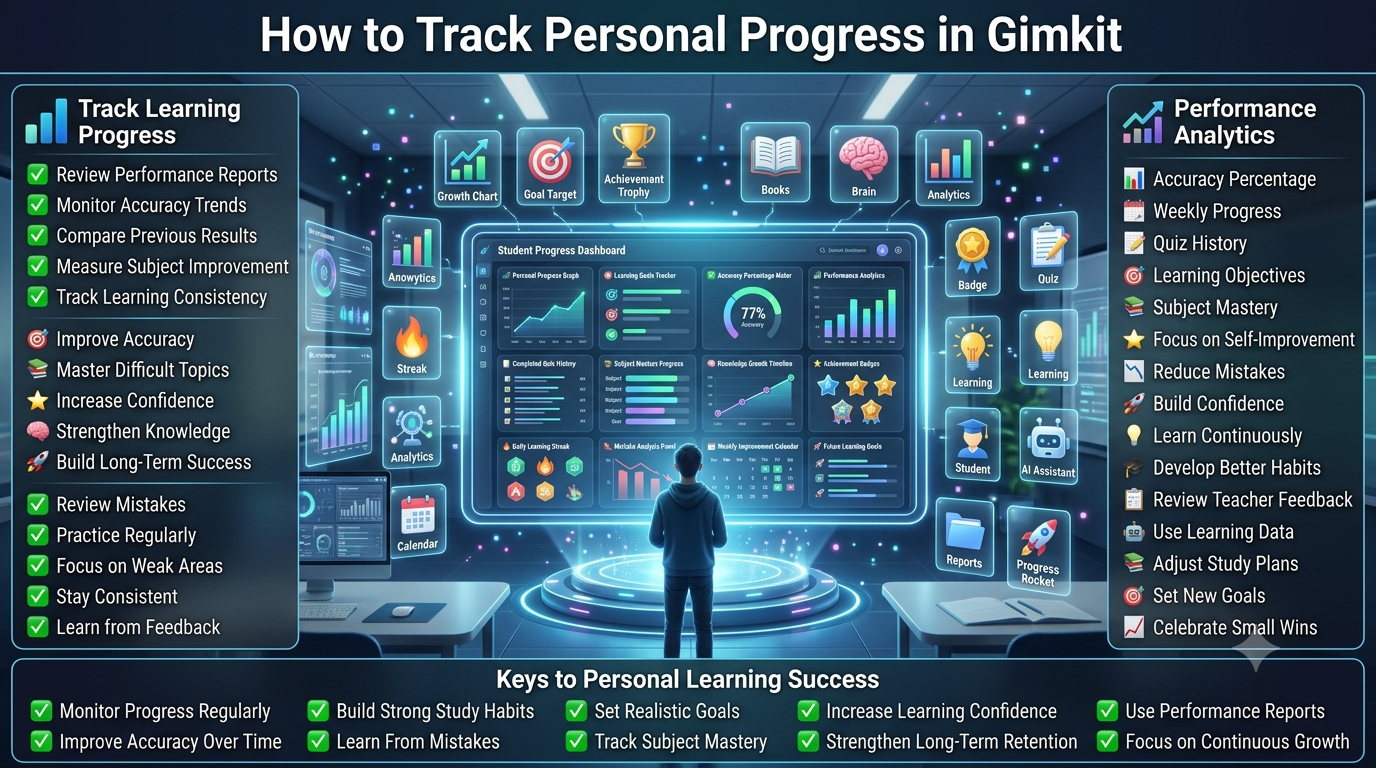
How to Track Personal Progress in Gimkit-Improving in Gimkit requires more than simply playing games and aiming for the top of the leaderboard. While earning in-game cash and winning matches can be motivating, real progress comes from consistently strengthening subject knowledge, identifying weak areas, and measuring improvement over time. Students who regularly evaluate their performance develop better study habits and gain a clearer understanding of how their learning is advancing.
Gimkit is designed to support ongoing practice through features such as Gimkit Live, Gimkit Join, and the Gimkit App. These tools allow students to participate in interactive review sessions while giving teachers valuable performance data. Instead of viewing each game as a separate competition, students should treat every session as an opportunity to improve accuracy, confidence, and long-term retention.
Tracking personal progress also encourages a growth mindset. Rather than comparing scores with classmates, students can focus on increasing their own accuracy, reducing repeated mistakes, answering questions more confidently, and mastering challenging topics. This approach creates healthier motivation while supporting continuous academic development throughout the school year.
Modern educational practice increasingly emphasizes formative assessment and data-informed learning. Reviewing previous performance, reflecting on mistakes, and setting realistic improvement goals help students become more independent learners. Even small improvements measured consistently over time can lead to significant academic gains.
This guide explains How to Track Personal Progress in Gimkit, covering performance reports, accuracy trends, goal setting, study routines, classroom feedback, and practical strategies that help students measure meaningful learning progress instead of focusing only on game results.
Focus on Accuracy Before Leaderboard Position
Many students judge success only by their final ranking, but leaderboard placement does not always reflect actual learning.
Consistently answering questions correctly builds stronger subject knowledge and improves long-term retention. Students should monitor whether their accuracy improves across multiple sessions instead of focusing only on winning individual games.
Progress Indicators
Indicator
Why It Matters
Question Accuracy
Measures understanding
Correct Answers
Shows knowledge growth
Fewer Repeated Mistakes
Indicates improvement
Consistent Performance
Long-term progress
Increased Confidence
Better learning habits
Topic Mastery
Stronger academic success
Accuracy provides a more reliable measure of learning than rankings alone.
Review Performance After Every Session
Reflection is one of the most valuable learning habits.
After each Gimkit activity, students should review questions they answered incorrectly, identify patterns in their mistakes, and revisit topics requiring additional study. This process transforms every game into an opportunity for improvement rather than simply another competition.
Reflection Routine
Review Habit
Learning Benefit
Examine Incorrect Answers
Identify weaknesses
Review Difficult Topics
Improve understanding
Compare Recent Results
Measure progress
Ask Questions
Clarify confusion
Practice Weak Skills
Build confidence
Reflect Regularly
Continuous improvement
Frequent reflection strengthens both retention and future performance.
Set Small, Achievable Learning Goals
Long-term improvement is easier when students focus on gradual progress.
Instead of aiming only to finish first, learners can set realistic goals such as increasing accuracy, reducing mistakes, mastering vocabulary, or improving performance in one challenging subject area. Achievable goals encourage consistent motivation throughout the school year.
Goal Setting
Goal
Educational Value
Improve Accuracy
Better understanding
Reduce Mistakes
Stronger retention
Master One Topic
Focused learning
Increase Confidence
Higher participation
Study Weak Areas
Balanced improvement
Track Weekly Progress
Long-term growth
Small improvements build lasting academic success.
Use Classroom Feedback to Improve
Teacher feedback adds valuable context to game results.
Performance reports, classroom discussions, and review sessions help students understand why mistakes occurred and what should be studied next. Combining personal reflection with teacher guidance creates more meaningful improvement than relying only on final scores.
Tracking progress becomes meaningful only when students practice consistently. Instead of using Gimkit only before major exams, successful learners schedule regular review sessions throughout each unit. Short, focused practice several times a week helps reinforce concepts, strengthen memory, and reduce the need for last-minute cramming. Consistency also makes it easier to recognize gradual improvement across multiple weeks rather than judging performance from a single game.
Study Routine
Habit
Long-Term Benefit
Review Weekly
Better retention
Practice Difficult Topics
Stronger understanding
Repeat Key Concepts
Improved recall
Study in Short Sessions
Higher concentration
Reflect After Each Game
Continuous improvement
Maintain a Routine
Sustainable learning
Regular practice produces more reliable academic progress than occasional intensive study.
Track Progress Across Different Subjects
Students often perform differently in various subjects, making subject-specific tracking especially valuable. Rather than looking at an overall score, monitor progress separately for mathematics, science, language arts, social studies, or other courses. This approach helps identify strengths and weaknesses more accurately, allowing study time to be focused where it will have the greatest impact.
One of the best ways to use Gimkit is as a formative assessment tool before quizzes and exams. Reviewing previous results helps students identify topics that require additional practice before formal assessments. Instead of studying everything equally, learners can prioritize concepts where accuracy has been consistently lower, making revision more efficient and targeted.
Test Preparation Strategy
Performance Indicator
Study Action
Frequently Missed Questions
Review immediately
Strong Performance
Maintain knowledge
Weak Topics
Allocate more study time
Improvement Trends
Continue current strategy
Consistent Accuracy
Build confidence
Teacher Feedback
Guide revision
Targeted preparation improves both efficiency and exam readiness.
Avoid Common Progress-Tracking Mistakes
Many students judge improvement using only leaderboard positions or total earnings, but these numbers do not always represent genuine learning. Personal progress should be measured through increased accuracy, stronger understanding, reduced repeated mistakes, and greater confidence when answering questions. Avoid comparing your results with classmates, since every learner progresses at a different pace.
Mistakes to Avoid
Mistake
Better Approach
Chasing leaderboard rankings
Focus on learning growth
Comparing with classmates
Measure personal improvement
Ignoring incorrect answers
Review every mistake
Studying only before tests
Practice consistently
Tracking only scores
Monitor accuracy and understanding
Skipping reflection
Analyze every session
Meaningful progress comes from learning, not just competition.
Stay Motivated Throughout the Learning Journey
Long-term motivation develops when students recognize steady personal improvement. Celebrating small achievements, setting realistic goals, and viewing mistakes as learning opportunities help maintain enthusiasm over an entire school year. Students who focus on continuous growth rather than immediate perfection generally develop stronger study habits and greater academic confidence.
Motivation Strategies
Strategy
Benefit
Celebrate Small Wins
Build confidence
Set Realistic Goals
Maintain motivation
Learn From Mistakes
Encourage resilience
Review Progress Regularly
Recognize improvement
Stay Consistent
Develop discipline
Enjoy the Learning Process
Long-term success
Motivation becomes sustainable when progress is measured against personal goals instead of short-term game outcomes.
30+ Expert Tips for Tracking Personal Progress in Gimkit
Long-term improvement in Gimkit comes from measuring learning consistently rather than focusing on individual wins. Students who monitor their performance, reflect on mistakes, and set realistic goals develop stronger study habits and achieve better academic results throughout the school year.
Learning Goals
Set one improvement goal each week.
Focus on understanding before competition.
Track your progress by subject.
Measure improvement over multiple sessions.
Celebrate small academic gains.
Gameplay Habits
Prioritize accuracy over speed.
Review difficult questions after every game.
Avoid random guessing.
Stay focused during every session.
Learn from incorrect answers immediately.
Study Routine
Practice consistently each week.
Revisit difficult topics regularly.
Study before major assessments.
Combine Gimkit with textbook review.
Keep a consistent revision schedule.
Performance Tracking
Compare recent results with older sessions.
Monitor recurring mistakes.
Identify strong subject areas.
Improve weaker topics gradually.
Review teacher feedback carefully.
Growth Mindset
Focus on personal improvement.
Avoid comparing yourself with classmates.
Accept mistakes as learning opportunities.
Stay patient during difficult units.
Maintain confidence through steady progress.
Long-Term Success
Build sustainable study habits.
Review performance reports regularly.
Reflect after important review sessions.
Keep learning goals realistic.
Measure success by knowledge gained, not only by leaderboard rankings.
Best Practices
✔ Track accuracy across multiple sessions.
✔ Review incorrect answers consistently.
✔ Practice challenging topics more often.
✔ Combine digital review with classroom learning.
✔ Make progress tracking a regular habit throughout the school year.
Small improvements recorded consistently lead to significant academic growth over time.
Common Mistakes Students Should Avoid
Many students misunderstand progress by focusing only on game outcomes instead of learning outcomes. Avoiding these common mistakes leads to more meaningful improvement and stronger long-term retention.
✔ Focus on long-term learning rather than short-term victories.
Strong learning habits produce more reliable progress than occasional high scores.
Instant Guidance & Expert Reviews
How to Track Personal Progress in Gimkit begins with setting clear learning goals before every activity. Knowing what you want to improve makes it easier to measure meaningful progress over time.
How to Track Personal Progress in Gimkit involves reviewing your performance after each game rather than focusing only on your final position on the leaderboard. Consistent improvement is a better indicator of learning than a single high score.
How to Track Personal Progress in Gimkit encourages students to monitor answer accuracy because correct responses reflect subject mastery more effectively than speed alone.
How to Track Personal Progress in Gimkit helps learners identify strengths by recognizing the subjects and question types they answer confidently and consistently.
How to Track Personal Progress in Gimkit highlights the importance of identifying weak areas so additional practice can be directed toward concepts that require improvement.
How to Track Personal Progress in Gimkit recommends comparing current performance with previous sessions to measure steady academic growth instead of judging success from a single activity.
How to Track Personal Progress in Gimkit encourages students to review missed questions carefully, as understanding mistakes leads to stronger long-term retention.
How to Track Personal Progress in Gimkit supports continuous learning by using assignment results to determine which topics deserve additional review before future lessons or assessments.
How to Track Personal Progress in Gimkit emphasizes maintaining consistent participation because regular practice produces more reliable evidence of improvement than occasional gameplay.
How to Track Personal Progress in Gimkit recommends balancing speed with accuracy, ensuring that quick responses never reduce the quality of your answers.
How to Track Personal Progress in Gimkit encourages students to establish realistic short-term goals, such as improving answer accuracy or mastering a specific topic before moving to more advanced material.
How to Track Personal Progress in Gimkit highlights the value of reflecting on each learning session by identifying what worked well and what could be improved next time.
How to Track Personal Progress in Gimkit helps learners recognize patterns in their performance, making it easier to identify recurring challenges and successful learning strategies.
How to Track Personal Progress in Gimkit supports independent learning by encouraging students to complete self-paced assignments that reinforce classroom instruction.
How to Track Personal Progress in Gimkit recommends organizing study sessions around topics that consistently appear challenging instead of reviewing only familiar material.
How to Track Personal Progress in Gimkit encourages students to celebrate small improvements, recognizing that gradual progress leads to long-term academic success.
How to Track Personal Progress in Gimkit highlights the importance of maintaining consistent study habits because steady practice strengthens both confidence and knowledge retention.
How to Track Personal Progress in Gimkit helps students build accountability by regularly evaluating their learning goals and adjusting study strategies when necessary.
How to Track Personal Progress in Gimkit supports meaningful growth by encouraging learners to focus on understanding concepts instead of simply memorizing correct answers.
How to Track Personal Progress in Gimkit recommends using teacher feedback alongside game results to gain a more complete understanding of academic performance.
How to Track Personal Progress in Gimkit encourages students to review progress over weeks or months, allowing long-term improvement to become more visible than daily performance changes.
How to Track Personal Progress in Gimkit highlights that consistent engagement with classroom activities contributes more to academic growth than occasional high-scoring performances.
How to Track Personal Progress in Gimkit supports personalized learning by helping students prioritize subjects and skills that require additional attention.
How to Track Personal Progress in Gimkit encourages learners to remain patient, understanding that meaningful educational progress develops through repeated practice and continuous improvement.
How to Track Personal Progress in Gimkit demonstrates that careful self-assessment helps students become more confident, independent, and responsible learners over time.
How to Track Personal Progress in Gimkit recommends combining classroom participation, independent assignments, and regular review sessions to build a comprehensive picture of academic development.
How to Track Personal Progress in Gimkit encourages students to use performance data as motivation for improvement rather than as a measure of personal ability or intelligence.
How to Track Personal Progress in Gimkit ultimately shows that lasting academic success comes from setting clear goals, practicing consistently, reviewing mistakes, monitoring accuracy, reflecting on progress, and using every learning session as an opportunity to build stronger knowledge and greater confidence.
Frequently Asked Questions
1. Where Do Teachers Find Long-Term Individual Student Analytics?
Teachers can monitor long-term student progress through the reporting and assignment analytics available within their Gimkit teacher account. These reports combine results from live games and assignments, allowing educators to review participation, accuracy, completion rates, and concept mastery over time. Instead of focusing on a single activity, teachers should compare results across multiple units to identify trends and measure growth. Current data-informed teaching practices recommend using these analytics alongside classroom observations and other assessments for a complete picture of student learning.
Best practices:
Review reports after each unit.
Compare performance across assignments.
Monitor long-term accuracy trends.
Identify recurring misconceptions.
Combine analytics with classroom assessment.
2. How Do Students Track Their Overall Game Growth and Cosmetic Milestones?
Students who use their own Gimkit accounts can monitor their personal progress by reviewing completed activities, improving question accuracy, and observing earned rewards, cosmetics, or other account milestones available to them. Cosmetic collections represent gameplay achievements but should not be considered indicators of academic performance. Teachers are encouraged to help students focus primarily on learning progress while treating cosmetic rewards as additional motivation rather than the ultimate goal.
Students should track:
Improvement in question accuracy.
Completion of assignments.
Consistent participation.
Personal gameplay milestones.
Long-term learning goals.
3. Can Students Save Their Progress During an Independent Assignment?
Independent assignments generally save progress automatically while students remain signed in with the correct account and complete work according to the assignment settings established by the teacher. If students leave before finishing, whether they can continue later depends on how the assignment was configured, including availability dates and teacher preferences. Students should always verify that work has been submitted successfully before closing the activity.
Helpful recommendations:
Stay signed into the correct account.
Complete assignments before deadlines.
Confirm progress is recorded.
Check assignment availability.
Contact the teacher if progress appears missing.
4. How Can Teachers Identify Specific Knowledge Gaps Across the Whole Class?
The most effective approach is to analyze question-level reports instead of looking only at overall scores. If many students answer the same questions incorrectly, this often indicates a shared misconception or topic requiring additional instruction. Comparing results across multiple assignments also helps identify persistent learning gaps. Modern formative assessment encourages teachers to use this data to adjust lessons, provide targeted review, and differentiate instruction before moving to new content.
Effective analysis includes:
Review question-by-question reports.
Identify commonly missed concepts.
Compare class performance across units.
Reteach difficult topics.
Monitor improvement after intervention.
5. Why Is a Student’s Personal Assignment Data Not Showing Up?
Missing assignment data is usually caused by account, assignment, or submission issues rather than lost information. Students may have signed in with a different account, failed to submit the assignment, accessed an expired activity, or experienced a temporary connectivity problem. Teachers should first confirm that the student joined using the correct account and that the assignment was completed within the allowed availability period before investigating further.
Troubleshooting steps:
Verify the correct student account was used.
Confirm the assignment was submitted.
Check assignment availability dates.
Ensure internet connectivity remained stable.
Review teacher reports and classroom roster for confirmation.
Final Verdict
Tracking Personal Progress in Gimkit is most effective when students measure learning rather than simply measuring wins. By reviewing performance reports, setting realistic goals, practicing consistently, and learning from mistakes, students can transform every review session into an opportunity for meaningful academic growth and lasting knowledge retention.
Conclusion
Personal progress is built through consistent effort, thoughtful reflection, and a commitment to continuous improvement. Students who prioritize accuracy, monitor their own development, apply teacher feedback, and maintain balanced study routines gain far more from Gimkit than higher leaderboard positions alone. Over time, these habits foster stronger confidence, deeper understanding, and long-term academic success both inside and outside the classroom.