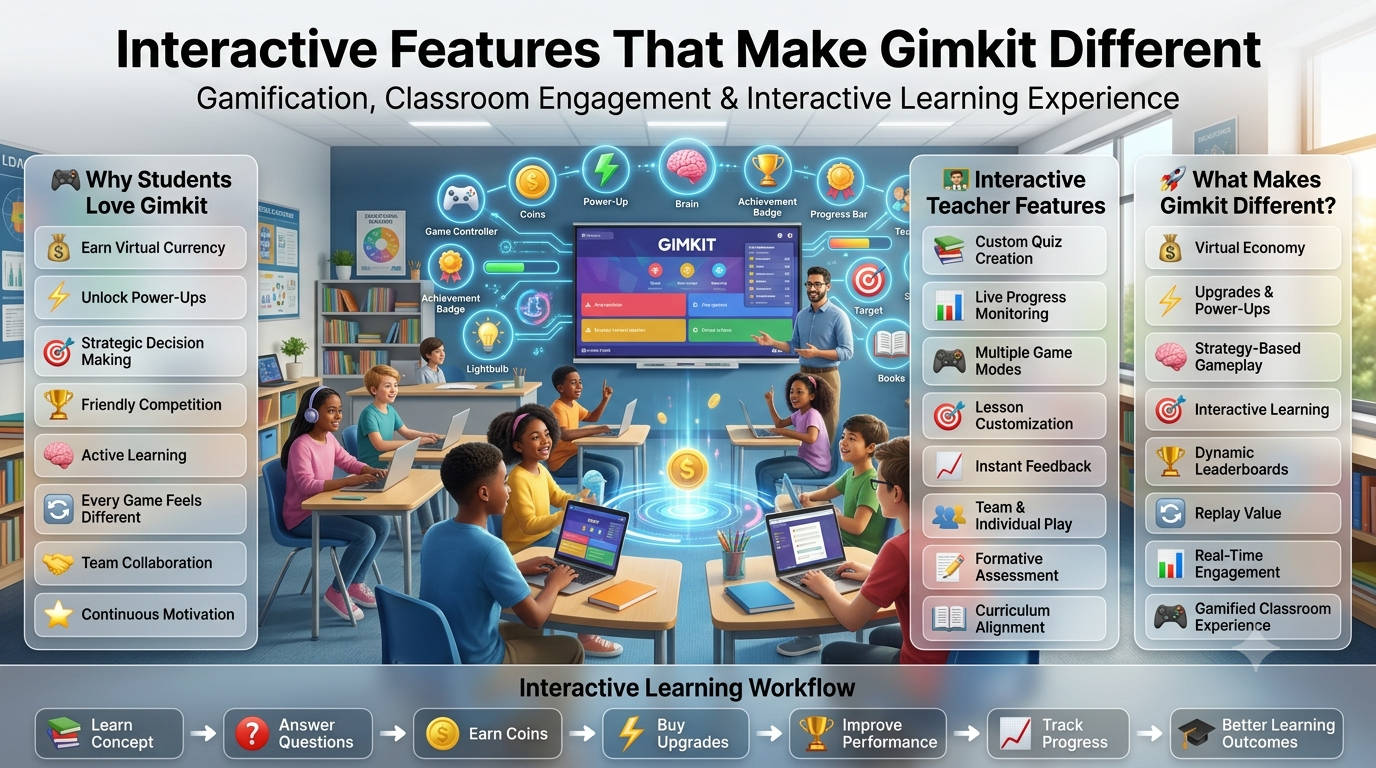
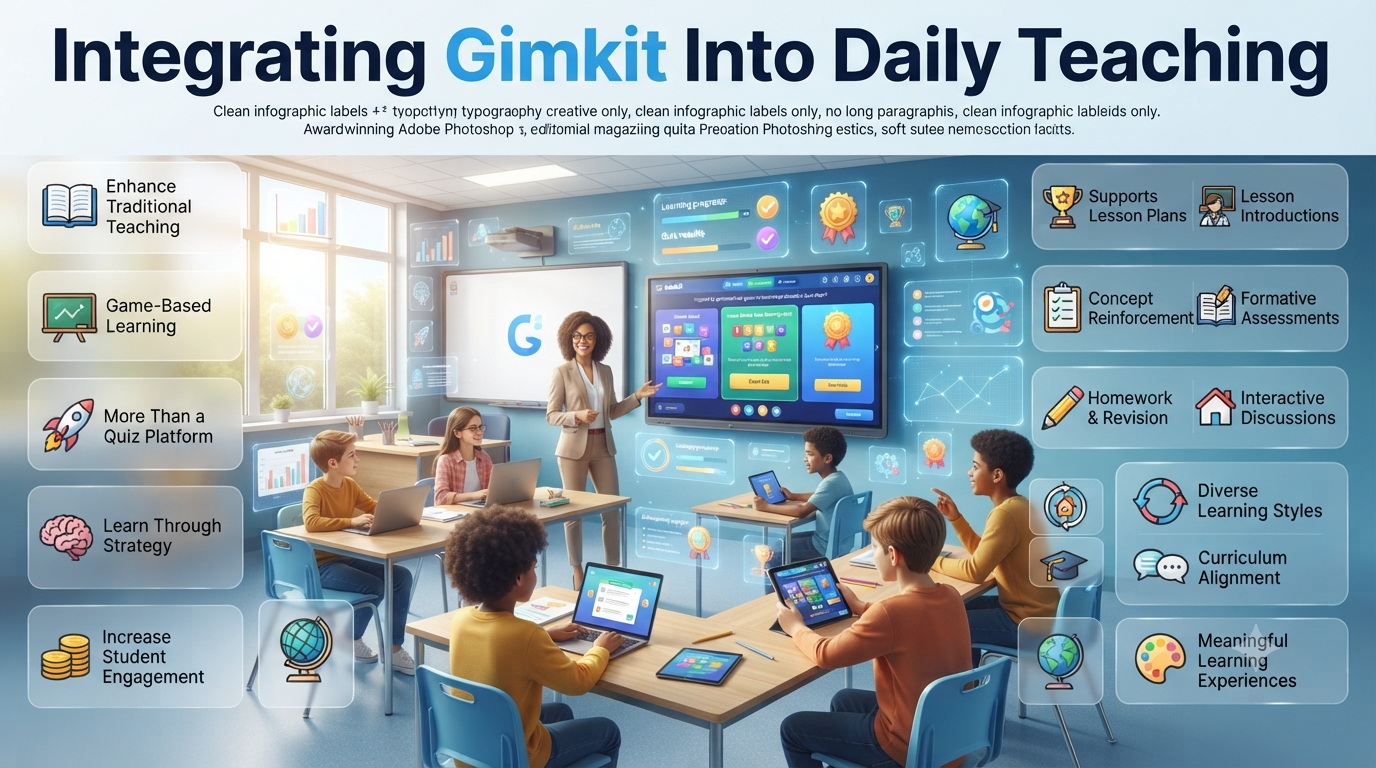
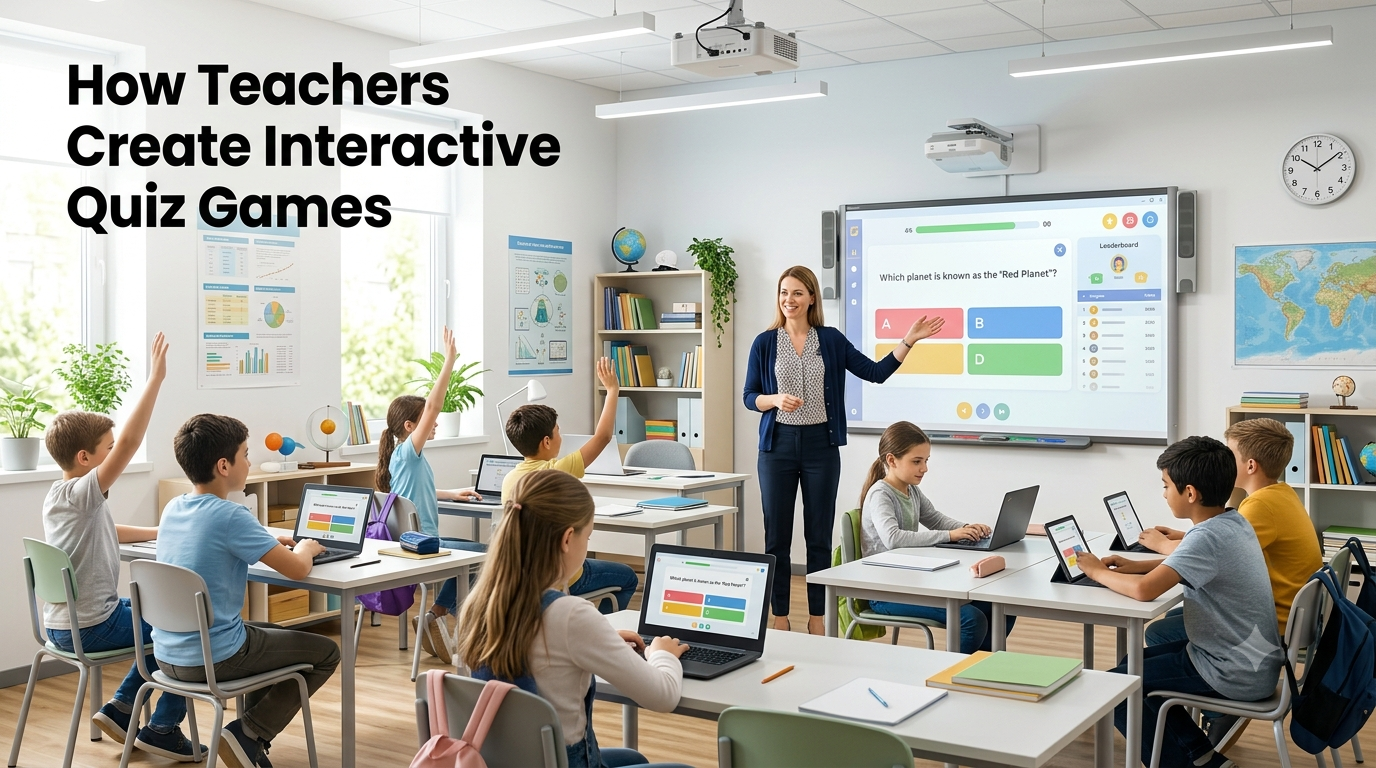
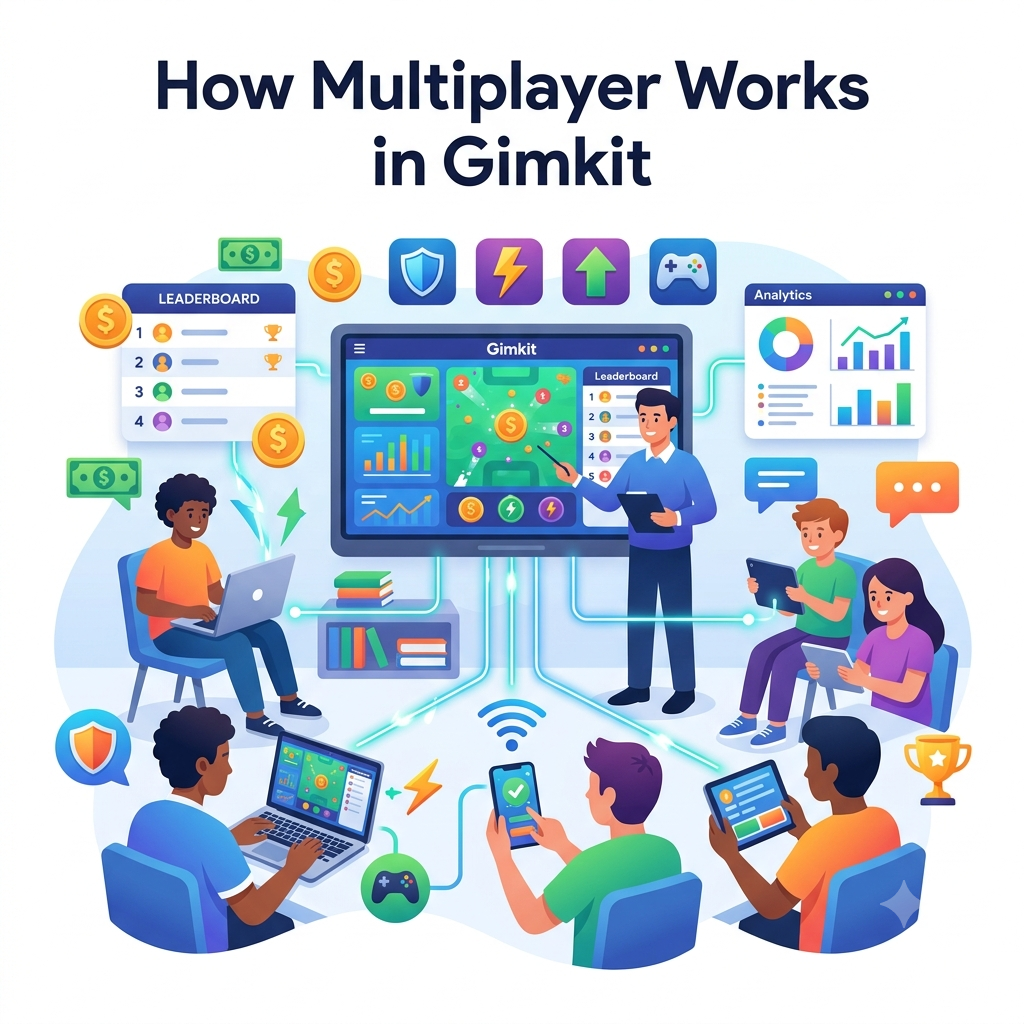
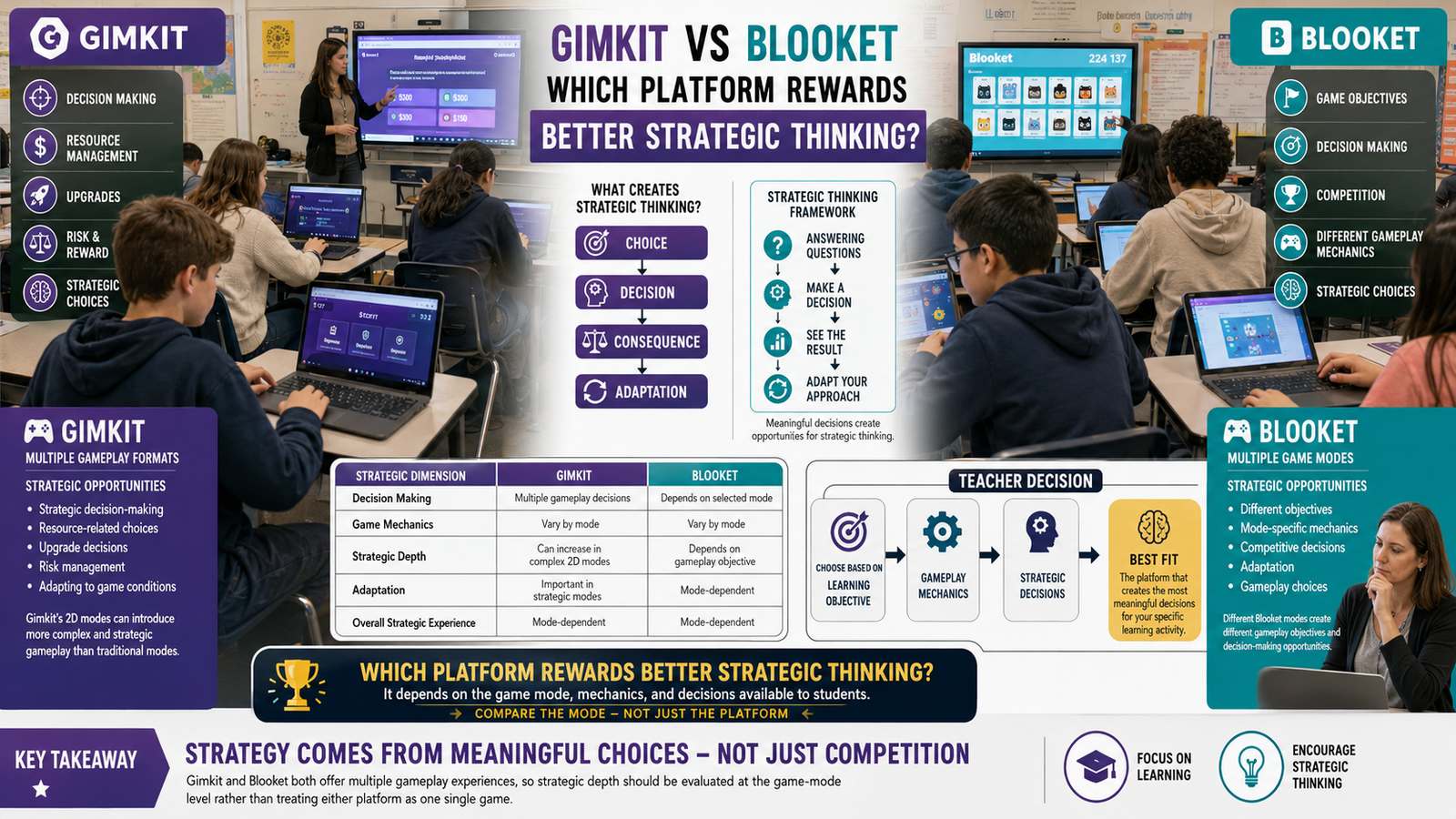
Interactive Features That Make Gimkit Different-Keeping students engaged from the first question to the last is one of the biggest challenges in today’s classrooms. While many quiz platforms focus on testing knowledge, Gimkit transforms every lesson into an interactive learning adventure. Instead of simply answering questions, students earn rewards, unlock upgrades, make strategic decisions, and stay motivated throughout the entire session.
Unlike traditional quiz-based tools, Gimkit creates a dynamic game environment where every correct answer has a purpose. Students collect virtual currency, invest in power-ups, improve their gameplay, and adjust their strategies as the game progresses. This combination of learning and decision-making keeps students focused for longer while making classroom activities far more exciting.
Teachers also benefit from a wide range of interactive classroom tools that make lessons flexible and engaging. Whether teaching math, science, languages, history, or exam preparation, educators can customize games, monitor live progress, and encourage collaboration or friendly competition based on their learning objectives.
Why Students Love Gimkit’s Interactive Experience
🎮 Every correct answer earns in-game rewards.
💰 Virtual currency adds excitement and strategic thinking.
⚡ Power-ups and upgrades make every game unique.
🧠 Students stay mentally active instead of answering passively.
🤝 Team modes encourage collaboration and communication.
🏆 Friendly competition increases motivation and participation.
🔄 Every session feels different thanks to multiple game modes.
Why Teachers Choose Gimkit
📊 Track student performance in real time.
🎯 Customize games for any subject or grade level.
📝 Reinforce lessons through engaging practice instead of repetitive worksheets.
⚙️ Adjust settings to match different classroom goals.
👨🏫 Keep students focused even during longer review sessions.
📈 Identify learning gaps instantly with live classroom insights.
What You’ll Learn in This Guide
In this complete guide, you’ll discover:
How Gimkit’s interactive gameplay works.
The features that keep students engaged for longer.
The most valuable tools available for teachers.
How different game modes encourage participation.
Tips for maximizing classroom engagement and learning outcomes.
Why Gimkit stands out from other educational quiz platforms.
By the end of this guide, you’ll have a clear understanding of what makes Gimkit different, how its interactive features improve classroom participation, and why so many teachers use it to create more engaging, memorable, and effective learning experiences.
What Makes Gimkit Different From Other Learning Platforms?
An educational infographic explaining what makes Gimkit different from traditional learning platforms through gamified quizzes, strategic gameplay, virtual rewards, classroom collaboration, and interactive learning experiences that keep students engaged.
Most learning platforms make quizzes easier, but Gimkit transforms every question into part of an interactive learning experience. Instead of answering questions just to earn points, students make decisions, build strategies, and stay engaged throughout the game. Learning becomes the key to progressing rather than simply completing a quiz.
🎮 More Than Just Questions and Answers
Unlike traditional quiz platforms, Gimkit doesn’t stop at asking questions and showing scores. Every correct answer unlocks new opportunities, giving students a reason to stay focused from start to finish.
Students can:
💰 Earn virtual currency instead of simple points.
🚀 Purchase upgrades and power-ups.
🧠 Make strategic decisions during gameplay.
🎯 Improve their performance as the game progresses.
This keeps every round fresh instead of repetitive.
🧩 Strategy Makes Every Game Different
Gimkit adds a layer of decision-making that most classroom quiz tools don’t offer. Students choose how to spend their earnings based on their own strategy.
Some players may:
💵 Invest in higher earning upgrades.
🛡️ Unlock defensive abilities.
⚡ Focus on faster progression.
🎲 Adapt their strategy for different game modes.
These choices make every student’s experience unique.
📚 Learning Always Comes First
Although the gameplay feels like a game, education remains the foundation. Students can only earn rewards by answering academic questions correctly.
This approach helps:
✅ Reinforce lesson concepts.
🧠 Improve long-term memory.
📖 Encourage active learning.
🎯 Reward knowledge instead of guessing.
🤝 Multiple Ways to Play
Not every classroom learns the same way, and Gimkit reflects that flexibility.
Teachers can choose from:
🏆 Competitive classroom games.
👥 Team-based collaboration.
📱 Independent practice.
📝 Homework assignments.
⏳ Self-paced learning sessions.
This allows lessons to match different teaching styles and classroom goals.
👨🏫 Built for Teachers
Gimkit gives educators complete control during every activity.
Teachers can:
⚙️ Customize question sets.
📊 Track student progress in real time.
🎮 Adjust live game settings.
📈 Review detailed performance reports.
🎯 Identify learning gaps quickly.
These features make Gimkit useful for both engagement and assessment.
🌟 Designed to Keep Every Student Motivated
Students stay motivated for different reasons, and Gimkit supports them all.
Whether learners enjoy:
🥇 Friendly competition.
🤝 Teamwork.
🎁 Rewards and achievements.
📈 Continuous progression.
…the platform provides multiple ways to stay engaged throughout the lesson.
🚀 A Complete Interactive Learning System
The biggest difference is that interaction never stops. Every correct answer, reward, upgrade, and strategic choice is connected, creating one continuous learning experience instead of a simple quiz.
As a result, students remain engaged longer, participate more actively, and retain information more effectively than they would with traditional classroom assessment platforms.
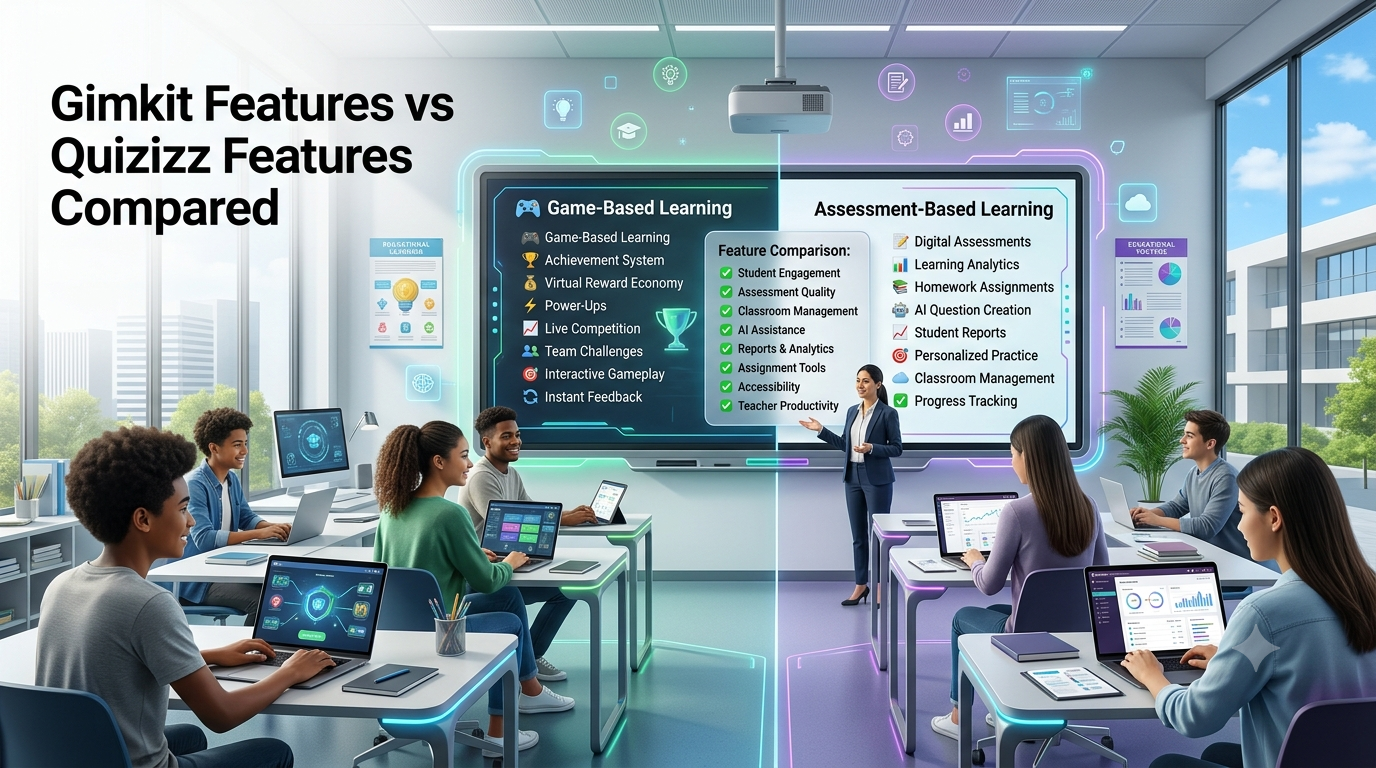
Quick Comparison: Gimkit vs Traditional Quiz Platforms
Designed to remain engaging throughout the session
Teacher Flexibility
Basic quiz management
Extensive classroom controls and customization
Collaboration Options
Limited in many platforms
Multiple cooperative and competitive experiences
Learning Experience
Assessment-focused
Learning integrated with interactive gameplay
Professional Insight: The real strength of Gimkit is not that it makes quizzes feel like games—it designs the entire learning process around meaningful interaction. Instead of students simply completing an activity, they actively shape their own experience while reinforcing academic knowledge, making classroom participation feel purposeful, engaging, and rewarding.
The Interactive Learning Philosophy Behind Gimkit
A professional infographic explaining Gimkit’s interactive learning philosophy, showing how active participation, strategic decision-making, continuous feedback, and gamification work together to improve classroom engagement and long-term learning outcomes.
Interactive learning in Gimkit is built on a simple but powerful principle: students learn more effectively when they actively participate in every stage of the experience instead of passively responding to questions. Rather than treating quizzes as isolated assessments, Gimkit transforms them into ongoing learning journeys where knowledge, decision-making, and engagement work together.
Many classroom platforms emphasize speed by rewarding students who answer quickly. While this approach can increase excitement, it may also encourage guessing instead of understanding. Gimkit follows a different philosophy by placing greater value on consistent learning, strategic thinking, and meaningful participation. Students quickly realize that every correct answer contributes to long-term success, making accuracy more rewarding than simply being the fastest player.
Learning Becomes an Active Experience
Traditional assessments often measure what students already know. Gimkit, however, encourages students to stay mentally involved throughout the activity. Every correct response creates a new opportunity to improve performance, unlock upgrades, or strengthen a long-term strategy. This continuous cycle keeps learners engaged because every decision influences what happens next.
Instead of viewing each question as a separate task, students begin thinking about how their current choices affect future progress. This shift naturally increases concentration and reduces the feeling that classroom review is repetitive.
Every Correct Answer Has Immediate Value
One reason students remain motivated is that success produces instant, visible rewards. Correct answers do more than increase a score—they generate resources that can be used strategically during gameplay.
This immediate feedback creates a strong connection between academic performance and game progression. Students see a direct relationship between understanding the lesson and achieving better results, making learning feel purposeful rather than routine.
Strategic Decisions Keep Students Mentally Engaged
Many educational games reward knowledge but offer limited decision-making. Gimkit introduces another layer by asking students to choose how they will use their earnings during the game.
Students constantly evaluate questions such as:
Should I save my earnings for a stronger upgrade?
Is it better to improve my earning potential now or later?
Which strategy best fits the current game mode?
Should I focus on long-term growth or immediate rewards?
These choices encourage planning, problem-solving, and critical thinking while students continue answering academic questions.
Continuous Feedback Supports Better Learning
Effective learning depends on timely feedback. Waiting until the end of an activity to discover mistakes often reduces learning opportunities. Gimkit provides immediate responses that allow students to recognize errors, adjust their thinking, and continue improving throughout the session.
Instead of feeling discouraged by occasional incorrect answers, students receive continuous opportunities to recover and make progress. This creates a learning environment where improvement becomes part of the experience rather than something that happens only after the activity ends.
Motivation Extends Beyond Competition
Competition can motivate many learners, but it does not engage everyone equally. Gimkit’s interactive philosophy recognizes that students are motivated by different experiences.
Some learners enjoy climbing leaderboards, while others prefer unlocking upgrades, completing objectives, working with teammates, or improving their personal performance. By combining multiple motivational systems into one platform, Gimkit creates a classroom environment that appeals to a wider range of learning preferences instead of relying on competition alone.
Teachers Become Learning Facilitators Instead of Scorekeepers
Interactive learning is not only about students. Gimkit also changes the teacher’s role during classroom activities.
Instead of simply monitoring scores, teachers can guide discussions, observe participation, identify learning gaps, adjust pacing, and provide support while students remain actively engaged. This allows classroom activities to become more flexible and responsive without interrupting the flow of learning.
Educational research consistently shows that students remember information more effectively when they actively retrieve, apply, and reinforce knowledge. Gimkit supports this process by repeatedly connecting academic questions with immediate actions and meaningful decisions.
As students answer, earn, upgrade, and adapt, they revisit concepts multiple times within different contexts. This repeated interaction strengthens recall while making review sessions feel dynamic instead of repetitive.
Why Gimkit’s Learning Philosophy Stands Out
A professional infographic illustrating why Gimkit’s learning philosophy stands out by combining continuous learning, strategic gameplay, immediate rewards, active participation, and meaningful student engagement in modern classrooms.
Traditional Quiz Philosophy
Gimkit’s Interactive Philosophy
Assessment is the final goal
Assessment is part of continuous learning
Students mainly answer questions
Students answer, plan, adapt, and improve
Points measure performance
Progress reflects both knowledge and strategy
Limited interaction after each answer
Continuous interaction throughout the session
Teacher mainly evaluates results
Teacher guides learning in real time
Motivation depends mostly on competition
Motivation comes from strategy, progress, collaboration, and achievement
Expert Insight: Gimkit’s biggest innovation is not its game mechanics alone—it’s the way those mechanics continuously reinforce learning. Every interaction has an educational purpose, allowing students to stay engaged without shifting attention away from the lesson itself. This balance between gameplay and instruction is what makes Gimkit feel fundamentally different from many traditional classroom quiz platforms.
Why Interactive Features Improve Student Engagement
Student engagement improves when learners actively participate in the learning process instead of simply observing or completing repetitive tasks. Gimkit achieves this by combining academic questions with interactive gameplay that keeps students making decisions, solving problems, and working toward meaningful goals. Rather than viewing a quiz as a short assessment, students become part of an experience that continuously rewards learning and encourages sustained attention.
Unlike traditional classroom activities where motivation may decline after a few minutes, Gimkit introduces multiple engagement triggers that work together throughout an entire session. Every correct answer creates progress, every decision influences future performance, and every achievement encourages students to continue participating. This constant sense of progress helps reduce boredom while maintaining academic focus.
Immediate Rewards Keep Students Motivated
One of the strongest engagement factors is immediate positive reinforcement. When students answer correctly, they receive instant rewards instead of waiting until the end of the lesson to see their results.
This immediate recognition creates a stronger connection between effort and achievement. Students remain motivated because every question contributes directly to their progress, making even review sessions feel productive and rewarding.
Instead of asking, “How many questions are left?”, students naturally begin asking, “What can I unlock next?” That shift in mindset significantly increases classroom participation.
Interactive Decisions Prevent Passive Learning
Many digital quizzes require only one action—selecting the correct answer. Gimkit extends the learning experience by asking students to make strategic decisions throughout the game.
After earning in-game currency, learners must decide how to use their resources. Should they improve earning potential, invest in upgrades, or prepare for future challenges? These decisions require planning rather than simple repetition.
Because students are constantly thinking beyond the next question, their attention remains active for much longer than in conventional quiz-based activities.
Progress Creates a Sense of Achievement
Visible progress is one of the most effective motivators in educational games. Gimkit allows students to watch their development throughout the session instead of seeing only a final score.
Small achievements accumulate into larger accomplishments, encouraging students to continue improving. Even learners who start slowly often remain engaged because they can recover, build momentum, and see continuous improvement rather than feeling eliminated after making a few mistakes.
This growth-oriented structure creates a healthier learning environment where persistence becomes more valuable than perfection.
Every Student Has a Reason to Participate
Classrooms contain different types of learners, and not everyone is motivated by the same experience. Gimkit supports multiple motivational styles through its interactive design.
Some students enjoy friendly competition and leaderboard rankings. Others prefer strategic planning, collecting upgrades, working with teammates, or simply improving their previous performance. Because the platform offers several ways to stay engaged, participation becomes more inclusive instead of favoring only highly competitive learners.
This flexibility allows more students to remain involved regardless of their confidence level or learning preferences.
Active Participation Improves Knowledge Retention
Engagement is valuable only when it supports learning. Gimkit’s interactive systems encourage repeated knowledge retrieval, which strengthens memory and improves long-term understanding.
Students answer questions, receive immediate feedback, apply strategies, and continue practicing throughout the session. This repeated cycle reinforces classroom concepts without making practice feel repetitive.
Instead of memorizing information temporarily for a quiz, learners repeatedly apply what they know in an interactive environment, increasing the likelihood that concepts will remain memorable after the activity ends.
Delayed feedback often reduces learning opportunities because students may forget why they selected a particular answer. Gimkit addresses this challenge by providing immediate responses during gameplay.
Students quickly recognize mistakes, adjust their thinking, and apply what they have learned to future questions. This continuous improvement process builds confidence while reducing frustration, especially during review sessions before tests or examinations.
Teachers also benefit by identifying misconceptions as they occur rather than discovering them only after grading assessments.
Collaboration Strengthens Classroom Participation
Not every engaging classroom activity needs to be competitive. Gimkit also encourages teamwork through collaborative game modes where students work together toward shared objectives.
Group participation helps quieter students contribute without the pressure of individual competition. Teams naturally communicate, discuss answers, and support one another, creating opportunities for peer learning while maintaining the excitement of interactive gameplay.
This collaborative approach makes classroom engagement more balanced and encourages stronger communication skills alongside academic learning.
Engagement Continues Beyond the Classroom
Interactive learning should not end when class finishes. Gimkit extends engagement through assignments and self-paced activities that allow students to continue practicing independently.
Because the experience remains interactive outside scheduled lessons, students often approach homework with greater interest than traditional worksheets. Teachers can reinforce classroom objectives while giving learners the flexibility to practice at their own pace.
This continuity helps strengthen understanding over time instead of limiting engagement to live classroom sessions.
Key Factors That Make Gimkit Highly Engaging
Engagement Factor
How It Supports Learning
Instant rewards
Keeps students motivated after every correct answer
Strategic gameplay
Encourages planning and critical thinking
Continuous progression
Maintains attention throughout the lesson
Real-time feedback
Helps students learn from mistakes immediately
Multiple motivation styles
Engages competitive, collaborative, and independent learners
Active decision-making
Prevents passive participation
Team-based activities
Promotes communication and peer learning
Self-paced practice
Extends learning beyond the classroom
Professional Insight: Student engagement is most effective when learners feel that every action has value. Gimkit achieves this by connecting academic success with meaningful interaction, continuous progression, and strategic decision-making. Instead of motivating students through points alone, it creates an environment where learning itself becomes the driving force behind every achievement.
Expert Reviews & Recomandations for you
Interactive Features That Make Gimkit Different transform ordinary quizzes into engaging learning experiences through real-time gameplay.
Interactive Features That Make Gimkit Different encourage students to stay actively involved from beginning to end.
Interactive Features That Make Gimkit Different combine educational content with meaningful classroom interaction.
Interactive Features That Make Gimkit Different reward correct answers with opportunities to make strategic gameplay decisions.
Interactive Features That Make Gimkit Different encourage students to think beyond simple memorization.
Interactive Features That Make Gimkit Different keep learners motivated through continuous participation.
Interactive Features That Make Gimkit Different provide immediate feedback after every answered question.
Interactive Features That Make Gimkit Different support active learning instead of passive observation.
Interactive Features That Make Gimkit Different encourage repeated practice without making review feel repetitive.
Interactive Features That Make Gimkit Different blend classroom assessment with interactive decision-making.
Interactive Features That Make Gimkit Different support healthy academic competition among students.
Interactive Features That Make Gimkit Different encourage strategic thinking alongside subject knowledge.
Interactive Features That Make Gimkit Different make classroom review sessions more enjoyable and memorable.
Interactive Features That Make Gimkit Different reward consistent accuracy throughout gameplay.
Interactive Features That Make Gimkit Different encourage students to remain focused during every round.
Interactive Features That Make Gimkit Different support individual learning while maintaining classroom collaboration.
Interactive Features That Make Gimkit Different allow teachers to create highly engaging review activities.
Interactive Features That Make Gimkit Different help students build confidence through continuous participation.
Interactive Features That Make Gimkit Different encourage learners to improve both speed and accuracy.
Interactive Features That Make Gimkit Different support meaningful classroom engagement across different subjects.
Interactive Features That Make Gimkit Different transform review sessions into interactive educational experiences.
Interactive Features That Make Gimkit Different motivate students through visible progress during gameplay.
Interactive Features That Make Gimkit Different encourage regular classroom participation without constant teacher prompting.
Interactive Features That Make Gimkit Different support flexible classroom instruction for different learning styles.
Interactive Features That Make Gimkit Different help teachers reinforce important curriculum objectives.
Interactive Features That Make Gimkit Different encourage repeated exposure to key classroom concepts.
Interactive Features That Make Gimkit Different support immediate correction of learning mistakes.
Interactive Features That Make Gimkit Different improve classroom energy through interactive learning activities.
Interactive Features That Make Gimkit Different encourage students to remain motivated throughout longer review sessions.
Interactive Features That Make Gimkit Different support continuous formative assessment during gameplay.
Interactive Features That Make Gimkit Different encourage students to take ownership of their learning progress.
Interactive Features That Make Gimkit Different help teachers identify classroom strengths and learning gaps.
Interactive Features That Make Gimkit Different support collaborative learning through shared classroom experiences.
Interactive Features That Make Gimkit Different encourage meaningful participation regardless of academic ability.
Interactive Features That Make Gimkit Different help transform traditional assessments into engaging classroom activities.
Interactive Features That Make Gimkit Different support stronger knowledge retention through repeated interaction.
Interactive Features That Make Gimkit Different encourage students to practice consistently without losing motivation.
Interactive Features That Make Gimkit Different help maintain classroom focus through interactive gameplay mechanics.
Interactive Features That Make Gimkit Different support creative lesson planning across multiple educational subjects.
Interactive Features That Make Gimkit Different encourage teachers to create memorable classroom experiences.
Interactive Features That Make Gimkit Different support meaningful student engagement beyond standard quiz formats.
Interactive Features That Make Gimkit Different encourage deeper classroom participation through interactive challenges.
Interactive Features That Make Gimkit Different help students apply knowledge immediately after learning new concepts.
Interactive Features That Make Gimkit Different support engaging review before quizzes, tests, and examinations.
Interactive Features That Make Gimkit Different encourage balanced learning through education and interactive gameplay.
Interactive Features That Make Gimkit Different demonstrate how classroom technology can increase student motivation.
Interactive Features That Make Gimkit Different support stronger classroom collaboration through shared learning experiences.
Interactive Features That Make Gimkit Different encourage teachers to combine curriculum goals with engaging instructional methods.
Interactive Features That Make Gimkit Different show that interactive learning can improve classroom participation and confidence.
Interactive Features That Make Gimkit Different ultimately combine real-time interaction, immediate feedback, strategic gameplay, active participation, classroom collaboration, and curriculum-focused learning to create an educational experience that keeps students engaged, strengthens knowledge retention, and makes classroom review significantly more effective than traditional quiz-only approaches.
Most Frequently Asked Faqs
1. What are the interactive features that make Gimkit different from other learning platforms?
Gimkit stands out because it transforms traditional quizzes into an interactive learning experience where every correct answer directly influences gameplay. Instead of simply answering questions and receiving a score, students earn virtual currency, purchase upgrades, activate power-ups, and make strategic decisions that affect their progress throughout the game. This combination of academic practice and game mechanics keeps students actively involved while reinforcing classroom concepts through repeated retrieval.
Beyond competitive gameplay, Gimkit also offers multiple game modes, live classroom sessions, assignments, instant feedback, and detailed teacher reports. These features allow educators to adapt activities for different subjects, grade levels, and teaching styles while maintaining strong instructional objectives.
Key interactive features include:
In-game virtual currency.
Strategic upgrades and power-ups.
Multiple live and asynchronous game modes.
Instant answer feedback.
Interactive assignments.
Real-time teacher dashboard.
Detailed performance reports.
Collaborative and competitive gameplay.
2. How does Gimkit keep students engaged better than traditional quiz platforms?
Unlike traditional quiz platforms that often end after students answer each question, Gimkit creates a continuous gameplay loop where every correct response unlocks new strategic opportunities. Students decide how to spend earned currency, whether to invest in upgrades, improve earnings, or increase efficiency, making learning an active decision-making process rather than passive question answering.
This combination of immediate rewards, continuous progression, and strategic gameplay keeps motivation high throughout the lesson. Because success depends on both subject knowledge and thoughtful choices, students remain focused for longer periods while repeatedly practicing important academic concepts.
Why engagement stays higher:
Continuous progression throughout the game.
Immediate rewards after correct answers.
Strategic decision-making.
Multiple ways to play.
High levels of student participation.
Frequent knowledge reinforcement.
3. What are the most powerful interactive features introduced in the latest version of Gimkit?
Recent versions of Gimkit continue expanding classroom engagement by improving game modes, assignment flexibility, reporting tools, and overall classroom management. Rather than focusing only on quizzes, the platform now supports a wider variety of interactive learning experiences that encourage collaboration, independent practice, and differentiated instruction.
Teachers also benefit from improved administrative controls, more flexible game customization, and enhanced performance tracking. These updates make it easier to adapt lessons for different classroom environments while maintaining both engagement and academic rigor.
Powerful modern features include:
Expanded game modes.
Improved assignment options.
Enhanced teacher analytics.
Flexible classroom customization.
Better student progress tracking.
Improved classroom management tools.
Faster and more reliable gameplay.
4. How do Gimkit’s in-game currency, upgrades, and power-ups improve learning?
Gimkit’s economy system encourages students to think strategically while answering academic questions. Every correct answer earns virtual currency, which can be invested in upgrades, power-ups, or earning multipliers. Because students continually decide how to use their resources, they remain mentally engaged throughout the activity instead of simply racing through questions.
This approach also reinforces retrieval practice. Students answer more questions over a longer period because continued success allows them to improve their in-game performance. The result is greater repetition, increased engagement, and stronger long-term knowledge retention without making learning feel repetitive.
Educational benefits include:
Encourages repeated retrieval practice.
Rewards accurate answers.
Promotes strategic thinking.
Increases sustained engagement.
Strengthens long-term memory.
Makes review sessions more enjoyable.
5. Can teachers customize Gimkit’s interactive features for different classroom needs?
Yes. One of Gimkit’s greatest strengths is its flexibility. Teachers can customize question sets, game modes, timing, assignments, classroom rules, and learning objectives to match different subjects, grade levels, and instructional goals. This allows educators to create learning experiences that support everything from vocabulary review to advanced subject assessments.
Customization also supports differentiated instruction by allowing teachers to adapt activities based on student ability levels, classroom size, and lesson objectives. Instead of using a single format for every class, educators can select the settings that best support student learning.
Teachers can customize:
Quiz content.
Game modes.
Assignment settings.
Time limits.
Classroom participation options.
Learning objectives.
Review activities.
6. How do Gimkit’s interactive game modes enhance student collaboration and participation?
Gimkit offers game modes that encourage both individual achievement and collaborative learning. Team-based activities require students to communicate, solve problems together, and support one another while working toward shared objectives. These experiences promote peer learning and strengthen classroom interaction beyond traditional question-and-answer formats.
Even individual game modes increase participation because every student remains actively involved throughout the session. Continuous gameplay, strategic choices, and immediate feedback reduce passive learning and encourage students to stay engaged from beginning to end.
Collaboration benefits include:
Encourages teamwork.
Promotes peer tutoring.
Increases classroom participation.
Builds communication skills.
Supports cooperative learning.
Keeps all students actively involved.
7. What are the biggest advantages of Gimkit’s interactive features compared to Kahoot and Quizizz?
While Kahoot, Quizizz, and Gimkit all support game-based learning, Gimkit distinguishes itself through its continuous gameplay economy. Instead of answering a question and immediately moving to the next one, students earn currency, purchase upgrades, and make ongoing strategic decisions that directly influence their progress. This creates a deeper level of engagement that extends beyond simple quiz competition.
Teachers also appreciate Gimkit’s flexible game modes, assignment options, and customization capabilities, which support a wider variety of instructional approaches. Each platform has strengths, but Gimkit is particularly effective for extended review sessions that combine active learning with meaningful student decision-making.
Gimkit’s unique advantages include:
In-game economy system.
Strategic upgrades.
Interactive power-ups.
Continuous gameplay progression.
Highly customizable game experiences.
Strong focus on sustained engagement.
8. Which interactive features should teachers use to maximize student engagement and knowledge retention?
The most effective classrooms combine multiple Gimkit features rather than relying on a single activity. Teachers should choose game modes that match lesson objectives, encourage strategic gameplay through upgrades, review incorrect answers after each session, and use performance reports to identify learning gaps. This combination transforms gameplay into a comprehensive instructional strategy.
Long-term knowledge retention improves when students repeatedly retrieve information, receive immediate feedback, reflect on mistakes, and revisit important concepts over time. Integrating these interactive features into regular instruction helps create engaging lessons while maintaining strong academic outcomes.