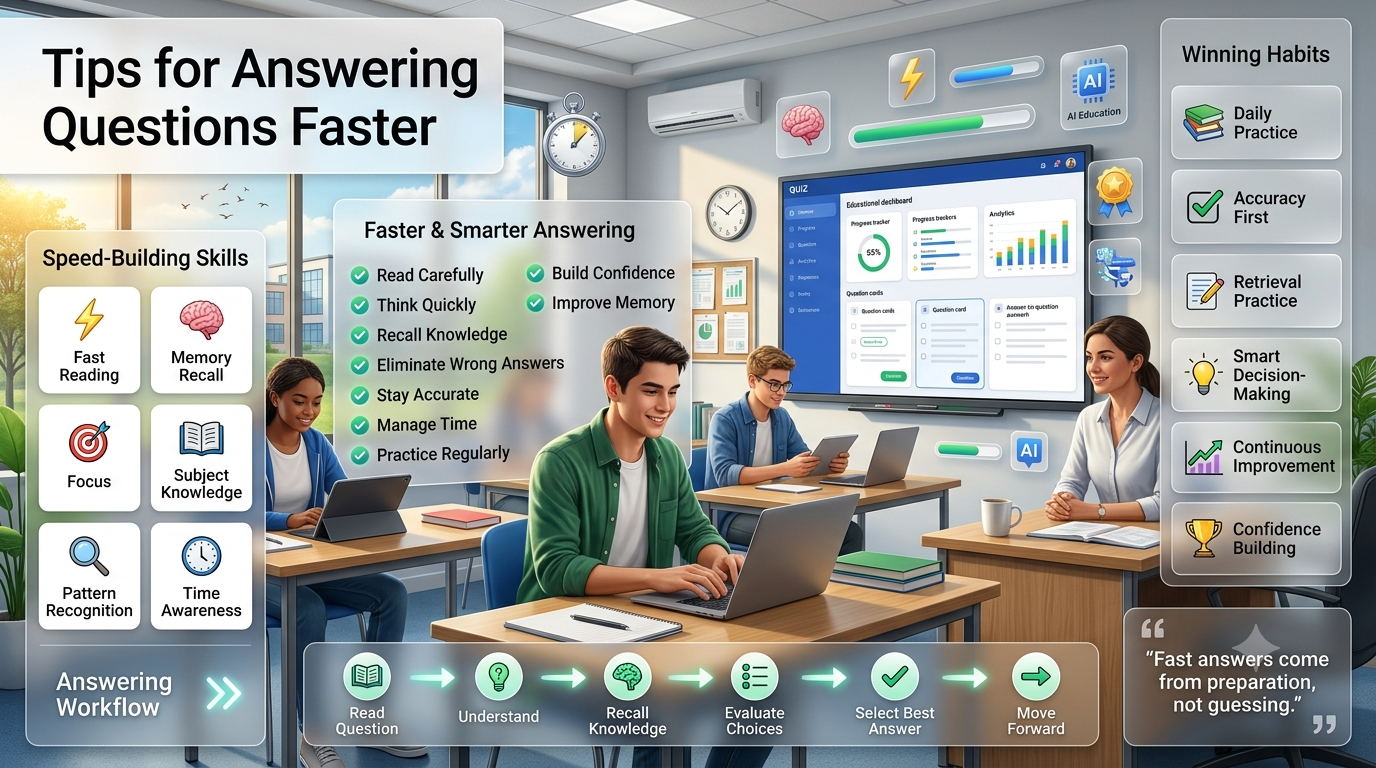
Tips for Winning Team Games in Gimkit | Team games in Gimkit are more than just answering questions correctly—they require communication, planning, smart spending, and coordinated teamwork.
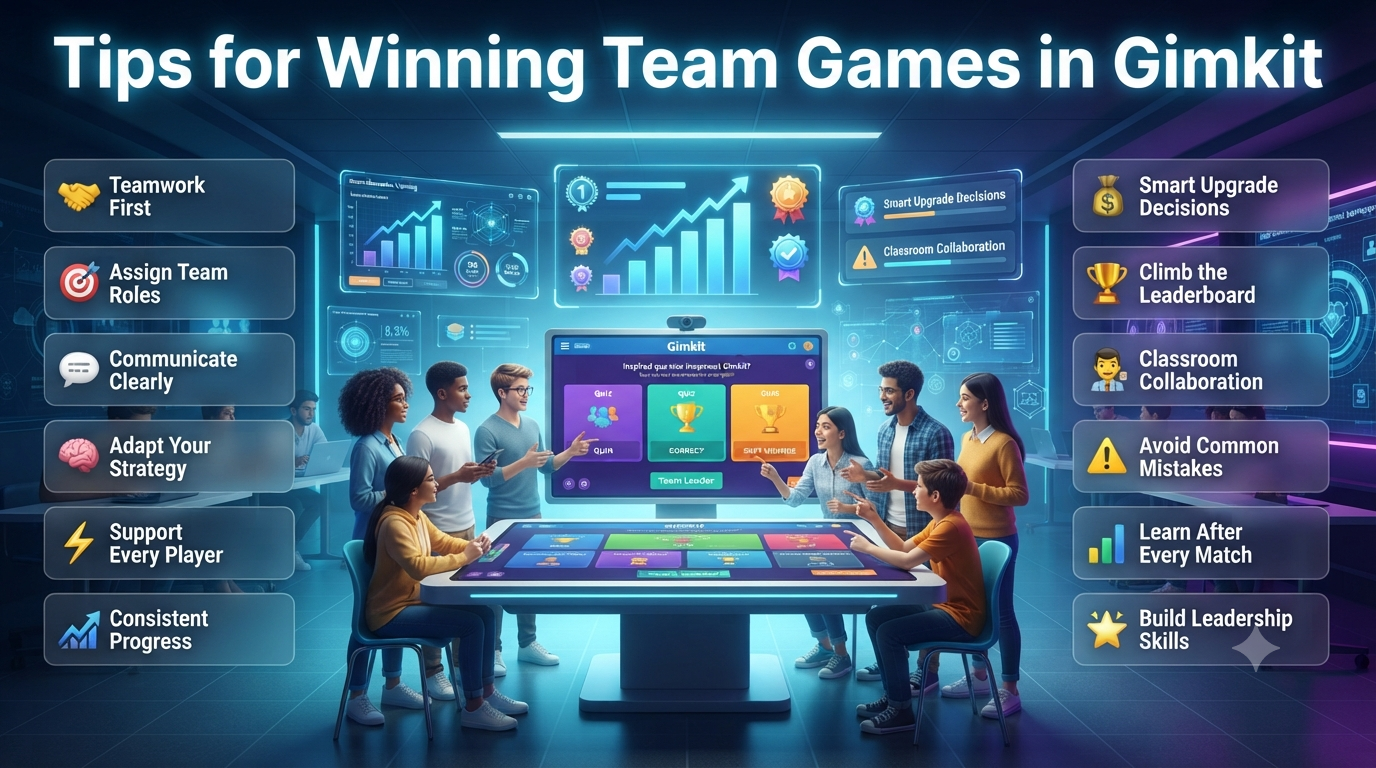
🤝 Success Depends on Teamwork: While individual knowledge is important, the teams that consistently win are those that communicate effectively, divide responsibilities, and work together toward a shared goal.
🎯 Assign Clear Roles: Give each team member a specific responsibility to improve coordination and maximise overall performance.
💬 Communicate Continuously: Encourage teammates to share information, discuss strategies, and help each other throughout the match.
🧠 Adapt Your Strategy: Winning teams don’t stick to one plan. They adjust their tactics as the game progresses based on challenges, opportunities, and team performance.
⚡ Support Every Team Member: Strong collaboration means helping teammates who are struggling, sharing knowledge, and ensuring everyone contributes to the team’s success.
📈 Focus on Smart Decision-Making: Use virtual cash and game upgrades wisely instead of spending resources too quickly or without a strategy.
🚀 Aim for Consistent Progress: Steady teamwork and smart planning often lead to better results than rushing for quick rewards.
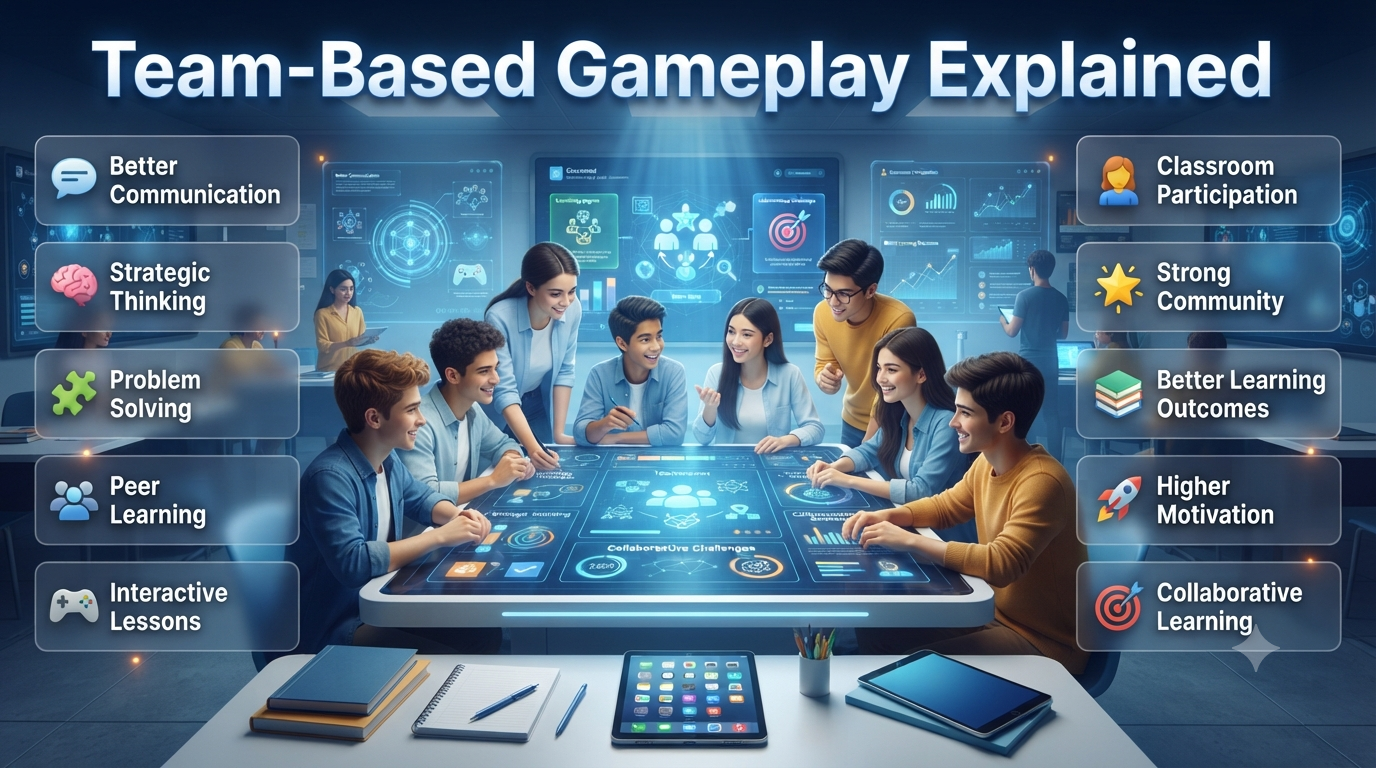
👨🏫 Encourage Classroom Collaboration: Teachers can use team mode to promote communication, cooperation, leadership, and peer learning while keeping students actively engaged.
🏅 Help Students Climb the Leaderboard: Effective teamwork increases the chances of achieving higher scores and performing consistently throughout the game.
⚠️ Avoid Common Team Mistakes: Watch out for:
❌ Poor communication
❌ Unequal participation
❌ Ignoring team strategy
❌ Wasting upgrades or resources
❌ Focusing only on individual performance
📊 Learn from Every Match: After each game, review what worked well, discuss challenges, and identify strategies that can improve future team performance.
🌟 Build Valuable Life Skills: Team-based gameplay develops communication, leadership, critical thinking, adaptability, and problem-solving skills that extend beyond the classroom.
🎮 Maximise the Gimkit Experience: By applying proven team strategies, avoiding common mistakes, and working together effectively, students and teachers can create more engaging, collaborative, and successful Gimkit sessions.
Looking for comprehensive classroom resources and educational technology insights? Explore GimkitApp for expert guides, teaching strategies, game modes, and the latest updates to enhance student engagement.
Why Team Games Are Different From Solo Games
Although the same knowledge questions appear in both solo and team matches, the way you approach them changes significantly.
In solo games, every decision affects only your own score. Your focus is on maximizing personal earnings, improving your accuracy, and staying ahead of every other player.
Team games introduce a completely different challenge. Individual success still matters, but every action contributes to the team’s overall progress. One player making poor decisions can slow the entire group, while one player making smart decisions can create opportunities for everyone else.
This shift encourages students to think collaboratively rather than competitively.
Solo vs Team Gameplay
Feature
Solo Games
Team Games
Primary Goal
Finish first individually
Help the entire team win
Strategy
Personal optimization
Shared strategy
Communication
Not required
Highly beneficial
Resource Management
Individual
Often coordinated
Decision Making
Independent
Team-oriented
Learning Style
Self-paced competition
Collaborative learning
The biggest adjustment for many players is realizing that personal rankings become less important than collective performance.
What Makes Team Games So Popular?
Teachers often choose team-based modes because they naturally encourage cooperation without making learning feel like traditional group work.
Instead of assigning students to complete worksheets together, Gimkit motivates collaboration through gameplay. Players celebrate shared victories, help teammates recover from mistakes, and learn that consistent teamwork usually produces better outcomes than individual brilliance.
Some of the biggest advantages include:
Encourages active participation
Builds classroom communication
Supports peer learning
Creates healthy competition
Keeps students engaged for longer periods
Rewards consistency rather than speed alone
Helps quieter students contribute meaningfully
For many classrooms, team games create a more inclusive environment because every correct answer supports the group.
How Team Games Work in Gimkit
The exact mechanics vary depending on the selected game mode, and Gimkit continues to evolve over time. However, most team-based experiences follow a similar structure.
Students are divided into groups before the game begins. Every participant answers questions individually, but their performance contributes to a shared objective.
Depending on the chosen mode, teams may:
Earn shared points
Collect resources together
Compete for territory
Defend objectives
Build combined scores
Unlock team progress
Race toward a common goal
Although players answer their own questions, their decisions influence the team’s overall success.
📌 Quick Note: Different Gimkit game modes may adjust scoring, objectives, and teamwork mechanics. It’s always worth reviewing the game settings before starting a match.
The Core Principles Behind Winning Teams
Successful teams rarely rely on luck. Instead, they consistently follow a few core principles that apply across nearly every Gimkit team mode.
1. Accuracy Comes Before Speed
Many players believe answering as quickly as possible guarantees victory.
In reality, repeated incorrect answers often reduce earnings and waste valuable opportunities.
A slightly slower player with excellent accuracy usually contributes more over the course of an entire game than someone rushing through questions carelessly.
Why Accuracy Matters
Accurate answers help teams by:
Increasing consistent scoring
Avoiding unnecessary penalties
Building momentum
Improving long-term earnings
Supporting steady progress
💡 Pro Tip: Aim for a high accuracy percentage first. Once accuracy becomes consistent, gradually increase your speed.
2. Every Team Member Matters
One common misconception is that only the highest-performing players determine the outcome.
Experienced teachers often observe the opposite.
Balanced teams frequently outperform teams with one superstar because every member contributes steady progress.
Imagine this example:
Team Alpha
Team Bravo
One excellent player
Four consistent players
Three inactive teammates
Everyone contributes
High individual score
High combined score
Weak collaboration
Strong teamwork
In many matches, Team Bravo has the advantage because everyone is participating.
3. Communication Wins Games
Communication doesn’t always mean constant talking.
Even simple coordination can make a significant difference.
Examples include:
Deciding who focuses on earning resources
Sharing helpful reminders
Alerting teammates about objectives
Coordinating upgrades
Encouraging struggling players
Teachers often notice that teams communicating respectfully stay engaged longer than teams working in isolation.
4. Consistency Beats Big Moments
Some players start extremely fast before slowing down dramatically.
Others maintain a steady pace from beginning to end.
Over a full game, consistent performance usually wins.
Instead of chasing huge scoring streaks early, successful teams focus on maintaining reliable progress throughout the match.
For the latest gaming news, expert reviews, and walkthroughs, readers can also visit IGN, one of the world’s leading gaming websites.
Essential Skills Every Team Player Should Develop
Winning isn’t only about subject knowledge.
Several soft skills directly improve team performance.
Active Listening
Players who understand team plans avoid unnecessary mistakes.
Listening carefully helps everyone stay aligned with shared objectives.
Adaptability
Game situations change quickly.
Strong players adjust when:
Objectives change
Scores become close
Another team gains momentum
New opportunities appear
Being flexible is often more valuable than sticking rigidly to one strategy.
Decision Making
Every in-game purchase or upgrade should support the team’s overall goal.
Ask yourself:
Does this improve my contribution?
Is this the best use of resources?
Will this help the team later?
Thinking ahead creates long-term advantages.
Positive Attitude
Team morale matters more than many players realize.
Encouraging teammates after mistakes keeps everyone focused instead of frustrated.
Simple phrases like:
“Keep going.”
“We’re catching up.”
“Nice job.”
“Good recovery.”
can improve engagement throughout the game.
Choosing the Right Mindset Before the Match
Many players lose before the game even begins because they approach team matches with a solo mentality.
Instead, shift your mindset toward collaboration.
Winning Team Mindset
Instead of Thinking…
Think Like This…
I need first place
Our team needs consistent points
I’ll do everything myself
Everyone has a role
Speed is everything
Accuracy creates momentum
My score matters most
Team progress matters
I’ll ignore teammates
I’ll support teammates whenever possible
Changing this perspective often produces immediate improvements.
Common Goals Shared by Successful Teams
Regardless of the specific Gimkit mode, successful teams usually focus on similar objectives.
Shared Priorities
Maintain high answer accuracy.
Keep every teammate actively involved.
Communicate when objectives change.
Spend in-game resources wisely.
Adapt strategies during the match.
Stay positive under pressure.
Avoid unnecessary risks.
Support teammates instead of competing against them.
These habits create a strong foundation before advanced strategies even come into play.
Imagine a classroom science review where students are divided into four teams.
One team has the highest-scoring student in the class, but the remaining members participate only occasionally.
Another team doesn’t have the top scorer, yet every member answers questions consistently, communicates respectfully, and stays focused throughout the session.
As the game progresses, the second team steadily builds points while the first team’s progress depends heavily on one player. By the end of the match, the balanced team finishes ahead because everyone contributed throughout the game.
This reflects a common pattern in Gimkit: sustained teamwork often produces better results than relying on individual talent alone.
⭐ Expert Insight: Teachers can encourage stronger collaboration by rotating team members across different sessions. This helps students develop communication skills with a variety of classmates and prevents teams from depending on the same high-performing players every time.
Best Practices Before Starting a Team Game
Use this quick checklist before launching into a match:
✔ Checklist
Why It Matters
Understand the game objective
Prevents confusion during play
Read the game rules carefully
Different modes have different goals
Focus on accuracy first
Builds reliable scoring
Agree to support teammates
Encourages collaboration
Stay engaged until the end
Consistent effort often changes the outcome
Keep communication respectful
Maintains team morale
Be ready to adapt
Flexibility is a competitive advantage
Completing these simple steps helps teams begin each game with a clear plan instead of reacting to problems as they arise.
Build a Strategy Before the Game Starts
Quick Answer: The strongest Gimkit teams don’t wait until the game begins to make decisions. Spending even 30–60 seconds discussing a simple plan can reduce confusion and improve coordination throughout the match.
Many teams jump into a game with no strategy. Everyone plays independently, upgrades randomly, and reacts to situations instead of planning ahead.
Successful teams usually agree on a few key points before the countdown ends:
What is the main objective?
Should the team play aggressively or cautiously?
Who needs extra support?
Which upgrades should be prioritized?
How will teammates communicate during the game?
A short discussion often prevents mistakes later.
💡 Pro Tip: If you’re playing in a classroom, appoint one student to briefly remind everyone of the team’s objective before the match starts.
Assign Roles Based on Strengths
Not every teammate has the same strengths. Some students answer questions quickly, while others are more accurate or better at making strategic decisions.
Instead of expecting everyone to play the same way, assign informal roles that match each person’s abilities.
Suggested Team Roles
Role
Primary Responsibility
Best For
Accuracy Specialist
Focus on correct answers
Students with high accuracy
Speed Contributor
Generate points quickly
Fast, confident learners
Strategy Coordinator
Monitor objectives and remind teammates
Organized students
Support Player
Encourage teammates and maintain consistency
Collaborative learners
These roles don’t need to be official. Even discussing them briefly helps create a more organized team.
Prioritize Accuracy Before Upgrades
One of the biggest mistakes players make is spending resources too early without establishing a steady income.
A team that consistently answers questions correctly will naturally earn more over time than a team that rushes into upgrades with poor accuracy.
Think of the early game as building a foundation. Reliable scoring creates more opportunities for effective upgrades later.
A Better Approach
Establish a strong accuracy rate.
Build consistent earnings.
Invest in upgrades that match the game’s objective.
Continue improving rather than spending impulsively.
⚠ Common Mistake: Buying every available upgrade immediately can leave players without the resources they need when more valuable opportunities appear later.
Communicate Without Creating Distractions
Communication is essential, but too much talking can become a distraction.
The most effective teams communicate clearly and briefly.
Examples include:
“Focus on accuracy.”
“We’re catching up.”
“Keep answering.”
“Save resources.”
“Great job, everyone.”
These short reminders keep everyone aligned without interrupting concentration.
Effective vs Ineffective Communication
Effective
Ineffective
Short reminders
Constant conversations
Positive encouragement
Blaming teammates
Objective-focused
Random discussions
Helpful updates
Complaints after mistakes
Positive communication helps maintain focus throughout the game.
Understand the Different Phases of a Match
Many players use the same strategy from beginning to end.
Experienced teams adjust their approach as the game progresses.
Early Game
The first few minutes are about building momentum.
Focus on:
High accuracy
Learning the pace
Building resources
Avoiding unnecessary mistakes
Avoid taking unnecessary risks early.
Mid Game
As the scoreboard becomes more competitive, teams should begin making smarter strategic decisions.
This stage often includes:
Better upgrade choices
Monitoring opponents
Supporting teammates
Maintaining consistent scoring
The middle phase often determines which teams remain competitive.
Late Game
Toward the end of the match, every decision becomes more important.
Successful teams:
Stay calm under pressure.
Continue answering accurately.
Avoid panicking if another team takes the lead.
Focus on steady progress instead of rushing.
Many games are won during the final moments because one team remains consistent while another becomes careless.
Learn to Spend Resources Wisely
Resource management is just as important as answering questions correctly.
Every purchase should have a purpose.
Before buying anything, ask yourself:
Does this improve my contribution?
Will it help the team objective?
Is it worth buying now?
Would saving resources be smarter?
Thinking strategically often produces better long-term results.
Coordinate Rather Than Compete
One surprising mistake in team games is teammates competing against each other instead of supporting one another.
Remember that personal rankings aren’t the main goal.
Instead of asking:
“How can I finish first?”
Ask:
“How can I help our team finish first?”
This small mindset shift changes many in-game decisions.
⭐ Expert Insight: Students who focus on helping their teammates often improve their own performance because they’re paying closer attention to the overall objective instead of individual statistics.
Encourage Every Team Member to Participate
A team is strongest when everyone contributes.
If one or two players stop participating, the entire team loses momentum.
Teachers can encourage participation by:
Rotating speaking opportunities
Pairing experienced students with beginners
Celebrating teamwork instead of individual scores
Recognizing consistent effort
Students also benefit from encouraging quieter teammates rather than taking over the game.
Watch the Scoreboard—But Don’t Obsess Over It
The scoreboard provides useful information, but checking it constantly can distract players.
Instead, use it strategically.
Look for patterns such as:
Is another team catching up?
Has your team fallen behind?
Is the gap increasing or shrinking?
Then return your attention to answering questions accurately.
📌 Quick Note: A small deficit early in the game doesn’t mean your team is losing. Many matches change dramatically during the final stages.
Adapt When Your Original Plan Isn’t Working
No strategy succeeds every time.
Strong teams recognize problems early and adjust instead of repeating ineffective habits.
Examples include:
Slowing down if accuracy drops
Changing priorities when objectives shift
Supporting teammates who are struggling
Conserving resources if spending hasn’t paid off
Adaptability is one of the most valuable competitive skills.
Recover Quickly After Mistakes
Every player makes mistakes.
The difference between average teams and great teams is how they respond.
Poor response:
Frustration
Blaming teammates
Giving up
Strong response:
Refocus immediately
Continue answering carefully
Encourage teammates
Learn from the mistake
One incorrect answer rarely decides the outcome of an entire match.
Balance Speed With Accuracy
Many players assume faster answers always produce better results.
In reality, speed only helps when accuracy remains high.
Comparison
High Speed + Low Accuracy
Moderate Speed + High Accuracy
Frequent mistakes
Reliable scoring
Inconsistent progress
Steady improvement
Wasted opportunities
Better long-term performance
Higher pressure
Greater confidence
Most experienced players recommend increasing speed only after accuracy becomes consistent.
Support New Team Members
Not every student has extensive experience with Gimkit.
Experienced players can strengthen the team by helping newcomers understand:
Game objectives
Team responsibilities
Basic upgrade decisions
Common mistakes
Communication expectations
Helping others improve often increases the entire team’s performance.
Classroom Workflow Example
Imagine a history review session where four students form one team.
Before the match begins, they agree on a simple strategy:
Everyone prioritizes correct answers over speed.
One student reminds the group to stay focused on the objective.
They avoid unnecessary spending early in the game.
They encourage one another after mistakes instead of assigning blame.
As the match progresses, another team takes an early lead. Rather than rushing, they stick to their plan, continue answering carefully, and gradually reduce the gap. During the final minutes, their consistent performance allows them to move ahead and secure the win.
This scenario highlights a common lesson in Gimkit: disciplined teamwork often outperforms aggressive but inconsistent play.
Team Communication Checklist
Before each match, review this simple checklist:
✔ Communication Habit
Benefit
Agree on the objective
Keeps everyone focused
Encourage teammates
Builds confidence
Share useful reminders
Improves coordination
Avoid blaming mistakes
Maintains morale
Stay respectful
Creates better teamwork
Adapt together
Responds to changing situations
Advanced Team Tactics, Game Mode Strategies & Expert-Level Decision Making
By this point, your team should understand the fundamentals of collaboration, communication, and smart resource management. The next step is learning how experienced players think during a match.
Winning consistently isn’t about memorizing a single strategy. Strong teams observe what’s happening, adjust their approach, and make decisions based on the current situation rather than following a fixed plan.
This section explores advanced tactics that help teams stay competitive across a variety of Gimkit game modes while maintaining a collaborative and enjoyable learning environment.
Think Beyond Individual Questions
Quick Answer: Experienced players don’t treat each question as an isolated challenge. Instead, they view every correct answer as part of a larger strategy that contributes to their team’s long-term success.
Beginners often focus only on the next question.
Advanced players ask themselves:
How does this help our team?
Should I keep building momentum?
Is now the right time to invest resources?
Are we maintaining our lead?
Do we need to change our approach?
This strategic thinking creates better decisions throughout the match.
Recognize Momentum Shifts
One of the most overlooked aspects of team games is momentum.
Momentum isn’t just about leading the scoreboard—it’s the feeling that your team is making consistent progress while staying focused.
Signs your team has positive momentum include:
Most teammates are answering accurately.
Communication remains calm.
Resources are being used effectively.
Everyone understands the objective.
Confidence stays high even after mistakes.
Conversely, momentum can weaken when players rush, become distracted, or stop communicating.
⭐ Expert Insight: When momentum starts to fade, don’t panic. A brief reminder to slow down and focus on accuracy often helps the team regain control.
Learn to Read the Flow of the Match
Every Gimkit game has its own rhythm.
Successful teams pay attention to how the game is developing instead of sticking to a rigid plan.
Ask questions such as:
Are we leading comfortably?
Is another team closing the gap?
Have we become too aggressive?
Should we play more conservatively?
Is our current strategy still working?
Adapting to the flow of the game is often more valuable than following a predetermined strategy.
Adjust Your Strategy Based on Your Position
Different scoreboard positions call for different approaches.
When Your Team Is Leading
A lead doesn’t guarantee victory.
Continue to:
Prioritize accuracy.
Avoid unnecessary risks.
Maintain communication.
Stay focused until the timer ends.
Many teams lose because they become overconfident.
When Your Team Is Slightly Behind
A small deficit is usually recoverable.
Focus on:
Reducing mistakes.
Improving consistency.
Supporting struggling teammates.
Making thoughtful decisions rather than rushing.
The goal is steady improvement, not desperation.
When Your Team Is Far Behind
Avoid giving up.
Instead:
Stay positive.
Continue contributing.
Look for opportunities to recover.
Treat the remainder of the match as valuable practice if catching up becomes unlikely.
Many classrooms reward effort and teamwork in addition to winning.
Avoid the “Hero Player” Mentality
One of the biggest obstacles to effective teamwork is believing that a single player can carry the team.
Although highly skilled students make important contributions, Gimkit rewards consistent participation from every member.
The strongest players often:
Encourage teammates.
Share helpful reminders.
Stay patient.
Focus on the team’s objective instead of personal recognition.
Accuracy should remain a priority from the first question to the last.
Many players become careless after building confidence early in the game.
To maintain accuracy:
Read each question carefully.
Avoid guessing when possible.
Stay focused despite distractions.
Resist the urge to rush because the timer is running low.
A consistent accuracy rate usually produces better overall results than occasional bursts of speed.
Recognize Common Opponent Patterns
Although every class is different, certain behaviors appear repeatedly.
Aggressive Teams
Characteristics:
Answer very quickly.
Take more risks.
Build early leads.
Sometimes lose consistency later.
Response:
Remain patient and avoid copying their pace if it reduces your accuracy.
Consistent Teams
Characteristics:
Maintain steady progress.
Make fewer mistakes.
Improve gradually.
Often perform well late in the game.
Response:
Stay disciplined and continue executing your own strategy.
Disorganized Teams
Characteristics:
Poor communication.
Random decisions.
Uneven participation.
Frequent mistakes.
Response:
Continue focusing on your own teamwork rather than reacting to their mistakes.
Adapt to Different Types of Learners
Teachers often create teams with students who have varying strengths.
Some students are:
Fast readers.
Careful thinkers.
Strong subject experts.
Excellent communicators.
Strategic decision-makers.
Rather than expecting identical performance, successful teams value these different skills.
This creates a more balanced learning experience for everyone.
Strategy Tips for Popular Team-Based Gimkit Experiences
Different Gimkit game modes encourage different approaches. While mechanics can change over time, these general principles remain useful.
Objective-Based Modes
Priorities:
Understand the objective immediately.
Coordinate actions.
Avoid unnecessary distractions.
Keep everyone involved.
Resource Collection Modes
Focus on:
Consistent earnings.
Smart spending.
Long-term planning.
Avoiding impulsive decisions.
Territory or Control-Based Modes
Successful teams usually:
Protect important areas.
Respond quickly to changing situations.
Coordinate movement and timing.
Support teammates instead of acting independently.
📌 Quick Note: Since Gimkit occasionally introduces new game modes or updates existing ones, always review the rules before applying a strategy.
Stay Calm During Close Matches
Close games often create unnecessary pressure.
Under pressure, players commonly:
Rush answers.
Stop communicating.
Forget their strategy.
Become frustrated.
The best teams slow down mentally instead of speeding up.
A calm team usually performs better than a nervous one.
Learn From Every Match
Winning is rewarding, but improvement comes from reflection.
After each game, discuss questions such as:
What worked well?
Which strategy helped the most?
Where did we lose momentum?
Were we communicating effectively?
Which mistakes can we avoid next time?
This short discussion helps teams improve over multiple sessions.
Teacher Coaching Tips During Team Games
Teachers can influence the quality of teamwork without interrupting gameplay.
Helpful coaching ideas include:
Remind students to stay respectful.
Encourage quieter students to participate.
Praise teamwork rather than individual scores.
Rotate team members occasionally.
Highlight good communication after the game.
These practices reinforce collaboration alongside academic learning.
Advanced Decision Matrix
Situation
Recommended Action
Why It Works
Early lead
Stay consistent
Protect momentum
Slight deficit
Improve accuracy
Small gains accumulate
Large deficit
Stay positive and adapt
Encourages recovery
Team confusion
Revisit the objective
Restores coordination
Frequent mistakes
Slow down slightly
Improves accuracy
Strong teamwork
Maintain communication
Keeps everyone aligned
This table isn’t a strict rulebook but a guide for making informed decisions during different stages of a match.
Common Advanced Mistakes
Even experienced players occasionally fall into these traps.
Chasing the Scoreboard
Constantly checking scores distracts from answering questions.
Changing Strategy Too Often
Frequent adjustments create confusion.
Stick with a plan unless there’s a clear reason to change.
Ignoring Teammates
Strong communication is one of the biggest advantages in team games.
Overconfidence
Leading early doesn’t guarantee success.
Maintain the same discipline from start to finish.
Losing Focus Near the End
Some teams relax too soon or panic during the final moments.
Stay consistent until the match officially ends.
⚠ Common Mistake: Many games are decided in the last few minutes because one team loses concentration while another continues playing carefully.
Classroom Example: Recovering From a Slow Start
A middle school geography class begins a team-based Gimkit review. One team falls behind during the opening minutes because several students answer too quickly and make avoidable mistakes.
Instead of becoming frustrated, the group pauses briefly between rounds of questions to remind one another of their original strategy:
Read every question carefully.
Avoid rushing.
Encourage teammates after mistakes.
Focus on steady progress rather than the leaderboard.
Over the next several minutes, their accuracy improves, communication becomes more positive, and the score gap gradually shrinks. Although they started slowly, their consistent approach allows them to finish near the top.
This scenario demonstrates an important lesson: successful teams recover by improving their process, not by panicking.
Advanced Team Success Checklist
Use this checklist before and during every competitive team match.
✔ Advanced Habit
Benefit
Review the objective before starting
Prevents confusion
Match responsibilities to player strengths
Improves efficiency
Monitor momentum instead of only scores
Encourages smarter decisions
Adapt when needed—not constantly
Maintains stability
Keep communication positive
Supports teamwork
Learn after every match
Builds long-term improvement
Stay focused until the timer ends
Prevents late mistakes
Celebrate teamwork as well as victories
Strengthens classroom collaboration
Professional Recommendations & Expert Reviews
Tips for Winning Team Games in Gimkit begin with establishing clear team communication.
Tips for Winning Team Games in Gimkit encourage every teammate to contribute consistently.
Tips for Winning Team Games in Gimkit help teams develop a shared strategy before the match starts.
Tips for Winning Team Games in Gimkit emphasize accuracy before speed whenever possible.
Tips for Winning Team Games in Gimkit encourage teammates to stay focused on the team’s objective.
Tips for Winning Team Games in Gimkit help players divide responsibilities effectively.
Tips for Winning Team Games in Gimkit encourage consistent participation from every team member.
Tips for Winning Team Games in Gimkit help teams adapt quickly as the game progresses.
Tips for Winning Team Games in Gimkit encourage positive communication during competitive matches.
Tips for Winning Team Games in Gimkit help players make thoughtful decisions under pressure.
Tips for Winning Team Games in Gimkit encourage learning from each completed round.
Tips for Winning Team Games in Gimkit help teams maintain steady progress instead of rushing.
Tips for Winning Team Games in Gimkit encourage supporting teammates throughout the game.
Tips for Winning Team Games in Gimkit help improve teamwork through regular practice.
Tips for Winning Team Games in Gimkit encourage players to remain calm during close matches.
Tips for Winning Team Games in Gimkit help teams balance speed with careful decision-making.
Tips for Winning Team Games in Gimkit encourage reviewing successful strategies after every match.
Tips for Winning Team Games in Gimkit help players strengthen collaboration skills.
Tips for Winning Team Games in Gimkit encourage every player to stay engaged until the final question.
Tips for Winning Team Games in Gimkit help teams maximize the value of every correct answer.
Tips for Winning Team Games in Gimkit encourage adapting strategies based on team performance.
Tips for Winning Team Games in Gimkit help players avoid unnecessary mistakes through careful planning.
Tips for Winning Team Games in Gimkit encourage respectful teamwork in every competition.
Tips for Winning Team Games in Gimkit help improve overall team coordination.
Tips for Winning Team Games in Gimkit encourage setting realistic goals for every match.
Tips for Winning Team Games in Gimkit help players recognize each teammate’s strengths.
Tips for Winning Team Games in Gimkit encourage flexible thinking when situations change.
Tips for Winning Team Games in Gimkit help teams stay organized throughout longer games.
Tips for Winning Team Games in Gimkit encourage steady improvement through consistent teamwork.
Tips for Winning Team Games in Gimkit help players build confidence by working together.
Tips for Winning Team Games in Gimkit encourage celebrating team achievements instead of individual success.
Tips for Winning Team Games in Gimkit help strengthen communication before making important decisions.
Tips for Winning Team Games in Gimkit encourage maintaining a positive attitude throughout the game.
Tips for Winning Team Games in Gimkit help players stay focused on long-term success.
Tips for Winning Team Games in Gimkit encourage teams to review mistakes for future improvement.
Tips for Winning Team Games in Gimkit help create consistent winning habits through teamwork.
Tips for Winning Team Games in Gimkit encourage active participation from every player.
Tips for Winning Team Games in Gimkit help teams remain competitive with smart planning.
Tips for Winning Team Games in Gimkit encourage cooperation rather than unnecessary competition within the team.
Tips for Winning Team Games in Gimkit help players make better strategic decisions together.
Tips for Winning Team Games in Gimkit encourage regular practice to improve team performance.
Tips for Winning Team Games in Gimkit help teams stay motivated during challenging rounds.
Tips for Winning Team Games in Gimkit encourage thoughtful planning before every match.
Tips for Winning Team Games in Gimkit help players develop stronger collaboration and leadership skills.
Tips for Winning Team Games in Gimkit encourage teammates to communicate important updates throughout the match.
Tips for Winning Team Games in Gimkit help teams stay organized by following a shared game plan.
Tips for Winning Team Games in Gimkit encourage players to remain patient instead of making rushed decisions.
Tips for Winning Team Games in Gimkit help teammates build trust by supporting one another consistently.
Tips for Winning Team Games in Gimkit encourage reviewing team performance to identify improvement opportunities.
Tips for Winning Team Games in Gimkit help players contribute according to their individual strengths.
Tips for Winning Team Games in Gimkit encourage teams to remain adaptable when game conditions change.
Tips for Winning Team Games in Gimkit help reduce mistakes through careful teamwork and communication.
Tips for Winning Team Games in Gimkit encourage maintaining positive energy even during difficult rounds.
Tips for Winning Team Games in Gimkit help players improve coordination through regular collaborative practice.
Tips for Winning Team Games in Gimkit encourage every teammate to stay involved until the match is complete.
Tips for Winning Team Games in Gimkit help teams achieve more consistent results through shared responsibility.
Tips for Winning Team Games in Gimkit encourage learning from both victories and challenging matches.
Tips for Winning Team Games in Gimkit help players strengthen strategic thinking while working together.
Tips for Winning Team Games in Gimkit demonstrate that successful teams combine communication, trust, planning, adaptability, and consistent collaboration to perform confidently and achieve better results in every Gimkit competition.
Most Frequently Asked Faqs
What is the best strategy for winning team games in Gimkit?
The best strategy for winning team games in Gimkit is to combine high answer accuracy, effective teamwork, smart resource management, and consistent communication. Many players focus only on answering questions quickly, but experienced teams know that winning requires a balance of speed and strategy. Before the game starts, every team should understand the objective and agree on a simple plan. During the match, players should avoid rushing, support teammates, and make thoughtful decisions instead of reacting impulsively. Even small improvements in teamwork can have a noticeable impact over the course of a game. Strong teams also remain flexible. If one approach isn’t working, they adjust without becoming frustrated or abandoning their overall strategy. Best practices include: Prioritize correct answers before increasing speed. Communicate clearly without distracting teammates. Stay focused on the team objective rather than personal rankings. Spend in-game resources wisely instead of making random upgrades. Keep every teammate actively involved from beginning to end. Adapt your strategy if the match changes. Stay calm during close games and avoid rushing under pressure.
Does teamwork matter more than individual skill in Gimkit?
Yes, in most team-based Gimkit games, teamwork usually has a greater influence on the final result than one outstanding individual player. A highly skilled student can certainly help the team, but consistent contributions from every teammate often produce better overall results. For example, a team where four students answer questions accurately and communicate effectively will often outperform a team that relies on one exceptional player while the others participate very little. Teamwork also creates a better classroom experience because students learn to solve problems together rather than competing against one another. Why teamwork is so valuable: Every player contributes to the team’s progress. Communication reduces unnecessary mistakes. Encouragement helps maintain confidence. Shared decision-making improves consistency. Teams recover from setbacks more effectively. Collaboration keeps students engaged throughout the game.
Should I answer questions quickly or focus on accuracy?
Accuracy should always come first. While answering quickly can increase efficiency, rushing often leads to incorrect answers, which may reduce your overall progress depending on the game mode. Experienced Gimkit players usually build a strong accuracy rate first and then gradually improve their speed through practice. This approach creates steady scoring and reduces costly mistakes. Instead of trying to answer every question instantly, focus on reading carefully, understanding the question, and selecting the correct answer with confidence. A balanced approach works best: Read each question completely. Avoid guessing unless necessary. Develop consistent accuracy first. Increase speed naturally through practice. Stay focused even when the game becomes competitive.
How can teachers create stronger teams in Gimkit?
Teachers can improve team performance by creating balanced groups and encouraging collaboration instead of focusing only on competition. Mixing students with different strengths often produces better learning outcomes than placing all high-performing students on one team. Some students excel at answering quickly, while others contribute through careful thinking, communication, or encouraging teammates. Teachers should also explain the game objective clearly before the match and recognize teamwork, problem-solving, and consistent participation—not just the winning score. Helpful classroom strategies include: Create balanced teams with mixed abilities. Rotate team members throughout the school year. Explain objectives before starting the game. Encourage respectful communication. Praise teamwork and effort alongside high scores. Discuss lessons learned after each match. Give every student an opportunity to contribute.
What are the most common mistakes teams make in Gimkit?
Many teams lose not because they lack knowledge but because they make avoidable strategic mistakes. These mistakes often reduce consistency and make it difficult to recover later in the game. The most common issue is rushing through questions without reading them carefully. Other frequent problems include poor communication, random spending decisions, ignoring teammates, and giving up too early after falling behind. Recognizing these mistakes is the first step toward improving future performance. Common mistakes to avoid: Prioritizing speed over accuracy. Ignoring the game objective. Failing to communicate with teammates. Spending resources impulsively. Blaming teammates after mistakes. Losing focus near the end of the game. Giving up after falling behind. Trying to carry the entire team alone.
Conclusion
Winning team games in Gimkit is about much more than answering questions correctly. While subject knowledge provides the foundation, consistent success comes from working together, communicating effectively, adapting to changing situations, and making smart decisions throughout the match. Teams that combine these skills often outperform groups that rely only on individual talent or speed.
For students, every team game is an opportunity to strengthen not only academic understanding but also collaboration, critical thinking, leadership, and problem-solving. Learning to support teammates, recover from mistakes, and stay focused under pressure are valuable skills that extend beyond the classroom.
For teachers, Gimkit’s team-based modes offer an engaging way to transform traditional review sessions into interactive learning experiences. By creating balanced teams, encouraging respectful communication, and recognizing teamwork alongside achievement, educators can build a classroom environment where every student has the opportunity to contribute meaningfully.
The most successful teams don’t chase quick victories—they develop good habits. They understand the game objectives, prioritize accuracy before speed, communicate with purpose, use resources wisely, and remain adaptable from the first question to the final seconds. Even when they fall behind, they stay composed, trust their strategy, and continue working together.
As Gimkit continues to introduce new features and game modes, the specific mechanics may evolve, but the core principles of successful teamwork remain the same. Teams that focus on preparation, consistency, and collaboration will always have a competitive advantage.