Introduction
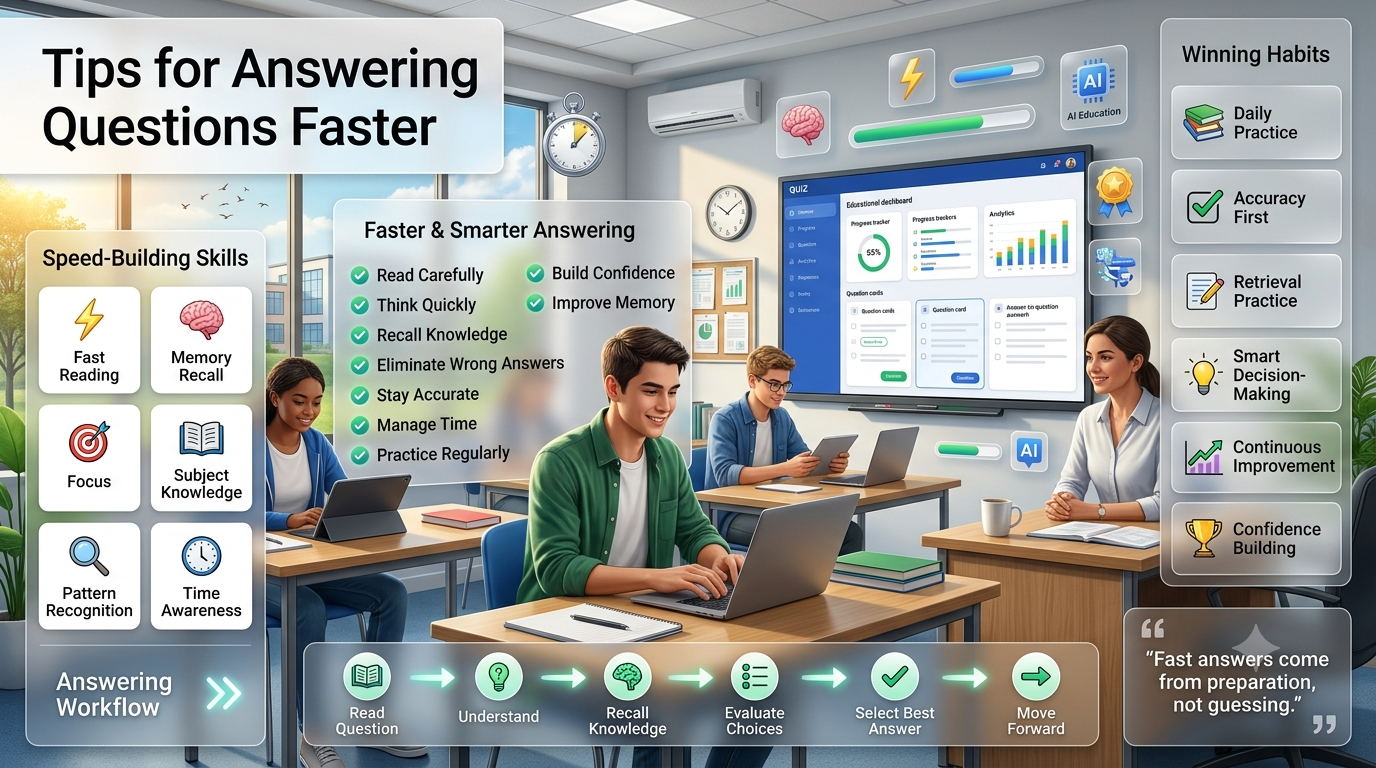
Tips for Answering Questions Faster-Speed is one of the biggest performance differences between average and high-scoring Gimkit players, but answering quickly is not about rushing through questions or clicking the first option that looks familiar. The fastest players consistently combine strong subject knowledge, efficient reading habits, accurate decision-making, and repeated practice that allows information to be recalled almost automatically. Their advantage comes from preparation rather than reaction.
In Gimkit, every second can influence the flow of the game. Faster correct answers often translate into more in-game cash, earlier access to upgrades, stronger momentum, and better opportunities to stay ahead of classmates. While accuracy always remains the foundation of success, improving response speed allows students to make better use of what they already know. Instead of spending valuable time searching their memory, they retrieve information quickly and continue progressing through the game.
Many students assume that quick responses are a natural talent that some people are simply born with. Educational research and classroom experience suggest otherwise. Response speed is a trainable skill influenced by memory strength, reading efficiency, familiarity with question formats, confidence, and regular retrieval practice. Students who intentionally develop these abilities usually become faster over time, regardless of their starting point.
Another common misconception is that answering faster means taking more risks. In reality, experienced players rarely guess randomly. They reduce hesitation by improving their understanding of the subject, recognizing familiar question patterns, and eliminating unnecessary mental steps before selecting an answer. Their confidence comes from preparation, not chance.
This guide explores the complete process of becoming a faster and more effective Gimkit player. Rather than focusing on shortcuts, it explains how stronger learning habits, better cognitive strategies, and smarter gameplay combine to improve both speed and accuracy. These techniques are equally valuable for classroom competitions, homework assignments, independent revision, and long-term academic success.You should be get in touch on our official Gimkit Live learning & earning show specially organized for students & teachers on Gimkit Host\App
Why Answering Speed Matters More Than Most Students Realize
Many students judge their performance only by the number of correct answers they give. While accuracy is essential, response speed also plays an important role in many Gimkit game modes because it influences how efficiently knowledge is converted into progress within the game. Two students may answer every question correctly, yet the one who consistently responds a few seconds faster often earns greater rewards and reaches important upgrades sooner.
Fast responses create momentum. Momentum is more than simply moving through questions quickly—it affects confidence, decision-making, and overall engagement. Students who answer several questions correctly in rapid succession often remain focused because they experience continuous positive reinforcement. This encourages sustained concentration throughout the game instead of becoming distracted after occasional delays or mistakes.
From a learning perspective, faster responses usually indicate stronger memory retrieval rather than superficial learning. When information has been reviewed consistently over time, the brain retrieves it with less effort. This frees mental resources for understanding more difficult questions instead of struggling with basic concepts. As a result, students can devote more attention to reasoning and problem-solving rather than recalling simple facts.
Teachers also benefit from observing response speed alongside accuracy. Students who answer correctly but require significantly more time may understand the material but still need additional retrieval practice. On the other hand, students who answer both accurately and efficiently often demonstrate stronger mastery of the topic. This makes response speed another useful indicator of learning progress rather than simply a competitive advantage.
Improving answer speed should therefore be viewed as part of developing academic fluency. The objective is not to rush through questions but to strengthen understanding until correct answers become easier to retrieve. When knowledge becomes automatic, students experience less stress during timed activities, participate more confidently in classroom games, and retain information more effectively beyond Gimkit itself.
Speed and Accuracy Are Partners, Not Opponents
One of the most harmful misconceptions in educational games is believing that speed and accuracy compete with each other. Many students deliberately slow themselves down because they fear making mistakes, while others sacrifice accuracy in an attempt to answer first. Neither approach produces consistent results over time.
The highest-performing Gimkit players demonstrate that speed and accuracy develop together when supported by strong learning habits. As understanding improves, the time required to process familiar information naturally decreases. Students no longer need to consciously analyze every detail because many decisions become automatic through repeated retrieval and meaningful practice.
Consider the difference between two learners preparing for a science review. One memorizes isolated definitions the night before class, while the other studies concepts gradually throughout the week, explains them in their own words, completes practice quizzes, and reviews incorrect answers after each session. During a Gimkit game, the second student is far more likely to recognize questions instantly because the knowledge has been integrated into long-term memory instead of remaining temporary information.
This relationship explains why simply telling students to “answer faster” rarely improves performance. Speed is an outcome of preparation rather than an independent skill. Attempting to increase speed without strengthening understanding usually leads to careless mistakes, hesitation, and frustration. Building stronger knowledge first creates the foundation that allows speed to develop naturally.
An effective strategy is to treat every practice session as an opportunity to improve both qualities simultaneously. Students should aim to answer carefully while gradually reducing unnecessary pauses between reading the question and selecting an answer. Over time, these small improvements accumulate into noticeably faster and more confident performance without reducing accuracy.
Understanding the Science Behind Fast Answers
Every question answered in Gimkit triggers a rapid sequence of mental processes. Although these steps occur in only a few seconds, understanding them helps explain why some students consistently respond more quickly than others.
The first stage is visual recognition. The brain identifies the words, numbers, symbols, or images displayed on the screen and begins organizing them into meaningful information. Students who read fluently complete this stage almost instantly, allowing them to focus on understanding the question rather than decoding individual words.
Next comes comprehension. During this stage, the brain determines exactly what the question is asking. This includes recognizing command words such as identify, compare, calculate, explain, or choose. Students who overlook these instructions often answer incorrectly despite knowing the topic because they misunderstand the task rather than the content.
Once the question is understood, the brain searches long-term memory for related information. Strongly reinforced knowledge is retrieved rapidly because it has been strengthened through repeated practice and meaningful connections. Weakly learned information requires a slower search process, increasing hesitation and reducing confidence.
After retrieving possible answers, the brain evaluates them before making a decision. Experienced learners complete this evaluation efficiently because they recognize familiar patterns and eliminate incorrect choices with little effort. Less experienced learners often compare every option individually, increasing cognitive load and response time.
Finally, the selected answer is confirmed and submitted. When every previous stage has been strengthened through effective learning, this entire sequence feels almost automatic. Rather than consciously thinking through each step, students recognize the question, retrieve the correct information, and respond confidently within seconds.
Understanding this process reveals an important principle: improving answer speed is not about moving one stage faster while ignoring the others. It requires strengthening every stage—from reading and comprehension to memory retrieval and decision-making—so that the entire process becomes smoother and more efficient.
Build Knowledge Before Building Speed
Many students try to increase their answering speed by repeatedly playing more Gimkit games. While frequent gameplay can improve familiarity with the platform, it cannot replace a strong understanding of the subject itself. True speed begins long before the game starts. Students who consistently answer questions quickly usually spend more time building knowledge than practicing speed because they understand that rapid responses are the natural result of confident learning.
Knowledge acts as the foundation for every fast decision made during gameplay. When concepts are deeply understood, the brain retrieves information almost instantly without consciously searching for it. In contrast, students who memorize isolated facts often pause to recall disconnected pieces of information, creating hesitation even when they eventually select the correct answer. This difference explains why two students with similar grades can perform very differently during timed activities.
Instead of asking, “How can I answer faster?” a better question is, “How can I make the correct answer easier to remember?” This small change in thinking shifts the focus from speed to learning efficiency. As understanding becomes stronger, speed naturally improves because the brain no longer struggles to locate the required information.
Professional educators often emphasize mastery before fluency. Mastery means understanding why an answer is correct, how it connects to related concepts, and when it should be applied. Fluency develops when this understanding becomes so familiar that recalling it requires very little mental effort. Gimkit rewards fluency, but fluency is built on mastery.
Replace Memorization With Conceptual Understanding
Memorizing isolated facts may help during short-term revision, but it rarely produces the fast, reliable recall needed during competitive classroom games. Facts learned without context are easier to forget and more difficult to retrieve under time pressure because the brain stores them as separate pieces of information rather than part of a connected knowledge network.
Conceptual understanding creates those connections. Instead of remembering individual answers, students learn relationships between ideas, causes, effects, definitions, examples, and applications. These relationships provide multiple pathways for recalling information, allowing the brain to recognize answers much more quickly.
For example, a student memorizing that photosynthesis occurs in chloroplasts may hesitate when the question is phrased differently. A student who understands the complete process—including sunlight, chlorophyll, carbon dioxide, glucose, oxygen, and plant energy—can identify the correct answer even when the wording changes. Understanding creates flexibility, while memorization often depends on familiar phrasing.
This principle applies across every subject. Mathematics relies on understanding problem-solving methods instead of remembering isolated formulas. History becomes easier when students recognize connections between events rather than memorizing dates alone. Language learning improves when vocabulary is linked with meaning, grammar, and practical usage instead of simple word lists.
Before trying to increase response speed, ask yourself whether you truly understand the topic or whether you are only remembering individual answers. The stronger the understanding, the less effort is required to retrieve the correct information.
Train Your Brain Through Active Recall Instead of Passive Review
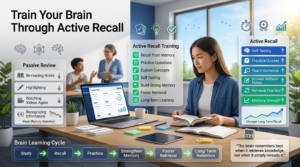
Many students believe they are studying effectively because they repeatedly read textbooks, class notes, or presentation slides. Although reviewing material has value, reading information multiple times does not necessarily prepare the brain to retrieve that information quickly during a quiz or game. Passive review creates familiarity, but familiarity is not the same as recall.
Active recall is one of the most effective learning strategies because it requires students to retrieve information from memory without immediately seeing the answer. Every successful retrieval strengthens the neural pathways associated with that knowledge, making future recall faster and more reliable. This is one of the reasons why game-based learning platforms such as Gimkit can support long-term retention when used alongside meaningful classroom instruction.
Examples of active recall include answering practice questions without notes, explaining a concept aloud from memory, creating your own quiz, teaching a lesson to a classmate, or covering textbook answers before attempting to recall them independently. Each of these activities challenges the brain to search for information, strengthening retrieval skills instead of simply recognizing familiar text.
Students who regularly practice active recall often notice that questions requiring several seconds to answer gradually become almost instantaneous. The improvement does not happen because the questions become easier but because the retrieval process becomes more efficient.
Passive Study vs Active Learning
| Study Method | Immediate Comfort | Long-Term Retention | Response Speed in Gimkit |
|---|---|---|---|
| Re-reading notes | High | Low to Moderate | Slow improvement |
| Highlighting textbooks | High | Low | Minimal improvement |
| Watching lessons repeatedly | Moderate | Moderate | Limited improvement |
| Practice quizzes | Moderate | High | Strong improvement |
| Active recall exercises | Challenging | Very High | Excellent improvement |
| Explaining concepts to others | Challenging | Very High | Excellent improvement |
The most effective learners usually combine several methods, but active recall consistently produces stronger improvements in both retention and answering speed because it mirrors the mental process required during gameplay.
Use Spaced Repetition to Strengthen Long-Term Memory
Learning is most effective when information is reviewed repeatedly over time rather than crammed into a single study session. This technique, known as spaced repetition, allows the brain to revisit knowledge just before it begins to fade, strengthening memory each time it is successfully recalled.
For Gimkit players, spaced repetition provides an important advantage. Instead of relearning the same information before every classroom game, students gradually build long-lasting knowledge that remains accessible weeks or even months later. As memory becomes stronger, response time naturally decreases because less mental effort is required to retrieve familiar concepts.
A simple review schedule might include studying a topic on the day it is introduced, reviewing it again after one day, then three days later, one week later, and finally after two weeks. Each review becomes shorter because the information is increasingly familiar. This approach is generally more effective than spending several hours studying immediately before a quiz.
Teachers frequently combine spaced repetition with Gimkit by revisiting previously taught material throughout the school term. Rather than treating completed units as finished, they integrate older concepts into new review sessions, helping students maintain long-term understanding while increasing retrieval speed.
Expert Reviews for your real gaining of experience 50+
- Tips for Answering Questions Faster begin with reading the entire question carefully before looking at the answer choices. Understanding the question first reduces unnecessary mistakes.
- Tips for Answering Questions Faster improve when you strengthen your subject knowledge. Familiar concepts are recalled much more quickly during gameplay.
- Tips for Answering Questions Faster require balancing speed with accuracy. A correct answer is always more valuable than a rushed mistake.
- Tips for Answering Questions Faster become easier through regular practice. Repeated exposure improves memory and response time naturally.
- Tips for Answering Questions Faster encourage focusing on keywords that reveal exactly what the question is asking.
- Tips for Answering Questions Faster involve eliminating obviously incorrect answers before choosing the best remaining option.
- Tips for Answering Questions Faster improve when you remain calm instead of feeling pressured by the timer or leaderboard.
- Tips for Answering Questions Faster recommend maintaining complete concentration by minimizing distractions during every review session.
- Tips for Answering Questions Faster encourage reviewing previous mistakes so similar questions can be answered more confidently later.
- Tips for Answering Questions Faster become more effective when you study consistently instead of relying on last-minute preparation.
- Tips for Answering Questions Faster recommend becoming familiar with common question formats before competitive classroom activities.
- Tips for Answering Questions Faster improve when you understand concepts instead of memorizing isolated facts.
- Tips for Answering Questions Faster encourage practicing difficult topics until answers become easier to recall.
- Tips for Answering Questions Faster recommend scanning each question for important clues before reading unnecessary details.
- Tips for Answering Questions Faster improve through consistent classroom participation and active learning.
- Tips for Answering Questions Faster encourage developing confidence by focusing on steady improvement rather than perfection.
- Tips for Answering Questions Faster recommend avoiding second-guessing when you are confident in your knowledge.
- Tips for Answering Questions Faster become easier when classroom review sessions are part of your regular study routine.
- Tips for Answering Questions Faster encourage paying close attention to teacher explanations during lessons.
- Tips for Answering Questions Faster improve when you organize study materials according to topics and learning objectives.
- Tips for Answering Questions Faster recommend identifying your weakest subjects and giving them additional practice time.
- Tips for Answering Questions Faster become more effective when you review information in short, frequent study sessions.
- Tips for Answering Questions Faster encourage learning vocabulary and key terminology commonly used in classroom questions.
- Tips for Answering Questions Faster improve through repeated formative assessments that reinforce important concepts.
- Tips for Answering Questions Faster recommend staying focused on one question instead of worrying about upcoming challenges.
- Tips for Answering Questions Faster become easier when you build strong reading comprehension skills.
- Tips for Answering Questions Faster encourage recognizing patterns in frequently asked classroom questions.
- Tips for Answering Questions Faster improve when you actively participate in classroom discussions and review activities.
- Tips for Answering Questions Faster recommend managing your time wisely throughout every learning session.
- Tips for Answering Questions Faster encourage maintaining a positive mindset after making occasional mistakes.
- Tips for Answering Questions Faster improve when you learn to identify the main idea before considering answer choices.
- Tips for Answering Questions Faster recommend reviewing important concepts immediately after classroom instruction.
- Tips for Answering Questions Faster encourage developing consistent study habits throughout the academic year.
- Tips for Answering Questions Faster become more effective when you regularly challenge yourself with new practice questions.
- Tips for Answering Questions Faster recommend building confidence through gradual improvement instead of expecting immediate mastery.
- Tips for Answering Questions Faster improve when learning sessions remain organized and focused on specific objectives.
- Tips for Answering Questions Faster encourage using classroom feedback to strengthen weaker academic areas.
- Tips for Answering Questions Faster recommend taking enough time to fully understand unfamiliar questions before answering.
- Tips for Answering Questions Faster improve when you remain attentive throughout the entire classroom activity.
- Tips for Answering Questions Faster encourage reviewing completed activities to identify opportunities for future improvement.
- Tips for Answering Questions Faster recommend practicing recall instead of repeatedly rereading notes.
- Tips for Answering Questions Faster improve when students maintain healthy study routines and consistent classroom attendance.
- Tips for Answering Questions Faster encourage approaching every review session with clear learning goals.
- Tips for Answering Questions Faster become more effective through continuous reinforcement of important classroom concepts.
- Tips for Answering Questions Faster recommend learning from every incorrect answer rather than becoming discouraged.
- Tips for Answering Questions Faster improve when students remain curious and actively seek deeper understanding.
- Tips for Answering Questions Faster encourage consistent reflection on academic progress after every review activity.
- Tips for Answering Questions Faster recommend combining regular practice with meaningful teacher feedback for continued improvement.
- Tips for Answering Questions Faster become long-lasting when strong study habits replace short-term memorization techniques.
- Tips for Answering Questions Faster ultimately come from combining subject knowledge, careful reading, consistent practice, focused attention, and confident decision-making. Students who develop these habits gradually improve both response speed and long-term academic performance.
Connect New Information to What You Already Know
The brain learns more efficiently when new knowledge is attached to existing knowledge. Instead of storing every idea independently, it creates connections between related concepts. These connections allow information to be retrieved through multiple pathways, making recall both faster and more reliable.
Suppose you are learning about the water cycle. Rather than memorizing the terms evaporation, condensation, precipitation, and collection separately, connect them as a continuous process. Visualize water changing states, moving through the atmosphere, forming clouds, and returning to the ground. Because each stage is linked logically, recalling one part often triggers the next automatically.
This approach works equally well in mathematics, literature, geography, science, and history. Connecting ideas reduces cognitive effort because the brain no longer searches for isolated facts—it follows meaningful relationships.
Professional learners often build these connections through concept maps, diagrams, summaries, and classroom discussions. Even simple mental associations can significantly improve both understanding and response speed during quizzes.
Develop Automatic Recall Through Consistent Practice
Automatic recall is the stage where correct answers seem to appear almost instantly. It does not mean students are guessing or relying on instinct. Instead, it reflects repeated successful retrieval that has strengthened memory to the point where very little conscious effort is required.
Think about multiplication tables, common vocabulary, or frequently used grammar rules. Most people no longer calculate these answers step by step because repeated practice has made them automatic. The same principle applies to every subject studied in Gimkit. The more often information is accurately retrieved, the faster it becomes available during future questions.
However, repetition alone is not enough. Repeating incorrect information reinforces mistakes, while repeating familiar questions without challenge eventually produces diminishing returns. Effective practice should include a mixture of familiar topics for confidence and more difficult questions that encourage deeper thinking. This balance strengthens existing knowledge while continuously expanding understanding.
Students who consistently dedicate even fifteen to twenty minutes each day to focused review often experience greater improvements than those who rely on occasional intensive study sessions. Small, consistent efforts build automatic recall far more effectively than last-minute cramming because they give the brain repeated opportunities to strengthen memory over time.
Expert Insight
Fast answers are not created by fast fingers—they are created by a well-trained mind. Every second saved during a Gimkit question is usually the result of hours spent building understanding, practicing retrieval, reviewing consistently, and connecting ideas into meaningful knowledge. When learning becomes deeper, answering quickly becomes a natural outcome rather than a separate skill to master.
Read Questions Like High-Performing Students
One of the biggest differences between average and high-performing Gimkit players is not how much they know—it’s how efficiently they process each question. Many students lose valuable seconds because they read every word individually, reread confusing sentences, or immediately focus on the answer choices before understanding what the question actually asks. High-performing students follow a completely different approach. They train themselves to identify the purpose of the question within seconds, allowing them to retrieve the correct answer with far less mental effort.
Reading efficiently should never be confused with reading carelessly. Skipping words, guessing from the first sentence, or clicking an answer before finishing the question often leads to avoidable mistakes. Instead, efficient reading means understanding the question the first time, reducing unnecessary thinking, and making confident decisions based on clear comprehension. This ability becomes increasingly valuable during competitive Gimkit sessions where every second contributes to overall performance.
Another advantage of efficient reading is reduced cognitive load. When students immediately recognize what a question is asking, their working memory remains available for solving the problem instead of trying to interpret the wording. This creates a smoother decision-making process and allows attention to remain focused throughout the game rather than becoming mentally exhausted after only a few questions.
Students often believe they need to become faster readers to improve their response time. In reality, they need to become better readers. Efficient comprehension consistently produces greater improvements than simply increasing reading speed because understanding eliminates hesitation before an answer is selected.
Start by Identifying What the Question Actually Wants

Every Gimkit question has a specific objective. Some ask students to identify a definition, while others require comparison, calculation, interpretation, explanation, or evaluation. Students who immediately recognize this objective spend far less time deciding how to approach the question.
Instead of reading passively, ask yourself a simple question before looking at the answer choices:
“What am I being asked to do?”
This habit immediately directs your attention toward the correct type of thinking. If the question asks you to compare two ideas, your brain begins searching for differences instead of definitions. If it asks for a cause, you naturally begin recalling events that produced a particular outcome.
Understanding the purpose of the question before searching for the answer creates a much more efficient thought process. Rather than examining every option individually, students begin evaluating answers according to what the question specifically requires.
Recognize Command Words Immediately
Many classroom questions include command words that determine how they should be answered. These words act as instructions for your brain, yet many students overlook them because they concentrate only on the topic itself.
Common command words include:
| Command Word | What It Requires |
|---|---|
| Identify | Recognize the correct fact or item. |
| Define | Recall the meaning of a term. |
| Compare | Look for similarities or differences. |
| Explain | Understand the underlying reason or process. |
| Calculate | Perform mathematical operations. |
| Analyze | Break information into smaller parts. |
| Predict | Apply knowledge to determine a likely outcome. |
| Evaluate | Judge based on evidence or criteria. |
| Classify | Place information into the correct category. |
Experienced students often recognize these words almost automatically. Once identified, they immediately activate the appropriate thinking strategy instead of treating every question exactly the same.
Train Your Eyes to Find Keywords First
Every well-written question contains keywords that reveal its central topic. These keywords allow the brain to ignore unnecessary information and focus on the concepts most likely to produce the correct answer.
For example, consider a science question discussing photosynthesis. Words such as chlorophyll, sunlight, glucose, carbon dioxide, and oxygen immediately indicate which knowledge should be retrieved. Students who recognize these signals begin recalling the relevant process before they even finish reading the question.
Keyword recognition becomes especially useful when questions contain additional background information or classroom scenarios. Rather than becoming distracted by lengthy wording, students identify the important terms and quickly connect them with existing knowledge.
Developing this habit reduces hesitation because the brain immediately knows where to search for the correct information.
Pay Special Attention to Negative Words
Many incorrect answers occur because students overlook a single negative word hidden within the question. These words completely change what is being asked and require careful attention.
Examples include:
- NOT
- EXCEPT
- NEVER
- LEAST
- INCORRECT
- FALSE
- AVOID
A student who ignores one of these words may confidently choose an answer that would normally be correct but is incorrect for that particular question.
Professional test-takers often pause briefly whenever they encounter negative wording. Some mentally emphasize the word before continuing to read, ensuring that the brain processes the question accurately instead of relying on assumptions.
Taking one extra second to identify negative wording often saves far more time than correcting repeated mistakes later in the game.
Avoid Reading the Answer Choices Too Early
Many students instinctively look at the answer choices before fully understanding the question. Although this feels faster, it often creates confusion because the brain begins evaluating possible answers before determining what information is actually needed.
High-performing students usually reverse this process.
They first understand the question.
Then they predict the likely answer.
Only afterward do they examine the available options.
This approach offers two important advantages. First, it reduces the influence of distracting answer choices that appear convincing but are incorrect. Second, it allows students to recognize the correct option almost immediately if it matches what they already expected.
Over time, predicting answers before viewing the options becomes one of the most effective ways to increase both speed and accuracy.
Recognize Common Question Patterns
Teachers frequently assess the same concept using different wording. Students who recognize these recurring structures spend less time interpreting questions because they already understand how similar questions are usually organized.
Some of the most common patterns include:
| Question Type | Thinking Strategy |
|---|---|
| Definition | Recall the meaning of a key term. |
| Cause and Effect | Identify what produced a particular outcome. |
| Sequence | Arrange events or steps logically. |
| Comparison | Look for differences and similarities. |
| Classification | Group ideas into categories. |
| Calculation | Apply formulas or mathematical reasoning. |
| Vocabulary in Context | Use surrounding information to determine meaning. |
| Diagram Interpretation | Analyze labels, relationships, or processes shown visually. |
Pattern recognition is one of the reasons experienced Gimkit players often appear faster even when facing unfamiliar questions. They recognize the structure before processing every individual detail.
Eliminate Distractors Efficiently
Multiple-choice questions are intentionally designed with distractors—answers that seem believable but are ultimately incorrect. These options often contain partially correct information, common misconceptions, or details that appear familiar but do not actually answer the question.
Rather than comparing every option equally, experienced students quickly eliminate answers that clearly contradict the question, misuse terminology, or contain impossible statements. Removing incorrect options reduces the number of realistic choices and simplifies the final decision.
This elimination strategy is especially useful when complete certainty is unavailable. Even narrowing four options to two significantly improves the likelihood of selecting the correct answer while reducing unnecessary mental effort.
Stop Second-Guessing Every Decision
Many students know the correct answer but lose time because they repeatedly question themselves before clicking. While reviewing difficult questions is sensible, excessive hesitation often leads to changing correct answers unnecessarily.
Confidence grows from preparation rather than speed. Students who consistently practice retrieval, review mistakes, and strengthen conceptual understanding develop greater trust in their first well-reasoned response.
An effective rule is simple:
- If you clearly understand the concept and immediately recognize the answer, trust your knowledge.
- If genuine uncertainty exists, slow down briefly, eliminate incorrect options, and make the most logical decision.
This balanced approach prevents careless guessing without encouraging unnecessary overthinking.
Develop a Consistent Reading Routine
Top-performing students rarely approach every question differently. Instead, they follow a predictable routine that becomes automatic through practice.
A simple workflow looks like this:
Read the question completely
            ↓
Identify command words
            ↓
Find important keywords
            ↓
Notice negative wording
            ↓
Predict the answer mentally
            ↓
Review answer choices
            ↓
Eliminate distractors
            ↓
Select confidently
            ↓
Move to the next question
Following the same sequence for every question reduces decision fatigue because the brain no longer needs to determine how to approach each new problem. Consistency creates efficiency, and efficiency naturally improves response speed.
Professional Insight
Fast readers are not necessarily the fastest responders. The students who consistently perform well in Gimkit are those who understand questions correctly the first time. They focus on comprehension before selection, recognize familiar patterns, ignore distractions, and trust well-developed knowledge instead of rushing through every question. As these habits become automatic, answering quickly becomes a natural consequence of better thinking rather than faster clicking.
The Psychology of Instant Recall: How High-Performing Students Answer Almost Automatically
If two students study the same lesson for the same amount of time, why does one answer almost instantly while the other pauses to think through every question? The difference is rarely intelligence. More often, it comes down to how efficiently the brain stores, organizes, and retrieves information.
Instant recall is not a special talent that only a few students possess. It is a cognitive skill developed through repeated learning, meaningful practice, and strong mental connections between ideas. Every time a student correctly retrieves information, the brain strengthens the pathway leading to that knowledge. Over time, these pathways become so efficient that answers appear almost automatically, even under the pressure of a timed Gimkit game.
Understanding how memory works helps students train more effectively. Instead of relying on last-minute revision or repeated guessing, they can develop learning habits that reduce hesitation, improve confidence, and increase response speed without sacrificing accuracy.
How the Brain Processes Every Question
Although answering a Gimkit question may take only a few seconds, the brain completes several complex processes during that short period. Every stage must work efficiently for fast and accurate responses to occur.
The process begins when the eyes recognize the words, numbers, or images displayed on the screen. This visual information is immediately sent to the brain, where it is interpreted according to previous learning experiences. The brain identifies familiar vocabulary, mathematical symbols, scientific terminology, historical events, or language patterns before determining what type of thinking is required.
Once the question has been understood, long-term memory begins searching for related knowledge. If the information has been studied thoroughly and practiced regularly, retrieval occurs almost immediately. If the knowledge is weak or incomplete, the brain searches through multiple possible answers, increasing hesitation and slowing response time.
After retrieving possible information, the brain evaluates the available answer choices, removes unlikely options, confirms the correct response, and sends instructions for the final selection. The more efficiently each stage operates, the faster and more confidently students answer.
Working Memory: The Brain’s Temporary Workspace
Working memory is the brain’s short-term processing system. It temporarily holds information while students read, think, calculate, compare ideas, or solve problems. Every Gimkit question depends on working memory because students must understand the question before retrieving the correct answer.
However, working memory has limited capacity. When students try to process too much information at once, their thinking slows considerably. Long questions, unfamiliar vocabulary, distractions, and complicated calculations all increase the demands placed on working memory.
High-performing students reduce this burden by recognizing familiar patterns instead of processing every detail individually. Rather than reading each word as isolated information, they immediately identify the important concepts and ignore unnecessary details. This allows more mental resources to remain available for solving the question itself.
Improving working memory is not about increasing its size but about reducing unnecessary mental effort. Better study habits, stronger conceptual understanding, and repeated retrieval all help students process information more efficiently.
Long-Term Memory: Where Fast Answers Come From
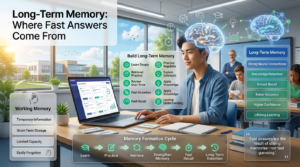
Every correct answer stored through meaningful learning eventually becomes part of long-term memory. Unlike working memory, which temporarily holds information, long-term memory preserves knowledge for extended periods and provides the foundation for quick recall.
When students repeatedly review important concepts, solve practice questions, explain ideas aloud, and apply knowledge in different situations, their memories become stronger and easier to retrieve. During Gimkit gameplay, the brain simply reconnects with these existing memories instead of attempting to reconstruct the answer from scratch.
Strong long-term memory provides several important advantages:
- Faster recall during timed questions.
- Greater confidence under pressure.
- Improved accuracy on unfamiliar question formats.
- Better retention between classroom units.
- Reduced dependence on memorization immediately before tests.
Students often mistake forgetting for a lack of ability. In reality, information that has not been reviewed recently simply requires additional reinforcement. Regular retrieval gradually transforms weak memories into reliable knowledge that can be accessed almost instantly.
Recognition vs. Recall: Understanding the Difference
Many students feel confident while reviewing notes because everything appears familiar. Unfortunately, recognizing information is much easier than recalling it independently.
Recognition occurs when students identify the correct answer after seeing it. Multiple-choice questions naturally support recognition because the correct answer is already displayed among the options.
Recall is different. It requires students to retrieve information without immediate assistance. Because recall demands greater mental effort, it creates stronger learning and prepares students for faster responses during future practice.
Consider the difference:
| Recognition | Recall |
|---|---|
| Seeing the correct answer and identifying it | Producing the answer without seeing it |
| Easier | More challenging |
| Creates temporary confidence | Builds lasting knowledge |
| Supports familiarity | Strengthens memory retrieval |
| Limited improvement in speed | Significant improvement in speed |
Students who rely only on recognition often struggle when questions are phrased differently. Those who practice recall become much more flexible because they understand the concept rather than simply recognizing familiar wording.
Retrieval Strength Determines Response Speed
Not all memories are equally strong. Some answers appear instantly, while others require several seconds of searching before they can be recalled. This difference is known as retrieval strength.
Retrieval strength increases whenever information is successfully remembered without assistance. Every correct retrieval reinforces the neural pathway responsible for that memory, making future retrieval faster and easier.
Several factors influence retrieval strength:
- Regular review.
- Active recall.
- Classroom discussion.
- Solving different question types.
- Explaining concepts to others.
- Correcting previous mistakes.
- Applying knowledge in practical situations.
Students who repeatedly retrieve information under different conditions build highly flexible memories that remain accessible even when questions are presented in unfamiliar ways.
Pattern Recognition: The Secret Behind Fast Thinking
High-performing students rarely solve every question from the beginning. Instead, they recognize familiar patterns that immediately activate related knowledge.
For example, a mathematics student may instantly recognize a quadratic equation before consciously reading every number. A history student immediately associates a famous date with a specific event. A science student recognizes the language of photosynthesis before reaching the end of the sentence.
Pattern recognition dramatically reduces response time because the brain retrieves groups of connected information rather than isolated facts.
This skill develops naturally through repeated exposure to similar concepts, practice questions, classroom discussions, and varied examples. The more frequently students encounter related ideas, the faster these mental patterns become.
Reduce Cognitive Load to Think More Efficiently
Cognitive load refers to the amount of mental effort required to complete a task. Every unnecessary distraction competes for the brain’s limited processing capacity.
Common sources of excessive cognitive load include:
- Multitasking during study.
- Poor organization.
- Learning too many unrelated topics simultaneously.
- Stress and anxiety.
- Constant notifications.
- Memorizing without understanding.
- Fatigue caused by insufficient sleep.
Reducing cognitive load allows students to focus their attention entirely on the question in front of them. A calm, organized study routine often improves response speed more effectively than simply spending additional hours reviewing material.
Professional learners intentionally simplify their environment before studying. They remove distractions, organize materials, review one topic at a time, and allow short breaks between intensive learning sessions. These habits improve concentration while strengthening long-term retention.
Build Stronger Neural Connections Through Repetition
Every successful learning experience slightly changes the brain. Each time students correctly retrieve information, solve a familiar problem, or explain a concept from memory, the neural pathway associated with that knowledge becomes stronger.
This process explains why repeated practice produces increasingly faster responses. Initially, recalling a scientific formula or historical event may require considerable effort. After enough successful retrievals, the same information becomes almost effortless to access.
However, repetition must be meaningful. Simply reading notes twenty times is far less effective than retrieving the same information twenty separate times from memory. Active engagement forces the brain to strengthen its existing pathways instead of merely recognizing familiar text.
Over weeks and months, these repeated learning experiences gradually transform deliberate thinking into automatic recall.
Confidence Accelerates Recall
Confidence is not merely an emotional state—it directly influences cognitive performance. Students who trust their preparation make decisions more efficiently because they spend less time questioning themselves after identifying the correct answer.
This confidence develops through evidence rather than optimism. Every successful practice session, correctly solved problem, and improved quiz score reinforces belief in one’s own knowledge.
Conversely, students who repeatedly cram before assessments often experience uncertainty because their memories remain fragile. Even when they know the correct answer, they hesitate, fearing they may have forgotten an important detail.
Developing genuine confidence requires consistent preparation, regular retrieval practice, and reflection on previous improvements rather than relying solely on motivation.
Professional Insight
Instant recall is not the result of exceptional intelligence or unusually fast thinking. It is the product of well-organized knowledge, repeated retrieval, strong neural connections, efficient reading habits, and meaningful practice over time. Every strategy discussed in this guide—from conceptual learning to active recall and pattern recognition—contributes to strengthening these mental processes. As they become more efficient, answering quickly no longer feels like racing against the clock; it becomes the natural outcome of understanding the material deeply enough that the correct answer is immediately available.
Advanced Memory Techniques Used by High-Performing Students
Fast answers are not created during a Gimkit game—they are created during the learning process that happens beforehand. Students who consistently answer questions within seconds usually rely on memory systems that allow information to be stored, organized, and retrieved efficiently. Instead of depending on last-minute revision or repeated guessing, they build learning habits that make important concepts easier to remember long after the lesson ends.
Memory is often misunderstood as the simple ability to remember facts. In reality, effective memory depends on how information is encoded, connected, reviewed, and retrieved. The stronger these connections become, the less effort the brain needs to locate the correct answer during gameplay.
The following techniques are widely used in education because they improve both long-term retention and retrieval speed. While no single method works perfectly for every learner, combining several of these strategies creates a stronger foundation for rapid recall during Gimkit sessions.
Chunk Information Instead of Memorizing Individual Facts
One of the brain’s natural strengths is recognizing patterns rather than isolated details. High-performing students take advantage of this by grouping related information into meaningful “chunks” instead of trying to remember every fact independently.
For example, instead of memorizing the planets as unrelated names, students remember them as the complete order of the solar system. Instead of learning historical dates individually, they connect events that occurred within the same period. Science students group concepts according to biological systems, chemical reactions, or physical processes rather than treating every definition separately.
Chunking reduces the number of separate pieces of information the brain must process. Rather than searching through dozens of unrelated memories, the brain retrieves one organized concept that contains multiple connected ideas.
This technique is especially valuable in Gimkit because teachers frequently ask several questions about the same topic. Once one concept is recalled, related answers often become much easier to retrieve.
Build Associations Between Related Concepts

The brain rarely remembers isolated information for long. It remembers relationships.
Every new idea becomes easier to retrieve when it is connected to something already familiar. Instead of treating each lesson as a separate topic, successful learners deliberately create links between concepts.
For example:
- Photosynthesis connects with plant biology, chloroplasts, sunlight, glucose, oxygen, and the carbon cycle.
- Fractions connect with percentages, decimals, ratios, and proportions.
- World War II connects with political leaders, economic changes, geography, alliances, and historical consequences.
These connections create multiple retrieval paths. If one memory is temporarily difficult to access, another related concept often leads to the same answer.
The richer the network of relationships becomes, the faster information can be retrieved during classroom games.
Visualize Information Instead of Reading It Repeatedly
Visualization transforms abstract information into mental images that are easier for the brain to remember.
Many students repeatedly read paragraphs hoping they will eventually remember them. High-performing students often close the book and mentally picture the process instead.
A science student may imagine water evaporating into clouds before falling as rain. A geography student may mentally travel across continents. A biology student may picture blood flowing through the human heart.
Mental images create stronger and more memorable learning experiences because they involve multiple areas of the brain rather than relying only on verbal information.
Visualization becomes especially useful when preparing for questions involving:
- Scientific processes
- Historical timelines
- Geography
- Human anatomy
- Mathematical diagrams
- Engineering concepts
- Flowcharts
- Cause-and-effect relationships
Students who regularly practice visualization often recognize answers much more quickly because they retrieve complete mental pictures instead of disconnected sentences.
Use Mnemonics to Remember Complex Information
Mnemonics are memory tools that simplify difficult information by turning it into something easier to remember.
Rather than memorizing long lists directly, students create meaningful shortcuts using letters, phrases, rhymes, or simple patterns.
For example:
| Memory Technique | Purpose |
|---|---|
| Acronyms | Remember sequences using first letters. |
| Rhymes | Improve recall through rhythm. |
| Initial letters | Recall ordered lists. |
| Short phrases | Simplify complex information. |
| Simple stories | Connect unrelated concepts logically. |
Mnemonics should not replace understanding, but they provide an excellent support system for recalling information that must be remembered exactly, such as scientific classifications, mathematical rules, grammar principles, or historical sequences.
When combined with conceptual understanding, mnemonic techniques reduce hesitation because the brain retrieves organized information rather than isolated facts.
Create Simple Stories That Connect Information
Storytelling is one of the oldest and most effective memory techniques because the human brain naturally remembers events better than disconnected facts.
Instead of memorizing vocabulary words individually, imagine them interacting within a short story. Instead of remembering scientific processes separately, visualize one stage causing the next. Historical events become easier to recall when understood as a sequence of connected actions rather than isolated dates.
Stories create logical flow.
Logical flow improves recall.
Improved recall increases answering speed.
Teachers often explain complex topics through narratives for this reason. Students can apply the same principle independently by building their own mental stories while studying.
Strengthen Learning With Mind Maps
Mind maps organize information visually around one central idea. Rather than writing long pages of notes, students create branches that show how concepts relate to each other.
For example:
                 Photosynthesis
                        │
      ┌─────────────────┼─────────────────┐
      │                 │                 │
 Sunlight         Chlorophyll        Carbon Dioxide
      │                 │                 │
      └──────────────┬────────────────────┘
                     │
                  Glucose
                     │
                  Oxygen
This structure mirrors how the brain naturally stores connected information.
Instead of remembering six independent facts, students remember one organized system.
Mind maps are particularly effective before playing Gimkit because they provide a quick overview of an entire lesson without overwhelming the learner with lengthy notes.
Interleave Different Topics Instead of Studying Only One
Many students spend an hour reviewing a single topic before moving to the next. Although this feels productive, educational research has shown that mixing related topics often produces stronger long-term learning.
This strategy is known as interleaving.
For example:
Instead of studying:
- 30 algebra questions
Try:
- 10 algebra questions
- 10 geometry questions
- 10 statistics questions
The brain learns to recognize differences between concepts instead of assuming every question follows the same pattern.
During Gimkit, where question topics frequently change, interleaving prepares students to switch between ideas quickly without losing concentration.
Explain the Lesson to Someone Else
Teaching is one of the most effective forms of learning.
When students explain a topic in their own words, they immediately discover which parts they truly understand and which areas still need improvement.
Explaining information requires:
- organizing ideas,
- simplifying concepts,
- recalling facts,
- connecting relationships,
- identifying gaps in understanding.
All of these activities strengthen memory retrieval.
Students do not need an actual classroom audience. Explaining a lesson aloud to a friend, family member, or even to themselves can significantly improve understanding and response speed.
If an explanation feels confusing, that usually indicates the concept requires additional review before it becomes automatic.
Learn From Every Incorrect Answer
Many students celebrate correct answers but ignore incorrect ones.
High-performing learners treat mistakes as valuable learning opportunities.
Every incorrect Gimkit question reveals one of three problems:
- Missing knowledge.
- Weak understanding.
- Careless reading.
Instead of immediately moving on, successful students ask:
- Why was my answer incorrect?
- What concept did I misunderstand?
- Which keyword did I overlook?
- How should I approach a similar question next time?
Correcting mistakes immediately prevents the same error from becoming a repeated habit.
Over time, this reflective approach builds stronger understanding while reducing hesitation during future games.
Develop a Daily Memory Training Routine
Strong memory develops through consistency rather than intensity.
A simple twenty-minute daily routine is often more effective than several hours of studying only once each week.
A practical routine might include:
| Time | Activity | Purpose |
|---|---|---|
| 5 minutes | Review yesterday’s material | Strengthen retrieval |
| 5 minutes | Complete practice questions | Test recall |
| 5 minutes | Explain one concept aloud | Deepen understanding |
| 5 minutes | Review incorrect answers | Correct weaknesses |
This balanced routine strengthens both memory and confidence without causing mental fatigue.
Consistency is far more valuable than occasional marathon study sessions.
Combine Multiple Memory Techniques for Maximum Results
The strongest learners rarely depend on only one strategy.
Instead, they combine several evidence-based methods into a complete learning system.
For example:
- Learn the concept through classroom instruction.
- Organize information using a mind map.
- Create meaningful associations.
- Practice active recall without notes.
- Review using spaced repetition.
- Explain the topic aloud.
- Correct mistakes immediately.
- Reinforce learning through Gimkit practice.
Each step strengthens a different part of the learning process.
Together, they create knowledge that can be retrieved quickly, accurately, and confidently whenever a question appears.
Professional Insight
Students often search for shortcuts that promise instant improvement in answering speed. In reality, there is no single trick that permanently increases performance. The students who consistently dominate classroom review games are usually those who have built reliable learning systems long before the competition begins. Their speed reflects thousands of successful memory retrievals, meaningful connections between ideas, careful reflection on mistakes, and consistent daily practice. When memory is organized effectively, answering quickly stops feeling like a race against time and becomes a natural expression of genuine understanding.
Advanced Decision-Making Strategies During Gimkit Gameplay
Strong subject knowledge helps students recognize the correct answer, but decision-making determines how efficiently that knowledge is used during gameplay. Every Gimkit session requires dozens or even hundreds of rapid decisions. Some questions can be answered immediately, while others demand careful thinking to avoid unnecessary mistakes. Learning how to make better decisions under time pressure is one of the final steps toward consistently improving response speed.
High-performing players rarely panic when faced with unfamiliar questions. Instead, they follow a structured decision-making process that helps them stay accurate while minimizing hesitation. Rather than relying on instinct alone, they combine logical reasoning, pattern recognition, elimination strategies, and confidence built through preparation. This systematic approach allows them to remain consistent throughout the game instead of performing well only when questions feel easy.
Learn When to Respond Immediately and When to Slow Down
Not every question deserves the same amount of thinking time. Some questions involve concepts you know extremely well and can answer almost automatically. Others require calculations, interpretation, or careful reading because one overlooked word could change the correct answer.
Experienced students quickly classify questions into three categories:
| Question Type | Recommended Approach |
|---|---|
| Familiar concepts | Answer confidently without unnecessary hesitation. |
| Moderately challenging questions | Pause briefly, identify keywords, and evaluate options carefully. |
| Difficult or unfamiliar questions | Eliminate incorrect choices, apply logical reasoning, and avoid random guessing. |
This approach prevents wasting time on easy questions while still protecting accuracy on more demanding ones.
Adapt Your Strategy to Different Gimkit Game Modes
Each Gimkit game mode encourages slightly different decision-making. Understanding these differences allows students to adjust their pace without sacrificing accuracy.
During live classroom competitions, maintaining consistent momentum is often more valuable than rushing through individual questions. In assignment-based practice, students can slow down slightly to strengthen understanding because long-term learning is the primary objective. Some game modes reward efficient resource management, while others emphasize continuous correct answers.
Instead of using the same strategy everywhere, experienced players adapt their pace according to the learning objective. They recognize whether the goal is mastering new material, reviewing previous lessons, preparing for an assessment, or competing for the highest score.
Recover Quickly After Incorrect Answers
Every student answers some questions incorrectly. What separates high-performing learners from others is how they respond afterward.
Many students lose additional points because they become frustrated after a mistake. They begin rushing, second-guessing every answer, or focusing more on the leaderboard than on the next question. This emotional response often creates a chain of unnecessary errors.
Successful players treat every question as a fresh opportunity. Once an answer has been submitted, they immediately redirect their attention to the next challenge rather than replaying previous mistakes mentally. This ability to recover quickly maintains concentration throughout the entire session.
Remember that one incorrect answer rarely determines the final outcome. Maintaining consistent performance across the remaining questions usually has a much greater impact than worrying about a single mistake.
Maintain Focus Throughout Long Games
Concentration naturally decreases during extended learning sessions. As attention fades, students begin reading questions less carefully, overlooking keywords, and making preventable mistakes.
Maintaining focus requires active habits rather than relying on motivation alone.
Effective concentration strategies include:
- Reading every question from beginning to end.
- Ignoring unnecessary competition until the game ends.
- Keeping your study environment free from distractions.
- Sitting comfortably with proper screen positioning.
- Taking short breaks between extended practice sessions.
- Staying hydrated and well-rested before important classroom activities.
Consistent concentration supports both faster responses and greater accuracy because the brain remains fully engaged with the learning task.
Common Mistakes That Reduce Answer Speed

Many delays occur because of habits that students rarely notice. Identifying these behaviors allows learners to improve response speed without changing the way they study.
Some of the most common obstacles include:
- Reading questions more than once without need.
- Looking at answer choices before understanding the question.
- Overthinking simple concepts.
- Memorizing instead of understanding.
- Ignoring important keywords.
- Studying only immediately before classroom activities.
- Allowing distractions during revision.
- Changing correct answers because of uncertainty.
- Becoming discouraged after one incorrect response.
Correcting even one or two of these habits often produces noticeable improvements in both speed and confidence.
Expert Recommendations for Faster and More Accurate Answers
Students seeking long-term improvement should focus on developing consistent learning habits rather than searching for quick shortcuts. The following practices provide the strongest foundation for continued progress.
Best Practices Checklist
✔ Build conceptual understanding before memorization.
✔ Practice active recall instead of passive reading.
✔ Review lessons regularly using spaced repetition.
✔ Identify keywords before reviewing answer choices.
✔ Recognize common question patterns.
✔ Strengthen memory through meaningful associations.
✔ Learn from every incorrect answer.
✔ Maintain confidence without rushing.
✔ Adapt your strategy to different game modes.
✔ Practice consistently instead of cramming before assessments.
Following these habits regularly improves both classroom performance and long-term knowledge retention.
Expert Thoughts
Answering questions faster in Gimkit is not about developing faster reflexes or clicking answers more quickly than everyone else. It is the result of stronger learning habits, deeper conceptual understanding, efficient reading strategies, organized memory, and confident decision-making. Students who consistently perform well rarely depend on shortcuts because they have invested time in building knowledge that can be retrieved naturally under pressure.
Every improvement discussed throughout this guide contributes to the same objective: reducing the effort required to find the correct answer. As concepts become more familiar, memory becomes stronger, and question patterns become easier to recognize, response speed improves without sacrificing accuracy. This balanced approach not only leads to better Gimkit performance but also supports classroom learning, exam preparation, and long-term academic success.
The most successful learners understand that fast answers are earned before the game begins. Consistent practice, thoughtful review, and a commitment to understanding rather than memorizing create lasting confidence that extends far beyond any single quiz or classroom competition.
Next Sesion of Reviews for advance Knowledge & Your Best Guidance
- Tips for Answering Questions Faster improve when you review classroom notes shortly after each lesson while the information is still fresh.
- Tips for Answering Questions Faster encourage identifying important keywords before reading every detail of a long question.
- Tips for Answering Questions Faster become more effective when you build a strong understanding of fundamental concepts first.
- Tips for Answering Questions Faster recommend practicing with different question styles to improve adaptability during quizzes and classroom activities.
- Tips for Answering Questions Faster encourage reading carefully instead of skipping words that may completely change the meaning of a question.
- Tips for Answering Questions Faster improve when you maintain a steady answering rhythm instead of rushing through easy questions.
- Tips for Answering Questions Faster recommend eliminating distractions by focusing entirely on the current question until it is answered.
- Tips for Answering Questions Faster become easier when you regularly challenge yourself with timed practice sessions.
- Tips for Answering Questions Faster encourage understanding why an answer is correct instead of simply memorizing it.
- Tips for Answering Questions Faster improve through continuous revision of topics that frequently appear in classroom assessments.
- Tips for Answering Questions Faster recommend strengthening reading comprehension to process questions more efficiently.
- Tips for Answering Questions Faster encourage using classroom feedback to correct recurring mistakes before the next review session.
- Tips for Answering Questions Faster become more reliable when you develop confidence through consistent academic preparation.
- Tips for Answering Questions Faster recommend approaching unfamiliar questions logically instead of making random guesses immediately.
- Tips for Answering Questions Faster improve when students actively engage in classroom discussions and ask questions whenever concepts are unclear.
- Tips for Answering Questions Faster encourage reviewing both correct and incorrect answers after every learning activity.
- Tips for Answering Questions Faster become more natural when study sessions focus on understanding relationships between different concepts.
- Tips for Answering Questions Faster recommend practicing active recall instead of relying entirely on repeated reading.
- Tips for Answering Questions Faster improve when students organize study materials into clear topics and learning objectives.
- Tips for Answering Questions Faster encourage paying close attention to instructional examples because similar patterns often appear in assessments.
- Tips for Answering Questions Faster become stronger when students consistently reinforce previously learned material instead of studying only new topics.
- Tips for Answering Questions Faster recommend avoiding unnecessary hesitation once you have confidently identified the correct answer.
- Tips for Answering Questions Faster improve through regular classroom participation that strengthens familiarity with common academic terminology.
- Tips for Answering Questions Faster encourage maintaining a positive attitude because confidence supports quicker decision-making.
- Tips for Answering Questions Faster become more effective when students gradually increase the difficulty of their practice questions.
- Tips for Answering Questions Faster recommend reviewing challenging concepts several times throughout the semester to improve long-term memory.
- Tips for Answering Questions Faster improve when students develop consistent daily study routines rather than depending on occasional intensive preparation.
- Tips for Answering Questions Faster encourage using mistakes as learning opportunities that strengthen future performance and academic confidence.
- Tips for Answering Questions Faster become increasingly valuable when combined with strong subject knowledge and effective time management.
- Tips for Answering Questions Faster ultimately result from disciplined preparation, continuous practice, careful reading, accurate thinking, and confident decision-making. Students who consistently build these habits answer questions more efficiently while improving both classroom performance and long-term learning success.
- Tips for Answering Questions Faster begin with understanding the question before searching for the correct answer, reducing unnecessary confusion.
- Tips for Answering Questions Faster improve when you recognize familiar concepts instead of analyzing every option from the beginning.
- Tips for Answering Questions Faster encourage building subject mastery because confident learners naturally respond more quickly.
- Tips for Answering Questions Faster become more effective when you avoid overthinking straightforward questions with obvious answers.
- Tips for Answering Questions Faster recommend practicing under realistic classroom conditions to improve both confidence and response speed.
- Tips for Answering Questions Faster improve when you develop the habit of identifying the main idea within the first few seconds.
- Tips for Answering Questions Faster encourage reviewing difficult topics regularly so answers become easier to recall during classroom activities.
- Tips for Answering Questions Faster become more reliable when you understand concepts deeply instead of depending on memorized definitions.
- Tips for Answering Questions Faster recommend concentrating on one question at a time instead of worrying about your overall score.
- Tips for Answering Questions Faster improve when you recognize common question patterns used throughout classroom assessments.
- Tips for Answering Questions Faster encourage strengthening memory through active recall and spaced repetition rather than passive reading.
- Tips for Answering Questions Faster become easier when classroom review is supported by consistent study habits outside school hours.
- Tips for Answering Questions Faster recommend staying mentally organized by separating facts, formulas, and vocabulary during revision.
- Tips for Answering Questions Faster improve when students build confidence through frequent practice with curriculum-aligned questions.
- Tips for Answering Questions Faster encourage careful observation because small details often determine the correct answer.
- Tips for Answering Questions Faster become more effective when you remain calm after making mistakes and immediately refocus on the next question.
- Tips for Answering Questions Faster recommend reviewing teacher feedback carefully because it often highlights the most important learning priorities.
- Tips for Answering Questions Faster improve when students strengthen their reading speed without sacrificing comprehension and accuracy.
- Tips for Answering Questions Faster encourage maintaining consistent concentration from the beginning of every activity until the final question.
- Tips for Answering Questions Faster ultimately become lifelong academic skills through regular practice, strong conceptual understanding, effective study techniques, careful reading, and continuous self-improvement, helping students perform confidently across classroom activities, quizzes, and examinations.
- Tips for Answering Questions Faster improve when you review key concepts briefly every day instead of studying everything at once.
- Tips for Answering Questions Faster encourage recognizing instruction words such as compare, define, identify, and explain before answering.
- Tips for Answering Questions Faster become more effective when you trust well-prepared knowledge instead of constantly changing your first confident answer.
- Tips for Answering Questions Faster recommend building a strong vocabulary because understanding academic terms speeds up question comprehension.
- Tips for Answering Questions Faster improve when you connect new information with concepts you have already mastered during previous lessons.
- Tips for Answering Questions Faster encourage staying organized by reviewing one topic at a time rather than switching between unrelated subjects.
- Tips for Answering Questions Faster become easier when you identify common mistakes and consciously avoid repeating them in future activities.
- Tips for Answering Questions Faster recommend practicing with questions of different difficulty levels to strengthen both speed and adaptability.
- Tips for Answering Questions Faster improve when you maintain steady focus throughout the activity instead of becoming distracted by classmates or rankings.
- Tips for Answering Questions Faster encourage checking your understanding during lessons so confusion does not slow you down during review sessions.
- Tips for Answering Questions Faster become more reliable when you strengthen long-term memory through consistent revision instead of last-minute cramming.
- Tips for Answering Questions Faster recommend approaching every question with confidence, patience, and a clear understanding of the learning objective.
- Tips for Answering Questions Faster improve when classroom practice is combined with regular self-assessment and meaningful teacher feedback.
- Tips for Answering Questions Faster encourage developing disciplined study habits because preparation outside the classroom directly improves response speed inside it.
- Tips for Answering Questions Faster ultimately come from combining careful reading, conceptual understanding, active recall, consistent practice, and confident decision-making, enabling students to answer more efficiently while maintaining high levels of accuracy and long-term academic success.
Frequently Asked Questions
Key Takeaways
| Strategy | Why It Matters |
|---|---|
| Understand concepts deeply | Builds long-term recall instead of temporary memorization. |
| Practice active recall | Strengthens retrieval pathways for faster answers. |
| Read questions strategically | Reduces careless mistakes and hesitation. |
| Recognize patterns | Speeds up comprehension and decision-making. |
| Review consistently | Improves retention and automatic recall over time. |
| Learn from mistakes | Prevents repeated errors and strengthens understanding. |
| Stay calm under pressure | Supports clearer thinking and more confident decisions. |
Final Expert Perspective
The fastest students are rarely the ones who rush—they are the ones who understand. Speed is simply the visible result of strong preparation, organized knowledge, efficient reading, deliberate practice, and confident decision-making. By developing these habits consistently, students can transform Gimkit from a fast-paced classroom game into a powerful tool for strengthening memory, improving academic performance, and building lasting learning confidence.