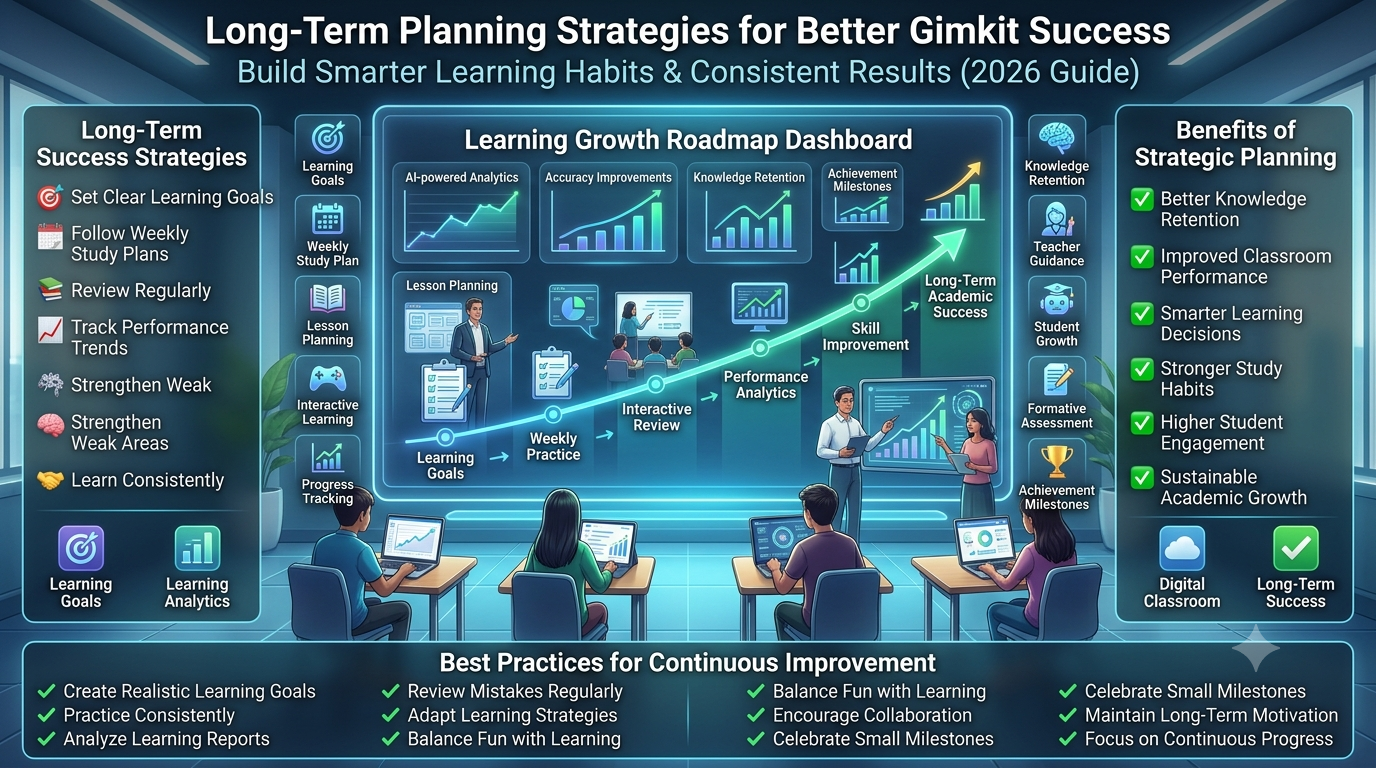
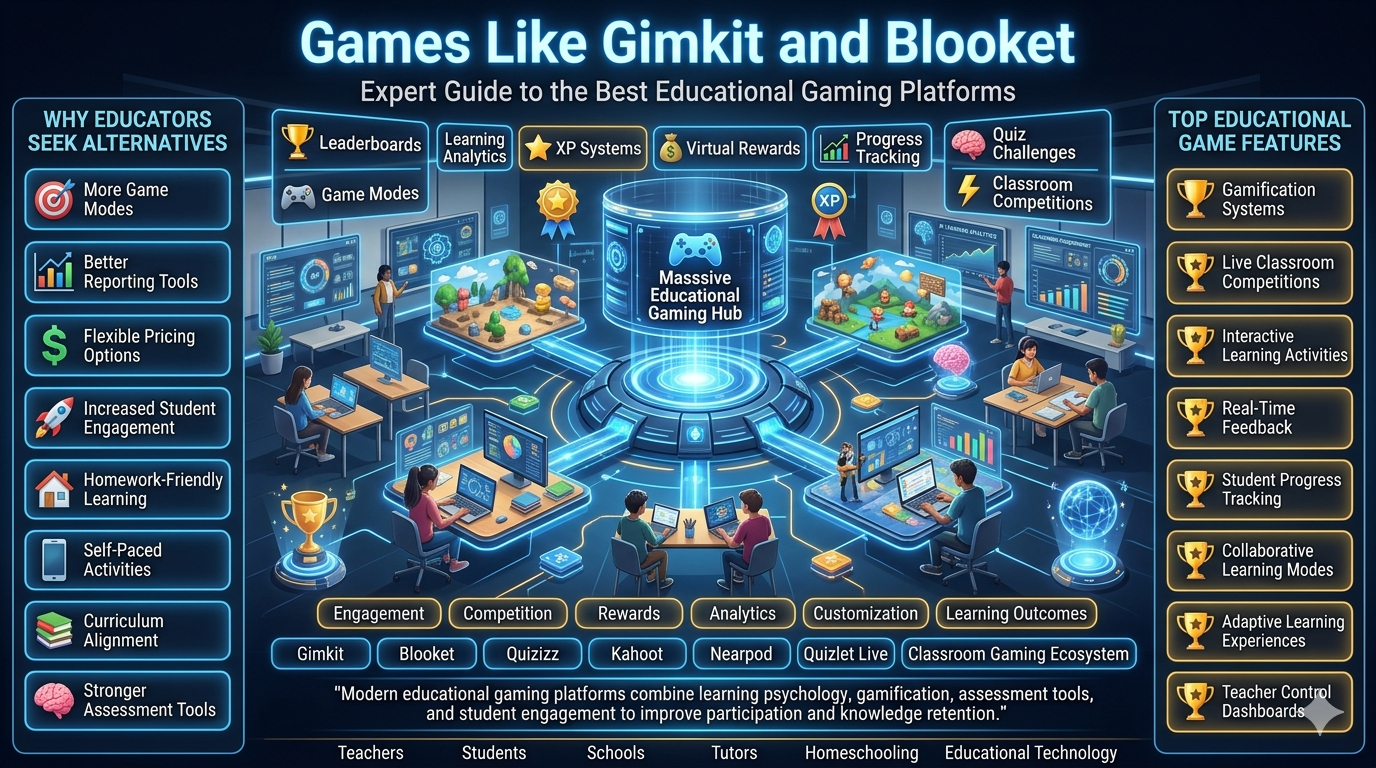
Long-Term Planning Strategies for Better Results for Gimkit Success-Achieving consistent success with Gimkit is rarely the result of luck or simply answering questions quickly. Whether you are a teacher designing engaging classroom experiences or a student trying to improve learning outcomes, long-term planning creates a stronger foundation than relying on short-term tactics. A structured approach allows players to build knowledge gradually, understand game mechanics, and develop habits that produce measurable improvement over time.
Unlike many educational games, Gimkit rewards both subject knowledge and strategic decision-making. Planning ahead helps users identify learning objectives, choose the most suitable game modes, monitor progress, and continuously refine their approach. Instead of focusing only on individual matches, experienced users think about weekly goals, classroom objectives, review cycles, and performance trends.
This guide explains professional long-term planning strategies that improve both educational performance and overall Gimkit success. You’ll learn how experienced educators organize lessons, how students build sustainable study routines, and how thoughtful preparation leads to better engagement, higher retention, and more consistent results. Throughout the guide, you’ll also discover practical techniques that can be applied whether you’re using Gimkit Classroom, Gimkit Live, Gimkit Kit, or other learning experiences.In This article we explain all advance strategies that would likely benifites you and help to achieve success.
Why Long-Term Planning Matters More Than Short-Term Wins
Many new users concentrate on winning individual games, but experienced players and educators understand that lasting improvement comes from consistency rather than isolated victories.
Long-term planning encourages gradual skill development, allowing learners to strengthen weak areas while reinforcing concepts they already understand. Instead of repeatedly practicing random topics, users follow a structured roadmap that builds confidence over weeks and months.
For teachers, planning ahead also reduces preparation time because quizzes, activities, and review sessions can be organized before lessons begin.
Comparison: Short-Term vs Long-Term Approach
Short-Term Focus
Long-Term Planning
Winning today’s game
Continuous improvement
Random practice
Structured learning roadmap
Immediate rewards
Long-lasting knowledge retention
Temporary motivation
Sustainable learning habits
Limited performance tracking
Ongoing progress evaluation
Set Clear Learning Goals Before Playing
Every successful strategy begins with clearly defined objectives. Before launching any Gimkit Play session, determine exactly what you hope to achieve.
Students may want to improve multiplication speed, master science vocabulary, or prepare for upcoming exams. Teachers might focus on increasing classroom participation, identifying knowledge gaps, or reviewing completed lessons.
Without measurable goals, progress becomes difficult to evaluate.
SMART Goal Planning
Goal Element
Example
Specific
Improve biology vocabulary
Measurable
Score above 90% accuracy
Achievable
Complete three review sessions weekly
Relevant
Supports upcoming examination
Time-Based
Achieve within four weeks
Professional Recommendation
Create monthly learning targets instead of daily expectations. This allows room for natural progress without creating unnecessary pressure.
Build a Weekly Gimkit Learning Schedule
One of the biggest mistakes users make is playing only when they feel motivated. Consistency almost always outperforms occasional intensive sessions.
Instead of irregular gameplay, establish a predictable weekly schedule that includes review, practice, and assessment.
Example Weekly Study Plan
Day
Activity
Monday
New Gimkit Quiz practice
Tuesday
Vocabulary review
Wednesday
Competitive Gimkit Live session
Thursday
Analyze mistakes
Friday
Mixed-topic revision
Weekend
Practice difficult concepts
A balanced routine prevents burnout while ensuring regular exposure to learning material.
Organize Your Knowledge into Learning Units
Rather than studying everything simultaneously, divide subjects into manageable sections.
For example, a science course can be separated into:
Cell Biology
Genetics
Human Body Systems
Ecology
Chemistry Basics
Each learning unit should have its own Gimkit Kit, making review sessions much more focused.
Benefits of Topic-Based Organization
✔ Easier progress tracking
✔ Better memory retention
✔ Faster revision
✔ Reduced cognitive overload
✔ Improved classroom organization
Track Progress Instead of Guessing
Many players assume they’re improving simply because they play frequently. However, improvement should be measured using actual performance data.
Experienced Gimkit Teachers regularly review classroom reports to identify:
Frequently missed questions
Common misconceptions
Average accuracy
Student participation
Response speed
Students can also maintain personal learning journals to record:
Metric
Why It Matters
Accuracy
Measures understanding
Speed
Indicates confidence
Difficult topics
Guides future study
Strong areas
Reinforces strengths
Weekly improvement
Shows long-term growth
Use Different Gimkit Modes for Different Objectives
Every Gimkit Mode offers unique educational advantages. Choosing the correct mode based on your learning goal produces better long-term outcomes.
Objective
Recommended Mode
Review before exams
Classic
Team collaboration
Team Mode
Independent homework
Assignments
Classroom engagement
Live Games
Fast revision
Short quizzes
Changing modes regularly also prevents learning fatigue while keeping students engaged.
Expert Insight
Instead of using one favorite mode repeatedly, rotate different activities throughout the month to encourage adaptability and maintain interest.
Create a Monthly Review Cycle
Learning experts consistently recommend spaced repetition over cramming.
A monthly review system helps reinforce previously learned material before it is forgotten.
Example cycle:
Week 1
Learn new content
Week 2
Practice through Gimkit Activities
Week 3
Mixed-topic review
Week 4
Full assessment
This cycle continuously strengthens long-term memory while identifying concepts that require additional attention.
Develop Consistent Gameplay Habits
Professional improvement comes from habits rather than occasional bursts of effort.
Successful learners often follow routines before every session.
Effective Pre-Game Checklist
✔ Review previous mistakes
✔ Remove distractions
✔ Set one learning objective
✔ Choose the appropriate game mode
✔ Prepare necessary study materials
During Gameplay
Focus on accuracy first.
Avoid rushing difficult questions.
Learn from incorrect answers.
Observe recurring patterns.
After Gameplay
Review incorrect responses.
Update notes.
Revise challenging concepts.
Plan the next study session.
These small habits compound into significant long-term improvement.
Build a Personalized Improvement Roadmap
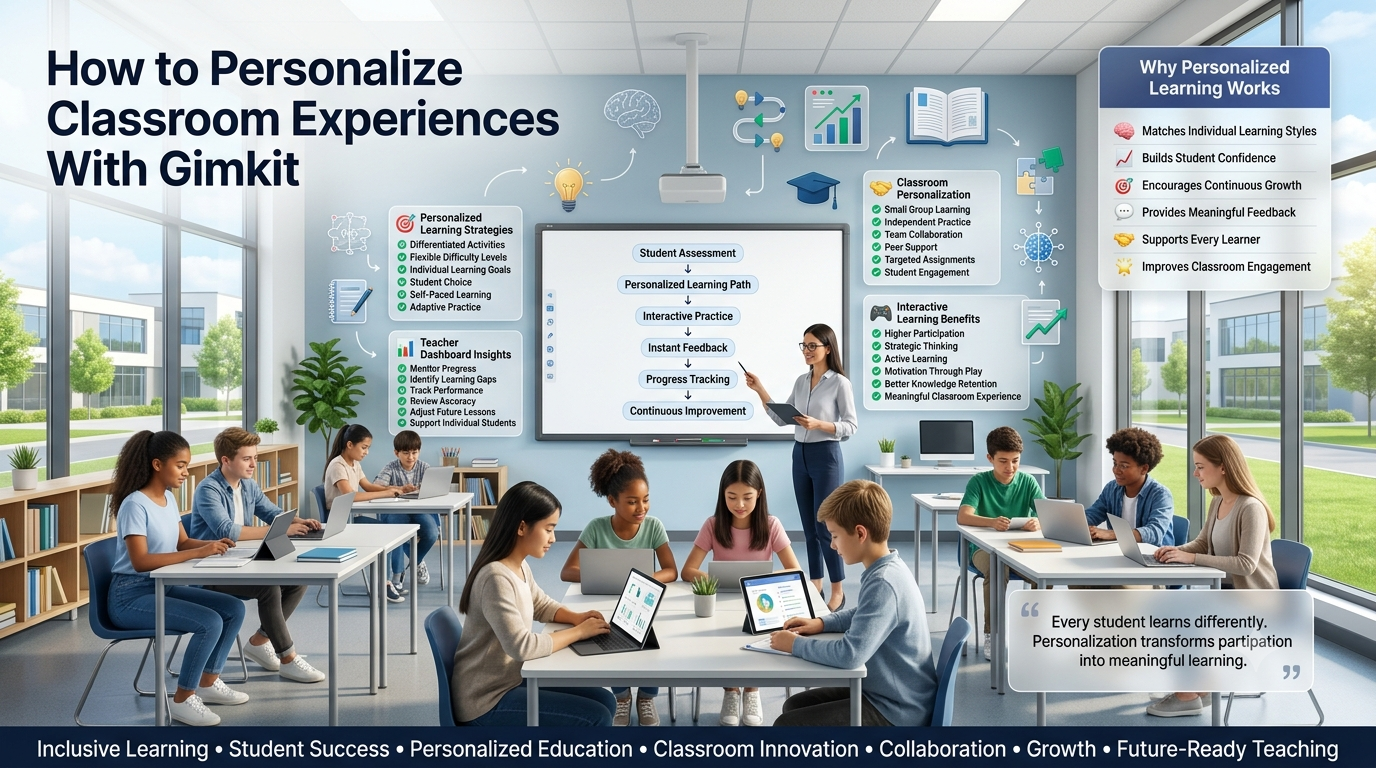
Long-term success becomes much easier when every learning session contributes toward a larger objective. Instead of choosing random quizzes each week, create a roadmap that outlines what you want to master over the next few months. This approach keeps practice focused and prevents important topics from being overlooked.
Your roadmap should remain flexible. If progress reports show that certain concepts need additional attention, adjust your schedule instead of rigidly following the original plan. Continuous refinement is one of the characteristics of successful learners.
Sample Learning Roadmap
Time Period
Primary Goal
Review Focus
Expected Outcome
Week 1–2
Learn new concepts
Basic understanding
Build foundation
Week 3–4
Practice regularly
Accuracy improvement
Reduce mistakes
Month 2
Mixed-topic revision
Knowledge retention
Faster recall
Month 3
Comprehensive assessments
Weak topic recovery
Higher confidence
Use Performance Data to Guide Future Practice
One of the biggest advantages of modern learning platforms is access to performance data. Rather than relying on memory, analyze your results after every learning session.
Within the Gimkit Dashboard, teachers can review participation, answer accuracy, completion rates, and commonly missed questions. These insights help identify trends that may not be obvious during live gameplay.
Students should also pay attention to recurring mistakes instead of celebrating only high scores. Consistent errors often reveal deeper knowledge gaps that deserve extra study time.
Performance Indicators Worth Monitoring
Metric
What It Reveals
Question accuracy
Subject understanding
Average completion time
Confidence level
Frequently missed topics
Knowledge gaps
Participation rate
Engagement consistency
Improvement trend
Long-term progress
Balance New Learning with Regular Revision
Many learners spend all of their time studying new material while forgetting earlier lessons. Long-term success depends on balancing both activities.
A practical approach is to dedicate one portion of each study session to new concepts and another portion to reviewing previous material. This keeps information active in long-term memory while gradually expanding knowledge.
Suggested Learning Balance
60% learning new topics
30% reviewing previous lessons
10% analyzing mistakes
This ratio can be adjusted depending on upcoming exams or classroom objectives.
Create High-Quality Quiz Collections
The quality of your practice questions directly influences learning outcomes. Rather than creating extremely difficult or extremely easy quizzes, focus on balanced question sets that gradually increase in complexity.
A well-designed Gimkit Quiz usually contains:
Simple recall questions
Concept application
Scenario-based questions
Problem-solving challenges
Mixed difficulty levels
Quiz Design Checklist
✔ Clear wording
✔ One learning objective per question
✔ No misleading answer choices
✔ Appropriate difficulty progression
✔ Regular updates as lessons advance
Strengthen Knowledge Through Active Recall
Reading notes repeatedly often creates a false sense of confidence. Active recall forces the brain to retrieve information without immediately seeing the answer, making learning more durable.
Instead of reviewing textbooks first, begin with a Gimkit Play session or practice activity. After answering questions, return to your notes only for concepts you struggled to remember.
Active Recall Workflow
Step
Action
1
Attempt questions from memory
2
Identify incorrect answers
3
Review only missed concepts
4
Practice again
5
Repeat during future sessions
Encourage Collaborative Learning
Long-term improvement is rarely achieved in isolation. Working with classmates or colleagues introduces different perspectives and encourages discussion around difficult topics.
Teachers can organize collaborative review sessions where Gimkit Students solve challenges together before participating in competitive games. This combination supports both teamwork and individual accountability.
Benefits of Group Learning
Better concept explanation
Increased classroom engagement
Shared problem-solving
Higher motivation
Improved communication skills
Professional educators often alternate between collaborative and individual activities to maximize learning outcomes.
Develop a Sustainable Motivation System
Motivation naturally changes over time. Successful learners avoid depending entirely on enthusiasm and instead build systems that encourage consistent progress.
Examples include setting weekly milestones, celebrating completed study goals, or tracking streaks of consistent practice.
Motivation Ideas
Strategy
Purpose
Weekly milestones
Maintain focus
Progress charts
Visual improvement
Personal challenges
Increase engagement
Small rewards
Encourage consistency
Reflection sessions
Measure growth
Long-term planning works best when motivation comes from measurable progress rather than temporary excitement.
Learn to Analyze Mistakes Professionally
Incorrect answers are valuable learning opportunities. Instead of immediately moving to the next game, spend time understanding why mistakes happened.
Ask questions such as:
Did I misunderstand the concept?
Was I rushing?
Did I guess the answer?
Have I reviewed this topic recently?
Is additional practice required?
Keeping a simple mistake journal can dramatically reduce repeated errors over time.
Mistake Analysis Table
Error Type
Possible Cause
Improvement Strategy
Concept misunderstanding
Weak foundation
Review lesson
Careless mistake
Lack of focus
Slow down
Time pressure
Poor pacing
Practice regularly
Guessing
Insufficient knowledge
Study topic again
Repeated error
No revision
Schedule review session
Build Subject-Specific Study Strategies
Different subjects benefit from different learning methods. A single study strategy may not work equally well across mathematics, languages, science, and history.
For example:
Subject
Effective Gimkit Strategy
Mathematics
Step-by-step problem solving
Science
Terminology and concept review
History
Timeline quizzes
Geography
Map-based vocabulary practice
Languages
Daily vocabulary repetition
Customizing study plans for each subject improves efficiency and reduces unnecessary repetition.
Integrate Gimkit into a Complete Study Routine
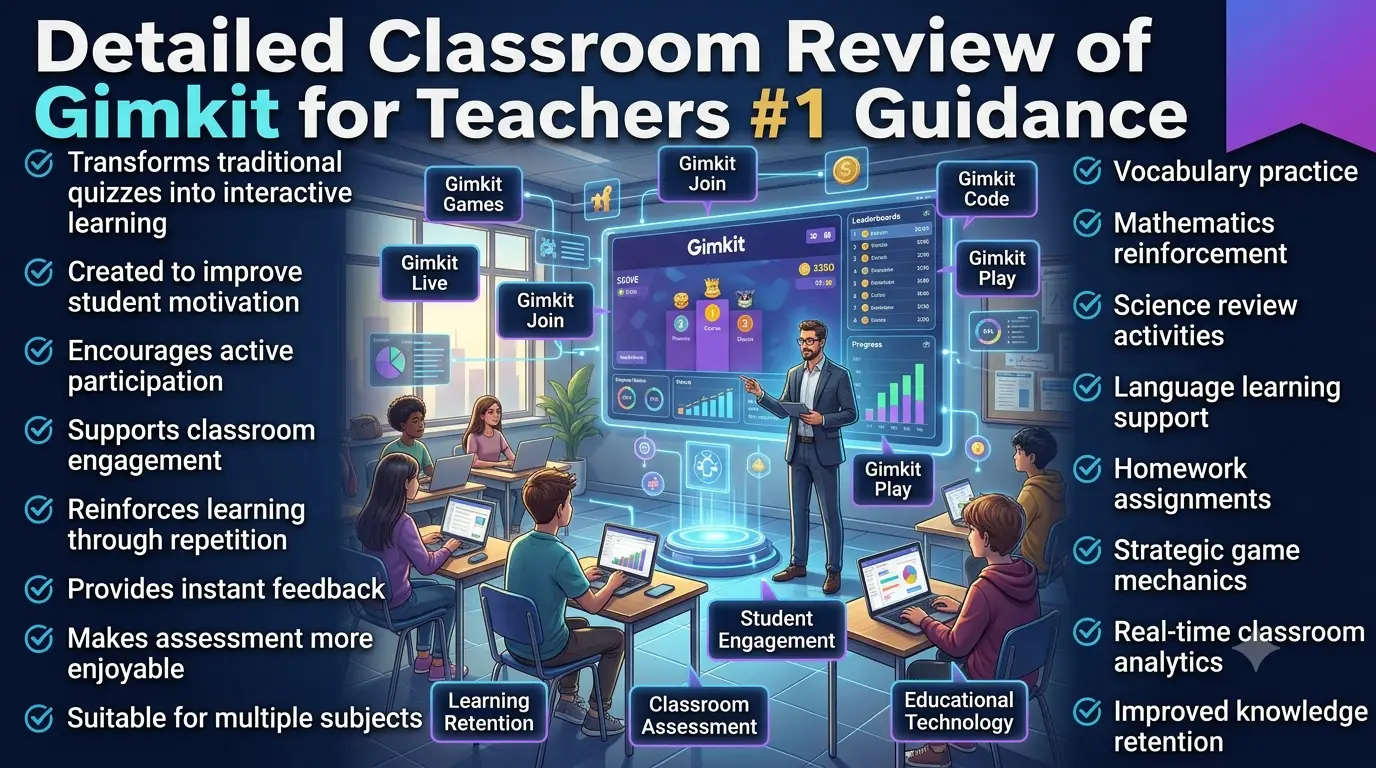
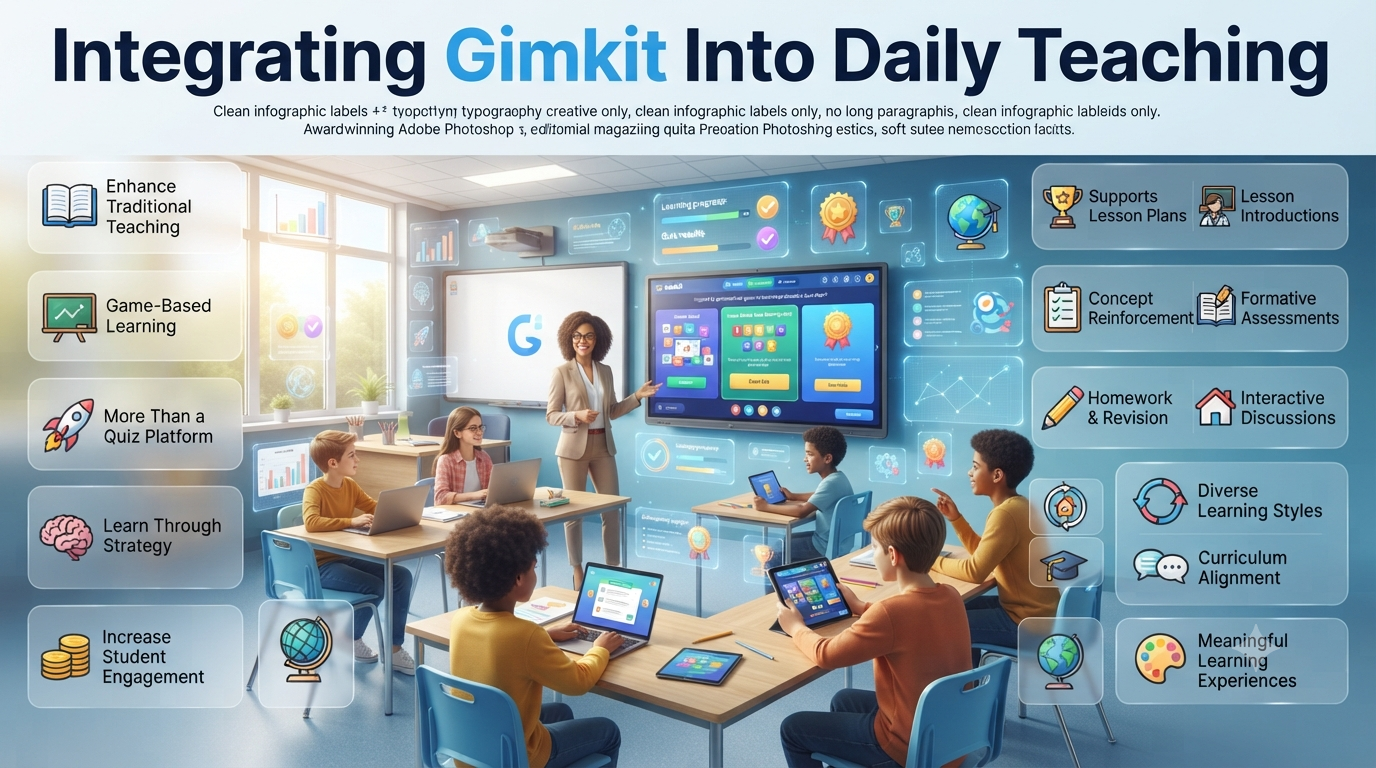
Although Gimkit Learning is highly effective, it should complement—not replace—other study methods.
An ideal learning routine combines multiple activities throughout the week.
Balanced Study Workflow
Attend lessons.
Review class notes.
Practice with Gimkit Games.
Analyze mistakes.
Revise difficult concepts.
Complete homework.
Perform weekly assessments.
This balanced approach develops deeper understanding than relying on quizzes alone.
Manage Time Efficiently During Long-Term Preparation
Effective learners protect their study time by planning sessions in advance.
Instead of studying for several hours without direction, divide learning into focused blocks with specific objectives.
Example Time Allocation
Activity
Suggested Duration
Review previous lesson
15 minutes
New learning
25 minutes
Gimkit Live practice
20 minutes
Mistake analysis
15 minutes
Planning next session
10 minutes
Consistent short sessions usually produce better long-term retention than occasional marathon study sessions.
Use Technology Without Becoming Distracted
Digital learning platforms offer many advantages, but notifications and unrelated browsing can quickly reduce productivity.
Before starting a session:
✔ Silence unnecessary notifications.
✔ Close unrelated browser tabs.
✔ Prepare study materials.
✔ Define one clear objective.
✔ Review completed work before ending the session.
These habits improve concentration and make every learning session more productive.
Professional Recommendation
Experienced educators rarely rely on one technique for an entire semester. Instead, they continuously refine lesson plans based on student performance, rotate different Gimkit Activities, update question banks, and revisit challenging topics at planned intervals. Long-term planning is an ongoing process of observation, adjustment, and improvement rather than a fixed schedule.
Establish Long-Term Milestones Instead of Daily Targets
Daily goals are useful for maintaining momentum, but long-term milestones provide a clearer picture of overall progress. Instead of measuring success by a single high score, evaluate achievements over several weeks. This approach helps learners stay motivated even if individual sessions vary in performance.
For teachers, milestone planning also simplifies curriculum management. By connecting classroom objectives with scheduled assessments, every Gimkit Classroom activity contributes toward larger educational outcomes rather than acting as a standalone game.
Example Milestone Plan
Timeline
Milestone
Success Indicator
Month 1
Build subject foundation
Consistent participation and improving accuracy
Month 2
Strengthen weak topics
Fewer repeated mistakes
Month 3
Mixed-topic mastery
High confidence across multiple units
End of Term
Comprehensive review
Strong overall performance and retention
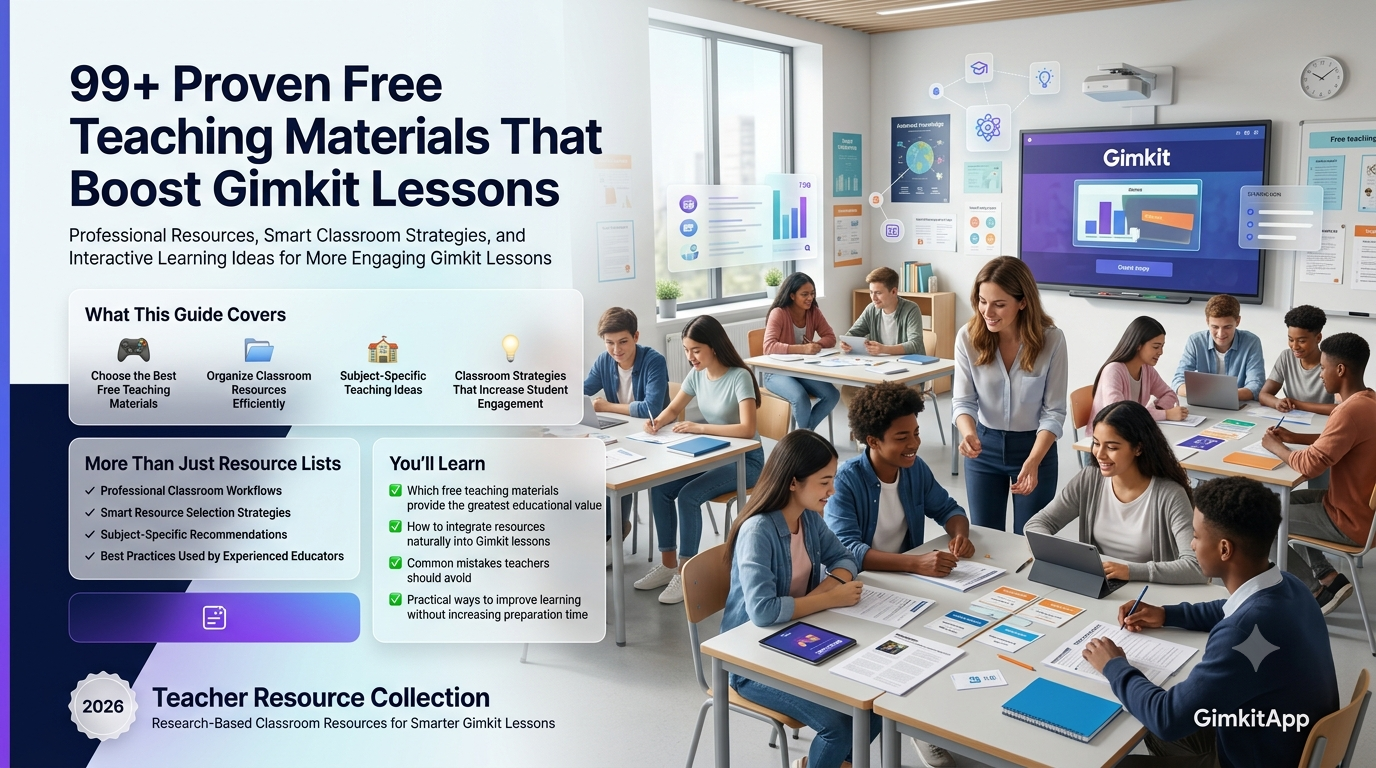
Create a Resource Library for Continuous Learning
Long-term success depends on having organized learning materials that are easy to revisit. Instead of searching for resources before every study session, build a personal library of notes, question sets, worksheets, and customized Gimkit Kit collections.
Teachers can organize materials by subject, grade level, or learning objective. Students can maintain folders for vocabulary, formulas, definitions, and practice questions. An organized resource library saves time and supports faster revision.
Recommended Resource Categories
Resource Type
Purpose
Class notes
Review key concepts
Practice quizzes
Reinforce learning
Vocabulary lists
Improve terminology
Previous assessments
Identify recurring errors
Revision summaries
Quick exam preparation
Rotate Question Types to Improve Critical Thinking
Repeated exposure to identical question formats can make learning predictable. Rotating question styles encourages deeper thinking and prevents learners from relying on memorization alone.
A balanced Gimkit Quiz should include a variety of question approaches, such as factual recall, concept application, comparisons, and scenario-based challenges. This keeps learners engaged while developing broader problem-solving skills.
Question Variety Checklist
✔ Definition-based questions
✔ Cause-and-effect scenarios
✔ Real-world applications
✔ Multiple-step reasoning
✔ Comparative questions
✔ Vocabulary matching
✔ Problem-solving exercises
Build a Continuous Feedback Loop
Feedback is most effective when it becomes part of the learning process rather than something received only after exams. Every Gimkit Play session provides valuable information that can guide future improvement.
Teachers should regularly review classroom performance reports and discuss common mistakes with students. Learners should compare current results with previous performances to identify patterns and celebrate gradual improvement.
Continuous Feedback Cycle
Stage
Action
Practice
Complete learning activity
Analyze
Review strengths and weaknesses
Improve
Focus on weak concepts
Reassess
Practice again
Reflect
Record progress and plan next steps
This ongoing cycle transforms every practice session into an opportunity for meaningful growth.
Plan for Different Learning Styles
Not every learner absorbs information in the same way. Long-term planning becomes more effective when study strategies match individual learning preferences.
Some students benefit from visual diagrams, while others learn more effectively through discussion, repetition, or hands-on activities. Teachers using Gimkit Teachers resources can diversify classroom experiences by combining quizzes with collaborative projects, presentations, and independent assignments.
Learning Style Comparison
Learning Preference
Recommended Strategy
Visual
Charts, diagrams, images
Auditory
Discussions and verbal explanations
Reading/Writing
Notes and written summaries
Kinesthetic
Interactive classroom activities
Mixed
Combination of multiple approaches
Avoid Common Long-Term Planning Mistakes
Even well-designed plans can fail if common mistakes are ignored. Recognizing these issues early helps maintain steady progress throughout the learning journey.
Frequent Mistakes
Mistake
Better Alternative
Practicing only favorite topics
Cover all learning objectives
Ignoring weak areas
Schedule targeted review sessions
Chasing high scores only
Focus on knowledge improvement
Never updating quizzes
Refresh question banks regularly
Studying without reflection
Analyze results after every session
Professional Advice
Review your learning plan every few weeks. Small adjustments made consistently are far more effective than major changes made only when problems become obvious.
Prepare for Assessments Using Structured Review
As exams or classroom assessments approach, avoid replacing your long-term strategy with last-minute cramming. Instead, gradually increase review frequency while continuing to reinforce previously learned material.
An effective assessment plan combines Gimkit Activities, independent revision, and self-testing. This balanced approach reduces stress and improves long-term retention.
Pre-Assessment Checklist
✔ Review completed units
✔ Practice weak topics first
✔ Revisit previous mistakes
✔ Complete mixed-topic quizzes
✔ Track confidence levels
✔ Schedule adequate rest before assessments
Encourage Independent Learning Habits
Long-term success extends beyond classroom instruction. Learners who develop independent study habits continue improving even outside scheduled lessons.
Students can create personal review schedules, build their own question sets, and monitor progress using the Gimkit Dashboard. These habits foster responsibility and lifelong learning skills that remain valuable long after a course ends.
Independent Learning Routine
Activity
Frequency
Review notes
Daily
Practice quizzes
Several times per week
Analyze mistakes
After each session
Update study goals
Weekly
Reflect on progress
Monthly
Adapt Your Strategy as Goals Change
Learning objectives naturally evolve over time. A beginner may focus on understanding basic concepts, while advanced learners prioritize speed, accuracy, and deeper application.
Review your long-term plan periodically to ensure it still aligns with your current needs. Teachers may update lesson plans based on class performance, while students can modify study schedules according to upcoming projects or exams.
Being flexible allows your planning strategy to remain effective as circumstances change.
Future Trends in Long-Term Digital Learning
Educational technology continues to evolve, making long-term planning more personalized and data-driven. Interactive learning platforms increasingly support adaptive practice, detailed analytics, collaborative activities, and flexible learning environments.
Teachers using Gimkit Live, Gimkit Classroom, and related tools are likely to benefit from continued improvements in reporting, customization, and classroom management features. Students can also expect learning experiences that become more engaging and responsive to individual progress.
Rather than replacing traditional teaching, these developments strengthen it by providing better opportunities for practice, feedback, and continuous improvement.
Best Practices for Sustainable Gimkit Success
The following habits consistently contribute to long-term improvement regardless of subject or grade level.
Best Practices Checklist
✔ Set realistic long-term learning goals.
✔ Follow a consistent weekly study schedule.
✔ Organize quizzes into logical learning units.
✔ Review mistakes immediately after practice.
✔ Balance new learning with regular revision.
✔ Rotate different Gimkit Mode options to maintain engagement.
✔ Reflect on achievements and refine your learning plan over time.
Expert Insight: Long-Term Success Is Built Through Consistency
Experienced educators understand that meaningful learning happens gradually. High-performing students are not necessarily those who play the most games—they are the ones who consistently review concepts, analyze mistakes, and follow structured learning routines.
A thoughtful long-term strategy transforms Gimkit Learning from a simple classroom activity into a comprehensive educational tool that supports deeper understanding, stronger retention, and lasting academic confidence.
Expert Reviews & Instant Guidance for you
Long-Term Planning Strategies for Better Results for Gimkit Success begin with establishing clear academic goals before creating or hosting any activity. When every game supports a specific learning objective, students understand the purpose behind the practice and achieve more meaningful results.
Long-Term Planning Strategies for Better Results for Gimkit Success encourage teachers to organize content according to curriculum units instead of creating random question sets. A structured progression helps students build knowledge gradually throughout the school year.
Long-Term Planning Strategies for Better Results for Gimkit Success recommend developing a consistent review schedule rather than using Gimkit only before major examinations. Regular reinforcement improves long-term retention and reduces last-minute cramming.
Long-Term Planning Strategies for Better Results for Gimkit Success emphasize creating high-quality questions that assess conceptual understanding instead of simple memorization. Well-designed content leads to stronger critical thinking and deeper learning.
Long-Term Planning Strategies for Better Results for Gimkit Success encourage educators to maintain a reusable question bank that can be updated as lessons evolve, saving preparation time while keeping classroom materials relevant.
Long-Term Planning Strategies for Better Results for Gimkit Success highlight the importance of balancing live games with self-paced assignments so students can review concepts at their own pace outside classroom hours.
Long-Term Planning Strategies for Better Results for Gimkit Success recommend analyzing performance reports after every activity to identify learning gaps before introducing new topics.
Long-Term Planning Strategies for Better Results for Gimkit Success encourage teachers to revisit difficult concepts regularly instead of assuming students have mastered them after one successful lesson.
Long-Term Planning Strategies for Better Results for Gimkit Success support differentiated instruction by creating multiple versions of activities that accommodate different learning abilities and academic readiness levels.
Long-Term Planning Strategies for Better Results for Gimkit Success emphasize that consistency is more valuable than intensity. Short, regular review sessions often produce better educational outcomes than occasional lengthy competitions.
Long-Term Planning Strategies for Better Results for Gimkit Success recommend introducing new game modes strategically throughout the academic year to maintain student engagement without allowing classroom routines to become repetitive.
Long-Term Planning Strategies for Better Results for Gimkit Success encourage students to prioritize answer accuracy before speed because consistent correctness produces stronger long-term academic improvement.
Long-Term Planning Strategies for Better Results for Gimkit Success highlight the value of reviewing incorrect answers immediately, allowing misconceptions to be corrected while the lesson remains fresh.
Long-Term Planning Strategies for Better Results for Gimkit Success recommend integrating classroom discussions after each game so students can explain reasoning, clarify misunderstandings, and strengthen conceptual understanding.
Long-Term Planning Strategies for Better Results for Gimkit Success encourage teachers to establish measurable learning milestones that allow students to monitor progress throughout the semester.
Long-Term Planning Strategies for Better Results for Gimkit Success support collaborative learning by incorporating team-based activities that promote communication, problem-solving, and peer instruction.
Long-Term Planning Strategies for Better Results for Gimkit Success emphasize maintaining an organized classroom library of question sets categorized by subject, unit, and learning objective for quick future access.
Long-Term Planning Strategies for Better Results for Gimkit Success encourage educators to update existing question sets regularly so examples, terminology, and curriculum standards remain current.
Long-Term Planning Strategies for Better Results for Gimkit Success recommend combining interactive review with worksheets, classroom discussions, hands-on activities, and independent practice for balanced instruction.
Long-Term Planning Strategies for Better Results for Gimkit Success highlight that frequent formative assessment allows teachers to adjust instruction before learning gaps become significant academic challenges.
Long-Term Planning Strategies for Better Results for Gimkit Success encourage students to reflect on their own performance after each activity by identifying strengths, weaknesses, and practical improvement goals.
Long-Term Planning Strategies for Better Results for Gimkit Success recommend using classroom analytics to recognize participation trends rather than evaluating success through leaderboard positions alone.
Long-Term Planning Strategies for Better Results for Gimkit Success support long-term motivation by celebrating academic growth, consistent participation, and personal improvement instead of rewarding only top scores.
Long-Term Planning Strategies for Better Results for Gimkit Success encourage teachers to test every activity before presenting it to students, ensuring questions, settings, and gameplay function properly.
Long-Term Planning Strategies for Better Results for Gimkit Success recommend incorporating seasonal themes, curriculum events, and classroom challenges to keep learning fresh throughout the academic year.
Long-Term Planning Strategies for Better Results for Gimkit Success highlight that technology should enhance effective teaching practices rather than replace thoughtful lesson planning and meaningful instruction.
Long-Term Planning Strategies for Better Results for Gimkit Success encourage educators to collaborate with colleagues by sharing question sets, teaching strategies, and successful classroom activities that improve learning outcomes.
Long-Term Planning Strategies for Better Results for Gimkit Success recommend reviewing instructional effectiveness periodically by comparing classroom performance data across multiple weeks or grading periods.
Long-Term Planning Strategies for Better Results for Gimkit Success emphasize maintaining flexibility, allowing lesson plans and review strategies to evolve according to student progress, curriculum updates, and classroom needs.
Long-Term Planning Strategies for Better Results for Gimkit Success ultimately demonstrate that sustainable academic improvement comes from careful planning, curriculum alignment, consistent review, meaningful assessment, thoughtful use of classroom analytics, continuous reflection, and high-quality instructional design. When teachers and students commit to long-term learning strategies instead of short-term performance goals, Gimkit becomes a powerful educational tool that supports deeper understanding, stronger knowledge retention, greater classroom engagement, and lasting academic success.
Long-Term Planning Strategies for Better Results for Gimkit Success encourage teachers to establish weekly learning routines so students know when interactive review sessions will occur, creating consistency that supports long-term knowledge retention.
Long-Term Planning Strategies for Better Results for Gimkit Success recommend dividing large curriculum units into smaller review milestones, making it easier for students to master concepts gradually without becoming overwhelmed.
Long-Term Planning Strategies for Better Results for Gimkit Success highlight the importance of tracking student improvement over several months instead of evaluating success based on a single game or assessment.
Long-Term Planning Strategies for Better Results for Gimkit Success encourage educators to use classroom data to identify frequently missed questions and redesign future lessons around those learning gaps.
Long-Term Planning Strategies for Better Results for Gimkit Success support continuous improvement by updating question sets with clearer wording, more accurate answer choices, and examples that reflect current classroom instruction.
Long-Term Planning Strategies for Better Results for Gimkit Success emphasize encouraging students to set personal learning goals, such as improving answer accuracy, mastering difficult topics, or participating more confidently during review sessions.
Long-Term Planning Strategies for Better Results for Gimkit Success recommend scheduling cumulative review activities that revisit earlier units, helping students retain important knowledge throughout the entire academic year.
Long-Term Planning Strategies for Better Results for Gimkit Success encourage teachers to balance competition with collaboration by using both individual and team-based activities to develop academic confidence and communication skills.
Long-Term Planning Strategies for Better Results for Gimkit Success highlight that meaningful feedback after every activity helps students understand not only which answers were incorrect but also why the correct answers matter.
Long-Term Planning Strategies for Better Results for Gimkit Success recommend maintaining a flexible instructional approach, allowing lesson plans to evolve based on classroom performance data and changing student needs.
Long-Term Planning Strategies for Better Results for Gimkit Success encourage educators to introduce progressively challenging question sets as students develop stronger subject knowledge, keeping learning both engaging and appropriately demanding.
Long-Term Planning Strategies for Better Results for Gimkit Success demonstrate that combining digital review with classroom discussion, written reflection, and practical activities produces deeper understanding than relying on gameplay alone.
Long-Term Planning Strategies for Better Results for Gimkit Success highlight that long-term educational growth is achieved through consistent participation, thoughtful assessment, regular feedback, and continuous refinement of teaching strategies rather than occasional high scores.
Long-Term Planning Strategies for Better Results for Gimkit Success encourage schools to foster collaboration among teachers by sharing successful review strategies, curriculum-aligned question banks, and classroom best practices that improve learning outcomes across multiple subjects.
Long-Term Planning Strategies for Better Results for Gimkit Success ultimately prove that sustainable success is built through careful preparation, structured curriculum planning, ongoing formative assessment, consistent student engagement, data-informed instructional decisions, and continuous improvement. By treating Gimkit as a long-term learning resource instead of a short-term classroom game, educators can maximize student achievement, strengthen knowledge retention, and create a more effective, engaging, and academically rewarding learning environment.
Long-Term Planning Strategies for Better Results for Gimkit Success encourage teachers to review instructional goals at the end of each grading period, ensuring that future activities continue to align with curriculum standards and student learning needs.
Long-Term Planning Strategies for Better Results for Gimkit Success recommend creating a structured archive of question sets by subject, grade level, and unit, making lesson preparation faster and ensuring valuable educational resources can be reused efficiently.
Long-Term Planning Strategies for Better Results for Gimkit Success highlight that students develop stronger learning habits when interactive review sessions become a consistent part of classroom instruction rather than occasional special activities.
Long-Term Planning Strategies for Better Results for Gimkit Success encourage educators to compare performance trends across multiple classes, helping identify instructional strategies that consistently produce better engagement and academic achievement.
Long-Term Planning Strategies for Better Results for Gimkit Success demonstrate that maintaining a balance between review, new instruction, assessment, and classroom discussion creates a more complete and effective learning experience.
Long-Term Planning Strategies for Better Results for Gimkit Success emphasize that technology should always support educational objectives by reinforcing curriculum content, encouraging active participation, and providing meaningful feedback that guides future instruction.
Long-Term Planning Strategies for Better Results for Gimkit Success ultimately show that lasting academic success is achieved through strategic planning, consistent implementation, high-quality question design, regular performance analysis, collaborative teaching practices, and continuous refinement of classroom activities. When these long-term strategies are applied consistently, Gimkit becomes far more than a review game—it becomes a reliable tool for improving student engagement, strengthening knowledge retention, and supporting measurable educational growth throughout the school year.
Long-Term Planning Strategies for Better Results for Gimkit Success encourage teachers to evaluate the effectiveness of every review activity by gathering student feedback, analyzing classroom performance, and refining future lessons accordingly. This cycle of planning, implementation, assessment, and improvement helps create increasingly effective learning experiences while ensuring that interactive activities continue to support curriculum objectives and long-term academic growth.
Long-Term Planning Strategies for Better Results for Gimkit Success ultimately reinforce that sustainable educational achievement is built through purposeful lesson planning, consistent formative assessment, high-quality instructional content, regular curriculum review, and a commitment to continuous improvement. By combining strategic organization with engaging classroom activities, educators can maximize the educational value of Gimkit, foster stronger student participation, improve knowledge retention, and create a learning environment that supports lasting academic success year after year.
Frequently Asked Questions
1. How Do I Structure My Custom “Kits” at the Start of the Year for Long-Term Cumulative Review?
The most effective long-term strategy is to organize your custom Kits around curriculum units rather than individual lessons. Create a master Kit for each major topic, then build smaller review Kits that combine questions from previous units. This spaced-review approach reinforces older concepts while introducing new material, helping students retain knowledge throughout the school year instead of forgetting it after each test. Label Kits consistently using unit names, grade levels, or standards to simplify future planning. Periodically update questions based on student performance data to keep your review sessions relevant and targeted.
Best practices:
Organize Kits by units or standards.
Maintain consistent naming conventions.
Include cumulative review questions.
Update Kits after each assessment.
Archive outdated versions instead of deleting them.
Reuse high-performing questions across multiple reviews.
2. What Is the Optimal Frequency and Duration for Running Gimkit Without Causing “Game Fatigue”?
While Gimkit is highly engaging, using it every day in the same format can reduce its educational impact over time. Most educators find success by incorporating live games two or three times per week while alternating with discussions, projects, hands-on activities, or traditional instruction. Individual sessions typically work best between 15 and 25 minutes, depending on grade level and lesson objectives. Rotating different game modes and varying classroom activities helps maintain student motivation while preventing repetitive gameplay from becoming predictable or distracting.
Recommended schedule:
Use live games 2–3 times weekly.
Keep sessions around 15–25 minutes.
Rotate different game modes regularly.
Combine with non-digital learning activities.
Reserve longer sessions for major reviews.
Gather student feedback periodically.
3. How Should I Configure Game Modifiers to Prioritize Actual Learning Over Gaming Strategy?
Game settings should reinforce academic objectives rather than encourage students to focus only on earning in-game currency or maximizing scores. Teachers can achieve this by selecting balanced game modes, limiting overly distracting modifiers when appropriate, and emphasizing question accuracy during classroom discussions. Explain that thoughtful responses are more valuable than rapid guessing, and review misconceptions after gameplay. Matching modifiers to the lesson objective ensures that game mechanics support learning instead of overshadowing instructional goals.
Configuration tips:
Prioritize accuracy over speed.
Choose settings that support lesson goals.
Avoid excessive distractions during assessment reviews.
Discuss incorrect answers after each session.
Encourage strategic thinking without reducing academic focus.
Adjust gameplay according to student maturity.
4. How Can I Use the Data Reports Over a Semester to Drive My Small-Group Intervention?
Semester-long analytics become most valuable when teachers analyze patterns instead of individual game scores. Review reports after each unit to identify students who consistently struggle with specific standards or concepts. Group learners with similar needs for targeted instruction while providing enrichment opportunities for students demonstrating mastery. Comparing results across multiple assignments also reveals whether interventions are improving understanding over time. Combining Gimkit reports with classroom assessments provides a more complete picture of student progress and supports informed instructional planning.
Effective intervention strategies:
Track recurring misconceptions.
Group students by learning needs.
Monitor growth after interventions.
Compare results across multiple units.
Combine analytics with teacher observations.
Adjust instructional plans based on evidence.
5. How Do I Successfully Transition Gimkit Into an Independent, Asynchronous Homework Tool?
Independent assignments allow students to practice outside the classroom while working at their own pace. To maximize effectiveness, create assignments with clear instructions, reasonable deadlines, and question sets aligned with current learning objectives. Encourage students to complete assignments in distraction-free environments and review feedback after submission. Teachers should regularly monitor completion reports and use assignment data to identify concepts requiring additional classroom instruction. Asynchronous practice works best as reinforcement rather than replacing direct teaching.
Homework implementation tips:
Provide clear completion instructions.
Set realistic deadlines.
Align assignments with current lessons.
Monitor completion and accuracy reports.
Offer follow-up support for difficult concepts.
Use homework data to guide future classroom review.
Long-Term Planning in Practice: A Teacher’s Evidence-Based Roadmap
The following implementation guide adds practical decision points to the earlier planning framework. Its sample timelines and allocations are adaptable teaching examples rather than product promises or guaranteed outcomes.
Start With a Diagnostic, Not a Leaderboard Position
Long-term improvement starts by finding out what students can explain without the game interface. Before introducing a new kit, give a short, low-pressure diagnostic with a mixture of recall, application, and explanation questions. Record which learning targets are secure, which are partially understood, and which are unfamiliar. A class may answer multiplication facts rapidly while struggling to interpret word problems; treating those as the same skill would hide the instructional gap. For a student studying independently, a short written explanation of the reasoning behind three missed questions can be more informative than a high in-game balance.
Separate the academic baseline from the gameplay baseline. The academic baseline might include correct explanations, common misconceptions, and ability to transfer knowledge to unfamiliar examples. The gameplay baseline may include familiarity with the controls, reading time, and comfort navigating the selected mode. These dimensions can influence each other, but they are not interchangeable. Do not interpret a low leaderboard position as proof of weak subject knowledge, especially for a student who is new to the interface or needs more reading time.
Write one clear statement before the first session: “By the end of this unit, students will justify why a fraction comparison is correct using a number line.” Then choose questions that actually reveal that reasoning. This provides a reference point for future lessons and protects the plan from drifting into game-score optimization. The guide to formative assessment strategies with Gimkit explains how to connect evidence from activities with instructional decisions.
Design a Six-Week Improvement Cycle With Decision Gates
A six-week cycle is a useful planning example, not a mandatory Gimkit feature or a scientifically fixed learning interval. During week one, establish baseline understanding and teach students how to review errors. In week two, focus on one or two recurring misconceptions and introduce retrieval practice without visual hints. In week three, mix previously taught questions with current content so learners must identify which method applies. Week four is a checkpoint: collect a short written response or demonstration that does not depend on the game. Week five offers differentiated follow-up, and week six checks whether learners can apply the knowledge in a new context.
Each week needs a decision gate: a concrete question that determines what happens next. For example, “Can students explain the difference between weather and climate using two examples?” If not, change the teaching approach rather than simply repeating the same kit. A teacher might model the distinction using a local weather log, then revisit the same concept through a different question type. If the explanation is sound, increase complexity or move to a related application. A student can use the same process by recording which explanations still require notes.
Build flexibility into the calendar. Testing periods, attendance changes, and school events may require shortening or extending the cycle. It is better to run four meaningful sessions than to force six sessions with no time for feedback. For a classroom example of pacing and revision decisions, see planning effective revision sessions. The objective is an improving evidence trail, not completing an arbitrary number of games.
Plan Retrieval Practice Without Mistaking Repetition for Mastery
Repeated exposure can improve familiarity, but familiarity is not the same as independent retrieval. A learner who recognizes an answer in a familiar multiple-choice set may still struggle to produce the explanation from memory. Use a three-stage sequence: an initial practice opportunity, a delayed retrieval check, and a transfer task with a changed surface context. For example, after reviewing vocabulary in a kit, ask students to use three words in an original paragraph a few days later. After practicing a math procedure, ask them to choose between two possible methods and justify the choice.
Gimkit’s Smart Repetition documentation says questions missed on their first appearance are prioritized for repetition in live games and assignments. That feature can support practice, but teachers should not describe its repetition algorithm as a substitute for independent delayed testing. The tool does not automatically establish durable understanding of the concept, and a student’s success in a particular game mode cannot establish mastery of every related skill.
Use a practical schedule such as the next lesson, later that week, and after a longer interval, adjusting to student needs and the course timetable. If the delayed check shows confusion, return to explicit teaching, examples, and explanation before assigning more repetitions. Keep notes on the type of error: vocabulary confusion, calculation mistake, misread instruction, or missing prerequisite. Those categories lead to different interventions. A good long-term plan adapts the next practice opportunity to the reason an answer was wrong.
Use Question-Level Evidence Carefully
Gimkit’s official Game Reports guide describes Student Overview, General Overview, and Question Breakdown views for live games hosted with a kit you own. These views can help teachers identify questions that need attention. They do not, by themselves, explain why a student answered incorrectly. A confusing distractor, a reading barrier, a guessed response, or a genuinely missing concept can produce similar patterns. Follow the report with a conversation, a worked example, or an exit response before deciding what to reteach.
When reviewing a report, ask four questions in order. Was the question aligned to the lesson objective? Did students have enough information and time to understand it? Is the incorrect option revealing a recognizable misconception? Can students answer a differently worded question without relying on the original choices? If the first two answers are uncertain, revise the assessment item before labeling the student as struggling. For multilingual learners, clarify language demands without removing the essential cognitive task.
Maintain a small evidence table with the target concept, observed response pattern, possible explanation, next instructional action, and a date for rechecking. Avoid creating permanent ability labels from one session. If you need a more detailed interpretation framework, the teacher assessment reports guide provides examples of how to translate classroom patterns into follow-up instruction. A long-term planning strategy becomes meaningful only when the collected evidence changes what you teach next.
Distinguish Assignments, Practice Links, and Live Games
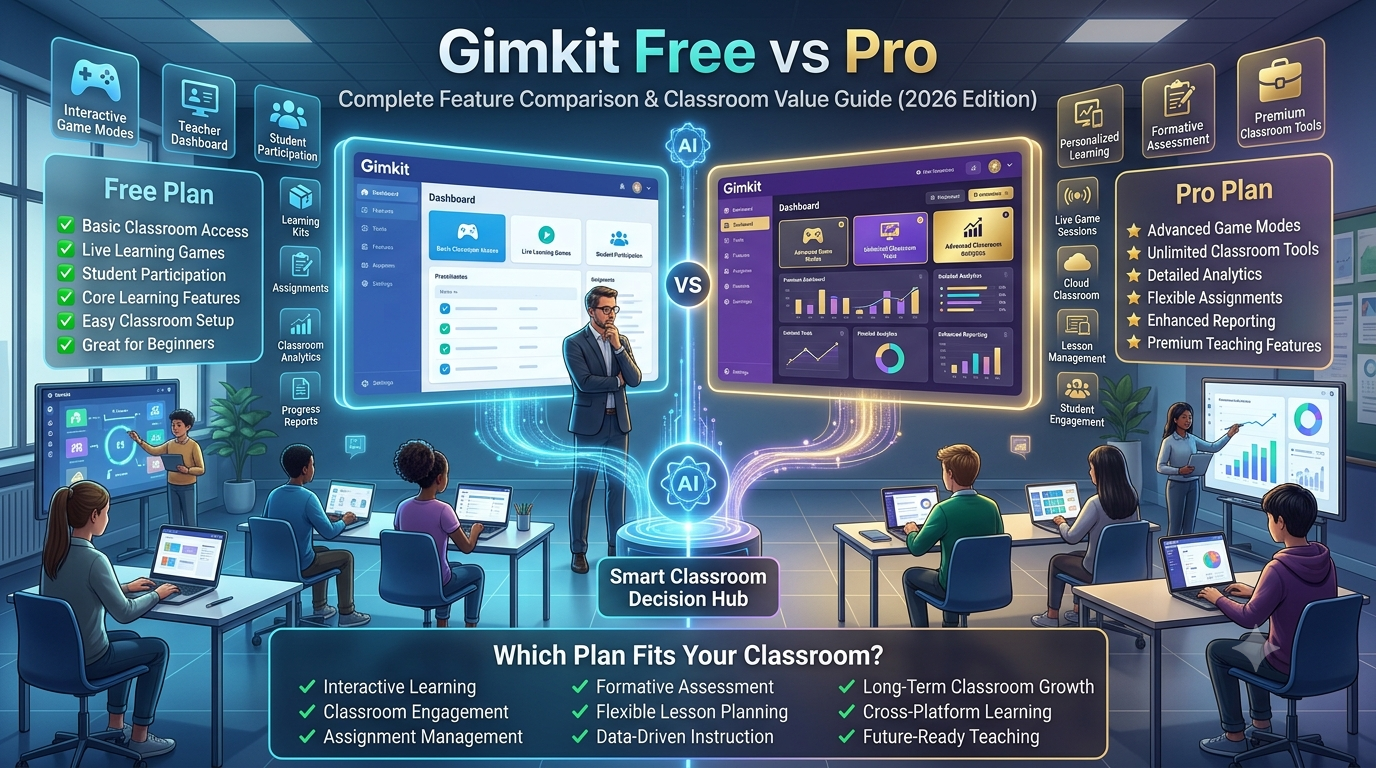
Choose the format according to the learning goal and current product availability. A live game can create a shared review experience and immediate discussion opportunities. Gimkit’s official Practice Mode guide describes a simpler question-and-answer experience without due dates, modes, or reporting. A practice link can be suitable when a learner needs independent rehearsal without the additional game layer. The official Assignments Explained guide currently identifies assignments as a Gimkit Pro feature and describes their use for independent work.
These options should not be treated as interchangeable data sources. A student using a practice link may have a useful learning experience without generating the same reporting trail as a hosted game. An assignment can provide completion information, but completion alone does not prove understanding. The official Assignment Reports guide notes that only the first response appears in the assignment report, even when students play more than once. Teachers should check the documentation and their account before making reporting promises to students or families.
For an ongoing program, write the purpose next to each activity: “live game—surface misconceptions,” “practice link—independent rehearsal,” or “written response—check transfer.” If a school lacks the required paid plan, use the free activities available to that account and a paper or classroom assessment for the evidence that the platform cannot provide. A sustainable plan depends on clear purposes, not on purchasing every feature.
Build a Misconception Register That Leads to Reteaching
Instead of maintaining a list of “wrong answers,” keep a short misconception register organized by concept. An entry should contain the original question, the incorrect reasoning students may be using, one clarifying explanation, an alternative example, and a follow-up check. For instance, when students assume a larger denominator means a larger fraction, a number-line model may be more effective than another round of multiple-choice practice. When students confuse a historical cause with a consequence, ask them to construct a two-column evidence chart and defend the distinction.
Review the register after every two or three sessions. Merge repeated entries so the document stays usable. If a misconception persists after an explanation, change the representation or teaching method rather than making the question more frequent. You might switch from symbolic math to manipulatives, from vocabulary definitions to contextual sentences, or from a lecture summary to a short peer explanation. Give learners a chance to demonstrate the new understanding without the original answer choices.
Record what happened after the intervention, including cases where it did not work. That is valuable information, not a failure of the plan. A useful register might say, “Initial comparison exercise showed confusion; visual model improved explanations for most learners; three students still need guided practice.” Avoid recording sensitive student details in a public webpage or an unapproved third-party tool. The point is to make reteaching specific, observable, and proportionate to the evidence.
Use a Two-Layer Goal System for Students and Teachers
Student goals and teacher goals should be connected but not identical. A student might aim to explain a process without notes, correct two recurring errors, or ask a better question during discussion. A teacher might aim to identify one misconception across the class, revise an unclear item, or provide an alternative way to participate. Both goals are more useful than a vague target such as “get a higher score next time.” They also reduce the temptation to equate competitive outcomes with personal worth or academic ability.
Use one process goal and one evidence goal per week. A process goal describes a controllable behavior: review the reasoning behind three mistakes, practice for ten focused minutes, or participate in a short explanation exchange. An evidence goal describes the learning that should become visible: solve an unfamiliar example, explain a term accurately, or compare two methods. At the end of the week, discuss both. A learner can meet the process goal yet need a different explanation to meet the evidence goal; that is a signal to adapt instruction.
Teachers should model this language during debriefs. Instead of “the winning team learned the most,” say “our next goal is to explain why option B is wrong, and we will check it in a new example.” For collaborative approaches, the teacher teamwork guide offers ideas for sharing instructional responsibility. A good goal system makes improvement possible for learners who start at different levels.
Protect Equity, Accessibility, and Participation
Long-term programs should not reward only students who read quickly, have stable devices, or already know the game mechanics. Before a session, check whether the activity requires fast navigation, sustained screen attention, color discrimination, audio access, or reading at a particular pace. Provide reasonable alternatives when those requirements are unrelated to the academic objective. For example, a learner who can explain the science accurately but needs extra reading time should not be judged solely by how rapidly the game registers an answer.
Rotate participation structures. Some lessons may use individual responses, others pairs, small groups, anonymous explanation cards, or teacher-led discussion. When forming teams, avoid repeatedly assigning the same students to lead, operate devices, or answer aloud. Give students meaningful roles such as evidence checker, question explainer, and misconception recorder, and rotate those roles. Participation should mean contributing to the learning, not merely appearing on a leaderboard.
Review participation patterns every few weeks. Ask who has had a chance to explain reasoning, who needs a quieter pathway, and who might benefit from a different mode or offline alternative. Do not collect names or disability information in the public planning calculator below. The tool uses only anonymous aggregate numbers entered locally in the browser. For additional classroom considerations, see creating balanced learning activities. Accessibility is a design decision throughout the plan, not a correction applied only after students struggle.
Separate Game Engagement From Learning Evidence
Engagement is useful when it creates opportunities for attention, practice, feedback, and discussion, but it is not itself proof of learning. A room can be enthusiastic while students repeat a misconception; a quiet written reflection can reveal deep understanding. Use at least two forms of evidence before making an important instructional decision. One might be a question-level response pattern from a game, while another is an explanation, demonstration, short quiz, or work sample completed outside the game.
Ask whether the evidence is independent. If students answer a question after seeing the correct option several times, that response may reflect recognition rather than transfer. To check transfer, alter the context, remove hints, and ask for the reasoning. If a class can solve the original equation but cannot explain how the same operation applies to a real-world situation, the next lesson should focus on application rather than more rapid repetition. Use teacher observation and student feedback to identify where the difficulty lies.
Do not turn every Gimkit activity into a high-stakes grade. The consequences of the decision should match the strength of the evidence. For a quick reteaching choice, a small amount of formative information may be enough. For a summative judgment, use a valid assessment aligned to the learning objective and school policy. The distinction between practice and evaluation makes the learning environment safer for students to take risks and acknowledge uncertainty.
Run a Monthly Content Quality Review
A sustainable program needs maintenance time for the kits themselves. Once a month, select a small sample of frequently used questions and review accuracy, clarity, alignment, accessibility, and distractor quality. Check whether a question has more than one defensible answer, relies on an outdated fact, or requires vocabulary that was not part of the lesson. If students frequently choose the same incorrect option, investigate whether it represents a misconception or simply confusing wording. Revise the item and document why it changed.
Invite another teacher to review a few questions without seeing the intended answer. A colleague can identify ambiguous phrasing that the original author has stopped noticing. If the kit is used across several grade levels, check whether examples and reading demands remain appropriate. Separate reusable core items from temporary current-events questions so old material does not silently become inaccurate. Maintain a simple version note such as “October review: clarified the photosynthesis distractor and replaced an obsolete statistic.”
Do not expand a kit simply to make it appear comprehensive. A smaller set of accurate, well-sequenced questions may be more effective than a large collection of loosely related items. When a topic requires complex reasoning, pair the kit with a discussion, worked problem, project, or short writing task. This content review also helps prevent topical overlap across units and supports consistent terminology throughout a course.
Plan for Absences, Interruptions, and Uneven Access
A long-term strategy should survive real school schedules. Students may miss sessions because of illness, school events, family responsibilities, or connectivity problems. Avoid building a plan in which missing one live game makes later learning impossible. Provide a brief recap of the target concept, an independent example, and a low-bandwidth or offline way to catch up. Where account permissions and plan features allow, a practice link may support rehearsal; otherwise a worksheet, short conversation, or shared worked example can serve the same instructional purpose.
When attendance is uneven, compare learners against their own prior evidence rather than using the class leaderboard as a universal benchmark. A student returning after an absence may need a prerequisite explanation before joining the next challenge. Offer a short entry task to check readiness and a clear route to help. Avoid penalizing a learner for missing a game-specific opportunity when the underlying knowledge can be demonstrated another way.
Keep the catch-up pathway small and predictable: identify the learning target, review one worked example, complete two independent questions, and ask for clarification if needed. The goal is to restore participation without creating a second, overwhelming homework burden. Teachers can also use these pathways during device outages or platform interruptions, making the curriculum less dependent on a single service.
Make the End-of-Cycle Review a Teaching Decision
At the end of a cycle, bring together three sources: the original objective, evidence collected during practice, and an independent check of current understanding. Write a brief decision statement for each major target. For example: “Most students can identify equivalent fractions, but explanations remain inconsistent; next week we will compare number-line models and ask for written justification.” A statement like this is more useful than “scores improved” because it identifies both the strength and the next action.
Invite students to explain which activity helped them and what remains confusing. Their impressions are useful clues but should be checked against the work they can produce. Review whether the practice schedule was realistic, whether all students had access, and whether question quality supported the intended skill. If the game introduced distractions, simplify the next session. If the questions were too easy, increase reasoning demand rather than simply speeding up the activity.
Keep a compact record for the next unit: objective, baseline misconception, intervention, independent evidence, and follow-up date. Archive outdated questions and preserve useful examples. For students, a one-paragraph reflection describing a strategy change and its effect can make progress visible. The outcome of long-term planning is not a perfect game record; it is a more accurate understanding of what learners know and a better-informed next lesson.
Interactive Long-Term Learning Cycle Planner
Use anonymous planning inputs to create a sample practice schedule. This is a local educational planning aid, not a Gimkit account integration, a prediction of grades, or an assessment of an individual learner.
Enter your planning values and select Create sample plan.
This planner does not save or transmit data. Percentages are only user-provided starting points; it does not forecast achievement.