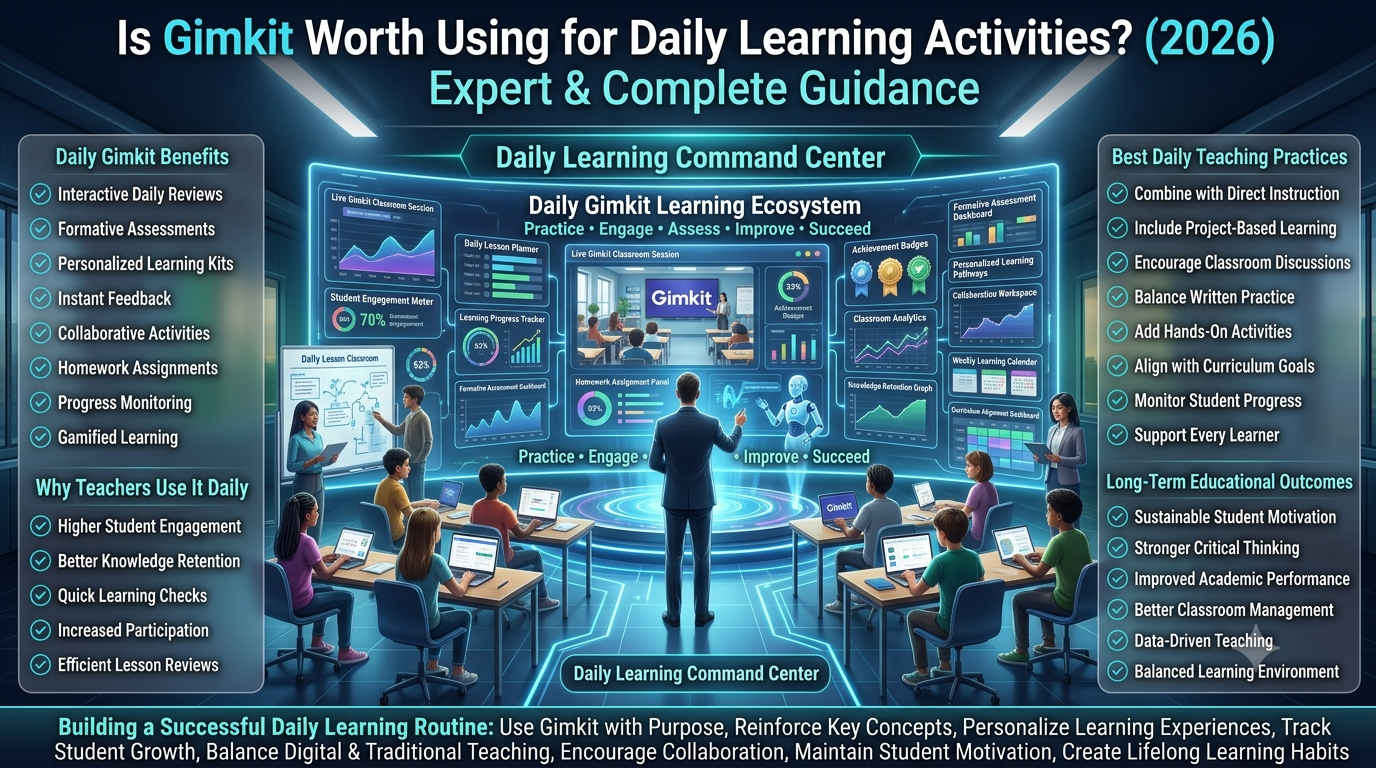
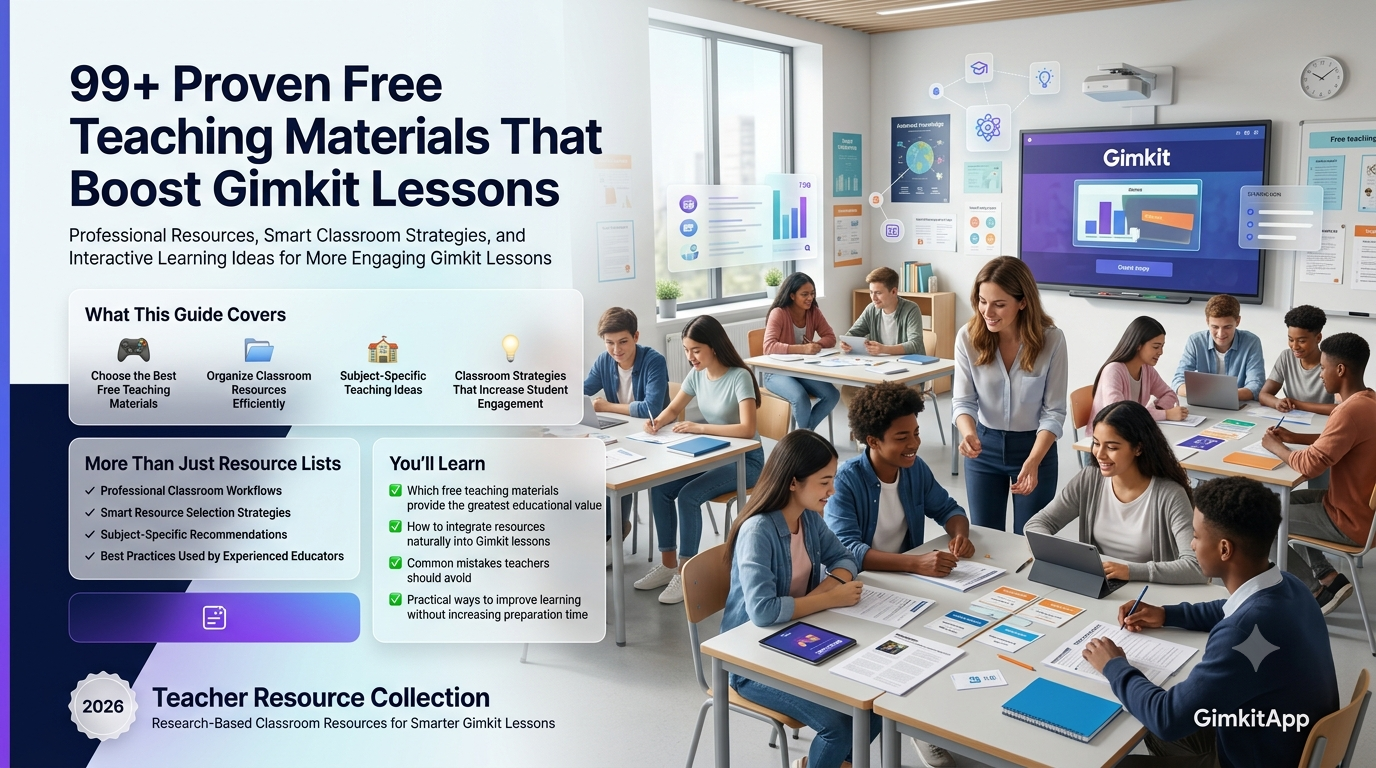
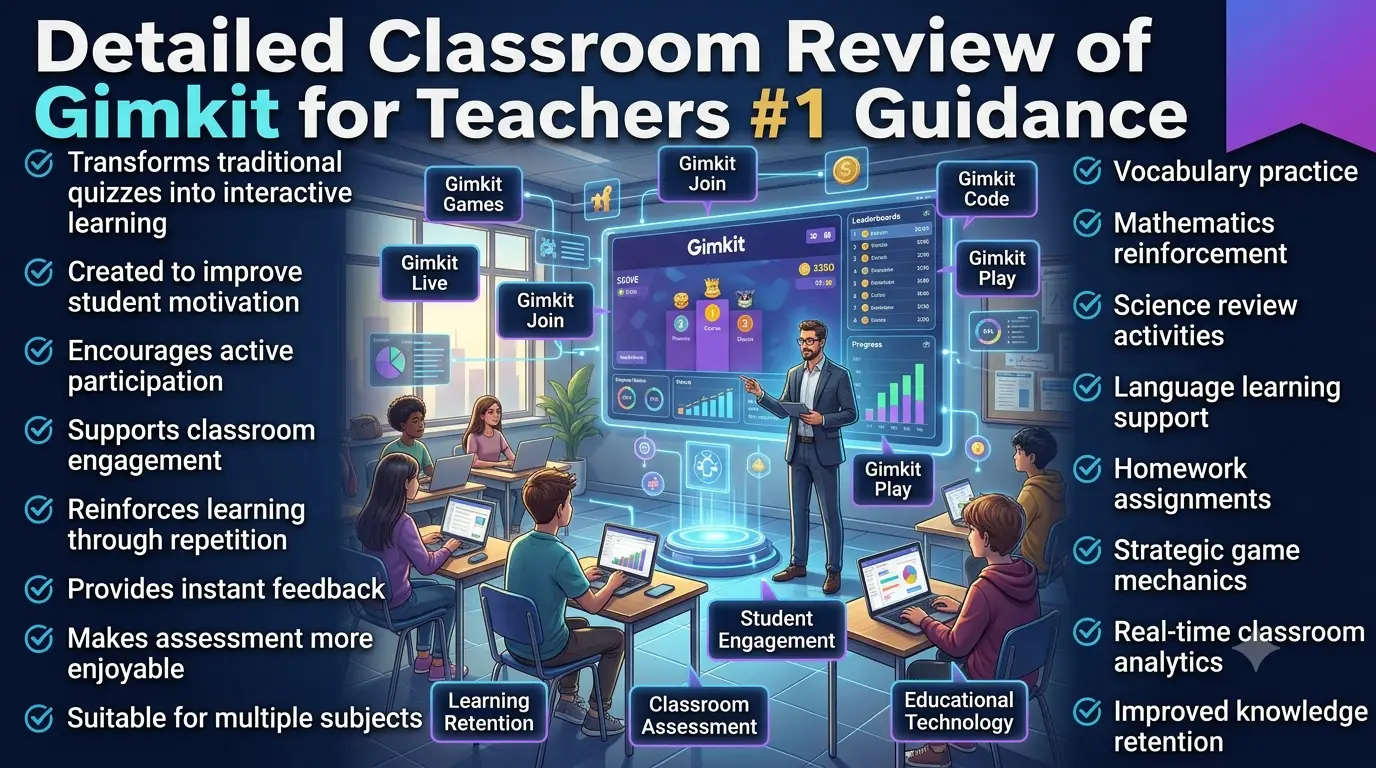
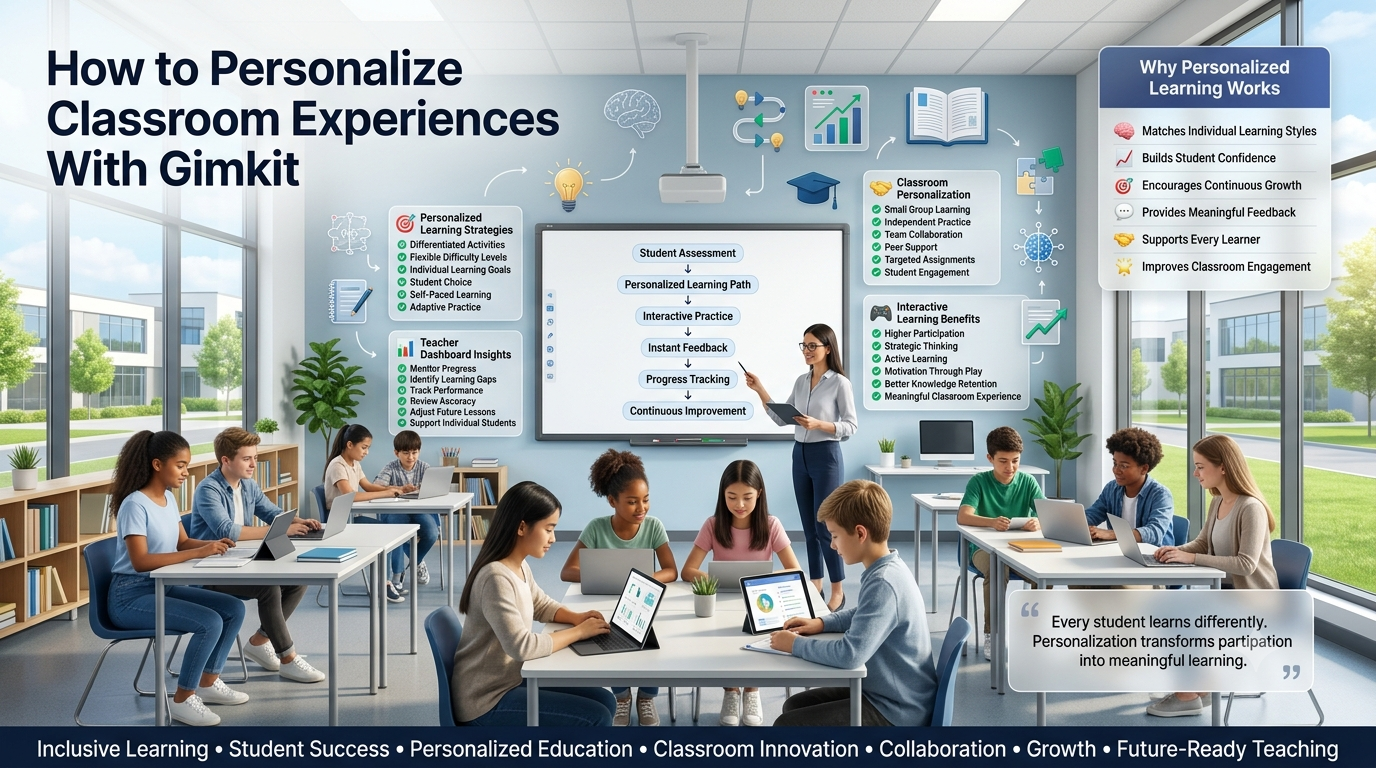
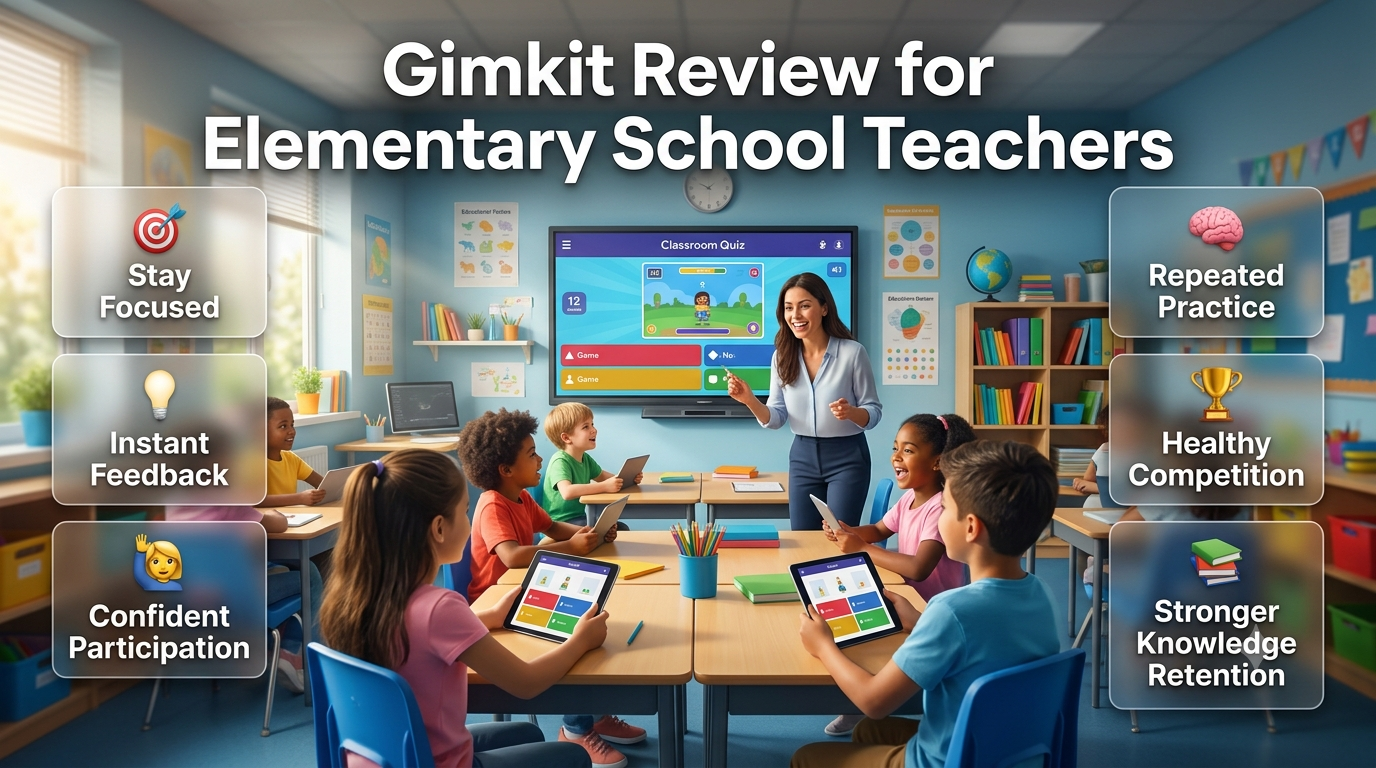
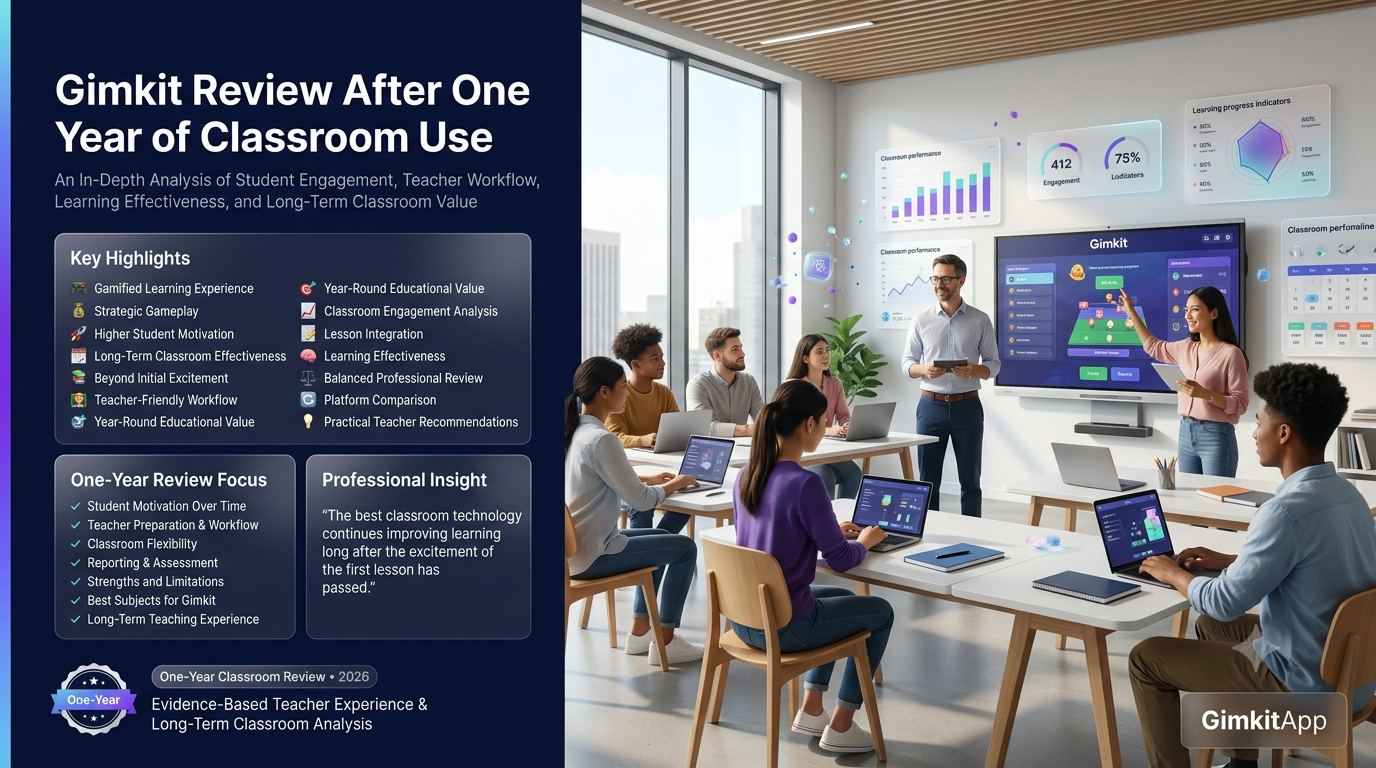
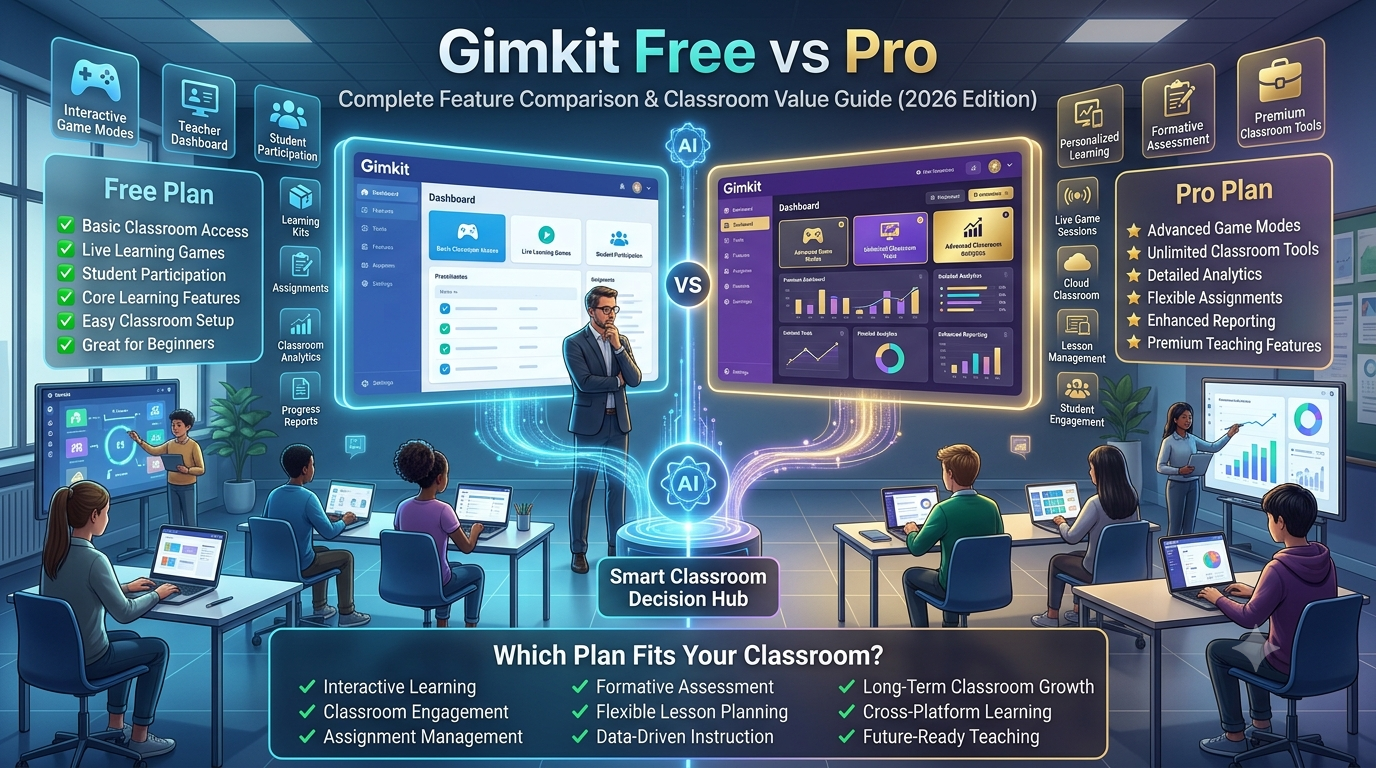
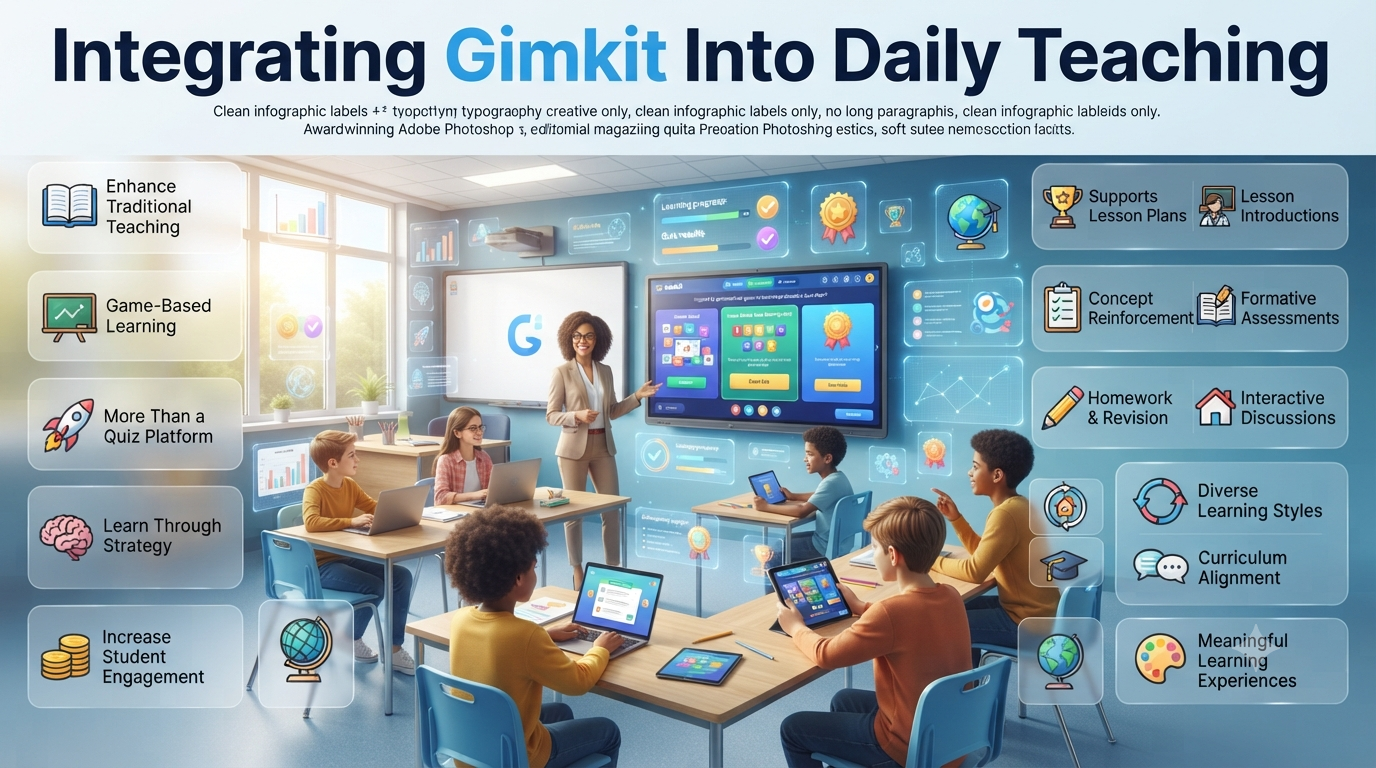
Daily classroom instruction requires tools that do more than capture students’ attention for a few minutes. Teachers need platforms that consistently reinforce learning objectives, provide meaningful assessment opportunities, encourage participation, and fit naturally into everyday teaching routines. As classrooms increasingly adopt digital learning technologies, many educators ask whether Gimkit is suitable as a daily instructional resource or whether it should be reserved only for occasional review sessions.
Gimkit is a game-based learning platform that supports question practice, live classroom review, and, for eligible Pro accounts, supported independent assignments. Through Gimkit Live, Gimkit Join, and the Gimkit App, teachers can create customized Kits, assign independent practice, monitor student performance, and adapt activities for different instructional goals. These capabilities make it possible to integrate the platform into regular classroom instruction instead of using it only before exams.
However, effective daily use depends on thoughtful implementation. Gamified activities can support motivation, but relying on any single instructional method every day can reduce variety and limit opportunities for different forms of learning. Teachers must balance digital review with direct instruction, collaborative discussion, project-based learning, written practice, and hands-on experiences to create a well-rounded learning environment. The question is not simply whether Gimkit is engaging, but whether it continues supporting meaningful academic growth when used consistently.
Daily classroom integration also requires consideration of curriculum alignment, differentiated instruction, accessibility, classroom management, assessment quality, and student motivation. Educators should evaluate how the platform fits their teaching style, subject area, and learning objectives rather than assuming one approach works equally well for every lesson.
This guide explores evaluating Gimkit for daily learning, examining its instructional strengths, potential limitations, classroom implementation strategies, subject-specific applications, assessment benefits, student engagement, and best practices for sustainable long-term use.
Why Many Teachers Use Gimkit Regularly
Teachers continue using Gimkit because it combines active participation with immediate formative assessment.
Instead of passively reviewing notes, students answer questions, receive instant feedback, and remain involved throughout the activity. Teachers simultaneously collect valuable performance data that helps identify misconceptions before they become larger learning gaps.
Daily Classroom Benefits
Feature
Educational Value
Immediate Feedback
Faster learning correction
Active Participation
Higher engagement
Formative Assessment
Continuous progress monitoring
Flexible Assignments
Personalized learning
Classroom Motivation
Increased participation
Data Reports
Better instructional planning
Consistent use can strengthen learning when combined with varied instructional methods.
Daily Review Without Repetitive Learning
One concern with daily gamified learning is repetition.
Teachers can avoid routine fatigue by rotating game modes, updating question sets, varying lesson formats, and using Gimkit only during selected portions of instruction rather than throughout the entire class period. Combining digital review with discussions, collaborative work, written reflection, and practical activities maintains both novelty and educational value.
Keeping Lessons Fresh
Strategy
Learning Benefit
Rotate Game Modes
Sustained interest
Update Question Banks
Better engagement
Mix Teaching Methods
Balanced instruction
Short Review Sessions
Improved attention
Classroom Reflection
Deeper understanding
Subject Variation
Reduced repetition
Variety helps maintain long-term motivation while preventing gameplay fatigue.
Supporting Different Learning Needs
Every classroom includes students who learn differently.
Some learners respond well to visual activities, while others prefer reading, collaboration, discussion, or independent practice. Gimkit can complement these preferences by serving as one component of a broader instructional strategy rather than replacing diverse teaching approaches.
Teachers should continue offering multiple opportunities for students to demonstrate understanding through projects, presentations, written work, discussions, and hands-on activities.
Learning Support
Learning Preference
Classroom Application
Students who benefit from diagrams
Interactive questions
Students needing independent practice
Self-paced assignments
Students practicing group discussion
Team activities
Students needing reflection time
Post-game discussion
Struggling Students
Targeted review
Advanced Students
Extension practice
Differentiated instruction remains essential even when technology is used daily.
Using Gimkit Across Different Subjects
Although often associated with quiz-based review, Gimkit can support instruction across numerous subject areas.
Teachers use customized Kits for mathematics practice, science vocabulary, historical concepts, language learning, reading comprehension, business education, geography, and even professional training. Carefully designed questions allow educators to reinforce curriculum objectives while maintaining student engagement.
Subject Integration
Subject
Daily Learning Example
Mathematics
Skills practice
Science
Concept review
English
Vocabulary and comprehension
Social Studies
Historical understanding
Geography
Map and terminology review
World Languages
Vocabulary reinforcement
The platform becomes most effective when activities remain closely aligned with classroom instruction.
Balance Gimkit With Traditional Teaching Methods
Using Gimkit every day does not mean every lesson should revolve around gameplay. The most effective classrooms combine direct instruction, guided practice, collaborative learning, independent work, discussions, and gamified review. Gimkit works best as a reinforcement tool that strengthens concepts already introduced through quality teaching.
A balanced instructional model prevents students from becoming overly dependent on one learning format while ensuring different learning preferences are supported throughout the school week.
Balanced Daily Instruction
Teaching Component
Educational Purpose
Direct Instruction
Introduce new concepts
Guided Practice
Build understanding
Gimkit Review
Reinforce learning
Classroom Discussion
Deepen comprehension
Independent Work
Develop mastery
Reflection Activities
Improve retention
Variety creates stronger and more sustainable learning outcomes.
Use Daily Performance Data to Personalize Instruction
One of Gimkit’s greatest strengths is the immediate feedback it provides after each activity.
Teachers can identify frequently missed questions, recognize students who need additional support, evaluate overall class understanding, and adjust future lessons accordingly. Instead of waiting until a unit test reveals learning gaps, educators can respond immediately through targeted review and differentiated instruction.
Data-Informed Teaching
Classroom Data
Instructional Benefit
Question Accuracy
Detect misconceptions
Student Progress
Monitor improvement
Completion Rates
Measure participation
Class Trends
Guide reteaching
Individual Performance
Personalize support
Lesson Reports
Improve future planning
Daily assessment helps teachers make informed instructional decisions throughout the learning process.
Extend Learning Beyond the Classroom
Daily learning does not need to end when class finishes.
Teachers can assign self-paced activities that reinforce vocabulary, mathematical procedures, scientific concepts, reading comprehension, or historical knowledge. Short homework assignments encourage consistent review without creating excessive workload.
Combining classroom instruction with independent digital practice supports continuous learning while allowing students to work at their own pace.
Homework Integration
Assignment Type
Student Benefit
Vocabulary Review
Better retention
Unit Practice
Knowledge reinforcement
Independent Revision
Flexible learning
Skill Development
Continuous improvement
Concept Review
Exam preparation
Follow-Up Activities
Long-term understanding
Meaningful homework strengthens classroom learning without replacing teacher instruction.
Maintain Strong Classroom Management
Daily digital activities require clear expectations and consistent routines.
Teachers should explain participation guidelines, establish respectful digital behavior, organize smooth transitions, and maintain instructional focus throughout gameplay. Short review sessions followed by classroom discussion often produce better learning outcomes than extended gaming periods.
Strong classroom management ensures technology supports instruction rather than becoming a distraction.
Classroom Expectations
Management Strategy
Educational Benefit
Clear Instructions
Better participation
Consistent Routines
Reduced confusion
Time Limits
Improved focus
Digital Citizenship
Respectful behavior
Teacher Monitoring
Active engagement
Reflection Sessions
Reinforced learning
Well-managed classrooms maximize both engagement and instructional value.
Understand the Long-Term Benefits and Limitations
Like every educational tool, Gimkit has both strengths and limitations when used regularly.
Its greatest advantages include high engagement, immediate feedback, flexible assignments, and detailed reporting. However, relying exclusively on gamified instruction may reduce novelty over time and limit opportunities for deeper inquiry, extended writing, creative projects, and collaborative investigation.
Successful teachers treat Gimkit as one component of a broader instructional strategy rather than a complete teaching solution.
Long-Term Evaluation
Strength
Consideration
Student Engagement
Rotate activities regularly
Quick Assessment
Pair with deeper evaluations
Flexible Learning
Maintain instructional variety
Immediate Feedback
Encourage classroom discussion
Easy Review
Avoid excessive repetition
Progress Monitoring
Combine with other evidence
Balanced implementation produces stronger educational outcomes over the long term.
Build a Sustainable Daily Learning Routine
Consistency is more valuable than constant novelty.
Teachers who successfully integrate Gimkit into daily instruction typically use it strategically rather than continuously. Short review sessions, targeted practice, weekly formative assessments, collaborative challenges, and occasional homework assignments create a predictable routine without overwhelming students.
This balanced approach helps maintain motivation while ensuring digital learning complements broader classroom instruction.
Sustainable Classroom Routine
Routine Element
Educational Advantage
Short Daily Reviews
Consistent reinforcement
Weekly Skill Checks
Progress monitoring
Rotating Activities
Reduced fatigue
Targeted Practice
Personalized learning
Reflection Discussions
Deeper understanding
Ongoing Improvement
Long-term success
A structured routine allows Gimkit to remain effective throughout the entire academic year.
30+ Expert Tips for Using Gimkit Effectively in Daily Learning
Using Gimkit every day requires thoughtful planning rather than simply launching a game at the beginning of each lesson. Teachers achieve the best results when they use the platform to reinforce instruction, monitor progress, and encourage active participation while balancing it with other evidence-based teaching strategies.
Lesson Planning
Define the learning objective before creating a Kit.
Keep review sessions focused on one concept at a time.
Align every question with curriculum standards.
Update Kits after each instructional unit.
Plan gameplay as part of the lesson—not the entire lesson.
Student Engagement
Rotate game modes throughout the week.
Encourage participation instead of only competition.
Keep daily sessions short and purposeful.
Celebrate improvement as much as high scores.
Include post-game discussions after every activity.
Assessment
Use Gimkit primarily for formative assessment.
Review reports after each session.
Identify misconceptions quickly.
Provide targeted follow-up instruction.
Combine digital assessment with written work.
Classroom Management
Establish consistent gameplay expectations.
Monitor student participation actively.
Reinforce respectful digital behavior.
Maintain clear classroom routines.
Balance excitement with instructional focus.
Long-Term Success
Refresh question banks regularly.
Organize Kits by unit and subject.
Collect student feedback periodically.
Adjust activities based on performance data.
Continue exploring new instructional approaches.
Professional Growth
Share successful Kits with colleagues.
Stay informed about platform updates.
Experiment with different review strategies.
Integrate Gimkit into blended learning plans.
Always prioritize meaningful learning over entertainment.
Best Practices
✔ Use Gimkit as a reinforcement tool rather than a replacement for teaching.
✔ Keep activities varied to prevent routine fatigue.
✔ Base instructional decisions on classroom data.
✔ Encourage reflection after every review session.
✔ Continuously refine lessons according to student needs.
Consistent, purposeful implementation helps Gimkit remain valuable throughout the school year.
Common Mistakes Teachers Should Avoid
Although Gimkit is highly engaging, daily use can become less effective if instructional balance is ignored. Teachers should focus on maintaining variety, strong pedagogy, and meaningful assessment instead of depending entirely on game-based review.
Frequent Mistakes
Mistake
Better Practice
Using Gimkit every lesson without variation
Rotate instructional methods
Reusing identical Kits repeatedly
Refresh questions regularly
Prioritizing competition over understanding
Emphasize learning objectives
Ignoring performance reports
Use analytics to guide instruction
Making review sessions too long
Keep gameplay concise and focused
Depending only on digital assessment
Combine with multiple assessment methods
Professional Recommendations
✔ Blend digital learning with traditional instruction.
✔ Review classroom performance consistently.
✔ Adapt activities for different learner needs.
✔ Maintain student motivation through instructional variety.
✔ Keep curriculum objectives at the center of every lesson.
Effective daily use depends on thoughtful planning, not simply frequent gameplay.
Is daily Gimkit use worth the instructional time?
The answer is conditional, not universally yes. A brief, accurate question-based activity can help students retrieve knowledge, give teachers a clue about misconceptions and create a shared starting point for discussion. But repeating the same game every day can also consume teaching time, encourage guessing or exclude students with access barriers. The right question is whether the activity improves the lesson’s evidence, practice or feedback enough to justify its cost.
Gimkit’s official hosting guide describes choosing a Kit, selecting a mode, configuring options and sharing a joining route. Game options differ by mode, so do not assume one routine works everywhere. This independent article evaluates the teaching decision, not a guaranteed outcome.
A realistic five-day schedule: sometimes the best decision is not to play
1. Monday: retrieval baseline
Start with five to eight questions about material previously taught, then ask students to explain one response without seeing options. Use the result to identify concepts that need explanation rather than trying to generate a final grade. A short, low-stakes session is more useful than an extended competition if the goal is to diagnose recall.
Evidence to review: Record the proportion of responses linked to each misconception and note any reading or device barriers. Do not compare raw game earnings between different modes as if they measure the same academic skill.
2. Tuesday: direct teaching and application
Use teacher explanation, worked examples, guided practice or a practical demonstration to address Monday’s misunderstandings. If Gimkit appears at all, keep it to a brief check after instruction rather than using gameplay to introduce every new concept.
Evidence to review: Ask learners to solve a new problem or explain an unfamiliar example. This is stronger evidence of transfer than simply recognizing yesterday’s repeated question.
3. Wednesday: collaborative reasoning
Use a suitable team experience only when the selected mode supports the desired interaction. Give students roles and a clear rule that every answer needs an explanation. A teacher should observe whether discussion is genuinely about content rather than only game strategy.
Evidence to review: Invite a quiet student to share a written explanation privately if public competition creates pressure. Evaluate the quality of reasoning, not just which group accumulated more points.
4. Thursday: independent retrieval
Offer a short, varied set of questions with a delay since the first exposure. If an asynchronous Gimkit assignment is planned, verify that the educator has Pro and that the selected independent mode is supported.
Evidence to review: A Kit practice link may be an alternative for self-checking, but it does not provide the same assignment reports. Do not count completion of an unreported activity as evidence of mastery without a separate response.
5. Friday: reflection and next steps
Use a brief review or skip the game entirely if discussion, writing or a hands-on task would provide better evidence. Ask students which concept remains uncertain and what strategy helped them learn.
Evidence to review: Compare independent work with earlier misconceptions and decide whether the next week needs more retrieval, new teaching or a different activity. Preserve student privacy and avoid public ranking-based labels.
Twelve different situations that change the value of daily play
These are illustrative classroom cases rather than reports of measured student success. They show why frequency alone cannot determine whether Gimkit is effective.
1. Ten-minute primary-class transition
A teacher has a short period between reading and lunch. Rather than opening a long 2D mode, they choose a brief vocabulary retrieval check and reserve the last two minutes for students to use a word in a sentence. The activity is worthwhile only if the transition remains manageable and the written or spoken response reveals something useful.
Teacher decision: If joining takes longer than the learning check, use cards or oral questions next time. Daily digital use should not become a logistical burden.
2. Secondary mathematics practice
Students have just learned solving linear equations. The teacher uses a Kit with plausible sign-error distractors and follows it with two worked problems. The game can expose common errors, but correct selection does not replace algebraic working.
Teacher decision: The teacher compares the worked steps, not only game accuracy, before deciding who needs additional explanation.
3. Science lab preparation
A brief Kit checks terminology and equipment symbols, then the class completes a supervised practical activity. The game is not used as certification of safe laboratory behavior.
Teacher decision: School safety procedures, demonstrations and teacher observation remain essential. The tool adds a retrieval opportunity, not a safety qualification.
4. History discussion
The class reviews chronology with questions, then reads two sources and discusses conflicting perspectives. A rapid quiz cannot fully assess evidence-based argument.
Teacher decision: The teacher asks for a claim supported by a source and records reasoning quality separately from game ranking.
5. Language learning
A daily word check may help recall, but the teacher also requires speaking, listening and writing. A student who can select a translation may still struggle to use it in conversation.
Teacher decision: The schedule alternates retrieval with dialogue and independent production so no single answer format dominates.
6. Exam-week fatigue
Students have already completed several screen-based activities. The teacher decides to skip Gimkit for a day and uses a paper concept map with peer explanation.
Teacher decision: The choice is not a failure of the platform. Instructional variety and manageable cognitive demands matter more than maintaining a perfect daily-use streak.
7. Device inequity
Some learners share devices and the school network is unreliable. The teacher projects questions for whole-class discussion rather than making individual login a condition of participation.
Teacher decision: A digital report would be incomplete in this setting; the teacher collects comparable paper responses and avoids interpreting missing game data as poor achievement.
8. Competition anxiety
A learner is reluctant to participate when a leaderboard is visible. The teacher chooses a calmer available mode, adjusts classroom norms or provides a parallel response format.
Teacher decision: The objective is participation with meaningful thinking, not forced enthusiasm. Check whether the alternative yields usable learning evidence.
9. Frequent guessing
Students answer rapidly and appear to improve their scores without explaining why. The teacher reduces the question set, includes distractors that expose misconceptions and adds a short justification prompt.
Teacher decision: If explanations remain weak, stop relying on repeated game exposure as evidence of understanding.
10. Pro assignment planning
An educator wants to give nightly independent practice. They verify subscription entitlements and learn that official Gimkit assignments require Pro and supported modes.
Teacher decision: If Pro is unavailable, they choose an appropriate practice link or another approved task. They do not claim that an ungraded link offers the same teacher reporting.
11. Report interpretation
A game report shows frequent errors on one item. The teacher first checks whether the question itself is ambiguous or miskeyed, then plans targeted teaching.
Teacher decision: Question-level patterns suggest where to investigate. They do not automatically reveal the cause of a student’s mistake.
12. A mixed-ability class
Some learners are ready for extension while others need scaffolded examples. The teacher keeps a common essential objective but offers different follow-up tasks based on several pieces of evidence.
Teacher decision: Differentiation is revised as learners progress; the class is not divided into permanent ability categories based on a single session.
What daily data can and cannot establish
Gimkit’s game reports guide describes student, general and question breakdowns after hosting a Kit that the teacher owns. These are useful for identifying candidate misconceptions and planning follow-up. They do not make virtual cash, speed or leaderboard rank a standardized measure of achievement. A student may perform well because of game strategy or repeated familiarity with questions, while another may know the content but struggle with movement, reading or network access.
To evaluate learning, pair question-level evidence with an independent explanation, worked example or application task. Use comparable questions over time and note whether students encountered the same wording repeatedly. Distinguish confidence, engagement, accuracy and transfer: each is different. If a classroom is excited but students cannot explain the target concept afterward, increase instruction rather than adding more rounds.
When to reduce frequency
Reduce or pause digital gameplay when the class needs new conceptual teaching, a practical experiment, a sustained reading task, extended writing, a difficult discussion or a break from screen competition. A teacher may choose one or two high-quality Gimkit sessions per week and still use active retrieval every day through other methods. Daily learning does not require daily use of the same software.
Before promising homework, check the official assignment documentation: assignments are available to Pro members and only supported independent 2D modes. A Kit practice link offers a different self-checking experience, not the same teacher reporting. Keep current subscription access and school policy in mind.
Interactive time-cost and evidence planner
This calculator compares planned screen time with feedback time over a school week. It does not connect to Gimkit or predict learning gains.
Independent editorial guidance, not an official Gimkit publication or a claim of proven learning gains. Check current product documentation for feature and plan changes.
Twelve detailed checks before committing to a daily Gimkit routine
These checks focus on instructional usefulness rather than promotional claims. Each addresses a decision a teacher can observe, document and revisit.
1. The novelty effect is not a learning outcome
Students may be enthusiastic about a new game mode for several lessons, but excitement does not establish durable understanding. Track the ability to explain concepts after a delay and compare that with the initial activity. If participation remains high while explanations stagnate, change the instructional task rather than assuming more novelty will solve the problem. Conversely, a calmer routine may be valuable even when it is less exciting, provided learners retrieve relevant knowledge and receive useful feedback.
2. Repeated questions need independent checks
Smart repetition and revisiting missed items can create useful practice opportunities, but familiarity with exact wording can also inflate apparent accuracy. Write a fresh application question after the activity or return to the concept later without the same answer options. Distinguish a student's first response from later repeated attempts when the available evidence permits. A teacher should not claim retention merely because a learner eventually answered a familiar item correctly.
3. The best daily activity may be a non-game retrieval task
A two-minute written recall, oral questioning, concept map or partner explanation can support the same objective with less setup. Choose the method that fits the lesson. Gimkit is useful when its question practice, participation format or reports provide a clear advantage, not because a schedule requires a game every day. Teachers can preserve the benefits of retrieval while varying the medium and reducing screen fatigue.
4. Question accuracy matters more than round length
If a Kit contains a wrong answer or ambiguous distractor, a longer session repeats the problem. Review the question bank before the activity, especially when copying public material or importing from another source. Check formulas, definitions, historical dates and any images against reliable teaching resources. Ask whether a student could defend an alternative answer. Correct the item before interpreting its report as evidence of a misconception.
5. Game ranking is influenced by game mechanics
Movement, resource decisions, teamwork, speed and mode-specific rules can contribute to a player's outcome. A high rank may indicate successful gameplay strategy alongside accurate answers, while a lower rank may reflect access barriers or different choices. Use the available question breakdown, class discussion and independent work to understand subject knowledge. Avoid converting virtual earnings directly into a grade without an appropriate assessment design.
6. Teacher preparation time belongs in the evaluation
A recurring five-minute activity can consume additional time for Kit editing, mode selection, joining, device troubleshooting and report interpretation. Track the complete workflow, not only the game timer. Reuse accurate questions where appropriate, prepare joining instructions in advance and decide which reports merit review. If preparation costs repeatedly outweigh the instructional benefit, shorten the activity or choose a simpler alternative.
7. Students need equitable participation routes
Check reading demands, audio, visual presentation, movement, device access and network reliability. Offer a comparable paper, oral or partner-supported response when needed, following individual accommodations and school policy. Do not label students as disengaged because they cannot join or cannot keep pace with a particular mode. The goal is access to the learning objective, not identical interaction with every game mechanic.
8. Privacy changes how reports should be discussed
A class-level pattern may be appropriate for a whole-group explanation, while individual errors usually call for private feedback. Avoid projecting personally identifiable results or sending reports through unapproved channels. Follow school retention and consent policies. The existence of a digital report does not remove the teacher's responsibility to decide what data is necessary, how it should be interpreted and who may see it.
9. Homework is conditional on actual plan access
Official Gimkit documentation identifies assignments as a Pro feature. Teachers should not build a daily homework policy around a feature that their account does not include. Check whether the selected independent mode supports assignments and whether the class can access them. If a Pro assignment is unavailable, choose a suitable practice link or another approved activity, and be explicit that reporting may differ.
10. Use a decision rule at the end of each week
Keep Gimkit in the routine when the questions are accurate, all learners can participate, setup is manageable and follow-up evidence shows useful retrieval or clearer understanding. Revise the routine when the same misconceptions recur, preparation becomes excessive or students rely on guessing. Pause the activity when another method is better suited to new teaching, practical work or extended reasoning. This rule is a professional judgment framework, not a validated effectiveness score.
11. Measure what the lesson intended to teach
A spelling review may reasonably use short answer recognition as a starting point, but a persuasive-writing lesson requires evidence of argument construction. A geometry lesson may require diagrams and justification; a science investigation requires observation and reasoning. Do not choose the game first and then redefine the objective to match what the platform can easily score. Start with the curriculum, then decide whether a Kit offers a meaningful contribution.
12. Keep the routine sustainable across the term
Schedule periodic question audits and ask students for feedback about clarity, access and pressure. Review a small sample of independent work rather than trying to analyze every metric every day. Coordinate with colleagues when multiple classes share Kits, and update outdated content when necessary. A sustainable system uses a few well-designed routines consistently and remains flexible when the needs of the class change.
A practical yes, revise or no decision matrix
Use the activity: the objective is suitable for question practice, the Kit has been checked, access is equitable, the selected mode fits the available time and a follow-up response is planned. Revise it: students are guessing, the game is dominating lesson time, technical interruptions recur or the report reveals ambiguous questions. Skip it: the lesson requires extended writing, physical experimentation, new conceptual explanation or another method that better reveals understanding.
Do not treat the matrix as a scientific score. It is a transparent way to make a classroom decision and explain it to colleagues. Review it after a few weeks, using student work and teacher observations rather than a claim that a certain number of sessions automatically raises achievement.
Two sample evidence checks that go beyond the leaderboard
Mathematics: A student correctly selects that 3/4 is greater than 2/3. Ask them to draw equal-sized bars or use a common denominator to justify the comparison. If they cannot, the next step is reasoning practice, not simply another round with the same question.
Science: A student correctly names condensation in a multiple-choice question. Ask them to explain why droplets form on the outside of a cold glass. The explanation helps reveal whether the learner can transfer the term to a familiar physical example.
In both cases, the game can start the retrieval process, but independent explanation makes the instructional decision more defensible.
Frequently Asked Questions
1. Will Students Get Tired of Gimkit if It Is Used Every Single Day?
Students can lose enthusiasm if Gimkit is used in exactly the same way every day. Educational research on gamification shows that novelty and variety are major factors in maintaining long-term engagement. Teachers should rotate game modes, update question banks, introduce collaborative challenges, and combine Gimkit with discussions, projects, and hands-on learning. Current classroom trends favor using gamified platforms as one element of a blended instructional model rather than the sole teaching method. This approach keeps motivation high while preventing routine fatigue.
Best practices:
Rotate game modes weekly.
Refresh Kits regularly.
Alternate with non-digital activities.
Keep sessions purposeful and concise.
Gather student feedback periodically.
2. Does Daily Use Encourage Rapid Guessing Instead of Actual Learning?
Daily gameplay can encourage rapid guessing if activities focus only on speed or competition. Teachers can reduce this by writing higher-quality questions, including application-based scenarios, reviewing answers after each session, and discussing common misconceptions. Modern instructional practice emphasizes formative assessment rather than simply identifying correct answers. Reflection and explanation help students understand why an answer is correct, transforming quick responses into meaningful learning experiences while maintaining the motivational benefits of gamification.
Ways to discourage guessing:
Use higher-order thinking questions.
Review incorrect responses together.
Encourage explanation during discussions.
Reward understanding, not just speed.
Use reports to identify misconceptions.
3. Is Gimkit Effective for Teaching Complex Daily Concepts?
Gimkit is highly effective for reinforcing complex concepts after students have received direct instruction, but it should not serve as the primary method for introducing difficult topics. Complex ideas usually require teacher explanation, guided practice, collaborative discussion, and multiple examples before students are ready for review. Once foundational understanding is established, Gimkit strengthens retention through repeated retrieval practice and immediate feedback. Many educators combine it with inquiry-based learning, demonstrations, and problem-solving activities for the strongest instructional results.
Recommended instructional sequence:
Introduce concepts through direct teaching.
Provide guided practice.
Reinforce learning with Gimkit.
Discuss challenging questions afterward.
Extend learning through independent application.
4. How Can I Manage Daily Gimkit Sessions Without Destroying My Prep Time?
Daily implementation becomes manageable when teachers build reusable instructional resources instead of creating new content every day. Organizing Kits by unit, updating question banks gradually, importing existing materials, and modifying previous activities significantly reduce preparation time. Many educators also develop a weekly review schedule where the same high-quality Kits are refined throughout the school year. Recent AI-assisted lesson planning tools can further streamline question creation while allowing teachers to maintain curriculum alignment and instructional quality.
Time-saving strategies:
Build reusable Kits.
Organize content by unit.
Edit existing question sets instead of starting over.
Schedule weekly review sessions.
Use AI tools responsibly for drafting questions.
5. Can I Use Daily Gimkit Data to Replace Traditional Grading?
Daily Gimkit reports provide valuable evidence of student progress, participation, and concept mastery, but they should not completely replace traditional grading methods. Educational assessment experts recommend combining formative analytics with written assignments, projects, presentations, classroom observations, and summative assessments to create a balanced picture of student achievement. Gimkit data is most valuable for monitoring learning trends, identifying misconceptions, and guiding instruction rather than serving as the sole measure of academic performance.
Balanced assessment approach:
Use Gimkit for formative assessment.
Combine with written evaluations.
Include project-based learning.
Monitor long-term academic growth.
Base final grades on multiple sources of evidence.
Final Verdict
evaluating Gimkit for daily learning? Yes—when used with purpose and balance. Gimkit provides immediate feedback, encourages active participation, supports formative assessment, and helps teachers monitor student progress efficiently. Its greatest value comes from reinforcing instruction rather than replacing diverse teaching methods. When combined with discussion, projects, written work, and collaborative learning, Gimkit becomes a powerful component of an effective daily classroom routine.
Conclusion
Daily classroom learning benefits most from instructional variety, meaningful assessment, and active student engagement. Gimkit supports these goals by providing flexible review opportunities, personalized practice, and valuable learning analytics that help teachers make informed instructional decisions. Educators who integrate Gimkit thoughtfully—alongside traditional teaching, inquiry-based learning, and collaborative activities—can create balanced learning environments that keep students motivated while promoting lasting academic success.