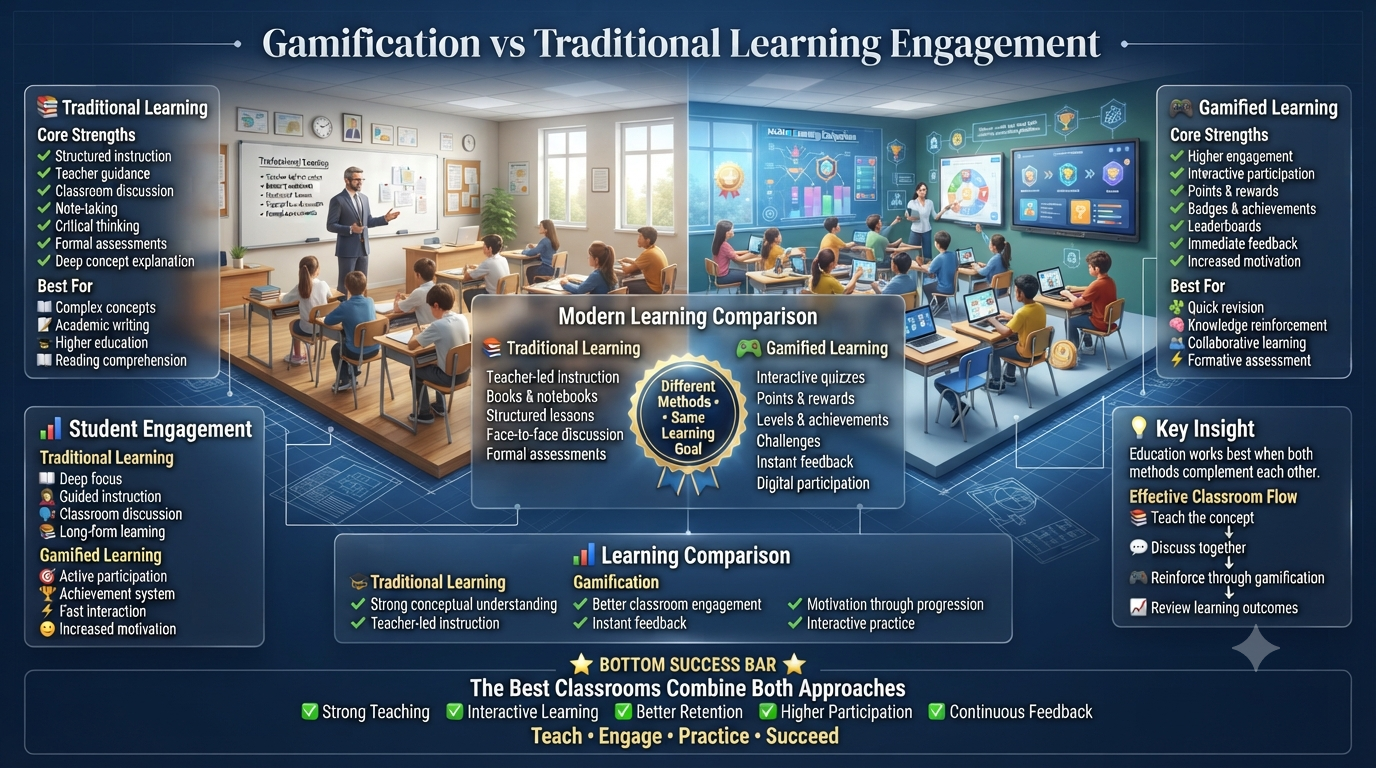
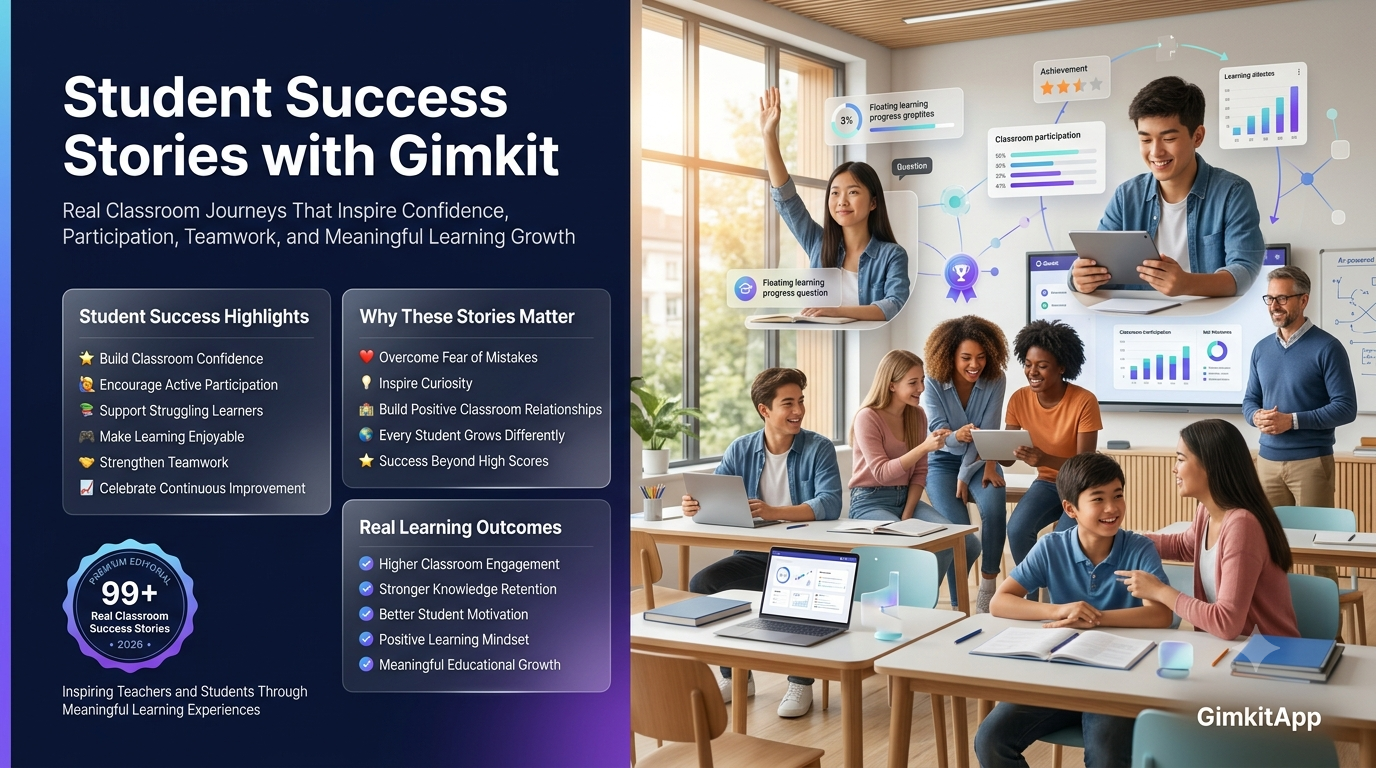
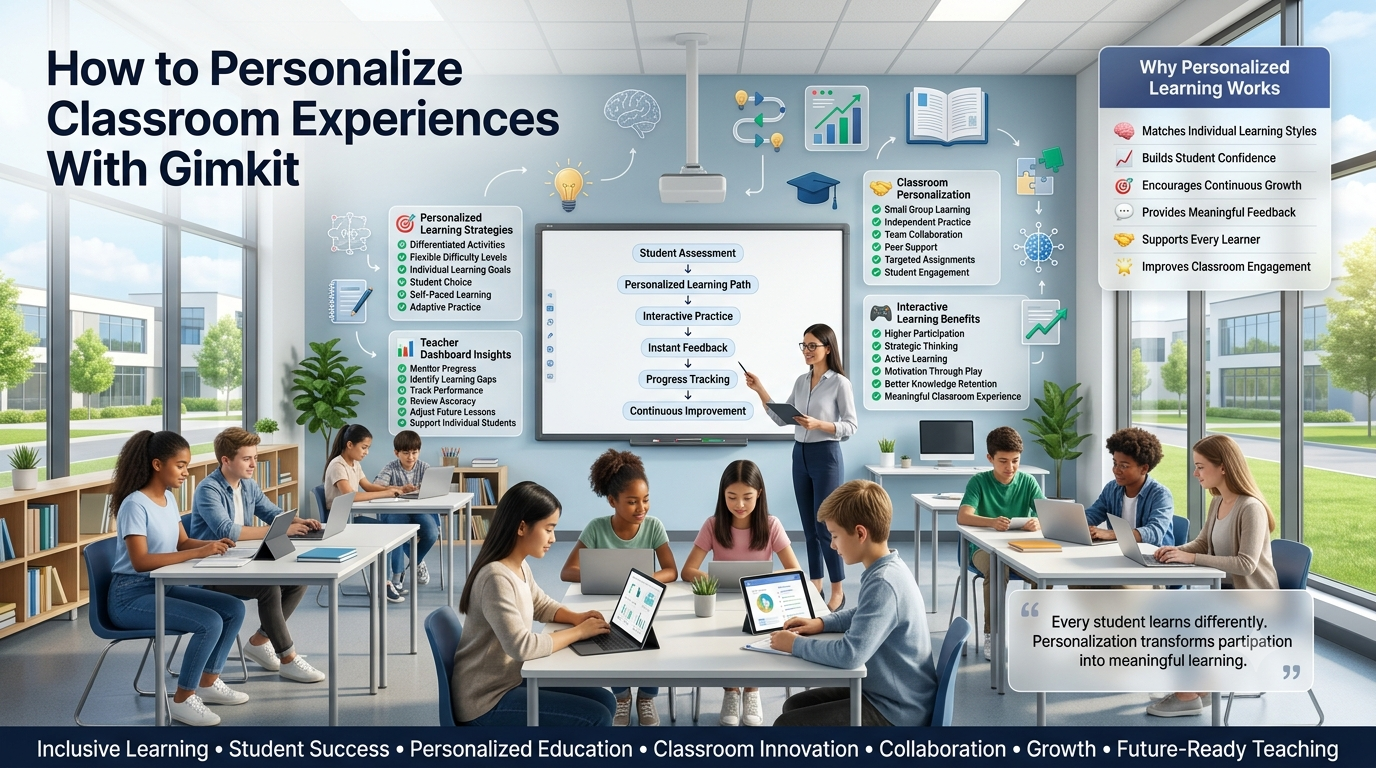
Improving Student Confidence Through Gamification | Student confidence is not built through praise alone—it grows through repeated success, meaningful challenges, timely feedback, and a classroom environment where mistakes are treated as part of learning. Gamification gives teachers a practical framework to create those experiences. By using game elements such as achievable goals, instant feedback, progression systems, collaboration, and healthy competition, teachers can help hesitant learners participate more actively, take intellectual risks, and develop lasting academic confidence.
Unlike simple classroom games, effective gamification is intentionally designed to improve motivation, engagement, resilience, and self-efficacy. When implemented thoughtfully, it shifts students from fearing failure to viewing challenges as opportunities for growth.
Why Student Confidence Matters in Learning
Confidence influences nearly every aspect of classroom performance. Students who believe they can succeed are more likely to:
Participate during discussions
Attempt difficult questions
Ask for clarification
Work independently
Collaborate with classmates
Recover from mistakes
Develop long-term learning habits
Low-confidence students often understand more than they demonstrate. Fear of being wrong can prevent them from answering questions, volunteering ideas, or completing challenging assignments.
Teachers play a central role in creating experiences that gradually replace uncertainty with confidence.
Understanding Confidence in the Classroom
Student confidence refers to a learner's belief that they can successfully complete academic tasks through effort, learning, and persistence.
It develops from consistent positive experiences rather than occasional success.
Confidence grows when students experience:
Confidence Builder
Classroom Impact
Small achievements
Builds momentum
Constructive feedback
Encourages improvement
Safe learning environment
Reduces fear of mistakes
Visible progress
Increases motivation
Peer support
Strengthens participation
Personal goal achievement
Develops self-belief
Gamification naturally supports every one of these elements.
Why Gamification Builds Student Confidence
Gamification restructures learning into achievable milestones rather than overwhelming tasks.
Instead of seeing one large assignment, students experience:
Small Challenge
↓
Immediate Success
↓
Positive Feedback
↓
Higher Confidence
↓
Greater Participation
↓
Improved Performance
Each completed challenge reinforces the belief:
"I can do this."
Repeated experiences like these gradually reshape student attitudes toward learning.
The Psychology Behind Gamified Confidence
Several educational principles explain why gamification increases confidence.
Mastery Experiences
The strongest source of confidence comes from successfully completing meaningful tasks.
Teachers should create learning sequences where students experience regular wins before moving to harder challenges.
Example:
Rather than giving one difficult quiz, divide the lesson into five progressively harder mini-challenges.
Each success prepares students for the next level.
Immediate Feedback
Students gain confidence when they know how they are performing.
Waiting days for assessment results often reduces motivation.
Gamified classrooms provide immediate responses that allow students to:
Correct misunderstandings
Celebrate progress
Improve quickly
Stay engaged
Immediate feedback reduces uncertainty, one of the biggest causes of low confidence.
Growth Mindset Reinforcement
Gamification emphasizes progress rather than perfection.
Instead of rewarding only high scores, teachers can recognize:
Improvement
Persistence
Strategy changes
Collaboration
Consistency
Students begin believing effort leads to success rather than assuming ability is fixed.
Reduced Fear of Failure
Traditional assessments often make mistakes feel permanent.
Gamified activities encourage retrying, learning, and improving.
Students become more willing to:
Experiment
Guess thoughtfully
Explore different strategies
Learn from incorrect answers
Confidence increases because failure becomes temporary rather than defining.
Teacher Strategies That Build Confidence Through Gamification
1. Begin with Easy Wins
Early success sets the emotional tone for learning.
Start each lesson with questions that most students can answer successfully before increasing difficulty.
Example classroom workflow:
Warm-Up Challenge
↓
Easy Success
↓
Positive Reinforcement
↓
More Difficult Activities
Students approach later tasks with greater confidence.
Best Practice: Ensure every student experiences success within the first five minutes of the lesson.
2. Create Progressive Difficulty Levels
Confidence develops gradually.
Instead of presenting difficult material immediately, organize lessons into levels.
Example:
Level 1 → Recall
Level 2 → Understanding
Level 3 → Application
Level 4 → Analysis
Level 5 → Problem Solving
Students feel their abilities growing as they advance through increasingly challenging tasks.
3. Reward Progress Instead of Perfection
High-achieving students naturally earn recognition in traditional classrooms.
Gamification allows teachers to celebrate growth instead.
Possible achievements include:
Most Improved
Consistent Participation
Excellent Teamwork
Problem Solver
Critical Thinker
Creative Solution
Persistence Award
This approach ensures every learner has opportunities for success.
4. Use Immediate Positive Reinforcement
Recognition should be timely and specific.
Instead of saying:
"Good job."
Try:
"You explained your reasoning clearly."
"I noticed you corrected your own mistake."
"Excellent improvement compared to yesterday."
Specific feedback strengthens confidence because students understand exactly what they did well.
5. Normalize Mistakes Through Game Design
Games naturally encourage multiple attempts.
Teachers can apply the same philosophy.
Instead of:
Wrong Answer → Lose Confidence
Create:
Wrong Answer
↓
Helpful Hint
↓
Retry
↓
Improved Answer
↓
Confidence
Students learn that mistakes are part of progress.
6. Encourage Collaborative Challenges
Many students gain confidence before speaking independently.
Team-based gamified activities allow quieter learners to:
Share ideas safely
Observe peers
Practice communication
Receive encouragement
Over time, collaborative confidence transfers into independent participation.
7. Give Students Meaningful Choices
Choice increases ownership.
Teachers can allow students to select:
Challenge levels
Learning paths
Quiz order
Team roles
Bonus activities
Review missions
Autonomy improves both motivation and confidence.
8. Track Visible Progress
Students need evidence that they are improving.
Visible progress systems include:
Experience points
Skill trees
Progress bars
Mastery charts
Learning journeys
Personal achievement records
When students see growth, they begin believing in their abilities.
Pro Tip: Compare each student only with their own previous performance rather than with classmates.
Classroom Workflow for Building Confidence Through Gamification
Lesson Stage
Teacher Action
Student Confidence Outcome
Warm-up
Easy challenge
Early success
Mini lesson
Guided instruction
Understanding grows
Gamified practice
Interactive activities
Safe experimentation
Feedback
Immediate responses
Clear improvement
Reflection
Celebrate progress
Stronger self-belief
Goal setting
Next learning target
Continued motivation
This routine helps students associate learning with progress instead of pressure.
Supporting Different Types of Learners
Quiet Students
Encourage participation through anonymous responses, team discussions, and low-pressure challenges before whole-class sharing.
Struggling Learners
Break complex objectives into manageable tasks and reward incremental progress rather than only final accuracy.
High-Achieving Students
Provide optional advanced missions or extension challenges so they remain engaged without dominating classroom recognition.
Students with Test Anxiety
Use low-stakes gamified reviews to practice skills repeatedly before formal assessments, helping reduce stress through familiarity.
Expert Insight: Confidence improves fastest when students feel challenged but not overwhelmed. Aim for tasks that require effort while remaining realistically achievable.
Gamification Features That Strengthen Confidence
Feature
How It Helps Students
Progress bars
Make improvement visible
Experience points
Reward consistent effort
Badges
Recognize specific achievements
Levels
Break learning into manageable stages
Team challenges
Build peer support
Instant feedback
Reduce uncertainty
Retry opportunities
Encourage persistence
Reflection prompts
Reinforce personal growth
The feature itself is less important than how the teacher uses it to support learning.
Measuring Growth in Student Confidence
Confidence cannot always be measured by grades alone. Teachers should observe changes in classroom behavior over time.
Look for indicators such as:
Increased willingness to answer questions
More students volunteering ideas
Greater persistence after mistakes
Improved collaboration
Higher completion rates
Stronger classroom discussions
Reduced dependence on teacher reassurance
More frequent goal setting and self-reflection
Keeping simple observation notes or student reflection journals can help teachers identify these positive trends.
Common Teacher Mistakes That Reduce Confidence
Mistake
Better Alternative
Rewarding only top scores
Celebrate improvement and effort
Overusing competition
Balance competition with collaboration
Making leaderboards the main focus
Emphasize personal progress
Giving delayed feedback
Provide timely, actionable responses
Increasing difficulty too quickly
Build confidence through gradual progression
Publicly highlighting mistakes
Offer constructive guidance respectfully
⚠ Common Mistake: Competitive systems can discourage some learners if only the same students succeed repeatedly. Include multiple ways to earn recognition so every student has realistic opportunities to experience success.
Best Practices for Teachers
Set clear and achievable learning goals before introducing game mechanics.
Explain that points and badges support learning rather than replace it.
Encourage students to reflect on what helped them improve.
Adjust challenge levels based on student readiness.
Foster respectful teamwork and positive peer encouragement.
Review gamified activities regularly to ensure they continue supporting learning objectives.
Long-Term Benefits of Confidence-Focused Gamification
When teachers consistently combine thoughtful gamification with supportive instruction, students often develop skills that extend beyond individual lessons.
These include:
Greater academic resilience
Increased willingness to tackle difficult tasks
Stronger problem-solving habits
Better communication and collaboration
Improved self-regulation
Higher intrinsic motivation
More positive attitudes toward learning
Increased readiness for independent learning
As confidence grows, students participate more fully, recover from setbacks more quickly, and become increasingly willing to challenge themselves in future learning situations.
Helping Students Overcome Fear of Failure Through Gamification
Fear of failure is one of the biggest barriers to student confidence. Many learners stay quiet not because they lack knowledge, but because they worry about giving the wrong answer, losing marks, or being judged by classmates. Gamification helps teachers replace this fear with curiosity by creating a classroom culture where practice, experimentation, and improvement are valued more than perfection.
Instead of treating mistakes as the end of learning, gamified lessons present them as checkpoints on the path to mastery. Students understand that every incorrect attempt provides information that helps them perform better next time.
Why Fear of Failure Develops
Students may become hesitant to participate for many reasons, including:
Previous negative classroom experiences
Pressure to earn high grades
Comparing themselves with classmates
Fear of public embarrassment
Perfectionist tendencies
Limited confidence in their abilities
Teachers who recognize these causes can design learning experiences that reduce anxiety while encouraging steady participation.
A Teacher Workflow for Reducing Failure Anxiety
A structured gamified approach helps students build confidence gradually instead of expecting immediate perfection.
Stage
Teacher Action
Student Experience
Introduce a low-pressure challenge
Emphasize learning over scoring
Students feel safe to participate
Allow multiple attempts
Encourage improvement after mistakes
Fear of failure decreases
Provide hints instead of answers
Guide students toward solutions
Independent thinking develops
Celebrate progress
Recognize persistence and improvement
Confidence increases
Reflect on learning
Discuss what students learned from mistakes
Growth mindset strengthens
This routine teaches students that learning is a process rather than a single performance.
Using Positive Feedback to Strengthen Confidence
Feedback has the greatest impact when it is immediate, specific, and focused on growth.
Instead of generic praise, teachers should highlight observable behaviors that students can repeat.
Examples include:
"You're smart."
"Your explanation became clearer after you reorganized your ideas."
"Perfect work."
"You used a better strategy than last time."
This type of feedback reinforces actions rather than labels, helping students believe they can continue improving through effort.
Pro Tip: End feedback with one achievable next step. Students leave knowing exactly how to improve instead of wondering what comes next.
Building Confidence Through Small Daily Wins
Confidence grows from repeated positive experiences rather than one major success.
Teachers can create daily opportunities for achievement by including:
Quick review challenges
Short collaborative missions
Exit ticket quizzes
Team problem-solving activities
Reflection questions
Mini achievement goals
Even students who struggle academically can experience meaningful success when learning is divided into manageable milestones.
Example Daily Confidence Routine
Lesson Begins
↓
Simple Review Challenge
↓
Immediate Success
↓
Introduce New Concept
↓
Guided Practice
↓
Gamified Activity
↓
Reflection
↓
Celebrate Progress
Repeating this workflow consistently builds both competence and confidence over time.
Encouraging Every Student to Participate
Not every learner feels comfortable raising a hand or speaking in front of the class. Gamification provides multiple ways for students to contribute according to their comfort level while gradually increasing participation.
Teachers can encourage involvement through:
Anonymous responses during quizzes
Small group discussions before whole-class sharing
Pair challenges that reduce social pressure
Rotating leadership roles within teams
Individual progress goals instead of public comparisons
As students experience successful participation in lower-pressure situations, many become more willing to contribute during larger classroom discussions.
Creating a Classroom Culture That Celebrates Growth
A confidence-focused classroom recognizes improvement as much as achievement.
Teachers can introduce recognition categories such as:
Recognition Category
What It Encourages
Most Improved
Continuous progress
Problem Solver
Critical thinking
Team Supporter
Collaboration
Creative Thinker
Innovation
Persistence Award
Resilience
Helpful Classmate
Positive classroom culture
Growth Champion
Consistent improvement
These recognitions ensure that success is accessible to students with different strengths instead of rewarding only the highest academic performers.
Expert Insight: When recognition reflects diverse strengths, students begin valuing their own unique contributions instead of comparing themselves with others.
Balancing Competition and Collaboration
Competition can motivate some students, but excessive competition may discourage others.
Teachers should balance competitive activities with collaborative experiences.
Competitive Elements
Collaborative Elements
Individual challenges
Team missions
Timed quizzes
Group problem-solving
Personal milestones
Shared classroom goals
Achievement badges
Team achievements
Individual streaks
Collaborative projects
The healthiest gamified classrooms use competition to inspire effort while ensuring collaboration remains central to learning.
Supporting Students After Mistakes
Every mistake provides an opportunity for growth if teachers respond constructively.
Instead of immediately providing the correct answer, teachers can ask:
"What strategy did you use?"
"Can you explain your thinking?"
"What might you try differently?"
"Which clue helped you most?"
"Would another approach work better?"
These questions encourage reflection instead of embarrassment.
Students gradually learn that mistakes are valuable learning tools rather than signs of failure.
Adapting Gamification for Different Age Groups
Confidence-building strategies should match students' developmental needs.
As students mature, teachers can gradually shift from external rewards toward intrinsic motivation, helping learners value mastery and personal growth over collecting points.
Reflecting on Confidence Growth
Reflection helps students recognize progress they might otherwise overlook.
Teachers can end lessons with prompts such as:
What challenged you today?
What are you proud of?
Which strategy worked best?
What would you try differently next time?
What new skill did you develop?
These reflections encourage students to focus on growth rather than perfection.
Professional Recommendations & Expert Reviews
Improving Student Confidence Through Gamification helps learners participate without fear of making mistakes.
Improving Student Confidence Through Gamification encourages students to celebrate small academic achievements.
Improving Student Confidence Through Gamification supports positive learning through engaging classroom activities.
Improving Student Confidence Through Gamification helps students develop confidence with regular practice.
Improving Student Confidence Through Gamification encourages active participation in every lesson.
Improving Student Confidence Through Gamification supports a safe environment for learning through trial and improvement.
Improving Student Confidence Through Gamification helps learners stay motivated during challenging topics.
Improving Student Confidence Through Gamification encourages students to take part in classroom discussions more willingly.
Improving Student Confidence Through Gamification supports stronger classroom engagement through interactive learning.
Improving Student Confidence Through Gamification helps students recognize their academic progress over time.
Improving Student Confidence Through Gamification encourages persistence when facing difficult questions.
Improving Student Confidence Through Gamification supports continuous improvement through immediate feedback.
Improving Student Confidence Through Gamification helps reduce classroom anxiety by making learning enjoyable.
Improving Student Confidence Through Gamification encourages students to challenge themselves with new concepts.
Improving Student Confidence Through Gamification supports better communication and teamwork skills.
Improving Student Confidence Through Gamification helps learners become more comfortable answering questions.
Improving Student Confidence Through Gamification encourages consistent participation regardless of ability level.
Improving Student Confidence Through Gamification supports stronger problem-solving through engaging activities.
Improving Student Confidence Through Gamification helps students build resilience after incorrect answers.
Improving Student Confidence Through Gamification encourages learners to focus on improvement rather than perfection.
Improving Student Confidence Through Gamification supports balanced competition that motivates positive growth.
Improving Student Confidence Through Gamification helps students gain confidence through repeated success.
Improving Student Confidence Through Gamification encourages independent learning while maintaining classroom collaboration.
Improving Student Confidence Through Gamification supports meaningful classroom participation every day.
Improving Student Confidence Through Gamification encourages students to develop a positive attitude toward learning.
Improving Student Confidence Through Gamification supports stronger knowledge retention through interactive practice.
Improving Student Confidence Through Gamification helps learners become more willing to explore new ideas.
Improving Student Confidence Through Gamification encourages healthy classroom interaction and collaboration.
Improving Student Confidence Through Gamification supports engaging review sessions before assessments.
Improving Student Confidence Through Gamification helps students develop stronger self-belief through regular participation.
Improving Student Confidence Through Gamification encourages every learner to contribute to classroom activities.
Improving Student Confidence Through Gamification supports long-term academic growth through positive reinforcement.
Improving Student Confidence Through Gamification helps improve classroom morale by recognizing progress.
Improving Student Confidence Through Gamification encourages students to remain motivated throughout the learning process.
Improving Student Confidence Through Gamification supports flexible teaching strategies that meet diverse learner needs.
Improving Student Confidence Through Gamification helps students overcome hesitation through engaging practice.
Improving Student Confidence Through Gamification encourages consistent effort instead of focusing only on final results.
Improving Student Confidence Through Gamification supports meaningful learning through enjoyable educational experiences.
Improving Student Confidence Through Gamification helps create classrooms where students feel comfortable participating.
Improving Student Confidence Through Gamification encourages teachers to reward effort as well as achievement.
Improving Student Confidence Through Gamification supports stronger classroom relationships built on encouragement.
Improving Student Confidence Through Gamification helps learners develop lifelong confidence in their abilities.
Improving Student Confidence Through Gamification encourages continuous growth through interactive challenges.
Improving Student Confidence Through Gamification demonstrates that engaging educational activities improve participation, motivation, and self-confidence.
Improving Student Confidence Through Gamification ultimately combines interactive learning, positive reinforcement, consistent practice, meaningful feedback, and supportive classroom experiences to help students build confidence, strengthen academic skills, and enjoy long-term educational success.
Improving Student Confidence Through Gamification helps students view mistakes as valuable learning opportunities.
Improving Student Confidence Through Gamification encourages learners to participate more actively without fear of failure.
Improving Student Confidence Through Gamification supports steady confidence growth through achievable classroom goals.
Improving Student Confidence Through Gamification helps students stay engaged by rewarding consistent effort.
Improving Student Confidence Through Gamification encourages positive classroom interactions that build self-esteem.
Improving Student Confidence Through Gamification supports greater willingness to answer challenging questions.
Improving Student Confidence Through Gamification helps learners recognize their strengths through regular participation.
Improving Student Confidence Through Gamification encourages students to celebrate progress instead of comparing themselves with others.
Improving Student Confidence Through Gamification supports stronger classroom participation by reducing learning anxiety.
Improving Student Confidence Through Gamification helps teachers create encouraging environments where every student can succeed.
Improving Student Confidence Through Gamification encourages learners to take academic risks with greater confidence.
Improving Student Confidence Through Gamification supports long-term motivation through meaningful classroom achievements.
Improving Student Confidence Through Gamification helps students develop perseverance while overcoming educational challenges.
Improving Student Confidence Through Gamification encourages consistent classroom involvement through engaging activities.
Teacher Confidence Checklist for Gamified Lessons
Before ending each lesson, consider the following questions:
Did every student have an opportunity to experience success?
Were mistakes treated as learning opportunities?
Did feedback highlight improvement instead of only correctness?
Were quieter students encouraged to participate?
Did students leave knowing their next learning goal?
Did the activity strengthen confidence as well as academic understanding?
Using this checklist regularly helps teachers design gamified experiences that support both learning outcomes and emotional development.
Conclusion
Improving student confidence through gamification is not about adding points, badges, or competitions to every lesson. It is about creating meaningful learning experiences where students feel safe to participate, willing to take risks, and motivated to keep improving. By designing progressive challenges, providing immediate feedback, recognizing effort, and treating mistakes as valuable learning opportunities, teachers can transform hesitant learners into confident, engaged participants.
Over time, these confidence-building practices contribute to stronger classroom participation, greater resilience, improved academic performance, and a lifelong belief that success is achieved through persistence and continuous learning.
Frequently Asked Questions (FAQs)
1. How does gamification improve student confidence?
Gamification improves confidence by providing achievable goals, immediate feedback, visible progress, and multiple opportunities to practice without fear of failure. Students build self-belief through consistent success and gradual skill development.
2. Can gamification help shy or introverted students?
Yes. Teachers can use anonymous responses, small-group activities, cooperative challenges, and personal progress tracking to encourage participation without putting students under unnecessary pressure.
3. Should teachers use competition in every gamified lesson?
No. While healthy competition can motivate some learners, it should be balanced with collaborative activities, personal goals, and recognition of individual growth to ensure all students remain engaged.
4. What is the biggest mistake teachers make when using gamification?
One of the most common mistakes is rewarding only top performers. Effective gamification celebrates improvement, persistence, teamwork, creativity, and problem-solving so every student has opportunities to experience success.
5. How can teachers measure whether gamification is increasing confidence?
Teachers can observe changes such as increased participation, greater willingness to answer questions, improved persistence after mistakes, stronger collaboration, higher task completion rates, and more positive student reflections about learning.
Technology & Awareness
Understanding Technology in the Modern World
Technology today shapes almost every part of daily life, from how people work and
communicate to how they learn, play, and make decisions. Having a solid knowledge of
technology is no longer optional — it helps individuals stay informed, adapt to new
tools quickly, and separate genuine innovation from passing trends. Whether it's
understanding how software and platforms function, staying updated on digital
developments, or simply knowing where to find reliable information, a curious and
informed mindset makes it far easier to navigate an increasingly connected world.