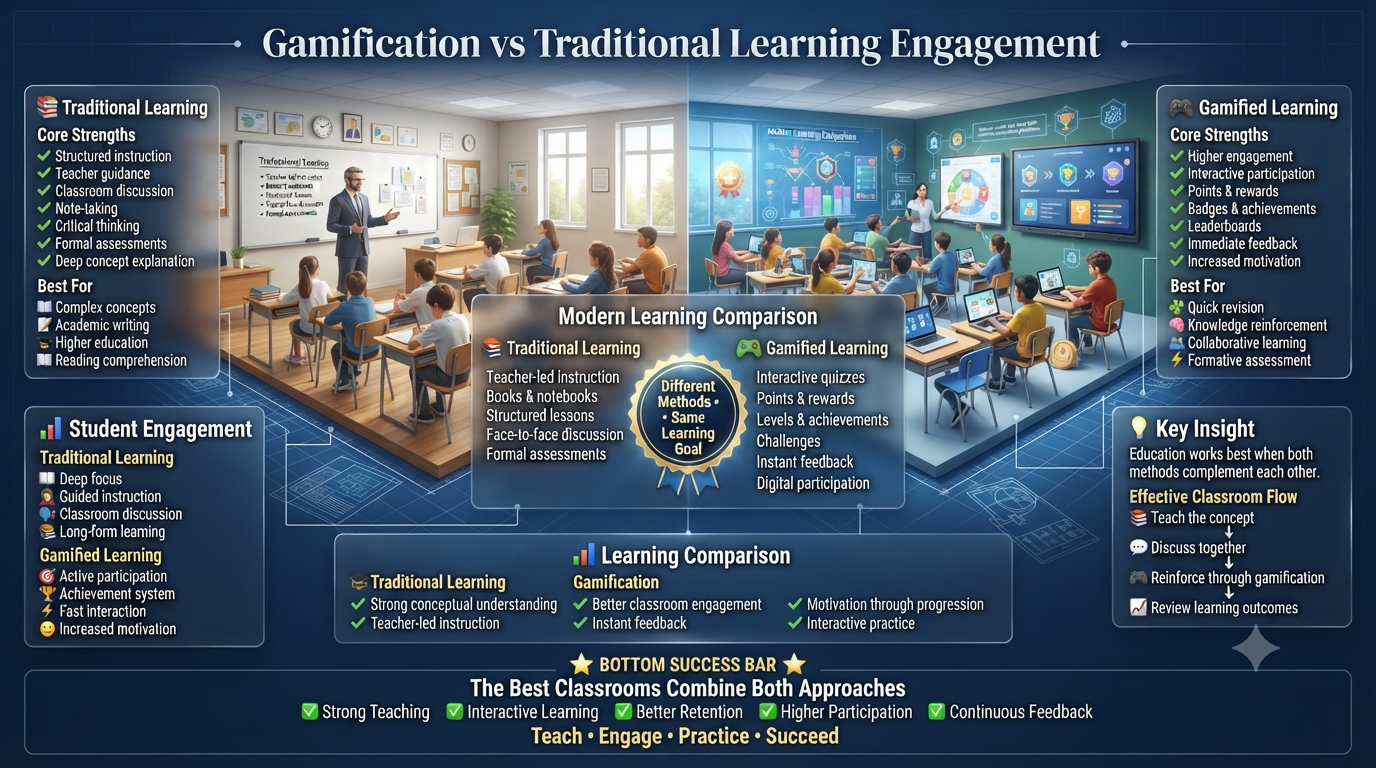
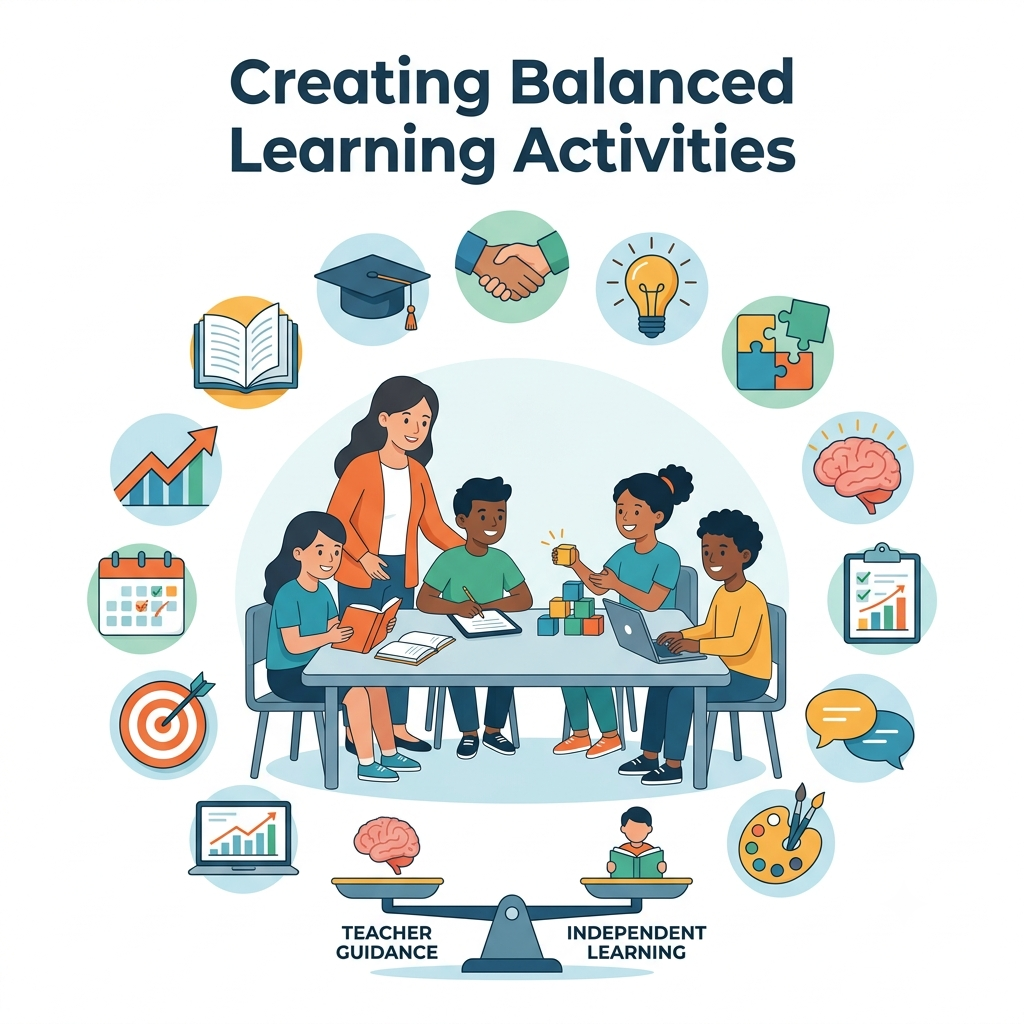
Gimkit Review for High School Learning: High school creates a much harder test for game-based learning than simply asking whether students enjoy playing.
By grades 9–12, classroom content is more specialized, assessments carry greater weight, and students are increasingly expected to analyze evidence, construct arguments, solve multi-step problems, interpret complex texts, and work independently. A learning activity that produces excitement but cannot support those expectations has limited instructional value.
That is why Gimkit deserves a different kind of evaluation at the high-school level.
The central question is not whether teenagers will play it.
Many will.
The real question is whether a platform built around questions and game mechanics can remain academically useful when the curriculum becomes more demanding.
If you’re exploring a digital dashboard or online workspace, take a closer look at Questrivo Dashboard for an overview of its features and functionality.
The answer is yes—but only when Gimkit is given the right job.
For high school, Gimkit is strongest as a retrieval, diagnostic, reinforcement, and targeted practice environment. It can make repeated encounters with important knowledge easier to sustain, give teachers rapid feedback about misconceptions, and provide an alternative to another conventional review sheet.
It becomes less convincing when teachers try to make it perform tasks better suited to essays, extended problem solving, close reading, laboratory work, discussion, projects, or formal assessment.
The strongest high-school implementation therefore begins with a distinction:
Gimkit should support rigorous learning, not be mistaken for rigor itself.
Explore GimkitApp for classroom resources, Gimkit guides, educational technology insights, and interactive learning content.
The High-School Verdict at a Glance
Gimkit can remain genuinely useful from freshman through senior year, but its value changes as students become more academically mature.
At the high-school level, its strongest uses include:
activating prior knowledge;
retrieving important facts and concepts;
identifying misconceptions;
reviewing terminology;
distinguishing similar ideas;
practicing short calculations;
preparing for cumulative assessments;
checking understanding after instruction;
providing an active transition between demanding lesson segments.
Its weaker uses include tasks requiring:
extended written reasoning;
lengthy calculations;
sustained interpretation;
complex source evaluation;
laboratory performance;
oral argument;
original research;
long-form problem solving.
This does not make Gimkit academically shallow by definition.
It means the question format and surrounding game structure have boundaries.
An experienced high-school teacher gets more value from Gimkit by working inside those boundaries intelligently rather than trying to force every learning objective into the platform.
High School Changes What “Engagement” Should Mean
Engagement is often discussed too casually in educational technology.
A classroom can look engaged because students are staring at screens, reacting to results, competing, laughing, or trying intensely to win.
That is visible participation.
It is not necessarily evidence of learning.
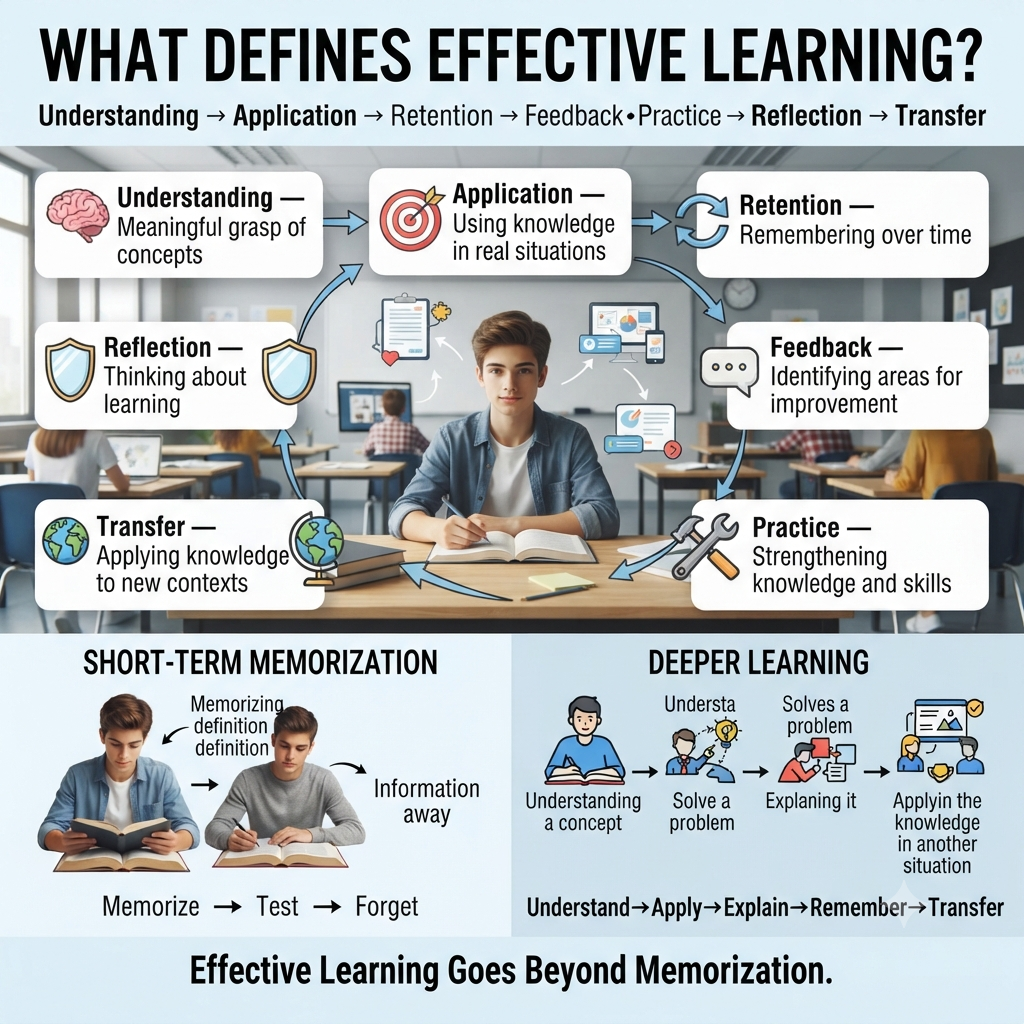
For high school, engagement should be judged more carefully.
A useful activity should create some combination of:
attention — students are mentally present;
retrieval — students must recall something they previously learned;
reasoning — students must distinguish, connect, calculate, interpret, or apply;
feedback — students discover whether their thinking was correct;
adjustment — mistakes influence what they or the teacher do next.
Gimkit can support all five, but only when the Kit is designed accordingly.
If students can succeed by recognizing obvious answers or repeatedly clicking through superficial questions, the platform may generate behavioral engagement without much intellectual engagement.
That becomes increasingly problematic in high school because curriculum standards demand more than recognition.
Gimkit Is Better for High School When Teachers Stop Treating It Like a Trivia Game
The quality of a high-school Gimkit session depends heavily on the quality of its questions.
Consider a biology class.
A basic question might ask:
What organelle is responsible for producing ATP?
That has legitimate retrieval value.
But an entire session built from definition-style questions would undersell what high-school students can do.
A more sophisticated question could describe a cell experiencing a particular dysfunction and ask students which organelle is most directly implicated.
Another might present two cellular processes and ask students to identify the relationship between them.
Another might present a plausible misconception.
Now students are not simply retrieving isolated labels.
They are using what they know to make distinctions.
The same principle works across subjects.
A platform does not become academically rigorous because its interface is sophisticated.
Rigor comes from what students are required to think about.
A Better Way to Design High-School Gimkit Questions
One of the most effective improvements a high-school teacher can make is to stop writing every question at the same cognitive level.
A stronger Kit can deliberately mix different kinds of retrieval.
Direct Retrieval
Students recall information they should know automatically.
Example:
Which economic concept describes a sustained increase in the general price level?
Direct retrieval is not inherently weak. High-school students need fluent access to foundational knowledge.
The problem begins when every question stops here.
Discrimination
Students distinguish between concepts that are easily confused.
Example:
Which situation demonstrates correlation without establishing causation?
This is often more valuable than asking students simply to define correlation.
Application
Students apply a concept to a short unfamiliar situation.
Example:
A physics question describes a moving object and asks which change would produce the greatest effect on its momentum.
Error Detection
Students identify faulty reasoning.
Example:
A worked algebraic solution contains one incorrect transformation. Students identify the step where the reasoning fails.
Best-Explanation Questions
Several answers may sound plausible, but one explains the situation more accurately.
These questions can be particularly valuable in subjects where misconceptions persist because students recognize vocabulary without fully understanding relationships.
A high-quality Kit can move between these forms instead of repeating a single question pattern.
Gimkit Review for High School Learning: Review Gimkit for high school learning, including game-based learning, student engagement, classroom use, study features, benefits, and practical tips for teachers.
Distractors Matter More Than Most Teachers Realize
High-school multiple-choice questions become substantially more useful when incorrect options are designed around actual misconceptions.
Suppose an algebra question asks students to solve an equation.
Weak distractors might be random numbers.
A student who does not know the method can eliminate them easily.
Stronger distractors can represent:
a sign error;
incorrect distribution;
failure to apply an operation to both sides;
an arithmetic mistake;
confusion between two related procedures.
Now an incorrect response tells the teacher something.
The student did not merely miss the question.
The response may indicate how the student’s reasoning went wrong.
This is an important distinction for high-school Gimkit design.
A teacher should not ask only:
What is the correct answer?
The better design question is:
What wrong answer would a student choose if they held a particular misconception?
That turns distractor design into diagnostic design.
Where Gimkit Fits Inside a Serious High-School Lesson
Gimkit becomes much more credible academically when it occupies a defined segment of a lesson rather than replacing the entire instructional sequence.
Consider a 55-minute chemistry class.
Opening Retrieval — 5 Minutes
Students independently answer several questions from previous lessons.
No game.
No discussion yet.
This gives the teacher a baseline.
Instruction and Worked Examples — 15 Minutes
The teacher addresses the new concept and models reasoning.
Guided Practice — 10 Minutes
Students work through examples, compare approaches, and ask questions.
Gimkit Diagnostic Review — 12 Minutes
The Kit mixes current material with prerequisite concepts.
Students repeatedly retrieve information while the teacher observes patterns.
Misconception Debrief — 8 Minutes
The teacher revisits the questions that created the greatest difficulty.
Independent Exit Problem — 5 Minutes
Students solve one problem outside the game environment.
This structure gives Gimkit a clear purpose.
It increases activity during the middle of the lesson without asking the game to provide every type of learning students need.
The “Before and After” Test Makes Gimkit More Meaningful
A high-school teacher can improve the diagnostic value of a Gimkit session by surrounding it with brief independent evidence.
For example:
Before playing, students answer three questions independently.
After the game and discussion, they answer one or two related questions again without game support.
This creates a simple but useful distinction.
If students perform well only while playing, the teacher should be cautious about interpreting the session as mastery.
If students can independently retrieve and apply the same ideas afterward, the evidence is stronger.
This approach also reduces the temptation to use the game’s final rankings as the main indicator of academic success.
The game becomes the practice environment.
Independent work remains the check on learning.
Freshman Classes: Gimkit Can Help Bridge the Transition
Grade 9 students often enter high school with very different academic habits.
Some are ready for independent study.
Others still rely heavily on teacher prompting.
Some have strong retrieval habits.
Others may recognize information when they see it but struggle to recall it independently.
Gimkit can be useful during this transition because it creates frequent opportunities to retrieve information without making every retrieval event feel like a formal assessment.
For freshman classes, useful applications can include:
prerequisite knowledge checks;
vocabulary reinforcement;
review after instruction;
misconceptions from earlier grades;
low-stakes preparation;
introducing retrieval routines.
The danger is allowing the game to become a substitute for building independent study habits.
Grade 9 students should gradually learn how to retrieve material without needing a game around every practice session.
Gimkit can help establish the habit.
It should not become the only condition under which the habit occurs.
Sophomore Year: Connect Retrieval to Application
By grade 10, teachers can increasingly use Gimkit to test distinctions rather than simple recognition.
Instead of asking:
What does this term mean?
ask:
Which example best demonstrates this concept?
Instead of:
What is the formula?
ask students to identify which situation requires it.
Instead of:
Who was this historical figure?
ask which development most directly relates to that figure’s actions.
This transition matters because students begin encountering increasingly complex disciplinary thinking.
The question cycle can remain relatively fast.
The thinking inside the question does not have to remain basic.
Junior Year: Use Gimkit to Expose Misconceptions Before High-Stakes Work
Junior-year courses can involve demanding content and increasingly consequential assessments.
At this level, Gimkit can be particularly useful as a misconception detector.
Imagine students are preparing for a major unit assessment.
A teacher could create questions based not simply on everything covered in the unit but on:
concepts students previously missed;
easily confused terminology;
common calculation errors;
incorrect assumptions;
relationships students often reverse;
prerequisite knowledge needed for harder problems.
This makes the activity targeted rather than generic.
Instead of asking:
What can we put into a review game?
the teacher asks:
What thinking errors do I most need to uncover before students reach the assessment?
That is a much stronger high-school use of the platform.
Senior Year: Gimkit Works Best When It Respects Student Maturity
Seniors do not necessarily become too old for game-based learning.
But the framing matters.
An activity can feel patronizing when students believe the game exists merely to make serious material artificially entertaining.
A better approach is transparent.
Tell students why the activity is being used.
For example:
We have twelve minutes to expose as many weak areas as possible before tomorrow’s review.
That framing gives the game an academic job.
For senior classes, teachers can also use Gimkit strategically rather than routinely:
before cumulative exams;
to reactivate older content;
as a fast prerequisite check;
after a difficult instructional sequence;
as an occasional change of pace.
The goal is not to convince older students that everything must feel like a game.
The goal is to use the game format where it actually improves participation or retrieval.
Can Gimkit Handle Advanced Courses?
Yes, within the right scope.
Advanced courses do not require every learning activity to be difficult in the same way.
Students in demanding courses still need foundational knowledge available quickly.
A calculus student still needs algebraic fluency.
An advanced biology student still needs terminology and conceptual relationships.
A literature student still needs knowledge of texts, devices, contexts, and interpretive distinctions.
A history student still needs chronology and factual knowledge to support argument.
Gimkit can help maintain that foundation.
Where it becomes insufficient is when the desired evidence involves sustained reasoning.
An advanced course may require students to:
construct an argument;
synthesize multiple sources;
justify a mathematical method;
analyze a long passage;
design an experiment;
evaluate evidence;
write an extended response.
A short-form game question cannot fully demonstrate those abilities.
That does not make the game inappropriate for advanced classes.
It means the teacher should use it for the knowledge and discrimination layer surrounding deeper work.
Mathematics: Use Gimkit for Decisions, Not Just Answers
High-school mathematics provides a good example of both Gimkit’s potential and its limitations.
It can work well for:
algebraic fluency;
function characteristics;
geometry terminology;
formula selection;
graph interpretation;
probability concepts;
identifying equivalent expressions;
common-error recognition.
But teachers should be cautious with problems that require substantial written work.
A student solving a multi-step equation may need to show:
transformations;
substitutions;
calculations;
justification.
The final answer alone may hide the reasoning.
One effective approach is to use Gimkit for mathematical decisions.
Ask students:
Which operation should come next?
Which graph matches this function?
Which transformation produced this expression?
Where did the solution become invalid?
Which theorem applies?
Which estimate is reasonable?
This allows the game to test mathematical thinking without pretending that selecting an answer replaces complete mathematical work.
Science: Excellent for Conceptual Distinctions, Limited for Scientific Practice
High-school science often contains a large body of interconnected knowledge.
That gives Gimkit useful territory.
Biology teachers can revisit:
cellular processes;
genetics;
ecology;
evolution;
body systems.
Chemistry teachers can work with:
atomic structure;
periodic trends;
bonding;
reactions;
stoichiometric concepts.
Physics teachers can reinforce:
forces;
energy;
motion;
momentum;
waves;
electricity.
The strongest questions often connect knowledge to a scenario.
But science education also involves practices that Gimkit cannot fully capture.
Students may need to:
design procedures;
analyze experimental uncertainty;
interpret complex datasets;
construct scientific explanations;
perform laboratory techniques.
The game can reinforce the conceptual foundation.
It cannot replace doing science.
History and Social Studies: Retrieval Should Feed Argument
High-school history courses need factual knowledge.
Students cannot analyze historical causation without knowing what happened.
They cannot evaluate change over time without chronology.
They cannot interpret a source without context.
This makes retrieval valuable.
Gimkit can help students maintain access to:
people;
events;
chronology;
political concepts;
geography;
economic terminology;
institutional structures.
But a stronger high-school Kit moves beyond isolated facts.
Questions can ask students to distinguish:
cause from consequence;
continuity from change;
primary from secondary evidence;
correlation from causation;
competing interpretations;
immediate from long-term effects.
The game can strengthen the knowledge base.
The essay, discussion, source analysis, or project should still require students to build arguments from that knowledge.
English Language Arts: Useful Around the Text, Not Instead of the Text
High-school English exposes an important boundary.
Gimkit can help with:
vocabulary;
rhetorical terms;
literary devices;
grammar;
conventions;
textual details;
short interpretation questions;
identifying stronger evidence.
But literature requires sustained attention.
Students may need to:
read a long passage;
examine diction;
track a motif;
compare interpretations;
analyze structure;
construct an argument;
support claims with evidence.
Turning all of that into rapid questions can reduce the complexity of the task.
A better role is to use Gimkit around deeper reading.
For example, students might retrieve terminology or contextual knowledge before analyzing a text.
Afterward, a short Kit could expose misunderstandings.
The text remains central.
The game supports access to it.
World Languages: Recognition Must Eventually Become Production
High-school language courses can use Gimkit effectively for retrieval.
Useful areas include:
vocabulary;
verb forms;
grammatical distinctions;
sentence completion;
contextual word choice;
translation decisions.
Repeated retrieval can help students access language more quickly.
But language competence requires production.
Students need to speak, listen, write, interpret, and respond.
A learner who can recognize the correct verb form among four options may still struggle to produce it independently.
Therefore, Gimkit can support language acquisition, but teachers should deliberately transfer practice beyond recognition.
One useful sequence is:
recognize → retrieve → use → produce
Gimkit can contribute strongly to the first two stages.
The classroom must provide the rest.
Career, Technical, and Elective Courses Can Use Gimkit Too
Gimkit’s high-school value is not limited to traditional academic subjects.
Career and technical courses often contain large bodies of procedural vocabulary, safety knowledge, tools, standards, symbols, and conceptual distinctions.
Potential applications include:
identifying tools;
matching procedures to situations;
recognizing safety requirements;
distinguishing components;
interpreting terminology;
reviewing prerequisite knowledge.
Art, music, health, business, technology, and other electives can similarly use short-form retrieval where it fits the curriculum.
The same limitation applies:
recognizing the correct procedure is not the same as performing it.
A student can correctly identify a design principle without demonstrating it in a project.
A student can recognize a musical concept without performing it.
Gimkit can support knowledge.
Performance-based evidence still needs performance.
One of Gimkit’s Best High-School Uses Is Prerequisite Diagnosis
High-school courses build heavily on previous knowledge.
A new lesson can fail because students are missing something taught months or years earlier.
That creates a powerful use case.
Before beginning a new unit, teachers can create a short Kit around prerequisite concepts.
For example:
Before quadratic functions, check algebraic manipulation.
Before genetics, revisit cell division and DNA.
Before persuasive writing, revisit claims, evidence, and reasoning.
Before a new historical era, reactivate relevant chronology.
The purpose is not necessarily to grade students.
It is to answer:
What does this class actually remember well enough for me to build on?
That information can influence instruction immediately.
A teacher may discover that the planned lesson assumes knowledge the class no longer has.
Catching that before instruction begins is more valuable than discovering it after an assessment.
Another Powerful Use: Cumulative Retrieval
High-school courses often suffer from a predictable pattern.
Students study a unit.
Take an assessment.
Move to the next unit.
Then forget much of the earlier material.
Gimkit can help teachers bring older knowledge back into later review sessions.
A Kit does not have to contain only the current chapter.
A teacher can deliberately mix:
current material;
last month’s material;
foundational knowledge from earlier in the course.
This changes review from short-term rehearsal into cumulative retrieval.
The game format may make students more willing to revisit material they thought was finished.
That can be particularly valuable in courses where later concepts depend heavily on earlier ones.
Gimkit Can Expose False Confidence
Teenagers sometimes recognize material and interpret that recognition as mastery.
A student sees a term in notes and thinks:
I know that.
But recognition is easier than retrieval.
A well-designed Gimkit session can expose this gap.
When students must select an answer without simply rereading their notes, they may discover that familiar-looking material is not actually accessible.
This can be useful before an assessment.
The experience becomes a low-stakes warning:
I thought I knew this, but I cannot retrieve it reliably yet.
For high-school students developing independent study habits, that realization can be more useful than another passive rereading session.
Do Game Mechanics Become Too Distracting for Teenagers?
They can.
Older students may be better at understanding game mechanics, but that does not mean they automatically manage them academically.
In some modes, students may begin optimizing:
movement;
resources;
timing;
strategy;
interactions with other players.
That can be part of the appeal.
It can also shift mental attention away from the questions.
The teacher therefore needs to watch the ratio between:
time thinking about content
and
time thinking about the game system.
If students spend most of the session discussing strategy and very little discussing academic questions, the balance may not fit the learning objective.
Gimkit’s customizable game options can help teachers adjust aspects of the experience, and 2D modes allow hosts to influence how strongly correct answers feed game progression.
For high school, this control is useful because teachers can deliberately make academic retrieval more central when the lesson requires it.
Not Every High-School Class Needs Maximum Competition
Competition can motivate teenagers.
It can also produce several undesirable behaviors.
Students may:
guess to move faster;
focus excessively on rankings;
disengage when far behind;
celebrate others’ mistakes;
prioritize winning over accuracy.
The solution is not necessarily eliminating competition.
It is varying the social structure.
Some classes thrive on individual competition.
Others respond better to teams.
Some lessons benefit from collaboration.
Others need quiet individual retrieval.
A teacher should choose the interaction structure based on what the class needs, not simply which option creates the loudest reaction.
The best high-school implementation treats game design as an instructional decision.
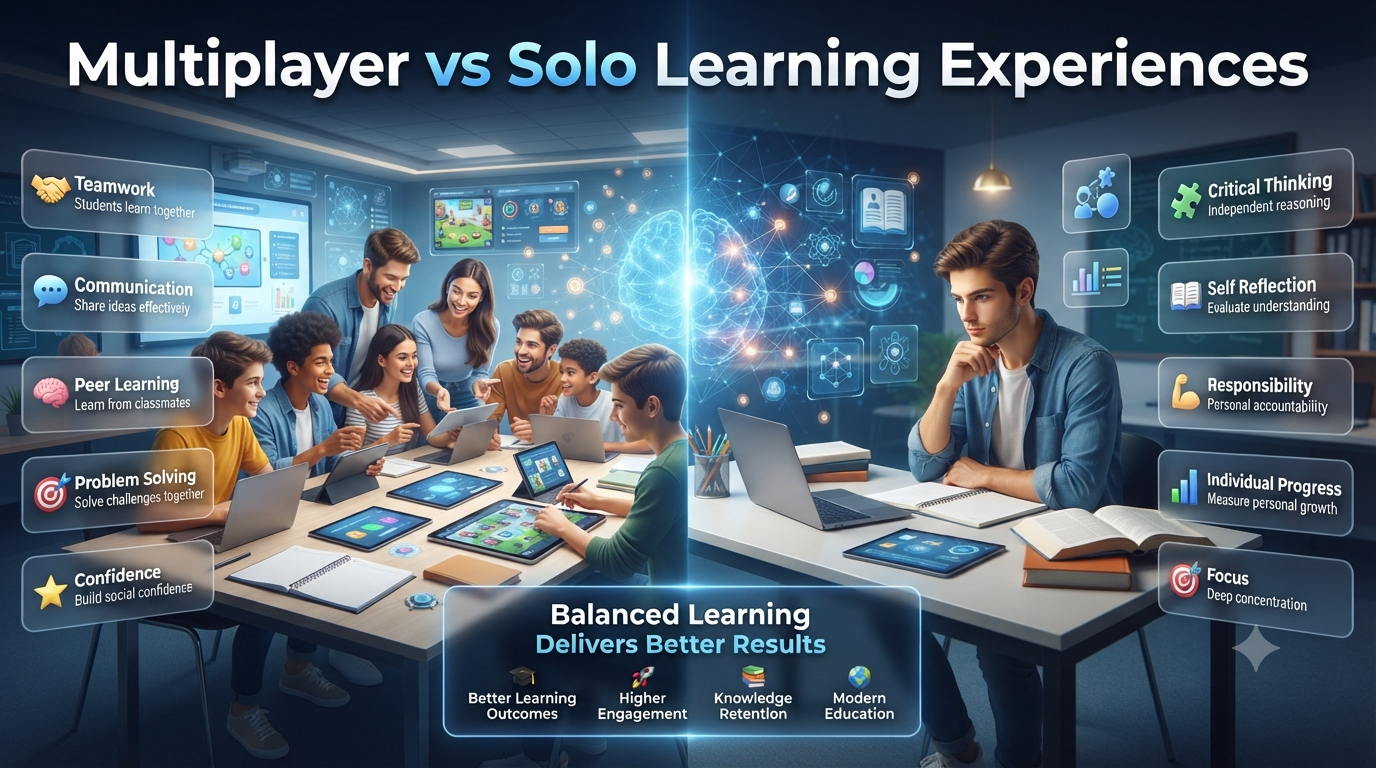
Why Collaborative Modes Can Matter More in High School Than They First Appear
Game-based learning is often associated with competition, but collaboration can be equally useful.
A collaborative activity changes the social question from:
Can I beat you?
to:
Can we solve this together?
That can create different classroom conversations.
Students may begin sharing strategies, explaining concepts, or helping peers recover from mistakes.
However, collaboration needs academic accountability.
A group activity can fail when one knowledgeable student does the intellectual work while everyone else follows.
Teachers therefore need to distinguish between:
game collaboration
and
learning collaboration.
Students working together inside a game are not necessarily explaining academic reasoning to one another.
A short post-game discussion can help bridge that gap.
Game Reports Are More Valuable Than the Leaderboard
For high-school teachers, one of the most useful outputs of a Gimkit session is not who finished first.
It is the response data generated by the questions.
For live games using a teacher’s own Kit, Gimkit provides reporting views that can show student-level, overall, and question-level information.
This can help a teacher ask:
Which questions produced widespread errors?
Which students may need additional support?
Which concept appears secure?
Was one question poorly written?
Did students confuse two specific ideas?
That makes Gimkit more useful as formative assessment.
The important word is formative.
The data should influence what happens next.
If a teacher collects response information but never adjusts instruction, much of its value is lost.
A simple next-day reteaching decision can make the session substantially more useful.
A Wrong Answer Is Not Always a Student Problem
High-school teachers should also use game results to evaluate their own questions.
Suppose nearly everyone misses one item.
Possible explanations include:
students genuinely misunderstand the concept;
instruction did not make the distinction clear;
the question is ambiguous;
two answers could reasonably be defended;
a distractor is misleading for the wrong reason;
necessary context is missing.
This is why question-level review matters.
Teachers should not automatically interpret every incorrect response as evidence of student weakness.
Sometimes the assessment item itself needs revision.
A strong question bank improves over time because teachers learn from how students respond.
Gimkit Assignments Can Extend Practice Beyond the Live Classroom
Gimkit is not limited to teacher-hosted live sessions.
Its assignment system can allow students to work independently using supported modes, with teachers setting goals and reviewing completion and results.
This creates several possible high-school uses:
homework;
independent review;
make-up work;
additional practice;
asynchronous learning.
The value is different from a live game.
A live session creates shared classroom energy.
An assignment shifts responsibility toward the individual student.
That can fit high school particularly well because students increasingly need to manage work outside direct teacher supervision.
However, an assignment should still have a reason to exist.
Turning every Kit into homework simply because the option is available can create digital busywork.
Independent Gimkit practice is most defensible when it addresses a specific learning need.
Practice Without Game Mechanics Can Sometimes Be the Better Choice
An important strategic point is that not every student needs the game layer every time.
Sometimes the desired activity is simply:
questions + answers + independent practice.
For students who need focused retrieval without competition or game mechanics, a simpler practice experience may be more appropriate.
This is particularly relevant in high school because students should gradually learn to study effectively without needing constant external stimulation.
Game-based practice can help.
So can plain retrieval.
A mature classroom uses both.
High-School Students Should Gradually Learn to Study Without Gimkit
This is one of the most important limitations to acknowledge.
A strong educational tool can still become a crutch.
If students begin believing that review only works when it is entertaining, teachers may unintentionally weaken independent study habits.
High-school students need to develop the ability to:
self-test;
retrieve without prompts;
organize notes;
identify weak areas;
practice difficult material;
tolerate productive struggle.
Gimkit can model some of those processes.
It can reveal gaps.
It can increase practice volume.
It can make retrieval more attractive.
But students eventually need to perform those behaviors independently.
A useful teacher question is:
What study behavior am I helping students practice here, and can they eventually reproduce it without the game?
That shifts Gimkit from entertainment toward learning strategy.
Should Gimkit Scores Become Grades?
Usually, teachers should be cautious.
Game outcomes can reflect more than academic knowledge.
Depending on the activity, success may involve:
speed;
strategy;
resource management;
familiarity with the mode;
movement skill;
other gameplay decisions.
That makes final game rankings problematic as direct measures of academic mastery.
Question responses may still provide useful formative evidence.
But a student who understands the content should not necessarily receive a lower academic evaluation because another student is better at the surrounding game.
For high school, where grades can carry significant consequences, the distinction becomes particularly important.
Use the game to practice.
Use evidence aligned directly with the learning objective when assigning consequential grades.
When Gimkit Works Exceptionally Well in High School
Several situations make particularly strong use cases.
Before a Major Assessment
Students retrieve content while teachers identify remaining weaknesses.
At the Start of a New Unit
A prerequisite check reveals what knowledge survived from earlier learning.
After a Dense Lecture or Reading Sequence
An active retrieval segment changes the cognitive rhythm.
During Cumulative Review
Old material can be mixed with current concepts.
When Misconceptions Are Predictable
Questions can deliberately target common errors.
Before Students Work Independently
A short diagnostic activity can reveal who is ready and who needs more support.
When Participation Is Uneven
A structured digital response environment may involve students who rarely volunteer during whole-class questioning.
These situations all give Gimkit a specific instructional purpose.
When Gimkit Is the Wrong High-School Tool
There are equally clear situations where another approach is better.
Extended Essays
Students need to construct and support arguments.
Complex Mathematical Proof or Derivation
Teachers need to see the reasoning process.
Long-Form Source Analysis
Students need sustained attention and evidence evaluation.
Laboratory Performance
Procedural competence must be demonstrated.
Seminar Discussion
Students need to respond to ideas in depth.
Research Projects
Students must investigate, synthesize, create, and communicate.
Creative Production
The desired evidence is an original product rather than selection of an answer.
Formal High-Stakes Assessment
A game environment may introduce factors unrelated to the construct being assessed.
Recognizing these limits actually strengthens the case for Gimkit.
A tool becomes more useful when teachers stop asking it to do jobs it was not designed to do.
What About Students Who Think Educational Games Are Immature?
This is a legitimate high-school concern.
Some teenagers enjoy classroom games openly.
Others may perceive them as childish, especially when the teacher oversells the entertainment.
The framing can make a significant difference.
Compare:
“We’re going to play a fun game today!”
with:
“We’re running a ten-minute diagnostic to identify what we still need to fix before the assessment.”
The underlying platform may be identical.
The second framing respects the academic purpose and student maturity.
Teachers do not need to pretend that high-school students are younger than they are.
They can explain exactly why the activity is useful.
Teenagers often respond better when the purpose is transparent.
Can Gimkit Help Quiet Students Participate?
Potentially.
Whole-class questioning has an obvious participation limitation.
A teacher asks one question.
One student answers.
Several students may think about it, but only one response becomes visible.
A digital question environment can collect responses from many students during the same period.
This can increase opportunities for students who rarely raise their hands.
But participation should not be confused with voice.
A quiet student selecting answers on a screen is participating.
That does not mean the student has had an opportunity to explain their thinking.
Teachers should still create spaces for:
written explanation;
partner discussion;
small-group reasoning;
individual conferences;
whole-class contributions.
Gimkit can broaden participation.
It should not replace every other form of classroom communication.
Can Strong Students Become Bored?
Yes, especially if the questions are too easy.
This is another reason question design matters more at the high-school level.
A high-performing student may quickly lose interest in a Kit built entirely from obvious recall questions.
The solution is not simply making every question obscure.
Instead, teachers can introduce greater intellectual discrimination.
Ask students to:
choose the best explanation;
identify the strongest evidence;
detect an error;
compare two plausible alternatives;
apply a concept to a new situation.
These questions remain compatible with a relatively fast activity while reducing the likelihood that stronger students can answer automatically.
What About Students Who Need More Processing Time?
Fast-paced game environments can create a different problem.
Some students understand the material but need longer to:
read;
calculate;
interpret;
process language;
compare options.
If classroom culture begins equating speed with intelligence, the activity can become discouraging.
Teachers should therefore consider whether the chosen question type and game structure are compatible with the students in the room.
A complicated paragraph followed by four nuanced answers may be academically excellent but poorly suited to a fast game cycle.
The best high-school question is not merely rigorous.
It is rigorous in a form that fits the activity.
Device Access and Network Reliability Are Part of the Evaluation
A digital classroom activity is only as practical as the environment supporting it.
Gimkit live games require student devices and reliable connectivity.
A teacher with excellent questions and a carefully designed lesson can still lose instructional time if students cannot connect reliably.
Schools should therefore evaluate Gimkit under actual classroom conditions.
Important practical questions include:
Does the classroom Wi-Fi remain stable when everyone joins?
Do school-managed devices run the activity smoothly?
Are students using a consistent device type?
How much class time is lost getting everyone connected?
Is there a backup activity if technology fails?
This is not unique to Gimkit.
But it is part of whether Gimkit is genuinely useful in a specific high-school environment.
A Practical High-School Quality Test
Before using a Gimkit activity, a teacher can ask six questions.
1. What exactly should students know or be able to distinguish afterward?
If the answer is unclear, the activity probably lacks focus.
2. Why is Gimkit better for this objective than another format?
“Students like it” can be part of the answer, but it should not be the whole answer.
3. Are the wrong answers diagnostically meaningful?
Good distractors can expose misconceptions.
4. Does the game structure encourage accuracy or rushing?
The teacher should know which behavior the session is rewarding.
5. What will I do with the response information?
Data without a next action has limited instructional value.
6. How will students demonstrate understanding outside the game?
A brief independent check can reveal whether learning transfers beyond the activity.
If a teacher can answer all six, Gimkit is much more likely to function as an instructional tool rather than classroom entertainment.
Can generate broad involvement during short review cycles.
Retrieval practice
Strong
Well suited to repeated recall of important knowledge.
Misconception detection
Strong when questions are designed well
Diagnostic distractors can reveal specific errors in thinking.
Concept application
Good within short scenarios
Works when application can be represented concisely.
Cumulative review
Strong
Older and current material can be revisited together.
Advanced-course usefulness
Good as a supporting tool
Valuable for foundational knowledge but not a substitute for complex disciplinary work.
Extended reasoning
Limited
Long mathematical, written, scientific, or interpretive reasoning requires other formats.
Formative assessment
Strong
Response patterns can inform reteaching and intervention.
High-stakes grading
Weak fit
Game mechanics can introduce factors beyond academic mastery.
Independent study
Useful selectively
Can support asynchronous practice but should not replace independent study skills.
Classroom maturity
Depends on framing
Purposeful academic framing matters more with older students.
Long-term value
Strong when used selectively
Most useful when it solves a defined instructional problem rather than becoming routine.
The Biggest Strength of Gimkit for High School
Gimkit’s biggest high-school strength is its ability to increase the amount of active retrieval students are willing to perform.
High-school students need enormous amounts of knowledge available to them.
That knowledge supports:
problem solving;
interpretation;
argument;
analysis;
writing;
laboratory work;
advanced coursework.
Retrieving foundational knowledge repeatedly can be tedious.
Gimkit can make that process more active.
That does not mean entertainment causes mastery.
It means the game environment can encourage students to remain involved in a practice process they might otherwise abandon earlier.
When the questions are carefully designed, that is a meaningful instructional advantage.
The Biggest Limitation of Gimkit for High School
Its biggest limitation is equally clear:
The platform can make short-form academic interaction more engaging, but it cannot represent every form of high-school thinking equally well.
A student may correctly identify:
the strongest thesis;
the correct formula;
the likely scientific outcome;
the historical cause;
the grammatical structure.
But recognizing the correct option is not always equivalent to independently:
writing the thesis;
deriving the solution;
designing the investigation;
constructing the historical argument;
producing the language.
High-school teachers therefore need to distinguish between supporting knowledge and demonstrating mastery.
Gimkit is often very good at the first.
For many learning objectives, another form of evidence is required for the second.
Final Verdict: Is Gimkit Worth Using for High School Learning?
Yes—but high school is where purposeful implementation matters more than novelty.
Gimkit can remain useful from grade 9 through grade 12 because teenagers still need retrieval, feedback, repetition, misconception correction, and changes of instructional pace.
What changes is the standard by which the platform should be judged.
A high-school Gimkit session should not be considered successful merely because students enjoyed it.
It should accomplish something identifiable.
It might reveal that students have forgotten prerequisite knowledge.
It might expose a misconception before an assessment.
It might reactivate material taught months earlier.
It might increase the number of students participating in review.
It might make repeated retrieval easier to sustain.
It might help the teacher determine what needs reteaching tomorrow.
Those are legitimate instructional outcomes.
The platform becomes less useful when the game itself becomes the objective, when questions remain permanently at a shallow recall level, or when teachers use a leaderboard as though it were equivalent to academic mastery.
The best high-school approach is therefore neither to dismiss Gimkit as childish nor to treat gamification as automatically educational.
It is to use the platform precisely.
Use Gimkit for the parts of learning it can strengthen: retrieval, discrimination, reinforcement, participation, feedback, and diagnostic review.
Then move students beyond the game.
Ask them to calculate.
Write.
Explain.
Debate.
Interpret.
Design.
Create.
Defend their reasoning.
That combination respects both the appeal of interactive learning and the intellectual demands of high school.
For grades 9–12, Gimkit is most valuable not when it makes school feel like a game, but when its game structure helps students do more of the academic thinking they genuinely need.
Frequently Asked Questions
Is Gimkit appropriate for high-school students?
Yes. High-school students can benefit from Gimkit when it is used for purposeful retrieval, review, misconception detection, and targeted practice. The academic quality depends substantially on question design and how the teacher integrates the activity into the wider lesson.
Is Gimkit too childish for grades 11 and 12?
Not inherently. Older students may respond poorly to childish framing, but game-based review itself is not restricted to younger learners. Clear academic purpose and appropriately challenging questions matter more.
Can Gimkit be used in advanced high-school courses?
Yes, particularly for foundational knowledge, conceptual distinctions, prerequisite checks, and cumulative retrieval. It should complement rather than replace extended reasoning and discipline-specific performance.
Is Gimkit useful for exam preparation?
It can be useful for identifying knowledge gaps, retrieving older material, and exposing misconceptions. Students should still practice the actual response formats and reasoning demands required by their assessment.
Can Gimkit replace traditional studying?
No. High-school students need independent retrieval, reading, writing, problem solving, organization, and self-monitoring skills. Gimkit can support study but should not become the only way students practice.
Should teachers grade students according to Gimkit rankings?
Final game rankings should generally not be treated as direct measures of mastery because gameplay can involve factors beyond academic knowledge. Teachers should use evidence aligned with the intended learning objective for consequential grading.
Can Gimkit support difficult subjects?
Yes, but the question format matters. Even advanced subjects contain foundational knowledge and conceptual distinctions suitable for retrieval. Tasks requiring lengthy reasoning or performance should be completed through other methods.
Is Gimkit better for review or initial instruction?
Its clearest high-school strength is usually review, retrieval, reinforcement, and diagnostic checking after students have encountered the material. Teachers can integrate it elsewhere when appropriate, but the game should not be expected to replace complete instruction.
For the latest gaming news, reviews, walkthroughs, and entertainment coverage, visit IGN