Gimkit Tag Domination
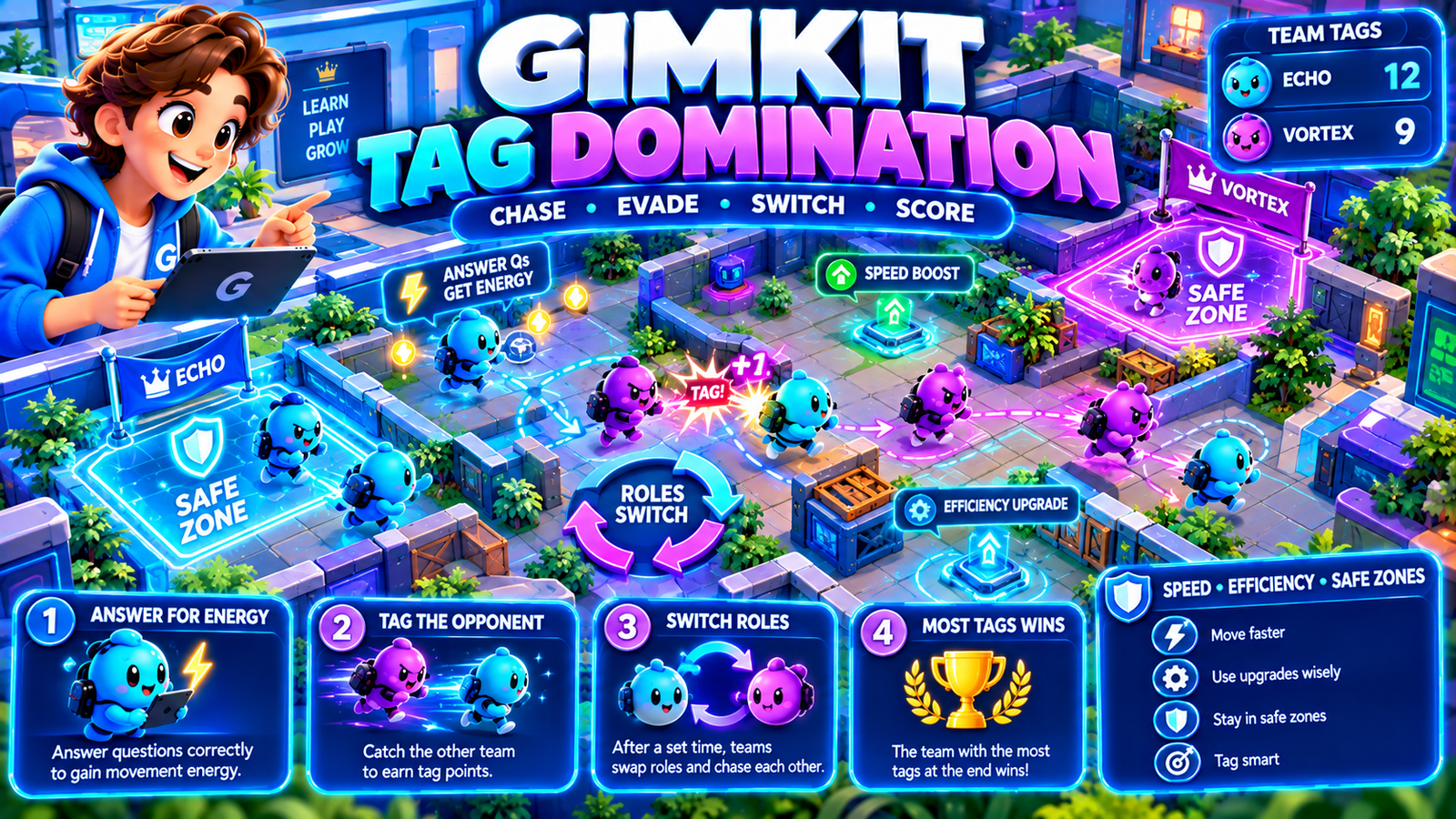
Gimkit Tag Domination illustration showing Echo and Vortex teams, tagging turns, chase and escape strategies, safe zones, movement energy and team scoring.

GimkitApp / Tag Domination Specialist Gimkit Tag Domination: Complete Guide to Tagging Turns, Teams & Strategy Gimkit Tag: Domination is a competitive 2D tagging mode in which two teams—Echo and Vortex—take turns pursuing opponents and avoiding tags. Successful tagging earns points, and energy gained through correct answers supports movement and upgrades. Unlike Capture the Flag, … Read more
Gimkit Live

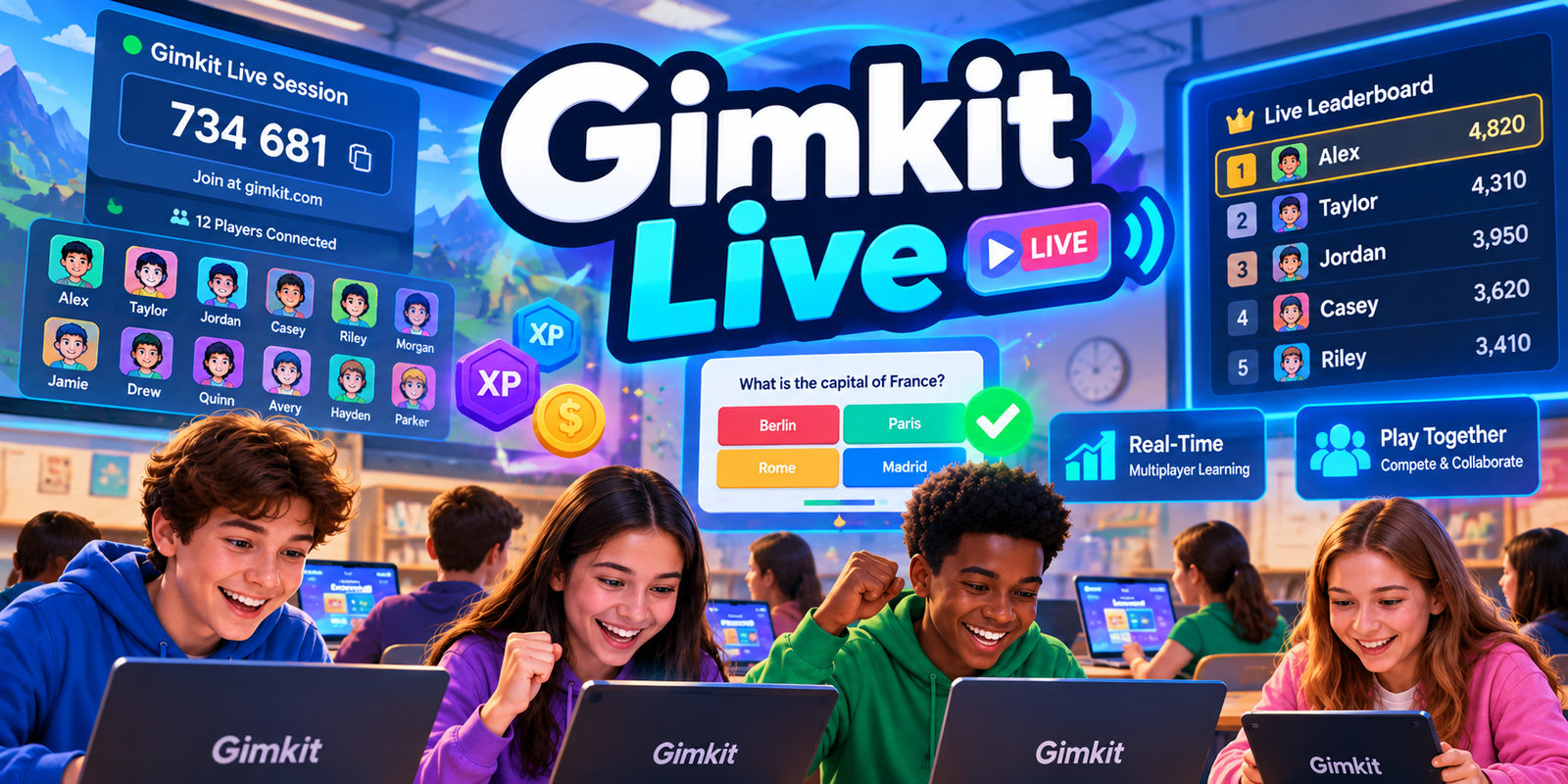
Gimkit Live multiplayer learning illustration showing students participating in real-time quiz games, interactive challenges, and classroom activities.Gimkit Live Multiplayer Classroom Challenge

GimkitApp / Real-time learning Gimkit Live: Understanding Real-Time Learning Sessions What makes a Gimkit activity live? Explore shared session time, simultaneous participation, game-wide events, individual experiences and the difference between being connected together and doing exactly the same thing. Live classroom sessions Shared participation Concurrent presence Interactive timeline lab Explore the Live Session Lab ↗ … Read more

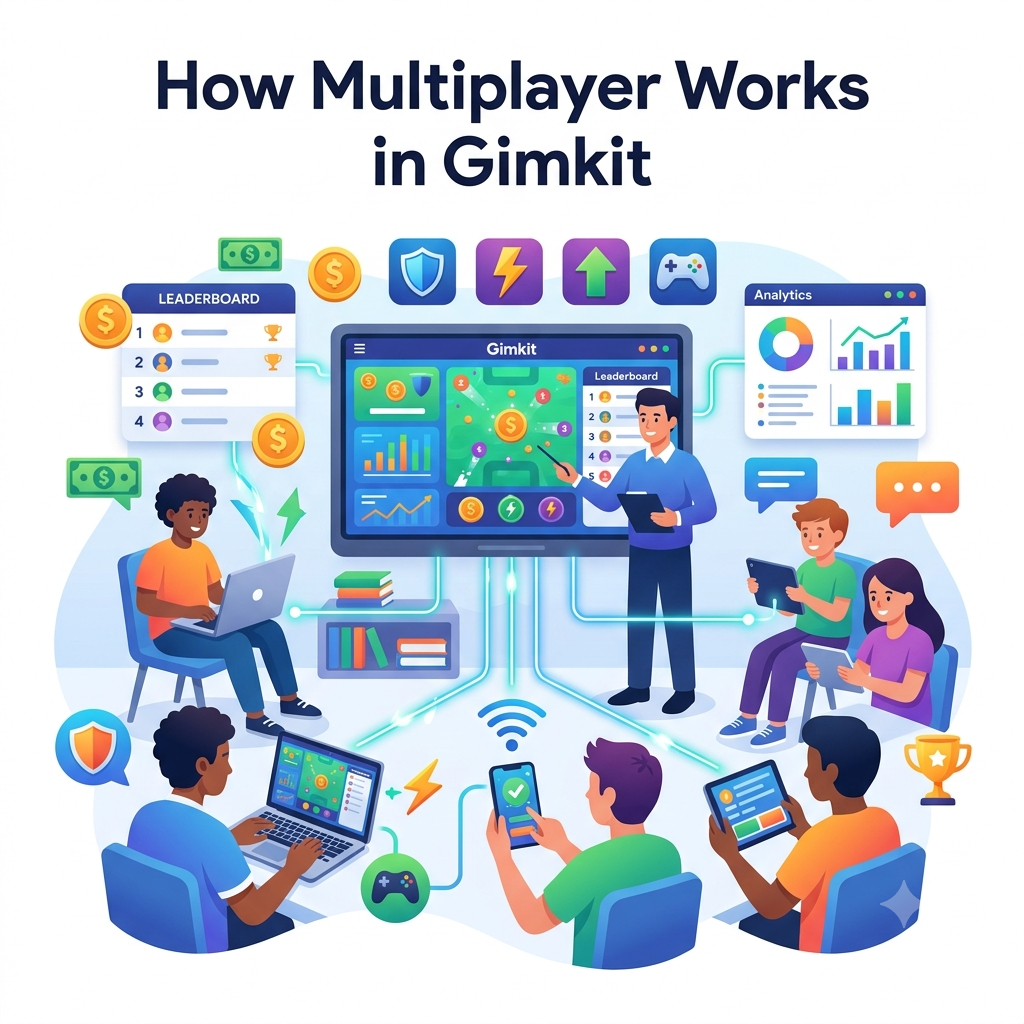
How Multiplayer Works in Gimkit

How Multiplayer Works in Gimkit illustration showing students joining a live classroom game with connected devices, teacher dashboard, virtual cash, and multiplayer gameplay.How Multiplayer Works in Gimkit

GimkitApp / Multiplayer Systems Reference Gimkit Multiplayer: How Shared Live Games Really Work Gimkit Multiplayer connects players to the same hosted live session, allowing their actions to contribute to a shared game experience. How they compete, cooperate, move, earn resources or complete objectives depends on the selected Gimkit game mode. This guide explains what happens … Read more

Team-Based Gameplay Explained

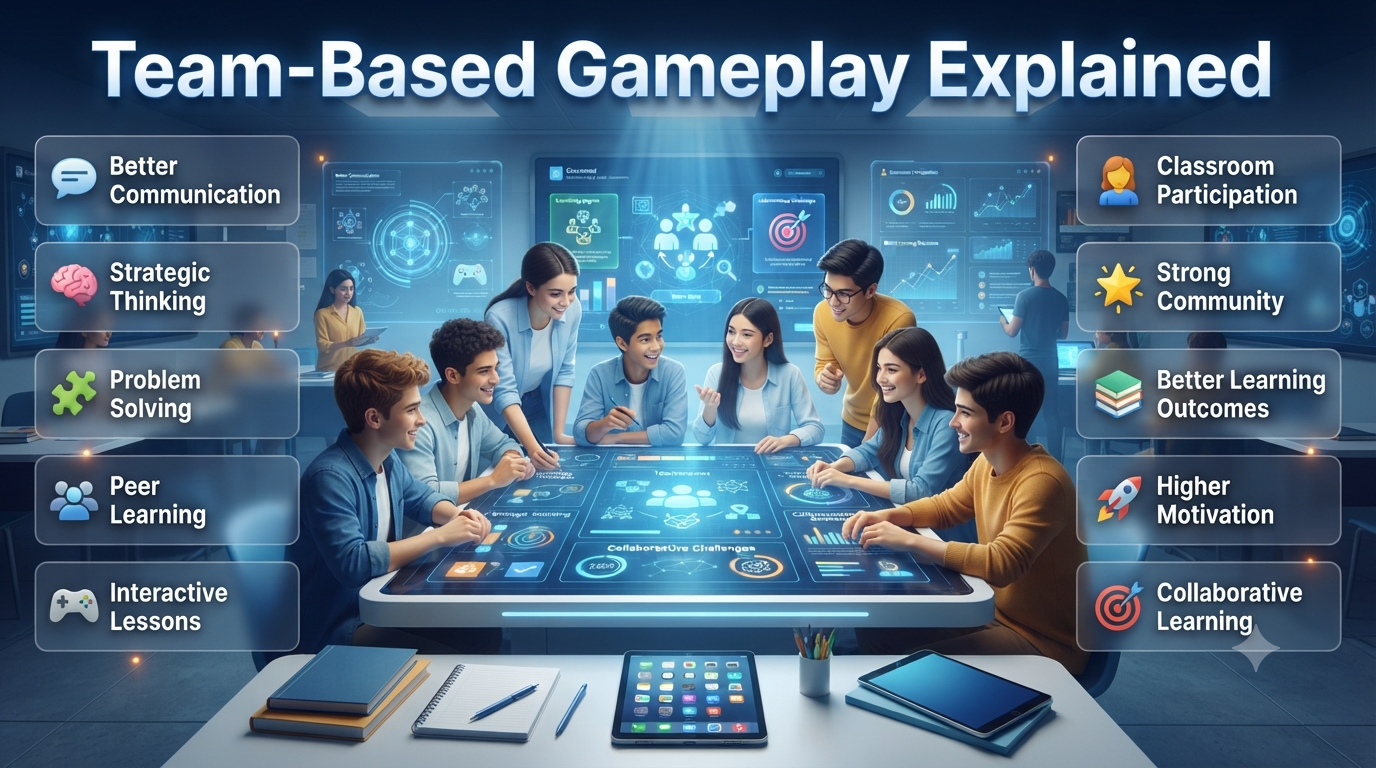
Illustration of students collaborating on team-based classroom learning, discussion, and shared problem-solving

Introduction  Team based gameplay is a way of organizing a game around a shared objective rather than treating every participant as an entirely independent competitor. In an educational setting, students may contribute knowledge, coordinate actions, make decisions, or complete different responsibilities while working toward an outcome that belongs to the group. However, putting students on … Read more

Multiplayer vs Solo Learning Experiences

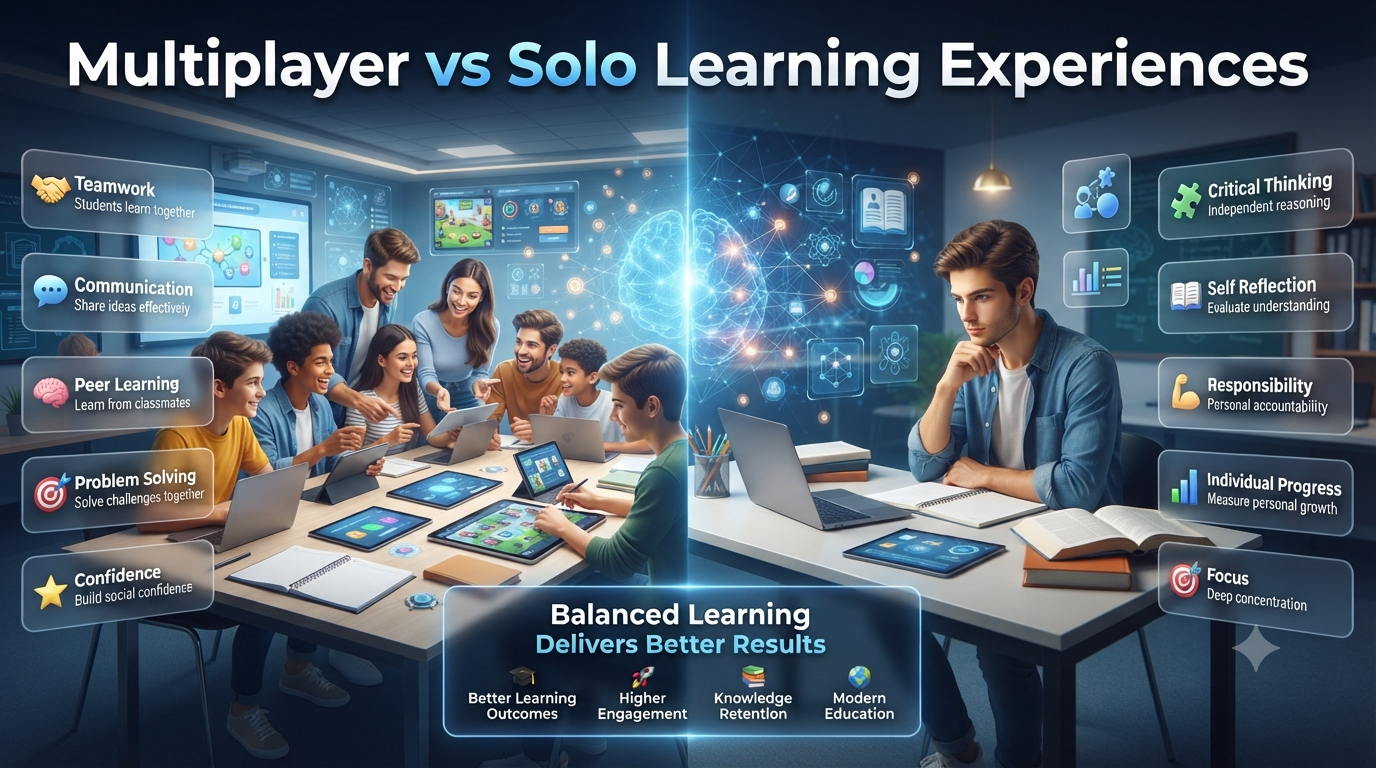
Modern educational infographic comparing multiplayer and solo learning experiences, highlighting teamwork, independent study, classroom engagement, critical thinking, and student success. Multiplayer vs Solo Learning Experiences: Which Learning Style Wins?

Introduction Multiplayer vs solo learning is not a contest in which one format must defeat the other. It is an instructional choice about when students should think with other people, when they should demonstrate understanding independently, and how to move between those conditions without losing the learning objective. The most useful comparison begins with the … Read more

Tips for Winning Team Games in Gimkit

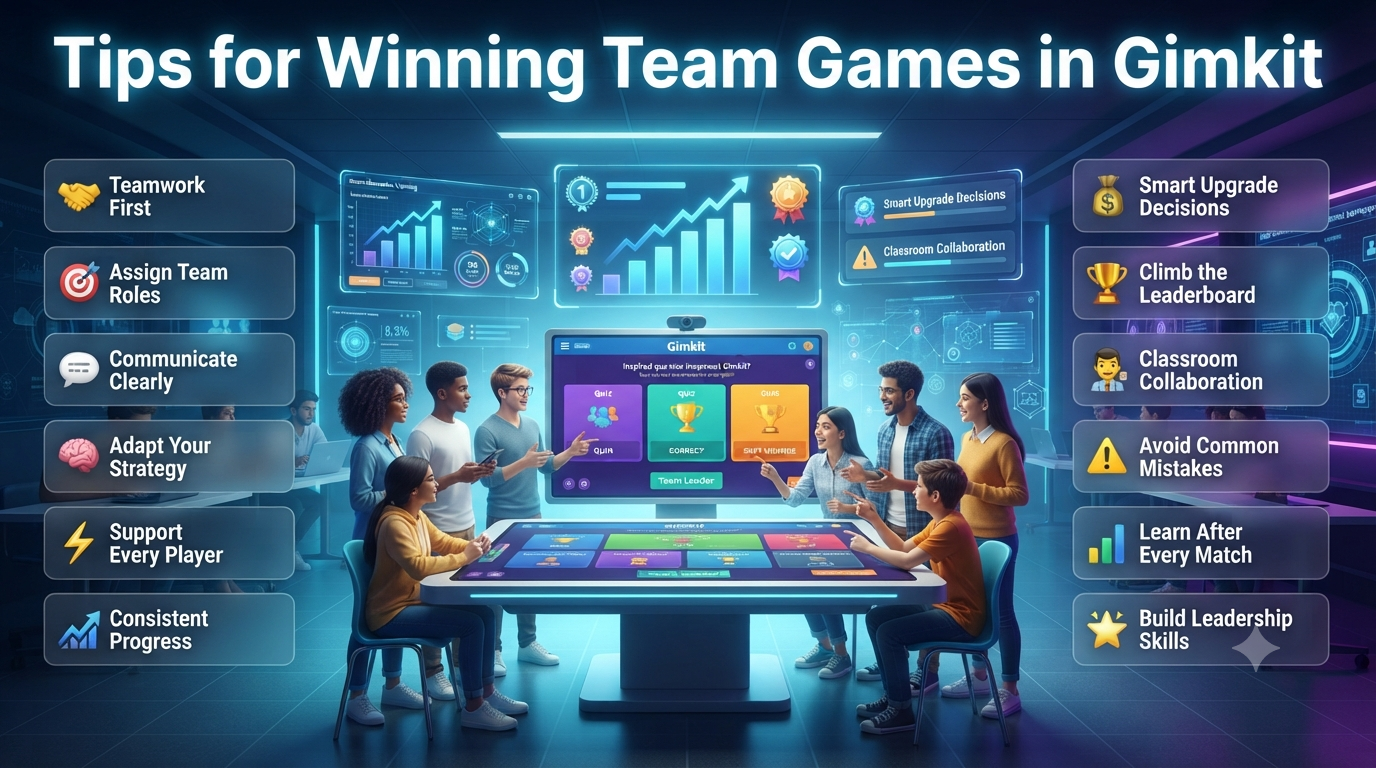
Students collaborating in a Gimkit team game with strategy panels, communication icons, smart upgrades, and leaderboard success in a modern classroom. Tips for Winning Team Games in Gimkit – Best Team Strategy Guide

Introduction Winning team games in Gimkit starts with identifying what the selected mode actually rewards. A strategy that helps a team score goals in Blastball cannot be copied unchanged into a cooperative spaceship escape, and advice about buying upgrades is irrelevant when a mode has no comparable shop. Before anyone tries to move faster, spend … Read more

Best Classroom Activities for Multiplayer Learning | Latest 50+

Teacher facilitating a multiplayer classroom activity with small-group collaboration, shared problem-solving and inclusive student participation

2026 editorial accuracy and practical classroom implementation note Multiplayer classroom activities can encourage discussion and retrieval, but group success does not establish that every participant learned the intended skill. Before selecting a competition or cooperative challenge, write an observable objective and an individual transfer prompt. For example, a group may solve a ratio problem together, … Read more