Intrduction
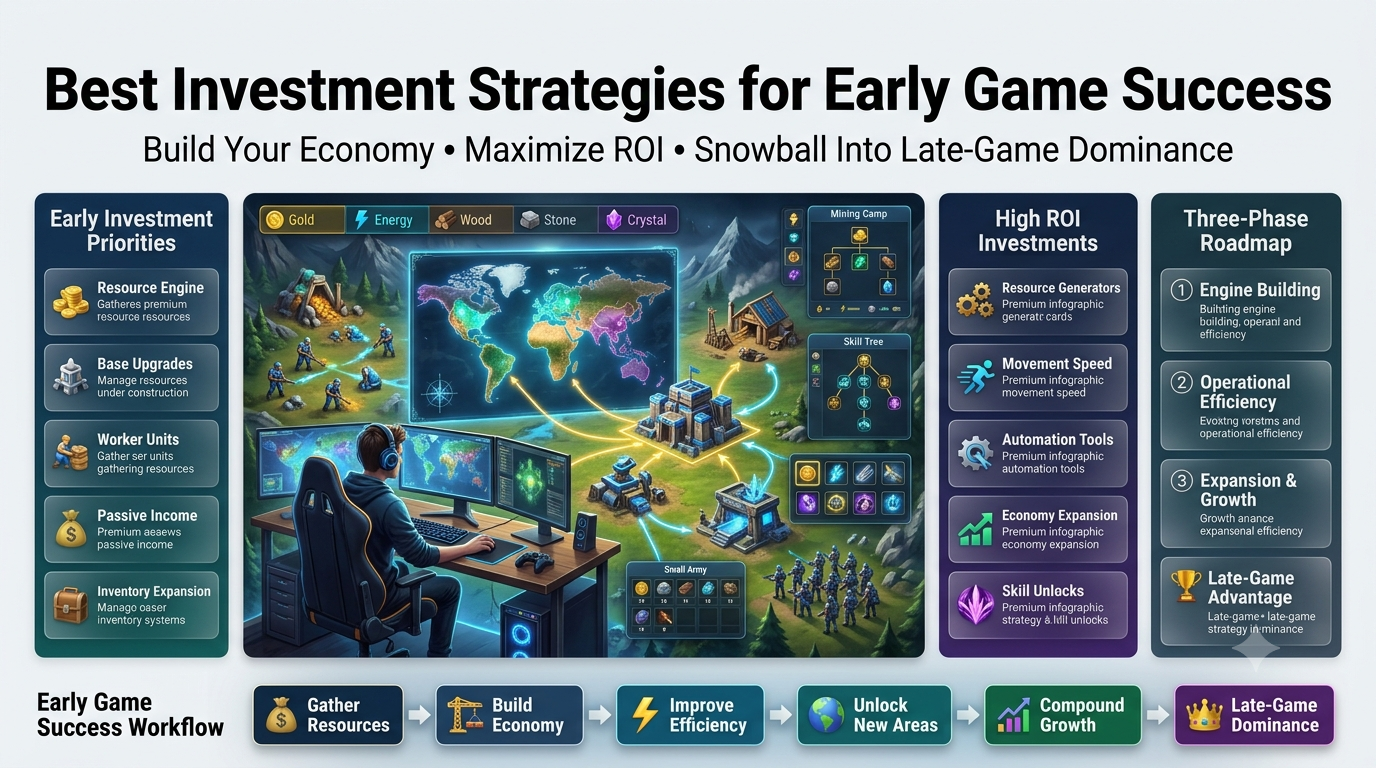
Best Investment Strategies for Early Game Success | Starting a new game, whether it is a grand strategy title, an MMORPG, a survival game, or a complex RPG, presents a single foundational challenge: resource scarcity. Every early-game action carries an opportunity cost. Allocating resources into short-term survival or immediate combat power often starves long-term economic growth, while over-investing in economy leaves players vulnerable to sudden difficulty spikes.
Achieving early-game success requires a structured approach to early investment. This guide breaks down the core principles of economic snowballing, resource prioritization, and efficient progression models designed to build a solid foundation for late-game dominance.
1. The Core Mechanics of Early-Game Snowballing
In gaming terminology, snowballing refers to the process where a small early advantage compounds over time into an overwhelming benefit. Early investments are valuable precisely because they have the maximum amount of time to generate returns.
[ Early Resource Allocation ] ──> [ Infrastructure / Engine ] ──> [ Higher Yields ]
                                                                       │
                                                                       ▼
[ Late-Game Dominance ] <── [ Unlocked Efficiency ] <── [ Compounding Returns ]
The Return on Investment (ROI) Principle
Not all early purchases yield equal value. To maximize efficiency, evaluate every potential early-game investment by calculating its payback period—the time or number of actions required for an asset to pay for itself and begin generating pure profit.
High-ROI Assets: Permanent resource generators, movement speed enhancements, automated collection tools, and skill-unlocking items.
Low-ROI Assets: Purely aesthetic upgrades, temporary consumables, mid-tier equipment with short utility windows, and over-defensive structures early on.
2. Resource Categorization Matrix
To optimize early choices, categorize resources into distinct functional tiers:
| Resource Tier | Function | Investment Priority | Example Uses |
| Primary (Engine) | Generates further resources | Highest (Immediate) | Base upgrades, worker units, gold mines, energy grids. |
| Secondary (Mobility/Efficiency) | Reduces time per action | High (Early) | Speed boots, inventory expansions, fast-travel unlocks. |
| Tertiary (Power/Progression) | Allows access to higher-yield areas | Medium (Targeted) | Basic weapons, key skills, gate-clearing gear. |
| Consumable (Maintenance) | Keeps the player alive/operational | Lowest (Minimal) | Healing items, temporary buffs, repair kits. |
3. The Three-Phase Early Game Roadmap
Phase 1: Engine Building (0-15% Progress)
   └─ Priority: Maximum allocation to passive yield and inventory space.

Phase 2: Operational Efficiency (15-35% Progress)
   └─ Priority: Mobility upgrades, key skill unlocks, and basic gear threshold.

Phase 3: Transition & Expansion (35-50% Progress)
   └─ Priority: Unlocking high-yield zones, mid-tier crafting, and compound assets.
Phase 1: The Engine-First Strategy (0–15% Game Progress)
During the initial hours, direct every available unit of currency or material toward building your passive yield engine.
Minimize Consumption: Rely on basic mechanics (dodging, careful pathing, free healing points) rather than purchasing expensive consumable items.
Expand Bottlenecks First: If inventory capacity limits your run length, invest in bag upgrades before stat upgrades. The ability to bring back 50% more loot per trip compounds faster than a 5% damage increase.
Phase 2: Mobility and Operational Speed (15–35% Game Progress)
Once basic resource generation is functional, transition focus toward reducing operational downtime.
💡 Pro Tip: Time spent travelling is non-productive time. Upgrades that increase movement speed, lower action cooldowns, or grant fast-travel capabilities yield direct indirect economic returns by increasing the number of actions you can take per session.
Phase 3: Targeted Gear Thresholds (35–50% Game Progress)
Avoid upgrading gear incrementally (e.g., buying every tier of weapon available). Instead, adopt a threshold gearing approach:
Identify the exact stats required to access or clear the next high-yield zone.
Skip intermediate crafting/buying tiers whenever possible.
Invest heavily only when the gear unlock directly leads to a higher rate of resource acquisition.
4. Common Early-Game Investment Pitfalls
+--------------------------------------------------------------------------+
|                         COMMON INVESTMENT TRAPS                          |
+------------------------------------+-------------------------------------+
| Trap                               | Impact                              |
+------------------------------------+-------------------------------------+
| 1. Sunk Cost in Mid-Tier Gear      | Wastes non-refundable currency on   |
|                                    | items soon replaced.                |
| 2. Over-Diversification            | Slows progression by spreading      |
|                                    | skill points/resources too thin.    |
| 3. Hoarding Liquid Currency        | Zero return; unspent gold generates |
|                                    | no passive value.                   |
+------------------------------------+-------------------------------------+
⚠ The Hoarding Trap: Holding onto large amounts of unspent liquid currency early in the game prevents compounding growth. Keep a small reserve for emergencies, but invest the rest into upgrades that boost resource generation or efficiency.
⚠ The “Jack of All Trades” Mistake: Early game systems heavily reward specialization over generalism. Focus skill points and upgrade materials into a single core loop first before diversifying into secondary mechanics.
5. Strategic Decision Framework for Upgrades
Before committing resources to any early-game purchase, run through this quick evaluation checklist:
[ ] Does this asset generate resources passively or actively increase yield?
[ ] Does this purchase unlock a new region, quest line, or mechanic that was previously inaccessible?
[ ] Will this item remain useful for at least 5–10 hours of gameplay?
[ ] Is there a cheaper alternative that accomplishes the same goal?
If the answer to the majority of these questions is No, defer the investment and reallocate those resources to your primary economic engine.
Strategic Resource Allocation & Unlocks: The Early-Game Playbook
1. The Capital Deployment Hierarchy
To maximize early-game progression, your scarce starting resources must be allocated according to a strict hierarchy. Investing out of order creates bottlenecking—where you have strong combat power but lack the resources to maintain or advance it.
                  ┌───────────────────────────────┐
                  │ TIER 1: Capacity & Mobility   │
                  │ (Inventory, Mounts, Teleports)│
                  └──────────────┬────────────────┘
                                 │
                                 ▼
                  ┌───────────────────────────────┐
                  │ TIER 2: Income Generators     │
                  │ (Mines, Farms, Trade Nodes)   │
                  └──────────────┬────────────────┘
                                 │
                                 ▼
                  ┌───────────────────────────────┐
                  │ TIER 3: Efficiency & Skill Trees│
                  │ (Crafting Speed, XP Boosts)   │
                  └──────────────┬────────────────┘
                                 │
                                 ▼
                  ┌───────────────────────────────┐
                  │ TIER 4: Threshold Power       │
                  │ (Min-req Weapons/Armor)       │
                  └───────────────────────────────┘
Direct Answer: Where Should Your First 1,000 Gold (or Currency Units) Go?
Your initial currency should almost exclusively fund Tier 1 (Capacity & Mobility) and Tier 2 (Income Engines). Investing early currency into gear or temporary stat boosts yields zero compounding value, whereas capacity and mobility directly shorten every subsequent farm loop.
2. Deep Dive: Early-Game Investment Pillars
Pillar A: Capacity Expansion (The Throughput Multiplier)
Inventory and weight limits act as an artificial tax on your time.
The Math of Trips: If a standard farming run takes 3 minutes of travel and 5 minutes of gathering for 20 items, your rate is 2.5 items/minute. Doubling inventory capacity to 40 items changes the equation to 3 minutes travel + 10 minutes gathering = 3.07 items/minute. That is a ~23% net increase in yield per hour without changing any combat or gathering stats.
Best Practice: Upgrade bag, vault, or vehicle storage until you reach the point of diminishing returns (where the next slot upgrade costs more than 1–2 hours of active income).
Pillar B: Passive Yield Engines (The Sleep Multiplier)
Passive generators (town upgrades, base nodes, worker hires, or daily claim mechanics) must be prioritized on Day 1.
💡 Pro Tip: A passive generator that takes 12 real-world hours to pay off its cost should be built before logging off or taking a break. Waiting until your second or third session to build it forfeits hundreds of hours of potential passive compounding over a long playthrough.
Pillar C: XP & Skill Utility (The Speed Multiplier)
When selecting early perks, traits, or skill points:
Prioritize XP-boost passive nodes and Gathering Speed / Yield bonuses over flat combat damage.
A 10% XP bonus acquired in the first hour saves dozens of hours of grinding by the time you reach the level cap.
Combat power can be compensated for via tactics, positioning, or group play; lost time efficiency cannot.
3. High-ROI Investment Strategy Comparison
Different game genres prioritize different early-game investments. Use this breakdown to apply the strategy to your specific game environment:
| Strategy / Focus | Primary Asset Type | Best Suited For | Target Payback Period | Risk Level |
| Node Automation | Workers, Mines, Passive Generators | Grand Strategy, Survival, City Builders | 3–5 Real Hours | Very Low |
| Mobility Rush | Mounts, Glide Suits, Waypoint Keys | Open World RPGs, MMORPGs | Instant (Time Saved) | Low |
| Crafting Pipeline | Refining Stations, Tool Upgrades | Sandbox, Crafting-heavy RPGs | 2–4 Farming Runs | Medium |
| Threshold Gearing | Single Power-Spike Weapons | Roguelites, ARPGs, Action RPGs | 1 Boss / Dungeon Clear | High |
4. Advanced Operational Workflows for Early Game
[ Step 1: Identify Bottleneck ] ──> [ Step 2: Calculate Cost vs Time Saved ]
                                                   │
                                                   ▼
[ Step 4: Resume Loop ] <── [ Step 3: Deploy Minimum Viable Investment ]
Execution Protocol: The “Minimum Viable Investment” (MVI)
Never buy top-tier items in the early game. Apply the Minimum Viable Investment (MVI) rule:
Identify the exact gate: Is a boss killing you because of low HP, or are you running out of mana?
Buy only to cover the deficit: Purchase the exact potion tier or single armor piece needed to pass the gate.
Save the surplus: Reserve remaining funds for passive engines or permanent upgrades.
5. Early-Game Investment Checklist
[ ] Reinvested 80%+ of early liquid currency into capacity or passive nodes.
[ ] Unlocked primary movement/fast-travel mechanics.
[ ] Unlocked early XP or gathering-yield perks before entering main combat loops.
[ ] Avoided buying full gear sets or non-essential consumable stacks.
[ ] Established a passive generation pipeline before offline/break periods.
Mid-Game Transitioning, Risk Management & Advanced Portfolio Scaling
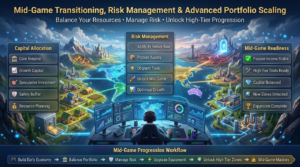
1. The Mid-Game Shift: From Pure Accumulation to Portfolio Balancing
As your early engine reaches maturity, the return on investment (ROI) for pure early-game capacity and basic generators begins to diminish. The transition to the mid-game requires pivoting from raw resource hoarding to strategic capital allocation that protects your assets while expanding into high-yield, higher-risk zones.
       ┌──────────────────────────────┐
       │   Early Engine Maturation    │
       │ (Diminishing Yields on Bags) │
       └──────────────┬───────────────┘
                      │
                      ▼
       ┌──────────────────────────────┐
       │     Strategic Capital Pivot  │
       └──────────────┬───────────────┘
                      │
         ┌────────────┴────────────┐
         ▼                         ▼
┌──────────────────┐      ┌──────────────────┐
│ Risk Mitigation  │      │ High-Tier Access │
│ (Asset Safety)   │      │ (Stat Thresholds)│
└──────────────────┘      └──────────────────┘
Direct Answer: When Do You Pivot from Early-Game Investments?
You pivot the moment your primary operational bottlenecks (inventory space, basic travel speed, core passive nodes) are cleared, and adding another tier of early capacity yields less than a 10% increase in operational speed. At this threshold, excess capital must be funneled into progression gates to unlock mid-game resource nodes.
2. Risk Management Strategies for Early-to-Mid Transition
Higher-yield zones often carry increased risk—such as open-world PvP, harsh environmental hazards, loss-on-death mechanics, or expensive entry keys. Mitigating these risks ensures that a single failed run does not reset your early-game progress.
The “3x Rebuy Rule”
Never risk an asset, gear setup, or key consumable unless you hold liquid capital or passive reserves equal to at least three times its replacement cost.
Adhering to the Rule: A failed dungeon run or lost gear set becomes a minor setback that is absorbed by your reserve buffer.
Violating the Rule: A single bad encounter forces you back into early-game resource grinding to rebuild lost baseline capital.
3. High-Tier Asset Allocation Matrix
As you exit the early phase, divide your capital across three distinct buckets:
💡 Pro Tip: Never pull from your Core Reserve to fund Speculative ventures. If a high-risk venture fails, fund the recovery entirely through active farming or your Growth Capital allocation.
4. Avoiding the Mid-Game Stagnation Trap
+---------------------------------------------------------------------------------+
|                          MID-GAME PROGRESSION TRAPS                             |
+------------------------------------+--------------------------------------------+
| Trap                               | Mitigation Strategy                        |
+------------------------------------+--------------------------------------------+
| 1. Over-Investing in Base Tier     | Stop upgrading early generators once cost  |
|    Generators                      | recovery exceeds 15–20 active gameplay hrs.|
| 2. Unbalanced Stat Spreading       | Specialize fully in one mid-tier playstyle |
|    (Jack-of-all-Trades)            | before attempting hybrid builds.           |
| 3. Sunk-Cost Gear Crafting         | Rent or borrow temporary power where possible|
|    for Transitional Content        | rather than crafting untradeable mid gear. |
+------------------------------------+--------------------------------------------+
5. Mid-Game Readiness Evaluation Matrix
Before committing your capital to mid-game expansion, verify your operational readiness:
6. Optimization Checklist for Mid-Game Readiness
[ ] Primary early-game passive engine fully operational and self-sustaining.
[ ] 3x Rebuy Rule applied to all high-value loadouts or dungeon keys.
[ ] Capital split cleanly across Core (40%), Growth (40%), and Speculative (20%) reserves.
[ ] High-tier gathering tools acquired before entering new resource zones.
[ ] Clear target exit criteria established for all high-risk, speculative investments.
Advanced Portfolio Scaling, Market/System Economics, and the End-Game Bridge
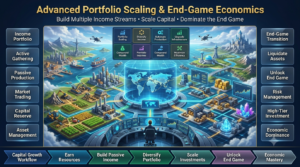
1. The Multi-Engine Economy: Scaling Beyond Single-Yield Loops
By the late-mid game, relying on a single resource stream (e.g., just mining, just quest rewards, or a single passive farm) creates a structural vulnerability. If an update balances your primary node, or if market saturation drops the value of your main crop/loot, your progression halts.
Advanced strategy requires building a decentralized, multi-engine portfolio where distinct income channels hedge against one another.
                  ┌─────────────────────────────────────────┐
                  │       INDEPENDENT RESOURCE LOOPS        │
                  └────────────────────┬────────────────────┘
                                       │
         ┌─────────────────────────────┼─────────────────────────────┐
         ▼                             ▼                             ▼
┌─────────────────┐           ┌─────────────────┐           ┌─────────────────┐
│ Active Gathering│           │ Passive Engine  │           │ Market Arbitrage│
│ (High Yield/Hr) │           │ (Zero Time Cost)│           │ (Capital Scaling)│
└────────┬────────┘           └────────┬────────┘           └────────┬────────┘
         │                             │                             │
         └─────────────────────────────┼─────────────────────────────┘
                                       │
                                       ▼
                  ┌─────────────────────────────────────────┐
                  │    END-GAME CAPITAL LIQUIDITY BUFFER    │
                  └─────────────────────────────────────────┘
Direct Answer: How Do You Scale Capital from Mid-Game to End-Game?
You scale capital by shifting from labor-intensive loops (active farming) to capital-intensive loops (crafting margins, asset holdings, automated nodes, and market trade). When your passive and automated systems cover 100% of your daily operational costs, 100% of your active play time can be dedicated to securing high-tier end-game assets.
2. Advanced Hedging & Portfolio Diversification
To ensure steady progress regardless of in-game economic shifts or RNG (random number generation) bad luck, distribute your investments across three non-correlated income mechanics:
| Income Mechanism | Dependency Factor | Return Potential | Downtime Efficiency | Strategic Function |
| Active Extraction | Player Time & Concentration | Linear ($1:1$ ratio to time) | Low | Cash flow during active play sessions |
| Passive Production | Real-World Elapsed Time | Exponential early, constant later | Maximum (100%) | Steady income while offline/afk |
| Asset Arbitrage / Crafting | Capital Availability & Market Knowledge | Compounding (Scales with wealth) | High | Converting excess liquidity into exponential growth |
💡 Pro Tip: Align your passive cycles with your real-world schedule. Set long-duration passive queues (8–12 hours) before sleeping or leaving for school/work, and short-duration queues (15–30 minutes) when actively playing.
3. The Liquidation & Exit Strategy (The End-Game Pivot)
A common mistake is holding onto mid-tier assets for too long. Mid-tier tools, gear, and intermediate crafting stations lose their value rapidly once end-game content unlocks.
+-----------------------------------------------------------------------------------+
|                           THE ASSET LIQUIDATION LIFECYCLE                         |
+-----------------------------------------------------------------------------------+
|  [ Acquired ]  ──>  [ Operational Peak ]  ──>  [ Depreciation Warning ]  ──>  [ Liquidated ]  |
|  (Mid-Tier Gear)    (Yields max value)         (End-game access near)        (Sold for capital)|
+-----------------------------------------------------------------------------------+
The Exit Protocol Rules:
Identify the Sunset Window: The moment a mid-tier asset is within 10–15% of being replaced by an end-game equivalent, begin planning its liquidation or conversion.
Avoid “Nostalgia Hoarding”: Unless an item provides a unique, permanent passive bonus from your storage, sell or salvage outdated mid-game gear to recover raw materials or liquid capital.
Reinvest into Non-Depreciating Assets: Convert depreciating liquid cash or mid-tier gear into non-depreciating assets—such as permanent account unlocks, max-tier crafting recipes, or high-tier upgrade materials.
4. End-Game Transition Matrix
Use this matrix to make clean, objective decisions when moving from mid-game investments to end-game capital deployment:
| Asset / System | Action at Mid-Game Cap | Rationale |
| Mid-Tier Gathering Gear | Sell / Salvage | Low resale value later; liquidate immediately to fund Tier-1 End-Game tools. |
| Intermediate Crafting Stations | Convert / Upgrade | Do not build duplicate mid-tier stations; dump resources directly into the final upgrade branch. |
| Raw Mid-Tier Materials | Craft into Liquidity | Process raw mats into high-demand consumables or trade goods before selling for higher margins. |
| Liquid Capital Buffer | Deploy into Key Unlocks | Move cash reserves directly into mandatory end-game entry tokens, raid keys, or master skill unlocks. |
5. End-Game Readiness Audit Checklist
[ ] Established at least two independent income streams (e.g., active farming + passive production).
[ ] Passive income generators aligned with real-world offline hours.
[ ] Depreciating mid-tier assets identified and scheduled for liquidation.
[ ] Liquid reserves allocated to fund mandatory end-game threshold requirements.
[ ] Zero capital tied up in redundant or obsolete intermediate gear.
Genre-Specific Execution Frameworks & The Final Mastery Audit
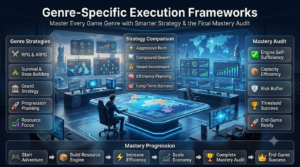
1. Cross-Genre Implementation Blueprints
While the core principles of compound returns and capacity management remain universal, their practical application varies significantly across different game genres. Apply these genre-tailored execution models to convert theory into gameplay strategy.
       ┌─────────────────────────────────────────────────────────┐
       │             GENRE-SPECIFIC FOCUS AREAS                  │
       └────────────────────────────┬────────────────────────────┘
                                    │
         ┌──────────────────────────┼──────────────────────────┐
         ▼                          ▼                          ▼
┌─────────────────┐        ┌─────────────────┐        ┌─────────────────┐
│     ARPGs       │        │  Survival/Base  │        │   Grand Strat   │
│  (Speed/Area)   │        │   (Automation)  │        │  (Tech Scaling) │
└─────────────────┘        └─────────────────┘        └─────────────────┘
RPGs & ARPGs (e.g., Path of Exile, Diablo, Elden Ring)
Primary Objective: Maximize clear speed and item filter efficiency.
Key Early Strategy: Prioritize Area of Effect (AoE) skills and movement abilities over single-target burst damage. Skip non-essential mini-bosses in early zones if their drops do not unlock explicit progression gates.
Resource Focus: Liquid currency, movement speed attributes, and vendor recipes that yield guaranteed stat rolls.
Survival & Base-Building Games (e.g., Valheim, Rust, Factorio)
Primary Objective: Reduce manual material gathering through progressive base automation.
Key Early Strategy: Build automated processing units (smelters, automated chest sorters, water collectors) before expanding decorative base perimeters.
Resource Focus: Raw structural materials, energy grids, and storage capacity.
Grand Strategy & 4X (e.g., Civilization, Stellaris, Hearts of Iron)
Primary Objective: Maximize science/tech generation to shorten the iteration time of future upgrades.
Key Early Strategy: Expand rapidly to claim high-yield tile nodes early, then shift immediately into internal infrastructure to avoid over-extension penalties.
Resource Focus: Research points, population growth modifiers, and baseline energy/gold generation.
2. Comparative Analysis: Aggressive Rush vs. Compound Growth
Different playstyles suit different objectives. The table below compares the two primary early-game operational models:
3. Real-World Decision Framework: The “3-Minute Rule”
To maintain peak efficiency during active gameplay sessions, implement the 3-Minute Rule for early-game decision making:
💡 The 3-Minute Rule: If an action (such as hunting a distant chest, fighting an out-of-way optional enemy, or sorting an unorganized inventory) takes more than 3 minutes and does not directly contribute to unlocking a primary engine, skip it or defer it until your mobility/capacity is doubled.
4. The Final Early-Game Mastery Audit
Before declaring your early-game phase complete and moving your focus entirely to late-game objectives, run this self-audit. Every checkbox represents a core metric of early-game operational success:
+-----------------------------------------------------------------------------------+
|                           EARLY-GAME SUCCESS AUDIT                                |
+-----------------------------------------------------------------------------------+
|  [✓] Engine Self-Sufficiency  ──>  Does passive income cover all maintenance costs?|
|  [✓] Capacity Efficiency      ──>  Is downtime between runs under 15% of play time? |
|  [✓] Threshold Alignment      ──>  Was gear acquired only to pass specific gates?  |
|  [✓] Risk Buffer Maintained   ──>  Do you meet the 3x Rebuy Rule for core setups?  |
+-----------------------------------------------------------------------------------+
Mastery Evaluation Checklist:
[ ] Engine Self-Sufficiency: Your passive and automated assets fully cover basic maintenance, repair, and consumable costs without requiring active grinding.
[ ] Minimal Downtime: Inventory trips and travel represent less than 15% of your total session time due to early capacity and mobility investments.
[ ] No Dead Capital: You hold zero obsolete mid-tier equipment; all transitional items have been salvaged, sold, or converted into liquid liquidity.
[ ] Threshold Efficiency: You passed every early-game boss or zone gate using the Minimum Viable Investment (MVI) rather than over-gearing prematurely.
[ ] Preparedness for Scale: Your liquid reserves are allocated toward high-tier access keys, master skill trees, or permanent account-wide unlocks.
Here is **Part 6: Educational Game Systems & Knowledge Hub Integration**, designed to bridge economic investment strategies with live classroom game modes, complete with direct resource links.
Educational Gaming Architecture & Complete Knowledge Hub
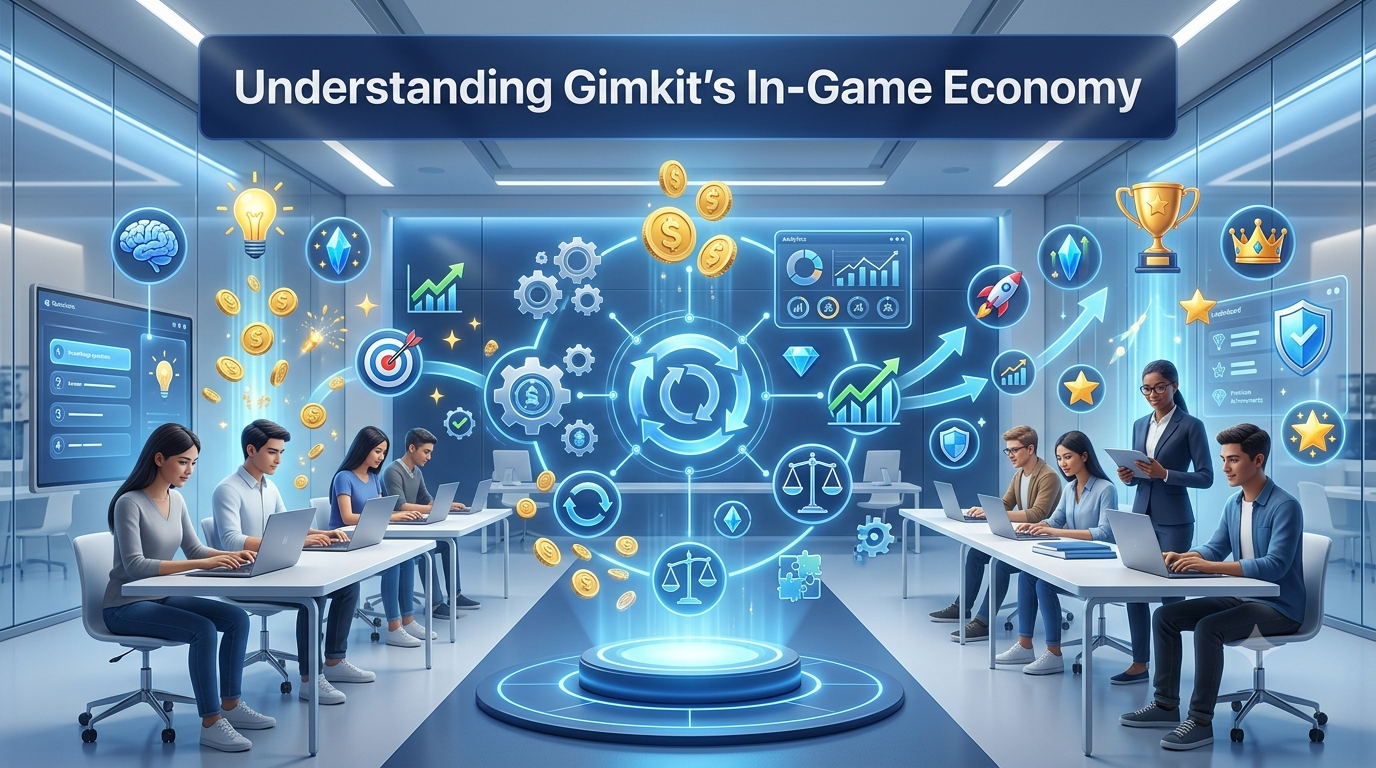
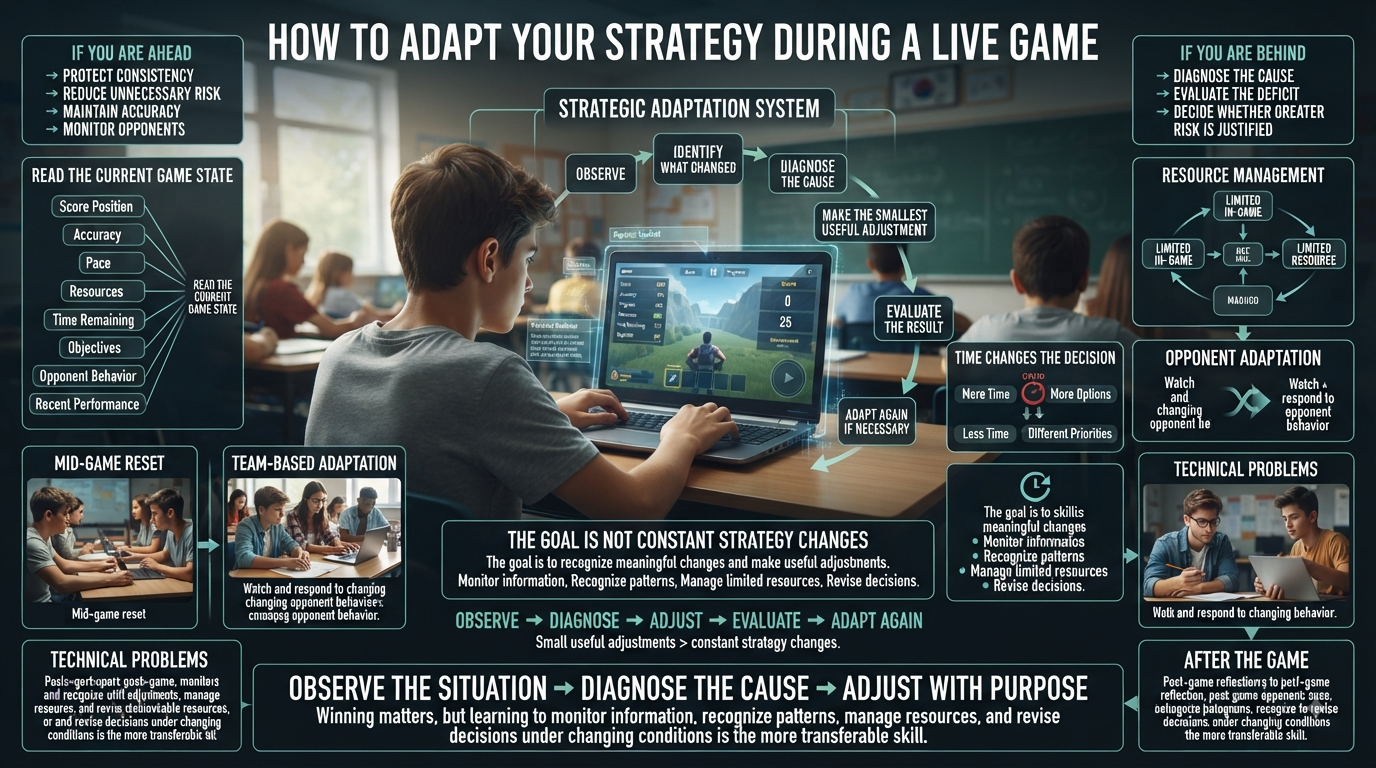
Applying early-game investment principles to live educational game platforms (such as Gimkit) demonstrates how economic mechanics drive engagement, strategy, and rapid skill acquisition. In fast-paced, live-learning environments, balancing cash flow, multiplier upgrades, and time management is essential for consistent victory.
       ┌────────────────────────────────────────────────────────┐
       │             CLASSROOM GAME ECONOMIC LOOP               │
       └───────────────────────────┬────────────────────────────┘
                                   │
         ┌─────────────────────────┼─────────────────────────┐
         ▼                         ▼                         ▼
┌─────────────────┐       ┌─────────────────┐       ┌─────────────────┐
│ Question Yield  │       │ Multiplier Shop │       │  Team Strategy  │
│ (Base Capital)  │       │ (Passive ROI)   │       │ (Yield Scaling) │
└─────────────────┘       └─────────────────┘       └─────────────────┘
1. Case Study: Economic Scaling in Classroom Game Modes
In active learning environments, players earn game currency by answering questions correctly. However, simply saving base currency leads to linear growth. Winning strategies require reinvesting early earnings into permanent multipliers, streak bonuses, and passive income generators during the first few minutes of play.
Phase 1 (0–2 Minutes): Direct $100\%$ of earnings into level-1 multipliers and streak bonuses.
Phase 2 (2–5 Minutes): Purchase passive income boosters to generate currency during downtime.
Phase 3 (5+ Minutes): Pivot toward team power-ups or defensive protections to retain market position.
2. Essential Resource & Knowledge Hub
To master platform mechanics, resolve technical issues, and access specialized learning materials, explore the organized knowledge categories below:
🛠️ Technical Setup & Getting Started
Main Portal: Access the complete platform overview at the Gimkit App Homepage.
Troubleshooting: Resolve connection drops, code entry errors, and access issues via Gimkit Login & Join Troubleshooting.
Platform Overview: Browse basic concepts and background details in General Information.
🎮 Game Modes, Features & Updates
Game Modes: Explore interactive mechanics, power-ups, and special rules under Features & Game Modes.
Recent Patches: Stay informed on new features and seasonal events at Games & Updates.
Quiz Sets: Create and manage interactive question banks in Interactive Quizzes.
💡 Strategy, Tutorials & Teacher Tools
Strategic Gameplay: Learn optimal upgrade paths and earning strategies through Gimkit Tips & Strategies.
Step-by-Step Guides: Follow detailed walk-throughs for hosting and playing in Gimkit Guides & Tutorials.
Educator Tools: Access lesson integration guides and classroom management tips in Gimkit Resources for Teachers.
📊 Platform Evaluation & Alternatives
Pricing & Plans: Review subscription tiers, pro features, and limits in Gimkit Reviews & Pricing.
Comparative Analysis: Evaluate alternative learning tools and feature comparisons via Comparisons & Alternatives.
3. Educator & Player Implementation Matrix
| Objective | Recommended Resource | Expected Outcome |
| Fix Join Code & Login Errors | Login & Join Troubleshooting Guide | Zero downtime during class setup |
| Optimize Upgrade Purchases | Tips & Strategies Hub | Maximum compounding return per session |
| Integrate Classroom Lessons | Teacher Resource Center | Streamlined assignment creation and reporting |
| Evaluate Software Plans | Reviews & Pricing Analysis | Clear budget planning for pro features |
Here is the English version of the paragraph:
Early-game success relies heavily on smart resource management and prioritizing key upgrades. Building a solid strategy early on allows you to speed up your progression and master complex game mechanics with ease. For the latest gaming news, detailed walkthroughs, and expert reviews, check out the IGN to find comprehensive guides for all your favorite games.
Professional Recommendations & Expert Reviews
Best Investment Strategies for Early Game Success require prioritizing core infrastructure upgrades to maximize your baseline resource generation right from the start.
Best Investment Strategies for Early Game Success emphasize unlocking automated passive income streams as early as possible to build sustained wealth.
Best Investment Strategies for Early Game Success dictate focusing on high-ROI tools and efficiency multipliers to drastically reduce gathering time.
Best Investment Strategies for Early Game Success suggest keeping high liquidity to capitalize on sudden market arbitrage opportunities.
Best Investment Strategies for Early Game Success advise minimizing consumable expenses and focusing strictly on permanent stat boosts.
Best Investment Strategies for Early Game Success call for early skill point allocation into economic and resource-yield nodes.
Best Investment Strategies for Early Game Success highlight the importance of reinvesting initial profits immediately to trigger compounding gains.
Best Investment Strategies for Early Game Success recommend securing fast-travel and mobility upgrades to minimize operational time loss.
Best Investment Strategies for Early Game Success involve targeting low-risk, high-margin missions to build a stable emergency reserve.
Best Investment Strategies for Early Game Success suggest establishing early dominance in high-demand trade routes or regional markets.
Best Investment Strategies for Early Game Success focus on acquiring foundational tier-one technologies before scaling production.
Best Investment Strategies for Early Game Success mandate strict budget planning to avoid capital drain on low-utility items.
Best Investment Strategies for Early Game Success leverage synergy bonuses by pairing complementary assets for maximum output.
Best Investment Strategies for Early Game Success include acquiring storage expansion early to hoard low-priced resources for future resale.
Best Investment Strategies for Early Game Success recommend building vendor reputation early to unlock crucial trade discounts.
Best Investment Strategies for Early Game Success dictate avoiding highly volatile assets until a solid capital buffer is established.
Best Investment Strategies for Early Game Success highlight the value of fast-payout quests over long-term, high-risk projects.
Best Investment Strategies for Early Game Success encourage buying rare crafting blueprints early to secure long-term market control.
Best Investment Strategies for Early Game Success emphasize cost-reduction upgrades to lower the daily maintenance fees of your assets.
Best Investment Strategies for Early Game Success recommend controlled strategic debt only when expansion yields far exceed interest rates.
Best Investment Strategies for Early Game Success suggest early guild or community funding to share resource burdens and speed up progression.
Best Investment Strategies for Early Game Success involve controlling key raw material hubs to create supply monopolies.
Best Investment Strategies for Early Game Success focus on optimizing the energy-to-gold ratio to extract peak value from daily actions.
Best Investment Strategies for Early Game Success advise converting surplus inventory into cash immediately to keep capital flowing.
Best Investment Strategies for Early Game Success require positioning assets in advance of timed events to exploit dynamic price spikes.
Best Investment Strategies for Early Game Success stress buying durable equipment to eliminate recurring repair costs.
Best Investment Strategies for Early Game Success leverage market price gaps by buying undervalued items and relisting them at standard rates.
Best Investment Strategies for Early Game Success prioritize unlocking pivotal zone gates to access higher-tier resource nodes.
Best Investment Strategies for Early Game Success focus on low-upkeep, high-utility units to maintain operational efficiency.
Best Investment Strategies for Early Game Success recommend stacking permanent passive modifiers to elevate overall account throughput.
Best Investment Strategies for Early Game Success demand strict opportunity-cost tracking to eliminate low-yield farming tasks.
Best Investment Strategies for Early Game Success involve hedging against inflation by storing wealth in tangible, high-demand goods.
Best Investment Strategies for Early Game Success suggest early investment in base production buildings to increase unit turnover speed.
Best Investment Strategies for Early Game Success advise focusing on first-mover advantages by capturing newly opened territories immediately.
Best Investment Strategies for Early Game Success require balancing early stat points toward raw economic output rather than late-game stats.
Best Investment Strategies for Early Game Success emphasize purchasing scalable assets that grow in utility as your level increases.
Best Investment Strategies for Early Game Success call for liquidating unnecessary starting gear to fund core progression milestones.
Best Investment Strategies for Early Game Success recommend prioritizing quests that offer permanent stat rewards over simple currency payouts.
Best Investment Strategies for Early Game Success suggest monitoring market cycles closely to sell gathered materials at daily peak rates.
Best Investment Strategies for Early Game Success advise against speculative buying on unproven assets during initial gameplay phases.
Best Investment Strategies for Early Game Success focus on securing regional transport routes to reduce freight and travel overhead.
Best Investment Strategies for Early Game Success recommend maintaining a liquid cash buffer for emergency market opportunities.
Best Investment Strategies for Early Game Success involve upgrading primary gathering tools to unlock rare material drop rates.
Best Investment Strategies for Early Game Success focus on building low-cost, high-speed units to clear basic objectives efficiently.
Best Investment Strategies for Early Game Success suggest prioritizing permanent territory control gains over temporary regional buffs.
Best Investment Strategies for Early Game Success require aligning every early trade with your ultimate end-game strategy.
Best Investment Strategies for Early Game Success emphasize unlocking automated crafting systems to generate passive market goods.
Best Investment Strategies for Early Game Success call for reinvesting quest bonuses directly into revenue-generating infrastructure.
Best Investment Strategies for Early Game Success recommend minimizing travel downtime by grouping location-based missions effectively.
Best Investment Strategies for Early Game Success demand a continuous review of asset yield to ensure peak performance at every stage.
Best Investment Strategies for Early Game Success rely on setting up multi-tier recycling systems so that any leftover resources or junk items can be converted directly into valuable crafting materials or emergency funds.
Most Frequently Asked Faqs
1. Should I invest in combat gear or economic infrastructure first?
Direct Answer: Economic infrastructure and yield generators should almost always take priority over combat gear in the opening phase of a game.
Professional Insight: In the early game, combat gear depreciates rapidly as character levels increase, quickly making expensive early purchases obsolete. Conversely, investments in inventory space, gathering tools, and passive resource generators begin compounding immediately. Unless gear is strictly required to pass a hard stat gate (the minimum stats needed to clear content), direct your starting capital toward capacity and yield.
2. Is it better to save currency for late-game items or spend it immediately?
Direct Answer: Reinvest liquid currency immediately into operational efficiency rather than letting it sit idle.
Professional Insight: Hoarding liquid currency in the early game incurs a heavy opportunity cost. Unspent currency generates zero passive value. By spending starting capital on speed boots, extra bag slots, or automated workers, you shorten your gathering loops and earn resources back at a significantly faster rate. Keep only a minimal safety buffer for emergency repairs or consumable refills, and reinvest the rest.
3. How do active farming and passive resource engines differ in ROI?
Direct Answer: Active farming trades player time for linear yields, while passive engines trade upfront capital for continuous time-independent returns.
Professional Insight: * Active Farming: Yields scale strictly with time spent playing. It is essential for immediate cash flow but limited by operational downtime.
Passive Engines: Continue producing value while offline or engaged in other tasks.
An optimal strategy uses active farming early on to fund high-value passive nodes. Once passive income covers your baseline maintenance costs, active play time can be shifted toward high-yield progression goals.
4. What is the “3x Rebuy Rule” and why is it important for risk management?
Direct Answer: The 3x Rebuy Rule dictates that you should never enter high-risk zones unless you hold cash or asset reserves equal to three times the total replacement cost of your equipment or access keys.
Professional Insight: In games featuring loss-on-death mechanics, durability degradation, or costly entry fees, a single unsuccessful run can wipe out hours of early-game progress if you are unhedged. Maintaining a triple reserve ensures that a setback is merely a minor financial speedbump rather than a critical loss that forces you to restart early-game grinding loops.
5. When should I liquidate my mid-tier gear and tools?
Direct Answer: Begin liquidating or salvaging mid-tier equipment when you reach within 10% to 15% of unlocking permanent end-game equivalents.
Professional Insight: Mid-tier gear loses market and strategic value quickly as player communities progress toward the end game. Holding onto intermediate tools past their utility window results in trapped capital. Liquidating these assets while demand remains moderate allows you to convert depreciating items into liquid reserves that fund mandatory end-game access keys, recipes, or permanent character upgrades.