Introduction
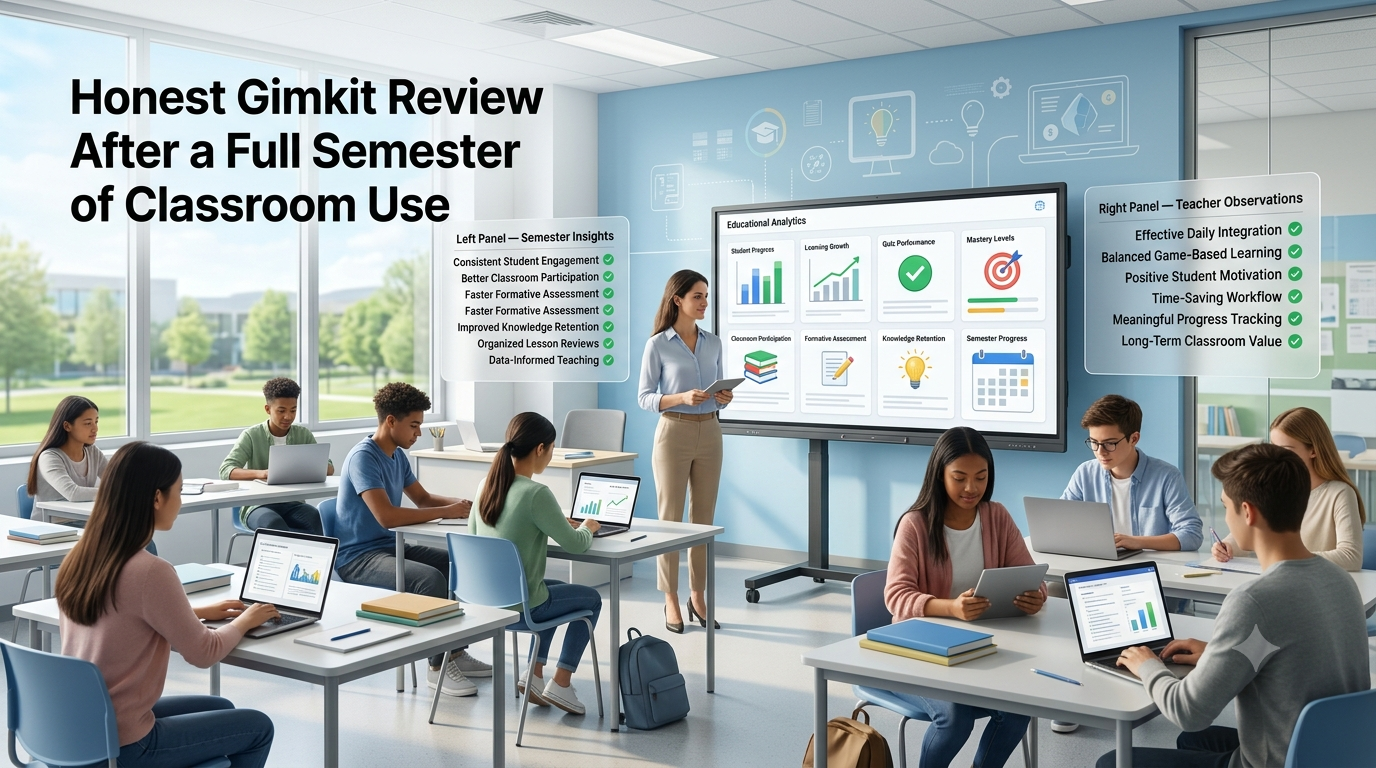
Honest Gimkit Review After a Full Semester of Classroom Use-Educational technology often makes a strong first impression, but the real test begins after the excitement wears off. Many classroom platforms are engaging during the first few lessons, only to become predictable within weeks. That difference between initial enthusiasm and long-term instructional value is what truly determines whether a tool deserves a permanent place in a teacher’s workflow.
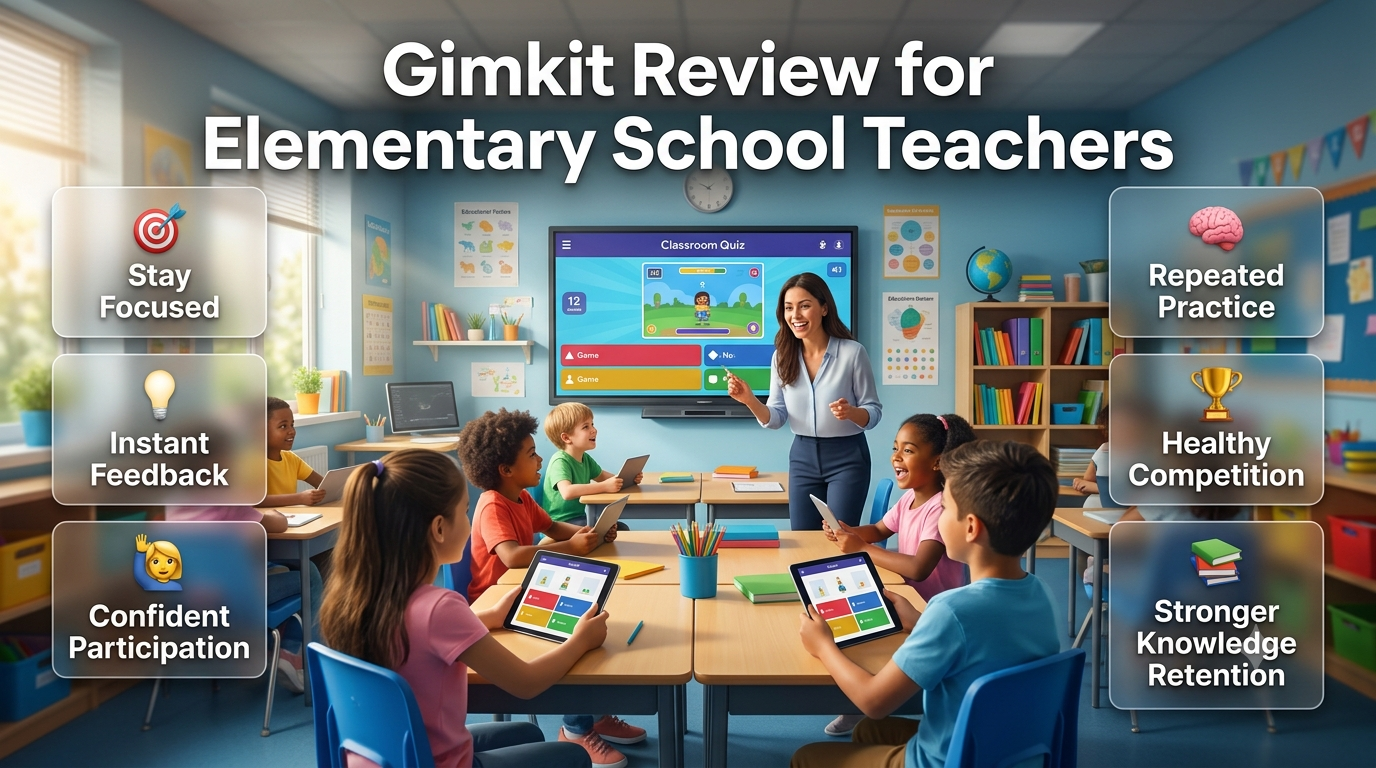
After incorporating Gimkit into regular classroom instruction for an entire semester, the experience became much clearer than any short-term trial could reveal. Instead of judging the platform based on its first few sessions, this review focuses on how it performed after months of consistent use across review lessons, formative assessment activities, curriculum reinforcement, and everyday teaching routines.
Looking at a full semester also changes the questions that matter. Rather than asking whether students enjoyed using the platform, the more meaningful questions become whether participation remained consistent, whether learning habits improved, whether classroom routines became more efficient, and whether the platform continued adding value after students became completely familiar with it.
This review is written from that long-term perspective. It explores classroom observations, instructional adjustments, student behavior, teaching strategies, and practical lessons learned over months of real implementation. The goal is not to promote or criticize the platform, but to provide an honest evaluation that helps other educators decide whether it can support their own instructional objectives throughout an academic term rather than only during the first few exciting lessons.
Setting Expectations Before the Semester
Before introducing any digital learning tool into a classroom routine, it’s important to define what success actually looks like. Measuring effectiveness solely by student excitement can be misleading because almost any new activity attracts attention during its first few uses. The real objective was to determine whether Gimkit could support meaningful instruction over an extended period without becoming another short-lived classroom trend.
Several practical goals were established before the semester began. The first was increasing consistent participation, particularly among students who rarely volunteered answers during traditional review sessions. The second involved improving the efficiency of formative assessment by making it easier to identify misunderstandings before formal testing. Finally, the platform needed to demonstrate that it could fit naturally into weekly lesson planning without creating additional preparation burdens that outweighed its educational benefits.
Another important expectation involved sustainability. A classroom resource should continue providing instructional value even after students become familiar with it. If motivation depends entirely on novelty, its usefulness naturally declines over time. For that reason, the semester focused on observing patterns that developed after repeated classroom use rather than drawing conclusions from isolated lessons.
Classroom Challenges Before Implementation
Every classroom develops its own instructional patterns, and not all review sessions produce the same level of participation. Before introducing Gimkit into the regular teaching schedule, several recurring challenges had become noticeable during revision activities. While most students completed assigned work, maintaining active involvement throughout an entire review lesson often proved difficult, particularly after demanding instructional units or near examination periods.
Participation also tended to become concentrated among a relatively small group of confident learners. These students frequently volunteered responses, answered discussion questions, and contributed throughout class, while others preferred remaining passive observers even when they understood the material. This imbalance made it more difficult to evaluate the overall level of class understanding because teacher feedback came from only a portion of the room.
Another challenge involved maintaining instructional momentum. Review lessons sometimes followed predictable routines that encouraged compliance rather than curiosity. Students completed the required tasks, but the atmosphere lacked the energy that often accompanies deeper learning. Addressing that issue required more than simply adding another activity—it required finding an approach capable of encouraging broader participation without disrupting curriculum objectives.
These existing classroom conditions became the baseline against which every later observation was measured. Instead of comparing Gimkit with ideal teaching situations, the evaluation compared it with the everyday realities already present throughout the semester.
Semester Planning Strategy
Rather than treating Gimkit as an occasional reward activity, the implementation followed a structured schedule designed to evaluate its consistency over time. Sessions were integrated into existing lesson plans only when they aligned with instructional objectives, ensuring that the platform supported learning rather than replacing carefully planned teaching.
Different curriculum units provided opportunities to observe how student responses evolved under varying academic demands. Some review sessions followed concept-heavy lessons that required careful recall, while others reinforced procedural knowledge or previously covered material. This variety helped determine whether classroom outcomes remained stable across changing instructional contexts instead of being influenced by a single subject area or lesson type.
Equally important was maintaining consistency in observation. After each session, notes were recorded regarding participation patterns, classroom atmosphere, transitions between activities, and overall lesson flow. These ongoing reflections gradually revealed trends that would have been impossible to identify after only a handful of classroom experiences. Over time, the accumulated observations provided a much clearer picture of where the platform genuinely supported instruction and where traditional teaching approaches continued to be more effective.
Student Behavior Changed Faster Than Academic Performance
One of the earliest observations during the semester had very little to do with assessment results. Instead, the first noticeable changes appeared in everyday classroom behavior. Within the first few weeks, students who normally remained passive during revision activities began participating more consistently. This shift did not immediately translate into higher assessment scores, but it changed the overall learning environment in meaningful ways.
Behavioral improvement often appears before measurable academic growth because students must first become comfortable participating before they can demonstrate deeper understanding. Increased confidence encourages more attempts, more questions, and greater willingness to learn from mistakes. Throughout the semester, these behavioral changes gradually became one of the strongest indicators that classroom culture was evolving in a positive direction.
Increased Willingness to Participate
Traditional review sessions often rely on volunteers or direct questioning, which naturally favors students who are already confident speaking in front of their classmates. Over time, it became evident that participation was becoming more evenly distributed across the classroom rather than remaining concentrated among a handful of outspoken learners.
Students who had previously avoided answering questions started contributing without requiring repeated encouragement. Even when answers were not entirely correct, they appeared more willing to engage with the lesson instead of remaining silent. This gradual increase in voluntary participation created more opportunities to identify misconceptions before formal assessments.
Confidence Developed Through Consistency
Confidence rarely develops because of a single successful lesson. Instead, it grows through repeated experiences where students feel comfortable contributing without fearing embarrassment after making mistakes.
Throughout the semester, classroom interactions reflected this gradual progression. Students who initially hesitated before responding became noticeably quicker to engage during later review activities. Rather than waiting for classmates to respond first, many developed the habit of attempting questions independently and trusting their own thinking.
This confidence also extended beyond review sessions. During ordinary classroom discussions, several students became noticeably more willing to explain ideas, justify answers, and contribute to collaborative learning activities.
The Motivation Curve Across an Entire Semester
Many classroom technologies receive positive reviews after only one or two lessons. Unfortunately, those evaluations rarely account for what happens once students become completely familiar with the platform. Sustained motivation is far more valuable than initial excitement because meaningful learning depends on consistency rather than novelty.
Observing student motivation over an entire semester revealed that engagement followed a predictable pattern rather than remaining constant.
| Time Period | General Classroom Observation |
|---|
| Weeks 1–2 | Curiosity and enthusiasm were naturally high. |
| Weeks 3–5 | Students became familiar with classroom routines. |
| Mid-Semester | Participation stabilized into consistent learning habits. |
| Final Weeks | Motivation depended more on lesson design than novelty. |
One important lesson emerged from this progression. Technology itself does not sustain engagement indefinitely. Instead, the teacher’s instructional decisions gradually become the primary factor influencing classroom energy once the platform is no longer new.
This distinction is important because many educators mistakenly attribute long-term engagement entirely to software. In reality, successful implementation depends just as much on lesson planning, timing, classroom management, and instructional variety.
Which Learners Benefited the Most?
One of the most interesting findings involved the fact that students did not respond to the classroom experience in exactly the same way. Different learning personalities benefited for different reasons, and recognizing these patterns made it easier to adapt future lesson planning.
Reserved Learners
Students who rarely participated during whole-class questioning often demonstrated the greatest improvement in classroom involvement. Because participation occurred within a structured activity rather than through public discussion, many appeared more comfortable contributing regularly.
Their increased activity provided better insight into their understanding, allowing instructional support to become more targeted instead of relying on assumptions based solely on verbal participation.
High-Achieving Students
Strong academic performers generally maintained their usual level of success, but another pattern became noticeable. Many shifted their attention away from simply completing review activities toward refining accuracy and maintaining consistency throughout longer classroom sessions.
Instead of dominating discussions, several began supporting classmates during collaborative moments that followed review activities. This contributed to a healthier classroom atmosphere where stronger students became learning partners rather than only high scorers.
Students Who Frequently Lost Focus
Learners with shorter attention spans often benefited from having clearly structured review periods that required ongoing interaction. Rather than becoming disengaged midway through revision sessions, many remained involved for longer periods than during conventional worksheet-based review.
However, maintaining this improvement required thoughtful classroom pacing. When review sessions extended beyond an appropriate duration, attention gradually declined regardless of the instructional platform being used.
Classroom Conversations Became More Meaningful
An unexpected outcome appeared after review sessions had become a regular part of classroom routines. Improvements were not limited to the activities themselves. Instead, discussions immediately afterward became noticeably richer than they had been earlier in the semester.
Students increasingly referred to concepts from previous lessons without requiring prompts from the teacher. Questions also became more analytical, with learners asking why particular answers were correct instead of simply requesting the correct solution.
These conversations demonstrated an important instructional principle. Effective review should not conclude when an activity ends. Instead, it should create opportunities for deeper classroom dialogue that extends learning beyond immediate recall.
Several changes became noticeable over time:
- Students justified answers more frequently.
- Peer explanations became increasingly common.
- Classroom discussions required less teacher prompting.
- Misconceptions surfaced naturally during conversations.
- Reflection became a more regular part of review lessons.
These developments suggested that the review process was gradually supporting broader classroom communication rather than functioning as an isolated instructional activity.
Knowledge Retention Several Weeks Later
Immediate review performance provides only limited evidence of learning. Students often remember information shortly after practicing it, but long-term retention depends on whether knowledge remains accessible weeks later when no recent review has occurred.
To evaluate this aspect, attention was given to delayed recall during later instructional units. Rather than measuring only short-term classroom success, observations focused on how frequently previously taught concepts reappeared during unrelated lessons.
One encouraging pattern involved the speed with which students retrieved earlier material. Concepts revisited several weeks after initial instruction generally required less prompting than expected. While this did not eliminate forgetting altogether, it suggested that repeated retrieval opportunities had strengthened memory connections over time.
Equally important was the quality of student explanations. Instead of recalling isolated facts, many learners demonstrated a better ability to connect previous concepts with new material introduced later in the semester. This kind of cumulative understanding is often more valuable than isolated performance during individual review sessions because it supports long-term academic growth rather than temporary memorization.
Where Gimkit Didn’t Meet My Expectations
No classroom tool performs perfectly throughout an entire semester, and expecting otherwise creates unrealistic standards. While Gimkit strengthened several aspects of daily instruction, there were also situations where it failed to deliver the results I originally anticipated. Recognizing these limitations became just as valuable as identifying its strengths because it prevented me from forcing the platform into lessons where another instructional approach produced better outcomes.
One lesson became particularly clear: the success of a digital learning platform depends heavily on matching it to the right instructional objective. When used outside those conditions, the educational value declined regardless of how much students enjoyed the activity. Understanding these boundaries allowed lesson planning to become more intentional rather than relying on the same review method every week.
Competitive Energy Sometimes Overshadowed Reflection
Healthy competition can increase classroom participation, but maintaining the right balance proved more challenging than expected. In several classes, students became so focused on improving their personal performance that they rushed through questions without pausing to think about why an answer was correct. Their attention shifted toward maintaining momentum instead of carefully processing the underlying concept.
This behavior became easier to recognize after repeated observations. Students who normally demonstrated thoughtful reasoning occasionally responded more impulsively during highly energetic review sessions. Although participation remained high, the depth of learning was not always equal to the level of excitement in the room.
Rather than eliminating competitive activities altogether, I began treating them as one component within a broader instructional sequence instead of the final stage of learning. This adjustment encouraged students to slow down and reflect once the activity had concluded.
Some Learning Objectives Needed Slower Instruction
Not every lesson benefits from rapid review cycles. Certain topics require extended discussion, multiple examples, guided reasoning, and opportunities for students to explain their thinking step by step. During these units, a faster classroom rhythm sometimes worked against the learning objective instead of supporting it.
Subjects involving analytical writing, evidence-based argumentation, complex mathematical reasoning, or open-ended interpretation demanded more deliberate instructional pacing. Students needed time to organize ideas, evaluate alternative viewpoints, and revise their thinking through conversation. Those experiences could not be replaced by quick-response activities, regardless of how engaging they appeared.
Recognizing this distinction improved lesson planning because it reinforced an important principle: instructional methods should always follow learning goals, not the other way around.
The Biggest Surprise After One Semester
Before beginning the semester, I expected the most significant improvements to appear in assessment data. Instead, the greatest surprise involved classroom culture. The atmosphere during review lessons gradually became more collaborative, more confident, and noticeably less intimidating for many learners.
Students became increasingly comfortable acknowledging uncertainty instead of avoiding participation altogether. Rather than viewing incorrect answers as failures, they appeared more willing to treat them as opportunities for improvement. This subtle shift created a classroom environment where learning became more visible because students stopped trying to hide every mistake.
Another unexpected observation involved consistency. Attendance, energy levels, and participation naturally fluctuated throughout the semester, yet the overall willingness to engage remained relatively stable. That consistency proved more valuable than occasional bursts of enthusiasm because it supported sustainable classroom routines instead of depending on temporary excitement.
Perhaps the most meaningful surprise was how these changes extended into lessons that did not involve Gimkit at all. Students carried greater confidence into ordinary discussions, collaborative activities, and teacher-led questioning, suggesting that the influence of regular participation reached beyond individual review sessions.
Classroom Management Lessons I Learned
Introducing any recurring classroom activity eventually changes management routines. Over time, I realized that successful implementation depended less on technology itself and more on the procedures established around it. Clear expectations reduced unnecessary interruptions and allowed instructional time to remain focused on learning rather than organization.
One effective adjustment involved creating consistent transitions between lesson segments. Instead of moving directly into a review activity without preparation, students followed a predictable routine that included brief instructions, expectations for behavior, and clear objectives for the session. These small organizational habits significantly reduced confusion while improving classroom efficiency.
Consistent Routines Reduced Lost Time
Repeated classroom experiences demonstrated that students perform better when expectations remain stable. Establishing the same preparation routine before every review session minimized unnecessary questions and allowed activities to begin more smoothly.
An effective transition routine included several predictable steps:
| Classroom Routine | Instructional Purpose |
|---|
| Brief objective reminder | Reinforce lesson goals |
| Device preparation | Reduce technical interruptions |
| Classroom expectations | Maintain productive behavior |
| Reflection after completion | Connect activity to learning |
Although these routines required a small investment of time during the first few weeks, they eventually became automatic and reduced classroom management demands throughout the remainder of the semester.
Noise Levels Required Active Monitoring
One practical lesson involved classroom volume. Increased participation naturally produced higher energy, but without clear expectations that energy occasionally developed into unnecessary noise. Allowing enthusiasm to grow unchecked sometimes distracted nearby students who were concentrating on their own work.
Rather than discouraging excitement, I found it more effective to establish acceptable classroom volume before each session began. Short reminders about respectful communication, appropriate celebration, and maintaining focus helped preserve a productive learning environment without reducing student motivation.
How My Teaching Style Changed
The semester influenced more than student behavior. It also changed several aspects of my own instructional approach. As classroom routines evolved, I spent less time delivering extended review explanations and more time observing how individual students interacted with the material.
This shift allowed teaching decisions to become increasingly responsive. Instead of assuming which concepts required additional instruction, I could identify learning patterns through classroom observation and adjust future lessons accordingly. Intervention became more targeted because instructional support focused on specific misunderstandings rather than reviewing entire units unnecessarily.
Another noticeable change involved questioning techniques. Rather than asking whether students understood a topic, classroom conversations increasingly focused on why particular ideas remained confusing and how different concepts connected with one another. These discussions generated richer instructional insights than simple right-or-wrong responses.
Perhaps the most valuable professional lesson involved patience. Immediate classroom performance no longer became the sole measure of success. Instead, I began evaluating progress through gradual improvements in participation, confidence, communication, and long-term understanding. This broader perspective created a more balanced view of student learning throughout the semester.
Situations Where I Eventually Stopped Using Gimkit
One important realization emerged after several months of experimentation: successful teaching is not about using the same resource as often as possible. Instead, it involves recognizing when a particular instructional strategy has reached the limits of its effectiveness.
There were several lesson types where I intentionally chose different approaches because they aligned more closely with the desired learning outcomes.
Extended Writing Lessons
When students needed to organize ideas into detailed paragraphs, essays, or research responses, uninterrupted writing time proved far more valuable than interactive review activities. Developing written communication requires planning, revision, and sustained concentration that cannot be accelerated through shorter review formats.
Critical Discussion Sessions
Some lessons focused entirely on interpreting evidence, debating perspectives, or exploring multiple possible answers. These objectives depended on thoughtful dialogue rather than immediate responses. Small-group discussions and teacher-guided conversations consistently produced deeper reasoning during these units.
Project-Based Learning
Long-term projects required creativity, planning, collaboration, and problem-solving over multiple days or weeks. During these learning experiences, classroom time was better invested in coaching, feedback, and progress conferences than structured review activities.
Learning when not to use a particular educational tool ultimately became just as important as learning how to use it effectively. Rather than reducing the value of Gimkit, these decisions strengthened its role by reserving it for situations where it genuinely contributed to better instruction instead of attempting to solve every classroom challenge.
Building a Sustainable Weekly Classroom Workflow
One of the biggest lessons from a semester of consistent classroom use was that Gimkit produced the best educational results when it became part of a structured instructional routine instead of a spontaneous activity used whenever extra time was available. Initially, I scheduled sessions whenever students seemed tired or needed a break from traditional instruction. Although those lessons remained enjoyable, the learning outcomes varied because the activities were not always connected to specific instructional objectives.
As the semester progressed, I developed a predictable weekly workflow that aligned review sessions with curriculum pacing rather than classroom mood. This consistency helped students understand the purpose of each activity and allowed every session to reinforce previously taught concepts without interrupting the overall progression of the course.
Instead of becoming an occasional reward, the platform gradually became one component within a larger teaching strategy where each lesson prepared students for the next stage of learning.
A Weekly Routine That Proved Sustainable
Rather than relying on fixed daily schedules, I organized review opportunities around instructional milestones. New concepts received direct instruction first, followed by guided practice and collaborative discussion before any review activities were introduced. This sequence ensured that students encountered material through multiple learning experiences before being expected to demonstrate independent understanding.
The resulting workflow looked something like this:
This approach prevented review activities from becoming isolated classroom events. Instead, every session contributed to a continuous learning cycle where feedback influenced upcoming lessons rather than simply measuring completed instruction.
Teacher Mistakes I Made During the First Month
Looking back, the first month contained several avoidable mistakes that affected the quality of instruction far more than the technology itself. None of these issues resulted from software limitations. Instead, they reflected my own assumptions about how students would respond after repeated classroom use.
Recognizing these mistakes early made the remainder of the semester significantly more effective because instructional adjustments were based on actual classroom observations rather than expectations.
Using It Too Frequently
During the opening weeks, enthusiasm led me to schedule review sessions more often than necessary. Students continued participating, but the activities gradually became predictable because they appeared too regularly within the weekly routine.
Reducing the frequency created a noticeable improvement. By spacing review opportunities more intentionally, each session regained its instructional impact while preserving student interest throughout the semester.
The experience reinforced an important teaching principle: effective educational resources remain valuable when used purposefully rather than excessively.
Measuring Success Too Quickly
Another early mistake involved expecting immediate academic improvement. After several successful classroom sessions, I anticipated that assessment scores would increase almost immediately.
Instead, meaningful improvement appeared much more gradually. Participation increased first, followed by confidence, classroom discussion, and eventually stronger academic performance over time.
This delayed progression emphasized that learning develops in stages. Behavioral improvements often provide the foundation upon which measurable achievement is later built.
Trying to Use the Same Approach for Every Class
Although lesson objectives remained similar across multiple classes, student personalities differed considerably. Initially, I assumed that identical instructional routines would produce similar outcomes everywhere.
That assumption quickly proved inaccurate.
Some groups responded enthusiastically to energetic review sessions, while others benefited from a calmer instructional pace that included more reflection between activities. Adapting implementation to individual classroom dynamics produced noticeably stronger results than following a rigid teaching formula.
Flexibility ultimately became one of the most valuable professional lessons of the semester.
Professional Recommendations After a Full Semester
Several practical recommendations emerged naturally through repeated classroom experience. These suggestions are not universal rules but rather instructional habits that consistently supported productive learning environments across different units and teaching situations.
Begin With Clear Learning Objectives
Every successful review session started with a clearly defined instructional purpose rather than the simple intention of making class more enjoyable. Students participated more thoughtfully when they understood exactly which concepts were being reinforced and why those concepts mattered within the broader curriculum.
Connecting every activity to specific learning outcomes also made post-session reflection much more meaningful because students could relate their performance directly to lesson objectives instead of viewing the experience as an isolated classroom event.
Observe More Than Scores
One of the easiest mistakes teachers can make is evaluating classroom success entirely through numerical performance. Throughout the semester, some of the most valuable observations came from watching how students approached learning rather than simply recording assessment results.
Important indicators included:
- Increased willingness to attempt difficult questions.
- Better collaboration during follow-up activities.
- More thoughtful classroom discussions.
- Greater confidence when explaining ideas.
- Improved persistence after making mistakes.
These behaviors often revealed meaningful educational growth before significant improvements appeared in formal assessment data.
Schedule Reflection Immediately After Review Sessions
Some of the richest classroom conversations occurred immediately after review activities ended. Instead of transitioning directly into another lesson, spending a few minutes discussing common misconceptions, surprising observations, or particularly challenging concepts significantly strengthened long-term understanding.
Reflection transformed review from a standalone activity into an opportunity for deeper thinking. Students became increasingly capable of identifying their own learning needs, which encouraged greater independence throughout the remainder of the semester.
Who Will Benefit Most From Long-Term Classroom Use?
After several months of implementation, certain teaching situations consistently demonstrated stronger educational value than others. Rather than recommending Gimkit for every educator, it seems more appropriate to identify the environments where long-term use naturally complements existing instructional practices.
It is particularly well suited for teachers who regularly incorporate formative assessment into their classroom routines and who prefer making instructional adjustments based on ongoing observations rather than relying exclusively on end-of-unit testing. Educators working with classes that benefit from active participation, structured review opportunities, and frequent retrieval practice are also likely to find long-term value.
Teachers who emphasize continuous feedback throughout a semester may appreciate how repeated review activities create regular opportunities to monitor classroom understanding without interrupting the overall pace of instruction.
Conversely, instructors whose courses revolve primarily around extended essays, design projects, laboratory investigations, artistic performance, or research-based assignments may discover that other instructional approaches better support those learning objectives. In those settings, thoughtful discussion, detailed feedback, and sustained independent work often contribute more directly to student success than recurring review sessions.
Final Verdict After a Full Semester
After an entire semester of classroom use, my overall opinion became far more balanced than it was during the opening weeks. Initial enthusiasm gradually evolved into a practical understanding of where Gimkit genuinely strengthened instruction and where traditional teaching methods continued to provide greater educational value.
Its greatest contribution was not simply increasing classroom activity but encouraging broader participation, improving instructional feedback, and supporting consistent review habits over time. The platform became most effective when integrated thoughtfully within a larger teaching strategy rather than serving as the centerpiece of every lesson.
Equally important was recognizing its limitations. No educational resource can replace careful lesson planning, meaningful teacher-student interaction, or high-quality instructional design. Successful implementation depended far more on thoughtful teaching decisions than on technology alone.
Viewed through the lens of an entire semester rather than a single exciting lesson, Gimkit proved to be a reliable instructional support tool—not because it transformed teaching overnight, but because it consistently enhanced specific aspects of classroom learning when used intentionally and in the right context.
Conclusion
A semester provides enough time for first impressions to disappear and genuine instructional value to become visible. Looking back over months of consistent classroom experience, the most important lesson was that sustainable educational success comes from thoughtful implementation rather than from any single platform or teaching method.
Gimkit contributed positively by encouraging broader participation, creating more consistent review routines, and helping classroom discussions become increasingly reflective. At the same time, it reinforced an equally valuable reminder: technology should always serve pedagogy, not replace it.
For educators considering long-term adoption, the decision should not be based on whether the platform is enjoyable. Instead, it should be based on whether it supports the specific learning goals, classroom culture, and instructional philosophy they want to develop over the course of an entire academic year.
In my experience, when used with clear objectives, realistic expectations, and a willingness to adapt teaching strategies as students evolve, Gimkit earned its place as a dependable component of classroom instruction rather than a short-lived educational trend.
Expert Reviews & Instant Guidance for you
Honest Gimkit Review After a Full Semester of Classroom Use begins with one clear observation: sustained classroom value matters more than an exciting first impression. After months of regular use, it becomes easier to evaluate whether the platform consistently supports learning.
Honest Gimkit Review After a Full Semester of Classroom Use shows that student enthusiasm generally remains strong when activities are varied and aligned with classroom objectives rather than repeated without modification.
Honest Gimkit Review After a Full Semester of Classroom Use demonstrates that the platform works best as a formative assessment tool, helping teachers review concepts and identify learning gaps throughout the semester.
Honest Gimkit Review After a Full Semester of Classroom Use highlights that regular participation encourages students to remain actively involved instead of becoming passive observers during review sessions.
Honest Gimkit Review After a Full Semester of Classroom Use reveals that thoughtful lesson planning has a greater impact on educational outcomes than the platform’s game mechanics alone.
Honest Gimkit Review After a Full Semester of Classroom Use shows that immediate feedback helps students recognize misunderstandings while the lesson is still fresh, making correction more effective.
Honest Gimkit Review After a Full Semester of Classroom Use demonstrates that repeated exposure to key concepts improves long-term retention when review activities are scheduled consistently.
Honest Gimkit Review After a Full Semester of Classroom Use indicates that students often become more confident participating in classroom reviews because the interactive format reduces pressure compared with traditional quizzes.
Honest Gimkit Review After a Full Semester of Classroom Use highlights that different game modes help maintain engagement by preventing classroom review from becoming repetitive.
Honest Gimkit Review After a Full Semester of Classroom Use demonstrates that teachers benefit from performance reports, which provide useful insights into individual and class-wide learning progress.
Honest Gimkit Review After a Full Semester of Classroom Use shows that creating curriculum-aligned question sets significantly improves the educational value of every activity.
Honest Gimkit Review After a Full Semester of Classroom Use emphasizes that strategy-based gameplay encourages students to think beyond simply selecting correct answers.
Honest Gimkit Review After a Full Semester of Classroom Use demonstrates that classroom discussions after gameplay reinforce understanding and help students explain their reasoning.
Honest Gimkit Review After a Full Semester of Classroom Use shows that self-paced assignments provide additional opportunities for independent practice outside classroom hours.
Honest Gimkit Review After a Full Semester of Classroom Use highlights that regular use improves student familiarity with the platform, allowing greater attention to academic content instead of game mechanics.
Honest Gimkit Review After a Full Semester of Classroom Use demonstrates that performance improvements are most noticeable when activities support ongoing classroom instruction instead of isolated review sessions.
Honest Gimkit Review After a Full Semester of Classroom Use encourages teachers to vary question difficulty throughout the semester so students continue experiencing meaningful academic challenges.
Honest Gimkit Review After a Full Semester of Classroom Use shows that interactive learning is particularly effective when combined with discussions, written work, and practical classroom activities.
Honest Gimkit Review After a Full Semester of Classroom Use highlights that students generally respond positively to immediate recognition of progress through continuous participation.
Honest Gimkit Review After a Full Semester of Classroom Use demonstrates that formative assessment data becomes increasingly valuable when collected consistently across multiple units.
Honest Gimkit Review After a Full Semester of Classroom Use reveals that teachers save preparation time by updating and reusing existing question banks rather than creating new activities every week.
Honest Gimkit Review After a Full Semester of Classroom Use shows that classroom engagement remains high when review sessions are scheduled strategically instead of being overused.
Honest Gimkit Review After a Full Semester of Classroom Use demonstrates that collaborative game modes encourage communication, teamwork, and peer-supported learning throughout classroom activities.
Honest Gimkit Review After a Full Semester of Classroom Use highlights that meaningful educational value depends on quality instructional content rather than competition alone.
Honest Gimkit Review After a Full Semester of Classroom Use indicates that teachers who analyze classroom reports regularly can adapt instruction more effectively to student needs.
Honest Gimkit Review After a Full Semester of Classroom Use demonstrates that consistent implementation throughout the semester produces stronger results than occasional classroom use.
Honest Gimkit Review After a Full Semester of Classroom Use encourages educators to balance interactive review with direct instruction, discussion, and independent learning activities.
Honest Gimkit Review After a Full Semester of Classroom Use shows that students benefit most when gameplay supports clearly defined curriculum objectives and measurable learning outcomes.
Honest Gimkit Review After a Full Semester of Classroom Use demonstrates that long-term success comes from thoughtful integration into classroom routines rather than relying solely on technology for engagement.
Honest Gimkit Review After a Full Semester of Classroom Use ultimately concludes that the platform continues to deliver meaningful educational value after months of consistent classroom implementation. Its combination of engaging gameplay, formative assessment, immediate feedback, flexible learning options, and useful performance analytics makes it an effective supplement to traditional instruction.
Honest Gimkit Review After a Full Semester of Classroom Use shows that students quickly become familiar with the interface, allowing classroom time to focus on learning rather than explaining game controls.
Honest Gimkit Review After a Full Semester of Classroom Use demonstrates that shorter review sessions often maintain higher energy levels than extended gameplay, especially during busy instructional weeks.
Honest Gimkit Review After a Full Semester of Classroom Use highlights that regularly updating question sets keeps activities fresh and prevents students from relying solely on memorized answers.
Honest Gimkit Review After a Full Semester of Classroom Use reveals that participation increases when teachers rotate game modes to match different lesson objectives and classroom dynamics.
Honest Gimkit Review After a Full Semester of Classroom Use shows that students appreciate immediate feedback because it helps them understand mistakes before moving to the next topic.
Honest Gimkit Review After a Full Semester of Classroom Use demonstrates that quieter students often participate more confidently in interactive review sessions than in traditional classroom questioning.
Honest Gimkit Review After a Full Semester of Classroom Use highlights that classroom engagement remains strongest when competition is balanced with collaboration and meaningful academic discussion.
Honest Gimkit Review After a Full Semester of Classroom Use indicates that teachers benefit from identifying recurring misconceptions through performance reports instead of relying only on final test results.
Honest Gimkit Review After a Full Semester of Classroom Use demonstrates that regular formative assessment supports better instructional decisions throughout the semester.
Honest Gimkit Review After a Full Semester of Classroom Use shows that integrating review games into weekly lesson plans creates more consistent learning habits among students.
Honest Gimkit Review After a Full Semester of Classroom Use highlights that technology becomes most effective when it reinforces curriculum objectives instead of distracting from instructional priorities.
Honest Gimkit Review After a Full Semester of Classroom Use demonstrates that repeated classroom use encourages students to become more confident with difficult concepts through continuous practice.
Honest Gimkit Review After a Full Semester of Classroom Use reveals that teachers can efficiently differentiate instruction by modifying question difficulty for different groups of learners.
Honest Gimkit Review After a Full Semester of Classroom Use shows that combining interactive gameplay with teacher explanations produces stronger educational outcomes than either approach independently.
Honest Gimkit Review After a Full Semester of Classroom Use highlights that student motivation remains higher when learning activities emphasize progress and improvement rather than leaderboard rankings alone.
Honest Gimkit Review After a Full Semester of Classroom Use demonstrates that careful planning before each session significantly improves both engagement and knowledge retention.
Honest Gimkit Review After a Full Semester of Classroom Use indicates that the platform supports a variety of subjects, making it useful across multiple grade levels and curriculum areas.
Honest Gimkit Review After a Full Semester of Classroom Use shows that consistent classroom implementation allows teachers to collect meaningful performance data over time, helping track student growth more effectively.
Honest Gimkit Review After a Full Semester of Classroom Use demonstrates that educational value comes from combining interactive technology with effective teaching strategies, clear learning objectives, and regular student feedback.
Honest Gimkit Review After a Full Semester of Classroom Use ultimately confirms that the platform remains an effective classroom resource after sustained use. Rather than losing its appeal over time, Gimkit continues to support active participation, formative assessment, concept reinforcement, and data-informed instruction when teachers thoughtfully integrate it into their long-term lesson planning.
Most Frequently Asked Faqs
1. Is Gimkit still worth using after the initial excitement wears off?
One of the biggest concerns teachers have before adopting any educational platform is whether students will lose interest once the novelty disappears. After using Gimkit consistently for an entire semester, I found that the answer depends less on the platform itself and more on how it’s integrated into classroom instruction. When Gimkit becomes a predictable daily routine, engagement naturally begins to decline. However, when it’s used intentionally to reinforce key concepts, review challenging units, or prepare students for upcoming assessments, it continues to hold students’ attention surprisingly well.
What changed over time wasn’t the platform—it was my teaching strategy. Instead of relying on Gimkit as a weekly habit, I started using it at instructional moments where active participation added genuine value. That simple adjustment kept students engaged without making the experience feel repetitive.
Key Takeaways:
- Use Gimkit as a reinforcement tool rather than a daily activity.
- Align sessions with important learning objectives.
- Rotate review methods to prevent classroom fatigue.
- Long-term success depends on instructional planning, not novelty.
2. What changes did I notice in student learning after using Gimkit for a full semester?
The most meaningful improvements were not immediate test score increases but gradual changes in how students approached learning. Over several months, many students became more willing to participate, answer challenging questions, and engage in follow-up discussions. Those who previously stayed quiet during review activities started contributing more consistently, giving me a clearer picture of class-wide understanding.
Another noticeable difference was the confidence students showed when revisiting previously taught material. Instead of relying heavily on teacher prompts, many learners were able to recall concepts independently and explain their thinking with greater clarity. These improvements developed gradually through repeated opportunities to revisit important content rather than through a single review session.
Key Observations:
- Increased confidence during classroom participation.
- Better recall of previously learned concepts.
- More meaningful classroom discussions.
- Greater willingness to attempt challenging questions.
- Stronger learning habits developed over time.
3. Are there situations where Gimkit is not the best instructional choice?
Absolutely. One lesson that became clear after months of classroom use is that no educational platform fits every teaching objective. While Gimkit works well for reinforcing knowledge and checking understanding, some lessons require completely different instructional approaches. Activities involving extended writing, research, project development, or deep analytical discussion benefit more from slower, teacher-guided instruction where students have time to organize ideas and explain their reasoning in detail.
Trying to force the same digital tool into every lesson eventually reduces its effectiveness. The most successful approach is recognizing where Gimkit supports learning and where traditional teaching methods provide stronger educational outcomes.
When Other Methods Work Better:
- Essay writing and written analysis.
- Research-based assignments.
- Project-based learning activities.
- Socratic discussions and debates.
- Lessons requiring detailed explanations and critical thinking.
4. What was the biggest lesson learned after using Gimkit throughout an entire semester?
The biggest takeaway was realizing that educational technology should enhance teaching—not replace thoughtful lesson design. During the first few weeks, it was easy to focus on student excitement, but long-term classroom success depended far more on instructional planning than on the software itself. Sessions that were carefully connected to lesson objectives consistently produced better learning outcomes than activities used simply to make class more entertaining.
Another important realization was that student engagement should never be confused with student understanding. A classroom can be energetic and enjoyable while still requiring meaningful follow-up instruction. The most effective lessons combined active review with reflection, discussion, and targeted teacher feedback.
Professional Lessons Learned:
- Engagement does not automatically equal learning.
- Strong lesson planning remains the most important factor.
- Reflection after review improves understanding.
- Technology should support pedagogy, not replace it.
- Consistency is more valuable than occasional excitement.
5. Would I recommend Gimkit to other teachers after a full semester of classroom experience?
After using Gimkit across an entire semester, I would recommend it to educators who view it as part of a balanced teaching strategy rather than a complete instructional solution. It proved most valuable for maintaining participation, reinforcing previously taught concepts, and creating regular opportunities to monitor student understanding throughout the term. However, its effectiveness depended on thoughtful implementation and realistic expectations.
Teachers looking for a tool that complements classroom instruction, encourages consistent participation, and supports ongoing formative assessment are likely to benefit the most. Those expecting it to replace direct instruction, discussion, or project-based learning may be disappointed. Used with the right purpose and at the right time, it becomes a reliable addition to the classroom rather than a temporary trend.
Who Will Benefit Most:
- Teachers who regularly conduct formative assessments.
- Classrooms that need higher student participation.
- Educators reinforcing concepts throughout the semester.
- Instructors seeking better insight into student understanding.
- Schools combining traditional teaching with digital learning tools.