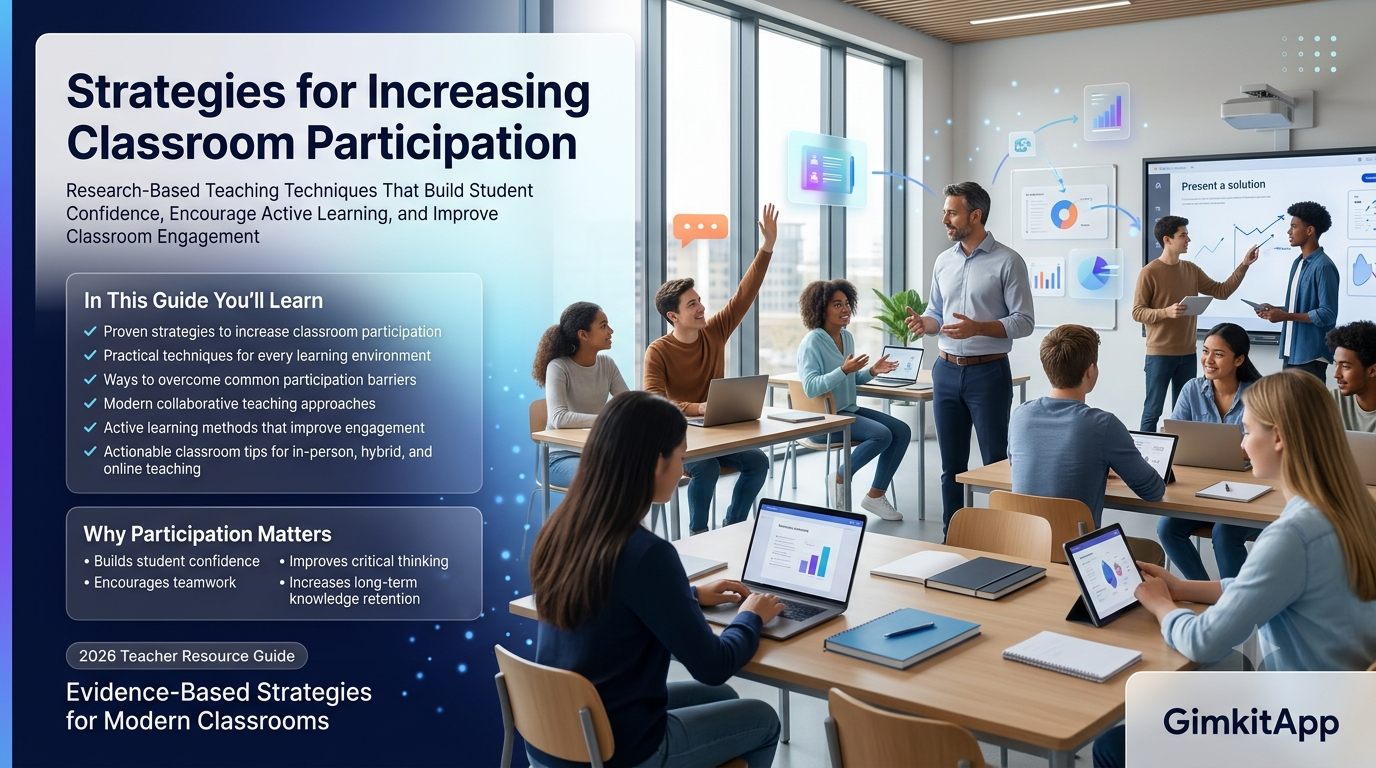
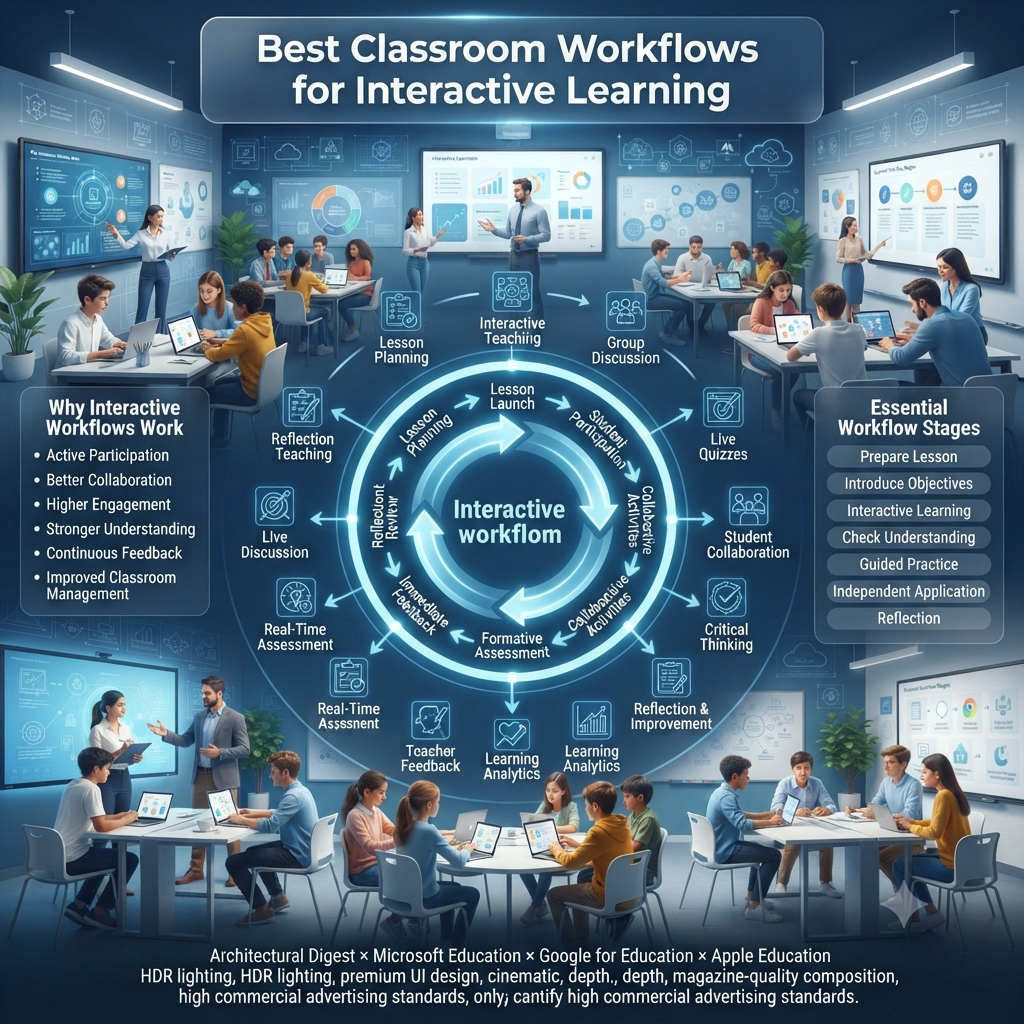
Strategies for Increasing Classroom Participation: An active classroom is one where students confidently ask questions, share ideas, and participate in meaningful discussions. Strong classroom participation goes beyond simply raising hands—it reflects student confidence, curiosity, understanding, and a willingness to learn together. When learners are actively involved, they retain information more effectively, strengthen critical thinking skills, and stay motivated throughout the learning process.
Effective participation, however, does not happen automatically. Many students remain quiet because of anxiety, fear of making mistakes, or limited confidence, while others become disengaged when lessons feel passive or disconnected from real-world experiences. Building an inclusive classroom where every student feels comfortable contributing requires thoughtful planning, engaging teaching methods, and a supportive learning environment.
In This Guide, You’ll Learn:
Proven strategies to increase classroom participation and student engagement.
Practical techniques that work for different age groups and learning environments.
Common barriers that prevent students from participating—and effective ways to overcome them.
Modern teaching approaches that encourage collaboration, confidence, and active learning.
Actionable classroom tips for traditional, hybrid, and online teaching settings.
Whether you’re teaching in a physical classroom, a blended learning environment, or through digital platforms, this guide provides practical, research-informed strategies to help every learner become a more confident, engaged, and active participant.
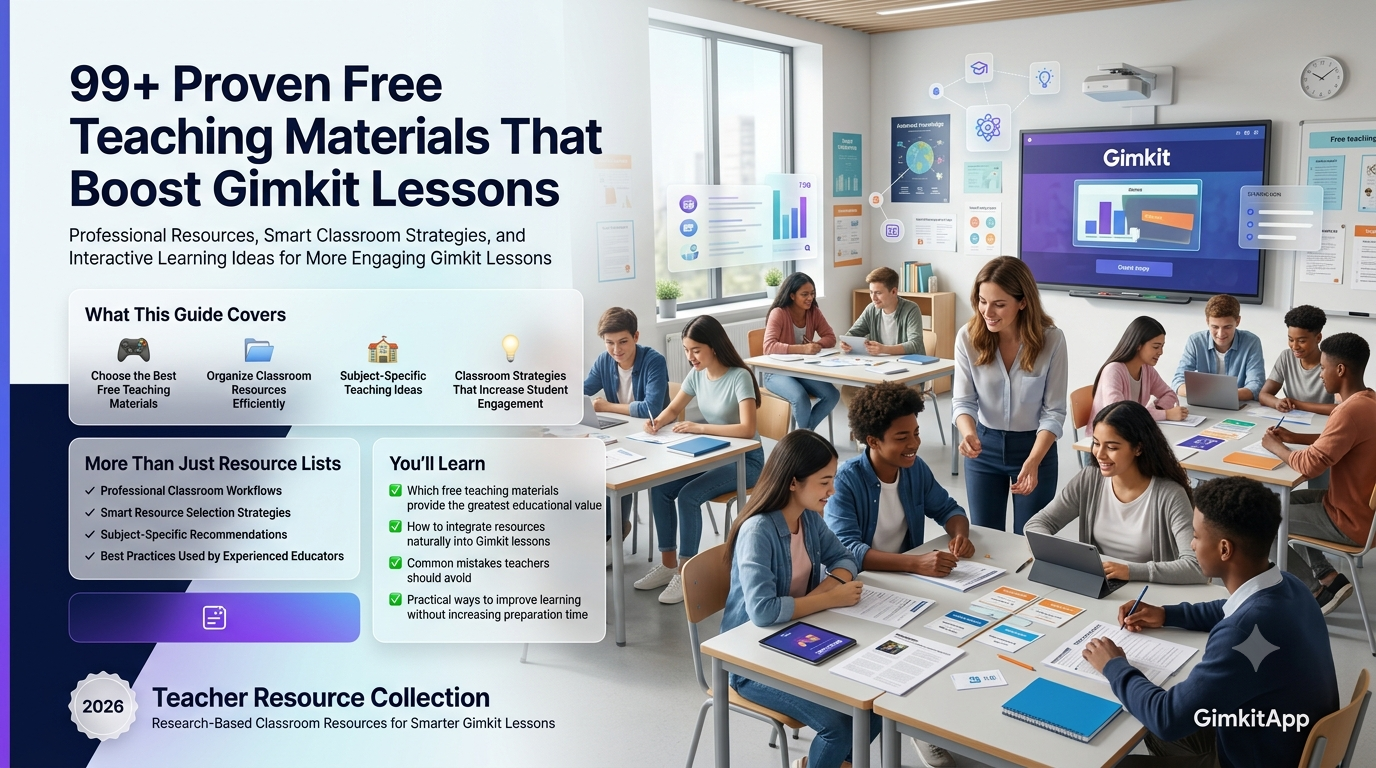
Explore the latest classroom resources, expert tutorials, and educational technology insights on GimkitApp, your complete destination for everything related to Gimkit and modern learning tools.
What Are Strategies for Increasing Classroom Participation?
Strategies for increasing classroom participation are teaching methods and classroom management techniques designed to encourage every student to engage actively in lessons. These strategies focus on creating opportunities for students to ask questions, discuss ideas, solve problems, collaborate with classmates, and share their understanding without fear of judgment.
Effective participation goes beyond simply answering teacher questions. It includes meaningful discussions, collaborative activities, reflective thinking, peer learning, interactive assignments, and technology-supported engagement. The goal is to ensure that every learner contributes according to their abilities while feeling respected and supported.
Rather than relying on a single technique, successful teachers combine multiple participation strategies based on lesson objectives, student needs, classroom dynamics, and learning styles. This balanced approach increases engagement while helping students build communication, confidence, and critical-thinking skills over time.
Why Classroom Participation Matters
Active participation is closely linked to improved academic performance and stronger student motivation. When learners contribute to classroom discussions, they process information more deeply, making it easier to remember and apply new concepts in future situations.
Participation also develops essential life skills beyond academic achievement. Students learn how to express opinions respectfully, listen to different perspectives, solve problems collaboratively, and communicate effectively—skills that remain valuable throughout higher education and professional careers.
From a teacher’s perspective, participation provides immediate feedback about student understanding. Instead of waiting until quizzes or exams, teachers can quickly identify misconceptions, adjust instruction, and provide additional support where needed. This ongoing feedback loop makes lessons more responsive and effective.
Most importantly, an engaging classroom helps students feel that their ideas matter. When learners know their contributions are valued, they become more confident, take greater ownership of their education, and develop a lasting interest in learning.
How Classroom Participation Improves Learning Outcomes
Classroom participation strengthens learning by transforming students from passive listeners into active thinkers. Instead of memorizing information temporarily, students analyze ideas, ask questions, explain concepts, and apply knowledge through discussion and collaboration.
Active participation also supports different learning preferences. Some students learn best through conversation, others through hands-on activities, collaborative projects, or educational technology. By using varied participation strategies, teachers can reach a wider range of learners while making lessons more inclusive and engaging.
Research in educational practice consistently shows that classrooms encouraging active engagement often experience higher attention levels, improved knowledge retention, stronger problem-solving abilities, and greater student satisfaction compared with lecture-only instruction.
Common Challenges That Reduce Classroom Participation
Creating a safe learning environment, encouraging collaboration, and using interactive teaching strategies help every student participate with greater confidence.
Many factors can prevent students from participating regularly. Fear of making mistakes remains one of the most common barriers, especially among younger learners or students who lack confidence. Others may avoid speaking because they worry about peer judgment or have experienced negative classroom interactions in the past.
Classroom structure also plays a significant role. Lessons dominated by lengthy lectures, limited interaction, or repetitive activities often reduce student involvement over time. Similarly, large class sizes and limited opportunities for individual participation can make quieter students feel overlooked.
External factors such as language barriers, learning differences, lack of preparation, or limited interest in the topic may also affect participation. Recognizing these challenges allows teachers to choose strategies that address the underlying causes instead of simply encouraging students to speak more often.
Create a Safe and Supportive Learning Environment
The most effective way to increase classroom participation is to build an environment where students feel comfortable sharing their thoughts without fear of embarrassment or criticism. Students are far more likely to contribute when they know mistakes are treated as learning opportunities rather than failures.
Teachers can establish this culture by setting clear expectations for respectful communication, encouraging diverse viewpoints, and responding positively to student contributions. A welcoming atmosphere helps even quiet learners gain confidence over time.
Best Practices
Encourage respectful discussions.
Celebrate effort, not just correct answers.
Respond constructively to mistakes.
Ensure every student feels heard.
Build trust through consistency.
Learn Students’ Interests and Connect Lessons to Real Life
Students naturally participate more when lessons feel relevant to their daily lives. Understanding their hobbies, goals, favorite subjects, or current interests allows teachers to design discussions that capture attention.
For example, a mathematics lesson can use sports statistics, while a science lesson may connect concepts to smartphones, gaming, or environmental issues. These real-world connections make abstract ideas easier to understand and encourage students to contribute their own experiences.
Ask Better Questions Instead of More Questions
Participation depends greatly on the quality of questions being asked. Closed questions often receive short responses, while open-ended questions encourage students to think critically and explain their reasoning.
Instead of asking:
“Is this answer correct?”
Ask:
“Why do you think this solution works?”
or
“Can someone suggest a different approach?”
Thought-provoking questions naturally create discussion and invite multiple perspectives rather than a single correct answer.
Give Students Enough Thinking Time
Many teachers unintentionally reduce participation by expecting immediate answers. Some students need extra time to process information before responding.
Allowing five to ten seconds of wait time after asking a question significantly increases both the number and quality of student responses. This simple strategy benefits thoughtful learners who may otherwise remain silent.
Students become more confident when they know they won’t be rushed.
Encourage Small Group Discussions First
Speaking in front of an entire class can be intimidating. Small group discussions provide a comfortable starting point before students share ideas with everyone.
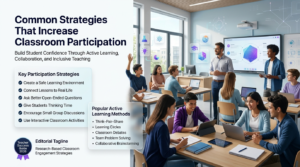
Popular techniques include:
Think-Pair-Share
Peer Discussions
Learning Circles
Team Problem Solving
Collaborative Brainstorming
Once students have discussed ideas with classmates, they generally feel much more comfortable participating in larger classroom conversations.
Use Interactive Classroom Activities
Active learning naturally encourages participation because students become part of the lesson instead of simply listening.
Effective activities include:
Classroom debates
Role-playing scenarios
Problem-solving challenges
Educational games
Case studies
Brainstorming sessions
Gallery walks
Group presentations
Interactive activities promote communication, teamwork, creativity, and critical thinking while maintaining high energy throughout the lesson.
Integrate Educational Technology
Technology provides additional opportunities for students who may hesitate to participate verbally.
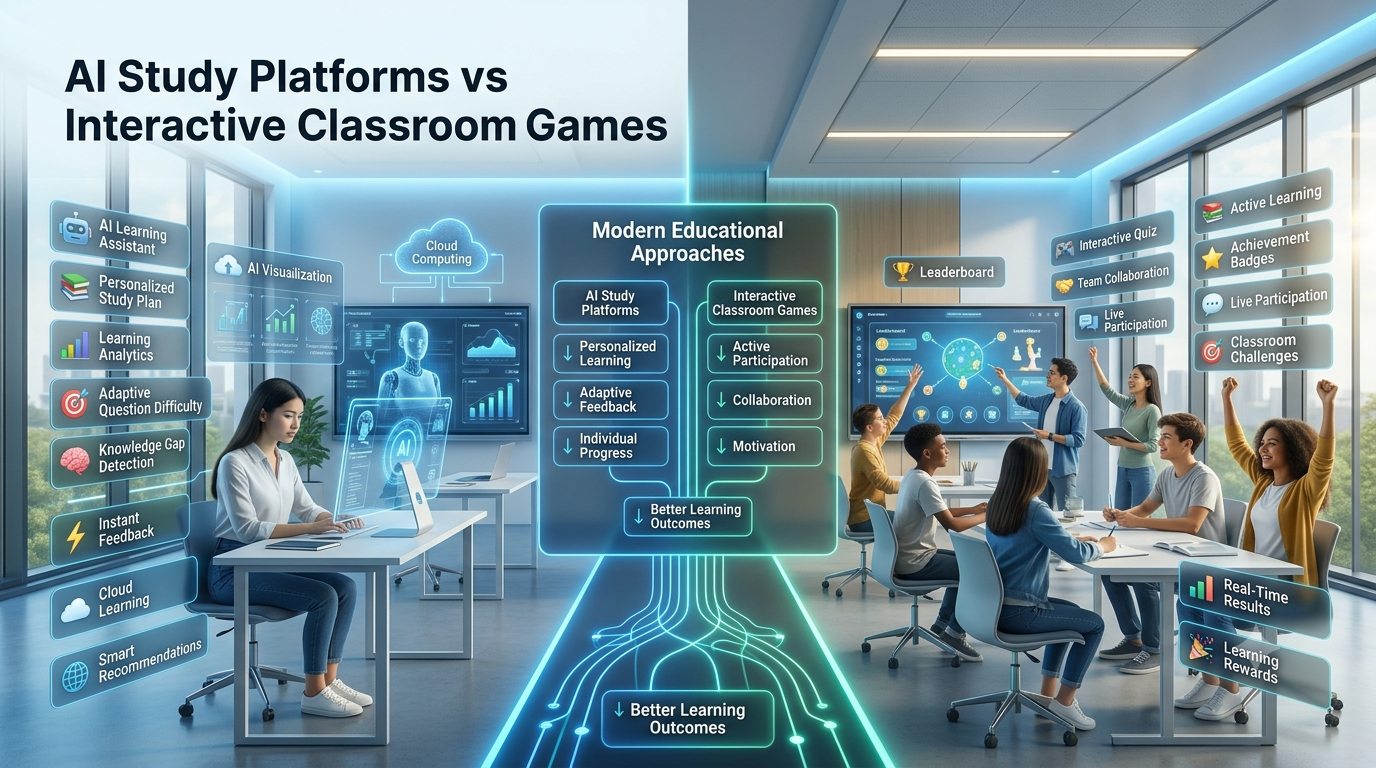
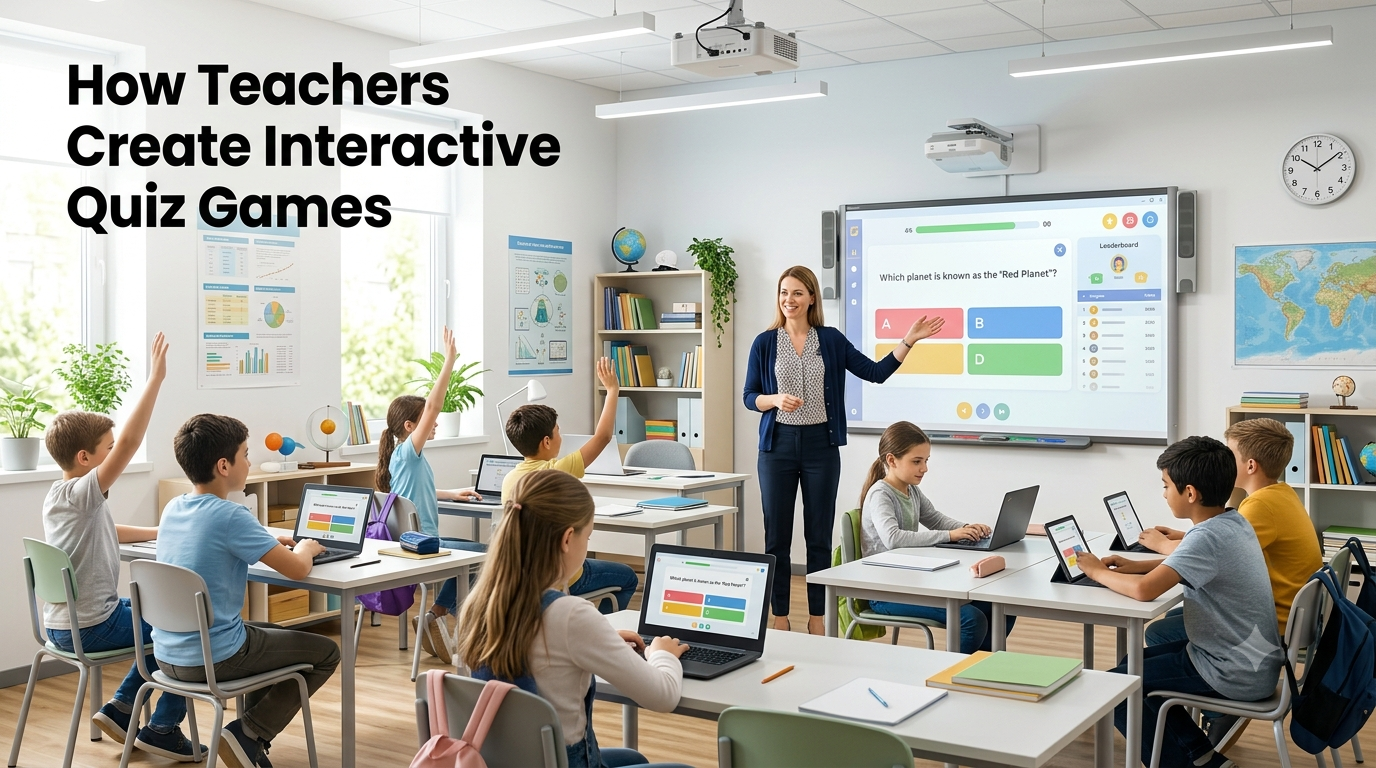
Interactive learning platforms allow students to answer questions anonymously, participate in quizzes, complete collaborative challenges, and receive immediate feedback. For teachers using gamified instruction, platforms such as Gimkit can transform review sessions into engaging classroom competitions, encouraging even reluctant learners to become active participants.
Other useful digital tools include collaborative whiteboards, polling apps, shared documents, and classroom discussion platforms that allow every student to contribute.
Use Positive Reinforcement
Recognition motivates continued participation. Students who feel appreciated are more likely to contribute again.
Positive reinforcement may include:
Verbal praise
Participation points
Achievement badges
Classroom recognition
Leadership opportunities
Constructive feedback
The goal is not to reward only correct answers but also thoughtful questions, creative ideas, and genuine effort.
Rotate Participation Opportunities
Confident students often dominate classroom discussions, leaving quieter classmates with fewer opportunities.
Teachers can create balance by intentionally rotating participation through:
Random name selection
Participation cards
Small-group reporting
Student discussion leaders
Rotating presentation roles
This ensures every learner has meaningful opportunities to contribute throughout the lesson.
Build Student Confidence Gradually
Confidence develops through consistent positive experiences rather than forcing participation.
Teachers can support hesitant students by:
Starting with simple questions.
Allowing written responses before speaking.
Pairing shy students with supportive classmates.
Providing preparation time.
Offering encouragement after each contribution.
Over time, these small successes help students become comfortable participating independently.
Stay updated with the latest video game news, expert reviews, walkthroughs, and industry coverage by visiting IGN, one of the world’s leading gaming and entertainment websites.
Differentiate Participation Methods
Not every student demonstrates learning in the same way. Some communicate best through discussion, while others express understanding through writing, visual projects, or collaborative work.
Providing multiple participation options—such as verbal responses, digital submissions, creative presentations, peer teaching, or reflective journals—creates a more inclusive classroom where every learner can contribute according to their strengths.
Monitor and Reflect on Participation
Improving participation is an ongoing process. Teachers should regularly observe classroom engagement and adjust strategies based on student responses.
Questions to consider include:
Which students participate most frequently?
Who rarely contributes?
Which activities generate the highest engagement?
Are all learners receiving equal opportunities?
What barriers still exist?
Reflecting on these patterns allows teachers to refine instructional methods and continuously improve classroom interaction.
Encourage Student-Led Learning
Students become more invested when they take an active role in teaching and learning. Instead of being passive listeners, they explain concepts, facilitate discussions, and help classmates understand challenging topics.
Student-led learning can include:
Peer teaching
Student presentations
Group facilitation
Student-generated questions
Mini lessons
Research sharing
This approach builds communication skills while increasing confidence and participation across the classroom.
Incorporate Collaborative Learning Strategies
Collaboration encourages every student to contribute toward a shared goal. Working in teams helps quieter learners participate in smaller, less intimidating settings before speaking to the entire class.
Effective collaborative activities include:
Jigsaw learning
Cooperative problem-solving
Project-based learning
Team investigations
Brainstorming sessions
Peer feedback exercises
When students rely on one another, participation becomes a natural part of the learning process.
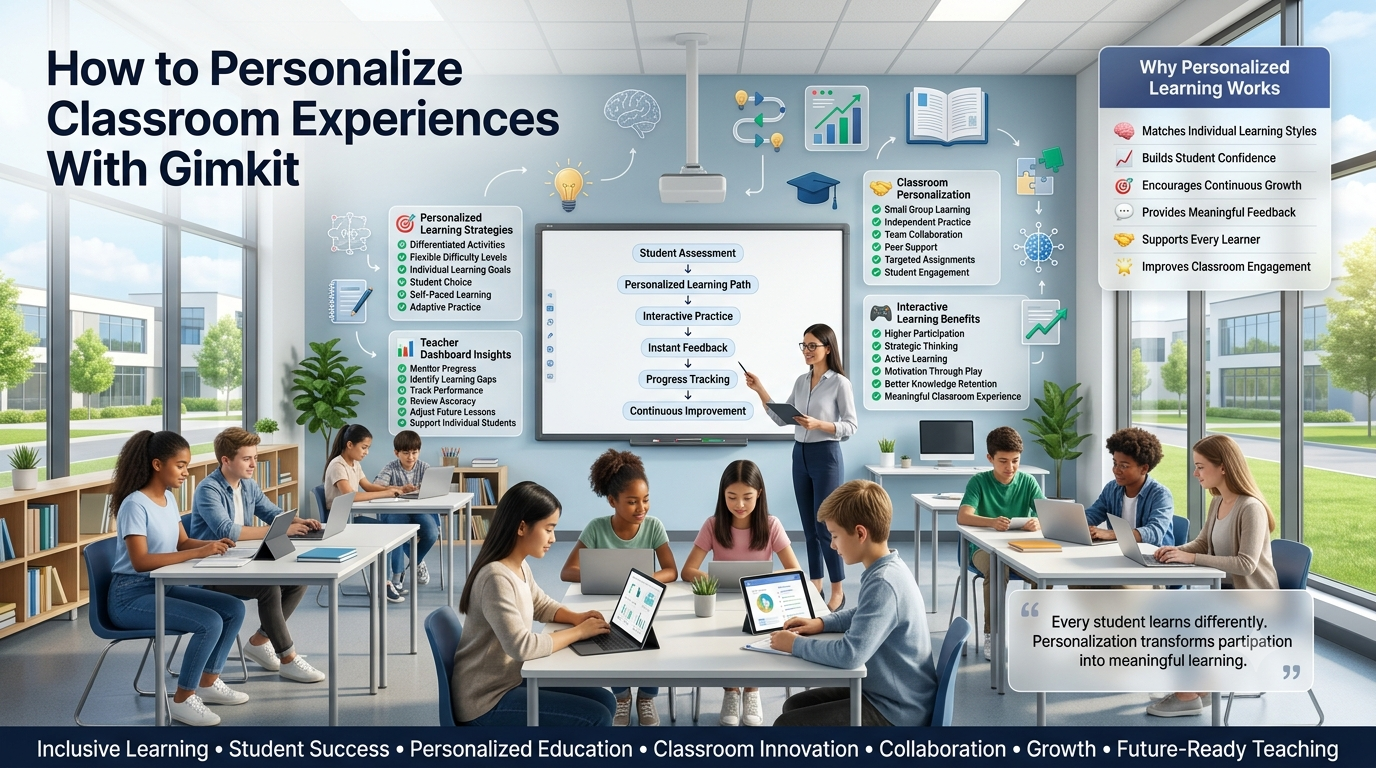
Personalize Learning Experiences
Students participate more when instruction matches their interests, abilities, and learning preferences. Personalized learning allows teachers to offer multiple ways for students to engage with content.
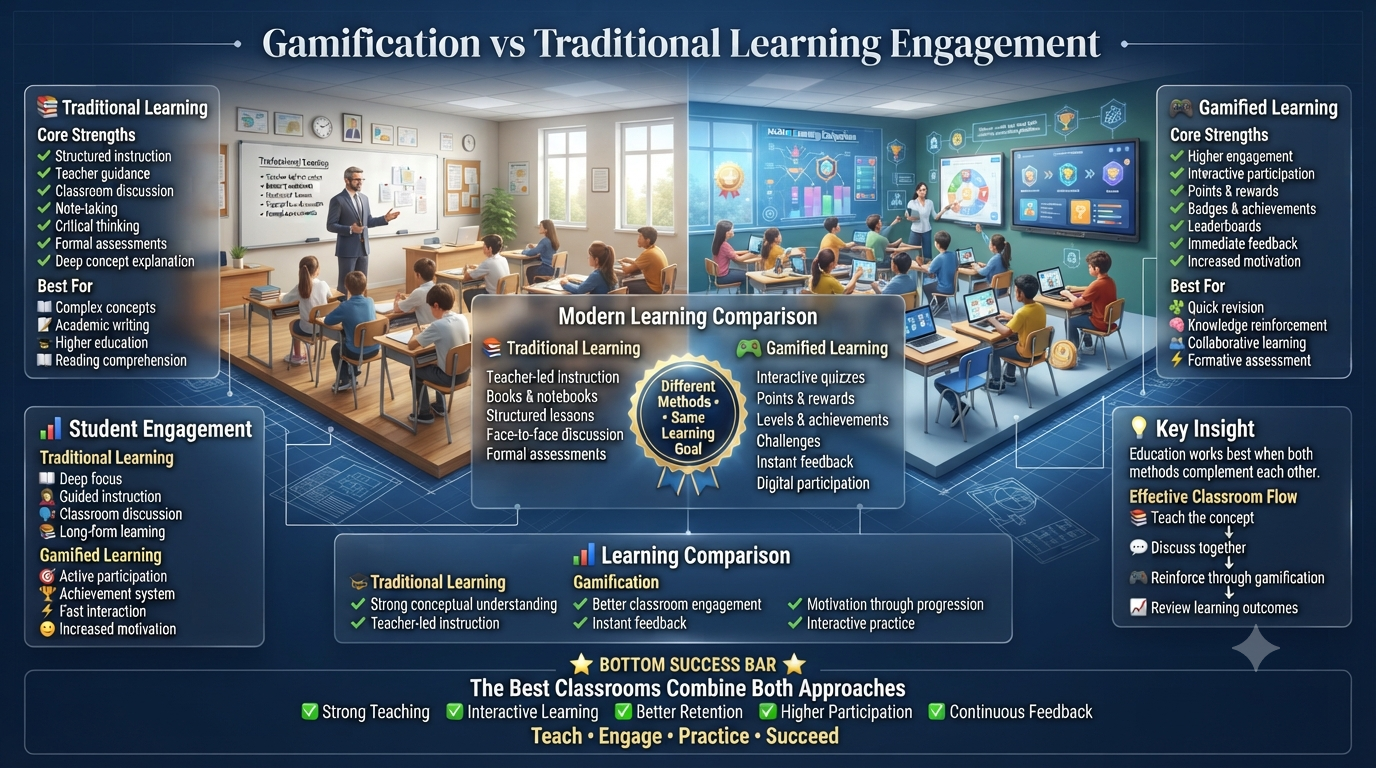
Adding game elements transforms ordinary lessons into interactive learning experiences. Gamification encourages participation through friendly competition, teamwork, and immediate feedback.
Popular gamification techniques include:
Classroom quizzes
Points and rewards
Achievement badges
Team competitions
Learning challenges
Progress tracking
Digital platforms like Gimkit support gamified learning by combining educational quizzes with engaging gameplay, making classroom review sessions more interactive without sacrificing learning objectives.
Promote Inquiry-Based Learning
Rather than simply delivering information, encourage students to investigate questions, analyze evidence, and develop their own conclusions.
Inquiry-based classrooms often begin with questions such as:
Why does this happen?
What evidence supports this idea?
Can there be multiple solutions?
What would happen if…?
This teaching method develops curiosity while naturally increasing classroom discussion.
Integrate Project-Based Learning
Long-term projects require students to communicate, solve problems, conduct research, and present findings. Throughout the project, participation becomes continuous rather than limited to occasional classroom discussions.
Project-based learning encourages:
Teamwork
Critical thinking
Creativity
Communication
Real-world application
Independent learning
Students become active contributors throughout the learning journey.
Differentiate Instruction for Diverse Learners
Every classroom contains students with different strengths, learning styles, language abilities, and confidence levels. Differentiated instruction ensures everyone has opportunities to participate successfully.
Teachers can differentiate by adjusting:
Question complexity
Assignment formats
Group sizes
Support materials
Assessment methods
Participation options
An inclusive classroom creates more opportunities for every learner to contribute.
Strengthen Teacher-Student Relationships
Students are more willing to participate when they trust their teacher. Building positive relationships creates psychological safety, encouraging learners to ask questions and share ideas without hesitation.
Teachers can strengthen relationships by:
Learning student names quickly.
Showing genuine interest in students’ experiences.
Listening actively.
Providing constructive feedback.
Maintaining consistent expectations.
Celebrating individual progress.
Trust forms the foundation of active classroom engagement.
Use Formative Assessment to Drive Participation
Participation should also provide insight into student understanding. Formative assessments help teachers monitor learning while keeping students actively involved.
Examples include:
Exit tickets
Quick polls
Think-write-share
Reflection journals
Peer assessment
Interactive quizzes
Concept maps
These assessments provide immediate feedback that benefits both teachers and students.
Encourage Reflective Learning
Reflection helps students recognize how they learn, identify challenges, and improve future participation.
Reflection activities include:
Learning journals
Self-assessment checklists
Weekly reflection prompts
Goal-setting exercises
Group debrief sessions
Students who regularly reflect on their learning become more confident and engaged over time.
Adapt Strategies for Online and Hybrid Classrooms
Virtual learning environments require different participation techniques than traditional classrooms. Teachers should intentionally create opportunities for interaction using digital tools and structured activities.
Providing multiple participation options helps maintain engagement regardless of the learning environment.
Measure Participation Effectively
Improving participation requires ongoing evaluation. Teachers should monitor both the quantity and quality of student engagement rather than simply counting how often students speak.
Useful indicators include:
Participation Indicator
What to Observe
Verbal Contributions
Frequency and quality of responses
Group Collaboration
Team interaction and cooperation
Question Asking
Curiosity and critical thinking
Digital Engagement
Quiz participation and online activity
Peer Support
Willingness to help classmates
Confidence Growth
Increased willingness to participate over time
Tracking these indicators helps teachers refine instructional strategies and ensure every student has opportunities to succeed.
Why Some Students Rarely Participate
A lack of participation does not always mean a lack of interest. Many students remain quiet for reasons unrelated to their understanding of the subject.
Common causes include:
Fear of giving the wrong answer
Low self-confidence
Social anxiety
Language barriers
Learning disabilities
Limited background knowledge
Previous negative classroom experiences
Fear of peer judgment
Lack of motivation
Distractions inside or outside the classroom
Rather than assuming students are disengaged, teachers should identify the underlying reason and adapt their instructional approach accordingly.
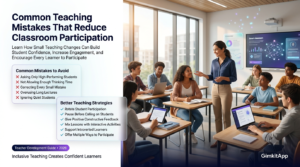
Common Mistakes Teachers Make That Reduce Participation
Avoiding common teaching mistakes helps teachers create inclusive classrooms where every student feels confident participating, collaborating, and sharing ideas.
Even well-intentioned teaching practices can unintentionally discourage student involvement.
Asking Only High-Performing Students
Teachers often call on the same confident learners because they respond quickly. While this keeps lessons moving, it limits opportunities for quieter students to develop confidence.
Better approach: Rotate participation and intentionally include every learner.
Not Allowing Enough Thinking Time
Students need time to process information before responding.
Immediately calling on someone after asking a question often favors fast thinkers while discouraging reflective learners.
Better approach: Pause for several seconds before inviting responses.
Correcting Every Small Mistake
Constant correction can make students afraid to participate.
Instead of focusing only on errors, acknowledge the student’s effort first, then guide them toward a more accurate understanding.
Positive correction builds confidence without sacrificing learning.
Overusing Lectures
Long lectures reduce opportunities for interaction.
If students spend most of the lesson listening, participation naturally declines.
Break lessons into shorter instructional segments followed by discussion, activities, or collaborative learning.
Ignoring Quiet Students
Quiet students are not necessarily disengaged.
Many participate through observation, writing, and thoughtful reflection.
Teachers should create multiple ways for these learners to contribute comfortably.
How to Encourage Introverted Students
Introverted students often prefer preparation before speaking publicly.
Effective strategies include:
Think-Pair-Share activities
Small group discussions
Written responses before discussion
Digital participation tools
Advance discussion questions
Reflection journals
Optional presentation formats
These methods allow students to contribute without unnecessary pressure.
Supporting Students with Different Learning Needs
Inclusive classrooms recognize that participation looks different for every learner.
Teachers should provide flexible opportunities that accommodate:
English language learners
Students with learning disabilities
Neurodivergent learners
Gifted students
Students with speech or communication challenges
Possible accommodations include:
Visual supports
Graphic organizers
Extra response time
Collaborative learning
Assistive technology
Alternative participation methods
Inclusive participation ensures every student has an equal opportunity to demonstrate learning.
Managing Large Classrooms Effectively
Participation becomes more challenging as class size increases.
Instead of relying only on whole-class discussions, teachers can divide students into smaller learning communities.
Helpful techniques include:
Small discussion groups
Station rotations
Team leaders
Collaborative projects
Digital polling
Random response systems
Group presentations
These strategies increase the number of students actively involved during each lesson.
Encouraging Participation Without Forcing Students
Forced participation often creates anxiety rather than confidence.
Instead of requiring every student to speak immediately, teachers should gradually increase expectations while providing encouragement and support.
Healthy participation develops through:
Trust
Consistency
Preparation
Positive feedback
Psychological safety
Students who feel respected are much more likely to participate voluntarily.
Using Feedback to Improve Participation
Constructive feedback helps students recognize their progress while identifying areas for improvement.
Effective feedback should be:
Specific
Timely
Encouraging
Actionable
Focused on growth
For example, instead of saying:
“Good job.”
Say:
“Your explanation connected today’s lesson with yesterday’s discussion. That helped everyone understand the concept more clearly.”
Participation should never be measured solely by how often students speak.
Teachers should evaluate multiple forms of engagement.
Participation Type
Example
Verbal Participation
Answering or asking questions
Collaborative Participation
Working effectively in groups
Written Participation
Reflection journals, exit tickets
Digital Participation
Online quizzes, polls, discussion boards
Creative Participation
Projects, presentations, demonstrations
Peer Support
Helping classmates and contributing to teamwork
Using diverse assessment methods creates a more accurate picture of student engagement.
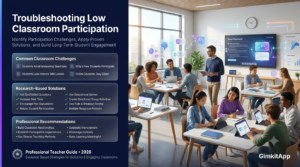
Troubleshooting Low Participation
Identify the causes of low classroom participation and apply research-based teaching strategies that help every student become more confident, engaged, and active in learning.
If classroom participation remains low, teachers should examine both instructional practices and classroom conditions.
Problem: Students Avoid Answering Questions
Possible Causes
Fear of mistakes
Low confidence
Questions are too difficult
Solutions
Ask scaffolded questions.
Increase wait time.
Praise effort.
Encourage pair discussions first.
Problem: Only a Few Students Participate
Possible Causes
Confident students dominate discussions.
Participation opportunities are uneven.
Solutions
Rotate speakers.
Use random selection.
Assign discussion roles.
Create structured group activities.
Problem: Students Lose Interest Mid-Lesson
Possible Causes
Lessons are too passive.
Activities become repetitive.
Solutions
Introduce movement.
Use collaborative tasks.
Incorporate educational games.
Break long lectures into shorter segments.
Problem: Online Students Stay Silent
Possible Causes
Camera anxiety
Technical barriers
Limited interaction
Solutions
Use live polls.
Encourage chat participation.
Create breakout room discussions.
Offer multiple response formats.
Professional Recommendations for Long-Term Success
Experienced educators understand that classroom participation improves gradually rather than overnight.
Long-term success depends on consistently applying evidence-based teaching practices.
Professional recommendations include:
Build strong classroom relationships from the first day.
Establish participation expectations early.
Create predictable classroom routines.
Use a variety of instructional methods.
Reflect on student engagement regularly.
Adapt strategies based on classroom needs.
Celebrate improvement, not perfection.
Encourage curiosity instead of memorization.
Make learning meaningful and relevant.
Continue refining teaching practices through professional development.
Teachers who focus on creating an inclusive, supportive, and engaging classroom culture often see steady improvements in both participation and overall learning outcomes.
Professional Recommendations & Expert Reviews
Strategies for Increasing Classroom Participation begin with creating a welcoming environment where every student feels respected.
Strategies for Increasing Classroom Participation encourage students to share ideas without fear of making mistakes.
Strategies for Increasing Classroom Participation help build confidence through regular classroom interaction.
Strategies for Increasing Classroom Participation support asking open-ended questions that encourage thoughtful responses.
Strategies for Increasing Classroom Participation encourage active listening during classroom discussions.
Strategies for Increasing Classroom Participation help teachers recognize and value every student’s contribution.
Strategies for Increasing Classroom Participation support creating clear expectations for respectful discussions.
Strategies for Increasing Classroom Participation encourage collaborative learning through group activities.
Strategies for Increasing Classroom Participation help students prepare before classroom discussions begin.
Strategies for Increasing Classroom Participation support interactive learning instead of passive observation.
Strategies for Increasing Classroom Participation encourage participation through meaningful classroom questions.
Strategies for Increasing Classroom Participation help maintain student attention during lessons.
Strategies for Increasing Classroom Participation support using visual materials to stimulate discussion.
Strategies for Increasing Classroom Participation encourage students to explain their reasoning clearly.
Strategies for Increasing Classroom Participation help develop stronger communication skills.
Strategies for Increasing Classroom Participation support creating opportunities for peer learning.
Strategies for Increasing Classroom Participation encourage regular classroom conversations instead of one-way instruction.
Strategies for Increasing Classroom Participation help quieter students become more comfortable speaking.
Strategies for Increasing Classroom Participation support balanced participation from the entire class.
Strategies for Increasing Classroom Participation encourage respectful disagreement during academic discussions.
Strategies for Increasing Classroom Participation help students connect lessons with real-life experiences.
Strategies for Increasing Classroom Participation support classroom activities that require teamwork.
Strategies for Increasing Classroom Participation encourage teachers to provide positive reinforcement.
Strategies for Increasing Classroom Participation help students become active learners every day.
Strategies for Increasing Classroom Participation support short classroom discussions throughout each lesson.
Strategies for Increasing Classroom Participation encourage students to ask meaningful questions.
Strategies for Increasing Classroom Participation help reduce classroom anxiety through supportive teaching.
Strategies for Increasing Classroom Participation support creating lessons that maintain student curiosity.
Strategies for Increasing Classroom Participation encourage active problem-solving during classroom activities.
Strategies for Increasing Classroom Participation help students develop independent thinking skills.
Strategies for Increasing Classroom Participation support using educational games to increase engagement.
Strategies for Increasing Classroom Participation encourage students to participate in small groups before whole-class discussions.
Strategies for Increasing Classroom Participation help teachers adapt lessons to different learning styles.
Strategies for Increasing Classroom Participation support providing immediate feedback during activities.
Strategies for Increasing Classroom Participation encourage students to reflect on classroom discussions.
Strategies for Increasing Classroom Participation help strengthen critical thinking through interactive lessons.
Strategies for Increasing Classroom Participation support creating a classroom culture of curiosity.
Strategies for Increasing Classroom Participation encourage equal opportunities for every learner to contribute.
Strategies for Increasing Classroom Participation help improve confidence through consistent participation.
Strategies for Increasing Classroom Participation support using technology to enhance classroom interaction.
Strategies for Increasing Classroom Participation encourage collaborative projects that require shared responsibility.
Strategies for Increasing Classroom Participation help students remain focused throughout the lesson.
Strategies for Increasing Classroom Participation support recognizing effort as well as correct answers.
Strategies for Increasing Classroom Participation encourage meaningful classroom debates on appropriate topics.
Strategies for Increasing Classroom Participation help students practice respectful communication skills.
Strategies for Increasing Classroom Participation support regular knowledge checks during instruction.
Strategies for Increasing Classroom Participation encourage students to build on each other’s ideas.
Strategies for Increasing Classroom Participation help teachers create lessons that invite discussion naturally.
Strategies for Increasing Classroom Participation support creating interactive classroom routines.
Strategies for Increasing Classroom Participation encourage students to participate consistently rather than occasionally.
Strategies for Increasing Classroom Participation help improve academic confidence through frequent engagement.
Strategies for Increasing Classroom Participation support building stronger teacher-student relationships.
Strategies for Increasing Classroom Participation encourage celebrating classroom participation as part of learning.
Strategies for Increasing Classroom Participation help students develop leadership and teamwork skills.
Strategies for Increasing Classroom Participation support creating inclusive classrooms where every voice matters.
Strategies for Increasing Classroom Participation encourage students to take greater ownership of their learning.
Most Frequently Asked Faqs
1. What are the most effective strategies for increasing classroom participation in 2026?
The most effective classroom participation strategies focus on active learning rather than passive instruction. In 2026, successful teachers combine collaborative discussions, retrieval practice, project-based learning, gamification, formative assessments, and educational technology to keep every student involved. Instead of asking a few volunteers to answer questions, teachers create opportunities where all learners contribute through polls, quizzes, peer collaboration, and small-group activities.
Consistent participation grows when students feel psychologically safe, understand clear expectations, and receive regular feedback. A classroom culture that values curiosity over perfection encourages more meaningful engagement throughout the lesson.
High-impact participation strategies:
Use active learning every lesson.
Incorporate gamified review activities.
Encourage think-pair-share discussions.
Rotate collaborative group work.
Ask open-ended questions.
Provide immediate formative feedback.
2. How can teachers encourage shy or introverted students to participate in class discussions?
Shy and introverted students often participate more confidently when they are given time to think before responding and multiple ways to share their ideas. Teachers can begin with partner discussions, anonymous polls, digital response platforms, or written reflections before transitioning to whole-class conversations. Building trust gradually helps students develop confidence without feeling pressured.
Creating an inclusive classroom means recognizing that participation isn’t limited to speaking aloud. Written responses, collaborative work, digital discussions, and creative projects all demonstrate meaningful engagement while respecting different communication styles.
Ways to support quieter students:
Allow think time before answering.
Use pair or small-group discussions.
Offer anonymous digital responses.
Encourage written reflections.
Praise effort rather than perfection.
Create a supportive classroom atmosphere.
3. Which classroom activities improve student participation and engagement the most?
Activities that require every student to think, respond, and collaborate consistently produce the highest levels of classroom engagement. Interactive quizzes, collaborative problem-solving, debates, simulations, project-based learning, peer teaching, and educational games transform students from passive listeners into active participants. Varying instructional methods also helps maintain attention throughout the lesson.
The most successful classrooms combine technology with face-to-face interaction, ensuring that participation remains meaningful rather than simply entertaining.
Highly engaging classroom activities:
Think-Pair-Share.
Educational quiz games.
Team problem-solving challenges.
Classroom debates.
Project-based learning.
Peer teaching sessions.
4. How can technology and gamified learning platforms increase classroom participation?
Educational technology increases participation by making learning interactive, personalized, and accessible. Gamified platforms encourage students to answer questions, solve problems, and collaborate through points, achievements, challenges, and real-time feedback. These features motivate learners to participate more frequently while giving teachers immediate insights into student understanding.
When used intentionally, technology supports—not replaces—effective teaching. Combining digital tools with discussion, reflection, and collaborative learning creates a balanced classroom that promotes both engagement and academic achievement.
Technology-driven participation methods:
Interactive learning games.
Live quizzes and polls.
Real-time formative assessments.
Digital collaboration tools.
Instant performance feedback.
Adaptive learning activities.
5. How do you measure classroom participation fairly without relying only on hand-raising?
Fair participation assessment considers the many ways students contribute to learning rather than focusing solely on who speaks most often. Teachers can evaluate participation through group collaboration, written responses, digital activities, peer feedback, project contributions, reflective journals, and formative assessments. Using multiple forms of evidence creates a more accurate picture of student engagement.
Clear participation criteria also help students understand expectations and encourage consistent involvement throughout the learning process rather than rewarding only the most vocal learners.