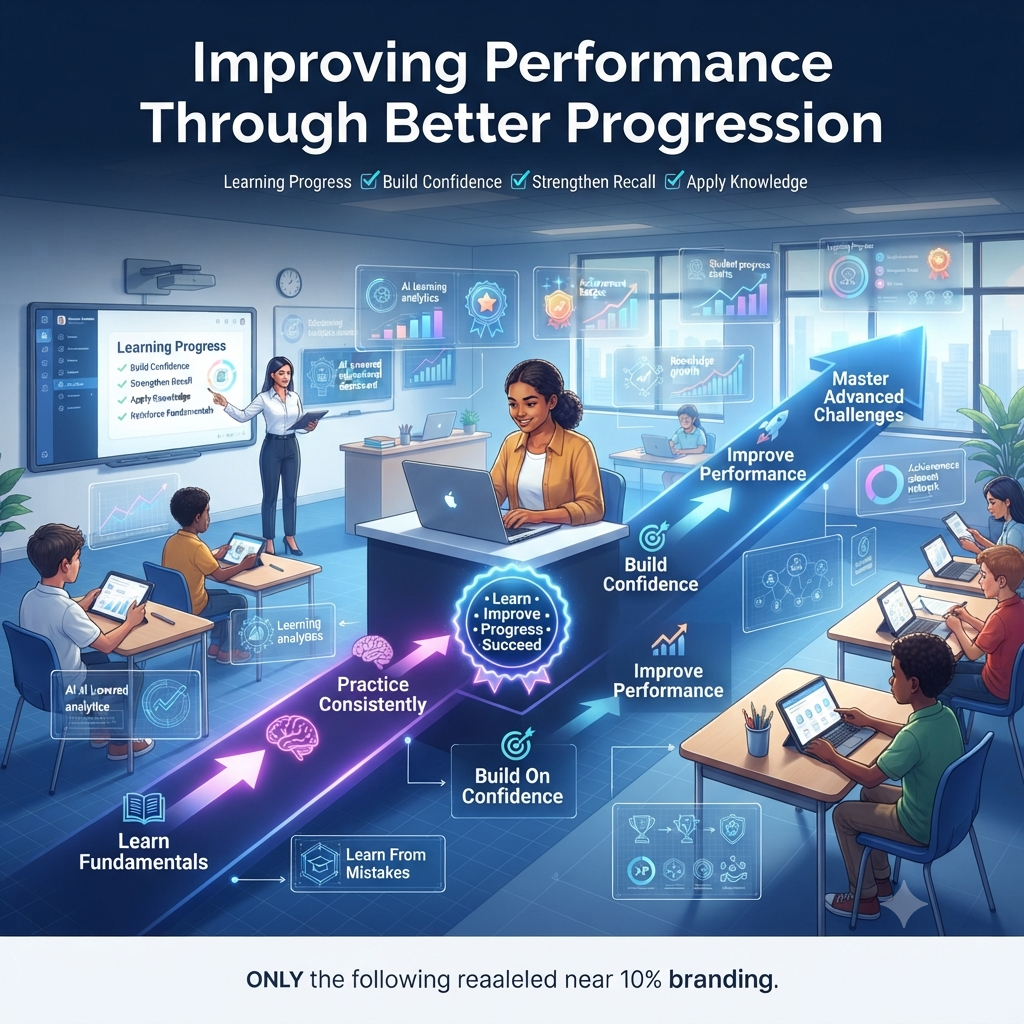
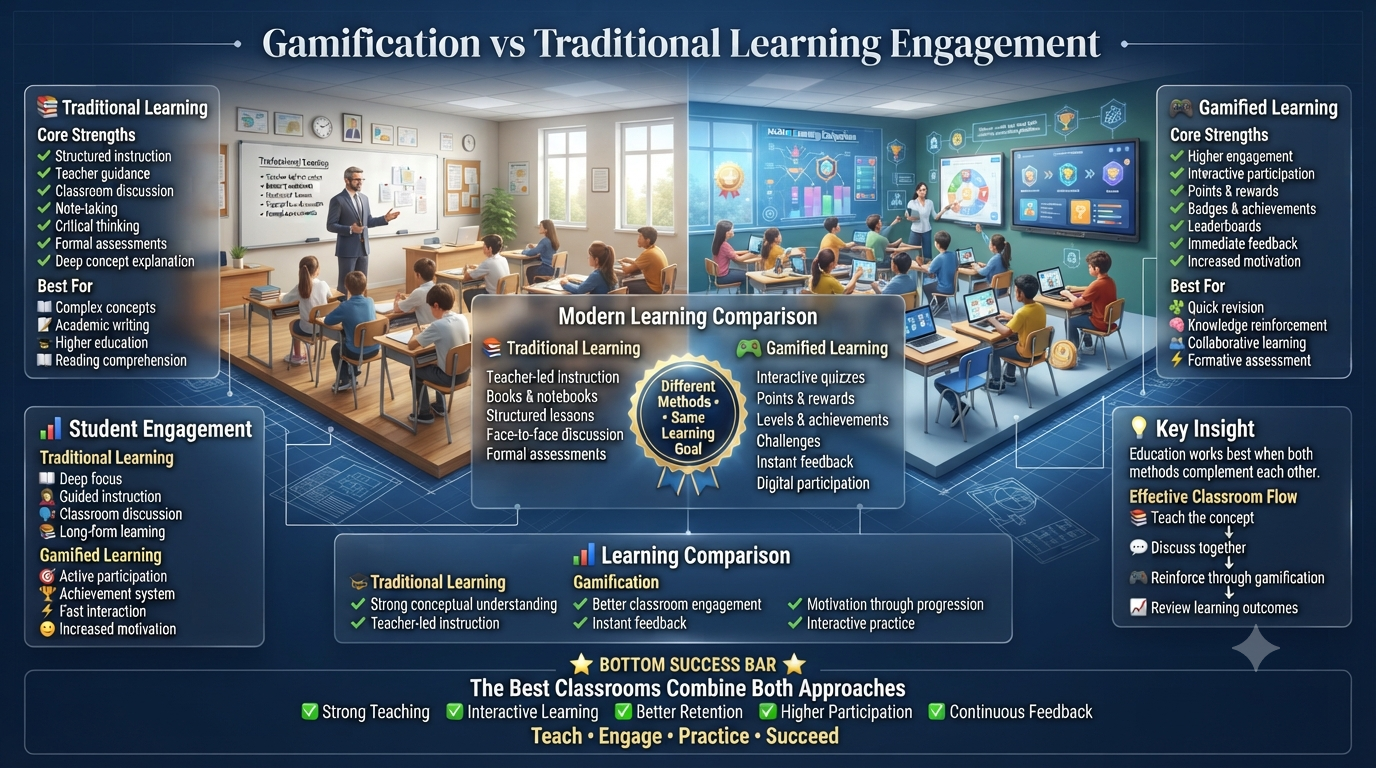
Improving Performance Through Better Progression | Performance rarely improves through repetition alone. In learning environments, long-term success comes from structured progression—a system that gradually increases challenge while reinforcing previous knowledge.
Whether students are using Gimkit for classroom review, homework, formative assessment, or independent practice, a well-designed progression strategy helps transform isolated game sessions into meaningful learning experiences.
🎯 Benefits of a Strong Progression Strategy
🧠 Build Confidence – Helps students grow through consistent learning.
💡 Apply Knowledge More Effectively – Supports deeper understanding over time.
🚀 Reinforce Fundamentals – Helps students know when to review core concepts.
🎯 Take On Greater Challenges – Encourages gradual progression to more difficult tasks.
🔄 Learn From Mistakes – Promotes improvement instead of repeating the same errors.
Instead of focusing only on scores or virtual earnings, teachers who understand progression create opportunities for students to build confidence, develop stronger recall, and apply knowledge more effectively over time. Likewise, students who recognize how progression works often perform more consistently because they know when to reinforce fundamentals, when to take on harder challenges, and how to learn from mistakes rather than repeating them.
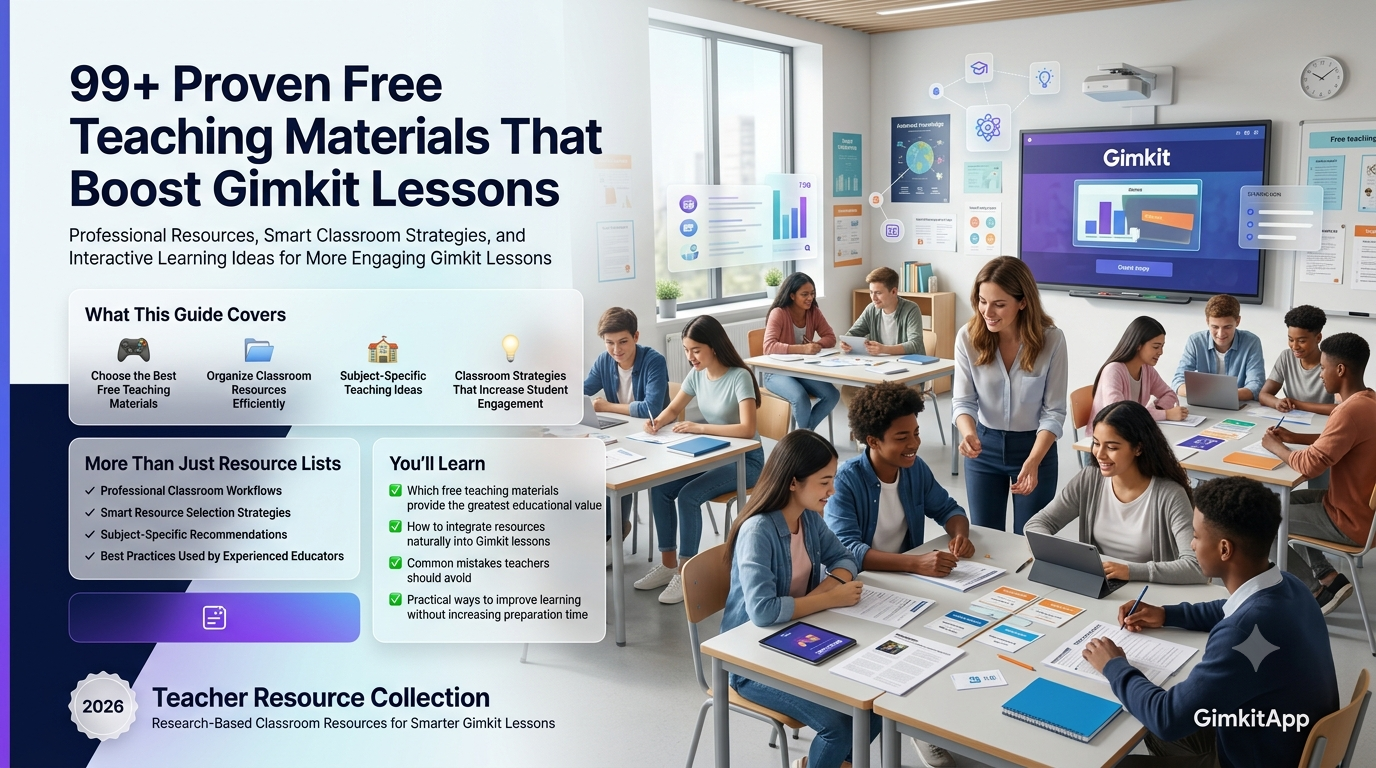
Looking for comprehensive classroom resources and educational technology insights? Explore GimkitApp for expert guides, teaching strategies, game modes, and the latest updates to enhance student engagement.
Understanding Progression in Gimkit
Progression in Gimkit is the process of helping learners move from basic understanding to advanced mastery through gradual, intentional improvement. Rather than expecting immediate high performance, progression emphasizes continuous growth by matching the difficulty of learning activities with the learner’s current level of understanding.
Unlike traditional quizzes that measure what students know at a single moment, Gimkit allows repeated practice across multiple sessions. This repeated exposure creates opportunities for learners to strengthen memory, recognize patterns, and become more confident with each attempt.
A strong progression model usually includes:
📚 Building a solid foundation before increasing difficulty
📈 Introducing more challenging questions over time
🔄 Learning from incorrect answers instead of ignoring them
🧠 Developing confidence through consistent improvement
🚀 Encouraging long-term mastery instead of short-term memorization
When progression is planned carefully, every game contributes to measurable academic growth instead of becoming a standalone activity.
Why Better Progression Leads to Better Performance
Improved performance is usually the result of consistent learning habits, not isolated moments of success. Progression provides a structured path that helps students connect new information with existing knowledge, making learning more durable and easier to recall.
Progression Element
How It Improves Performance
Gradual difficulty
Prevents learners from becoming overwhelmed
Regular review
Strengthens long-term memory retention
Continuous feedback
Helps identify and correct misconceptions early
Goal-based learning
Keeps students motivated through achievable milestones
Repeated practice
Builds confidence and automatic recall
Performance tracking
Makes improvement visible over time
Instead of asking students to master everything at once, progression divides learning into manageable stages. This approach reduces frustration while increasing engagement and overall achievement.
The Science Behind Progressive Learning
Educational research consistently shows that people learn more effectively when information is introduced in manageable steps. Large amounts of new material presented all at once often overload working memory, making it harder to retain important concepts.
Progressive learning addresses this challenge by allowing students to:
Understand one concept before adding another.
Connect new ideas with previously learned material.
Practice repeatedly until knowledge becomes more automatic.
Receive timely feedback that guides improvement.
Develop confidence before facing greater challenges.
In Gimkit, every completed game provides another opportunity to reinforce learning. Rather than viewing mistakes as failures, progression treats them as valuable feedback that helps learners identify areas needing additional practice.
💡 Pro Tip: Students who revisit difficult topics across several shorter Gimkit sessions often retain information better than those who rely on one long review session immediately before a test.
How Progression Supports Different Types of Learners
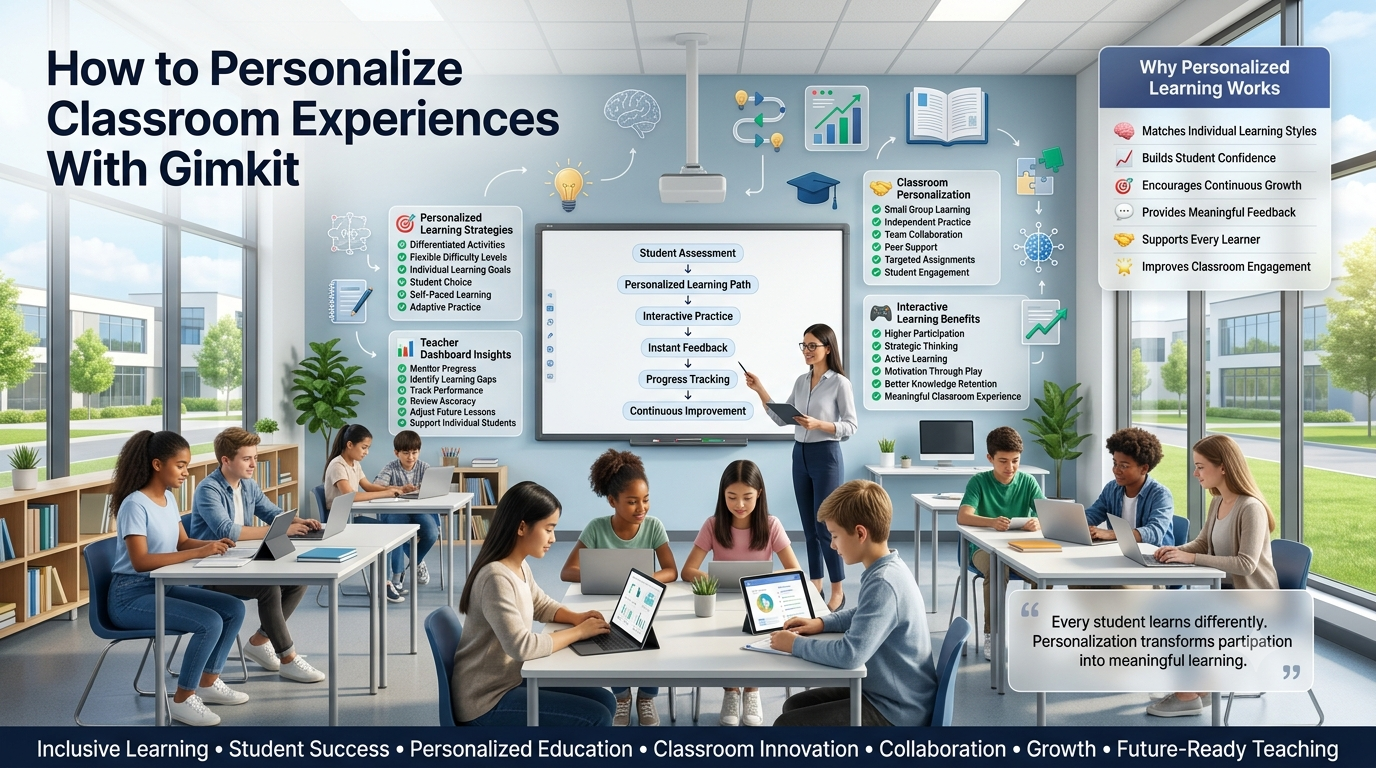
Not every student learns at the same pace. Some quickly grasp new concepts, while others benefit from additional practice before moving forward. A progression-based approach accommodates these differences without lowering expectations.
🌱 Beginners
Students who are just starting benefit from:
Simpler question sets
Familiar vocabulary
Frequent positive reinforcement
Lower-pressure review sessions
Opportunities to repeat foundational material
The objective is to establish confidence before increasing complexity.
📘 Intermediate Learners
Once foundational knowledge is secure, progression focuses on applying concepts in different contexts.
Typical improvements include:
Faster recall
Better decision-making
Increased accuracy
Stronger conceptual understanding
Greater independence during gameplay
Teachers often notice these students becoming more willing to participate because they have built confidence through repeated success.
🏆 Advanced Learners
Students with stronger understanding require new challenges to continue progressing.
Effective strategies include:
Mixed-difficulty question sets
Higher-order thinking questions
Scenario-based problem solving
Time-sensitive activities
Competitive classroom game modes
This prevents advanced learners from becoming disengaged while encouraging deeper understanding instead of simple memorization.
Building an Effective Learning Progression
Successful progression rarely happens by accident. It is usually planned around clear learning objectives that gradually increase in complexity.
A practical progression framework looks like this:
Learn the Basics
        │
        ▼
Practice Frequently
        │
        ▼
Identify Weak Areas
        │
        ▼
Review Incorrect Answers
        │
        ▼
Increase Difficulty
        │
        ▼
Apply Knowledge
        │
        ▼
Achieve Long-Term Mastery
Each stage prepares learners for the next, reducing unnecessary gaps in understanding.
Key Components of High-Performance Progression
🎯 Clear Learning Goals
Students perform better when they understand what success looks like.
Instead of simply aiming for a higher score, define measurable objectives such as:
Mastering a vocabulary unit
Improving multiplication accuracy
Remembering scientific terminology
Identifying historical events correctly
Applying grammar rules consistently
Clear goals make progress easier to evaluate and celebrate.
🔄 Consistent Practice
Learning improves through repetition—but only when practice remains purposeful.
Short, regular Gimkit sessions often produce better results than infrequent marathon reviews because they:
Reduce mental fatigue.
Improve concentration.
Strengthen memory through repeated retrieval.
Encourage continuous improvement.
Consistency matters more than session length.
📊 Feedback-Driven Improvement
One of the strongest advantages of progression is the ability to learn from feedback.
After each activity, students can reflect on questions such as:
Which topics caused the most difficulty?
Which mistakes occurred repeatedly?
Which concepts became easier over time?
What should be reviewed before the next session?
Teachers can use this information to adjust future lessons and provide targeted support where it is needed most.
🧠 Confidence Through Small Wins
Confidence grows through repeated success rather than occasional high scores.
As learners experience gradual improvement, they often become:
More willing to participate.
Less anxious during assessments.
More motivated to continue practicing.
Better prepared for increasingly challenging material.
Small achievements create momentum that supports long-term academic growth.
⭐ Expert Insight: Sustainable performance improvement is built on consistent progress, not perfection. Students who steadily improve over multiple learning sessions typically retain knowledge longer than those who depend on last-minute intensive study.
Classroom Example: Progression in Action
Imagine a middle school science teacher introducing a new unit on ecosystems.
Instead of assigning one large review game at the end of the chapter, the teacher structures progression across several lessons:
Week 1: Students learn foundational vocabulary and complete a beginner-level Gimkit review.
Week 2: Questions begin connecting vocabulary with real-world examples, encouraging deeper understanding.
Week 3: Students analyze relationships between organisms, habitats, and food chains using more complex question sets.
Week 4: Mixed-review sessions combine current material with previous lessons, reinforcing long-term retention while preparing students for assessment.
By increasing complexity gradually, students remain engaged without feeling overwhelmed, and performance improves because each stage builds directly on the previous one rather than introducing unrelated challenges.
✅ Progression Checklist for Better Performance
Before moving students to more advanced content, verify that these foundations are in place:
✅ Core concepts are consistently understood.
✅ Common misconceptions have been addressed.
✅ Students can explain key ideas confidently.
✅ Previous lessons have been reviewed.
✅ Feedback has informed future practice.
✅ Learning goals remain clear and achievable.
✅ Challenge increases gradually rather than suddenly.
✅ Progress is measured over multiple sessions instead of a single game.
Establishing these habits creates a learning environment where improvement becomes predictable, measurable, and sustainable rather than relying on short-term performance spikes.
Advanced Progression Strategies That Consistently Improve Performance
Once students have mastered the basics, the next stage is not simply making questions harder. Effective progression increases the quality of thinking, decision-making, and knowledge application. High-performing classrooms gradually move students from remembering information to analyzing, applying, and evaluating concepts in different situations.
The goal is to develop independent learners who can transfer classroom knowledge into new contexts rather than relying on memorized answers.
Creating a Multi-Level Progression Framework
A structured progression framework helps teachers organize learning into manageable stages while ensuring every lesson builds on previous knowledge.
Progression Level
Student Focus
Teacher Objective
Expected Outcome
Foundation
Understand basic concepts
Introduce essential knowledge
Confidence and familiarity
Reinforcement
Practice repeatedly
Strengthen recall
Higher accuracy
Application
Solve practical problems
Encourage critical thinking
Better understanding
Analysis
Compare and evaluate
Develop reasoning skills
Deeper learning
Mastery
Apply knowledge independently
Confirm long-term retention
Consistent high performance
Each level prepares students for the next without creating unnecessary learning gaps.
Aligning Progression with Bloom’s Taxonomy
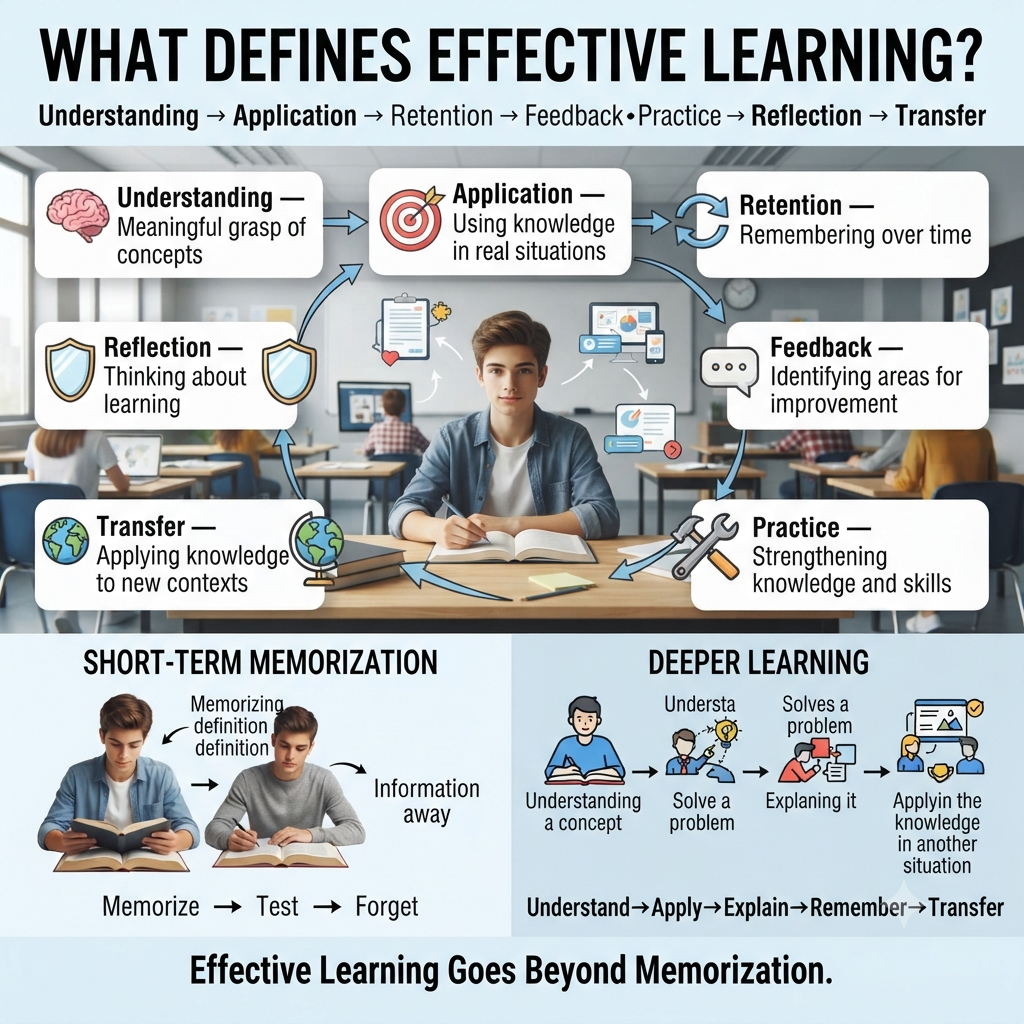
One of the most effective ways to improve performance is to gradually increase the level of thinking required. Instead of repeatedly asking students to recall facts, progression should encourage higher-order cognitive skills.
Bloom’s Level
Example in Gimkit
Learning Goal
Remember
Recall vocabulary
Build memory
Understand
Explain definitions
Confirm comprehension
Apply
Solve practical questions
Use knowledge correctly
Analyze
Compare multiple concepts
Recognize relationships
Evaluate
Choose the best solution
Justify decisions
Create
Design or predict outcomes
Demonstrate mastery
📌 Quick Note: Not every game should target the highest level. A balanced progression mixes review with increasingly challenging thinking tasks.
Using Retrieval Practice to Strengthen Long-Term Performance
Retrieval practice means recalling information from memory instead of simply rereading it. Every time students retrieve knowledge successfully, the memory becomes stronger.
Effective retrieval strategies include:
Revisiting previous units regularly.
Mixing old and new questions.
Reviewing incorrect answers after each session.
Repeating key concepts across multiple weeks.
Asking similar questions in different formats.
Rather than treating completed topics as finished, progression keeps important concepts active throughout the learning process.
💡 Pro Tip: Students often believe they have mastered a topic because it feels familiar. Retrieval practice reveals whether they can actually remember and apply the information without hints.
Spaced Learning vs. Cramming
Many learners try to improve performance by studying intensely just before an assessment. While this may increase short-term recall, much of the information is forgotten quickly.
Progressive learning favors spaced practice, where review sessions are distributed over time.
Cramming
Progressive Spaced Learning
Large amount of study at once
Short, regular review sessions
High mental fatigue
Better concentration
Short-term memory
Long-term retention
Greater stress
More confidence
Easy to forget
Easier to remember later
For classrooms using Gimkit regularly, spaced learning naturally supports stronger academic performance throughout the school year.
Differentiated Progression for Diverse Learners
Every classroom contains students with different strengths, learning speeds, and confidence levels. A single progression path rarely works equally well for everyone.
🌱 Students Needing Additional Support
These learners often benefit from:
Smaller learning objectives.
Simpler vocabulary.
Extra review opportunities.
Immediate corrective feedback.
More repetition before advancing.
The emphasis should remain on building confidence without reducing learning expectations.
🚀 Students Ready for Greater Challenge
Advanced learners should continue progressing through:
Multi-step reasoning questions.
Scenario-based problem solving.
Mixed-topic review sessions.
Time-limited challenges.
Collaborative leadership activities.
Providing additional complexity keeps highly capable students engaged while promoting deeper understanding.
Building Progressive Question Sets
Question quality plays a significant role in improving performance.
Instead of presenting random questions, organize them intentionally.
Stage 1: Basic Recall
Example:
“What is the capital of France?”
Purpose:
Develop quick recognition and factual recall.
Stage 2: Understanding
Example:
“Why is Paris considered an important cultural center?”
Purpose:
Encourage explanation rather than memorization.
Stage 3: Application
Example:
“How might geography influence France’s economy?”
Purpose:
Connect classroom knowledge with practical understanding.
Stage 4: Analysis
Example:
“Compare France’s economy with another European country.”
Purpose:
Develop reasoning and comparative thinking.
Stage 5: Evaluation
Example:
“Which economic factor has the greatest influence on France’s global role?”
Purpose:
Support evidence-based decision making.
This gradual increase in cognitive demand creates meaningful progression rather than simply increasing question difficulty.
Tracking Performance Beyond Scores
High scores are encouraging, but they represent only one indicator of learning.
Teachers should also monitor:
📈 Accuracy trends over time.
⏱ Response speed.
❌ Frequently missed concepts.
🔄 Improvement after review.
📚 Retention across multiple weeks.
🤝 Participation and engagement.
🎯 Progress toward learning objectives.
Looking beyond individual game scores provides a more complete picture of student development.
Classroom Workflow for Progressive Improvement
A structured weekly routine helps maintain continuous learning without overwhelming students.
Introduce New Concept
        │
        ▼
Guided Practice
        │
        ▼
Beginner Gimkit Review
        │
        ▼
Identify Weak Areas
        │
        ▼
Targeted Mini Lesson
        │
        ▼
Intermediate Review
        │
        ▼
Mixed Topic Practice
        │
        ▼
Assessment Preparation
        │
        ▼
Reflection and Feedback
This workflow reinforces learning through repeated exposure while allowing teachers to adjust instruction based on student performance.
Using Motivation Without Making Competition the Goal
Game-based learning naturally introduces competition, but progression should emphasize personal improvement rather than simply outperforming classmates.
Healthy motivation strategies include:
Celebrating improvement instead of ranking.
Rewarding persistence.
Recognizing consistent effort.
Encouraging teamwork.
Highlighting mastery milestones.
Setting individual learning goals.
Students who focus on improving their previous performance often remain motivated even when facing more difficult content.
⭐ Expert Insight: Long-term motivation is driven by visible progress. When students can clearly see how much they have improved, they are more likely to stay engaged and continue learning.
Common Progression Mistakes That Limit Performance
Even well-designed lessons can lose effectiveness if progression is poorly managed.
Common Mistake
Why It Hurts Learning
Better Alternative
Increasing difficulty too quickly
Students become frustrated
Build complexity gradually
Repeating identical questions
Encourages memorization
Introduce varied question formats
Ignoring previous topics
Knowledge fades over time
Schedule regular review
Focusing only on leaderboard rankings
Motivation becomes external
Reward growth and mastery
Moving ahead before mastery
Creates learning gaps
Confirm understanding before advancing
Using one strategy for every learner
Different needs remain unmet
Differentiate instruction where possible
Recognizing these issues early allows teachers to adjust progression before small misunderstandings become significant learning barriers.
Professional Best Practices for Sustainable Performance Growth
Educators who consistently achieve strong learning outcomes often share several common practices:
✅ Define clear learning objectives before every activity.
✅ Increase challenge gradually rather than suddenly.
✅ Review previous concepts frequently.
✅ Encourage students to reflect on mistakes.
✅ Use feedback to guide future instruction.
✅ Balance competition with collaboration.
✅ Monitor improvement across weeks instead of isolated sessions.
✅ Celebrate consistent progress as much as high achievement.
✅ Adapt progression based on student readiness rather than a fixed schedule.
When these practices become part of regular classroom routines, progression evolves from a simple sequence of activities into a powerful system for developing confidence, understanding, and lasting academic success.
Troubleshooting Progression Challenges and Optimizing Long-Term Performance
Even the best progression strategy requires regular refinement. As students develop new skills, teachers should evaluate whether the current level of challenge still matches learner needs. Progression is most effective when it remains flexible, data-informed, and focused on continuous improvement rather than fixed milestones.
Instead of asking “Did students finish the lesson?”, experienced educators ask, “Did students genuinely improve, and what should happen next?” This mindset transforms progression into an ongoing cycle of assessment, reflection, adjustment, and growth.
Troubleshooting Common Progression Challenges
When student performance stalls, the issue is often not motivation alone. Small problems within the progression pathway can gradually reduce engagement and learning outcomes.
Challenge
Possible Cause
Recommended Solution
Students stop improving
Difficulty level remains unchanged
Introduce more varied and progressively challenging questions
Students become frustrated
Learning curve increases too quickly
Break complex topics into smaller learning stages
Strong students lose interest
Activities become repetitive
Add higher-order thinking tasks and enrichment challenges
Weaker students fall behind
Insufficient review opportunities
Schedule targeted reinforcement sessions
Knowledge fades after assessments
Limited long-term review
Use spaced retrieval throughout the semester
Students focus only on winning
Competition outweighs learning
Reward improvement, participation, and mastery alongside performance
Identifying these patterns early helps teachers make small instructional adjustments before they become larger learning barriers.
Using Reflection to Strengthen Progression
Reflection is one of the most overlooked components of performance improvement. After completing a Gimkit session, students benefit from thinking about how they learned, not just how they scored.
Useful reflection questions include:
Which questions were easiest, and why?
Which concepts still feel confusing?
What mistakes happened more than once?
Which strategy helped answer difficult questions?
What should I review before the next session?
What personal improvement can I aim for next time?
These conversations encourage students to take ownership of their learning and develop stronger self-assessment skills.
💡 Pro Tip: A five-minute reflection at the end of a lesson can often provide more instructional insight than another five minutes of gameplay.
Building a Continuous Improvement Cycle
High-performing classrooms rarely rely on isolated activities. Instead, they follow a repeatable improvement process where each learning experience informs the next.
Teach New Concept
        │
        ▼
Guided Practice
        │
        ▼
Gimkit Learning Session
        │
        ▼
Review Performance Data
        │
        ▼
Identify Learning Gaps
        │
        ▼
Targeted Reinforcement
        │
        ▼
Higher-Level Practice
        │
        ▼
Measure Growth
        │
        ▼
Repeat with New Objectives
This cycle promotes consistent academic development rather than temporary performance gains.
Best Practices for Sustainable Progression
Educators who consistently achieve positive learning outcomes often share similar habits. Their focus extends beyond game mechanics to the broader learning process.
✅ Plan Progression Before Launching Activities
Each session should have a clear instructional purpose. Determine what students should understand before choosing questions or game settings.
✅ Balance Review and New Learning
Introducing new concepts is important, but previous material should continue appearing regularly. This strengthens long-term retention and reduces forgetting.
✅ Increase Challenge Gradually
Students should feel stretched without feeling overwhelmed. Small increases in complexity generally produce better engagement than sudden jumps in difficulty.
✅ Use Performance Data Thoughtfully
Scores alone do not tell the full story. Look for trends in accuracy, participation, response patterns, and recurring misconceptions to guide future instruction.
✅ Celebrate Growth, Not Just High Scores
Recognizing improvement encourages persistence. Students who see steady progress are often more motivated than those who focus only on leaderboard positions.
The Future of Progression in Digital Learning
Educational technology continues to evolve, and progression models are becoming more personalized. While specific platform capabilities may change over time, several long-term trends are shaping digital learning:
📊 Greater use of learning analytics to identify knowledge gaps.
🎯 More personalized learning pathways based on student performance.
🧠 Increased emphasis on mastery learning rather than one-time assessment.
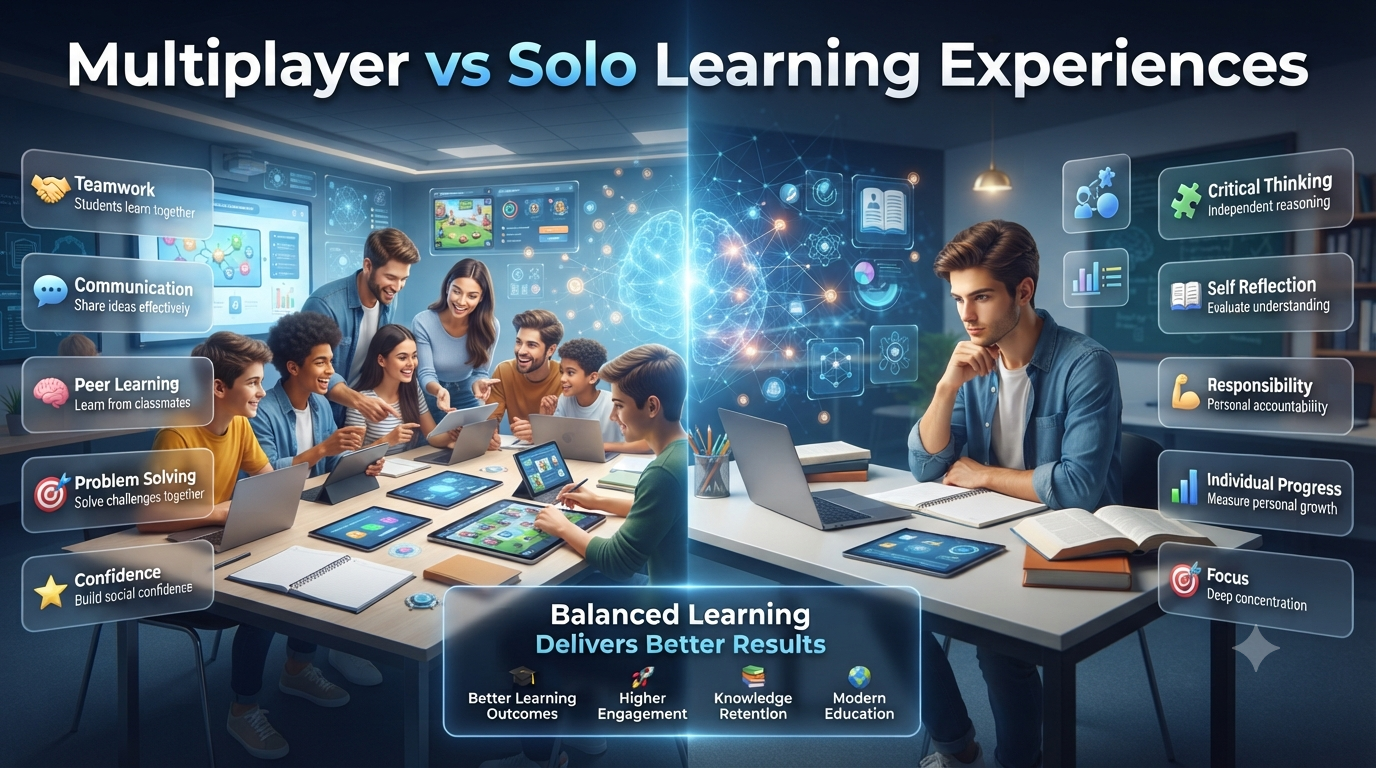
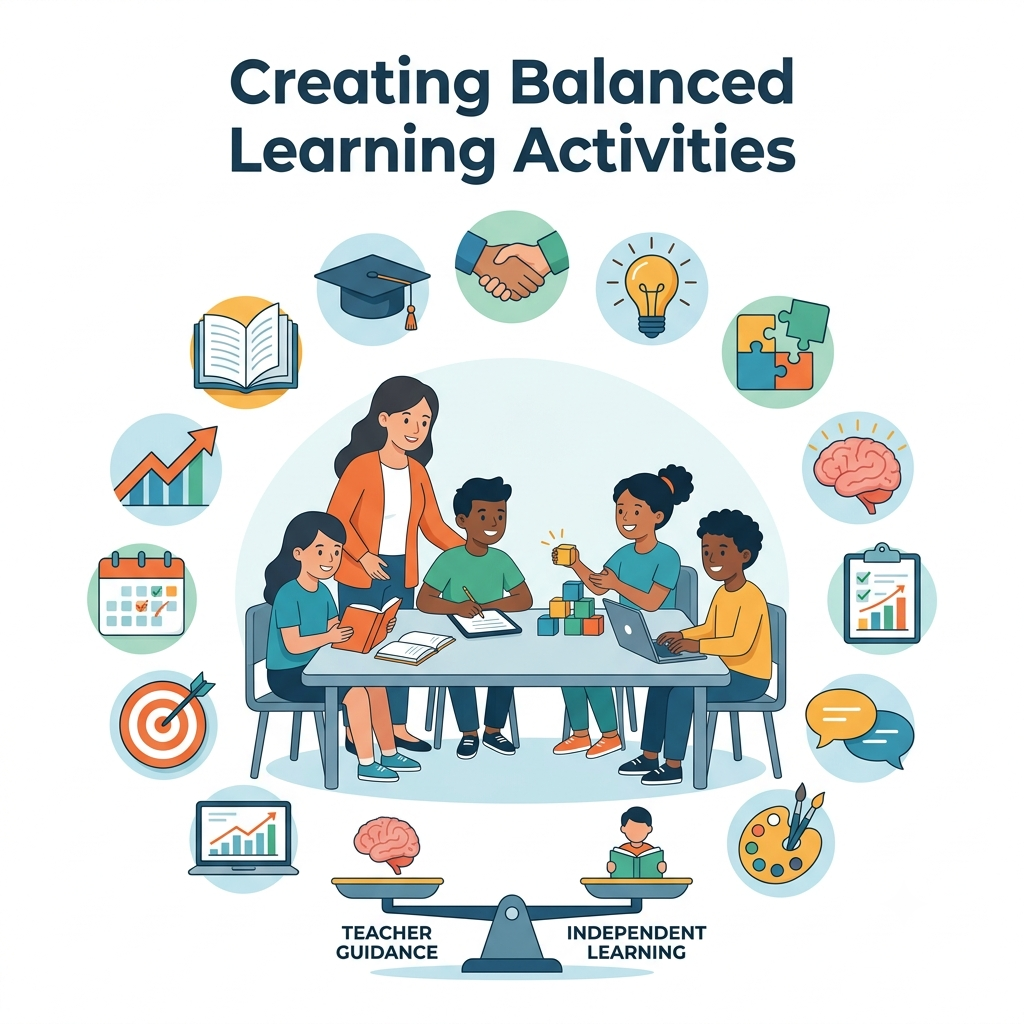
🤝 Stronger integration of collaborative and independent learning experiences.
📈 Data-informed instructional planning that adapts to classroom needs.
As these approaches become more common, progression will continue to play a central role in helping students build durable knowledge and transferable skills.
Professional Recommendations
If your goal is to improve student performance through Gimkit or similar game-based learning platforms, keep these recommendations in mind:
Start with clear learning objectives instead of focusing on game outcomes.
Build progression around gradual increases in challenge.
Reinforce foundational knowledge before introducing advanced concepts.
Combine retrieval practice, spaced review, and meaningful feedback.
Differentiate progression when learners have different readiness levels.
Review classroom data regularly to refine future instruction.
Encourage reflection so students become active participants in their own learning.
Measure success by sustained growth, confidence, and knowledge retention—not only by scores.
A thoughtful progression strategy helps create classrooms where learning remains engaging while steadily improving academic performance over time.
For the latest gaming news, expert reviews, and walkthroughs, readers can also visit IGN, one of the world’s leading gaming websites.
Conclusion
Improving performance through better progression is about creating a structured pathway that supports continuous learning rather than isolated success. By combining gradual challenge, regular review, timely feedback, and purposeful reflection, educators can help students move from basic understanding to lasting mastery.
Platforms like Gimkit become far more effective when they are used within a well-planned instructional framework instead of as standalone review games. Progression encourages learners to strengthen existing knowledge, address misconceptions, and build confidence with each learning session.
Ultimately, sustainable academic performance is achieved through consistent growth. When teachers design progression intentionally and students understand that improvement happens step by step, classroom activities become more meaningful, learning becomes more durable, and success extends well beyond a single game or assessment.
Expert Reviews & Professional Recommendations
Improving Performance Through Better Progression begins with setting clear learning goals for every session.
Improving Performance Through Better Progression encourages steady improvement instead of chasing quick results.
Improving Performance Through Better Progression helps players build stronger habits through consistent practice.
Improving Performance Through Better Progression supports gradual skill development over time.
Improving Performance Through Better Progression encourages reviewing previous performance before starting a new game.
Improving Performance Through Better Progression helps players recognize patterns that lead to better outcomes.
Improving Performance Through Better Progression supports smarter decision-making during gameplay.
Improving Performance Through Better Progression encourages focusing on accuracy before increasing speed.
Improving Performance Through Better Progression helps players improve confidence through repeated success.
Improving Performance Through Better Progression supports balanced learning and strategic thinking.
Improving Performance Through Better Progression encourages learning from both victories and mistakes.
Improving Performance Through Better Progression helps players strengthen long-term consistency.
Improving Performance Through Better Progression supports continuous improvement with regular practice.
Improving Performance Through Better Progression encourages adapting strategies as skills improve.
Improving Performance Through Better Progression helps players make better choices under pressure.
Improving Performance Through Better Progression supports gradual mastery of game mechanics.
Improving Performance Through Better Progression encourages patience while building stronger skills.
Improving Performance Through Better Progression helps players identify areas needing improvement.
Improving Performance Through Better Progression supports smarter resource management throughout the game.
Improving Performance Through Better Progression encourages reviewing progress after every session.
Improving Performance Through Better Progression helps players stay motivated through measurable achievements.
Improving Performance Through Better Progression supports better planning before each match.
Improving Performance Through Better Progression encourages maintaining consistent focus during gameplay.
Improving Performance Through Better Progression helps strengthen decision-making through experience.
Improving Performance Through Better Progression supports continuous learning rather than short-term success.
Improving Performance Through Better Progression encourages players to improve one skill at a time.
Improving Performance Through Better Progression helps create reliable gameplay habits.
Improving Performance Through Better Progression supports smarter strategic adjustments as challenges increase.
Improving Performance Through Better Progression encourages learning through regular repetition.
Improving Performance Through Better Progression helps players become more adaptable in different game situations.
Improving Performance Through Better Progression supports balanced improvement across multiple skills.
Improving Performance Through Better Progression encourages thoughtful analysis instead of rushed decisions.
Improving Performance Through Better Progression helps players build confidence through consistent advancement.
Improving Performance Through Better Progression supports stronger performance with organized practice.
Improving Performance Through Better Progression encourages continuous refinement of successful strategies.
Improving Performance Through Better Progression helps players remain focused on long-term improvement.
Improving Performance Through Better Progression supports better preparation before competitive matches.
Improving Performance Through Better Progression encourages players to track their personal growth.
Improving Performance Through Better Progression helps strengthen both knowledge and gameplay skills.
Improving Performance Through Better Progression supports consistent progress through disciplined practice.
Improving Performance Through Better Progression encourages evaluating strengths and weaknesses regularly.
Improving Performance Through Better Progression helps players develop confidence through experience.
Improving Performance Through Better Progression supports smarter gameplay with thoughtful planning.
Improving Performance Through Better Progression encourages steady progress that leads to lasting improvement.
Improving Performance Through Better Progression demonstrates that consistent practice, strategic planning, gradual skill development, careful decision-making, and continuous self-evaluation create lasting success and stronger overall performance in Gimkit.
Frequently Asked Questions (FAQs)
1. How does progression improve student performance in Gimkit?
Progression improves performance by introducing learning in manageable stages. Students review foundational concepts, receive feedback, and gradually tackle more challenging questions, leading to stronger understanding and long-term retention.
2. What is the difference between progression and simply playing more Gimkit games?
Playing more games does not automatically improve learning. Progression involves intentional sequencing, targeted practice, reflection, and increasing cognitive challenge so each session builds on previous knowledge.
3. How often should teachers use progression-based Gimkit activities?
The ideal frequency depends on instructional goals, but short, consistent review sessions integrated throughout a unit are generally more effective than using Gimkit only before quizzes or exams.
4. How can teachers measure whether progression is working?
Teachers should evaluate multiple indicators, including accuracy trends, knowledge retention, recurring misconceptions, participation, confidence, and improvement across several learning sessions rather than relying solely on leaderboard scores.
5. Can progression strategies support mixed-ability classrooms?
Yes. Progression is particularly valuable in mixed-ability classrooms because it allows teachers to provide reinforcement for students who need additional support while offering more complex challenges for learners ready to advance. This flexible approach helps maintain engagement across different skill levels while promoting continuous improvement for every student.