📚🎮 Budgeting for Gimkit: A Smart Investment in Student Engagement and Learning
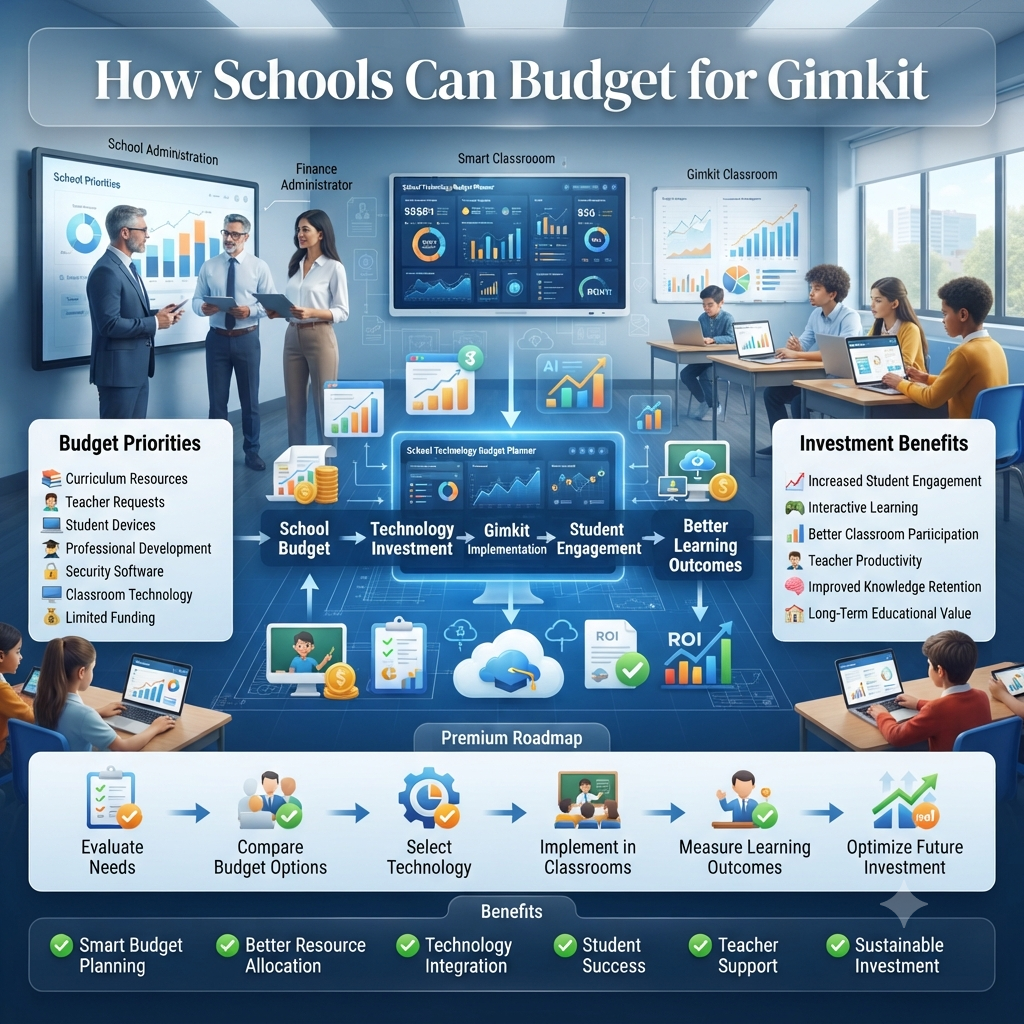
How Schools Can Budget for Gimkit | Technology budgets in schools are under constant pressure. Administrators must balance curriculum resources, teacher requests, student devices, professional development, security software, and classroom technology—all within limited funding. Because of this, every new educational platform must demonstrate clear educational and financial value before earning a place in the annual school budget.
🌟 Budget Priorities Schools Must Balance
📚 Curriculum Resources – Support high-quality teaching and learning materials.
👨🏫 Teacher Requests – Address classroom needs and instructional priorities.
💻 Student Devices – Ensure students have access to the necessary technology.
🎓 Professional Development – Invest in teacher training and skill development.
🔒 Security Software – Protect school systems and student data.
🖥️ Classroom Technology – Maintain and expand digital learning resources.
💰 Limited Funding – Allocate available resources wisely while maximizing educational value.
Looking for comprehensive classroom resources and educational technology insights? Explore GimkitApp for expert guides, teaching strategies, game modes, and the latest updates to enhance student engagement.
🎯 Why Budgeting for Gimkit Requires a Strategic Approach
Gimkit often begins as a teacher-requested classroom tool but can gradually evolve into a school-wide instructional platform. Although many educators first discover Gimkit as an engaging review game, budgeting for it involves much more than purchasing a subscription. School leaders must evaluate both its educational impact and long-term value before making an investment.
📊 Key Factors to Consider Before Budgeting
💲 Licensing Costs – Understand subscription pricing and available licensing options.
🏫 Classroom Adoption – Evaluate how widely teachers and students will use the platform.
📈 Instructional Impact – Assess how Gimkit supports engagement and learning outcomes.
👨🏫 Teacher Training – Plan for onboarding and professional development.
🔄 Long-Term Sustainability – Consider ongoing costs and future implementation.
💼 Return on Investment (ROI) – Compare educational benefits with overall spending.
🚀 Building a Sustainable Technology Budget
Unlike one-time classroom purchases, digital learning platforms become part of a school’s ongoing technology ecosystem. This means budgeting decisions should support both current classroom needs and long-term educational goals. A structured budgeting process helps schools make informed financial decisions while ensuring technology investments continue delivering value year after year.
✅ Best Practices for Budget Planning
🎯 Align Spending with Educational Goals – Invest in tools that directly support teaching and student learning.
📅 Plan for Long-Term Costs – Include subscription renewals and future expansion in the budget.
📊 Evaluate Educational Value – Consider learning outcomes, engagement, and teacher adoption—not just price.
🤝 Gather Teacher Feedback – Use classroom experiences to guide purchasing decisions.
💡 Focus on Long-Term ROI – Prioritize solutions that provide lasting educational benefits over the lowest upfront cost.
A well-planned budgeting strategy ensures that Gimkit is evaluated as part of a broader educational technology investment, helping schools balance financial responsibility with meaningful improvements in student engagement, classroom instruction, and long-term learning success.
Why Schools Should Plan a Budget for Gimkit Instead of Buying It Impulsively
The short answer is simple: a planned purchase leads to better educational outcomes and better financial decisions.
When a school budgets for Gimkit in advance, it can:
🎯 Match spending with curriculum priorities
👨🏫 Ensure teachers receive proper training
💻 Allocate licenses fairly across departments
📊 Measure student engagement and learning outcomes
Schools that skip the planning stage often discover later that only a handful of teachers actively use the platform, while others continue relying on different tools. Proper budgeting helps maximize adoption and ensures that the investment benefits a larger portion of the school community.
⭐ Expert Insight: Educational software delivers the greatest value when purchasing decisions involve both instructional leaders and classroom teachers—not just finance departments.
Understanding What Schools Are Actually Paying For
Many educators assume they are paying only for access to educational games. In reality, the investment supports a complete classroom engagement system.
A school’s budgeting discussion should consider several areas:
Budget Consideration
Why It Matters
Teacher licenses
Determines who can create and manage activities
Student participation
Supports classroom-wide interactive learning
Assessment features
Helps monitor understanding during lessons
Classroom engagement
Encourages participation through gamification
Reporting capabilities
Assists teachers in reviewing performance
Future renewals
Ensures continued access without interruptions
Professional development
Helps teachers use the platform effectively
Looking beyond the subscription price allows schools to evaluate the platform based on educational outcomes rather than cost alone.
Why Educational Technology Budgets Are Becoming More Strategic 📈
Schools today are moving away from purchasing software simply because it is popular. Instead, administrators increasingly ask questions such as:
Will teachers actually use it?
Does it improve classroom engagement?
Can it support multiple subjects?
Is it appropriate across different grade levels?
Does it complement existing instructional strategies?
Can it replace another paid platform?
Is it sustainable within future budgets?
These questions reflect a shift toward evidence-based purchasing, where educational value carries as much weight as price.
The Biggest Factors That Influence a School’s Gimkit Budget
No two schools budget in exactly the same way. Funding priorities differ depending on enrollment, curriculum goals, available technology, and local policies.
Some of the most important factors include:
🏫 School Size
Larger schools often require more teacher access and broader implementation planning. A single enthusiastic teacher may not justify a school-wide purchase, but widespread interest across departments can make budgeting more practical.
Small schools, meanwhile, may begin with a limited rollout involving only a few classrooms before expanding.
👩🏫 Number of Teachers Using the Platform
One of the biggest budgeting questions is:
How many teachers actually plan to use Gimkit regularly?
Schools frequently categorize teachers into groups such as:
Early adopters
Interested teachers
Occasional users
Teachers needing additional training
Understanding expected adoption helps administrators avoid paying for licenses that remain unused.
💡 Pro Tip: Survey teachers before budgeting. Knowing who intends to integrate Gimkit into instruction provides more accurate budgeting data and strengthens funding requests.
📚 Subjects That Will Use Gimkit
Although Gimkit is widely recognized for review games, its flexibility allows it to support many academic areas.
Examples include:
Mathematics
Science
English Language Arts
Social Studies
World Languages
Career and Technical Education
Elementary classrooms
Intervention programs
Test preparation
Vocabulary instruction
When multiple departments plan to use the platform, the investment often delivers greater value because costs are shared across instructional programs rather than benefiting only one subject area.
💻 Existing Classroom Technology
A budgeting discussion should also examine whether classrooms already have the necessary technology.
Questions may include:
Do students have access to school-issued devices?
Is classroom Wi-Fi reliable?
Are teachers comfortable using digital platforms?
Can students participate without technical barriers?
Does the school’s infrastructure support simultaneous classroom sessions?
If additional technology upgrades are required, those costs should be considered alongside software purchases.
Who Should Participate in Budgeting Decisions?
Successful educational technology purchases rarely come from a single decision-maker. Instead, schools benefit from involving multiple stakeholders who each contribute a different perspective.
Stakeholder
Primary Responsibility
School administrators
Align purchases with school improvement goals
Technology coordinators
Review compatibility, security, and implementation
Curriculum leaders
Ensure alignment with learning standards
Teachers
Evaluate classroom usability and instructional value
Finance staff
Monitor available funding and purchasing policies
Department heads
Prioritize subject-specific instructional needs
This collaborative approach reduces the risk of purchasing software that looks impressive during demonstrations but sees limited classroom use.
Creating Clear Budgeting Goals Before Purchasing
Before requesting funding, schools should define what success will look like.
Instead of saying:
“We want Gimkit because students enjoy it.”
A stronger budgeting objective would be:
“We aim to increase formative assessment participation, improve classroom engagement, encourage retrieval practice, and provide teachers with interactive review opportunities across multiple grade levels.”
Clear goals help decision-makers evaluate whether the investment supports broader educational priorities rather than isolated classroom activities.
Questions Every School Should Answer Before Adding Gimkit to the Budget
Administrators and instructional leaders can use the following checklist before approving funding:
✅ Budget Planning Checklist
Is there a documented instructional need?
Have teachers expressed consistent interest?
Will multiple departments benefit?
Does the platform align with curriculum goals?
Is classroom technology ready for implementation?
Have renewal costs been considered?
Is teacher training included in the rollout plan?
How will success be measured after adoption?
Could the platform replace or consolidate other digital tools?
Is there a long-term sustainability plan?
Completing this checklist helps ensure that budgeting decisions are intentional, transparent, and aligned with educational outcomes rather than short-term enthusiasm.
For the latest gaming news, expert reviews, and walkthroughs, readers can also visit IGN, one of the world’s leading gaming websites.
Common Budgeting Mistakes Schools Should Avoid ⚠️
Even well-intentioned purchases can underperform if key planning steps are overlooked.
Some of the most common mistakes include:
❌ Buying Without Measuring Teacher Demand
Purchasing licenses before understanding teacher interest often leads to low adoption and wasted resources.
❌ Ignoring Professional Development
A powerful platform is only effective when educators know how to integrate it into daily instruction.
❌ Focusing Only on Price
Choosing solely based on subscription cost may overlook factors such as instructional value, scalability, and long-term impact.
❌ Forgetting Renewal Planning
Digital platforms typically require ongoing subscriptions. Schools should account for future renewals during annual budget planning.
❌ Lack of Success Metrics
Without defining goals and measuring outcomes, it becomes difficult to determine whether the investment improved teaching or learning.
⚠ Common Mistake: Treating Gimkit as “just another classroom game” can lead to undervaluing its potential as a formative assessment and engagement tool. Budget discussions should focus on educational outcomes rather than entertainment alone.
Building a Long-Term Technology Budget Mindset
The most effective schools view platforms like Gimkit as part of a broader digital learning strategy rather than isolated purchases. By considering teacher adoption, curriculum alignment, infrastructure, professional development, and future sustainability from the outset, administrators can make informed decisions that maximize both instructional impact and budget efficiency.
In the next section, we’ll explore how schools can actually fund Gimkit, including departmental budgets, technology funds, grants, PTA/PTO contributions, phased rollouts, and practical cost-saving strategies that make implementation more affordable.
How Schools Can Fund Gimkit Without Straining the School Budget 💰🏫
Finding room in an already stretched education budget can feel challenging, but many schools successfully adopt digital learning platforms by combining multiple funding sources instead of relying on a single budget line. The key is to view Gimkit as an instructional resource that supports teaching, assessment, and student engagement—not simply as another software subscription.
Rather than asking, “Can we afford Gimkit?”, a better question is:
“Which funding strategy best fits our school’s instructional goals and financial plan?”
Where Does Funding for Gimkit Usually Come From?
Schools rarely pay for educational technology from one dedicated account. Instead, purchases often come from several funding streams depending on school policies, district priorities, and purchasing cycles.
Funding Source
Best Used For
Things to Consider
💻 Educational Technology Budget
School-wide licenses
Often planned annually
📚 Curriculum Budget
Subject-specific implementation
May require department approval
🏫 School Improvement Funds
Engagement initiatives
Must align with improvement goals
🧑🏫 Department Budgets
Pilot programs
Easier for smaller rollouts
🤝 PTA/PTO Support
Classroom enrichment
Requires community communication
🎁 Education Grants
Larger technology projects
Competitive application process
💼 District Innovation Funds
Digital learning expansion
Usually tied to strategic initiatives
Many successful implementations combine two or more of these funding sources, reducing the financial impact on any single department.
Start Small Before Expanding Across the Entire School
One of the smartest budgeting strategies is to avoid purchasing school-wide access immediately unless there is already strong teacher demand.
Instead, schools can begin with a carefully planned pilot.
Example Pilot Rollout
Phase 1 – Pilot Program
5–10 volunteer teachers
Multiple grade levels
Different academic subjects
One grading period or semester
⬇️
Phase 2 – Evaluation
Measure:
Student participation
Teacher feedback
Classroom engagement
Assessment effectiveness
Ease of implementation
⬇️
Phase 3 – Expansion
If results are positive:
Add more teachers
Include additional departments
Budget for wider adoption during the next fiscal cycle
⭐ Expert Insight: Pilot programs reduce financial risk while providing real classroom evidence that administrators can use to justify future investment.
Align Gimkit With School Improvement Goals
Budget approvals become much easier when software supports existing educational priorities.
Instead of presenting Gimkit as:
“A fun review game”
Frame it around measurable instructional objectives such as:
Improving formative assessment
Increasing classroom participation
Supporting differentiated instruction
Encouraging active learning
Strengthening retrieval practice
Enhancing student motivation
Supporting blended learning
Increasing technology integration
Providing immediate learning feedback
When software directly supports strategic goals already identified by school leadership, funding discussions often become more productive.
How Department Heads Can Share the Cost
Many schools avoid placing the full financial responsibility on one department.
Instead, several departments contribute smaller amounts toward a shared resource.
For example:
Department
Potential Benefit
Mathematics
Practice and review activities
Science
Interactive concept reinforcement
English Language Arts
Vocabulary and reading review
Social Studies
Historical facts and exam preparation
World Languages
Language acquisition practice
Special Education
Flexible review opportunities
Intervention Programs
Skill reinforcement
This collaborative funding model spreads costs while increasing overall platform usage.
Can PTA or PTO Organizations Help?
In many schools, parent organizations actively support classroom technology when they understand its educational value.
Rather than requesting funding for “games,” schools should explain:
✅ How students participate actively in lessons
✅ How teachers receive instant feedback
✅ How review sessions become more engaging
✅ How the platform encourages classroom participation
✅ How it supports different learning styles
Parents are generally more willing to support purchases that directly improve classroom experiences instead of simply adding another digital subscription.
Exploring Educational Grants
Schools looking to expand classroom technology often investigate grant opportunities offered by:
Local education foundations
Community organizations
Business partnerships
Corporate education initiatives
Regional innovation programs
STEM education initiatives
Digital learning initiatives
While grant requirements vary, strong applications typically explain:
The instructional challenge
Proposed implementation
Expected educational outcomes
Teacher participation
Student impact
Sustainability after funding ends
💡 Pro Tip: Collect teacher testimonials and classroom objectives before writing grant proposals. Specific instructional examples often strengthen funding applications.
Calculate the Educational Return on Investment (ROI)
School leaders are increasingly interested in educational ROI—not simply financial ROI.
Instead of asking,
“How much does Gimkit cost?”
They ask,
“What educational value does it produce?”
A useful evaluation framework looks like this:
Evaluation Area
Questions to Ask
Student Engagement
Are more students participating?
Assessment Quality
Do teachers receive actionable feedback?
Teacher Efficiency
Does it reduce preparation time?
Learning Motivation
Are students more willing to review?
Classroom Participation
Are reluctant learners becoming involved?
Curriculum Support
Does it reinforce instructional objectives?
These indicators help administrators determine whether continued funding is justified.
Hidden Costs Schools Should Consider
Budget planning should include more than the subscription itself.
Potential considerations include:
👨🏫 Teacher Training
Teachers need time to learn effective classroom workflows.
⏰ Planning Time
Educators may initially spend additional time creating activities before building a reusable library.
💻 Device Availability
Schools should ensure students have reliable access to compatible devices during classroom activities.
🌐 Internet Reliability
Stable internet access remains essential for smooth participation during live classroom sessions.
🔄 Annual Renewals
Subscription-based platforms generally require ongoing budget planning instead of one-time purchases.
Planning for these factors reduces unexpected expenses later.
Budgeting Throughout the School Year
Technology purchasing does not always happen at the beginning of the academic year.
Treating budgeting as an ongoing process helps schools evaluate whether the platform continues delivering educational value over time.
Cost-Saving Strategies Without Reducing Educational Impact
Schools can maximize value through thoughtful planning rather than simply cutting expenses.
✅ Launch Gradually
Expand implementation over multiple semesters instead of purchasing maximum access immediately.
✅ Encourage Resource Sharing
Teachers can collaborate by exchanging activity ideas, lesson plans, and classroom workflows, reducing preparation time.
✅ Coordinate Professional Development
Group training sessions help educators learn together and encourage consistent implementation practices.
✅ Review Existing Digital Tools
If multiple platforms serve similar instructional purposes, consolidating resources may free budget space for tools that better meet current classroom needs.
✅ Monitor Actual Usage
Regularly reviewing adoption rates ensures future funding decisions are based on meaningful classroom use rather than assumptions.
🔍 Did You Know? Schools often discover that software with high teacher engagement delivers greater long-term value than less expensive tools that remain underused.
Building a Sustainable Funding Strategy
Successful schools rarely view Gimkit as a one-year purchase. Instead, they integrate it into a broader digital learning plan that includes teacher support, curriculum alignment, ongoing evaluation, and future budgeting.
By combining funding sources, starting with pilot programs, measuring classroom impact, and planning for renewals, schools can adopt the platform in a financially responsible way while maximizing benefits for both teachers and students.
Is Gimkit Worth the Investment for Schools? 📊
For many schools, the answer depends less on the subscription cost and more on how effectively the platform is integrated into teaching and learning. A well-planned implementation can support formative assessment, student participation, collaborative learning, and classroom engagement across multiple grade levels and subject areas. On the other hand, even an excellent tool may provide limited value if it is purchased without clear instructional goals or teacher support.
Instead of viewing Gimkit as an isolated expense, schools should evaluate it as part of a broader digital learning strategy that contributes to long-term educational outcomes.
A Decision Matrix for School Leaders
Before approving a purchase, administrators can use the following framework to determine whether Gimkit aligns with their school’s priorities.
School Situation
Recommended Decision
Why It Makes Sense
High teacher interest across departments
✅ Strong candidate for school-wide budgeting
Greater adoption increases overall value
One or two teachers want access
✅ Begin with a pilot program
Test effectiveness before expanding
Limited technology budget
✅ Explore grants or phased implementation
Reduces financial pressure
Existing engagement tools meet current needs
✅ Compare features before purchasing
Avoid unnecessary overlap
School improving digital learning initiatives
✅ Consider long-term integration
Supports broader instructional goals
Reliable devices and internet available
✅ Easier implementation
Fewer technical barriers
This approach helps schools make evidence-based decisions rather than relying on trends or recommendations alone.
Measuring Success After Implementation 📈
A budget should not end with a purchase order. Schools should also define how success will be measured over time.
Student Engagement
Monitor whether more students actively participate during review sessions and classroom discussions.
Teacher Adoption
Track how many teachers regularly use the platform rather than simply having access to it.
Classroom Efficiency
Determine whether teachers can prepare engaging review activities more efficiently as they become familiar with the platform.
Learning Support
Evaluate whether Gimkit complements existing instructional strategies and helps reinforce key concepts through regular practice.
Feedback and Reflection
Collect feedback from teachers and students each semester to identify strengths, challenges, and opportunities for improvement.
⭐ Expert Insight: The most valuable educational software is not necessarily the one with the most features—it is the one that teachers consistently use to improve learning experiences.
Best Practices for Budgeting and Long-Term Success 🌟
Schools that gain the greatest value from Gimkit often follow a few consistent practices:
🎯 Define instructional objectives before purchasing.
👨🏫 Involve teachers in the decision-making process.
🧑💻 Provide basic training and onboarding.
📊 Review platform usage regularly.
🤝 Encourage collaboration by sharing classroom activities and best practices.
📅 Plan for subscription renewals during annual budget reviews.
🔄 Reassess educational impact each school year and adjust implementation as needed.
These practices help ensure that the investment continues to support both educators and students over time.
Common Budgeting Challenges and Practical Solutions
Challenge
Possible Cause
Practical Solution
Low teacher adoption
Limited awareness or training
Offer workshops and peer mentoring
Budget constraints
Competing technology priorities
Start with a pilot and expand gradually
Uneven usage across departments
Lack of collaboration
Create shared planning sessions and resource libraries
Difficulty demonstrating value
No success metrics established
Track engagement, participation, and teacher feedback
Renewal uncertainty
Budget not planned in advance
Include recurring costs in annual technology planning
By anticipating these challenges early, schools can create a more sustainable implementation plan.
Future Trends in Educational Budgeting 🔮
Educational technology continues to evolve, and budgeting decisions are becoming more data-informed. Schools are increasingly prioritizing platforms that:
Support active and personalized learning.
Integrate smoothly into classroom workflows.
Offer meaningful insights that help teachers adjust instruction.
Demonstrate consistent teacher adoption.
Fit within a long-term digital learning strategy.
As technology planning becomes more strategic, schools are likely to focus less on purchasing large numbers of tools and more on investing in platforms that deliver measurable instructional value.
School Budget Planning Checklist ✅
Before finalizing a Gimkit purchase, review this checklist:
✅ Confirm instructional goals.
✅ Gather teacher feedback.
✅ Assess device and internet readiness.
✅ Identify available funding sources.
✅ Compare existing educational tools.
✅ Plan professional development.
✅ Establish success metrics.
✅ Budget for future renewals.
✅ Review usage data annually.
✅ Adjust implementation based on classroom needs.
Completing these steps helps schools make informed financial decisions while maximizing educational benefits.
Professional Recommendations & Expert Reviews
How Schools Can Budget for Gimkit begins with identifying classroom learning objectives.
How Schools Can Budget for Gimkit encourages evaluating educational needs before purchasing.
How Schools Can Budget for Gimkit helps schools compare available subscription options.
How Schools Can Budget for Gimkit supports responsible spending on educational technology.
How Schools Can Budget for Gimkit encourages planning technology expenses annually.
How Schools Can Budget for Gimkit helps administrators align purchases with curriculum goals.
How Schools Can Budget for Gimkit supports long-term financial planning for classrooms.
How Schools Can Budget for Gimkit encourages reviewing available school technology funds.
How Schools Can Budget for Gimkit helps prioritize resources that improve student learning.
How Schools Can Budget for Gimkit supports efficient use of educational budgets.
How Schools Can Budget for Gimkit encourages schools to evaluate expected classroom usage.
How Schools Can Budget for Gimkit helps determine whether a free or paid plan meets current needs.
How Schools Can Budget for Gimkit supports informed purchasing decisions.
How Schools Can Budget for Gimkit encourages comparing value instead of focusing only on price.
How Schools Can Budget for Gimkit helps schools plan technology investments strategically.
How Schools Can Budget for Gimkit supports better financial accountability.
How Schools Can Budget for Gimkit encourages involving teachers in budgeting discussions.
How Schools Can Budget for Gimkit helps identify the features most valuable for instruction.
How Schools Can Budget for Gimkit supports cost-effective classroom technology planning.
How Schools Can Budget for Gimkit encourages reviewing subscription benefits before renewal.
How Schools Can Budget for Gimkit helps schools balance educational priorities with available funding.
How Schools Can Budget for Gimkit supports careful allocation of digital learning resources.
How Schools Can Budget for Gimkit encourages administrators to review classroom feedback.
How Schools Can Budget for Gimkit helps maximize the value of educational software.
How Schools Can Budget for Gimkit supports consistent financial planning throughout the school year.
How Schools Can Budget for Gimkit encourages schools to forecast future technology needs.
How Schools Can Budget for Gimkit helps compare software investments fairly.
How Schools Can Budget for Gimkit supports efficient classroom resource management.
How Schools Can Budget for Gimkit encourages schools to monitor subscription usage.
How Schools Can Budget for Gimkit helps reduce unnecessary technology expenses.
How Schools Can Budget for Gimkit supports smarter educational purchasing decisions.
How Schools Can Budget for Gimkit encourages evaluating instructional benefits regularly.
How Schools Can Budget for Gimkit helps schools invest according to student needs.
How Schools Can Budget for Gimkit supports sustainable technology adoption.
How Schools Can Budget for Gimkit encourages balancing classroom quality with financial responsibility.
How Schools Can Budget for Gimkit helps administrators measure educational value.
How Schools Can Budget for Gimkit supports better technology planning across departments.
How Schools Can Budget for Gimkit encourages reviewing classroom performance after implementation.
How Schools Can Budget for Gimkit helps schools prioritize educational outcomes.
How Schools Can Budget for Gimkit supports organized budgeting for digital resources.
How Schools Can Budget for Gimkit encourages careful evaluation before upgrading subscriptions.
How Schools Can Budget for Gimkit helps schools avoid unnecessary spending.
How Schools Can Budget for Gimkit supports effective financial decision-making.
How Schools Can Budget for Gimkit encourages schools to consider long-term instructional benefits.
How Schools Can Budget for Gimkit helps maximize educational return on investment.
How Schools Can Budget for Gimkit supports stronger planning for future classroom technology.
How Schools Can Budget for Gimkit encourages schools to review budget priorities annually.
How Schools Can Budget for Gimkit helps ensure digital tools align with learning objectives.
How Schools Can Budget for Gimkit supports flexible budgeting based on classroom growth.
How Schools Can Budget for Gimkit encourages schools to collect teacher feedback before renewing subscriptions.
How Schools Can Budget for Gimkit helps identify the most valuable classroom features.
How Schools Can Budget for Gimkit supports responsible management of educational funds.
How Schools Can Budget for Gimkit encourages comparing classroom impact with overall costs.
How Schools Can Budget for Gimkit helps schools build sustainable technology strategies.
How Schools Can Budget for Gimkit supports ongoing evaluation of instructional resources.
How Schools Can Budget for Gimkit encourages efficient planning for future academic years.
How Schools Can Budget for Gimkit helps schools create balanced technology budgets.
How Schools Can Budget for Gimkit supports thoughtful investment in interactive learning.
How Schools Can Budget for Gimkit encourages schools to focus on educational value rather than unnecessary features.
How Schools Can Budget for Gimkit helps administrators make informed subscription decisions.
Frequently Asked Questions (FAQs)
1. Should every school purchase Gimkit?
Not necessarily. Schools should first evaluate teacher interest, instructional goals, available funding, and existing digital learning tools. A pilot program is often the best starting point before making a larger commitment.
2. What is the best way to introduce Gimkit in a school?
Begin with a small group of interested teachers, provide basic training, gather classroom feedback, and expand gradually if the platform proves valuable across different subjects and grade levels.
3. Can Gimkit fit into a limited technology budget?
Yes. Schools may choose phased implementation, department-level funding, community support, or grant opportunities to reduce financial pressure while still providing access to teachers.
4. How can administrators measure whether Gimkit is successful?
Success can be evaluated through teacher adoption, student engagement, classroom participation, instructional feedback, and how well the platform supports learning objectives over time.
5. What should schools consider before renewing a subscription?
Review usage data, teacher feedback, educational outcomes, and alignment with current instructional priorities. Renewal decisions should be based on demonstrated value rather than routine continuation.
Final Thoughts 🎓
Budgeting for Gimkit is not simply about purchasing educational software—it is about investing in a learning environment where students are more engaged, teachers have flexible tools for formative assessment, and classrooms become more interactive. The strongest budgeting decisions are built on careful planning, collaboration, and a clear understanding of how technology supports teaching and learning.
Schools that involve administrators, teachers, curriculum leaders, and technology staff throughout the budgeting process are better positioned to make sustainable decisions that align with both financial realities and educational priorities. Whether starting with a small pilot or implementing the platform across multiple departments, success depends on setting measurable goals, supporting educators, and reviewing outcomes regularly.
As digital learning continues to shape modern education, thoughtful budgeting will remain just as important as the technology itself. By focusing on long-term value instead of short-term costs, schools can create technology plans that strengthen instruction, encourage student participation, and make every investment work harder for the entire learning community.