Editorial scope, updated November 2026. Long-term interactive learning experiences should be judged by what students can explain, retain, and apply, not by excitement or virtual points alone. This guide separates classroom observations from research claims and provides illustrative teaching scenarios, an evaluation protocol, and a privacy-conscious planning calculator. The examples are hypothetical and do not represent measured results from named schools.
Interactive learning may include peer instruction, inquiry, simulation, retrieval practice, discussion, and games. Gimkit is one optional practice platform within that broader category. Its official documentation should be checked for current mode and subscription rules.
Why Long-Term Experiences Matter More Than First Impressions
Many educational tools leave a strong first impression because they introduce novelty into the classroom. Students naturally become excited when lessons include quizzes, competitions, collaborative activities, or technology-enhanced participation. However, experienced educators know that initial enthusiasm does not automatically translate into meaningful learning outcomes.
Long-term user experiences provide a much clearer picture of educational effectiveness because they answer questions such as:
Do students remain engaged after the novelty wears off?
Does knowledge retention actually improve over time?
Are teachers able to integrate interactive learning into everyday lessons without increasing workload?
Does classroom participation become more inclusive?
Can interactive learning support different access needs throughout an academic term?
These questions cannot be answered after a single lesson. They require repeated classroom use across different topics, student groups, and learning objectives.
💡 Expert Insight: Sustainable engagement is a stronger indicator of educational success than short-term excitement. A classroom that remains actively involved throughout an entire semester demonstrates deeper learning habits than one that experiences only occasional bursts of enthusiasm.
How Student Engagement Evolves Over Time
One of the most consistent long-term observations is that student engagement changes in stages rather than remaining constant. The way learners interact during their first week is often very different from how they participate after several months.
Stage 1: Curiosity and Excitement
During the initial weeks, students are attracted by the interactive nature of lessons. Activities feel different from traditional lectures, making participation more appealing.
At this stage, motivation is often driven by:
Competition
Curiosity
Immediate feedback
Classroom energy
Visual interaction
Gamified activities
While these elements increase attention, they should not be mistaken for lasting educational impact.
Stage 2: Building Consistent Participation
As interactive learning becomes a regular part of classroom routines, students begin shifting their focus from entertainment toward learning itself.
Instead of participating only because an activity feels exciting, many students start engaging because they understand that active involvement helps them:
Remember concepts more effectively
Identify knowledge gaps quickly
Learn from classmates
Receive immediate correction
Build confidence before formal assessments
Participation gradually becomes a learning habit rather than a reaction to novelty.
✅ Best Practice: Consistency matters more than frequency. A well-planned interactive activity every week may be easier to sustain than several activities concentrated into a short period.
Stage 3: Active Learning Becomes the Classroom Norm
After extended implementation, classrooms often experience a cultural shift.
Students no longer wait passively for information. Instead, they begin expecting to contribute through discussions, collaborative tasks, questioning, peer learning, and interactive review sessions.
Teachers frequently notice improvements in behaviors such as:
Volunteering answers more confidently
Asking thoughtful questions
Supporting classmates during activities
Remaining attentive for longer periods
Taking greater ownership of learning
Rather than viewing lessons as information delivery, students increasingly see learning as an active process.
Long-Term Effects on Knowledge Retention
One of the strongest reasons educators continue using interactive learning is its influence on long-term memory.
Traditional instruction sometimes encourages short-term memorization before assessments. Interactive learning, by contrast, repeatedly asks students to retrieve, apply, discuss, and explain information. This repeated mental effort strengthens memory over time.
Instead of simply recognizing correct answers, learners repeatedly practice recalling information from memory—a process widely associated with stronger long-term retention.
Why Information Stays Longer
Several classroom experiences contribute to better memory formation:
Interactive Learning Practice
Long-Term Learning Benefit
Active participation
Stronger understanding instead of passive exposure
Immediate feedback
Misconceptions corrected before becoming habits
Repeated retrieval
Better long-term recall
Peer discussion
Multiple ways of understanding the same concept
Practical application
Easier transfer of knowledge into real situations
The cumulative effect becomes increasingly noticeable across an academic term as students revisit concepts in different contexts rather than relying solely on last-minute revision.
Confidence Grows Through Repeated Participation
Confidence rarely develops after one successful classroom activity. It grows gradually through repeated opportunities to participate without fear of failure.
Interactive learning environments often reduce the pressure associated with traditional classroom questioning because students receive regular chances to contribute, practice, and improve.
Over time, teachers commonly observe that previously quiet learners begin participating more frequently as they realize mistakes are treated as part of learning rather than as public failures.
This gradual increase in confidence can influence several areas of learning:
Classroom discussions become more balanced.
Students ask for clarification sooner.
Group collaboration improves.
Independent problem-solving increases.
Assessment anxiety may decrease because learners have practiced retrieving knowledge throughout regular lessons.
⭐ Professional Observation: Confidence built through continuous participation often extends beyond interactive activities. Students who become comfortable expressing ideas during classroom exercises are frequently more willing to contribute during projects, presentations, and collaborative assignments as well.
The Shift From Passive Learning to Active Learning Habits
Perhaps the most significant long-term change is not higher quiz scores or increased participation—it is the development of better learning habits.
Students who regularly experience interactive instruction begin approaching learning differently.
Instead of asking:
“Will this be on the test?”
They increasingly ask:
“Can I try solving it?”
That subtle shift reflects a deeper change in mindset. Learning becomes something students actively do rather than something they simply receive.
Over time, these habits can contribute to:
Greater curiosity during lessons
More independent thinking
Better preparation before class
Improved willingness to experiment with solutions
Increased resilience when facing challenging topics
These behavioral changes are often more valuable than any single assessment result because they support continuous learning long after a specific lesson has ended.
How Teachers’ Experiences Change After Long-Term Interactive Learning Implementation
Teachers often notice that their experience with interactive learning evolves just as much as their students’ experience. During the first few lessons, the focus is usually on learning the teaching approach, managing classroom participation, and understanding how students respond. After months of consistent implementation, however, many educators begin refining their instructional strategies rather than simply using interactive activities.
Instead of asking, “How do I run this activity?” experienced teachers begin asking, “How can this activity improve learning outcomes?” That shift reflects a move from using interactive learning as a classroom activity to treating it as an integrated teaching methodology.
⭐ Expert Insight: Long-term success rarely comes from using interactive learning more often. It comes from using it more intentionally, with each activity supporting a specific learning objective rather than serving as entertainment.
Classroom Management Becomes More Predictable
One concern many educators have before adopting interactive learning is classroom management. They often assume that increased participation will automatically lead to distractions or reduced discipline.
In practice, many classrooms experience the opposite effect over time.
As students become familiar with classroom expectations, activity routines become increasingly organized. Learners understand when to collaborate, when to compete, when to discuss ideas, and when to focus independently. Less time is spent explaining activity rules, allowing more time for meaningful learning.
Several positive classroom management changes may develop through consistent implementation:
Classroom Before Long-Term Interactive Learning
Classroom After Consistent Implementation
Students wait for teacher instructions
Students understand classroom routines
Participation comes from only a few learners
More students contribute naturally
Teachers manage constant attention loss
Students remain engaged for longer periods
Classroom discussions feel unbalanced
Broader participation becomes common
Review sessions require frequent prompting
Students participate with minimal encouragement
These improvements usually develop gradually through repeated classroom practice rather than appearing immediately.
Lesson Planning Becomes More Purposeful
Teachers who regularly use interactive learning often change how they prepare lessons.
Initially, activities may be added simply to increase engagement. Over time, experienced educators begin designing lessons where interaction supports specific educational goals.
Instead of asking students to participate for the sake of participation, teachers align activities with outcomes such as:
Reviewing previous lessons
Checking understanding before introducing new topics
Reinforcing difficult concepts
Encouraging critical thinking
Identifying misconceptions early
Measuring progress during instruction
This approach transforms interactive learning into an instructional strategy instead of an occasional classroom exercise.
✅ Best Practice: Begin lesson planning with the learning objective—not the activity. Once the educational goal is clear, choose an interactive method that naturally supports that objective.
Continuous Feedback Improves Teaching Decisions
One of the most valuable long-term benefits for educators is the ability to gather ongoing feedback throughout the learning process.
Traditional teaching methods often reveal learning gaps only after quizzes, assignments, or exams have been completed. Interactive learning creates opportunities to identify misunderstandings much earlier.
Over time, teachers become more confident in making instructional decisions because they receive regular insight into how students are progressing.
Continuous classroom feedback helps educators:
Detect misconceptions before they become long-term problems
Adjust lesson pacing based on student understanding
Revisit difficult topics before assessments
Differentiate instruction for learners with varying needs
Rather than waiting until the end of a unit, teachers can make smaller, timely adjustments that improve overall learning.
Student Collaboration Becomes More Meaningful
During the first few interactive activities, collaboration often focuses on completing tasks or participating in games. As students gain experience working together, collaboration tends to become more thoughtful and productive.
Learners gradually improve their ability to:
Explain ideas to classmates
Defend their reasoning respectfully
Listen to different viewpoints
Share responsibilities during group work
Solve problems collectively
Support peers who need additional help
These collaborative behaviors are valuable beyond individual lessons because they strengthen communication and teamwork—skills that remain useful across subjects and future learning environments.
Example Classroom Scenario
Imagine a science classroom where students regularly work through interactive concept reviews.
During the first month, discussions may revolve around choosing the correct answer.
Several months later, the conversation often changes. Students begin explaining why one answer is stronger than another, questioning assumptions, and helping classmates understand complex ideas before asking the teacher for assistance.
The activity itself has not changed dramatically—but the quality of learning has.
Interactive Learning Encourages More Reflective Teaching
Long-term implementation benefits teachers as well as students.
As educators observe patterns in participation, mistakes, and classroom discussions, they naturally become more reflective about their instructional methods.
Many teachers begin asking questions such as:
Which activities consistently improve understanding?
Which topics require additional discussion?
Which students participate less frequently?
Where do misconceptions repeatedly occur?
Which teaching approaches generate deeper thinking?
This reflection supports continuous professional growth rather than relying solely on intuition.
💡 Pro Tip: Keep brief notes after major interactive lessons. Recording common misconceptions, participation patterns, and successful teaching strategies creates a valuable reference for future lesson planning.
Long-Term Challenges Teachers Commonly Encounter
Interactive learning offers significant benefits, but experienced educators also recognize that long-term implementation brings practical challenges. Understanding these challenges helps teachers adapt instead of becoming discouraged.
Some of the most common issues include:
Challenge
Why It Happens
Practical Response
Engagement begins to decline
Students become familiar with repetitive activity formats
Introduce varied instructional approaches and question styles
Uneven participation
Confident learners dominate discussions
Rotate participation methods and encourage quieter students
Activity fatigue
The same routines are used too frequently
Balance interactive lessons with discussions, projects, and independent work
Time management
Activities extend beyond planned schedules
Set clear time limits and prioritize learning objectives
Surface-level participation
Students focus only on quick answers
Include follow-up questions that require explanation and reasoning
Recognizing these challenges early allows teachers to maintain the effectiveness of interactive learning without abandoning it.
⚠ Common Mistake: Treating every lesson as a game can reduce educational value over time. Interactive learning is most effective when it complements sound instructional design rather than replacing it.
Preventing Engagement Fatigue Over Time
One of the biggest misconceptions is that interactive learning automatically keeps students engaged forever.
In reality, any teaching strategy can lose its impact if used without variation.
Experienced educators maintain engagement by changing not only activities but also instructional goals, discussion formats, collaborative structures, and assessment techniques.
Effective long-term strategies include:
Rotating between individual, paired, and group activities
Combining discussion-based and problem-solving exercises
Using interactive reviews only when they genuinely reinforce learning
Introducing real-world scenarios that require critical thinking
Encouraging students to explain their reasoning instead of selecting answers alone
Balancing technology-supported learning with face-to-face interaction
These adjustments help preserve curiosity while preventing routines from becoming predictable.
Building a Sustainable Interactive Learning Culture
The most successful classrooms rarely depend on one activity or one platform. Instead, they develop a learning culture where interaction becomes an expected part of everyday education.
In these classrooms:
Students feel comfortable asking questions.
Mistakes are treated as opportunities to learn.
Feedback becomes a normal part of instruction.
Collaboration is encouraged rather than forced.
Participation is viewed as a shared responsibility.
Over time, this environment supports stronger engagement, better communication, and a greater willingness to explore new ideas—outcomes that extend well beyond individual lessons or assessments.
Long-Term Academic Outcomes of Interactive Learning
The true value of interactive learning is measured by what students continue to understand, remember, and apply long after an activity has ended. While immediate engagement is easy to observe, long-term academic outcomes become visible through consistent classroom performance, stronger conceptual understanding, and improved confidence when approaching unfamiliar problems.
Educators who integrate interactive learning into regular instruction often find that students rely less on short-term memorization and more on understanding relationships between ideas. Instead of recalling isolated facts, learners gradually develop the ability to connect concepts across lessons, making future learning more efficient.
Long-term academic improvements are often reflected in areas such as:
Academic Area
Potential Long-Term Outcome
Conceptual understanding
Stronger connections between related topics
Knowledge retention
Better recall over extended periods
Problem-solving
Increased ability to apply concepts in new situations
Critical thinking
More analytical responses during discussions and assessments
Classroom participation
Higher willingness to contribute ideas and ask questions
Independent learning
Greater confidence in exploring unfamiliar concepts
Although individual results vary depending on teaching quality, curriculum design, and student needs, consistent interactive learning can support deeper educational growth when paired with clear instructional goals.
How Interactive Learning Supports Long-Term Cognitive Development
Interactive learning encourages students to actively process information instead of passively receiving it. Repeated opportunities to discuss, analyze, explain, compare, and apply ideas strengthen the mental processes involved in meaningful learning.
Over time, learners often improve their ability to:
Analyze information rather than simply memorize it.
Connect new concepts with existing knowledge.
Explain ideas using their own understanding.
Evaluate different solutions before making decisions.
Transfer classroom learning to practical situations.
These cognitive improvements are particularly valuable because they continue supporting learning across multiple subjects rather than remaining limited to one lesson or assessment.
⭐ Expert Insight: Long-term cognitive development is usually built through consistent practice, meaningful feedback, and repeated opportunities to think critically—not through isolated high-engagement activities.
Student Motivation Becomes More Self-Directed
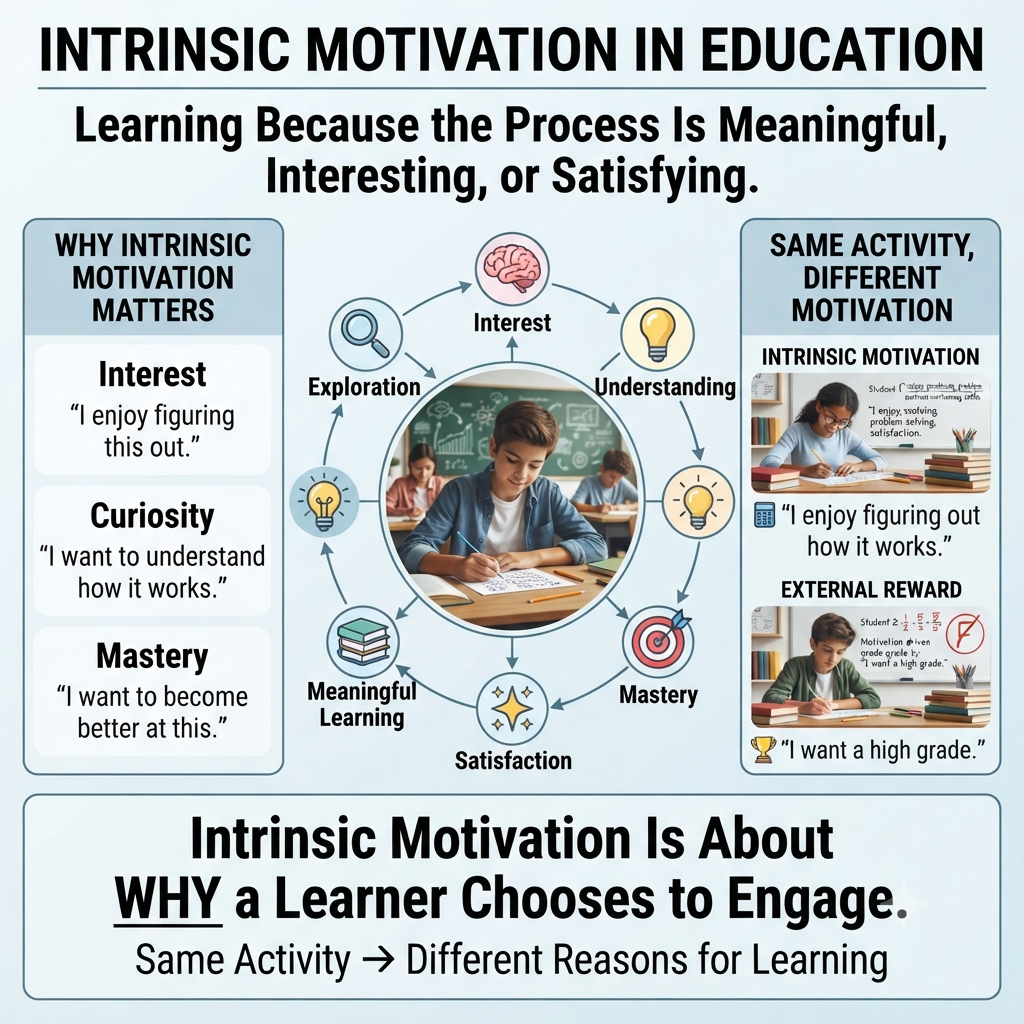
Early motivation is often driven by novelty, competition, or rewards. With continued exposure to interactive learning, many students gradually become motivated by the learning process itself.
Instead of participating only to earn points or complete an activity, learners begin recognizing the personal value of active engagement. They become more comfortable asking questions, testing ideas, correcting mistakes, and contributing during discussions.
Signs of more sustainable motivation include:
Voluntarily participating in classroom discussions.
Preparing before lessons to contribute confidently.
This transition from external motivation to internal motivation is one of the most meaningful long-term developments an educator can encourage.
Recognizing the Limitations of Long-Term Interactive Learning
Interactive learning is highly effective in many educational settings, but it is not a complete replacement for every teaching method. Understanding its limitations helps educators create balanced learning experiences instead of relying on a single instructional approach.
Some common limitations include:
Limitation
Why It Matters
Recommended Approach
Overuse reduces novelty
Repetition can decrease engagement
Rotate instructional strategies throughout the term
Not every topic requires interaction
Some concepts benefit from direct explanation
Match teaching methods to learning objectives
Different learners respond differently
Students have varied learning preferences
Combine interactive, visual, written, and discussion-based instruction
Preparation requires planning
Poorly designed activities reduce learning value
Align every activity with clear educational outcomes
Participation is not always equal
Confident students may dominate discussions
Use structured participation strategies to include all learners
Recognizing these limitations strengthens rather than weakens interactive learning because teachers can adjust their methods before problems become long-term obstacles.
⚠ Common Mistake: Assuming that high participation automatically means deep learning. Students may appear engaged while still holding misconceptions, making thoughtful questioning and ongoing feedback essential.
Best Practices for Sustaining Long-Term Success
Successful long-term implementation depends less on technology and more on thoughtful instructional design. Educators who achieve lasting results typically focus on consistency, reflection, and purposeful learning experiences rather than simply increasing the number of interactive activities.
Practical Recommendations
✅ Align every activity with a clear learning objective.
✅ Use interaction to deepen understanding—not merely to increase classroom energy.
✅ Regularly vary instructional formats to prevent routine fatigue.
✅ Encourage students to explain their reasoning instead of selecting answers alone.
✅ Use classroom feedback to adjust instruction before formal assessments.
✅ Balance collaborative learning with opportunities for independent thinking.
✅ Review participation patterns to ensure every learner has opportunities to contribute.
✅ Reflect on classroom outcomes and refine future lessons based on student progress.
Small improvements applied consistently often have a greater educational impact than occasional large changes.
What Educators Should Realistically Expect Over Time
Interactive learning is most successful when expectations are realistic.
Teachers should not expect every lesson to generate perfect participation or immediate academic transformation. Instead, long-term progress is typically gradual and cumulative.
During sustained implementation, educators are more likely to notice:
Increased confidence among hesitant learners.
Stronger classroom communication.
Better retention of previously learned concepts.
More thoughtful classroom discussions.
Improved collaboration between students.
Greater willingness to solve unfamiliar problems.
More consistent engagement throughout the academic year.
These improvements often emerge through repeated practice, ongoing reflection, and continuous refinement rather than dramatic short-term changes.
Indicators That Interactive Learning Is Delivering Long-Term Value
Rather than measuring success solely through test scores, educators can evaluate long-term effectiveness using a broader set of indicators.
Classroom Indicators
Students actively participate without frequent prompting.
Learners ask more meaningful questions.
Discussions become increasingly analytical rather than factual.
Students confidently explain concepts to peers.
Collaboration feels natural instead of forced.
Misconceptions are identified and corrected earlier.
Classroom routines become more efficient over time.
Learning Indicators
Concepts are retained across multiple units.
Students apply knowledge in unfamiliar contexts.
Independent problem-solving improves.
Reflection and self-assessment become more common.
Learners require less repetition before mastering key ideas.
Together, these indicators provide a more complete picture of educational progress than any single assessment.
Long-Term User Experiences With Interactive Learning: Key Takeaways
Interactive learning creates its greatest educational value through consistent, purposeful implementation rather than isolated classroom activities. Initial excitement may encourage participation, but long-term success depends on how effectively interactive experiences support meaningful learning, critical thinking, collaboration, and continuous improvement.
For students, sustained interactive learning can strengthen engagement, knowledge retention, confidence, communication, and independent thinking. These benefits often become more noticeable as active participation evolves into everyday learning habits that extend beyond individual lessons.
For teachers, long-term use provides continuous insight into student understanding, enabling more informed instructional decisions, earlier intervention when misconceptions arise, and more responsive lesson planning. Interactive learning also encourages reflective teaching practices, helping educators refine their strategies based on classroom evidence instead of assumptions.
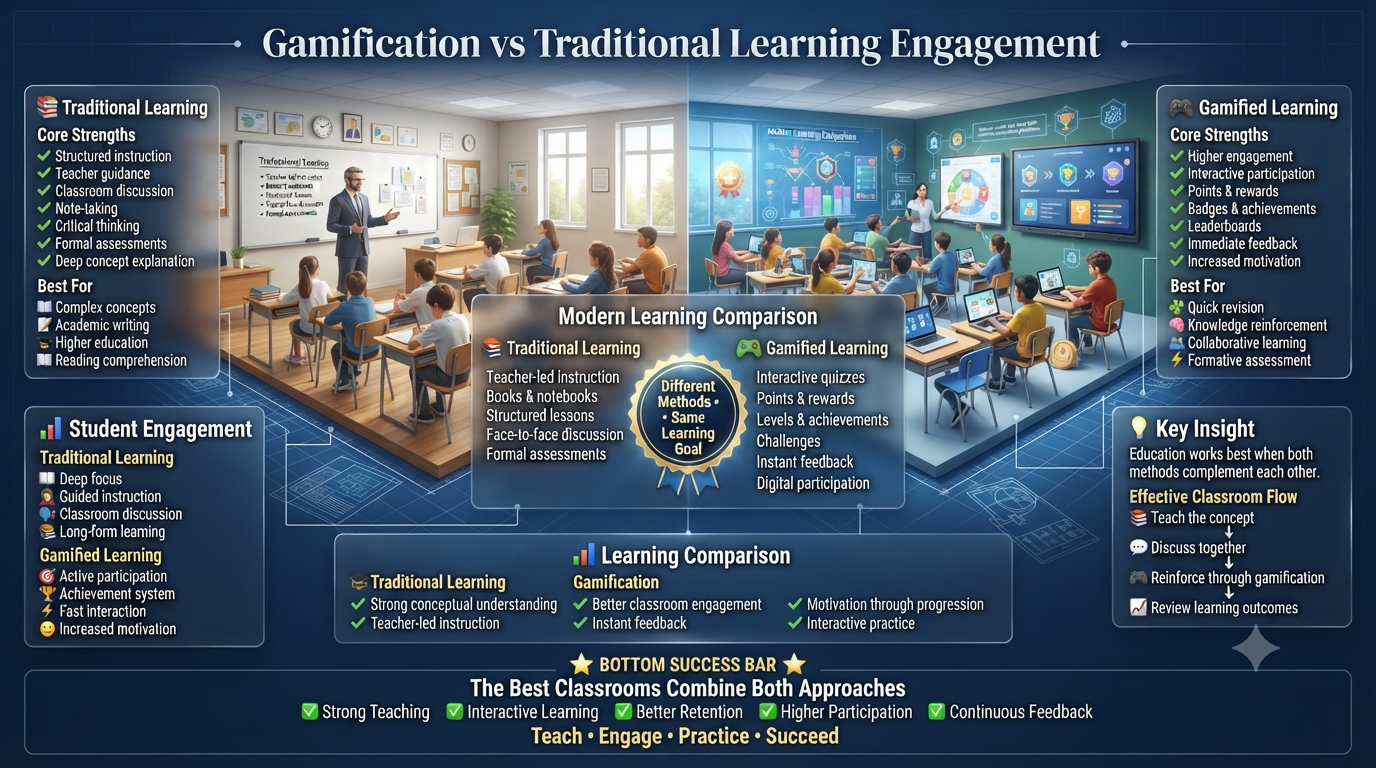
At the same time, lasting success requires balance. Interactive learning should complement—not replace—other effective instructional methods. Varying classroom activities, aligning interaction with clear learning objectives, encouraging deeper reasoning, and regularly evaluating outcomes help prevent engagement fatigue while preserving educational value.
Ultimately, long-term user experiences show that interactive learning is not defined by the technology or activity itself. Its impact depends on thoughtful implementation, consistent practice, and a classroom culture where participation, feedback, collaboration, and curiosity become integral parts of everyday learning. When these elements work together, interactive learning evolves from an engaging teaching strategy into a sustainable approach that supports meaningful academic growth over time.
Illustrative long-term classroom scenarios
The following twelve scenarios are original planning examples, not testimonials or experimental findings. They show how educators can connect interactive practice to a measurable objective and a realistic next teaching decision.
1. Grade-four mathematics: distinguish fluency from speed
A fourth-grade teacher notices that students become more enthusiastic about multiplication facts after a few lively review games. The first two weeks show more volunteers and faster starts, but several children still count on their fingers when asked to explain why six groups of seven equal forty-two. The teacher therefore defines two separate goals: efficient recall of selected facts and the ability to model equal groups. Those goals require different evidence, even when the same classroom activity sparks interest.
For the first month, the teacher uses a short Gimkit question set once a week and follows it with a paper array task. Students discuss how a mistaken product could arise from a reversed operation or a misread factor. During the next month, the digital round is shortened while partner explanation time increases. A later month introduces mixed facts and word problems so children cannot rely on memorizing the order of questions. The game is one component, not the entire mathematics lesson.
Evidence comes from an ungraded baseline, a delayed paper probe, explanation quality, and teacher notes about which learners participate without public pressure. The teacher does not interpret a high virtual balance as a mathematics score because game decisions and repeated attempts affect that balance. Question-level information from a game report may identify items worth revisiting, but the delayed probe tests whether children can transfer what they practiced to a new format.
If fact recall improves while arrays remain weak, the next teaching move is visual modeling rather than a harder game mode. If both measures improve, the teacher gradually reduces scaffolds and introduces more complex multiplicative reasoning. If only participation improves, the teacher keeps the enjoyable warm-up but changes the instructional sequence. The lesson is that a long-term positive experience can be real without every desired academic outcome improving at the same pace.
2. Middle-school science: revisit misconceptions across units
In a seventh-grade science class, students initially enjoy answering questions about particles and states of matter. Three weeks later, the same group performs poorly when asked to explain why a closed container can change pressure as temperature rises. The teacher realizes that recognition of a definition is not equivalent to applying a particle model. A sustainable approach must deliberately revisit concepts in unfamiliar contexts rather than simply replaying the same vocabulary quiz.
The teacher builds a sequence of short retrieval activities with different question demands. The first asks students to distinguish mass from volume. The second presents diagrams and asks for predictions. The third pairs a question with a brief written explanation of the reasoning. During group discussion, learners identify why a plausible distractor is wrong. The teacher rotates between individual reflection, partner talk, and game-based review so that participation does not depend on one format.
To evaluate progress, the teacher compares responses on equivalent but nonidentical prompts after one week and after six weeks. A simple error code records whether mistakes arise from vocabulary, causal reasoning, or graph interpretation. Attendance and access problems are noted separately. No single classroom score is used to claim a scientifically demonstrated improvement in long-term memory; the evidence is a local instructional signal that needs corroboration.
When many students can name the correct term but cannot justify a prediction, the next lesson includes a demonstration and structured explanation. When misconceptions recur after a delay, the teacher schedules a brief retrieval opportunity before the next unit. This approach turns an interactive activity into one step of a feedback loop and prevents repeated gameplay from being mistaken for a complete science curriculum.
3. High-school history: move from recall to source evaluation
A history teacher finds that students enjoy fast review questions about dates and major events, yet struggle when asked whether a newspaper account is reliable. The problem is not necessarily lack of engagement. The original questions reward recognition of a single fact, while the assessment asks students to compare provenance, audience, purpose, and corroboration. A long-term plan must change the type of thinking being practiced.
During the opening month, short quizzes activate background knowledge about a historical period. The teacher then presents two primary-source excerpts and asks students to annotate conflicting claims. Later sessions include questions that identify an author’s likely perspective, followed by a written justification that cannot be captured by a simple multiple-choice answer. The game remains a useful opening routine but no longer occupies the entire instructional period.
Over the term, the teacher collects short source analyses using a common rubric. Students are assessed on whether they cite evidence, acknowledge uncertainty, and explain how context affects interpretation. Game reports may reveal missing background knowledge, but they cannot by themselves measure the quality of an extended argument. Students also complete a short reflection about which feedback helped them improve their reasoning.
If source analysis remains weak despite high quiz accuracy, the teacher explicitly models sourcing and corroboration. If students can explain sources but forget essential chronology, a spaced factual review is retained. The balanced approach recognizes that different educational outcomes need different instruments. Long-term satisfaction with a tool is useful information, but curriculum alignment determines whether its use is justified.
4. Language learning: support reluctant speakers without coercion
In a multilingual classroom, an interactive quiz initially increases visible participation because learners can respond without speaking before the entire class. That can reduce some social risk, but it does not automatically develop oral fluency. A student who answers vocabulary questions accurately may still hesitate to use those words in a conversation. The teacher therefore treats digital responses as one access route rather than a substitute for language production.
The class alternates vocabulary retrieval with paired speaking tasks, sentence frames, and low-stakes recording or writing opportunities. Learners can rehearse privately before volunteering, and students are never publicly ranked by accent or speed. Question wording is checked for idioms that might disadvantage newcomers. The teacher also offers non-device participation when access or sensory needs make the game unsuitable for a particular student.
Progress is observed through samples of written sentences, short oral exchanges, and comprehension checks repeated with different prompts. The teacher records whether students use target words appropriately rather than counting only how often they click an answer. A small increase in classroom talk may reflect greater comfort, a changed seating plan, or improved relationships; it should not be attributed automatically to one application.
When students show receptive knowledge but limited production, the next sequence prioritizes dialogue and feedback. When speaking confidence improves but grammar remains inaccurate, the teacher adds focused practice and correction. The long-term value of the interactive component lies in making participation accessible while the broader lesson provides the communicative practice needed for meaningful language development.
5. Reading comprehension: test inference beyond answer recognition
A fifth-grade teacher notices that pupils can select correct answers after a passage is discussed together, yet cannot explain how a character’s actions reveal motivation. Repeatedly using the same multiple-choice questions might raise scores through familiarity. The teacher wants evidence of inference, not merely recognition. A better plan separates comprehension of the text from memory of the question set.
The teacher begins with a brief independent reading, uses a small digital check to identify uncertain vocabulary, and then asks students to cite sentences supporting an interpretation. Later sessions include fresh passages of comparable difficulty and partner discussion about alternative readings. Some weeks omit the game entirely so students experience reading as inquiry rather than a continuous competition. This variety protects time for sustained attention.
Evidence includes annotated passages, short written inferences, and responses to unfamiliar texts. The teacher records whether a learner can explain an answer without being shown the original choices. A digital question breakdown can suggest which concepts require attention, but it cannot establish independent reading comprehension unless the questions genuinely sample that construct. Students with reading accommodations receive comparable opportunities to demonstrate understanding.
If the delayed task reveals weak evidence citation, the teacher models selecting and explaining quotations. If students infer accurately but struggle with vocabulary, targeted word study is more appropriate. The routine stays useful only when it helps the teacher choose a better next lesson. The enduring outcome is improved reading reasoning, not simply a longer streak of correct game answers.
6. Special education: prioritize access and individualized evidence
A teacher supporting learners with different processing, attention, motor, and communication needs sees mixed reactions to competitive digital activities. Some students enjoy immediate feedback; others experience visual overload or anxiety about pace. A single average satisfaction score would hide those differences. The teacher begins with individual access considerations and the learning goals already established for each student rather than assuming that one interface is universally inclusive.
The classroom offers quiet alternatives, predictable instructions, optional partner support, and time to preview unfamiliar interfaces. Game mode labels can help teachers select a calmer or more collaborative format, but the actual activity is tested against students’ needs. Learners can show understanding through manipulatives, verbal explanations, typed responses, or a paper check when appropriate. Accommodations are determined by educational plans and local requirements.
The teacher monitors participation quality, task completion, observed stress, and specific academic responses. Sensitive student information stays in approved school systems, not a public leaderboard or a casual spreadsheet. A brief note about why a learner disengaged may be more useful than the class-wide completion rate. Families and relevant support staff can provide context without turning the game into a diagnostic instrument.
If an activity repeatedly excludes a learner, the teacher changes the activity rather than blaming the learner. If a calmer format increases access without reducing the learning demand, that is a meaningful local improvement. A successful long-term experience is one in which participation options expand and instructional evidence becomes more interpretable, even if the class uses the technology less frequently.
7. Art education: preserve creativity alongside quick knowledge checks
An art teacher uses short quizzes to introduce color relationships, materials, and historical styles. Students enjoy the rapid feedback, but a correct answer about complementary colors does not show that they can make intentional design choices. The teacher distinguishes declarative knowledge from the process of experimenting, revising, and explaining an artwork. This distinction matters because the most valuable evidence in an art classroom is often the work itself.
The unit starts with a few retrieval questions and moves quickly to sketching and peer critique. Learners create two versions of a composition, explain the choices they changed, and respond to feedback. The interactive check is reused only when a knowledge gap interferes with the project. Students can review terminology privately, while studio time remains protected from unnecessary interruptions and leaderboards.
Long-term evidence includes portfolios, process notes, and student explanations of revision. The teacher uses a rubric that values purposeful experimentation, communication, and craftsmanship rather than speed of response. A student who performs modestly in a quiz may produce excellent visual reasoning. Conversely, high quiz accuracy may coexist with limited willingness to revise an initial idea. Neither pattern should be hidden by a single overall score.
If learners understand terminology but struggle to apply it, the teacher demonstrates composition choices with examples. If projects are thoughtful but vocabulary is imprecise, a short retrieval activity may help students describe their decisions. The lesson is to match the tool to the narrow task it performs well and retain authentic creative work as the central measure of growth.
8. Physical education: connect knowledge with safe movement
A physical education teacher wants students to understand warm-up principles, recovery, and rules of team play. A classroom quiz can check whether learners recognize safety concepts, but it cannot establish coordination, endurance, or safe technique. The teacher avoids turning physical education into a screen-based subject merely because digital activities are engaging. Instead, knowledge checks are used selectively before or after practical movement.
Students answer a small set of questions about safe participation, then practice a skill with demonstrations and individualized feedback. The teacher adjusts physical demands for different abilities and provides accessible alternatives. Later, students explain how to adapt a warm-up for a different activity. This explanation asks them to apply the concept rather than repeat a memorized rule. Digital play never replaces required supervision or physical safety procedures.
Evidence includes observed movement, student self-assessment, and application questions. The teacher does not compare physical performance using a virtual game leaderboard. Instead, improvement is judged against appropriate goals and the learner’s starting point. A delayed knowledge check can show whether students remember safety principles, but practical observation remains necessary to determine whether they apply them during activity.
If students know a safety rule yet fail to follow it during practice, the teacher provides a demonstration and structured rehearsal. If movement improves but explanations remain weak, a concise reflection can bridge the gap. This keeps technology in a supporting role and helps students understand that learning is demonstrated through action as well as answers.
9. Career and technical education: rehearse decisions before practice
In a technical education class, students must learn procedures and recognize hazards before working with equipment. A quiz can help them recall symbols and sequencing, but it is not a license to operate tools. The teacher makes the distinction explicit because a high digital score could create false confidence. Real-world competence requires supervised demonstration, correct procedures, and attention to safety standards.
The teacher begins with scenario questions that ask learners to identify a hazard and choose an appropriate response. Students then observe a demonstration, practice under supervision, and explain why a step matters. Interactive review is spaced between practical sessions to revisit common mistakes. Some questions deliberately present plausible but unsafe choices so the discussion can surface misconceptions before students encounter a real situation.
Progress is measured through practical checklists, explanations, and repeated observations under consistent conditions. Digital answers are supplementary evidence, not certification. The teacher tracks which safety concepts are frequently missed without publishing identifiable performance details. Students are encouraged to ask questions and report uncertainty rather than treating rapid answers as a sign of professional competence.
If a learner knows the correct response in a quiz but cannot demonstrate the procedure safely, the teacher provides further supervised instruction. If practical work is competent but terminology is unclear, targeted review is appropriate. This case illustrates how an interactive tool can contribute to a long-term training sequence while the decisive evidence comes from authentic performance.
10. Adult education: make flexible practice genuinely flexible
Adult learners may balance employment, family responsibilities, and irregular access to devices. A weekly live game at a fixed time can feel less inclusive than a self-paced review opportunity. The teacher asks which learning tasks require simultaneous interaction and which can be completed independently. Convenience is not simply a preference; it can determine whether a learner is able to participate at all.
The course uses brief optional practice activities and discussion prompts that connect concepts to workplace or everyday situations. If Gimkit assignments are considered, the teacher verifies current plan eligibility because official documentation identifies assignments as a Pro feature. A practice link may provide question rehearsal without modes or reporting. Participants receive clear instructions about whether an activity is required, optional, or used for assessment.
Evidence includes task completion, learner feedback about access, and performance on realistic applications. A participant who practices fewer times may still understand the material well; frequency alone is not a fair success measure. The teacher also avoids assuming that an absence of clicks means disengagement. Access barriers, scheduling, and the relevance of the task are investigated before conclusions are drawn.
If adults report that the live format creates unnecessary barriers, the teacher moves the review to a flexible mode or a non-digital alternative. If independent practice is accessible but isolated, periodic discussion can rebuild connection. The strongest long-term experience is one that respects learners’ constraints while still providing meaningful feedback and opportunities to apply knowledge.
11. Exam preparation: resist the illusion of mastery
A secondary teacher uses frequent question games before examinations and notices that familiar items are answered rapidly. Students report feeling prepared, but an unfamiliar practice test reveals weaknesses. This is a classic risk of confusing fluency on rehearsed material with transferable understanding. The teacher needs a design that introduces spacing, variation, and delayed retrieval rather than relying on repeated exposure to identical prompts.
Review sessions alternate between previously studied topics and new combinations. Some questions require calculations or explanations completed outside the game. Students identify a reason for each incorrect answer and create a personal next-step plan. The teacher reduces the importance of speed and encourages learners to explain uncertainty. A short game remains a motivational element, but practice tests and error analysis carry more instructional weight.
To evaluate improvement, the teacher compares equivalent assessments taken at different intervals and looks at topic-level patterns. Results are interpreted alongside attendance, study time, and changes in question difficulty. Repeated game answers can inflate confidence because learners recognize familiar distractors. A delayed, independently completed task offers a more meaningful check of what students can retrieve without cues.
If performance falls sharply on new items, the teacher shifts from replaying questions to explaining principles and solving varied problems. If delayed recall is weak, shorter spaced review is scheduled. Students are shown how to distinguish feeling familiar with a topic from being able to solve an unfamiliar task. This makes the long-term learning experience more truthful and useful.
12. Cross-curricular project: evaluate collaboration rather than clicks
A school runs a project connecting environmental science, persuasive writing, and mathematics. Students enjoy a shared quiz about energy use, yet the project requires them to interpret data, evaluate sources, and present a defensible recommendation. The teacher team therefore avoids treating game participation as the primary outcome. They define separate evidence for disciplinary understanding and for the quality of collaboration.
Teams investigate local energy choices using teacher-approved information, calculate simple comparisons, and write a recommendation. A short interactive check helps reveal misunderstandings about units or terminology. Students then revise their argument in response to critique. Roles rotate so that confident speakers do not monopolize the work. Teachers observe how groups make decisions and resolve disagreement rather than awarding points for being the fastest team.
Evidence includes a shared rubric, individual reflection, calculation accuracy, and a final presentation. Teachers distinguish the contribution of each student from the quality of the group product. A team that wins a game may still need help citing sources or interpreting uncertainty. Conversely, a quiet student may make a crucial contribution through careful analysis that the game never records.
If the project reveals weak mathematical reasoning, a targeted mini-lesson addresses calculations. If arguments lack evidence, the writing teacher models source evaluation. If roles are unequal, collaboration structures are changed. The game remains one small tool inside a richer learning experience, demonstrating that sustainable interactive instruction depends on varied evidence and coordinated teaching decisions.
Methods for evaluating sustained learning responsibly
A twelve-week evaluation design that teachers can actually maintain
Start with a single instructional question, such as whether students can explain a concept after a four-week delay. In week one, collect a baseline using a short task that does not duplicate the planned game questions. During weeks two through four, introduce a consistent but modest interactive routine. Record the objective, approximate duration, access issues, and one observation about student reasoning. In week five, use a comparable task and discuss results with students. In weeks six through eight, change only one major feature, such as frequency or the balance of discussion and game time. In week nine, gather another delayed sample. Weeks ten and eleven are for targeted support, while week twelve is a final review of evidence and workload. Avoid presenting this as an experiment proving causation. Other classroom changes occur simultaneously, and a small class provides limited statistical confidence. The purpose is disciplined instructional reflection: decide what to continue, what to modify, and what to stop.
Measure opportunity to participate before measuring enthusiasm
Participation counts can be misleading. A room may sound lively while a small group answers most questions. Count how many learners had a reasonable opportunity to respond, not only how many responses the system recorded. Ask whether learners understood the instructions, had appropriate devices or alternatives, and could participate without avoidable embarrassment. Consider a brief anonymous pulse question about clarity and comfort, but never treat satisfaction as a direct measure of achievement. If one student contributes less in a public competition, check whether the format is appropriate before drawing conclusions about motivation. Track different types of participation: selecting an answer, explaining reasoning, asking a question, revising a response, or helping a peer. These are not interchangeable behaviors. A balanced record makes the learning environment visible without reducing students to a single engagement score.
Distinguish practice data from independent learning evidence
Question games can generate useful signals, especially when teachers inspect item-level errors rather than final rankings. Yet repeated attempts, hints, familiar choices, and game mechanics can change what the numbers mean. Gimkit’s official Smart Repetition documentation explains that missed questions may reappear more often; this supports practice but complicates naive comparisons of raw response counts. Its live-game reports offer student, general, and question breakdown views, while assignment reporting follows different rules. When a teacher wants evidence of retained knowledge, use an unfamiliar prompt or delayed task outside the practice sequence. When the aim is engagement, observe participation and learner experience directly. When the aim is transfer, ask students to apply the concept in a different context. One tool rarely measures all three outcomes well, and the best evaluation deliberately combines them.
Protect student privacy during long-term observation
A long-running evaluation can accumulate more personal information than a teacher intended. Collect only what is necessary for a defined educational purpose, follow school and district policies, and use approved systems for student-level records. Do not paste names, login credentials, disability information, or individual grades into a public calculator. The local planning tool below uses aggregate counts and runs in the browser; it is not a student information system. Avoid screenshots of identifiable leaderboards in public reports. Explain to learners why data is collected and how it will inform teaching. When discussing outcomes with families or colleagues, use appropriately authorized channels and describe limitations. If records are no longer needed, follow the institution’s retention rules rather than keeping informal copies indefinitely.
How to interpret negative or mixed results
A decline in game participation is not always a failure. Students may be ready for more demanding tasks, the novelty may have faded, or the format may no longer fit the objective. Conversely, high enjoyment can coexist with weak learning. Examine what changed: question difficulty, class composition, device reliability, timing, and instructional support. Ask students what helped them understand and what merely made the activity entertaining. If the workload grows faster than the educational benefit, simplify the routine. If students can recall facts but cannot explain them, increase discussion and application. If a competitive format raises anxiety, choose a calmer mode or a non-game alternative. A responsible review is willing to recommend using less technology when that produces a better learning experience.
An ethical way to describe classroom success stories
Case studies are most useful when they specify a setting, learning objective, activity, evidence, and uncertainty. The twelve scenarios in this guide are illustrative planning examples, not reports of observed classrooms or controlled research findings. Teachers who share real experiences should avoid attributing a gain to one platform without considering prior knowledge, additional instruction, and changes in assessment. Report the duration and sample where appropriate, explain whether scores came from repeated practice or independent work, and include examples of learners for whom the approach was less effective. Do not claim universal improvements or invent numerical success rates. This standard makes positive experiences more credible because readers can see exactly what was measured and what remains unknown.
Decision matrix for the next teaching cycle
Pattern
Possible explanation
Responsible next step
Enjoyment rises, delayed recall stays flat
Novelty or familiarity may exceed learning transfer
Change question demands and include independent retrieval
Recall rises, participation remains uneven
Some students may lack safe or accessible ways to respond
Offer alternatives and observe who is not represented
Game scores rise, application tasks remain weak
Practice items may be memorized
Add new contexts, explanations and worked problems
Teacher workload rises without clearer evidence
Setup and reporting may be disproportionate
Shorten or reduce digital sessions
Delayed understanding and access both improve
The overall sequence may be working
Continue cautiously and repeat the evaluation
Official documentation and related classroom guidance
Enter aggregate classroom observations only. This calculator estimates the change in a delayed recall check and participation opportunity rate; it does not prove that a platform caused any improvement. It does not ask for names and does not transmit the inputs.
Use the calculator to review your aggregate observations.
Interpretation: a positive percentage-point difference is descriptive, not causal. Compare equivalent assessments and note missing data, task difficulty, and access barriers.
Frequently Asked Questions (FAQs)
1. Does interactive learning remain effective after the initial excitement fades?
Yes, when implemented purposefully, interactive learning can remain highly effective long after the novelty wears off. While initial engagement is often driven by curiosity, long-term success comes from consistent participation, meaningful feedback, collaborative learning, and activities that reinforce clear educational objectives. Teachers who regularly adapt their instructional strategies are more likely to sustain student interest throughout the academic year.
2. What long-term benefits do students gain from interactive learning?
Students can develop several lasting academic and personal benefits through consistent interactive learning, including improved knowledge retention, stronger critical thinking, greater classroom confidence, enhanced collaboration, and better problem-solving skills. Over time, many learners also become more independent, participate more actively in discussions, and demonstrate a deeper understanding of concepts rather than relying on short-term memorization.
3. Can interactive learning improve long-term knowledge retention?
Yes. Interactive learning supports long-term knowledge retention by encouraging students to actively retrieve, discuss, apply, and reinforce information instead of passively receiving it. Repeated practice, immediate feedback, and collaborative learning experiences help strengthen memory and make it easier for students to recall and apply concepts weeks or even months after they are first introduced.
4. What challenges do teachers face when using interactive learning for a long time?
Long-term implementation can present challenges such as engagement fatigue, repetitive classroom routines, unequal student participation, and additional lesson planning requirements. These issues can usually be managed by varying instructional approaches, rotating activity formats, aligning every interactive session with specific learning objectives, and regularly reviewing classroom outcomes to refine teaching strategies.
5. What makes long-term interactive learning successful?
Long-term success depends on thoughtful implementation rather than frequent use alone. Interactive learning is most effective when educators use it consistently, connect activities to curriculum goals, encourage critical thinking instead of simple participation, provide continuous feedback, and balance interactive experiences with other evidence-based teaching methods. A well-planned learning environment focused on active participation and meaningful understanding delivers the greatest long-term educational value.