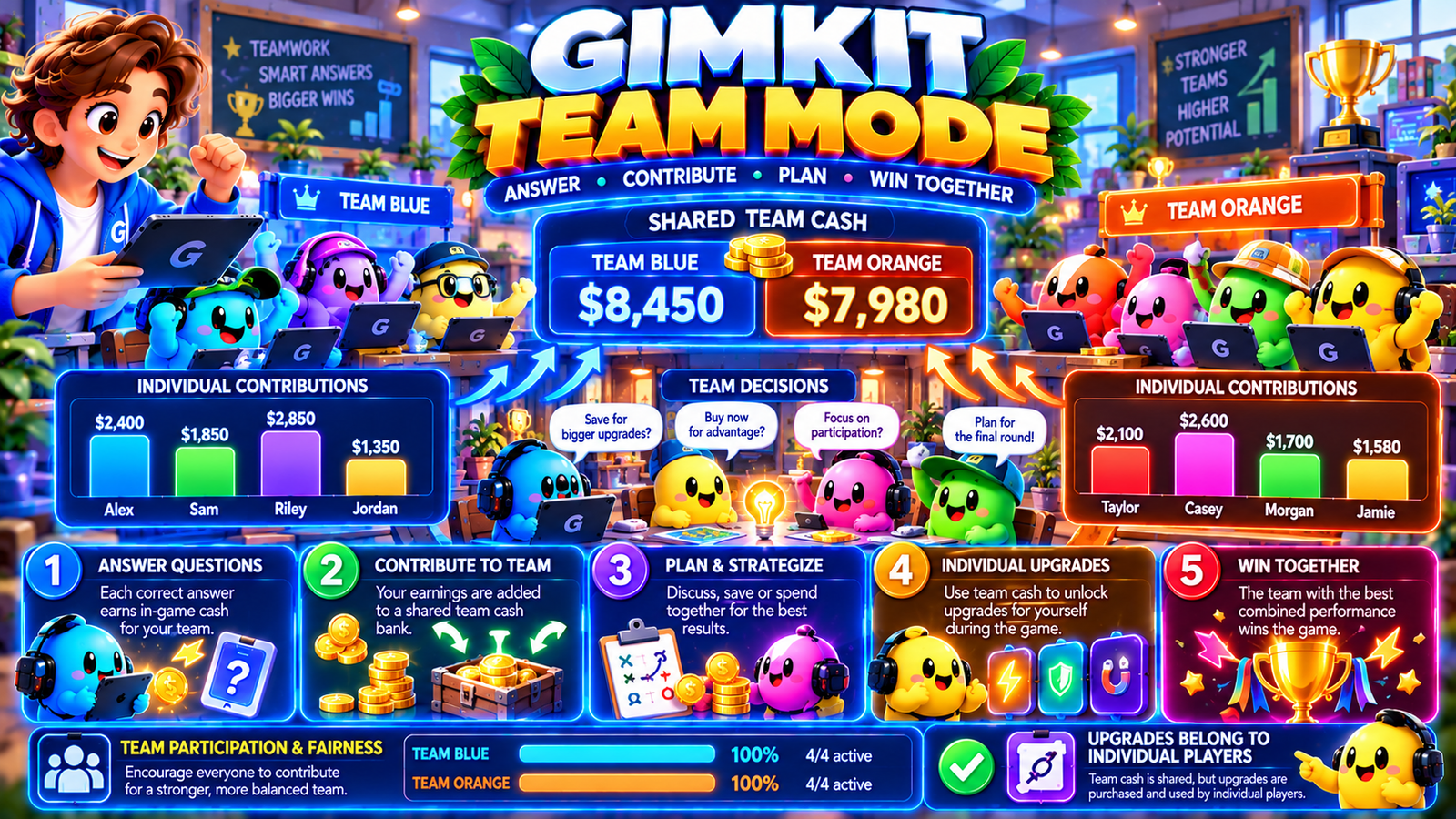
Gimkit Team Mode: Win Together Through Shared Progress
Understand the history of Gimkit Team Mode, the shared-cash economy associated with Teams and Team Tycoon, and the difference between individual performance and collaborative success. Explore an original team contribution simulator built around fairness and group progress.
Independent educational website. Not affiliated with or endorsed by Gimkit. The application below does not host official games or connect to real student accounts.
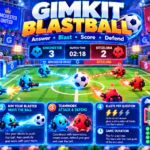
Fictional scoreboard illustration — individual answers, shared consequences, collective decisions.
What is Gimkit Team Mode?
Gimkit Team Mode is a historical name associated with team-based versions of Gimkit's classic cash-earning gameplay. Instead of competing only as individuals, players contribute to a shared team economy. This changes how progress is interpreted: an individual's actions can benefit or affect a wider group, so team performance becomes an important part of the outcome.
The community-maintained Gimkit Wiki describes the naming history as Team Mode, later Teams, and subsequently Team Tycoon. Its historical record gives July 31, 2024 as the Teams-to-Team Tycoon rename. The same community source describes shared team money as the key distinction from the individual cash economy.
💰 Shared Cash
Historical Team Tycoon descriptions identify pooled team money as a defining feature. One person's earning activity contributes to a balance shared with teammates.
🤝 Group Contribution
A team outcome can incorporate activity from multiple players. Contributions may differ, but the goal is collective progress rather than a purely personal ranking.
🧭 Shared Decisions
When an economic decision affects a common balance, players benefit from recognizing group priorities instead of focusing exclusively on individual outcomes.
⚖️ Unequal Contributions
A team can achieve a high total while its members contribute very different amounts. Group success and equal participation should not be confused.
📚 Question Practice
Team-based game participation can incorporate the same curriculum question content while shifting the social meaning of the resulting progress.
🕰️ Naming Evolution
The historical names matter because readers may encounter older screenshots, teaching materials and community tutorials using different terminology.
Individual answers, collective consequences
A shared economy creates a different incentive structure from solo cash accumulation. Players no longer need to interpret every outcome as belonging only to one person. However, a shared total does not eliminate differences in individual participation.
Individual cash model
In a purely individual model, each person's earnings and purchases principally influence their own balance. Performance differences are easy to display, and each participant can pursue a separate economic strategy.
A player who earns more usually acquires more purchasing capacity. The outcome is driven by individual answers, investments and the applicable game mechanics.
Shared team cash model
In a pooled model, earnings enter a shared balance. One member's productive activity benefits the team's aggregate result. This makes collective progress visible even when contributions are uneven.
Coordination becomes valuable because some economic decisions may affect resources available to the whole team.
Why a shared scoreboard can be misleading
Two teams can finish with identical cash totals while having very different participation patterns. One team might receive almost all of its earnings from one highly active member. Another might distribute the same total more evenly. These represent different collaborative experiences, despite identical leaderboard results.
Why contributions should not become public judgments
A learner's contribution during one game can depend on reading speed, technical access, question difficulty, confidence and other situational factors. In educational settings, contribution comparisons should guide supportive reflection rather than public embarrassment or simplistic ability rankings.
Shared-Team Contribution & Equity Simulator
Create a fictional classroom team scenario, record contributions from anonymous players, and watch group balances update instantly. Compare how team size, participation distribution and shared spending affect collective progress.
🤝 Team Contribution Studio
Simulate two shared banks and inspect whether group totals represent broadly distributed participation or concentrated contributions.
1. Configure the Teams
Applying this configuration resets the fictional teams and creates equal-size rosters. No actual Gimkit players are affected.
2. Record Fictional Contributions
Select an anonymous player and record a correct answer. The chosen team's shared bank increases by the configured amount. Individual contributions are tracked separately for educational analysis.
3. Shared Team Spending
Simulated expenditures demonstrate how one collective purchase can affect a whole team's balance. The application does not replicate the official in-game shop.
4. Collective Participation Analysis
| Indicator | Blue | Orange |
|---|---|---|
| Correct answers | 0 | 0 |
| Active members | 0 | 0 |
| Activity participation | 0% | 0% |
| Largest contribution share | — | — |
| Participation Gini | — | — |
| Shared expenditures | $0 | $0 |
Participation Gini ranges from 0 toward 1: smaller values indicate more equal distribution of recorded answer counts. It is not an official Gimkit metric, nor a measure of student ability.
5. Activity History
- No actions yet.
6. Interpretation
An equal team balance does not imply equal member contributions. A larger total does not automatically mean that every participant learned more.
The studio intentionally separates contributions from expenditures, allowing the analysis to distinguish gross earnings from the remaining shared balance.
Use the fictional results to discuss group cooperation, not to make judgments about real students.
Why team totals and contribution patterns are different
A team total is an aggregate quantity. It tells us how much the group has accumulated under the chosen measurement system. An aggregate can be useful for comparing progress, but it does not reveal the distribution of work behind that outcome.
Example: equal totals, unequal contributions
Imagine two fictional teams, each with four members. Team Blue's answer counts are 10, 0, 0 and 0. Team Orange's counts are 3, 3, 2 and 2. Both teams have ten recorded correct answers, yet the patterns are fundamentally different.
The first team relies entirely on one member. The second distributes its successful activity across the entire group. These patterns can motivate different classroom reflections, even when aggregate results are identical.
What a participation rate actually measures
In the simulator, participation rate represents the proportion of team members who have recorded at least one correct-answer event. It does not measure how often each person tried, whether their answers improved, or how difficult the questions were.
A learner can work hard but have no recorded correct answers. A participation indicator based only on success counts may therefore overlook meaningful effort.
Concentration and inequality
The largest-contribution share measures the proportion of a team's recorded answers supplied by its most active member. A high value signals concentration.
The Gini measure offers another perspective by considering the distribution across all team members. A value of zero means equal recorded contributions in the model. Larger values mean a more unequal distribution.
These measures describe a fictional dataset. Neither should be used as a stand-alone assessment of a student's motivation, classroom behavior or academic ability.
Shared spending changes retained cash
Team earnings and remaining team cash are different quantities. If a group earns $5,000 and spends $1,500, its retained balance is $3,500.
The simulator tracks these amounts separately because a team with substantial spending might appear weaker on a cash-only scoreboard despite having generated comparable gross earnings.
Team size complicates comparisons
Comparing totals between teams of unequal sizes can be misleading if every participant has similar opportunities to earn. A larger team can possess more total answer opportunities than a smaller team.
When educators study participation, they should distinguish total performance from averages and distributions. Those measurements answer different questions.
How to think about shared economic decisions
Team-based cash gameplay introduces a practical coordination problem. When financial resources are pooled, the benefits and consequences of individual decisions may extend beyond the person taking the action.
Understand the group's immediate objective
Before evaluating a collective investment, a team needs to understand the goal presented by the selected game rules. A time-limited earning objective creates a different decision problem from a fixed cash threshold.
Historical gameplay references describe team cash and upgrade mechanics, but the currently available options should always be checked in the live interface.
Avoid assuming the most active player should decide everything
A highly successful player may contribute a significant proportion of the team's earnings. However, economic contribution does not automatically make one person's preferences the best choices for the entire group.
A collaborative approach can encourage participants to explain the reasoning behind spending decisions before resources are committed.
Distinguish efficiency from inclusion
A group can maximize an immediate score by concentrating activity among its strongest performers. Yet a classroom activity can also have goals related to participation, confidence and repeated learning practice.
These educational objectives may require a different approach from maximizing a fictional game balance.
Do not confuse cooperation with equal ability
Group members differ in their prior knowledge, reading speed, confidence and familiarity with games.
Cooperation does not require everyone to perform identically. It can involve responding constructively to those differences and ensuring that each participant has meaningful opportunities to engage with the learning task.
Recognize free-rider concerns without stigmatizing students
Shared rewards can create a familiar group-work challenge: some members contribute less visible activity than others.
However, low observed activity may reflect legitimate obstacles. Teachers should avoid interpreting a small game contribution as proof of laziness or unwillingness to cooperate.
Use a short collaborative reflection
Following a group round, learners can describe one decision they made together, an alternative they considered and how the outcome compared with their expectations.
Reflection makes the experience about more than a scoreboard. It creates opportunities to discuss shared goals, evidence and decision quality.
Team Mode, Teams and Team Tycoon: understanding the names
Gimkit has evolved its gameplay catalog over time. A search for Team Mode may return guides, screenshots and videos using names from different periods. Readers should not assume that different names always represent different gameplay systems.
The earlier Team Mode name
Community documentation identifies Team Mode as an earlier name for the team-oriented cash economy. Its main distinction was that participants were grouped together rather than competing solely through individual balances.
The Teams naming period
Historical references also use the shorter term Teams. A guide using this terminology may discuss substantially the same shared-money idea, despite appearing under a different mode title.
The Team Tycoon name
The community Gimkit Wiki records Team Tycoon as the subsequent name and reports a rename on July 31, 2024.
This is community-maintained historical information. The record helps interpret older educational resources but does not independently prove that every current account offers the mode under the same name.
Team settings are not a synonym for Team Tycoon
Gimkit also documents team-related customization across game options. Some modes may group players in ways that are unique to their objectives.
For example, a team-based sports or 2D mode may use cooperation without implementing a shared cash economy identical to historical Team Tycoon.
Check the live description before teaching
If a lesson depends on specific team financial mechanics, teachers should read the description of the selected mode within the current official Mode Picker.
This protects against relying on instructions or screenshots created for an older version.
Using team results responsibly in education
Group-based gameplay can change the social experience of an academic activity. Rather than seeing every answer as a contribution to an individual ranking, students may see their successes contributing toward a collective result.
That change can encourage cooperation, but it does not automatically guarantee balanced engagement or deeper learning.
Separate the game outcome from the learning objective
A high team cash balance may depend on answer volume, accuracy, game settings, economic decisions and participant familiarity.
Teachers should therefore avoid treating the final shared cash total as direct evidence that every group member mastered the academic content.
Provide opportunities for individual evidence
A team activity can be followed by an individual explanation or a brief content-specific reflection.
This can help distinguish group-level success from each student's understanding of the topic being practiced.
Avoid publicly ranking contribution inequality
The simulation's concentration measures are designed for hypothetical analysis.
Teachers should not turn real learner contribution distributions into public rankings that embarrass participants.
Data should serve a supportive instructional purpose, with attention to privacy and context.
Consider team composition carefully
Group size and learner differences can influence opportunities for participation. No single grouping method is ideal for every class.
Teachers should consider the specific learning objective, accessibility needs and classroom relationships rather than relying on a generic assumption that random grouping is always fair.
Use role rotation as an instructional technique
During classroom reflection, teachers can rotate who explains the group's reasoning or summarizes a shared strategy.
These are suggested teaching practices. They do not imply that historical Team Mode includes a built-in role-rotation interface.
Interpret technical interruptions fairly
A player who experiences connectivity problems may record fewer completed questions.
That observed difference should not automatically be interpreted as weaker academic engagement.
The simulator demonstrates why quantitative contribution data requires context.
Team Mode compared with other Gimkit experiences
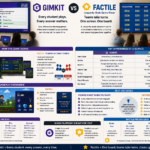
| Experience | Central Focus | What Makes It Different |
|---|---|---|
| Classic / Tycoon | Individual question earnings and economic decisions | Individual rather than pooled competitive balances |
| Team Mode / Team Tycoon | Shared cash and team contribution | Individual actions affect collective progress |
| Blastball | Ball-based competitive team sport | Spatial cooperation and goals rather than classic shared cash |
| Capture the Flag | Flag capture and defense | Territory, movement and objective-based competition |
| One Way Out | Cooperative escape gameplay | Shared survival and escape challenges |
Team Mode mistakes that lead to weak conclusions
Assuming a shared total proves everyone participated equally
Collective totals contain no direct information about distribution unless additional participation data is available.
Equal balances can hide very different patterns of individual contribution.
Confusing shared cash with shared knowledge
A team can earn together, but academic understanding remains a characteristic of each learner.
Group success cannot establish that every student understands every question.
Assuming group participation must be perfectly equal
Equal participation can be a useful aspiration, but contributions may vary for legitimate reasons.
A balanced learning environment should prioritize meaningful opportunities rather than demand identical output from everyone.
Comparing unequal team sizes without context
Larger groups may have more opportunities to accumulate activity.
A comparison of raw totals alone may conceal important differences in group structure.
Assuming the historical name remains unchanged
Community records document Team Mode and Teams as earlier terminology associated with Team Tycoon.
Always check the live official labels.
Treating the simulator's numbers as official
The interactive model uses fictional cash values and anonymous player labels.
Its fairness calculations are created for educational analysis and are not metrics reported by Gimkit.
Frequently asked questions
What is Gimkit Team Mode?
Team Mode is a historical name associated with a team-based version of Gimkit's traditional question-and-cash gameplay. The defining concept is collective progress using shared team resources.
Is Team Mode now called Team Tycoon?
The community Gimkit Wiki documents the naming sequence as Team Mode, Teams and Team Tycoon, with a Teams-to-Team Tycoon rename dated July 31, 2024.
How does a shared team balance work?
Historical community documentation describes teammates contributing to a common money balance rather than each having a completely separate competitive total.
Does every member need to contribute the same amount?
No. A team can accumulate shared earnings even when individual contributions vary. Unequal contributions should not automatically be interpreted as unequal effort or ability.
Does the team scoreboard measure student understanding?
Not directly. Group totals reflect game activity and economic mechanics. Individual learning requires appropriate independent evidence.
Can teachers use team options in other modes?
Official Gimkit Help describes team-related game options. The exact implementation depends on the selected mode and should not be assumed identical to historical Team Tycoon.
What is the difference between Classic and Team Mode?
The primary historical distinction is individual cash-focused competition versus collectively shared team money.
Does the simulator create real Gimkit teams?
No. It creates fictional local teams and performs calculations in the browser. It has no connection to Gimkit accounts or sessions.
What is a participation Gini value?
It is a numerical indicator describing how unequally the fictional correct-answer counts are distributed among members.
Does a lower Gini value mean better learning?
No. It indicates a more equal distribution of recorded counts. It cannot establish academic understanding, effort or learning quality.
Why does team size matter?
Different group sizes can create different total opportunities to answer questions and contribute to the shared bank.
Are historical upgrade prices guaranteed to be current?
No. Older community records should be treated as historical information, not authoritative contemporary shop pricing.
Is Team Tycoon available in the official Mode Picker?
Availability should be checked directly in the current Gimkit Mode Picker. Historical release records do not guarantee identical availability for every account.
References and related learning
- Gimkit Help — Game Options Explained . Official reference for standard and mode-specific game settings, including team options.
- Gimkit Help — Select a Game Mode . Official guidance for identifying and reviewing modes in the Mode Picker.
- Community Gimkit Wiki — Team Tycoon . Unofficial reference describing shared money, team economics and historical names.
- Gimkit Help — Quick Actions . Official documentation noting that certain non-2D host quick actions are not available in Team Mode.
- Official Gimkit Website . Refer to the current platform for real game availability.
Related GimkitApp learning
For individual cash strategy, see the Gimkit Classic Mode guide . For team interactions in a wider context, explore Gimkit Multiplayer . These topics have different primary editorial purposes and should not duplicate the shared-team analysis here.
A team score tells only part of the story.
Gimkit Team Mode's historical shared-cash design illustrates how individual actions can affect a collective result. The strongest educational interpretation considers both the group outcome and the opportunities each learner has to participate. Use the simulator for transparent fictional analysis, and consult Gimkit's official interface for current mode-specific details.
Return to Team Simulator ↑