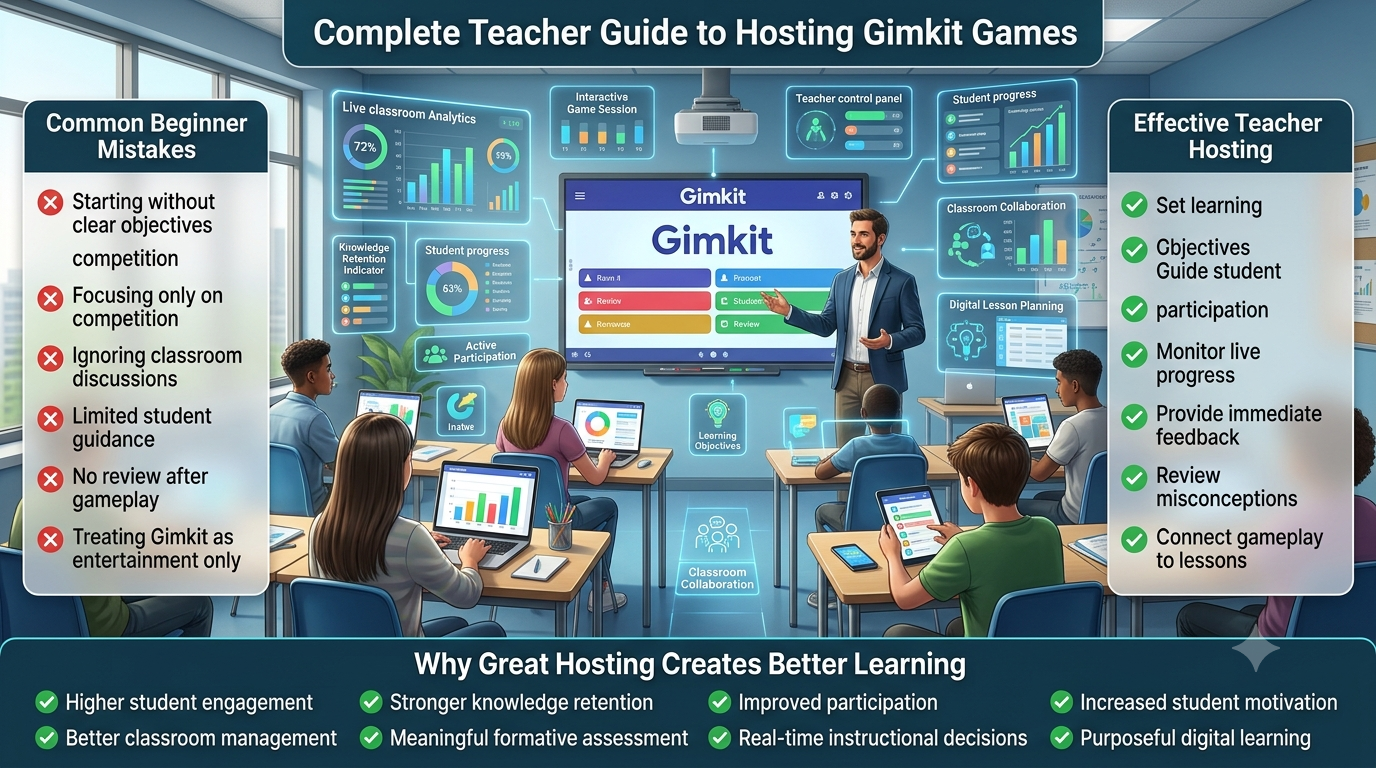
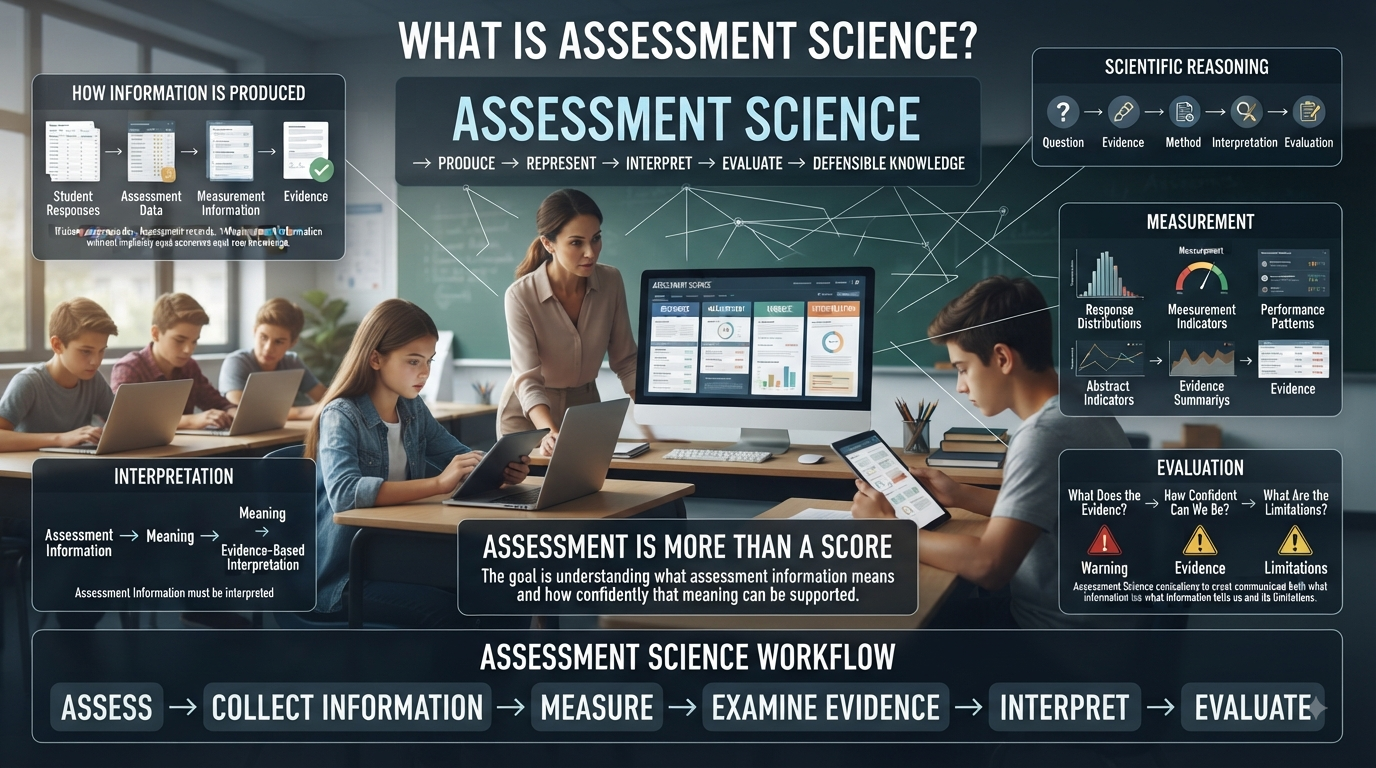
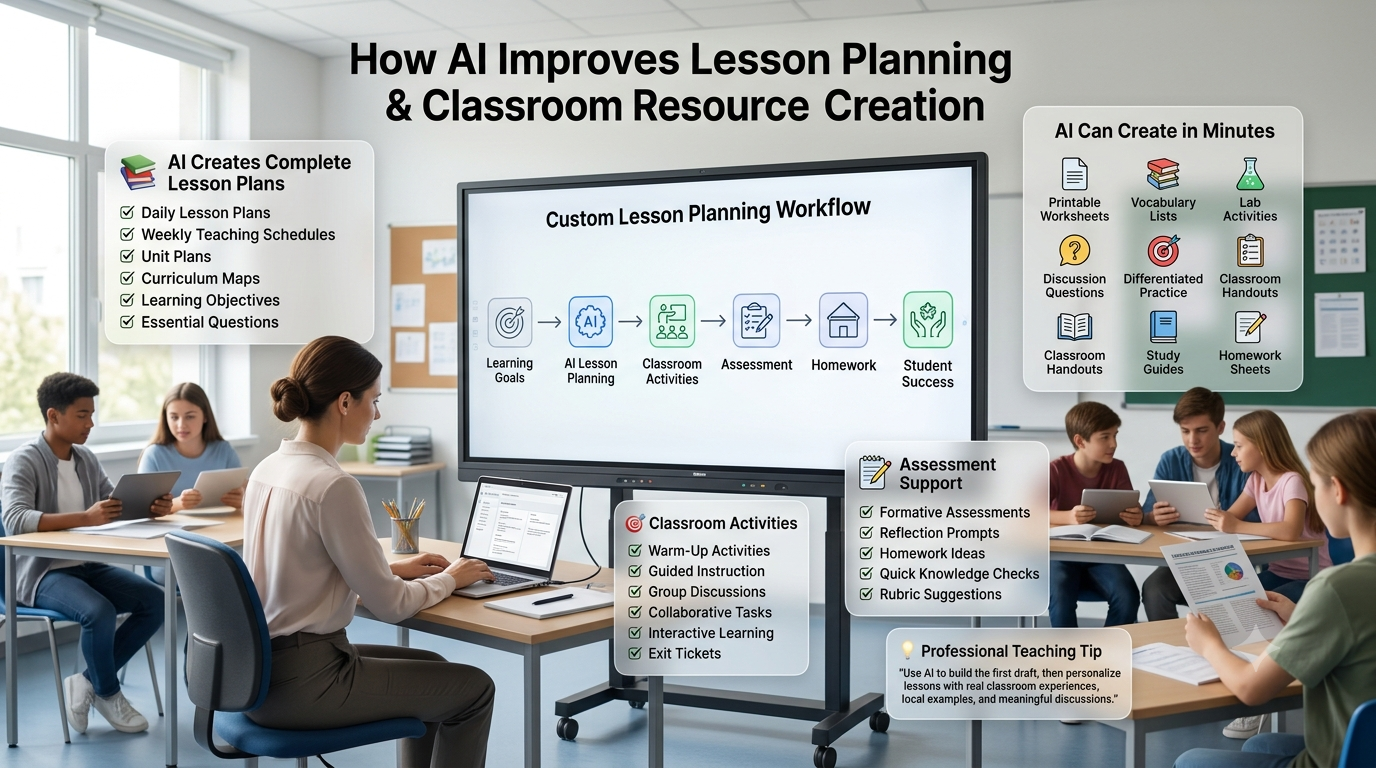
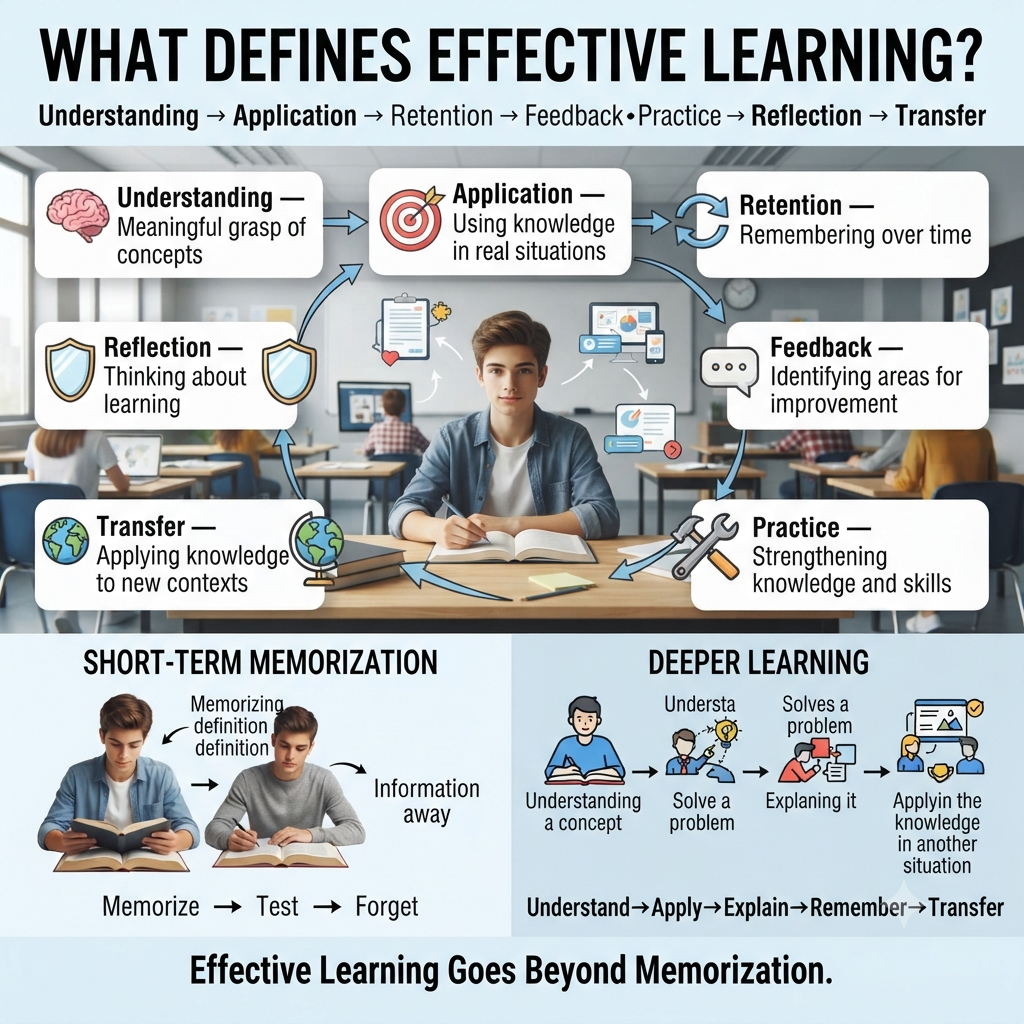
Formative Assessment Strategies with Gimkit-Formative assessment is one of the most effective ways to understand how well students are learning while instruction is still taking place. Instead of waiting until the end of a unit for a final test, teachers can gather continuous evidence of student understanding, identify learning gaps, and adjust instruction before misconceptions become permanent. Modern classrooms increasingly rely on digital learning platforms to make this process faster, more engaging, and easier to analyze.
Among today’s interactive learning tools, Gimkit has become a popular choice because it combines assessment with game-based learning. Rather than treating quizzes as isolated events, teachers can transform every lesson into an opportunity for immediate feedback, personalized practice, and meaningful classroom discussion. Whether students participate throughGimkit Live, complete independent assignments, or engage in collaborative classroom challenges, every activity generates valuable learning data that supports informed teaching decisions.
This guide explores practical formative assessment strategies using Gimkit that help educators monitor progress, improve participation, encourage higher-order thinking, and create a more responsive classroom environment. From lesson planning and question design to analyzing performance reports and differentiating instruction, you’ll learn professional techniques that go far beyond simply running a quiz.
Whether you’re new to Gimkit Teacherstools or already comfortable with the Gimkit Dashboard, this comprehensive guide will help you use formative assessment intentionally to improve student learning outcomes while keeping engagement consistently high.
Why Formative Assessment Matters in Modern Classrooms
Traditional assessments often measure learning after instruction has ended. While they are useful for grading, they provide limited opportunities to improve learning during the instructional process. Formative assessment shifts the focus from evaluation to continuous improvement by giving both teachers and students regular feedback.
Using Gimkit Learning, teachers receive real-time evidence of student understanding without interrupting classroom momentum. Every answer becomes an opportunity to identify strengths, uncover misconceptions, and decide what should happen next in the lesson.
Instead of asking, “Did students learn?” formative assessment asks, “What should we teach next based on today’s evidence?”
Key Characteristics of Effective Formative Assessment
Characteristic
Classroom Impact
Continuous feedback
Identifies learning gaps early
Low-pressure environment
Reduces assessment anxiety
Immediate correction
Prevents misconceptions from growing
Student participation
Increases engagement
Instructional flexibility
Supports responsive teaching
Why Students Benefit
Students become active participants in their own learning rather than passive recipients of grades.
Benefits include:
Better awareness of strengths and weaknesses
Faster correction of misunderstandings
Increased classroom confidence
Greater motivation through interactive practice
More opportunities for self-reflection
Improved long-term retention
Why Teachers Benefit
Teachers gain continuous insight instead of relying solely on unit tests.
Advantages include:
More informed lesson planning
Data-driven instructional decisions
Easier progress monitoring
Better classroom engagement
Reduced grading workload
Early intervention opportunities
How Gimkit Supports Formative Assessment
Unlike many quiz platforms that simply record correct or incorrect answers, Gimkit encourages repeated thinking through gameplay mechanics that reward persistence, strategic decision-making, and continuous participation.
Every session provides information beyond simple scores. Teachers can observe participation levels, identify difficult questions, monitor pacing, and evaluate overall classroom understanding.
Core Features That Strengthen Assessment
Feature
Assessment Value
Gimkit Live
Real-time classroom feedback
Assignment Mode
Independent practice evidence
Question Reports
Identify misconceptions
Individual Progress
Personalized intervention
Team Modes
Collaborative assessment
Live Monitoring
Immediate instructional adjustments
Real-Time Feedback Changes Instruction
One of the greatest advantages of using Gimkit Host during lessons is immediate visibility into student performance.
Instead of waiting until homework is submitted, teachers can instantly recognize:
Concepts requiring reteaching
Questions confusing multiple students
Students who need additional support
Students ready for enrichment
Unexpected learning gaps
Lesson pacing issues
This allows instruction to adapt while learning is still occurring.
Assessment Without Student Anxiety
Many students perform poorly during traditional tests because of pressure rather than lack of understanding.
Game-based assessment changes the classroom atmosphere by encouraging participation through:
Friendly competition
Instant feedback
Multiple opportunities
Reduced fear of mistakes
Higher engagement
Positive classroom energy
As a result, teachers often obtain a more accurate picture of genuine understanding.
Expert Insight
The most effective teachers avoid using Gimkit Quiz sessions solely for grading. Instead, they treat every game as a source of instructional evidence that guides future lessons. When students understand that mistakes are part of learning rather than permanent penalties, participation becomes more authentic, and assessment data becomes significantly more reliable.
Planning Formative Assessments Before Launching a Gimkit Session
Successful assessment begins long before students enter a Gimkit Join code. Careful planning ensures that every question contributes meaningful evidence about student learning instead of simply testing memorization.
Professional educators design assessment goals first and gameplay second.
Define Clear Learning Objectives
Every assessment should answer a specific instructional question.
Examples include:
Can students explain the concept?
Can students apply the formula?
Can students compare two ideas?
Can students identify patterns?
Can students justify their reasoning?
Can students solve unfamiliar problems?
When objectives are clearly defined, every question serves a purpose.
Align Questions with Learning Targets
Learning Goal
Example Question Type
Recall
Definitions
Understanding
Explain concepts
Application
Solve scenarios
Analysis
Compare examples
Evaluation
Justify decisions
Creation
Design solutions
This balanced approach measures multiple levels of thinking rather than focusing only on memorization.
Choose the Right Timing
Formative assessments work best when they are distributed throughout instruction rather than concentrated at the end.
Effective timing includes:
Beginning of lessons
Mid-lesson checks
Before group activities
After demonstrations
End-of-class reflection
Homework reinforcement
Frequent short assessments generally provide better instructional data than occasional lengthy quizzes.
Keep Assessments Purposeful
Avoid adding questions simply to increase quiz length.
Each question should help answer one of these:
✔ What do students already know?
✔ What misconceptions exist?
✔ Which students need support?
✔ Who is ready for advanced work?
✔ Which concepts require review?
Quality always outweighs quantity.
Designing High-Quality Questions for Better Assessment Data
The quality of assessment depends heavily on the quality of questions. Weak questions produce misleading results, while thoughtfully designed questions reveal how students actually think.
Teachers should avoid relying exclusively on factual recall.
Professional assessments include a mixture of thinking skills.
Recommended distribution:
Thinking Level
Suggested Percentage
Remember
20%
Understand
25%
Apply
25%
Analyze
15%
Evaluate
10%
Create
5%
This balance helps teachers understand both foundational knowledge and deeper conceptual understanding.
Use Real-World Context
Students demonstrate stronger understanding when questions connect classroom learning with authentic situations.
For example, instead of asking for a mathematical formula directly, present a practical scenario where students must decide which formula should be applied and explain why.
This approach measures transferable learning rather than memorization.
Professional Recommendation
Before publishing a new Gimkit Kit, review every question using this checklist:
Does it match a learning objective?
Is the wording simple and unambiguous?
Does it assess thinking instead of guessing?
Could students explain their reasoning?
Does it reveal common misconceptions?
Will the answer provide useful teaching information?
A well-designed question bank produces more valuable formative assessment data than simply increasing the number of questions.
Best Practices for Creating an Assessment-Focused Classroom Culture
Technology alone cannot create meaningful formative assessment. The classroom environment plays an equally important role. Students are more willing to participate honestly when they understand that assessment is intended to improve learning rather than simply assign grades. Building this mindset encourages risk-taking, thoughtful responses, and productive discussion throughout every Gimkit Activities session.
Establish Clear Expectations Before Every Session
Before launching a game, explain its instructional purpose. Tell students whether the activity is designed to check prior knowledge, monitor current understanding, or guide future lessons. This transparency helps students focus on learning instead of worrying only about winning.
Teacher Action
Student Benefit
Explain learning goals
Increases purpose and motivation
Clarify grading policy
Reduces performance anxiety
Encourage thoughtful answers
Promotes deeper thinking
Normalize mistakes
Builds confidence and participation
Encourage Honest Participation
Students sometimes guess quickly to earn more points, which can reduce the accuracy of assessment data. Remind learners that honest responses—even incorrect ones—help shape future instruction and benefit the entire class.
Strategies to encourage authenticity:
Praise improvement instead of only high scores.
Discuss misconceptions openly after each session.
Celebrate persistence and problem-solving.
Avoid public criticism of incorrect answers.
Reinforce that every mistake is a learning opportunity.
Use Reflection After Every Game
Assessment becomes far more valuable when students reflect on their own performance. After completing a Gimkit Play session, invite learners to identify one concept they mastered, one area they found challenging, and one question they would like to revisit. These reflections provide qualitative insights that complement the quantitative reports generated by the platform.
Using Live Assessment Data to Adjust Instruction Immediately
One of the greatest advantages of using Gimkit Live for formative assessment is the ability to make instructional decisions while students are still learning. Unlike traditional quizzes that provide feedback after class, live gameplay continuously generates information that helps teachers identify patterns, misconceptions, and individual learning needs in real time.
Effective teachers don’t simply watch the leaderboard—they observe learning behaviors. The assessment data should influence what happens next in the lesson, whether that means slowing down, reviewing a concept, providing enrichment, or changing instructional strategies.
What Teachers Should Monitor During Live Games
Instead of focusing only on scores, observe multiple indicators of learning.
Classroom Indicator
What It May Suggest
Recommended Teacher Action
Many students miss the same question
Whole-class misconception
Pause and reteach immediately
One student answers unusually slowly
Processing difficulty or uncertainty
Provide individual support later
Fast incorrect responses
Guessing instead of thinking
Encourage careful reading
High accuracy with slow completion
Students understand but need fluency
Increase guided practice
Consistent incorrect answers from a group
Shared misunderstanding
Create a small-group intervention
Declining accuracy over time
Cognitive fatigue
Introduce a short learning break
Turn Assessment Into Conversation
Assessment should lead to discussion rather than simply recording scores.
Ask questions such as:
Why was this question challenging?
Which clue helped you find the answer?
What strategy worked best?
Which answer choice almost fooled you?
What evidence supports your decision?
Can someone explain this differently?
These conversations often reveal student thinking that numerical reports cannot capture.
Pause the Game Strategically
Many teachers allow the game to continue uninterrupted. However, short instructional pauses can significantly improve learning.
Pause when:
Several students struggle with the same concept.
An important misconception appears.
A difficult vocabulary term needs clarification.
Students begin rushing through questions.
A teachable moment naturally develops.
Short pauses transform gameplay into meaningful instruction instead of continuous competition.
Professional Recommendation
Use the first five minutes of every Gimkit Host session as an informal diagnostic assessment. Early questions often reveal whether students retained previous lessons or require additional review before introducing new content.
Differentiating Formative Assessment for Diverse Learners
Every classroom includes students with different backgrounds, learning preferences, confidence levels, and academic readiness. Effective formative assessment should recognize these differences rather than expecting identical performance from every learner.
Gimkit Learning allows teachers to gather evidence from all students while adapting instruction based on individual needs.
Differentiate by Learning Readiness
Students rarely begin a lesson with the same level of understanding.
Instead of teaching every student identically, assessment results can guide differentiated instruction.
Student Group
Assessment Evidence
Recommended Strategy
Advanced learners
Consistently accurate
Extension activities
On-level learners
Minor errors
Guided practice
Developing learners
Frequent misconceptions
Small-group instruction
Struggling learners
Limited understanding
Scaffolded support
English learners
Vocabulary-related errors
Language reinforcement
Students with accommodations
Slower response time
Flexible pacing
Flexible Grouping Based on Assessment
Rather than assigning permanent ability groups, create flexible learning groups after each assessment.
Possible grouping methods include:
Similar misconceptions
Similar strengths
Mixed-ability collaboration
Vocabulary support
Skill-specific intervention
Peer coaching
Assessment data should guide grouping decisions, not fixed academic labels.
Offer Multiple Ways to Demonstrate Learning
Some students communicate understanding better through discussion than multiple-choice questions.
Consider combining Gimkit Quiz activities with:
Short written explanations
Partner discussions
Classroom demonstrations
Visual organizers
Reflection journals
Problem-solving tasks
Using multiple evidence sources improves assessment accuracy.
Avoid Comparing Students Publicly
Public comparisons often reduce motivation for struggling learners.
Instead:
✔ Celebrate individual growth
✔ Recognize improvement
✔ Highlight effort
✔ Encourage persistence
✔ Focus on learning goals
✔ Reinforce progress over perfection
A growth-oriented classroom produces more authentic assessment results.
Expert Insight
Differentiation is not about creating completely different lessons for every student. Instead, it involves making informed instructional adjustments based on formative evidence collected during learning.
Building Higher-Order Thinking into Gimkit Assessments
Many classroom quizzes measure only factual recall. While remembering information is important, deeper learning requires students to analyze, evaluate, justify, compare, and apply knowledge in unfamiliar situations.
Strong formative assessment challenges students to think rather than memorize.
Move Beyond Recall Questions
Instead of asking students to remember isolated facts, encourage them to explain relationships, identify patterns, and justify decisions.
Compare the difference below.
Recall Question
Higher-Order Question
What is the definition?
Why is this concept important?
Which answer is correct?
Which evidence supports your answer?
Identify the formula.
When should this formula be used?
Name the process.
Explain why the process works.
List the causes.
Compare the causes and their effects.
Encourage Classroom Discussion
After important questions, ask students to explain their reasoning.
Examples include:
Why did that answer make sense?
Which clue helped you decide?
Can someone explain this concept?
How is this similar to yesterday’s lesson?
What mistake should we avoid next time?
These conversations strengthen conceptual understanding while revealing student thinking.
Connect Questions Across Lessons
Students develop deeper understanding when new learning builds upon previous knowledge.
Instead of treating every Gimkit Kit independently:
Reference earlier units.
Compare old and new concepts.
Identify recurring patterns.
Encourage interdisciplinary thinking.
Relate learning to real-world examples.
This approach improves long-term retention.
Bloom’s Taxonomy Planning Guide
Thinking Skill
Classroom Example
Remember
Recall vocabulary
Understand
Summarize ideas
Apply
Solve practical problems
Analyze
Compare multiple solutions
Evaluate
Defend a position
Create
Design an original solution
A balanced assessment includes questions across several cognitive levels.
Using Gimkit Reports to Identify Learning Gaps
Assessment is only valuable if teachers analyze the results effectively. Reports generated after a Gimkit Play session provide far more than final scores—they reveal instructional opportunities.
Teachers should regularly review patterns rather than isolated results.
Identify Class-Wide Trends
Start by looking for concepts that challenged many students.
Questions to ask include:
Which question had the lowest accuracy?
Which topic required the most attempts?
Did students improve during the session?
Were mistakes concentrated around one objective?
Were misconceptions conceptual or vocabulary-based?
These observations guide future lesson planning.
Analyze Individual Progress
Student reports can reveal:
Consistent strengths
Repeated misconceptions
Slow improvement
Exceptional growth
Confidence changes
Learning consistency
Focus on growth over time instead of single-game performance.
Sample Data Analysis Table
Report Finding
Possible Interpretation
Next Teaching Step
Low class accuracy
Concept needs reteaching
Whole-class review
Few students struggled
Targeted intervention
Small-group instruction
Wide score variation
Uneven understanding
Differentiate instruction
High accuracy
Learning objective achieved
Move forward
Fast incorrect answers
Guessing behavior
Teach test-taking strategies
Combine Assessment Evidence
Do not rely on one report alone.
Combine information from:
Classroom observations
Student discussions
Written assignments
Exit reflections
Homework performance
Gimkit Dashboard reports
Multiple evidence sources produce more reliable instructional decisions.
Professional Recommendation
Keep a simple assessment journal after each Gimkit Teachers session. Record recurring misconceptions, successful teaching strategies, and topics requiring additional review. Over time, these notes become an invaluable resource for improving future instruction.
Creating Effective Exit Ticket Activities with Gimkit
Exit tickets provide one of the quickest ways to measure learning before students leave the classroom. Instead of distributing paper slips, teachers can use short Gimkit Activities to gather immediate evidence while maintaining student engagement.
A well-designed digital exit ticket should focus on the lesson’s most important learning objective rather than covering every detail discussed during class.
Characteristics of an Effective Digital Exit Ticket
Keep exit activities concise and purposeful.
Best Practice
Why It Matters
5–10 focused questions
Prevents cognitive overload
One learning objective
Produces clearer assessment data
Mix confidence and knowledge questions
Reveals understanding and self-awareness
Immediate review
Reinforces learning before students leave
Save results
Supports tomorrow’s lesson planning
Sample Exit Ticket Structure
An effective sequence might include:
One review question from yesterday.
Three questions from today’s lesson.
One application question.
One reflection question.
This format measures retention, current understanding, transfer of learning, and student confidence in just a few minutes.
Reflection Prompts to Include
After the assessment, encourage students to think about their learning by asking:
Which concept feels easiest now?
What still feels confusing?
Which strategy helped you succeed?
What should we review tomorrow?
How confident are you with today’s lesson?
Student reflections often reveal learning needs that objective questions cannot capture.
Most Frequently Asked Faqs
1. How do I use Gimkit data to plan my next teaching step?
The true value of formative assessment comes from what happens after the game ends. Instead of looking only at the class leaderboard, review the performance data to identify patterns in student understanding. Pay close attention to which questions had the lowest accuracy, which concepts required multiple attempts, and whether errors were concentrated around a single learning objective. These trends help determine whether the class is ready to move forward or needs additional instruction.
Rather than reteaching an entire lesson, use the data to make targeted instructional decisions. If most students answered a concept correctly but a small group struggled, provide a focused intervention instead of repeating the lesson for everyone. Conversely, if a large percentage of students missed the same question, revisit that concept using a different instructional strategy.
Assessment Finding
Next Teaching Step
Most students mastered the objective
Introduce the next concept
Several students missed one skill
Small-group remediation
Whole class struggled
Reteach using a new approach
Mixed performance across objectives
Differentiate practice activities
High confidence but low accuracy
Address misconceptions through discussion
A productive teaching cycle often follows this sequence:
Review Gimkit Dashboard reports.
Identify one or two priority misconceptions.
Plan a brief review or mini-lesson.
Provide targeted practice using another Gimkit Kit or classroom activity.
Reassess to confirm improvement.
Using assessment data in this way transforms Gimkit Learning into a continuous instructional feedback system rather than just an engaging classroom game.
2. What is the best way to use Gimkit for an entry or exit ticket?
Entry and exit tickets serve different instructional purposes, but both can be highly effective when designed intentionally with Gimkit.
An entry ticket checks what students already remember before new instruction begins. It activates prior knowledge, identifies misconceptions from previous lessons, and helps teachers adjust lesson pacing. Keep these assessments short—typically five to eight carefully selected questions focused on prerequisite knowledge.
An exit ticket, on the other hand, measures what students learned during the current lesson. Instead of reviewing every detail, focus on the lesson’s most important learning objective. Include one or two application questions that require students to think beyond simple recall.
Entry Ticket
Exit Ticket
Reviews previous learning
Assesses today’s learning
Identifies prior knowledge
Confirms lesson understanding
Guides lesson planning
Guides tomorrow’s instruction
Reveals misconceptions early
Reveals remaining learning gaps
Best Practices
✔ Limit assessments to 5–10 questions.
✔ Focus on one major objective.
✔ Include at least one higher-order thinking question.
✔ Discuss common misconceptions before moving on.
✔ Save assessment results for future lesson planning.
Using Gimkit Live as both an entry and exit assessment creates a complete learning cycle where teachers can compare students’ understanding before and after instruction, making instructional growth much easier to measure.
3. How can I assess individual mastery if students are playing in teams?
Team-based gameplay encourages collaboration, communication, and peer learning, but it can make measuring individual mastery more challenging. Fortunately, teachers can still gather meaningful evidence by combining team activities with individual accountability.
Begin by observing how students contribute during team discussions. Listen for explanations, reasoning, and problem-solving strategies rather than focusing only on final answers. Students who actively explain concepts often demonstrate deeper understanding than those who simply agree with teammates.
After the team activity, follow up with an individual assessment using a short Gimkit Quiz, reflection, or independent practice task. This confirms whether each student personally mastered the learning objective.
Team Assessment Evidence
Individual Follow-Up
Group discussion
Independent quiz
Shared problem-solving
Exit ticket
Collaborative reasoning
Written explanation
Team decisions
Individual reflection
Effective Strategy
Begin with collaborative learning.
Observe student interactions.
Facilitate class discussion.
Assign a short individual assessment.
Compare individual results with team performance.
This balanced approach preserves the engagement of teamwork while ensuring every learner demonstrates personal understanding. It also prevents stronger students from unintentionally masking learning gaps among teammates.
4. How do I prevent students from just guessing quickly to make money?
Fast guessing is one of the most common challenges in game-based learning. While the competitive nature of Gimkit Play increases engagement, students sometimes prioritize earning virtual currency over demonstrating genuine understanding. Teachers can reduce this behavior by shifting the classroom focus from competition to learning.
Start by explaining that the purpose of the activity is to improve understanding rather than simply earn points. When students know that reports will be used to guide instruction instead of assigning grades, they are often more willing to answer thoughtfully.
Another effective strategy is to pause periodically and discuss difficult questions. Encourage students to explain why an answer is correct instead of simply identifying the correct option. This reinforces reasoning and discourages random guessing.
Strategy
Why It Works
Discuss learning goals before the game
Encourages purposeful participation
Use higher-order thinking questions
Makes guessing less effective
Pause for class discussions
Reinforces conceptual understanding
Review common mistakes together
Promotes reflection
Praise thoughtful reasoning
Rewards quality over speed
Classroom Tips
Avoid emphasizing the leaderboard throughout the session.
Recognize students who improve, not just those who finish first.
Include application and analysis questions that require genuine thinking.
Rotate assessment formats to maintain instructional variety.
A classroom culture that values understanding over winning naturally reduces guessing behavior and produces more reliable formative assessment data.
5. Can I use Gimkit to have students create their own assessments?
Yes. Student-created assessments are an excellent way to deepen understanding because designing quality questions requires learners to analyze content, identify key concepts, and anticipate common misconceptions. This shifts students from simply answering questions to thinking like teachers.
After completing a unit, ask students to work individually or in small groups to create their own Gimkit Kit. Encourage them to write questions at different cognitive levels, including recall, application, analysis, and evaluation. Before using the questions in class, review them for accuracy, clarity, and alignment with learning objectives.
Student Task
Learning Benefit
Write multiple-choice questions
Reinforces key concepts
Create realistic scenarios
Encourages application
Design plausible distractors
Identifies misconceptions
Explain correct answers
Strengthens reasoning
Peer review classmates’ questions
Develops critical thinking
Best Practices
✔ Provide a question-writing rubric.
✔ Require explanations for correct answers.
✔ Encourage real-world examples.
✔ Include multiple levels of thinking.
✔ Review all questions before classroom use.
Student-generated assessments also foster creativity, ownership, and metacognitive skills. By evaluating what makes a question effective, learners gain a deeper understanding of the subject while giving teachers another valuable source of formative assessment evidence.
Tracking Student Growth Over Time with Gimkit
One of the greatest strengths of formative assessment is its ability to reveal progress over time rather than measuring learning through a single test. When teachers consistently use Gimkit Activities throughout a unit, they can identify trends, celebrate improvement, and provide timely interventions before students fall behind.
Instead of asking whether a student passed or failed one assessment, ask a more meaningful question: Is this student making continuous progress? Longitudinal assessment data helps answer that question with greater accuracy.
Create a Consistent Assessment Schedule
Regular assessments provide a clearer picture of learning than occasional high-stakes quizzes. A simple weekly routine allows teachers to compare performance across multiple lessons without overwhelming students.
Assessment Timing
Primary Purpose
Beginning of week
Measure prior knowledge
Midweek
Monitor ongoing understanding
End of week
Evaluate learning growth
End of unit
Confirm overall mastery
Consistency is more valuable than frequency. Short, focused assessments administered regularly create a reliable record of student development while minimizing testing fatigue.