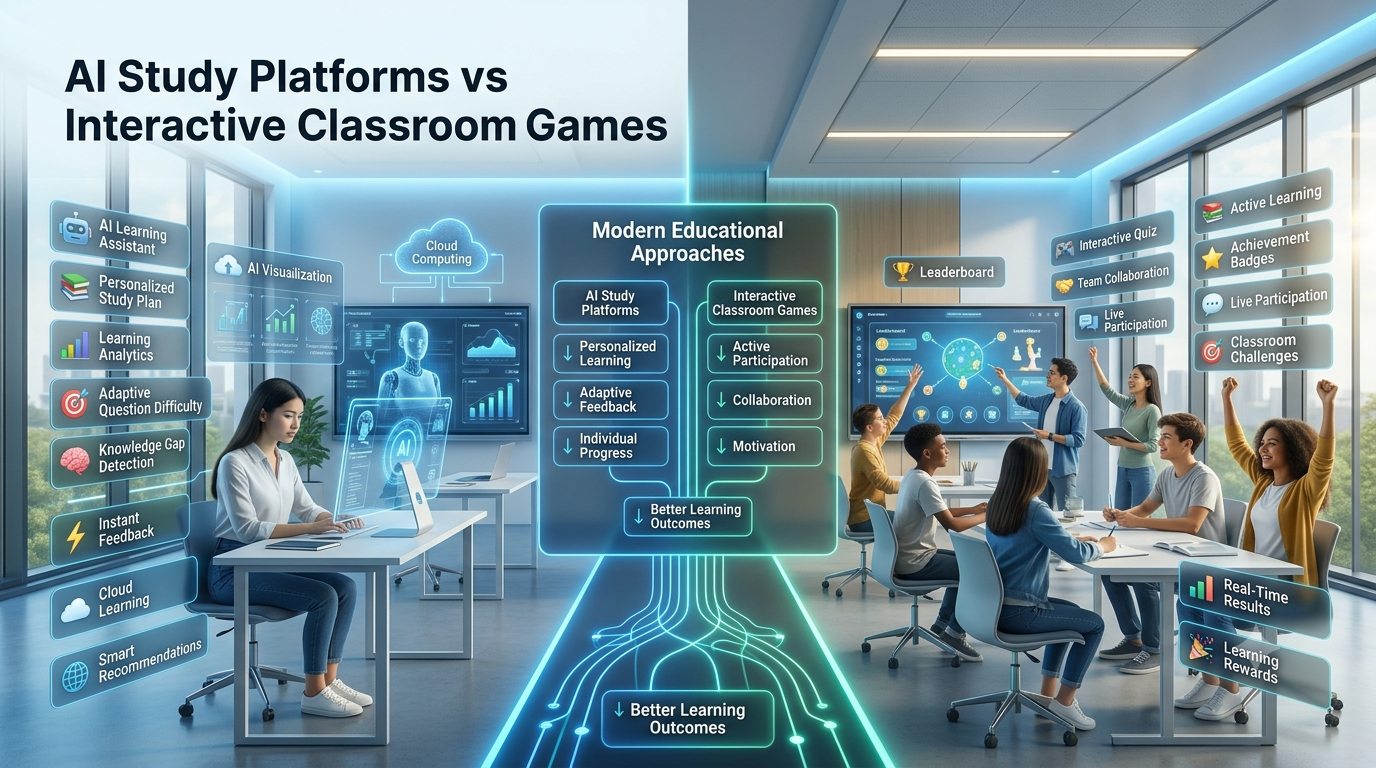
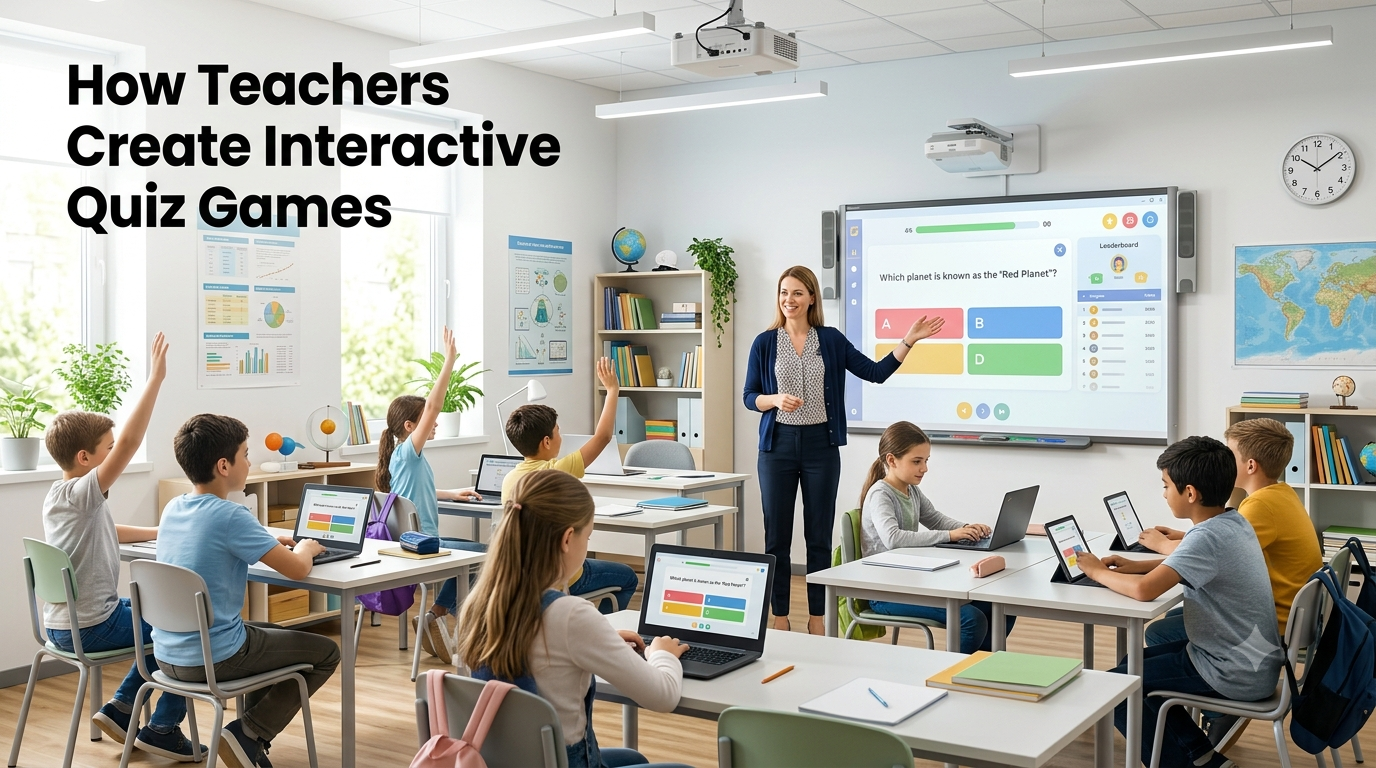
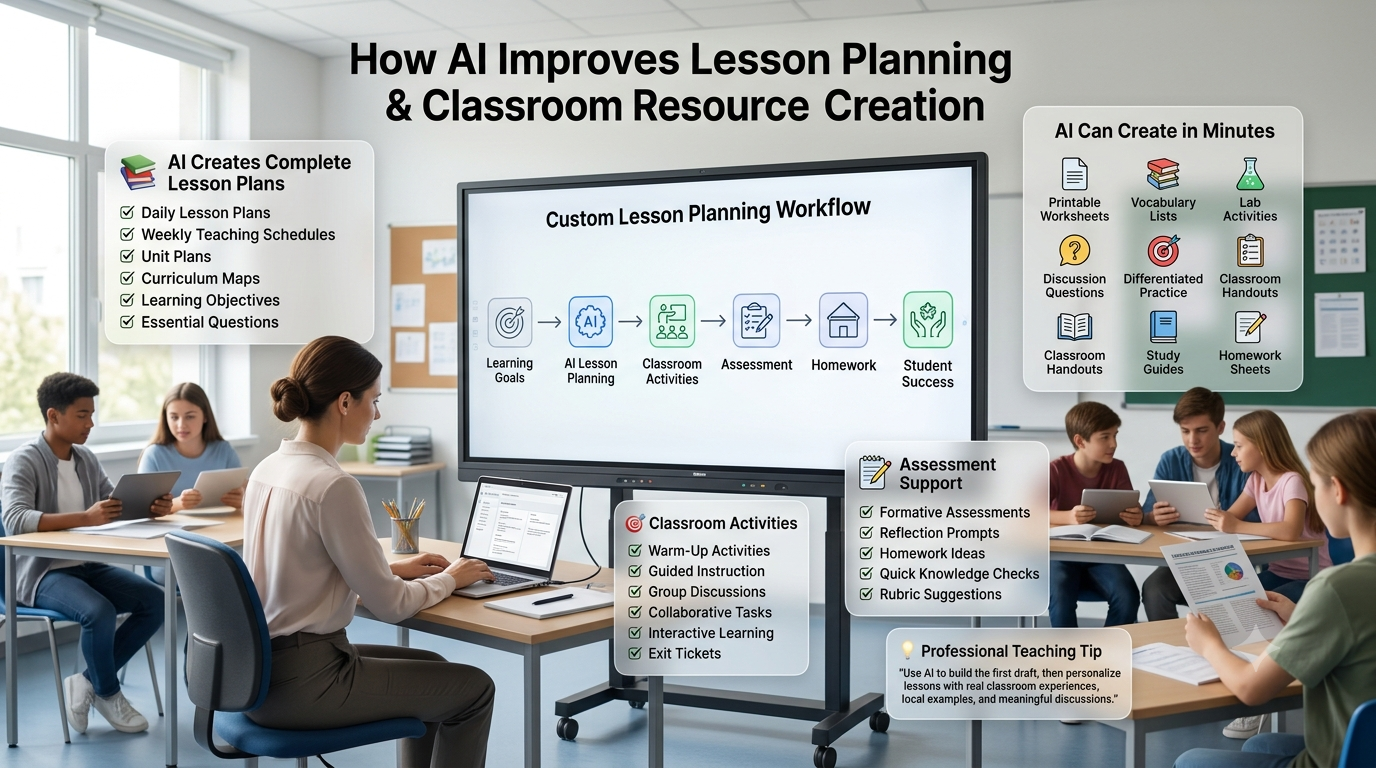
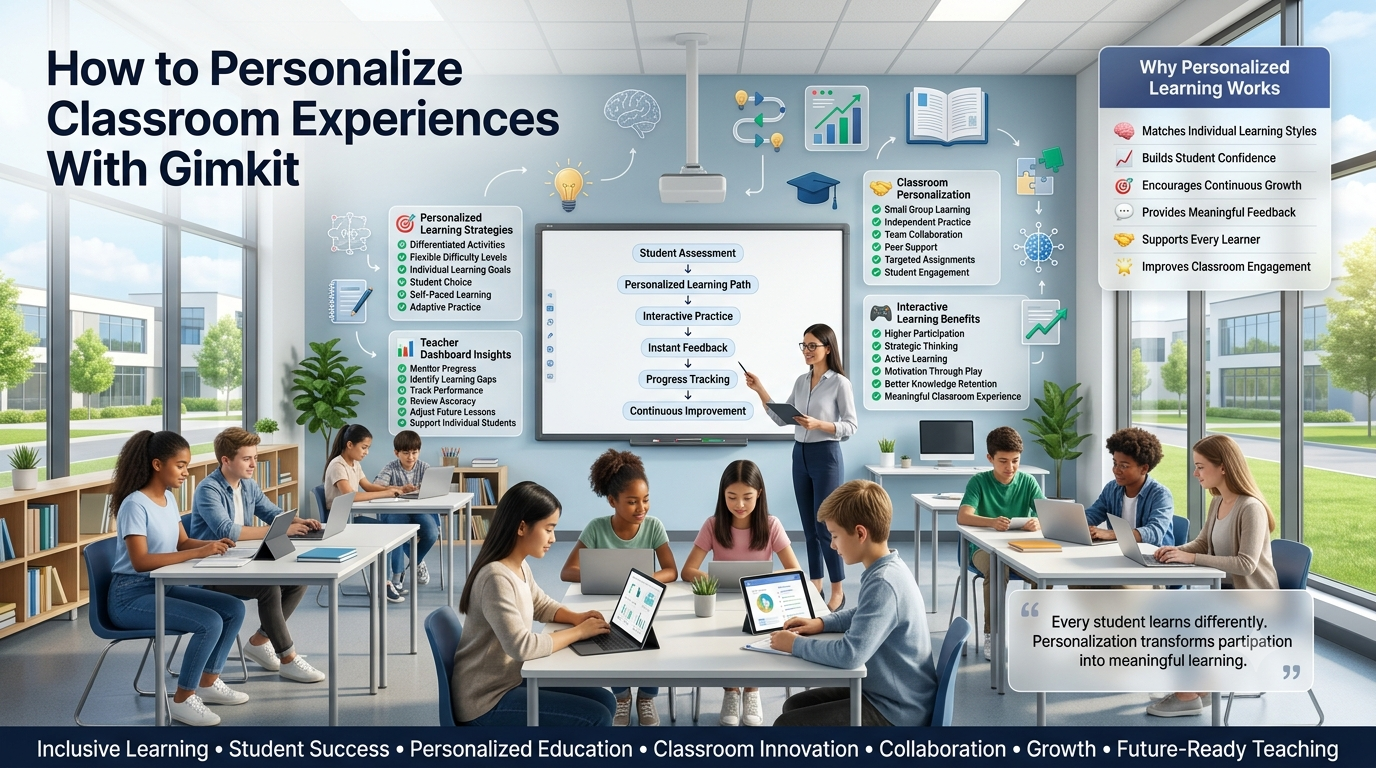
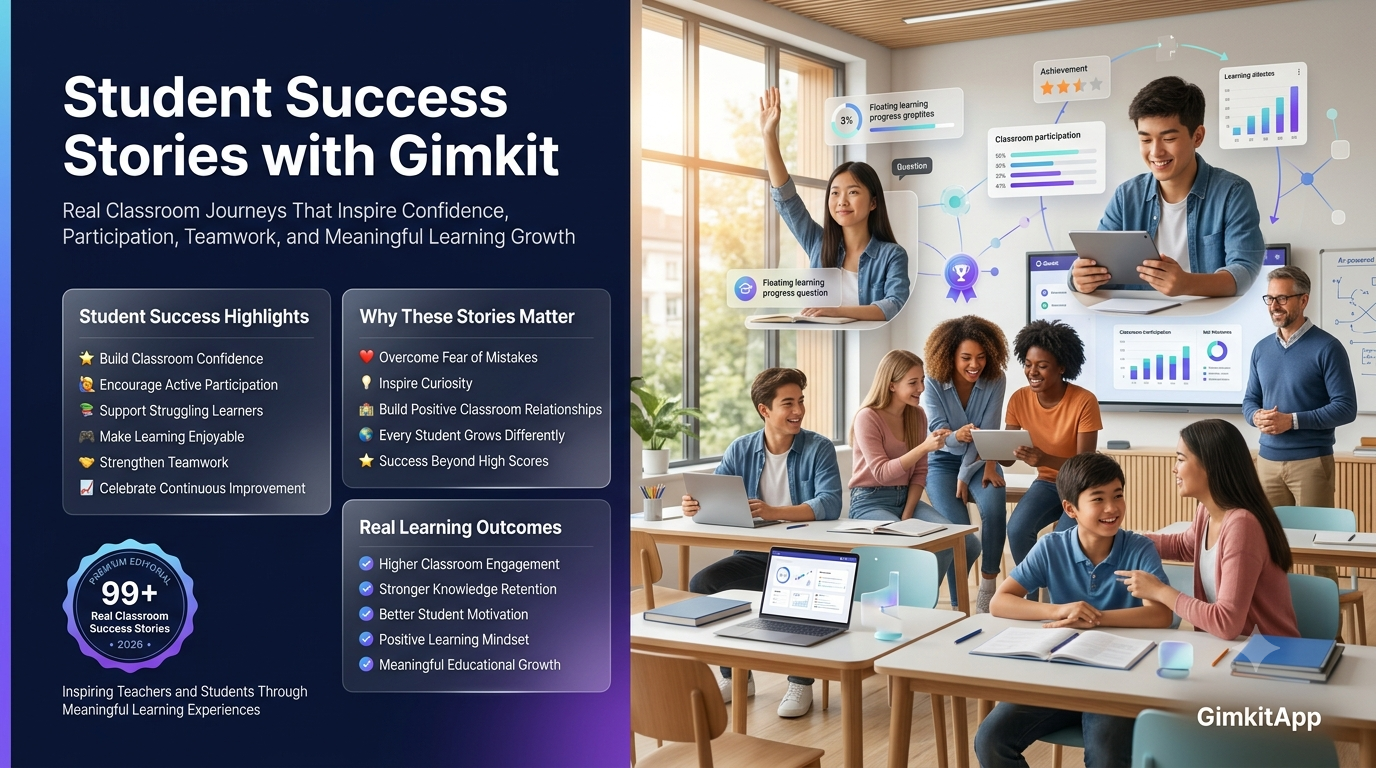
High-Level Tactics for Competitive Classrooms | Creating a competitive classroom is about more than keeping score or rewarding top performers. A well-designed competitive environment encourages participation, strategic thinking, teamwork, resilience, and continuous improvement. When used effectively, competition motivates students to stay engaged, think critically, solve problems creatively, and celebrate both individual and group success.
Many teachers want classrooms where every student feels challenged—not just the highest achievers. The key is building competition that is motivating, fair, and inclusive.
In this guide, you’ll learn:
Advanced strategies for creating healthy classroom competition
Ways to increase student participation and engagement
Techniques for encouraging teamwork alongside individual growth
Methods for building resilience and a positive learning mindset
Practical ideas for maintaining an inclusive classroom culture
By the end of this guide, you’ll understand how to use competition as a powerful learning tool that helps every student stay motivated, develop valuable skills, and achieve long-term academic success.
What Are High-Level Tactics for Competitive Classrooms?
High-level tactics are advanced teaching strategies that use structured competition to improve student engagement, knowledge retention, teamwork, and critical thinking. Rather than focusing solely on winning, these approaches encourage students to develop learning habits, analyze their performance, and improve over time.
Unlike simple quizzes or point systems, these tactics combine classroom management, motivational psychology, differentiated instruction, and game-based learning principles into a balanced learning experience.
Quick Answer: High-level competitive classroom tactics are structured methods that motivate students through meaningful challenges, fair competition, collaborative learning, and continuous feedback while supporting academic growth for learners of all ability levels.
Why Healthy Competition Improves Learning
Competition naturally captures attention because students enjoy testing their knowledge and measuring their progress. However, the educational value comes from how teachers design the experience rather than the competition itself.
Well-designed classroom competition can help students:
Stay engaged for longer periods
Participate more frequently
Practice faster recall
Build confidence
Improve teamwork
Develop strategic thinking
Learn from mistakes
Remain motivated throughout a lesson
When competition becomes part of regular instruction instead of an occasional activity, students often begin preparing more consistently because they know every lesson presents opportunities to contribute.
Shift the Focus from Winning to Improvement
One of the biggest mistakes teachers make is rewarding only the highest scores.
A stronger approach measures improvement instead of perfection.
Students who previously struggled should feel equally excited about increasing their scores, answering more questions correctly, or participating more actively.
Example
Instead of recognizing only the first-place team, celebrate:
Most Improved Team
Fastest Learning Growth
Best Collaboration
Strongest Comeback
Most Helpful Teammates
This approach keeps lower-performing students engaged instead of discouraging them after early setbacks.
💡 Pro Tip: Students remain motivated much longer when success is measured by progress rather than ranking alone.
Create Multiple Ways to Win
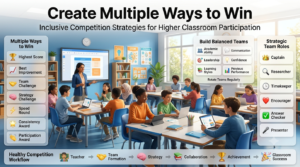
A modern classroom infographic illustrating inclusive competition strategies, balanced teamwork, and multiple achievement paths that increase student engagement and classroom participation.
Not every learner excels at rapid recall.
Some students perform better through collaboration, problem-solving, creativity, or consistency.
Offer several victory paths, such as:
Competition Type
Rewards Different Strengths
Highest Score
Subject mastery
Best Improvement
Learning growth
Team Challenge
Collaboration
Strategy Challenge
Critical thinking
Speed Round
Quick recall
Consistency Award
Daily effort
Participation Award
Classroom engagement
Multiple success paths create a more inclusive competitive environment.
Build Balanced Teams Instead of Random Groups
Random teams sometimes place all high-performing students together, creating one-sided competitions.
Balanced teams encourage stronger collaboration.
Consider mixing students based on:
Academic ability
Communication skills
Leadership qualities
Confidence levels
Learning styles
Previous performance
Balanced groups increase participation because every team has opportunities to contribute.
Best Practice
Rotate teams regularly so students learn to work with different classmates throughout the school year.
Introduce Strategic Roles Within Teams
Competition becomes richer when every student has a defined responsibility.
Possible team roles include:
Role
Responsibility
Captain
Coordinates discussion
Researcher
Finds supporting information
Timekeeper
Monitors deadlines
Encourager
Motivates teammates
Answer Checker
Reviews responses
Presenter
Shares final answers
Students remain engaged because everyone contributes instead of relying on one high-achieving teammate.
Use Time Pressure Carefully
Timers increase excitement but excessive pressure can reduce learning quality.
Instead of making every challenge a speed contest:
Mix timed and untimed activities.
Allow thinking time for complex questions.
Increase difficulty before decreasing response time.
Adjust timing based on student age.
This creates a healthier balance between accuracy and speed.
⚠ Common Mistake: Constant time pressure often rewards quick guessing rather than thoughtful problem-solving.
Surprise mechanics maintain excitement without distracting from learning objectives.
Balance Competition with Collaboration
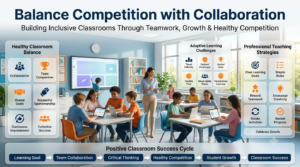
A premium educational infographic showing how balanced competition and collaboration create inclusive, engaging, and student-centered classroom experiences.
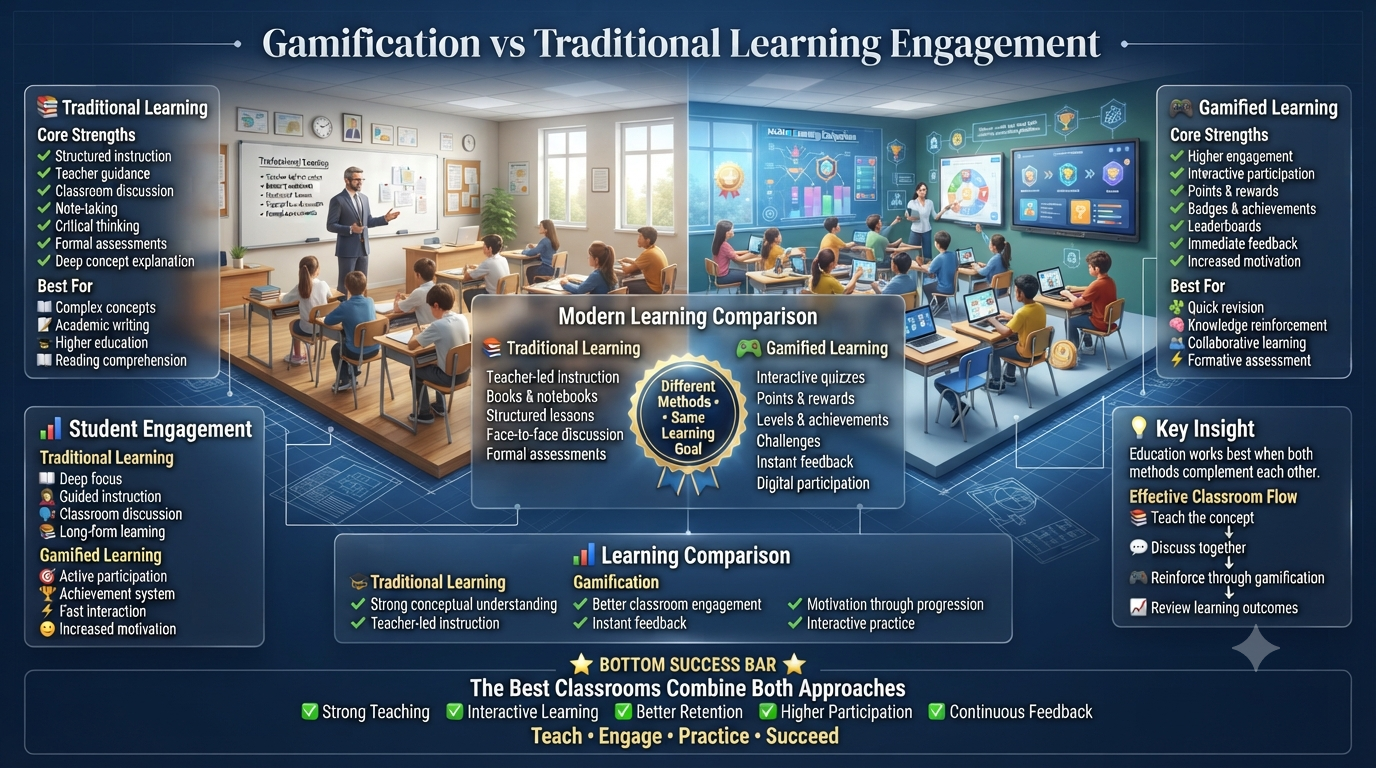
The strongest classrooms combine competition and cooperation.
Students should compete against other teams while collaborating closely with their own teammates.
Occasionally include whole-class goals where everyone earns a reward if the class reaches a shared performance target.
This reinforces that learning is both an individual and collective responsibility.
Adapt Challenges for Different Ability Levels
Students enter the classroom with varying backgrounds and confidence levels.
Differentiate competition by offering:
Tiered question difficulty
Optional challenge questions
Scaffolded hints
Flexible time limits
Mixed-ability teams
Differentiation ensures competition remains motivating rather than intimidating.
Common Mistakes to Avoid
Even well-intentioned competitive activities can become ineffective if they overlook classroom dynamics.
Avoid these common pitfalls:
Mistake
Better Approach
Rewarding only top scorers
Celebrate improvement and effort
Keeping the same teams all year
Rotate groups regularly
Using only speed-based games
Balance speed with accuracy
Ignoring quieter students
Assign structured participation roles
Repeating one game format
Introduce variety and new challenges
Focusing only on scores
Include reflection and feedback
Making competition too difficult
Increase challenge gradually
Recognizing these issues early helps maintain a positive and inclusive learning environment.
Professional Recommendations
Teachers seeking long-term success with competitive classrooms should:
Define clear learning objectives before introducing competition.
Explain rules and scoring systems clearly.
Encourage respectful sportsmanship.
Reward collaboration as well as achievement.
Review classroom data after each activity.
Adjust challenges based on student progress.
Rotate formats to sustain engagement.
Celebrate improvement, creativity, and persistence—not just high scores.
These practices create a classroom culture where competition supports learning instead of overshadowing it.
The gaming industry continues to evolve with new releases, reviews, updates, and expert analysis shaping how players discover and experience games. Staying informed through reliable gaming platforms helps users understand upcoming trends, gameplay improvements, and major announcements. For the latest gaming news, reviews, walkthroughs, and entertainment coverage, readers can also exploreIGN, one of the most recognized sources for gaming and digital entertainment information.
Expert Thoughts
High-level tactics for competitive classrooms go beyond points, leaderboards, and prizes. They create structured opportunities for students to think critically, work collaboratively, reflect on their learning, and steadily improve their skills. By balancing challenge with support, recognizing multiple forms of success, and using competition as a tool for growth rather than comparison, teachers can foster an environment where every student feels motivated to participate and capable of making meaningful progress.
Use Healthy Rewards Beyond Points
Points and leaderboards are motivating, but they are not the only rewards that encourage students to participate. High-level competitive classrooms recognize different forms of achievement, helping students feel valued regardless of where they rank.
Consider rewarding behaviors such as leadership, creative thinking, consistent participation, problem-solving, or helping classmates understand difficult concepts. These recognition systems build confidence while reinforcing positive classroom habits.
Teachers using digital learning platforms can also rotate different game styles to keep rewards fresh. Exploring new activities and platform improvements through Gimkit Games & Updates can help educators discover new ways to refresh classroom competitions throughout the school year.
✅ Best Practice: Reward the behaviors you want students to repeat, not just the highest scores.
Encourage Reflection Between Competitive Activities
The most effective competitions include moments for students to pause and think about what they learned. Reflection transforms competition from entertainment into meaningful academic growth.
Ask students questions like:
What strategy helped your team succeed?
Which question challenged you the most?
How could your team improve communication?
What concept should you review before the next challenge?
This process helps students recognize their strengths while identifying areas for improvement.
If students regularly practice classroom quiz activities, reviewing different assessment formats and question-based learning ideas through Gimkit Quiz Resources can help teachers design more engaging review sessions that encourage deeper thinking instead of simple memorization.
Rotate Classroom Roles Frequently
Assigning fixed responsibilities helps teams stay organized, but rotating those responsibilities develops a wider range of skills.
Students who normally answer questions may become discussion leaders, while quieter learners can gain confidence by presenting answers or managing team strategies.
Possible rotating responsibilities include:
Classroom Role
Learning Benefit
Team Leader
Decision-making
Presenter
Public speaking
Recorder
Organization
Time Manager
Responsibility
Strategy Planner
Critical thinking
Peer Coach
Collaboration
Role rotation also prevents one student from dominating every activity and gives everyone opportunities to contribute.
Design Challenges Around Learning Objectives
Competition should always reinforce instructional goals rather than distract from them.
Before creating any competitive activity, ask yourself:
What skill should students practice?
Which learning objective does this activity support?
How will success be measured?
What evidence of learning will students demonstrate?
When classroom games directly support curriculum objectives, students remain focused on understanding concepts instead of simply collecting points.
Teachers looking for practical implementation ideas can explore different classroom workflows and activity setups through Gimkit Guides & Tutorials, where educators can learn how to integrate interactive learning activities into different teaching environments.
Differentiate Challenges Without Separating Students
Competitive classrooms become more inclusive when every student receives an appropriate level of challenge.
Instead of giving every learner identical tasks, provide multiple levels of difficulty while keeping students engaged in the same activity.
For example:
Student Level
Challenge Type
Beginner
Recall key facts
Intermediate
Apply concepts
Advanced
Analyze scenarios
Expert
Create original solutions
This allows every learner to experience success while continuing to grow academically.
💡 Pro Tip: Different challenge levels should feel like opportunities rather than labels.
Make Technology Support Learning, Not Replace It
A premium educational infographic illustrating how teachers can combine technology with active instruction, critical thinking, and collaborative learning for better classroom outcomes.
Digital platforms can increase excitement, but they work best when combined with thoughtful teaching practices.
Teachers should:
Explain concepts before starting a game.
Pause periodically for discussion.
Review incorrect answers together.
Encourage students to explain their reasoning.
Connect game results back to lesson objectives.
When introducing interactive classroom technology, understanding available gameplay options is equally important. Exploring different Gimkit Features and Game Modes helps teachers select activities that match different lesson goals, whether reviewing vocabulary, practicing mathematics, or reinforcing science concepts.
Promote Strategic Thinking Instead of Guessing
Fast answers are exciting, but thoughtful answers create deeper learning.
Present situations where students must:
Justify their answers.
Compare multiple solutions.
Evaluate evidence.
Predict outcomes.
Defend their reasoning.
These activities encourage analytical thinking while making competition more intellectually rewarding.
Instead of rewarding only speed, consider awarding bonus points for well-supported explanations or creative problem-solving.
Give Constructive Feedback Throughout the Competition
Immediate feedback allows students to correct misconceptions before they become long-term habits.
Effective feedback should be:
Specific
Timely
Encouraging
Actionable
Connected to learning objectives
Rather than saying, “That’s incorrect,” explain why the answer is incorrect and guide students toward the correct reasoning.
Continuous coaching helps students view competition as an opportunity to improve rather than simply win or lose.
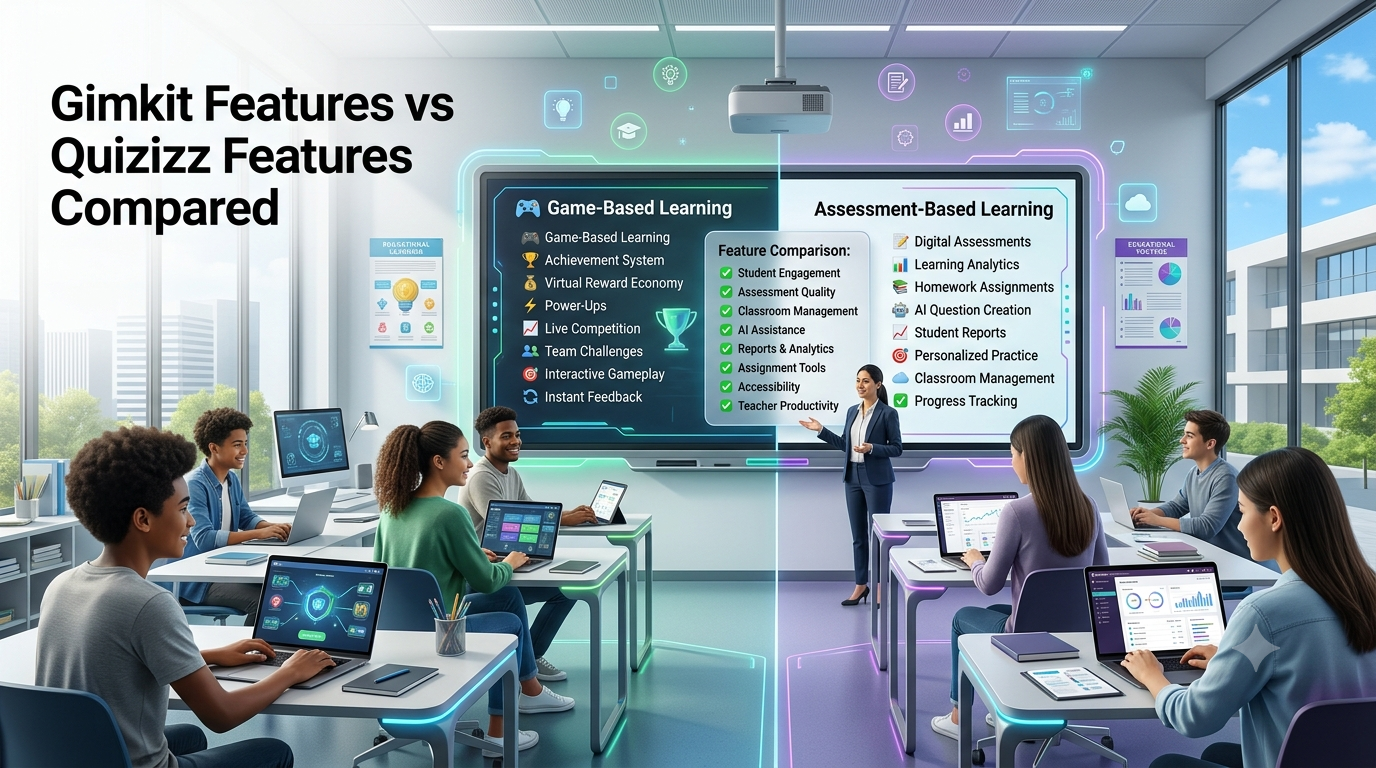
Help Teachers Choose the Right Classroom Platform
Not every classroom has identical needs. Some educators prioritize quick formative assessments, while others prefer collaborative game-based learning or detailed performance reports.
Understanding the strengths and limitations of different educational platforms allows teachers to select tools that match their instructional style instead of following trends.
For educators comparing multiple classroom engagement tools, exploring Gimkit Comparisons & Alternatives can help identify how different platforms support varying teaching objectives, classroom sizes, and learning environments.
Support Professional Growth Through Teaching Resources
Successful competitive classrooms continue evolving as teachers discover new instructional strategies and classroom management techniques.
Professional development does not always require formal training. Reading practical classroom ideas, experimenting with new game formats, and learning from other educators can significantly improve lesson quality over time.
Teachers seeking additional instructional ideas, classroom planning techniques, and educational materials can explore Gimkit Resources for Teachers, where classroom-focused materials and teaching approaches can support better lesson planning.
Build Long-Term Classroom Success
Healthy classroom competition is most effective when it becomes part of a broader learning culture rather than an occasional event. By combining thoughtful planning, balanced challenges, regular reflection, differentiated instruction, and meaningful feedback, teachers can create learning experiences that motivate students while supporting lasting academic growth.
For educators who want to continue exploring interactive teaching ideas, classroom strategies, platform guidance, feature explanations, and educational updates, the Gimkit platform provides resources covering everything from getting started to advanced classroom implementation.
Advanced Strategies for Building Competitive Classroom Excellence
Creating a truly effective competitive classroom requires moving beyond simple rewards and activities. The strongest learning environments combine competition with psychology, instructional design, technology, and student-centered teaching practices.
When competition is carefully structured, it becomes a powerful system for improving motivation, engagement, collaboration, and academic performance.
Create a Long-Term Competition Framework
Successful competitive classrooms are not built through random activities. They require a clear framework that defines how competition supports learning goals throughout the academic year.
A strong framework includes:
Clear objectives
Fair rules
Consistent evaluation methods
Multiple achievement opportunities
Regular feedback cycles
Opportunities for improvement
Instead of treating each competition as an isolated event, teachers can create a continuous learning journey where students understand how their effort contributes to long-term progress.
This approach also makes classroom competitions easier to manage because students become familiar with expectations and gradually develop stronger participation habits.
Develop a Growth-Based Leaderboard System
Leaderboards can increase motivation, but traditional ranking systems often focus only on top performers.
A more effective approach combines achievement with growth.
Consider including categories such as:
Leaderboard Category
Focus
Top Performance
Academic achievement
Biggest Improvement
Learning progress
Best Teamwork
Collaboration
Creative Problem Solver
Innovation
Consistent Contributor
Regular participation
This ensures that students with different strengths have opportunities to succeed.
A growth-based leaderboard changes the classroom mindset from:
“Who is the smartest student?”
to:
“How can everyone improve?”
Use Competition to Build Student Confidence
Some students avoid participation because they fear making mistakes publicly.
A well-designed competitive environment can reduce this fear by making mistakes part of the learning process.
Teachers can encourage confidence by:
Celebrating improvement
Discussing mistakes openly
Showing multiple solution methods
Encouraging peer support
Recognizing effort and persistence
When students understand that competition is about progress rather than judgment, they become more willing to participate.
⭐ Expert Insight: The goal of classroom competition is not to identify winners and losers. The goal is to create more active, confident, and motivated learners.
Introduce Real-World Problem Challenges
Advanced competitions should connect classroom knowledge with practical situations.
Instead of asking only:
“What is the correct answer?”
challenge students with questions like:
How would you solve this problem in real life?
Which strategy would work best and why?
What evidence supports your decision?
How could your solution be improved?
Real-world challenges develop:
Critical thinking
Decision-making
Communication skills
Creativity
Practical application
These skills prepare students beyond the classroom environment.
Combine Individual and Team Competition
A balanced competitive system includes both personal accountability and teamwork.
Individual challenges help students:
Track personal improvement
Build confidence
Practice independent thinking
Team competitions help students:
Communicate effectively
Share knowledge
Support classmates
Develop leadership skills
Using both formats prevents competition from becoming overly individualistic.
Create Meaningful Achievement Systems
Badges, milestones, and achievement levels can encourage students to continue improving.
Examples include:
Problem Solver Badge
Collaboration Champion
Improvement Leader
Knowledge Explorer
Strategy Master
Consistency Award
Achievement systems work best when they represent meaningful accomplishments rather than simple participation.
Students should understand what behavior or skill each achievement represents.
Adapt Competition Based on Student Feedback
Students are active participants in the learning environment, so their opinions can provide valuable insights.
Ask students:
Which activities helped you learn most?
Which challenges felt too easy or difficult?
What changes would improve future competitions?
Which teamwork strategies worked best?
Student feedback helps teachers refine activities and create competitions that remain engaging over time.
Manage Competition Stress Effectively
Competition can motivate students, but excessive pressure can create anxiety.
Teachers should monitor:
Student frustration levels
Unhealthy comparisons
Negative team behavior
Fear of mistakes
Reduced participation
Healthy competition should feel challenging but achievable.
If students begin focusing more on avoiding failure than improving skills, the competition structure needs adjustment.
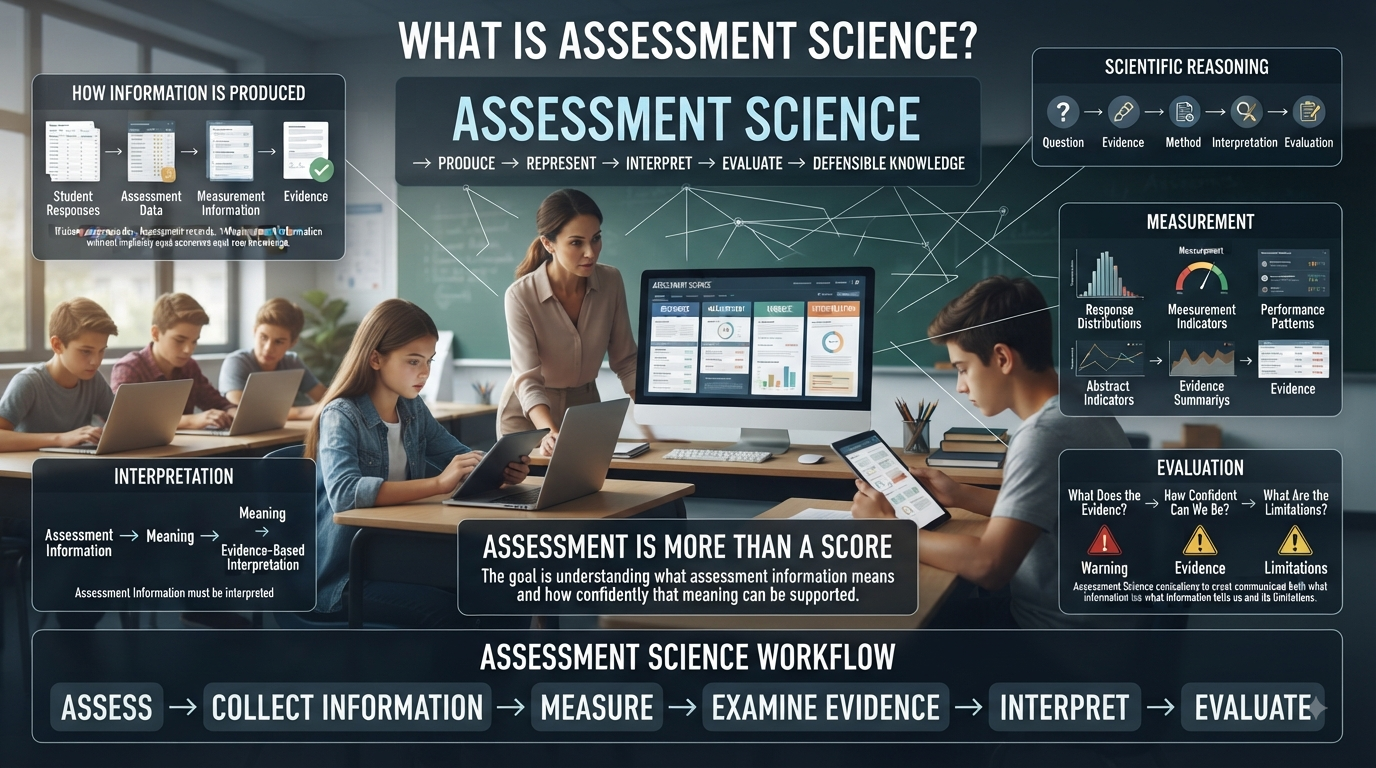
Connect Competition With Assessment Strategies
Competitive activities can support both learning and assessment when designed correctly.
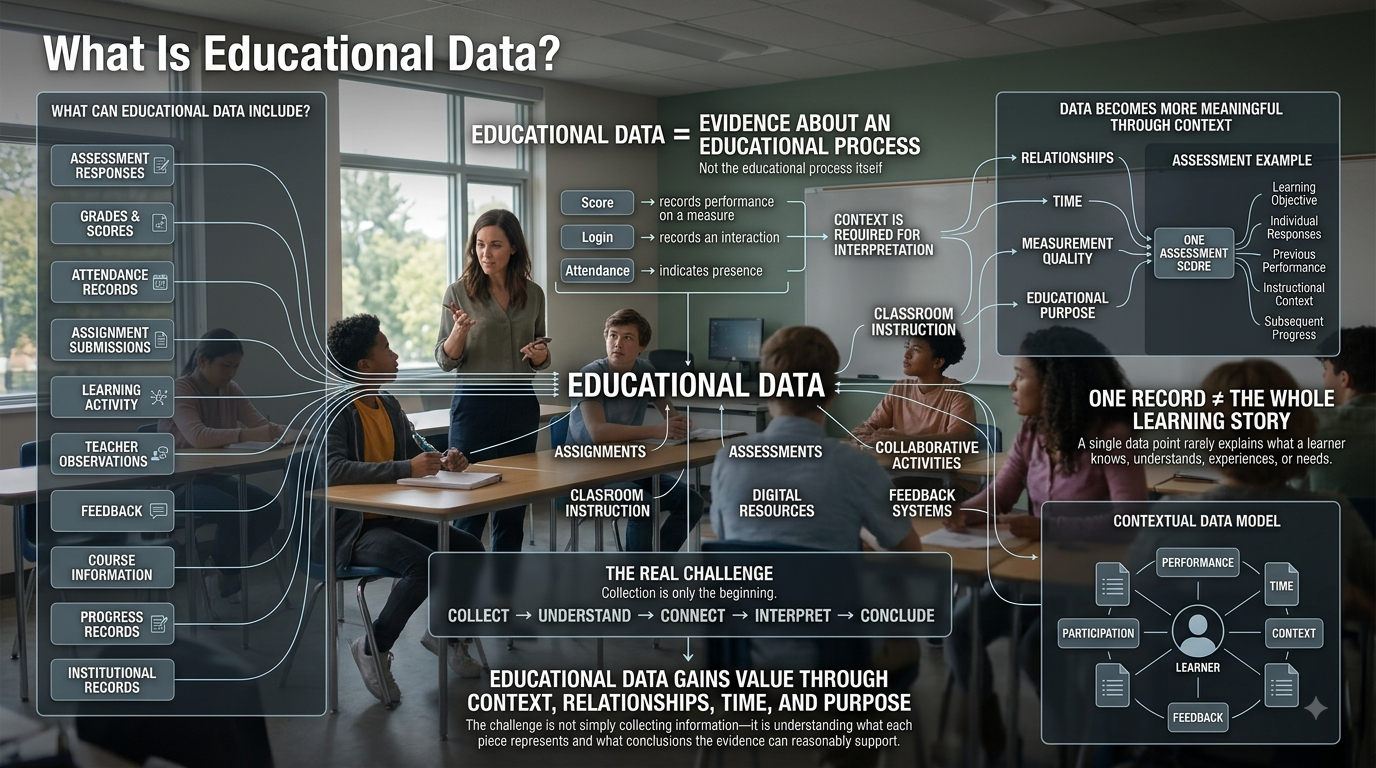
Teachers can use competition data to understand:
Student understanding
Common misconceptions
Learning gaps
Topic difficulty
Individual progress
This information helps educators adjust future lessons and provide targeted support.
For educators exploring different assessment approaches and interactive learning methods, reviewing Gimkit Tips & Strategies can provide additional ideas for improving classroom engagement and competitive learning workflows.
Prepare Students for Competitive Activities
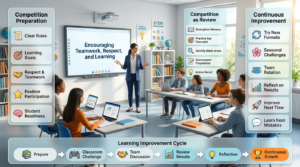
A premium educational infographic showing how teachers can prepare students for classroom competitions through clear expectations, active review, teamwork, and continuous improvement.
Students perform better when expectations are clear.
Before starting a competition, explain:
Rules
Students should understand how points, rewards, and progress are calculated.
Goals
Explain what knowledge or skill the activity is designed to improve.
Behavior Expectations
Clarify that teamwork, respect, and learning are more important than simply winning.
Clear preparation reduces confusion and creates a more positive experience.
Use Competition as a Review Strategy
Competitive activities are especially effective for revision because they encourage students to retrieve information actively.
Review competitions can help students:
Strengthen memory
Identify weak areas
Practice important concepts
Prepare for assessments
However, teachers should avoid making every review session competitive.
A combination of independent practice, discussion, and competition usually creates stronger learning outcomes.
Keep Competition Fresh With New Approaches
Even successful activities can lose effectiveness when repeated too often.
Teachers can maintain excitement by introducing:
New challenge formats
Different team structures
Seasonal competitions
Collaborative goals
Advanced difficulty levels
Following educational platform developments and new classroom ideas through Gimkit General Updates and Information can help educators discover additional ways to keep interactive learning experiences engaging.
Support Students After Competition Results
The conversation after a competition is just as important as the competition itself.
After results are announced, discuss:
What strategies worked?
What mistakes were valuable?
What skills improved?
What should change next time?
This turns competition into a continuous improvement cycle.
Students learn that every result provides information they can use to become better learners.
Consider When Competitive Learning Should Not Be Used
Competition is powerful, but it is not suitable for every situation.
Avoid competitive approaches when:
Students are learning a completely new difficult concept.
The activity may increase unnecessary anxiety.
Students lack foundational knowledge.
The goal requires deep individual reflection.
The competition could create unhealthy comparisons.
Sometimes collaboration, discussion, or individual practice is more effective.
Strong teachers choose competition strategically rather than using it automatically.
Final Professional Framework for Competitive Classrooms
The most successful competitive classrooms follow a simple principle:
Competition should increase learning, not distract from it.
Teachers who achieve the best results usually combine:
Clear learning objectives
Fair competition structures
Multiple success opportunities
Student reflection
Team collaboration
Continuous improvement
Meaningful feedback
Appropriate technology use
Digital classroom tools can support these strategies when they are aligned with teaching goals. Educators evaluating interactive platforms, classroom engagement methods, and learning features can also explore Gimkit Reviews & Pricing to better understand how different options fit specific classroom needs.
Professional Recommendations & Expert Reviews
High-Level Tactics for Competitive Classrooms create engaging learning environments where students improve skills through healthy competition and meaningful challenges.
High-Level Tactics for Competitive Classrooms help teachers motivate students with clear goals, fair rules, and positive feedback.
High-Level Tactics for Competitive Classrooms combine teamwork and individual achievement to build confidence, communication, and problem-solving skills.
High-Level Tactics for Competitive Classrooms make lessons more interactive by turning learning activities into exciting challenges.
High-Level Tactics for Competitive Classrooms focus on understanding student motivation and creating competitions that support growth.
High-Level Tactics for Competitive Classrooms encourage resilience by helping students learn from mistakes and improve performance.
High-Level Tactics for Competitive Classrooms ensure every learner gets a fair chance to participate and succeed.
High-Level Tactics for Competitive Classrooms use feedback to guide students toward better results and stronger learning habits.
High-Level Tactics for Competitive Classrooms build positive classroom cultures through purposeful and balanced competition.
High-Level Tactics for Competitive Classrooms help educators improve engagement, creativity, and long-term student success.
High-Level Tactics for Competitive Classrooms encourage students to stay focused, active, and involved throughout the learning process.
High-Level Tactics for Competitive Classrooms help educators design activities that increase motivation without creating unnecessary pressure.
High-Level Tactics for Competitive Classrooms promote strategic thinking by challenging students to make smarter decisions.
High-Level Tactics for Competitive Classrooms support better classroom management through structured and engaging activities.
High-Level Tactics for Competitive Classrooms create opportunities for students to test knowledge and build confidence.
High-Level Tactics for Competitive Classrooms improve participation by making lessons more dynamic and enjoyable.
High-Level Tactics for Competitive Classrooms help teachers balance achievement, teamwork, and personal growth.
High-Level Tactics for Competitive Classrooms develop important skills such as leadership, communication, and adaptability.
High-Level Tactics for Competitive Classrooms allow students to learn through challenges, reflection, and improvement.
High-Level Tactics for Competitive Classrooms transform competition into a positive educational experience.
High-Level Tactics for Competitive Classrooms help create a classroom atmosphere where students feel motivated to succeed.
High-Level Tactics for Competitive Classrooms encourage healthy challenges that inspire continuous improvement.
High-Level Tactics for Competitive Classrooms give teachers effective ways to increase student engagement.
High-Level Tactics for Competitive Classrooms support active learning by encouraging students to participate more frequently.
High-Level Tactics for Competitive Classrooms help learners develop confidence while working toward academic goals.
High-Level Tactics for Competitive Classrooms make educational activities more memorable and impactful.
High-Level Tactics for Competitive Classrooms encourage students to apply knowledge in practical situations.
High-Level Tactics for Competitive Classrooms help teachers create fair and rewarding learning experiences.
High-Level Tactics for Competitive Classrooms strengthen student motivation through achievable challenges.
High-Level Tactics for Competitive Classrooms provide a framework for improving classroom energy and involvement.
High-Level Tactics for Competitive Classrooms help students develop persistence when facing difficult tasks.
High-Level Tactics for Competitive Classrooms encourage learners to focus on progress rather than only results.
High-Level Tactics for Competitive Classrooms support creative approaches to teaching and learning.
High-Level Tactics for Competitive Classrooms improve student interaction through collaborative challenges.
High-Level Tactics for Competitive Classrooms help educators create stronger connections with their students.
High-Level Tactics for Competitive Classrooms make learning environments more exciting and student-centered.
High-Level Tactics for Competitive Classrooms encourage students to take responsibility for their own success.
High-Level Tactics for Competitive Classrooms help identify student strengths and areas for improvement.
High-Level Tactics for Competitive Classrooms create a balance between competition and cooperation.
High-Level Tactics for Competitive Classrooms encourage students to challenge themselves and reach higher goals.
High-Level Tactics for Competitive Classrooms help teachers use competition as a learning tool.
High-Level Tactics for Competitive Classrooms improve classroom engagement through interactive experiences.
High-Level Tactics for Competitive Classrooms motivate students by turning learning into an enjoyable challenge.
High-Level Tactics for Competitive Classrooms help build stronger academic habits through consistent practice.
High-Level Tactics for Competitive Classrooms encourage teamwork while maintaining individual accountability.
High-Level Tactics for Competitive Classrooms support innovative teaching methods that increase participation.
High-Level Tactics for Competitive Classrooms help students develop confidence in their abilities.
High-Level Tactics for Competitive Classrooms create a foundation for effective and engaging education.
High-Level Tactics for Competitive Classrooms help teachers maximize learning outcomes through smart competition.
High-Level Tactics for Competitive Classrooms create long-term benefits by improving motivation, skills, and classroom engagement.
FAQs About High-Level Tactics for Competitive Classrooms
1. How can teachers create healthy competition in the classroom without making students feel pressured?
Healthy classroom competition is created when the focus shifts from winning against others to improving personal performance, teamwork, and learning progress. Competition becomes harmful when only the highest achievers receive recognition or when students feel that mistakes represent failure.
Teachers can create a healthier environment by designing competitions that reward multiple forms of success, including improvement, collaboration, creativity, and problem-solving. For example, instead of recognizing only the student with the highest score, teachers can also celebrate the most improved learner, strongest team contribution, or best strategic thinking.
A balanced competitive classroom should include:
Clear rules and expectations
Multiple ways to succeed
Team-based challenges
Positive feedback
Reflection after activities
The goal is not to create a classroom where students compete against each other constantly. The goal is to create an environment where competition encourages students to challenge themselves and become more engaged learners.
When students understand that effort, growth, and teamwork matter as much as final rankings, competition becomes a motivational tool rather than a source of stress.
2. What are the best competitive classroom strategies to increase student engagement?
The most effective competitive classroom strategies combine challenge, interaction, and meaningful learning goals. Simply adding points or prizes is rarely enough to maintain long-term engagement.
Some of the most successful strategies include:
Team-Based Challenges
Students work together toward shared goals, allowing stronger collaboration and peer learning. Team competitions also help quieter students participate because they can contribute through different roles.
Progress-Based Competition
Instead of focusing only on final scores, measure improvement over time. This encourages struggling students to continue participating because progress becomes achievable.
Gamified Learning Activities
Game-based learning elements such as levels, challenges, rewards, and achievements can make lessons more interactive. Digital platforms that support quizzes, classroom games, and review activities can help teachers create structured competitions that align with learning objectives.
Strategic Challenges
Activities should require students to think, analyze, and make decisions rather than simply memorize information.
Reflection Sessions
After competitions, students should discuss what worked, what failed, and how they can improve. This turns a fun activity into a deeper learning experience.
The strongest competitive classrooms do not rely on one technique. They combine different strategies depending on the lesson goal, student needs, and classroom environment.
3. How can teachers make competitive classroom activities fair for all students?
Fair competition requires careful planning because students have different skill levels, confidence levels, and learning backgrounds.
A fair competitive classroom does not mean every student receives identical challenges. Instead, it means every student receives a realistic opportunity to participate and improve.
Teachers can improve fairness by:
Creating balanced teams with mixed abilities
Offering different difficulty levels
Rewarding improvement alongside achievement
Rotating leadership roles
Giving students different ways to contribute
For example, one student may contribute by answering questions quickly, while another may help the team by explaining concepts or organizing strategies.
Teachers should also avoid creating systems where the same students win repeatedly. If one group consistently dominates, other students may lose motivation.
A well-designed competition allows advanced students to remain challenged while giving developing learners opportunities to experience success.
4. Can competitive classroom activities improve student learning outcomes?
Yes, when designed correctly, competitive classroom activities can improve learning outcomes by increasing engagement, motivation, participation, and active recall.
Competition encourages students to interact with information instead of passively receiving it. During a competitive activity, students often practice:
Retrieving knowledge quickly
Applying concepts
Explaining reasoning
Solving problems
Collaborating with classmates
However, competition alone does not automatically improve learning. The educational value depends on how teachers structure the activity.
For example, a competition based only on speed may encourage guessing, while a competition that rewards explanation and problem-solving develops deeper understanding.
The most effective approach combines competition with:
Clear learning objectives
Immediate feedback
Discussion
Reflection
Follow-up instruction
When competition becomes part of a broader teaching strategy, it can support stronger academic engagement and better knowledge retention.
5. How can teachers use technology to create better competitive classroom experiences?
Technology can make classroom competition more interactive, organized, and engaging when it supports the teacher’s learning goals.
Digital classroom platforms allow educators to create activities such as:
Live quiz competitions
Team challenges
Knowledge review games
Progress-based activities
Interactive assessments
Tools like Gimkit are often used in classrooms because they combine quiz-based learning with game mechanics that encourage participation and strategic thinking. Teachers can explore different approaches to classroom implementation through resources related to Gimkit Features & Game Modes and Gimkit Tips & Strategies to understand how interactive competition can fit into different teaching styles.
However, technology should support instruction rather than replace it. The most effective teachers use digital competition as one part of a larger learning system that includes explanation, discussion, feedback, and reflection.
A successful technology-based competitive activity should always answer one question:
“How does this help students learn better?”
If the answer is clear, technology can become a powerful tool for creating engaging and meaningful classroom experiences.
Conclusion
High-level tactics for competitive classrooms transform competition from a simple motivational technique into a complete learning strategy. When designed carefully, competition encourages students to participate actively, think strategically, collaborate effectively, and develop confidence in their abilities.
The strongest classrooms are not those where only the highest scorers succeed. They are environments where every student has a reason to participate, improve, and feel proud of their progress.
By combining thoughtful competition design with strong teaching practices, educators can create classrooms where learning becomes more engaging, meaningful, and rewarding for everyone.