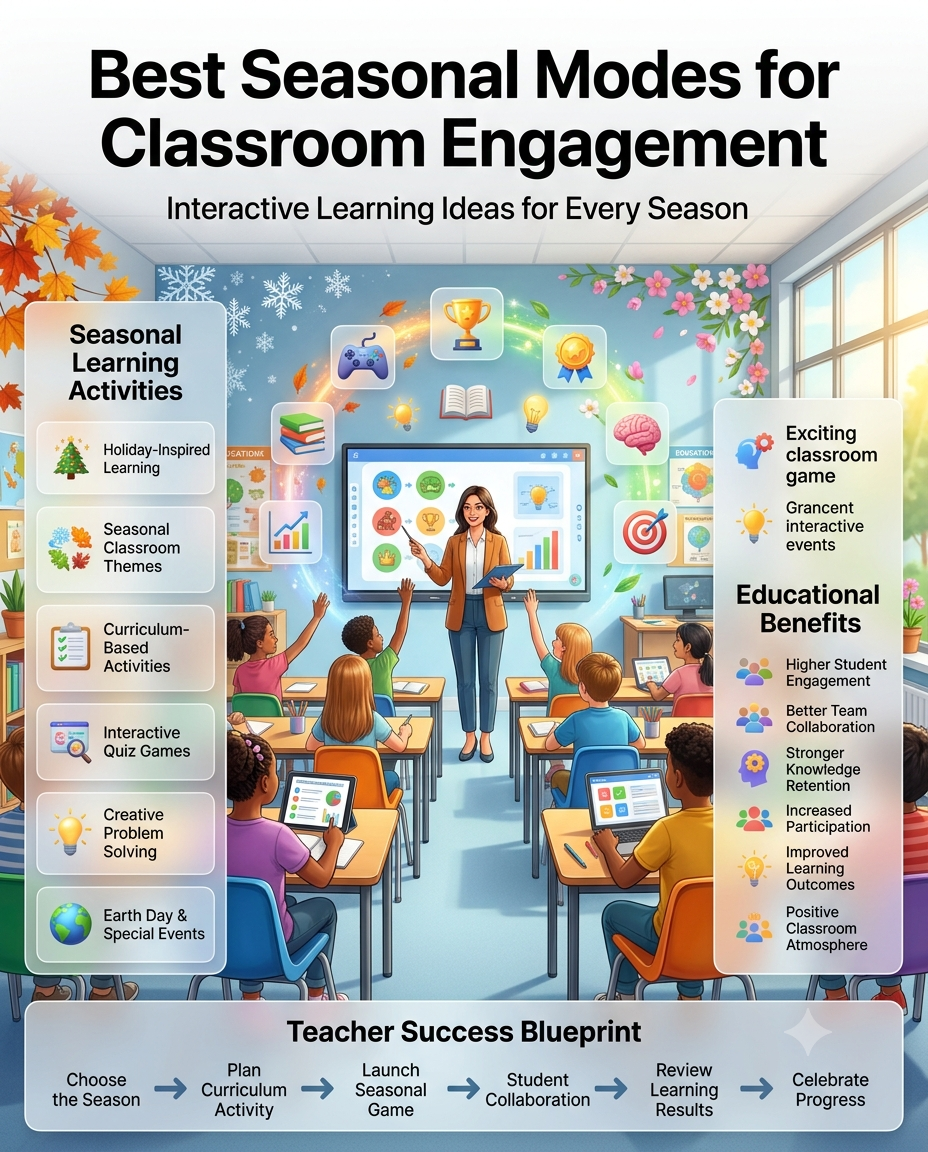
Best Seasonal Modes for Classroom Engagement-Seasonal classroom activities give teachers an exciting opportunity to keep lessons fresh, interactive, and memorable throughout the entire school year. Rather than following the same routine every week, educators can match classroom games, quizzes, and collaborative challenges with changing seasons, holidays, and important school events. This simple approach keeps students curious, motivated, and eager to participate while naturally reinforcing academic concepts.
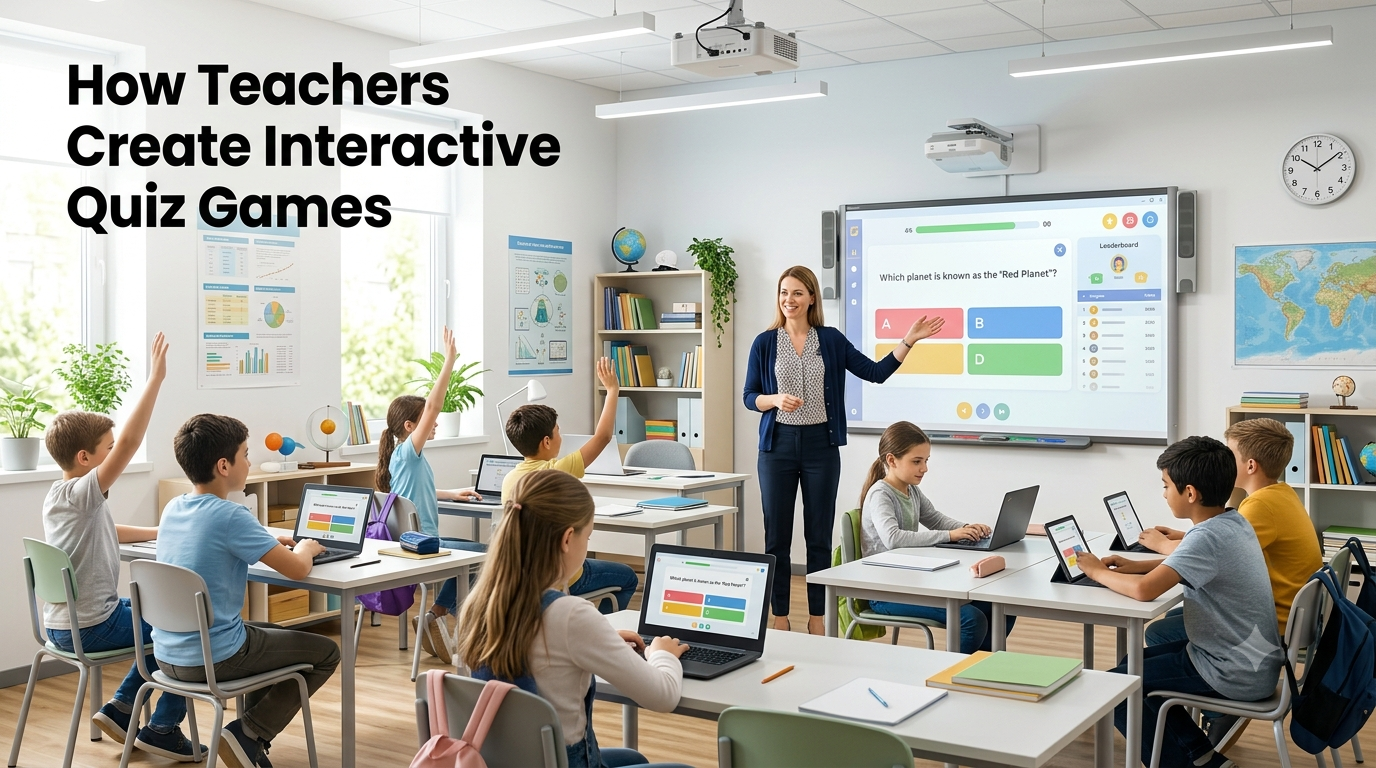
Modern game-based learning platforms make seasonal engagement easier than ever. With just a few adjustments, teachers can create themed quizzes, exciting team competitions, interactive review sessions, and classroom challenges that reflect the time of year. Seasonal customization may include:
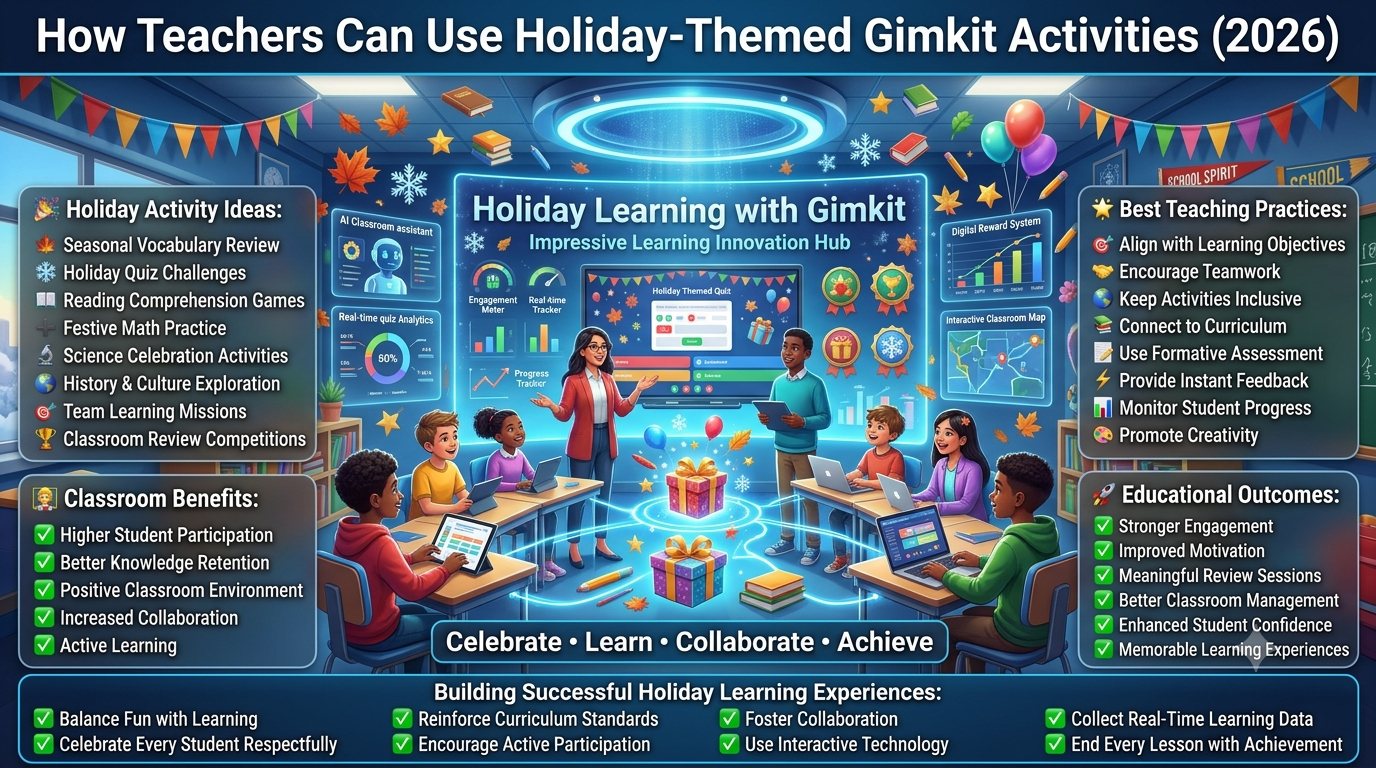
🍂 Holiday-inspired learning activities
🌸 Seasonal visuals and classroom themes
🏆 Reward-based competitions and achievements
📚 Subject-specific vocabulary and curriculum alignment
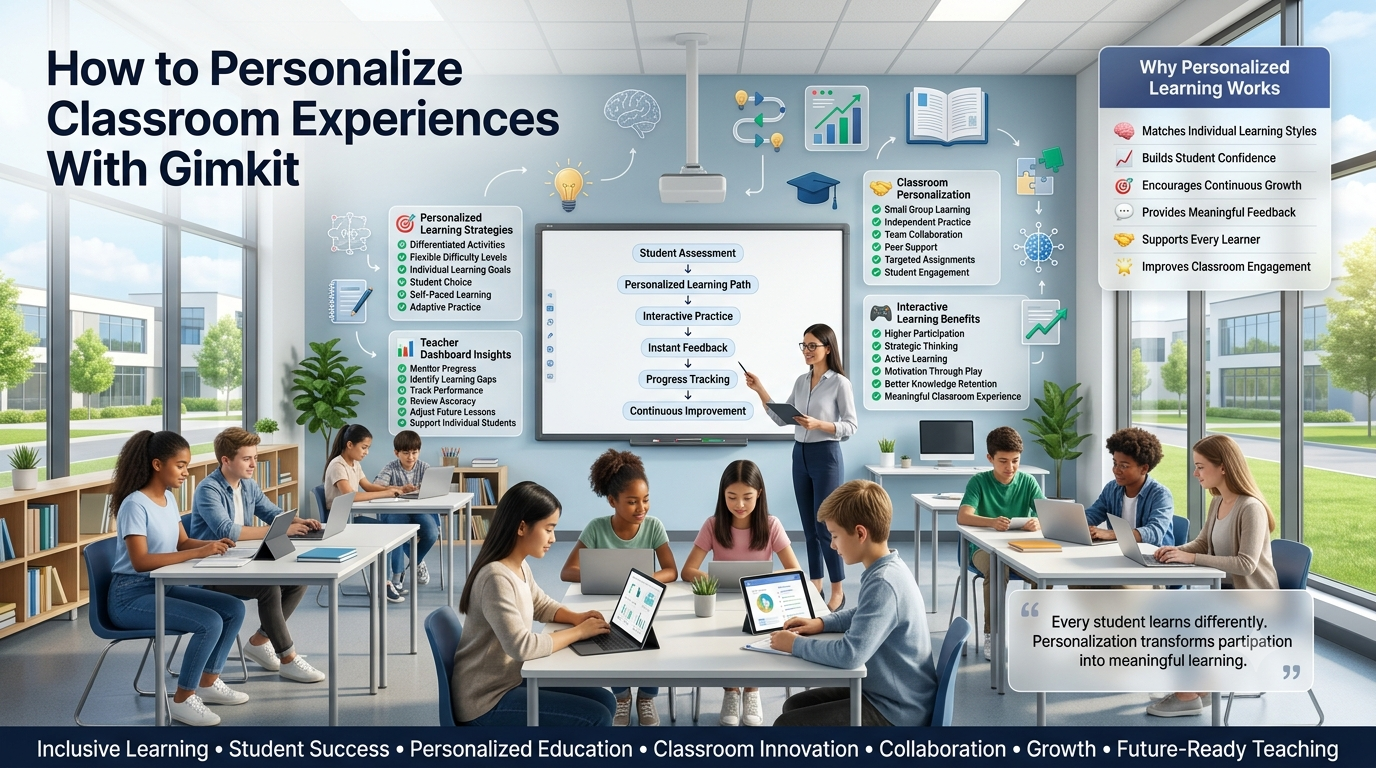
🤝 Team collaboration and classroom participation
Whether students are celebrating the first week of school, exploring environmental science during Earth Day, practicing reading with Halloween-themed challenges, or reviewing math before winter break, seasonal learning modes transform ordinary lessons into experiences students genuinely look forward to.
The best seasonal classroom modes offer far more than entertainment. They help increase participation, strengthen collaboration, improve knowledge retention, support diverse learning styles, and create a positive classroom atmosphere—all while keeping educational objectives at the center of every activity. When seasonal themes are thoughtfully connected to curriculum goals, they become powerful teaching tools instead of simple classroom decorations.
Join Gimkit Official Now!
Play live quiz games, earn coins, and crush the leaderboard. Learning has never been this fun. Tap to join for free!
In this comprehensive guide, you’ll discover:
The best seasonal classroom modes for every time of year
When each mode works most effectively
Practical implementation strategies for teachers
Tips to maximize student engagement and participation
Creative ideas that make learning enjoyable without sacrificing academic outcomes
By the end, you’ll have a complete roadmap for creating meaningful, seasonally inspired learning experiences that keep students engaged from the first day of school to the final classroom celebration.
What Are Seasonal Classroom Modes?
Seasonal classroom modes are learning activities designed around specific times of the year, holidays, school events, or seasonal themes. Rather than presenting lessons in the same format throughout the year, teachers adapt classroom experiences to reflect current events and seasonal celebrations while keeping educational objectives at the center of instruction.
These modes can include quiz competitions, collaborative challenges, scavenger hunts, creative projects, review games, classroom tournaments, themed discussions, digital learning activities, and reward-based participation systems. Modern educational platforms allow teachers to change backgrounds, question styles, team structures, and classroom objectives to match seasonal occasions without rebuilding an entire lesson plan from scratch.
The key difference between seasonal modes and traditional classroom games is relevance. Students naturally connect with activities that reflect what they are currently experiencing outside the classroom, making learning feel more timely and engaging.
Seasonal learning increases engagement because it introduces novelty without disrupting educational continuity. Students tend to respond positively when familiar academic content is presented in a new context that reflects holidays, weather changes, cultural events, or important school milestones.
The excitement generated by seasonal themes encourages students to participate more willingly, especially those who may hesitate during traditional classroom instruction. Visual themes, friendly competition, collaborative challenges, and limited-time classroom events create anticipation that helps maintain attention throughout the lesson.
Another important advantage is emotional connection. Students often associate seasons with positive memories, celebrations, and traditions. When teachers integrate these familiar experiences into classroom learning, academic content becomes easier to remember because it is linked with meaningful experiences rather than isolated facts.
From a classroom management perspective, seasonal activities can also improve attendance, participation, and overall classroom atmosphere by giving students something enjoyable to anticipate during different parts of the academic year.
Educational Benefits of Seasonal Classroom Activities
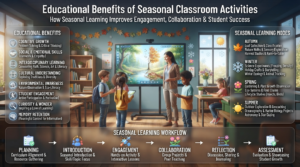
Professional infographic showing how seasonal classroom activities improve participation, motivation, collaboration, knowledge retention, and curriculum-based learning throughout the academic year.
Well-designed seasonal classroom modes contribute to learning in ways that extend beyond entertainment. They support cognitive development, encourage collaboration, and provide teachers with opportunities to reinforce curriculum standards through varied instructional approaches.
Benefit
How It Supports Learning
Higher Participation
Students are more willing to answer questions and join activities.
Activities can accommodate different learning preferences.
Formative Assessment
Teachers can monitor understanding in an engaging environment.
Positive Learning Habits
Students begin associating learning with enjoyable experiences.
Seasonal engagement also encourages students to practice critical thinking, creativity, communication, and problem-solving while remaining focused on academic objectives.
Different Types of Seasonal Modes Used in Classrooms
Seasonal classroom engagement is not limited to holiday celebrations. Effective teachers use a variety of seasonal approaches that match both curriculum goals and classroom needs.
Holiday-Themed Learning Modes
These activities revolve around widely recognized celebrations such as Halloween, Christmas, Valentine’s Day, Thanksgiving, Lunar New Year, or other culturally appropriate holidays observed within the school community. Lessons often incorporate themed questions, decorations, vocabulary, and collaborative challenges.
Weather and Nature Themes
Teachers frequently connect lessons with changing seasons by incorporating autumn leaves, winter snow, spring flowers, or summer exploration into science, language arts, geography, and creative writing activities. These themes help students observe real-world changes while applying classroom knowledge.
School Calendar Events
Beginning-of-year orientation, examination review weeks, reading months, science fairs, graduation preparation, and end-of-year celebrations all provide opportunities to design engaging classroom modes that match important academic milestones.
Educational Awareness Events
Many schools participate in events such as Earth Day, World Book Day, STEM Week, Computer Science Education Week, Mathematics Month, and Literacy Week. Seasonal modes built around these events reinforce curriculum objectives while connecting students with broader educational initiatives.
Community and Cultural Celebrations
Teachers can also design activities around local traditions, national celebrations, multicultural festivals, and school community events. These modes help students appreciate diversity while encouraging respectful participation in classroom discussions and collaborative learning.
How to Choose the Right Seasonal Mode
The most effective seasonal mode is one that supports learning outcomes rather than distracting from them. Before selecting a seasonal activity, teachers should evaluate several important factors to ensure that engagement and instruction remain balanced.
Consider Your Learning Objectives First
Every seasonal activity should reinforce a specific academic goal. Whether reviewing multiplication, introducing historical concepts, improving reading comprehension, or practicing scientific reasoning, the educational objective should determine the game structure rather than the seasonal theme alone.
For example, a Halloween-themed vocabulary challenge should still prioritize language development, while a winter mathematics competition should continue assessing mathematical understanding despite its festive presentation.
Match Activities to Student Age Groups
Different age groups respond differently to seasonal activities. Younger learners often enjoy colorful visuals, storytelling, and simple collaborative games, while older students typically prefer strategic competitions, problem-solving challenges, and team-based learning experiences that require critical thinking.
Selecting age-appropriate activities helps maintain engagement without making students feel that the lesson is either too childish or unnecessarily difficult.
Respect Classroom Diversity
Inclusive classrooms contain students from many different cultural, religious, and personal backgrounds. Teachers should carefully consider whether a seasonal theme is appropriate for the entire class and provide alternative options when necessary.
Focusing on universal themes such as kindness, gratitude, nature, teamwork, creativity, or seasonal changes often creates more inclusive learning experiences than emphasizing specific holiday traditions alone.
Balance Fun with Instruction
The excitement of seasonal games should never overshadow the lesson itself. Successful classroom engagement occurs when students remain focused on solving problems, answering questions, collaborating effectively, and achieving learning objectives throughout the activity.
Professional educators often evaluate each activity by asking a simple question: “If the seasonal decorations were removed, would the lesson still achieve its educational goal?” If the answer is yes, the activity is likely well designed.
Planning Seasonal Activities Throughout the School Year
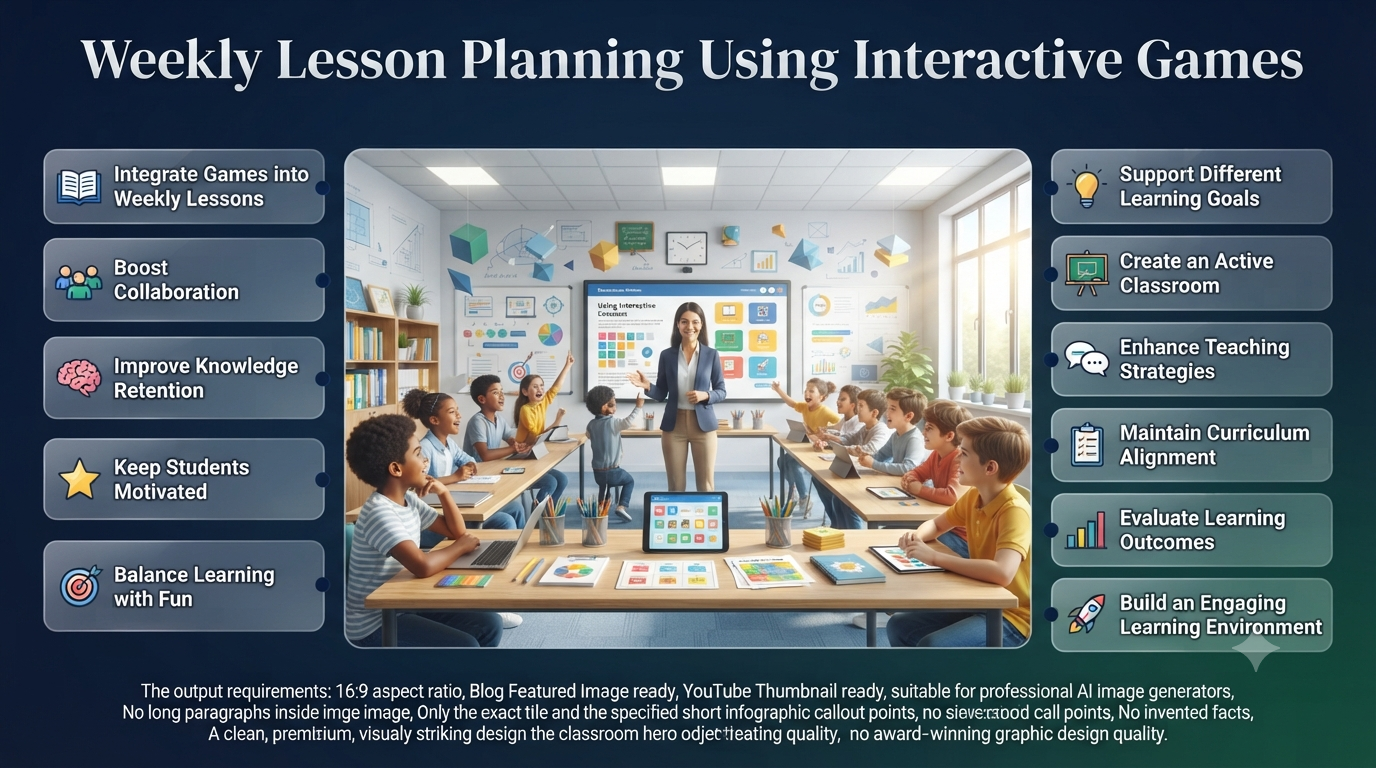
Rather than creating seasonal lessons at the last minute, experienced teachers develop an annual engagement calendar that aligns classroom activities with both curriculum pacing and major school events. Planning ahead reduces preparation time while ensuring that seasonal modes support instructional goals instead of interrupting them.
An effective planning workflow typically includes:
Mapping major school holidays and academic milestones.
Identifying curriculum units that naturally align with seasonal themes.
Preparing reusable quiz templates and classroom resources.
Scheduling collaborative projects before high-stress assessment periods.
Allowing flexibility to adjust activities based on student progress.
Reflecting after each event to improve future seasonal lessons.
By approaching seasonal engagement as part of a long-term instructional strategy rather than occasional entertainment, teachers can create a classroom environment where students consistently look forward to learning while steadily achieving academic success.
Best Fall Classroom Modes
Fall offers some of the most versatile opportunities for classroom engagement. The start of a new academic year, changing weather, colorful landscapes, and several educational events create a natural environment for interactive learning. Instead of overwhelming students with routine assignments, teachers can use seasonal modes to build classroom relationships while reinforcing academic skills.
Back-to-School Team Challenge
The first few weeks of school are ideal for activities that help students learn names, classroom expectations, and collaboration skills. Rather than focusing entirely on rules, teachers can organize team-based quizzes covering classroom procedures, school values, digital citizenship, and introductory subject knowledge.
Best practice: Keep competition friendly and reward teamwork, participation, and respectful communication instead of only recognizing high scores.
Autumn Adventure Mode
Autumn-themed lessons work well across multiple subjects. Teachers can incorporate falling leaves, pumpkins, harvest themes, forests, migration, and changing weather into science, geography, reading, writing, and mathematics activities.
Examples include:
Leaf classification challenges
Seasonal vocabulary competitions
Weather prediction activities
Nature observation journals
Measurement games using autumn objects
These activities encourage observation while helping students connect classroom concepts with real-world seasonal changes.
Reading Marathon Week
As temperatures cool in many regions, classrooms often become ideal spaces for extended reading sessions. Teachers can create reading challenges where students earn points for completing chapters, identifying themes, answering comprehension questions, or discussing books with classmates.
Adding small classroom goals rather than individual competition often increases participation among reluctant readers.
Halloween Learning Activities
Halloween provides excellent opportunities for creative classroom engagement when activities remain focused on learning rather than simply celebrating the holiday. Schools that observe Halloween often use themed lessons to review academic content in an enjoyable format.
Mystery Quiz Mode
Students solve academic questions to unlock clues leading to a final classroom mystery. Each correct answer reveals another piece of information, encouraging careful thinking rather than rapid guessing.
This format works especially well for:
Science investigations
Historical events
Vocabulary review
Mathematics puzzles
Reading comprehension
Escape Room Challenges
Educational escape rooms transform ordinary review sessions into collaborative problem-solving experiences. Students complete academic tasks to “escape” by solving subject-related puzzles.
A mathematics escape room might require solving equations to unlock codes, while a history challenge could involve arranging historical events in chronological order.
Vocabulary Monster Hunt
Teachers hide vocabulary words, definitions, or clues around the classroom. Students locate the cards and complete matching or sentence-building activities before moving to the next station.
The physical movement helps maintain energy while reinforcing language skills.
Creative Writing Adventures
Halloween also supports imaginative writing exercises without requiring scary content. Students might write:
Mystery stories
Detective reports
Fantasy adventures
Character descriptions
Problem-solving narratives
These assignments strengthen writing skills while encouraging creativity.
Professional Tip: Always adapt Halloween activities to your school’s policies and your students’ cultural backgrounds. Alternative autumn themes can provide similar engagement without focusing on Halloween itself.
Thanksgiving Classroom Challenges
Where Thanksgiving is observed, teachers often use the holiday to promote gratitude, reflection, collaboration, and community learning. Educational activities should remain inclusive while emphasizing appreciation and teamwork.
Thanksgiving themes naturally support cooperative learning. Teams complete subject-based challenges where every student contributes a unique role.
For example:
Team Role
Responsibility
Researcher
Finds information
Writer
Records answers
Presenter
Explains solutions
Reviewer
Checks accuracy
Timekeeper
Manages progress
Rotating responsibilities ensures every student participates.
Classroom Quiz Tournament
Teachers can organize review competitions covering material learned since the beginning of the semester. Seasonal decorations simply provide the atmosphere while academic objectives remain the primary focus.
Winter Holiday Learning Modes
Winter often arrives near important academic assessments and school breaks. Student attention naturally shifts toward upcoming holidays, making engagement increasingly important. Seasonal learning modes help maintain focus while reducing classroom fatigue.
Winter Knowledge Quest
Students complete learning missions across different subjects.
Example stations:
Science experiments
Reading comprehension
Mathematics puzzles
Geography challenges
Coding activities
Critical thinking questions
Each completed station contributes toward a shared classroom objective rather than individual competition.
Snowball Review Games
Students write review questions on paper circles representing snowballs. Teams exchange questions and work together to solve them.
This strategy encourages students to think about both asking and answering meaningful academic questions.
Winter STEM Challenges
Simple engineering activities remain popular during winter.
Students might design:
Paper bridges
Tower-building competitions
Insulated containers
Simple machines
Marshmallow structures
These activities naturally integrate science, mathematics, creativity, and collaboration.
Christmas-Themed Classroom Games
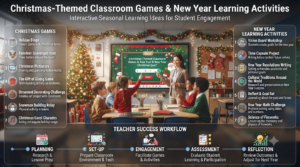
Professional 16:9 educational infographic showcasing Christmas classroom games and New Year learning activities that improve student engagement, teamwork, academic reflection, and goal-setting through interactive seasonal learning.
For schools that celebrate Christmas, festive learning activities can create memorable educational experiences while keeping lessons academically meaningful.
Christmas Quiz Challenge
Teachers can organize review quizzes featuring seasonal visuals, festive sound effects, and collaborative scoring systems.
Popular subjects include:
Mathematics review
Grammar practice
Science facts
Geography
Literature
The seasonal theme enhances motivation without replacing academic rigor.
Classroom Gift Exchange of Knowledge
Instead of exchanging physical gifts, students prepare educational questions, encouraging messages, book recommendations, or study tips for classmates.
This activity promotes kindness while reinforcing learning.
Holiday Problem-Solving Missions
Students complete progressively challenging academic tasks to help fictional characters complete a holiday mission.
Examples include:
Solving math equations
Identifying grammar mistakes
Completing science investigations
Decoding historical clues
The storyline maintains engagement while every task reinforces curriculum standards.
Important Note: In multicultural classrooms, teachers should ensure Christmas-themed activities remain inclusive and offer broader winter celebrations when appropriate.
New Year Goal-Setting Activities
The beginning of a new calendar year provides an excellent opportunity to encourage reflection and academic planning. Rather than focusing solely on celebrations, teachers can help students evaluate their progress and establish realistic learning goals.
Academic Goal Workshop
Students identify:
Skills they improved
Subjects needing more practice
Learning habits to strengthen
Personal reading goals
Collaboration goals
Teachers can revisit these goals throughout the semester to monitor growth.
Growth Mindset Challenges
Students complete activities emphasizing persistence, problem-solving, and continuous improvement rather than perfection.
Challenge examples:
Solve progressively harder problems.
Improve previous quiz scores.
Complete collaborative projects.
Learn one entirely new concept.
This reinforces the idea that learning develops over time through consistent effort.
Reflection Journals
Reflection prompts may include:
What was my biggest achievement?
What challenged me most?
Which learning strategy helped me?
What will I improve next?
How can I support classmates?
Reflection develops self-awareness and encourages students to take greater responsibility for their own learning.
Valentine’s Day Collaboration Games
Valentine’s Day classroom engagement works best when activities emphasize friendship, kindness, communication, and teamwork rather than personal relationships.
Partner Learning Missions
Students work in pairs to solve academic challenges requiring discussion, explanation, and mutual support.
Subjects that benefit include:
Mathematics reasoning
Reading comprehension
Language learning
Science investigations
Geography activities
Pair work strengthens communication skills while increasing confidence.
Kindness Challenge Board
Students anonymously recognize classmates for positive classroom behaviors such as:
Helping others
Showing respect
Demonstrating perseverance
Encouraging teamwork
Asking thoughtful questions
Positive recognition contributes to a stronger classroom culture.
Collaborative Puzzle Competition
Rather than competing individually, small groups complete large educational puzzles together.
Possible formats include:
Vocabulary matching
Historical timelines
Scientific processes
Mathematical reasoning chains
Map-building exercises
These activities reinforce collaboration while maintaining academic focus.
Spring Classroom Engagement Ideas
Spring represents growth, exploration, and renewed energy, making it one of the best seasons for project-based learning and hands-on activities. As the weather improves in many regions, teachers can incorporate outdoor observations, creative investigations, and collaborative challenges into everyday lessons.
Spring-themed classroom modes often work especially well for science, environmental studies, art, language development, and inquiry-based learning because students can directly observe seasonal changes around them.
Common spring activities include:
Nature observation journals
Plant life cycle investigations
Outdoor mathematics challenges
Creative storytelling inspired by seasonal changes
Science exploration stations
Collaborative research projects
Spring vocabulary competitions
Classroom garden planning
When paired with structured learning objectives, these activities help students remain engaged during a period when attention can sometimes shift toward the approaching end of the school year.
Earth Day Educational Challenges
Earth Day provides an excellent opportunity to combine environmental awareness with meaningful classroom learning. Rather than limiting activities to discussions about recycling, teachers can design interdisciplinary challenges that encourage students to investigate real-world environmental issues while practicing critical thinking, collaboration, and problem-solving.
Environmental Investigation Projects
Students explore local or global environmental topics through research and classroom presentations. Depending on the grade level, projects may focus on:
Plastic pollution
Water conservation
Renewable energy
Wildlife habitats
Climate patterns
Sustainable communities
Forest conservation
Waste reduction
Teachers should encourage students to support their findings with reliable sources and practical examples instead of memorizing isolated facts.
Earth Day Quiz Tournament
A themed quiz competition can reinforce science, geography, and environmental vocabulary in an engaging way. Questions might cover ecosystems, natural resources, recycling symbols, endangered species, weather patterns, or sustainable practices.
Professional Tip: Include scenario-based questions that ask students how they would solve environmental problems rather than relying solely on factual recall.
Sustainability Design Challenge
Students work in teams to create solutions for everyday environmental issues. For example, they might design a school recycling campaign, develop a water-saving plan, or build a simple model of an eco-friendly community using recycled materials.
These projects encourage creativity while demonstrating how classroom knowledge can be applied beyond school.
Summer Learning Activities
Although many schools have summer vacations, summer-themed learning modes remain valuable for summer programs, enrichment classes, online learning, and review sessions. The goal is to keep learning enjoyable while preventing students from feeling overwhelmed.
Summer Adventure Learning
Teachers can organize lessons around travel, exploration, and discovery. Students complete “learning destinations” by solving subject-specific tasks at different stations or through digital activities.
Possible themes include:
Around the World
Ocean Exploration
National Parks
Space Missions
Historical Journeys
This approach keeps review sessions fresh while encouraging curiosity.
Reading Passport Challenge
Students receive a reading passport where each completed book or chapter represents a new destination. Activities can include comprehension questions, vocabulary exercises, creative responses, or short presentations.
Rather than rewarding only the number of books read, teachers should also recognize thoughtful discussion and understanding.
STEM Exploration Week
Summer is ideal for hands-on experimentation because schedules are often more flexible. Students can participate in engineering challenges, coding activities, robotics, simple chemistry demonstrations, or design-thinking projects that encourage experimentation and collaboration.
Back-to-School Classroom Modes
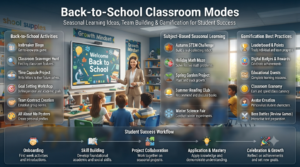
Professional 16:9 educational infographic illustrating back-to-school classroom activities, seasonal learning ideas, curriculum integration, and gamification strategies that improve student engagement and collaboration.
The beginning of a new academic year sets the tone for everything that follows. Effective back-to-school activities help students feel comfortable, establish classroom expectations, and build positive relationships without overwhelming them.
Classroom Orientation Game
Instead of reviewing classroom rules through a lecture, teachers can create interactive challenges that introduce:
Classroom procedures
Daily routines
Technology expectations
Group work guidelines
Safety practices
School values
Students learn expectations while actively participating.
Classroom Scavenger Hunt
A scavenger hunt encourages students to explore the classroom and locate important resources such as:
Library corner
Assignment trays
Technology stations
Emergency information
Learning materials
Collaboration spaces
This reduces uncertainty during the first weeks of school.
Team-Building Challenges
Collaborative tasks help students become comfortable working together before major academic projects begin.
Popular activities include:
Tower-building competitions
Logic puzzles
Problem-solving races
Communication challenges
Classroom mission games
These activities strengthen classroom relationships while encouraging respectful collaboration.
Subject-Specific Seasonal Lesson Ideas
Seasonal modes become even more effective when they directly support curriculum objectives. Rather than applying the same activity to every subject, teachers can adapt seasonal themes to fit specific learning outcomes.
This alignment ensures that seasonal engagement strengthens academic progress rather than interrupting it.
Gamification Best Practices for Seasonal Learning
Seasonal themes are most effective when combined with thoughtful gamification strategies. The objective is not simply to make lessons entertaining but to create meaningful opportunities for participation, feedback, and continuous improvement.
Focus on Learning Outcomes
Every game element should reinforce a specific educational objective. Points, badges, leaderboards, or rewards should recognize learning progress, collaboration, creativity, or persistence—not just speed.
Keep Rules Simple
Students should spend their time solving academic challenges rather than trying to understand complicated game mechanics. Clear instructions reduce confusion and maximize participation.
Encourage Team Success
While individual achievements have value, cooperative learning often produces stronger classroom relationships and deeper understanding. Team-based seasonal challenges encourage students to explain concepts, share ideas, and support one another.
Rotate Activity Formats
Using the same game repeatedly can reduce excitement over time. Teachers should alternate between quizzes, investigations, discussions, escape rooms, creative projects, and collaborative competitions throughout the school year.
Reflect After Each Activity
Short reflection sessions help students identify what they learned, what challenged them, and how they can improve. Reflection also provides valuable feedback that teachers can use when planning future seasonal activities.
Classroom Management During Seasonal Events
Exciting classroom activities can sometimes lead to increased noise or distractions if expectations are unclear. Effective classroom management ensures that seasonal engagement remains productive.
Establish Expectations Early
Before beginning any activity, clearly explain:
Learning objectives
Team responsibilities
Time limits
Classroom behavior
Scoring rules
Transition procedures
Students participate more effectively when expectations are consistent.
Maintain Balanced Competition
Healthy competition motivates students, but excessive emphasis on winning may discourage participation. Recognize collaboration, creativity, improvement, and respectful behavior alongside academic performance.
Use Structured Time Limits
Breaking activities into shorter segments helps maintain attention and prevents students from losing focus during longer sessions.
Common Mistakes to Avoid
Even well-planned seasonal activities can become less effective if common mistakes are overlooked.
Prioritizing Entertainment Over Learning
A seasonal theme should enhance the lesson—not replace it. Students should finish each activity having achieved meaningful learning outcomes.
Using the Same Format Repeatedly
Repeating identical quiz structures throughout the year reduces novelty and engagement. Variety helps sustain long-term interest.
Ignoring Classroom Diversity
Teachers should carefully select themes that respect different cultures, traditions, and personal backgrounds while maintaining an inclusive learning environment.
Overcomplicating Activities
Complicated rules or excessive instructions often reduce participation. Simple structures usually produce better classroom engagement.
Skipping Reflection
Without reflection, valuable learning opportunities may be lost. Encourage students to discuss what they learned and how they solved problems.
Troubleshooting Seasonal Activities
Challenge
Possible Cause
Practical Solution
Low participation
Activity too difficult
Adjust question difficulty and provide guidance
Students lose focus
Session too long
Divide activities into shorter segments
Uneven participation
Dominant team members
Assign rotating classroom roles
Technical issues
Internet or device problems
Prepare printable backup activities
Excessive competition
Overemphasis on scores
Reward collaboration and improvement
Limited preparation time
Last-minute planning
Reuse seasonal templates and lesson resources
Planning for potential challenges allows teachers to adapt quickly while maintaining a positive learning environment.
Professional Tips for Maximum Classroom Engagement
Experienced educators often achieve the best results by combining thoughtful planning with flexibility.
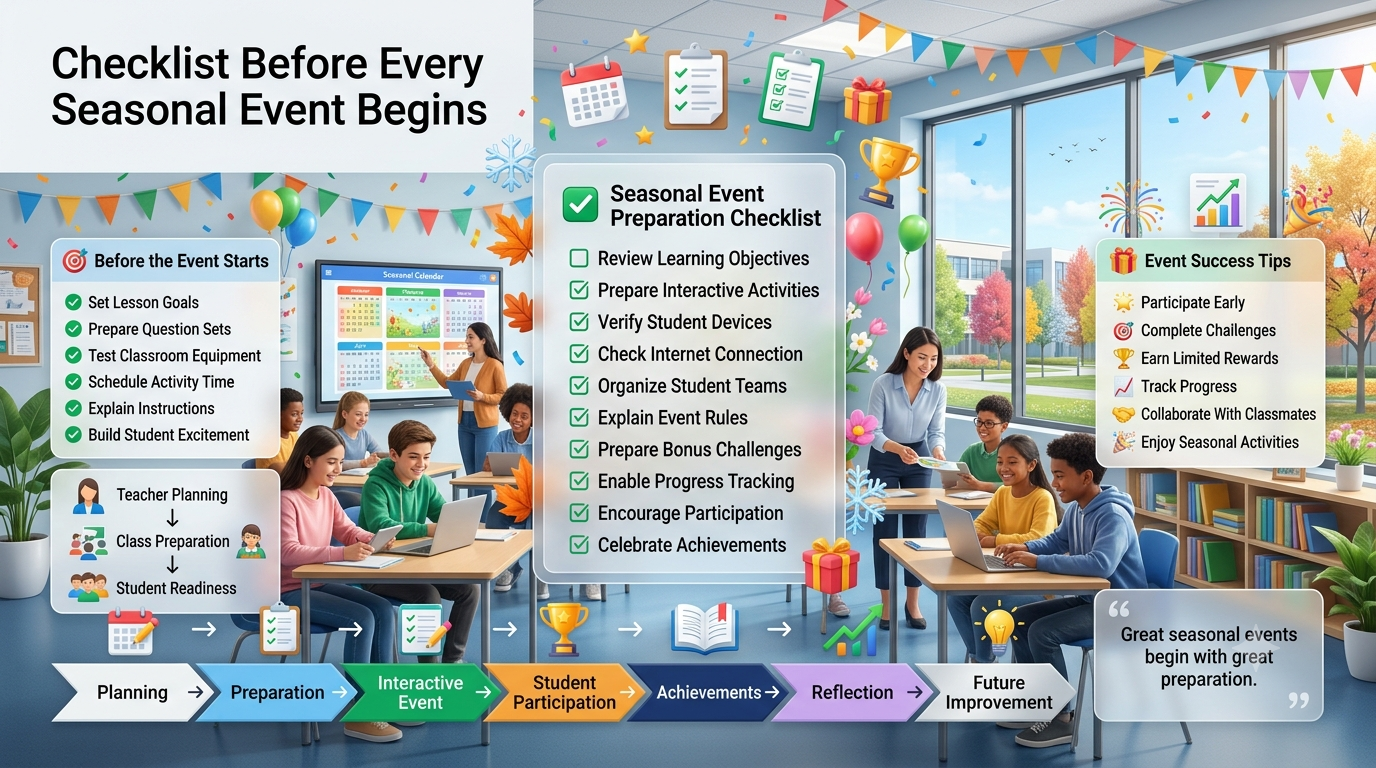
Checklist for Successful Seasonal Activities
✔ Align every activity with curriculum objectives.
✔ Keep instructions clear and age appropriate.
✔ Use a variety of activity formats throughout the year.
✔ Balance competition with collaboration.
✔ Include opportunities for student creativity.
✔ Encourage discussion after each activity.
✔ Prepare backup plans for technical difficulties.
✔ Adapt themes to respect classroom diversity.
✔ Evaluate student feedback for future improvements.
✔ Celebrate learning progress, not just high scores.
Small adjustments throughout the year often have a greater long-term impact than occasional large events.
Summary
Seasonal classroom modes provide an effective way to increase engagement without sacrificing educational quality. By connecting lessons with holidays, weather changes, school events, and seasonal themes, teachers create learning experiences that feel timely, enjoyable, and memorable.
The most successful seasonal activities always begin with clear learning objectives. Whether using autumn investigations, winter review games, Earth Day projects, summer exploration, or collaborative back-to-school challenges, teachers should ensure that every activity reinforces academic goals while encouraging participation, teamwork, creativity, and critical thinking.
When seasonal engagement is carefully planned, inclusive, and aligned with curriculum standards, it becomes an important part of a positive classroom culture rather than simply an occasional classroom celebration.
60+ Expert Reviews & Expert Recomendations
Best Seasonal Modes for Classroom Engagement help teachers keep lessons fresh throughout the academic year.
Best Seasonal Modes for Classroom Engagement encourage students to participate more actively in themed learning activities.
Best Seasonal Modes for Classroom Engagement connect classroom lessons with seasonal events that students already recognize.
Best Seasonal Modes for Classroom Engagement make routine review sessions feel new and exciting.
Best Seasonal Modes for Classroom Engagement support creative lesson planning across different grade levels.
Best Seasonal Modes for Classroom Engagement encourage collaboration through seasonal team challenges.
Best Seasonal Modes for Classroom Engagement help maintain student motivation during long academic terms.
Best Seasonal Modes for Classroom Engagement support curriculum review without making lessons repetitive.
Best Seasonal Modes for Classroom Engagement encourage teachers to introduce themed classroom competitions.
Best Seasonal Modes for Classroom Engagement improve participation by creating memorable learning experiences.
Best Seasonal Modes for Classroom Engagement support interactive quizzes connected to holidays and school events.
Best Seasonal Modes for Classroom Engagement encourage students to apply classroom knowledge in enjoyable ways.
Best Seasonal Modes for Classroom Engagement help reduce classroom boredom through regularly changing activities.
Best Seasonal Modes for Classroom Engagement support active learning instead of passive observation.
Best Seasonal Modes for Classroom Engagement encourage teamwork while reinforcing important academic concepts.
Best Seasonal Modes for Classroom Engagement make classroom review sessions more enjoyable for students.
Best Seasonal Modes for Classroom Engagement support flexible lesson planning across different academic subjects.
Best Seasonal Modes for Classroom Engagement encourage consistent participation throughout the school year.
Best Seasonal Modes for Classroom Engagement improve classroom energy with timely seasonal themes.
Best Seasonal Modes for Classroom Engagement support meaningful learning through creative classroom activities.
Best Seasonal Modes for Classroom Engagement encourage healthy academic competition in a positive environment.
Best Seasonal Modes for Classroom Engagement help students remain interested during revision lessons.
Best Seasonal Modes for Classroom Engagement support classroom celebrations without sacrificing educational value.
Best Seasonal Modes for Classroom Engagement encourage students to complete activities with greater enthusiasm.
Best Seasonal Modes for Classroom Engagement improve knowledge retention through enjoyable repetition.
Best Seasonal Modes for Classroom Engagement support personalized classroom experiences for different learning styles.
Best Seasonal Modes for Classroom Engagement encourage creative thinking during themed educational activities.
Best Seasonal Modes for Classroom Engagement help teachers introduce variety into weekly lesson plans.
Best Seasonal Modes for Classroom Engagement support stronger classroom relationships through collaborative challenges.
Best Seasonal Modes for Classroom Engagement encourage regular participation by keeping activities visually interesting.
Best Seasonal Modes for Classroom Engagement support student confidence through engaging classroom achievements.
Best Seasonal Modes for Classroom Engagement help teachers reinforce learning objectives in creative ways.
Best Seasonal Modes for Classroom Engagement encourage active discussion after every classroom activity.
Best Seasonal Modes for Classroom Engagement support meaningful formative assessment during seasonal lessons.
Best Seasonal Modes for Classroom Engagement improve classroom routines by introducing timely educational themes.
Best Seasonal Modes for Classroom Engagement encourage students to stay focused throughout interactive learning sessions.
Best Seasonal Modes for Classroom Engagement support long-term motivation through changing classroom experiences.
Best Seasonal Modes for Classroom Engagement encourage teachers to align activities with seasonal school calendars.
Best Seasonal Modes for Classroom Engagement help transform ordinary review sessions into memorable learning opportunities.
Best Seasonal Modes for Classroom Engagement support stronger classroom participation across diverse student groups.
Best Seasonal Modes for Classroom Engagement encourage balanced learning through creativity and structured instruction.
Best Seasonal Modes for Classroom Engagement support classroom inclusivity by offering activities suitable for every learner.
Best Seasonal Modes for Classroom Engagement encourage students to connect classroom knowledge with real-world seasonal experiences.
Best Seasonal Modes for Classroom Engagement improve learning through consistent variety across the school year.
Best Seasonal Modes for Classroom Engagement support higher classroom enthusiasm during important academic milestones.
Best Seasonal Modes for Classroom Engagement encourage teachers to refresh instructional strategies regularly.
Best Seasonal Modes for Classroom Engagement support positive classroom culture through shared seasonal experiences.
Best Seasonal Modes for Classroom Engagement demonstrate that themed learning can improve both engagement and participation.
Best Seasonal Modes for Classroom Engagement encourage educators to adapt classroom activities as seasons change.
Best Seasonal Modes for Classroom Engagement encourage teachers to refresh classroom activities with each new season to maintain student curiosity.
Best Seasonal Modes for Classroom Engagement support holiday-themed review games that reinforce academic concepts without interrupting lesson objectives.
Best Seasonal Modes for Classroom Engagement help students associate positive learning experiences with seasonal classroom events.
Best Seasonal Modes for Classroom Engagement encourage creative lesson customization while keeping educational standards the primary focus.
Best Seasonal Modes for Classroom Engagement support higher participation by introducing limited-time classroom themes and seasonal challenges.
Best Seasonal Modes for Classroom Engagement help teachers maintain excitement during difficult periods of the academic calendar.
Best Seasonal Modes for Classroom Engagement encourage collaborative problem-solving through themed team competitions and interactive classroom tasks.
Best Seasonal Modes for Classroom Engagement support differentiated instruction by adapting seasonal activities to different grade levels and learning abilities.
Best Seasonal Modes for Classroom Engagement help reinforce classroom routines while preventing lessons from becoming repetitive.
Best Seasonal Modes for Classroom Engagement encourage students to remain motivated by introducing fresh visual themes and engaging classroom experiences.
Best Seasonal Modes for Classroom Engagement support meaningful classroom interaction through cooperative learning and friendly academic competition.
Best Seasonal Modes for Classroom Engagement help teachers evaluate student understanding while maintaining a fun and engaging classroom atmosphere.
Best Seasonal Modes for Classroom Engagement encourage consistent participation by giving students new experiences throughout every school term.
Best Seasonal Modes for Classroom Engagement demonstrate that thoughtfully planned seasonal activities can strengthen both academic achievement and classroom relationships.
Best Seasonal Modes for Classroom Engagement ultimately show that combining seasonal creativity with clear learning objectives, interactive reviews, collaborative challenges, and engaging classroom activities creates memorable educational experiences that keep students motivated and actively involved throughout the entire school year.
Frequently Asked Questions
1. What are seasonal classroom modes?
Seasonal classroom modes are instructional activities and lesson formats designed around specific seasons, holidays, school events, or annual celebrations to make learning more engaging and relevant. Instead of following the same routine throughout the year, teachers adapt quizzes, collaborative games, creative challenges, and themed discussions to reflect occasions such as autumn, winter, spring, Earth Day, Halloween, Thanksgiving, or back-to-school season. These themed experiences help connect academic content with real-world events, making lessons more memorable.
When used with clear learning objectives, seasonal modes do far more than entertain students. They increase participation, encourage collaboration, strengthen knowledge retention through contextual learning, and keep classroom motivation high throughout the academic year. The focus should always remain on educational outcomes while using seasonal themes to enhance student engagement.
Benefits of seasonal classroom modes:
Increase student engagement.
Connect lessons to real-world events.
Encourage collaborative learning.
Improve knowledge retention.
Refresh classroom routines.
Support creative teaching strategies.
2. Why are seasonal learning activities effective?
Seasonal learning activities are effective because they introduce variety into the classroom while maintaining academic focus. Students naturally become more interested when lessons relate to current events, holidays, or seasonal changes they are already experiencing. This familiarity increases curiosity, participation, and motivation, making it easier for learners to understand and remember key concepts.
Seasonal themes also provide opportunities for hands-on activities, project-based learning, storytelling, and interactive review sessions that appeal to different learning styles. By combining curriculum objectives with meaningful real-world contexts, teachers create richer educational experiences that promote both engagement and long-term retention.
Reasons they improve learning:
Capture students’ attention naturally.
Make lessons more memorable.
Encourage active participation.
Reinforce concepts through real-life contexts.
Support creative classroom discussions.
Increase long-term information retention.
3. Can seasonal modes be used for every subject?
Yes. Seasonal classroom activities are highly adaptable and can support virtually every subject area. Mathematics lessons may include holiday-themed problem solving, science classes can explore seasonal weather or environmental changes, language arts can incorporate themed reading and writing activities, while history and social studies can examine the cultural significance of seasonal events around the world.
The key is ensuring that the seasonal theme enhances the curriculum instead of distracting from it. Well-planned activities maintain academic rigor while making lessons more engaging, regardless of the subject being taught.
Subjects that work well with seasonal activities:
Mathematics.
Science.
English and literature.
History and social studies.
Geography.
Foreign languages.
4. How often should teachers use seasonal activities?
Seasonal activities are most effective when used strategically rather than every day. Incorporating themed lessons during major holidays, seasonal transitions, special school events, or unit review sessions keeps learning fresh without reducing instructional consistency. Using them occasionally helps maintain excitement while preventing students from becoming overly focused on the theme instead of the lesson objectives.
Most educators find that integrating seasonal activities several times throughout each term provides the right balance between engagement and academic structure. The frequency should always reflect curriculum goals and classroom needs rather than the calendar alone.
Best practices include:
Use during major seasonal events.
Include them in unit review sessions.
Align activities with curriculum objectives.
Balance themed lessons with regular instruction.
Rotate different activity formats.
Evaluate student engagement after each activity.
5. How can teachers make seasonal activities inclusive?
Inclusive seasonal activities respect the diverse cultural, religious, and personal backgrounds represented within the classroom. Rather than focusing exclusively on one holiday or tradition, teachers can design broader seasonal themes that celebrate nature, community, kindness, creativity, or global cultural awareness. This approach allows every student to participate comfortably while promoting mutual respect and understanding.
Providing multiple participation options also supports students with different learning styles and abilities. Flexible activities encourage collaboration while ensuring that all learners feel welcomed and valued regardless of their individual backgrounds.
Ways to promote inclusivity:
Use broad seasonal themes.
Respect cultural diversity.
Offer flexible participation options.
Include collaborative group activities.
Avoid assumptions about celebrations.
Encourage students to share different traditions.
6. Do seasonal classroom games improve academic performance?
Yes, when they are aligned with clear educational objectives. Seasonal classroom games encourage active participation, repeated practice, and immediate feedback, all of which contribute to stronger understanding and better knowledge retention. Students are often more motivated to review content when it is presented through engaging, themed activities rather than traditional repetition alone.
However, academic improvement depends on instructional quality rather than the seasonal theme itself. Games should reinforce curriculum standards, encourage critical thinking, and provide opportunities for meaningful reflection after gameplay to maximize learning outcomes.
Educational benefits include:
Improve classroom engagement.
Strengthen concept retention.
Increase participation.
Encourage collaborative learning.
Provide immediate feedback.
Support formative assessment.
7. Which digital learning platforms work well with seasonal activities?
Many digital learning platforms support seasonal teaching by allowing educators to create customized quizzes, collaborative challenges, interactive assignments, and themed classroom competitions. Platforms that offer flexible content creation, instant feedback, and engaging game mechanics are particularly effective because teachers can easily adapt activities for different holidays, seasons, and curriculum topics without changing their instructional goals.
The best platform depends on classroom objectives, student age, and teaching style. Combining digital tools with traditional instruction allows educators to create balanced, interactive learning experiences throughout the year.
Popular platforms for seasonal learning include:
Gimkit.
Kahoot!.
Quizizz.
Blooket.
Google Forms.
Microsoft Forms.
Conclusion
Seasonal classroom engagement is most effective when it combines creativity with purposeful instruction. Rather than treating holidays or seasonal events as distractions, educators can use them as opportunities to reinforce learning, strengthen classroom relationships, and encourage active participation.
By planning activities around the academic calendar, adapting themes for different subjects, and balancing fun with meaningful educational outcomes, teachers create learning experiences that students remember long after the season has passed. Whether teaching in elementary classrooms, middle schools, or secondary education, thoughtful seasonal modes can transform routine lessons into engaging experiences that promote curiosity, collaboration, and lasting academic growth.