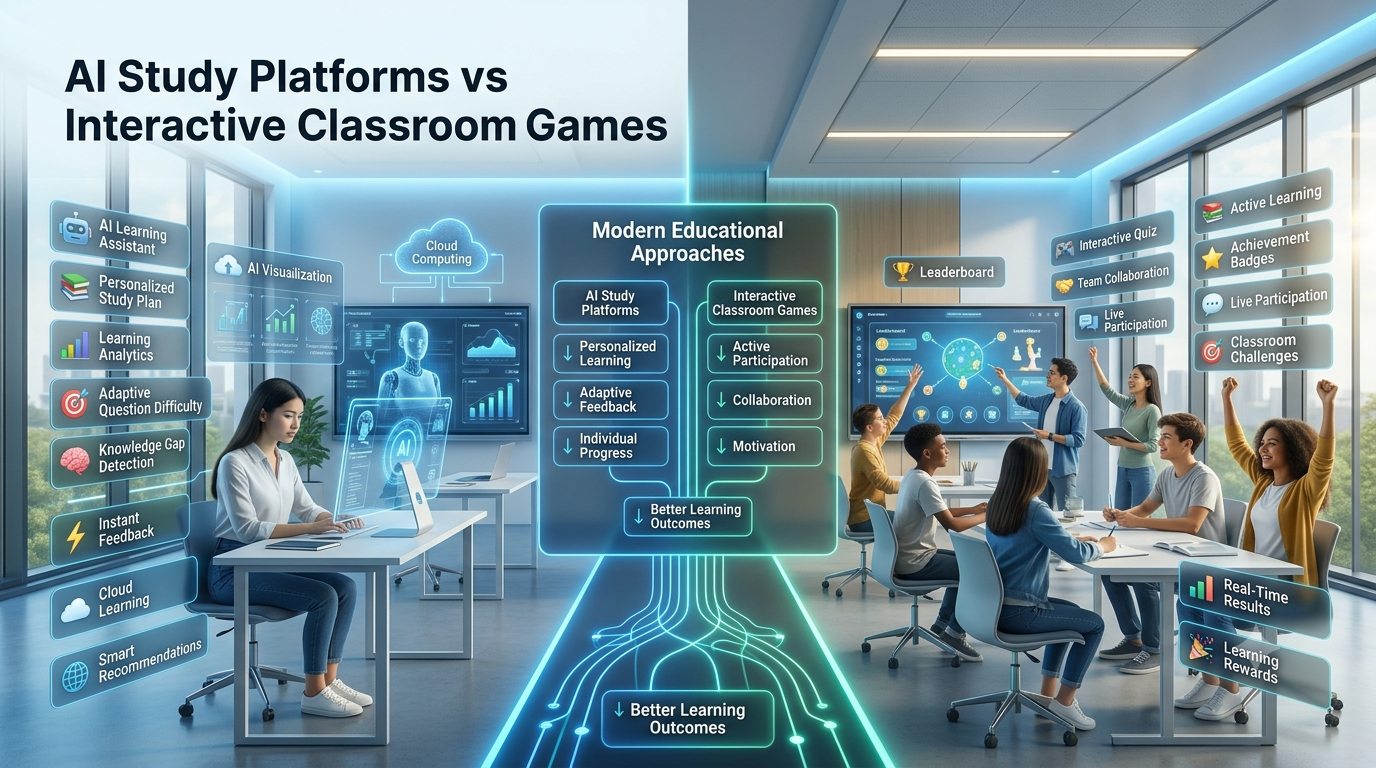
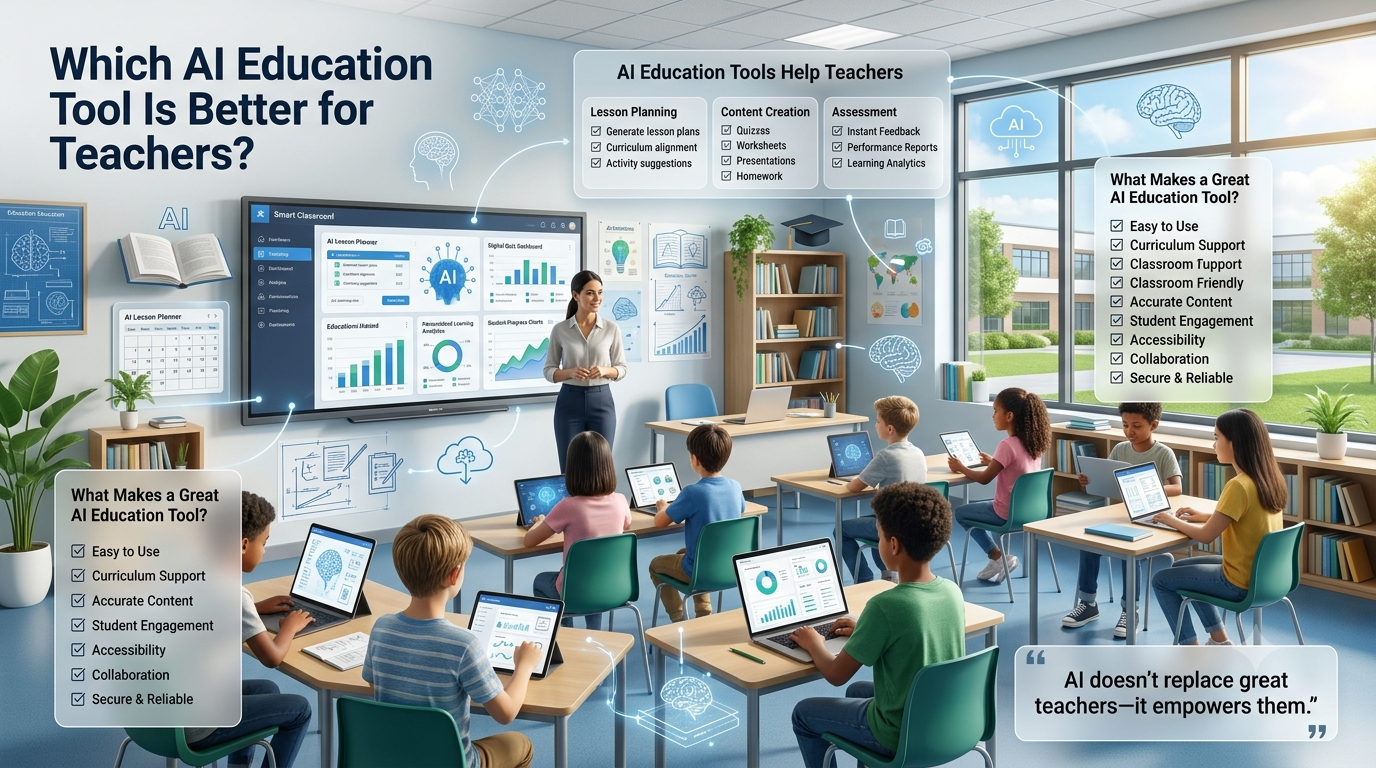
AI Study Platforms vs Interactive Classroom Games-Technology has reshaped education far beyond digital textbooks and virtual classrooms. Modern learners now expect personalized guidance, instant feedback, engaging activities, and flexible learning experiences that fit different skill levels and learning styles. As educational technology continues evolving, two approaches have become increasingly influential: AI study platforms and interactive classroom games. While both aim to improve learning outcomes, they achieve this goal through very different methods.
Artificial intelligence focuses on personalization, adaptive instruction, automated assessment, and data-driven recommendations. Interactive classroom games, on the other hand, increase participation through competition, collaboration, rewards, and real-time engagement. Teachers, schools, universities, training organizations, and self-directed learners often wonder which approach delivers better educational results or whether combining both creates the most effective learning environment.
This comprehensive guide explores every major aspect of AI study platforms and interactive classroom games. From learning science and classroom implementation to engagement strategies, accessibility, assessment methods, student motivation, future trends, and practical recommendations, you’ll discover how each approach supports different educational goals and when one may outperform the other as Gimkit.
What Are AI Study Platforms?
AI study platforms are educational systems that use artificial intelligence to personalize the learning experience for individual students. Instead of presenting identical lessons to everyone, these platforms analyze student performance, learning speed, strengths, weaknesses, and study behavior to recommend customized content and learning paths.
Unlike traditional online courses, AI-powered systems continuously adapt. If a learner struggles with algebra, grammar, or scientific concepts, the platform automatically provides additional explanations, easier practice questions, or alternative learning resources before moving forward. This adaptive process reduces frustration while helping students build stronger foundational knowledge.
Many AI learning platforms also automate repetitive educational tasks such as quiz generation, essay feedback, progress tracking, flashcard creation, concept summaries, and revision planning. These features allow educators to spend more time supporting students rather than managing administrative work.
At their core, AI study platforms focus on one primary objective: delivering the right educational content to the right learner at the right time.
Understanding Interactive Classroom Games
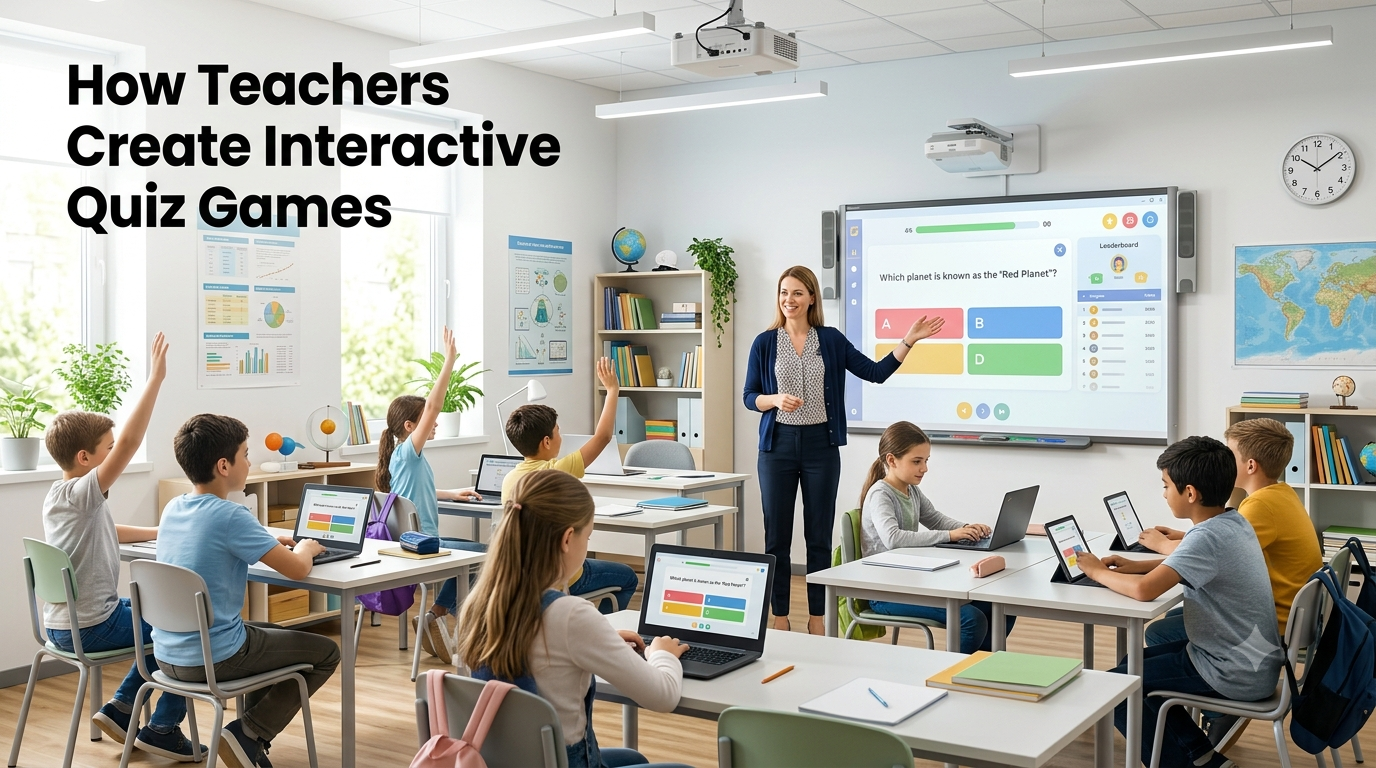
Interactive classroom games transform learning into an active experience by incorporating elements such as quizzes, teamwork, challenges, competitions, rewards, and immediate feedback. Rather than simply reading information, students participate directly in activities that encourage problem-solving, communication, and critical thinking.
These games can be played individually or collaboratively, allowing learners to compete against classmates, work together in teams, or complete classroom missions that reinforce educational concepts. The game mechanics create excitement while encouraging repeated practice without making learning feel repetitive.
Interactive learning games are particularly effective because they capture student attention within seconds. Visual effects, scoring systems, leaderboards, achievements, and timed challenges encourage students to remain focused throughout the lesson while naturally increasing participation from learners who might otherwise remain disengaged.
When designed effectively, classroom games become more than entertainment—they become structured learning experiences that reinforce academic objectives while making the classroom more energetic and inclusive.
The Evolution of Digital Learning Technologies
Education has progressed through several technological stages over the past few decades. Early digital learning relied primarily on static online documents, recorded lectures, and electronic textbooks. While these resources improved accessibility, they offered little personalization or meaningful interaction.
The next generation introduced Learning Management Systems (LMS), enabling teachers to distribute assignments, monitor grades, and communicate with students more efficiently. Although these systems streamlined administration, learning itself remained relatively passive.
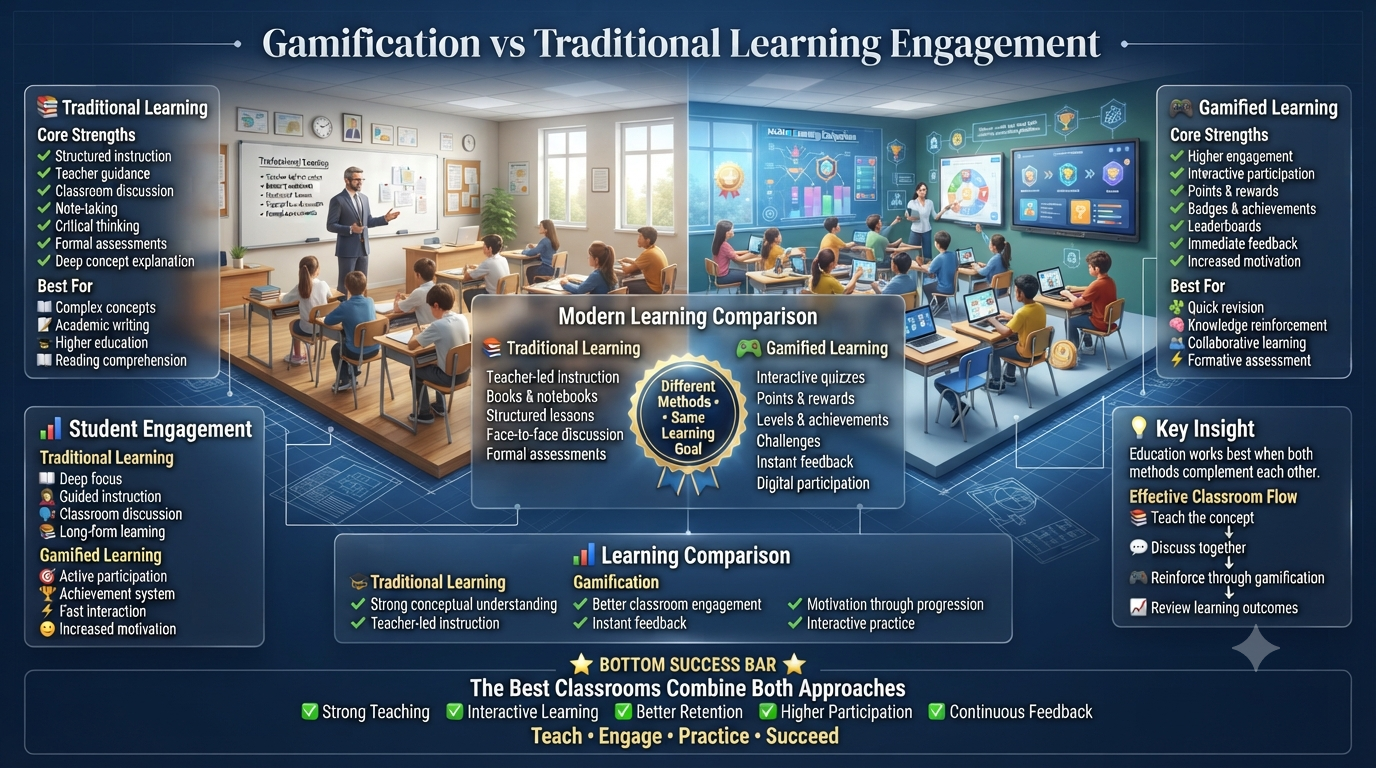
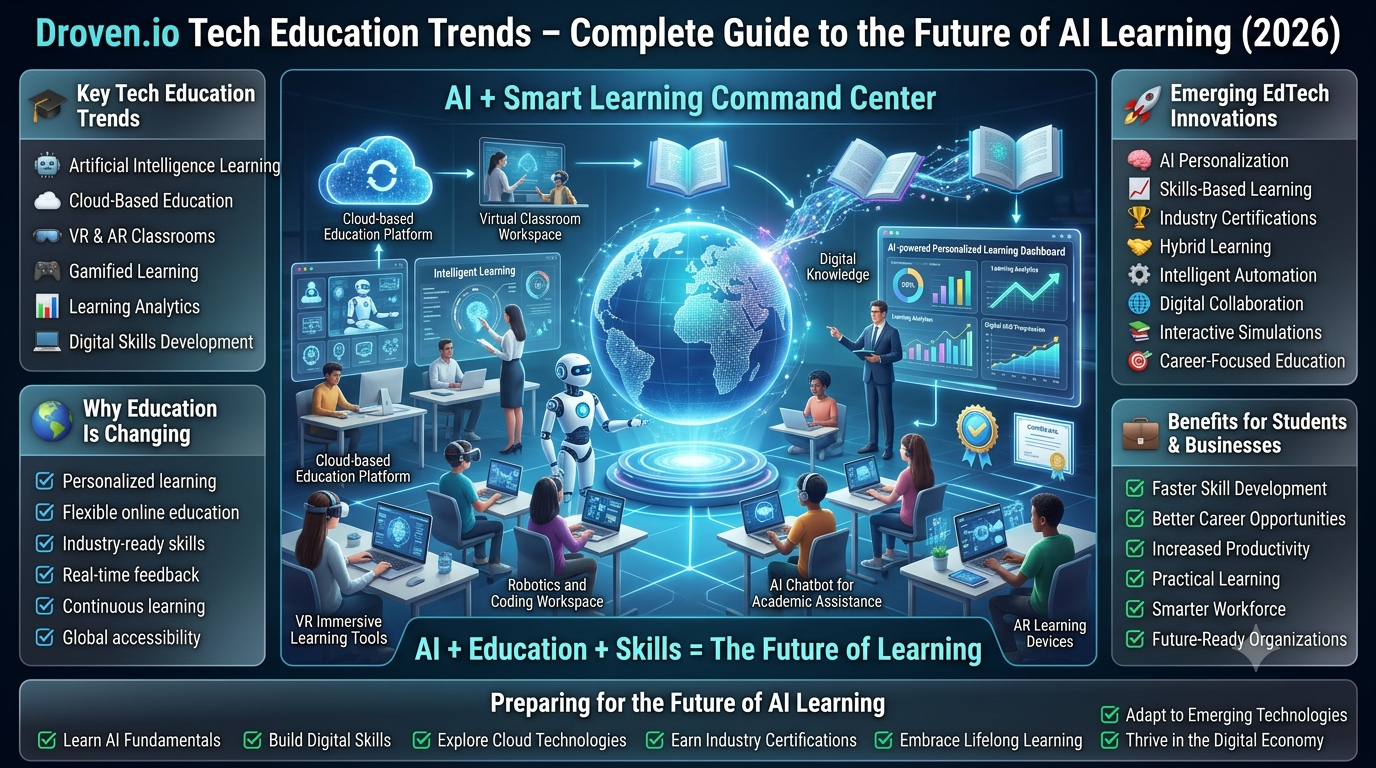
Today’s educational landscape has shifted toward intelligent and interactive environments. Artificial intelligence enables adaptive instruction based on individual performance, while classroom games promote participation through engaging learning activities. Together, these innovations represent a transition from content delivery to learner-centered education.
Rather than asking students to adapt to technology, modern educational platforms increasingly adapt technology to meet the needs of each learner.
Why Personalized Learning Has Become Essential
Every classroom contains students with different backgrounds, abilities, interests, confidence levels, and learning speeds. A single teaching approach rarely serves every learner equally well. Personalized learning addresses this challenge by recognizing that educational success improves when instruction adapts to individual needs.
AI study platforms excel in personalization by analyzing performance data and adjusting lesson difficulty accordingly. Advanced learners can progress more quickly, while struggling students receive additional explanations and targeted practice before moving forward. This individualized approach reduces learning gaps that often develop in traditional classroom environments.
Interactive classroom games also contribute to personalization, although in a different way. Students often choose strategies, collaborate with peers, and receive immediate feedback that helps them understand mistakes naturally. Even when every learner answers the same questions, the experience feels more individualized because participation remains active rather than passive.
The growing emphasis on personalized education reflects a broader understanding that successful learning depends not only on content quality but also on how effectively that content matches each student’s current level of understanding.
How Interactive Learning Changes Student Behavior
Learning is influenced as much by psychology as by instructional materials. Students who actively participate tend to retain information more effectively than those who simply observe or memorize facts. Interactive learning encourages curiosity, experimentation, and continuous engagement throughout the educational process.
When learners answer questions, solve challenges, discuss ideas with classmates, or receive immediate feedback, they remain mentally involved in the lesson. This active participation strengthens memory formation while improving confidence through repeated success and constructive correction.
Interactive classroom games are particularly effective because they reduce the fear of making mistakes. Students often perceive incorrect answers as opportunities to improve rather than failures. The playful environment encourages experimentation without the anxiety commonly associated with formal testing.
Over time, this behavioral shift helps develop resilience, problem-solving skills, collaboration, and intrinsic motivation—all qualities that extend beyond academic performance into lifelong learning.
Core Technologies Behind AI Study Platforms
Artificial intelligence in education combines several advanced technologies that work together to create adaptive learning experiences. While the user interface may appear simple, sophisticated algorithms continuously analyze learning behavior behind the scenes.
Technology
Educational Purpose
Machine Learning
Identifies learning patterns and predicts student needs
Natural Language Processing
Understands written responses and conversational questions
Recommendation Engines
Suggests personalized lessons and study materials
Learning Analytics
Tracks academic progress and identifies weaknesses
Predictive Modeling
Detects students who may require additional support
Intelligent Tutoring Systems
Provides guided explanations similar to a personal tutor
Automated Assessment
Evaluates quizzes, assignments, and practice exercises
These technologies enable educational systems to evolve alongside each learner rather than delivering identical content to every student.
Machine Learning and Adaptive Learning Paths
Machine learning enables educational platforms to improve continuously as they collect more information about student performance. Every quiz answer, revision session, completed lesson, and practice exercise contributes valuable data that helps the system understand individual learning patterns.
Instead of following a fixed curriculum, adaptive learning paths adjust according to demonstrated understanding. Students who master concepts quickly encounter more advanced material, while those requiring additional practice receive targeted reinforcement before progressing.
This adaptive approach minimizes both boredom and frustration. High-performing learners remain challenged, while others receive sufficient support to build confidence without feeling overwhelmed by increasingly difficult material.
The result is a learning experience that evolves naturally with each student’s educational journey.Gimkit App
Natural Language Processing in Educational AI
Natural Language Processing (NLP) allows AI systems to understand and respond to human language in meaningful ways. Students can ask questions using everyday language rather than selecting predefined options or navigating complex menus.
NLP also supports automated essay evaluation, grammar correction, writing suggestions, summarization tools, language translation, and conversational tutoring. Instead of simply marking answers as correct or incorrect, modern AI can explain mistakes, clarify misunderstandings, and recommend specific improvements.
As language models become increasingly sophisticated, educational platforms are evolving from simple assessment tools into interactive learning assistants capable of supporting students across multiple subjects and skill levels.
2026 Latest Expert Reviews 30+
AI Study Platforms vs Interactive Classroom Games compares personalized learning with collaborative classroom engagement and motivation.
AI Study Platforms vs Interactive Classroom Games highlight different approaches to improving academic performance and knowledge retention.
AI Study Platforms vs Interactive Classroom Games both support students through adaptive learning experiences and structured educational activities.
AI Study Platforms vs Interactive Classroom Games encourage active participation while reinforcing curriculum objectives in unique educational ways.
AI Study Platforms vs Interactive Classroom Games differ primarily in personalization, collaboration, pacing, and classroom interaction styles.
AI Study Platforms vs Interactive Classroom Games help teachers diversify instruction while addressing varying student learning preferences effectively.
AI Study Platforms vs Interactive Classroom Games improve engagement when integrated thoughtfully into well-planned classroom instruction.
AI Study Platforms vs Interactive Classroom Games offer valuable educational benefits across elementary, secondary, and higher education environments.
AI Study Platforms vs Interactive Classroom Games encourage continuous practice through engaging digital experiences and meaningful educational feedback.
AI Study Platforms vs Interactive Classroom Games strengthen learning by combining technology with evidence-based instructional strategies.
AI Study Platforms vs Interactive Classroom Games provide immediate feedback that supports faster correction of learning misconceptions.
AI Study Platforms vs Interactive Classroom Games motivate students using different techniques suited to diverse educational objectives.
AI Study Platforms vs Interactive Classroom Games help educators create balanced lessons that combine independent and collaborative learning.
AI Study Platforms vs Interactive Classroom Games promote critical thinking while supporting curriculum-aligned academic development throughout the year.
AI Study Platforms vs Interactive Classroom Games assist teachers in monitoring classroom participation and student learning progress efficiently.
AI Study Platforms vs Interactive Classroom Games encourage consistent practice, improving confidence and long-term knowledge retention among learners.
AI Study Platforms vs Interactive Classroom Games support differentiated instruction for students with varying academic abilities and learning speeds.
AI Study Platforms vs Interactive Classroom Games enhance classroom experiences by making educational activities more engaging and interactive.
AI Study Platforms vs Interactive Classroom Games help reduce passive learning through active participation and continuous formative assessment.
AI Study Platforms vs Interactive Classroom Games encourage students to remain motivated by presenting learning through enjoyable digital experiences.
AI Study Platforms vs Interactive Classroom Games provide flexible solutions for in-person, hybrid, and remote educational environments.
AI Study Platforms vs Interactive Classroom Games enable teachers to reinforce classroom concepts through repeated interactive learning opportunities.
AI Study Platforms vs Interactive Classroom Games improve educational outcomes when aligned with clear instructional goals and lesson planning.
AI Study Platforms vs Interactive Classroom Games support lifelong learning by encouraging curiosity, exploration, and continuous academic improvement.
AI Study Platforms vs Interactive Classroom Games help build collaboration, communication, and independent problem-solving skills among students.
AI Study Platforms vs Interactive Classroom Games demonstrate that educational technology complements effective teaching rather than replacing educators.
AI Study Platforms vs Interactive Classroom Games provide valuable classroom insights through performance tracking and learning analytics.
AI Study Platforms vs Interactive Classroom Games encourage teachers to select tools that best match specific instructional objectives.
AI Study Platforms vs Interactive Classroom Games create engaging learning environments that balance innovation, assessment, and student participation.
AI Study Platforms vs Interactive Classroom Games ultimately show that combining personalized AI learning with interactive classroom games creates richer educational experiences, stronger engagement, improved knowledge retention, and better long-term academic outcomes.
Core Technologies Behind Interactive Classroom Games
Interactive classroom games rely on a different technological foundation. Their primary objective is maximizing participation, collaboration, and sustained attention while reinforcing educational objectives through structured gameplay.
Several technologies work together to create engaging classroom experiences.
Technology
Classroom Benefit
Live Multiplayer Systems
Enables entire classes to participate simultaneously
Real-Time Scoring
Provides immediate performance feedback
Gamification Engines
Awards achievements, badges, levels, and rewards
Leaderboards
Encourages friendly competition
Collaborative Team Modes
Promotes communication and teamwork
Instant Feedback Systems
Reinforces correct understanding immediately
Classroom Dashboards
Helps teachers monitor participation and performance
Unlike AI platforms, which emphasize personalized adaptation, classroom game technologies prioritize engagement, interaction, and active participation.
Why Gamification Works So Effectively
Gamification applies proven game mechanics to educational activities without changing the underlying learning objectives. Instead of making lessons easier, it makes students more willing to participate consistently.
Several psychological principles explain why gamification improves classroom engagement:
Immediate rewards reinforce positive behavior.
Visible progress encourages continued effort.
Friendly competition increases concentration.
Collaborative challenges strengthen teamwork.
Instant feedback accelerates learning.
Achievements create long-term motivation.
Time-based activities improve focus and decision-making.
When balanced carefully, these elements transform ordinary classroom exercises into memorable learning experiences that encourage repeated practice while maintaining educational integrity.
AI Learning vs Game-Based Learning: A Foundational Comparison
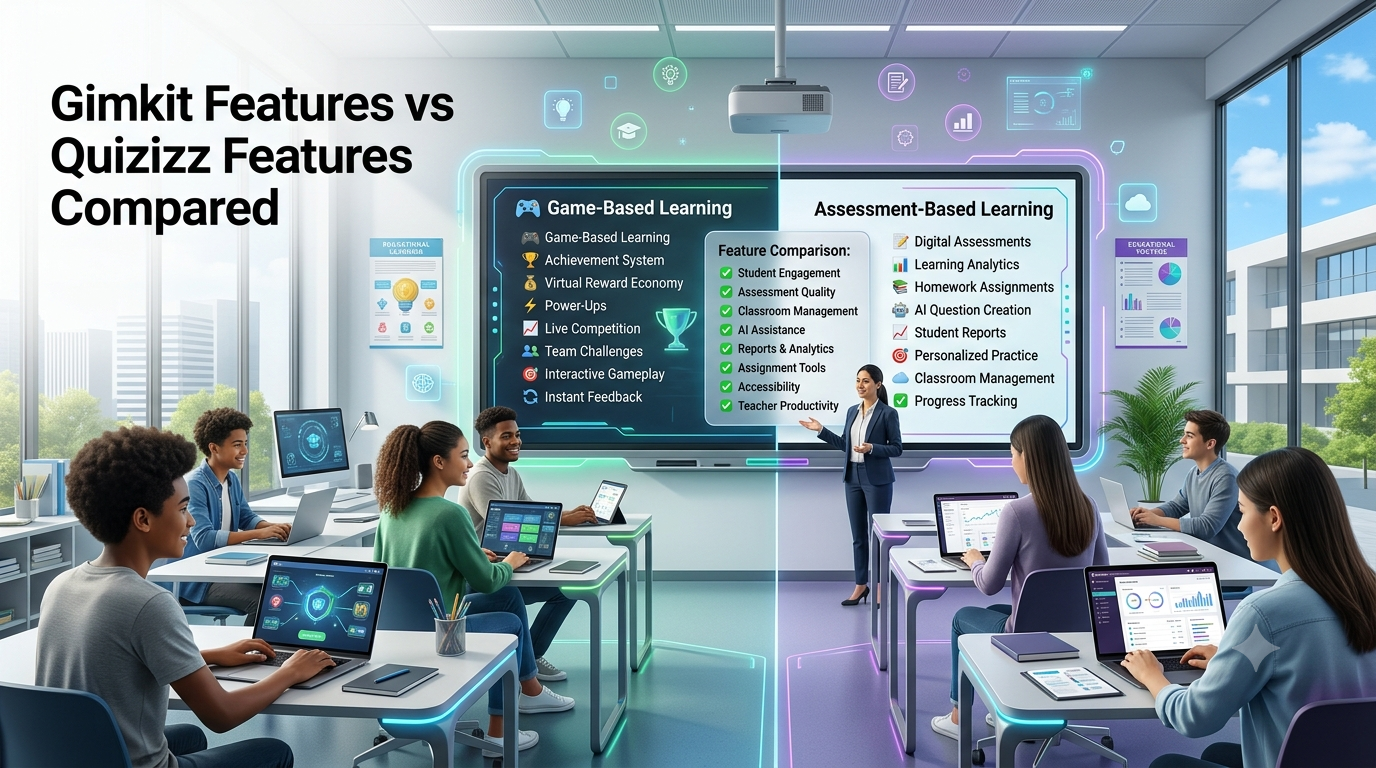
Although both educational approaches leverage technology, their philosophies differ significantly. AI study platforms prioritize individualized learning journeys, while interactive classroom games emphasize shared experiences that energize the learning environment.
Category
AI Study Platforms
Interactive Classroom Games
Primary Goal
Personalized learning
Student engagement
Learning Style
Individual adaptation
Collaborative participation
Feedback
Personalized recommendations
Immediate game feedback
Assessment
Continuous analysis
Activity-based evaluation
Motivation
Progress mastery
Competition and rewards
Teacher Role
Facilitator and mentor
Activity leader and moderator
Best Environment
Self-paced or blended learning
Live classroom sessions
Data Usage
Learning analytics
Participation metrics
Understanding these foundational differences provides the basis for evaluating which approach best supports specific educational objectives, classroom environments, and learner needs.
Student Engagement: Which Approach Captures Attention More Effectively?
Student engagement extends beyond simply paying attention during a lesson. It includes emotional investment, active participation, sustained curiosity, willingness to solve problems, and the motivation to continue learning after class. While both AI study platforms and interactive classroom games improve engagement compared to traditional lectures, they achieve this outcome through different educational strategies.
AI study platforms keep learners engaged by presenting content that closely matches their current ability. Lessons become neither too easy nor too difficult because the system continuously adjusts based on performance. This personalized challenge helps students remain focused while preventing discouragement caused by overwhelming material or boredom from repetitive exercises.
Interactive classroom games generate engagement through excitement and social interaction. Timed quizzes, cooperative missions, friendly competition, and visible achievements encourage students to participate enthusiastically. Even learners who are typically quiet during discussions often become active contributors when learning feels like a collaborative game rather than a formal assessment.
Educators increasingly recognize that engagement is not created by technology alone. The most successful learning environments combine meaningful educational objectives with experiences that encourage students to think, participate, communicate, and reflect throughout the lesson.
Cognitive Learning Differences Between AI and Classroom Games
Although both educational technologies improve learning outcomes, they stimulate different cognitive processes. Understanding these differences helps educators choose the most suitable approach for specific learning objectives.
AI-driven learning emphasizes deep understanding through repetition, adaptive practice, and personalized explanations. Students spend more time mastering concepts individually, allowing them to build strong foundational knowledge before progressing to increasingly complex topics.
Interactive classroom games emphasize rapid thinking, recall, collaboration, and immediate application of knowledge. Learners frequently retrieve information under time constraints while discussing ideas with classmates and responding to changing classroom situations.
Cognitive Area
AI Study Platforms
Interactive Classroom Games
Concept Mastery
Excellent
Moderate
Knowledge Recall
Strong
Excellent
Critical Thinking
Excellent
Strong
Collaboration
Limited
Excellent
Independent Learning
Excellent
Moderate
Communication Skills
Moderate
Excellent
Long-Term Practice
Excellent
Moderate
Classroom Participation
Moderate
Excellent
Rather than replacing one another, these approaches strengthen different aspects of the learning process, making them highly complementary when used together.
Personalized Learning Experiences
Personalization has become one of the defining characteristics of modern educational technology. Students no longer need to progress through identical lessons at the same pace because intelligent systems can adapt instruction according to individual performance.
AI study platforms continuously analyze learner behavior, including response accuracy, completion time, confidence levels, revision frequency, and topic mastery. Based on these observations, the platform adjusts future lessons automatically. Students receive customized recommendations that address their specific learning gaps without requiring constant teacher intervention.
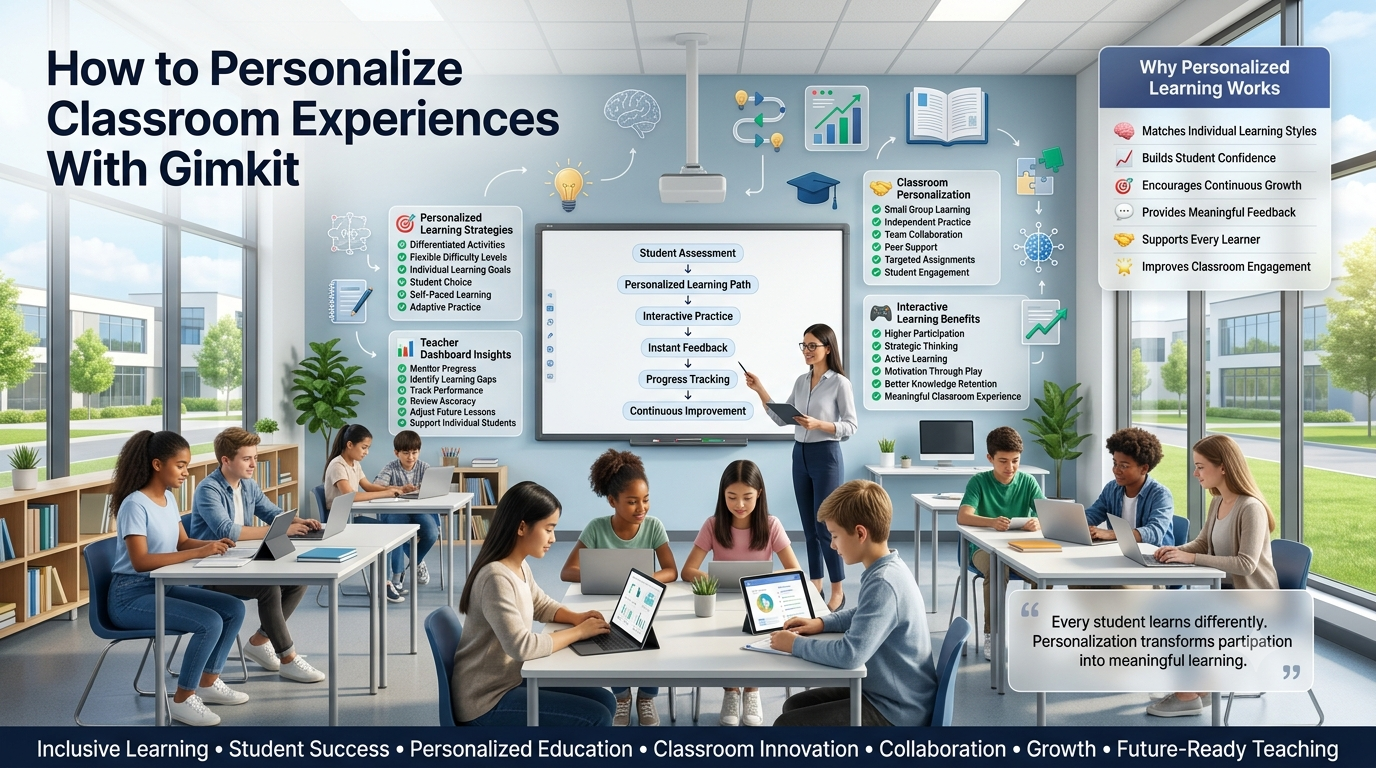
Interactive classroom games offer a different form of personalization. Although every student participates in the same activity, each learner develops unique strategies, collaborates differently with teammates, and receives immediate feedback that influences future decisions. Teachers can also create customized question sets aligned with classroom objectives and student ability levels.
Personalized learning succeeds because it acknowledges that every student begins from a different point. Educational technology becomes most valuable when it adapts instruction without compromising learning standards.
Motivation: Intrinsic vs Extrinsic Learning
Motivation significantly influences educational success. Students who genuinely enjoy learning tend to retain information more effectively and continue developing their skills beyond classroom requirements. AI platforms and classroom games encourage motivation in different ways.
AI learning systems primarily cultivate intrinsic motivation by helping learners experience steady progress. As students master increasingly challenging concepts, they develop confidence in their own abilities. Personalized recommendations also reduce frustration because learners receive support exactly when needed.
Interactive classroom games rely more heavily on extrinsic motivation. Points, badges, rankings, achievements, rewards, and classroom recognition encourage participation through positive reinforcement. These incentives increase excitement while making routine educational activities feel more enjoyable.
Neither motivational approach is inherently superior. Intrinsic motivation supports long-term academic growth, while extrinsic motivation often increases participation, especially among younger learners or students who initially lack confidence.
Immediate Feedback vs Reflective Feedback
Feedback shapes how students improve after making mistakes. The timing and quality of that feedback influence both understanding and confidence.
AI study platforms often provide reflective feedback. Rather than simply identifying incorrect answers, they explain misconceptions, recommend additional resources, generate follow-up practice questions, and monitor improvement over time. This detailed guidance supports deeper conceptual understanding.
Interactive classroom games prioritize immediate feedback. Students discover correct answers within seconds, allowing them to adjust their thinking while the lesson remains active. Immediate reinforcement strengthens memory because learners connect corrections directly with their recent decisions.
Effective educational environments often combine both methods. Immediate feedback maintains engagement during activities, while reflective feedback supports lasting academic improvement through deeper analysis.
Collaboration and Social Learning
Learning rarely occurs in isolation. Discussions, teamwork, peer teaching, and collaborative problem-solving help students develop communication skills while strengthening conceptual understanding.
Interactive classroom games naturally encourage collaboration. Team challenges require students to discuss possible answers, negotiate strategies, divide responsibilities, and support classmates who need assistance. These social interactions reinforce both academic content and interpersonal skills.
AI study platforms have traditionally focused on independent learning, although many modern systems increasingly include discussion forums, collaborative assignments, virtual classrooms, and peer-review activities. Even so, social interaction generally remains secondary to personalized instruction.
Collaboration is particularly valuable because explaining concepts to others requires deeper understanding than simply recognizing correct answers. Students often identify gaps in their own knowledge while helping classmates solve problems.
Knowledge Retention and Long-Term Memory
One of the primary goals of education is helping students retain knowledge long after a lesson has ended. Different instructional methods influence how effectively information transfers into long-term memory.
AI study platforms strengthen retention through adaptive revision schedules, spaced repetition, personalized practice sessions, and continuous reinforcement of previously learned concepts. These scientifically supported learning techniques reduce forgetting while improving long-term recall.
Interactive classroom games improve retention by creating emotionally engaging experiences. Excitement, competition, collaboration, and active participation make lessons more memorable than passive reading or lectures. Students frequently remember information associated with enjoyable classroom experiences.
Educational research consistently suggests that retention improves when learners repeatedly retrieve information rather than simply reviewing notes. Both AI systems and interactive games support retrieval practice, although they implement it using different instructional strategies.
Assessment Approaches Compared
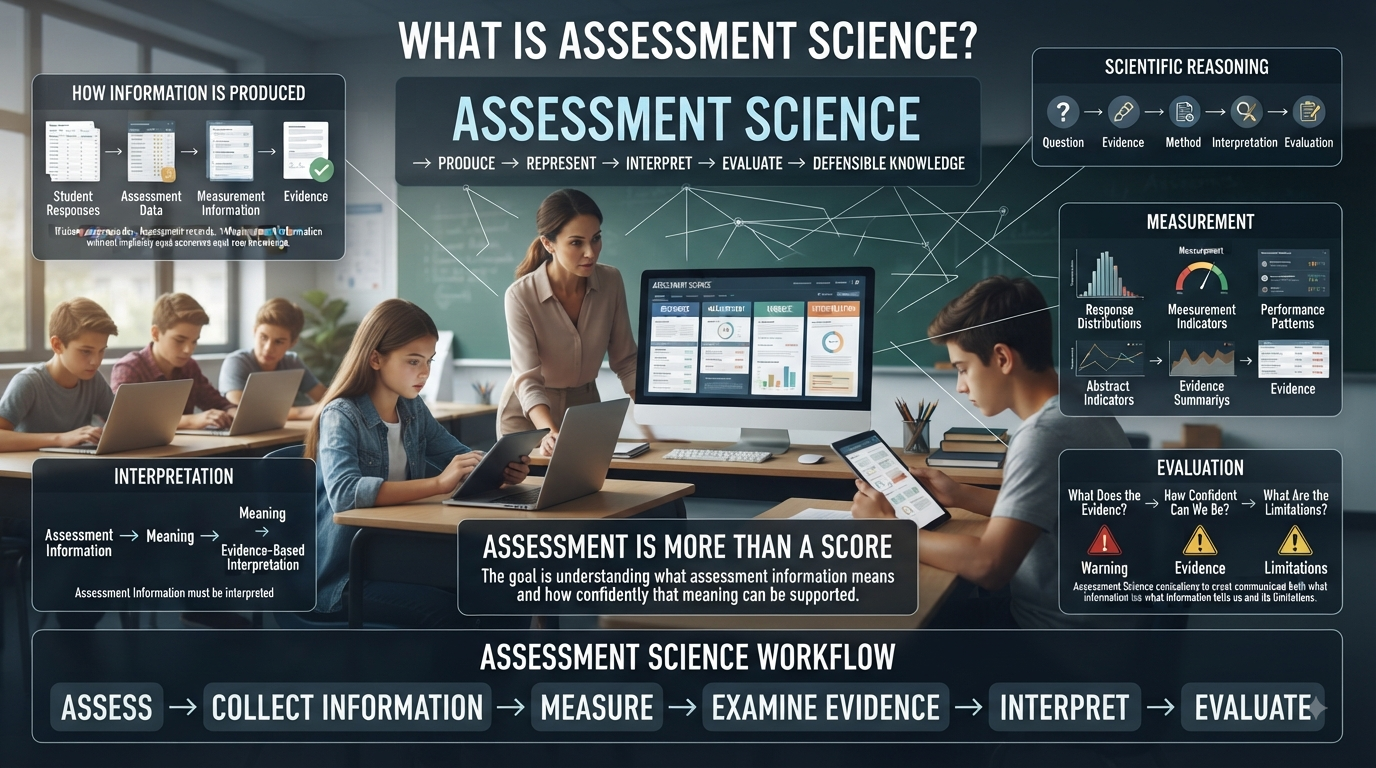
Assessment has evolved beyond traditional examinations. Modern educational technology allows teachers to monitor learning continuously while reducing administrative workload.
AI study platforms collect extensive learning data throughout every lesson. Rather than relying solely on final test scores, they evaluate progression, consistency, confidence, topic mastery, revision habits, and long-term improvement. This continuous assessment provides a detailed understanding of student development.
Interactive classroom games assess learning through participation and real-time responses. Teachers quickly identify misconceptions by observing which questions challenge the entire class or specific groups of students. These instant insights allow instructors to adjust lessons before misunderstandings become permanent.
Assessment Feature
AI Study Platforms
Interactive Classroom Games
Continuous Monitoring
Excellent
Moderate
Instant Results
Excellent
Excellent
Performance Trends
Excellent
Good
Classroom Participation Analysis
Moderate
Excellent
Personalized Reports
Excellent
Limited
Teacher Observation Support
Good
Excellent
Adaptive Testing
Excellent
Limited
Group Performance Evaluation
Moderate
Excellent
The most effective assessment strategies often combine automated analytics with direct classroom observation to provide a complete picture of student learning.
Teacher Workload and Classroom Management
Educational technology should support teachers rather than increase administrative complexity. Both AI platforms and classroom games help educators, but they reduce workload in different ways.
AI study platforms automate many time-consuming responsibilities, including grading objective assessments, tracking student progress, generating performance reports, identifying learning gaps, and recommending instructional resources. These automation features allow teachers to focus more on mentoring, discussion, and individualized support.
Interactive classroom games simplify classroom management by increasing student participation and maintaining attention throughout lessons. Real-time dashboards help teachers monitor responses, identify struggling students, and encourage classroom interaction without interrupting instructional flow.
Rather than replacing educators, these technologies enhance teaching efficiency by reducing repetitive administrative tasks while supporting higher-quality instruction.
Accessibility and Inclusive Learning
Modern education must accommodate learners with varying abilities, backgrounds, languages, and learning preferences. Accessibility ensures every student has meaningful opportunities to succeed.
AI study platforms often include features such as text-to-speech support, speech recognition, language translation, adjustable reading levels, personalized pacing, and adaptive lesson sequencing. These capabilities help learners overcome barriers related to language, reading ability, or learning differences.
Interactive classroom games promote inclusion by encouraging teamwork and active participation. Visual questions, collaborative activities, multiple response formats, and flexible game settings allow teachers to design experiences that accommodate diverse classrooms.
Inclusive educational technology recognizes that equal learning opportunities require flexible instructional methods rather than identical learning experiences for every student.Gimkit Live
Classroom Energy vs Independent Study Efficiency
AI study platforms and classroom games excel in different educational environments because they serve different instructional purposes.
AI systems perform exceptionally well during self-paced study, homework, exam preparation, personalized revision, and blended learning environments where learners progress independently. Students can practice whenever convenient while receiving individualized guidance throughout their learning journey.
Interactive classroom games perform best during live instruction, review sessions, collaborative projects, formative assessment, and lesson reinforcement. The social atmosphere encourages enthusiasm that is difficult to replicate through independent study alone.
Rather than competing, these approaches address different phases of the educational process. Independent mastery and collaborative reinforcement work together to produce stronger academic outcomes.
When AI Study Platforms Are the Better Choice
AI-powered learning environments are particularly effective under specific educational circumstances where personalization and continuous adaptation are essential.
They are often the preferred solution when:
Students learn at significantly different speeds.
Personalized revision is a priority.
Teachers manage large classes with diverse learning needs.
Continuous progress tracking is required.
Independent or remote learning is common.
Learners need adaptive practice before examinations.
Long-term skill development is the primary objective.
In these situations, AI provides scalable personalization that would be extremely difficult to deliver manually.
When Interactive Classroom Games Deliver Better Results
Game-based learning often produces superior outcomes when participation and classroom interaction become the primary instructional objectives.
Interactive classroom games are especially valuable when:
Teachers want every student actively involved.
Lessons require rapid review before assessments.
Collaboration is an important learning objective.
Student motivation needs improvement.
Classroom energy has declined.
Quick formative assessment is necessary.
Learning should feel enjoyable without reducing academic rigor.
Well-designed educational games transform ordinary review sessions into memorable learning experiences that strengthen both engagement and knowledge retention.
2026 LATEST EXPERT REVIEWS-2
AI Study Platforms vs Interactive Classroom Games help educators balance personalized instruction with collaborative classroom participation for improved learning outcomes.
AI Study Platforms vs Interactive Classroom Games encourage consistent student engagement through adaptive technology and interactive educational challenges.
AI Study Platforms vs Interactive Classroom Games strengthen academic confidence by providing immediate feedback and continuous opportunities for improvement.
AI Study Platforms vs Interactive Classroom Games allow teachers to address diverse learning styles using flexible digital teaching approaches.
AI Study Platforms vs Interactive Classroom Games improve lesson effectiveness when integrated with curriculum objectives and meaningful classroom discussions.
AI Study Platforms vs Interactive Classroom Games support formative assessment by helping teachers identify learning gaps and adjust instruction accordingly.
AI Study Platforms vs Interactive Classroom Games create motivating environments where students actively participate instead of passively consuming information.
AI Study Platforms vs Interactive Classroom Games encourage higher knowledge retention through repeated practice, instant feedback, and engaging educational experiences.
AI Study Platforms vs Interactive Classroom Games help students develop problem-solving, critical thinking, and independent learning skills over time.
AI Study Platforms vs Interactive Classroom Games provide educators with valuable learning analytics that support data-informed instructional decisions.
AI Study Platforms vs Interactive Classroom Games promote continuous academic growth by combining technology with effective teaching methodologies.
AI Study Platforms vs Interactive Classroom Games assist schools in creating engaging digital classrooms that encourage meaningful student participation.
AI Study Platforms vs Interactive Classroom Games demonstrate that learning becomes more effective when students remain actively involved throughout lessons.
AI Study Platforms vs Interactive Classroom Games support both individual practice and collaborative learning without compromising educational quality.
AI Study Platforms vs Interactive Classroom Games encourage teachers to diversify classroom instruction while maintaining clear academic learning objectives.
AI Study Platforms vs Interactive Classroom Games improve student motivation by transforming traditional review sessions into engaging learning opportunities.
AI Study Platforms vs Interactive Classroom Games help educators adapt instruction according to student performance and classroom assessment data.
AI Study Platforms vs Interactive Classroom Games reinforce classroom concepts through personalized recommendations and interactive knowledge application.
AI Study Platforms vs Interactive Classroom Games prepare students for modern education by combining innovation, collaboration, and continuous learning.
AI Study Platforms vs Interactive Classroom Games ultimately demonstrate that integrating adaptive AI tools with engaging classroom games creates a balanced educational ecosystem that enhances participation, improves learning retention, supports differentiated instruction, and delivers sustainable academic success.
Combining AI Study Platforms and Interactive Classroom Games for Maximum Learning Impact
The most effective educational environments no longer treat AI study platforms and interactive classroom games as competing solutions. Instead, they combine both technologies to create a balanced learning ecosystem that supports individualized instruction while maintaining classroom engagement. AI identifies what each student needs to learn, while game-based activities help reinforce those concepts through participation, collaboration, and repeated practice.
A blended strategy also allows teachers to use each tool where it performs best. Students can complete adaptive lessons before class, participate in interactive review activities during instruction, and return to personalized AI recommendations afterward. This continuous learning cycle improves both understanding and retention while keeping learners motivated throughout the educational journey.
Educational institutions increasingly recognize that technology should enhance teaching rather than replace it. Combining adaptive learning with collaborative gameplay creates an environment where students receive personalized support without losing the social benefits of classroom interaction.
A Practical Hybrid Learning Workflow
A structured workflow helps educators integrate AI-powered learning and classroom games without overwhelming students or disrupting lesson plans.
This workflow ensures students first understand new concepts, then apply them collaboratively, and finally reinforce their knowledge through adaptive revision. Each stage supports a different aspect of the learning process, making instruction more comprehensive and data-informed.
Supporting Different Learning Styles
No two students absorb information in exactly the same way. Some learn best through visual demonstrations, others through discussion, repetition, experimentation, or independent reading. Educational technology becomes more valuable when it accommodates these differences rather than expecting every learner to adapt to a single teaching method.
AI study platforms support individualized learning preferences by adjusting lesson difficulty, recommending personalized practice, presenting information in multiple formats, and allowing students to learn at their own pace. This flexibility benefits learners who require additional time or prefer independent study.
Interactive classroom games address learning preferences by encouraging communication, teamwork, visual engagement, and hands-on participation. Students who thrive in collaborative environments often gain confidence when learning becomes an active group experience instead of a solitary academic task.
Recognizing diverse learning styles helps educators create inclusive classrooms where more students have opportunities to succeed.
Building Critical Thinking Skills
Education extends beyond memorizing facts. Students must develop the ability to analyze information, evaluate evidence, solve unfamiliar problems, and make informed decisions. Critical thinking has become one of the most valuable skills in modern education and future careers.
AI study platforms strengthen critical thinking by presenting progressively challenging problems based on student performance. Instead of repeatedly practicing identical questions, learners encounter scenarios that require applying previously learned concepts in new contexts. Intelligent tutoring systems also encourage reflection by explaining why certain answers are correct rather than simply identifying mistakes.
Interactive classroom games develop critical thinking differently. Team discussions, strategic decision-making, time-limited challenges, and collaborative problem-solving encourage students to evaluate options quickly while communicating their reasoning to classmates.
When these instructional methods work together, students gain both analytical depth and practical decision-making experience.
Improving Knowledge Retention Through Spaced Learning
One of the biggest challenges in education is preventing students from forgetting information after completing a lesson. Effective retention requires repeated exposure over time rather than intensive study completed in a single session.
AI study platforms often implement spaced repetition by automatically scheduling review sessions based on previous performance. Concepts that students struggle to remember appear more frequently, while mastered topics gradually require less review. This personalized scheduling optimizes long-term memory formation.
Interactive classroom games complement this process by making repeated practice enjoyable. Instead of viewing revision as repetitive work, students revisit previously learned concepts through engaging competitions, collaborative activities, and classroom challenges.
Together, adaptive scheduling and enjoyable practice create a highly effective retention strategy that supports both examination performance and lasting understanding.
Data-Driven Teaching Decisions
Modern educational technology generates valuable information that helps teachers improve instruction. Instead of relying solely on intuition or periodic examinations, educators can monitor learning continuously through meaningful performance data.
AI platforms analyze individual learning trends, identifying which concepts require additional attention, how quickly students master new topics, and where misconceptions repeatedly occur. Teachers receive actionable insights that help prioritize future lessons and personalize instructional support.
Interactive classroom games provide immediate classroom-level feedback. Real-time response patterns reveal whether an entire class understands a concept or whether clarification is necessary before progressing further. Teachers can adapt instruction during the lesson rather than waiting until formal assessments reveal learning gaps.
Combining these analytical perspectives supports informed instructional decisions while improving educational outcomes for diverse groups of learners.
Measuring Student Progress Beyond Test Scores
Traditional examinations capture only a small portion of a learner’s educational development. Modern technology enables educators to evaluate progress using a broader range of indicators.
Important measures include:
Progress Indicator
AI Study Platforms
Interactive Classroom Games
Concept Mastery
Excellent
Good
Learning Consistency
Excellent
Moderate
Participation
Moderate
Excellent
Collaboration
Limited
Excellent
Confidence Growth
Good
Good
Problem-Solving
Excellent
Strong
Knowledge Retention
Excellent
Strong
Communication Skills
Moderate
Excellent
Evaluating multiple aspects of learning provides a more complete understanding of student development than relying exclusively on examination scores.
Supporting Remote, Hybrid, and In-Person Learning
Educational environments have become increasingly flexible. Students may learn entirely in classrooms, participate remotely, or alternate between home and school throughout the academic year. Technology must support all of these instructional models.
AI study platforms perform exceptionally well in remote and hybrid environments because students receive personalized instruction regardless of location. Adaptive learning paths, automated feedback, and continuous progress tracking ensure educational continuity even when face-to-face instruction is limited.
Interactive classroom games have also evolved to support both physical and virtual classrooms. Multiplayer participation, live quizzes, collaborative challenges, and digital classrooms allow students to engage with peers regardless of where they are learning.
Educational flexibility has become an important characteristic of modern teaching strategies, allowing institutions to maintain learning quality under varying circumstances.
Common Challenges of AI Study Platforms
Although AI-powered education offers significant advantages, successful implementation requires awareness of potential limitations. Understanding these challenges helps educators develop realistic expectations and effective implementation strategies.
Some common concerns include:
Overreliance on automated recommendations.
Reduced face-to-face interaction during independent study.
Data privacy and responsible information management.
Initial learning curve for teachers and students.
Dependence on reliable internet connectivity.
Limited effectiveness for highly collaborative learning objectives.
These challenges do not diminish the value of AI learning. Instead, they highlight the importance of thoughtful integration alongside traditional teaching practices.
Common Challenges of Interactive Classroom Games
Game-based learning also presents implementation challenges if instructional objectives become secondary to entertainment. Successful classroom games require careful planning and educational alignment.
Potential difficulties include:
Excessive focus on competition rather than understanding.
Time management during classroom activities.
Unequal participation among students.
Distractions caused by overly complex game mechanics.
Difficulty assessing deep conceptual understanding through short activities.
Maintaining engagement across different age groups and learning preferences.
Teachers can minimize these challenges by selecting activities that directly reinforce learning objectives while encouraging positive collaboration instead of unhealthy competition.
Common Mistakes Schools Should Avoid
Educational technology delivers the greatest value when implemented strategically rather than simply adopting the newest tools available. Institutions sometimes reduce effectiveness by introducing technology without considering instructional goals or teacher readiness.
Frequently observed mistakes include:
Choosing technology before identifying educational objectives.
Assuming AI can replace teacher guidance.
Using games solely for entertainment without academic purpose.
Ignoring teacher training and professional development.
Measuring success only through standardized test scores.
Overloading students with multiple disconnected learning platforms.
Neglecting accessibility and inclusive design considerations.
Successful implementation begins with pedagogy. Technology should support instructional goals instead of determining them.
Best Practices for Teachers
Teachers remain the most influential factor in student success, regardless of which educational technologies are available. AI platforms and classroom games achieve their greatest impact when integrated into thoughtful instructional planning.
Professional recommendations include:
Begin each lesson with clearly defined learning objectives.
Use AI diagnostics to identify learning gaps before instruction.
Reinforce concepts through collaborative classroom activities.
Encourage discussion after game-based learning sessions.
Review AI-generated analytics regularly.
Adjust future lessons based on student performance trends.
Balance independent learning with collaborative experiences.
Provide constructive feedback beyond automated recommendations.
Maintain consistent communication with students and parents.
Evaluate educational outcomes continuously rather than relying on isolated assessments.
These practices help educators maximize learning while preserving meaningful teacher-student relationships.
Some Advance Reviews & Instant Guidance for you 20+
AI Study Platforms vs Interactive Classroom Games represent two innovative approaches that are transforming modern education through technology. While both aim to improve learning outcomes, they achieve this goal using different instructional methods.
AI Study Platforms vs Interactive Classroom Games differ in how they personalize the learning experience. AI platforms adapt content to individual student performance, whereas classroom games focus on shared participation and collaborative engagement.
AI Study Platforms vs Interactive Classroom Games both encourage active learning, but AI systems emphasize personalized progression while interactive games promote teamwork and classroom interaction.
AI Study Platforms vs Interactive Classroom Games help educators diversify teaching strategies by combining adaptive instruction with engaging review activities that maintain student interest.
AI Study Platforms vs Interactive Classroom Games support formative assessment by providing immediate feedback that allows students to recognize mistakes and improve their understanding quickly.
AI Study Platforms vs Interactive Classroom Games encourage consistent practice through interactive learning experiences that reinforce classroom concepts without relying solely on traditional worksheets.
AI Study Platforms vs Interactive Classroom Games improve student motivation by making educational activities more engaging, interactive, and enjoyable across different subjects and grade levels.
AI Study Platforms vs Interactive Classroom Games provide valuable learning insights that help teachers identify knowledge gaps and adjust lesson plans according to classroom performance.
AI Study Platforms vs Interactive Classroom Games offer flexibility for in-person, hybrid, and remote education, allowing learning to continue across different teaching environments.
AI Study Platforms vs Interactive Classroom Games strengthen long-term knowledge retention through repeated exposure, immediate feedback, and continuous reinforcement of important concepts.
AI Study Platforms vs Interactive Classroom Games support differentiated instruction by accommodating students with varying learning speeds, academic abilities, and educational needs.
AI Study Platforms vs Interactive Classroom Games encourage critical thinking by requiring students to apply knowledge rather than simply memorize information for assessments.
AI Study Platforms vs Interactive Classroom Games help teachers create balanced lessons that combine independent study, collaborative activities, and meaningful classroom discussions.
AI Study Platforms vs Interactive Classroom Games demonstrate that technology is most effective when it complements thoughtful instructional design and curriculum-aligned teaching practices.
AI Study Platforms vs Interactive Classroom Games encourage educators to select digital tools based on learning objectives instead of choosing technology simply because it is popular.
AI Study Platforms vs Interactive Classroom Games improve classroom participation by giving students multiple opportunities to engage with educational content in meaningful ways.
AI Study Platforms vs Interactive Classroom Games provide measurable educational value through performance tracking, learning analytics, and continuous formative assessment.
AI Study Platforms vs Interactive Classroom Games encourage schools to integrate multiple teaching approaches that address both individual learning and collaborative classroom experiences.
AI Study Platforms vs Interactive Classroom Games demonstrate that the strongest educational outcomes often result from combining adaptive technology with engaging, student-centered instructional activities.
AI Study Platforms vs Interactive Classroom Games ultimately show that neither approach is universally superior. AI platforms excel at personalized learning and adaptive instruction, while interactive classroom games foster collaboration, motivation, and active participation. When used together within a well-designed curriculum, they create a balanced learning environment that improves engagement, strengthens knowledge retention, and supports long-term academic success.
Best Practices for Students
Students also play an active role in making educational technology effective. Simply accessing digital tools does not guarantee meaningful learning without consistent effort and purposeful study habits.
Review incorrect answers instead of immediately moving forward.
Participate actively during classroom games.
Collaborate respectfully with classmates.
Focus on understanding rather than memorization.
Ask questions whenever concepts remain unclear.
Use AI feedback to guide future study sessions.
Practice regularly instead of cramming before examinations.
Developing disciplined learning habits enhances the benefits offered by both adaptive learning systems and interactive educational games.
Future Trends in Educational Technology
Education continues evolving as artificial intelligence, immersive technologies, and learning science advance. Future classrooms are expected to become increasingly personalized, collaborative, and data-informed while maintaining strong human guidance.
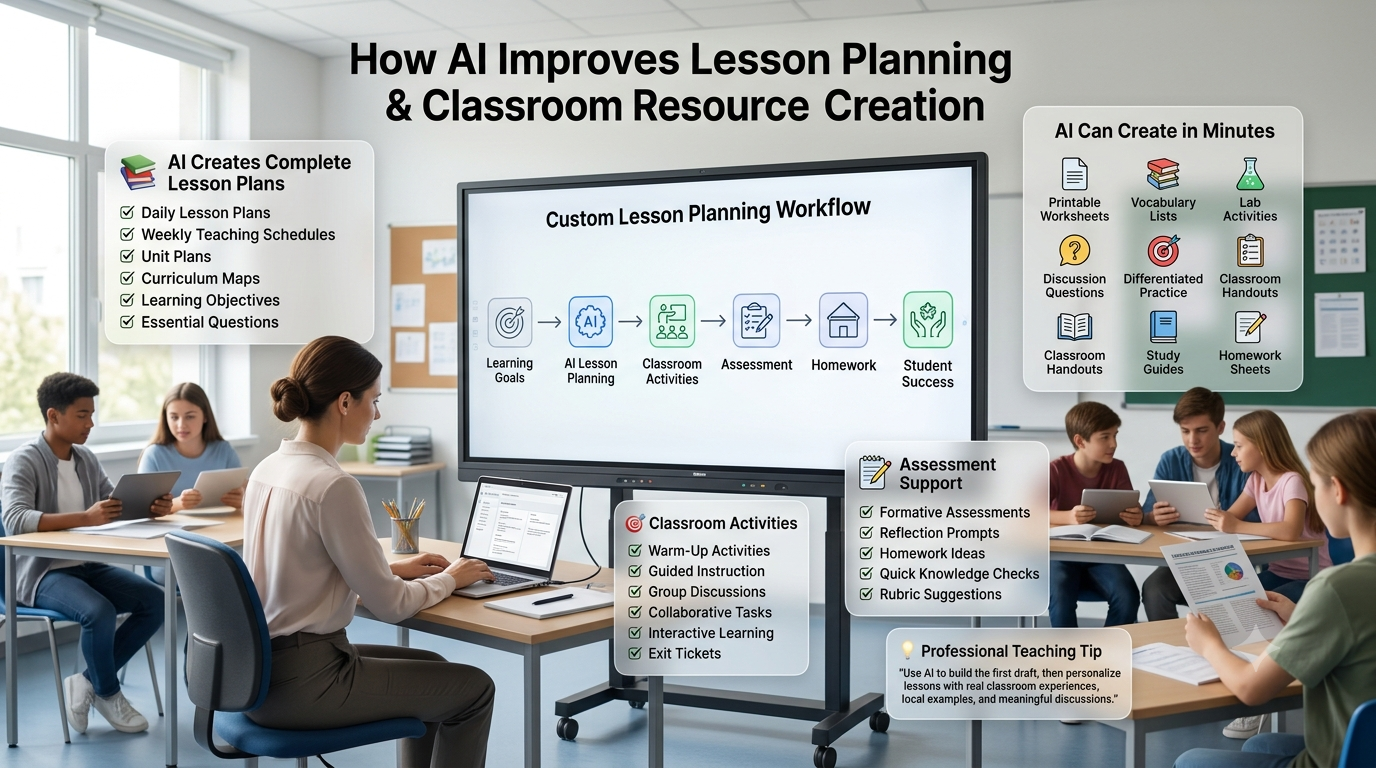
Emerging developments include intelligent tutoring assistants capable of natural conversation, predictive learning analytics that identify challenges before they affect performance, augmented and virtual reality educational experiences, adaptive collaborative learning environments, multimodal content generation, and AI-supported lesson planning that reduces teacher workload.
At the same time, classroom games are becoming more sophisticated through personalized challenges, adaptive difficulty levels, real-time collaboration across locations, and deeper integration with learning analytics. Rather than existing separately, AI and gamification are increasingly converging into unified educational ecosystems that combine personalization with engagement.
Schools adopting these innovations thoughtfully are likely to create learning experiences that are more flexible, inclusive, and effective for future generations.
Choosing the Right Solution: A Decision Framework
Selecting between AI study platforms and interactive classroom games should begin with educational objectives rather than technology preferences. Every classroom has unique learning goals, student demographics, available resources, and instructional constraints. Instead of asking which approach is universally better, educators should determine which solution best addresses the specific outcomes they want students to achieve.
For example, a teacher preparing students for standardized examinations may benefit more from adaptive AI-driven revision because personalized practice helps strengthen individual weaknesses. In contrast, an instructor introducing a new topic or reviewing recently taught concepts may achieve greater success through collaborative classroom games that encourage discussion and participation.
The strongest educational environments rarely depend on a single instructional strategy. Instead, they combine personalized learning with collaborative experiences, ensuring students receive both individual support and meaningful classroom interaction.
Decision Matrix for Teachers and Schools
The following framework can help educators determine which educational approach aligns best with their instructional priorities.
Educational Goal
AI Study Platforms
Interactive Classroom Games
Recommended Choice
Personalized revision
★★★★★
★★☆☆☆
AI Platforms
Whole-class engagement
★★★☆☆
★★★★★
Classroom Games
Independent homework
★★★★★
★★☆☆☆
AI Platforms
Collaborative learning
★★☆☆☆
★★★★★
Classroom Games
Exam preparation
★★★★★
★★★☆☆
AI Platforms
Lesson reinforcement
★★★★☆
★★★★★
Hybrid Approach
Classroom participation
★★★☆☆
★★★★★
Classroom Games
Long-term knowledge retention
★★★★★
★★★★☆
Hybrid Approach
Teacher workload reduction
★★★★★
★★★☆☆
AI Platforms
Student motivation
★★★★☆
★★★★★
Hybrid Approach
The matrix illustrates that educational success depends more on matching technology to instructional objectives than choosing one platform exclusively.
AI Study Platforms vs Interactive Classroom Games Across Different Education Levels
The effectiveness of educational technology changes as learners mature. Younger students often respond enthusiastically to visually engaging activities and immediate rewards, while older learners generally benefit from personalized instruction that supports independent study and deeper conceptual understanding.
Elementary classrooms typically prioritize participation, confidence building, and collaborative exploration. Interactive games naturally support these objectives by transforming lessons into engaging experiences where students remain active throughout instruction.
Secondary education introduces increasingly complex academic concepts that require both collaboration and individualized practice. A balanced combination of AI-guided learning and classroom games often produces the strongest outcomes during these years.
Higher education and professional training emphasize self-directed learning, analytical thinking, and mastery of specialized knowledge. AI study platforms become increasingly valuable because they provide personalized learning pathways while allowing learners to progress independently.
Education Level Comparison
Education Stage
Best Primary Approach
Why It Works
Early Primary School
Interactive Classroom Games
Builds confidence and engagement
Upper Primary School
Hybrid Learning
Combines fun with structured practice
Middle School
Hybrid Learning
Supports collaboration and personalized learning
High School
AI + Classroom Review Games
Exam preparation and concept mastery
University
AI Study Platforms
Independent and adaptive learning
Professional Development
AI Study Platforms
Flexible personalized skill development
Educational technology should evolve alongside learner maturity rather than remaining static throughout every stage of education.
Real-World Classroom Scenarios
Understanding practical implementation helps educators visualize how these technologies function in everyday teaching environments.
Scenario 1: Mathematics Revision
A mathematics teacher begins the week by assigning an AI-powered diagnostic assessment. The platform identifies which students struggle with fractions, percentages, or algebraic expressions. During class, the teacher reviews common misconceptions before launching an interactive quiz game where teams solve progressively challenging problems together.
Students receive immediate feedback throughout the activity while reinforcing concepts that the AI platform previously identified as difficult. Homework then focuses on individualized practice generated automatically according to each learner’s performance.
Scenario 2: Language Learning
Students complete personalized vocabulary exercises through an AI learning platform before attending class. The system adjusts future lessons according to spelling accuracy, reading comprehension, and grammar performance.
During classroom instruction, learners participate in collaborative language games that encourage conversation, pronunciation practice, and rapid vocabulary recall. Independent preparation combines naturally with social interaction, improving both language confidence and communication skills.
Scenario 3: Science Education
An AI platform introduces new scientific concepts through adaptive reading materials, simulations, and formative assessments. Students who require additional explanation automatically receive supplementary learning resources before laboratory activities begin.
Later, classroom games challenge students to identify scientific processes, classify organisms, solve experimental scenarios, or answer conceptual questions collaboratively. The teacher observes participation while collecting valuable insights about overall class understanding.
This balanced instructional sequence supports both conceptual mastery and active engagement.
AI Study Platforms for Self-Paced Learners
Independent learners often appreciate the flexibility offered by AI-powered educational systems. Personalized learning paths allow students to study according to their own schedules while receiving continuous feedback throughout the learning process.
Self-paced instruction reduces pressure associated with keeping pace with an entire classroom. Learners spend additional time on challenging topics while progressing quickly through familiar material. Automated reminders, revision schedules, and adaptive assessments help maintain consistency without requiring constant teacher supervision.
This flexibility makes AI especially valuable for adult learners, online students, certification candidates, and individuals balancing education with professional responsibilities.
Interactive Classroom Games for Collaborative Learners
Some students learn most effectively through discussion, teamwork, and shared problem-solving. Interactive classroom games create opportunities for these learners to explain ideas, defend reasoning, negotiate solutions, and support classmates throughout educational activities.
Collaborative learning also strengthens communication skills that extend beyond academic performance. Students practice leadership, active listening, respectful disagreement, and collective decision-making while reinforcing subject knowledge through meaningful interaction.
Teachers frequently observe increased classroom confidence among learners who become more willing to participate within supportive game-based environments.
Can AI Replace Interactive Classroom Games?
Artificial intelligence continues advancing rapidly, but replacing classroom games entirely would overlook the importance of human interaction in education. AI excels at personalization, adaptive instruction, and continuous analysis, yet it cannot fully replicate the spontaneous collaboration, social learning, and emotional engagement created through live classroom experiences.
Similarly, classroom games cannot provide the individualized instructional pathways and detailed learning analytics that AI platforms generate automatically.
Rather than replacing one another, these educational approaches solve different instructional challenges. AI strengthens individualized learning, while interactive games strengthen participation and collaboration. Together they create a more complete educational experience than either approach can provide independently.
Summary
AI study platforms and interactive classroom games represent two of the most influential innovations in modern education, yet they serve different instructional purposes. AI focuses on personalization, adaptive learning, continuous assessment, and long-term academic growth. Interactive classroom games prioritize engagement, collaboration, immediate feedback, and active participation. Rather than competing, these approaches complement one another by addressing different aspects of the learning process.
For educators, the decision should begin with learning objectives instead of technology preferences. Independent study, exam preparation, and personalized revision generally benefit more from AI-driven platforms, while lesson reinforcement, classroom participation, and collaborative learning are strengthened through game-based activities. Institutions that combine both methods create flexible learning environments capable of supporting students with diverse abilities, interests, and educational goals.
As educational technology continues evolving, successful classrooms will increasingly integrate artificial intelligence, gamification, learning analytics, and teacher expertise into unified instructional strategies. The future of education belongs not to a single technology but to thoughtfully designed learning experiences that place student success at the center of every decision.
Frequently Asked Questions
What is the main difference between AI study platforms and interactive classroom games?
The biggest difference lies in how they support learning. AI study platforms personalize instruction by adapting lessons, practice activities, and feedback according to each student’s performance. Interactive classroom games improve engagement through competition, collaboration, and real-time participation.
Key distinctions include:
AI emphasizes individualized learning.
Classroom games emphasize group engagement.
AI continuously analyzes progress.
Games encourage active participation and discussion.
Both improve learning when used together.
The most effective educational strategies often combine these strengths instead of choosing one exclusively.
Which approach improves learning outcomes more effectively?
There is no universal winner because learning outcomes depend on instructional goals. AI platforms generally produce stronger results for personalized study, exam preparation, and long-term concept mastery. Interactive classroom games often outperform traditional instruction when increasing participation, motivation, and classroom interaction is the primary objective.
Many schools achieve the strongest academic performance by integrating both technologies within the same curriculum, allowing students to benefit from adaptive learning alongside collaborative classroom experiences.
Are AI study platforms suitable for younger students?
Yes, provided they are age-appropriate and supported by teachers or parents. Younger learners benefit from personalized pacing, adaptive practice, and immediate feedback, but they also require opportunities for social interaction and collaborative learning.
For elementary education, educators often combine AI-based instruction with classroom games to maintain engagement while supporting foundational academic development.
Do classroom games only work for younger learners?
No. Although classroom games are especially popular in primary education, they remain highly effective in secondary schools, universities, and professional training programs. Well-designed educational games encourage participation regardless of learner age.
Applications include:
Medical education
Corporate training
Language learning
STEM instruction
University seminars
Professional certification courses
Game-based learning succeeds because it encourages active thinking rather than passive information consumption.
Can AI completely replace teachers?
No. AI can automate repetitive tasks, personalize learning, and provide valuable performance insights, but it cannot replace the professional judgment, empathy, creativity, mentorship, and interpersonal relationships that teachers bring to education.
Teachers interpret learning data, motivate students, facilitate discussions, manage classroom dynamics, and adapt instruction according to emotional as well as academic needs. AI should be viewed as a powerful teaching assistant rather than a replacement for educators.
What are the biggest advantages of combining AI with classroom games?
Combining both technologies creates a balanced learning environment where students receive individualized instruction alongside collaborative educational experiences.
Benefits include:
Personalized learning pathways.
Increased classroom engagement.
Better knowledge retention.
Faster identification of learning gaps.
Higher student motivation.
Improved teacher decision-making.
Stronger collaboration skills.
More effective formative assessment.
Hybrid learning models allow educators to maximize the strengths of each instructional approach while minimizing their individual limitations.
How do AI study platforms support students with different learning abilities?
AI platforms continuously analyze student performance and adjust lesson difficulty, practice frequency, and instructional recommendations accordingly. Learners who need additional support receive extra explanations and reinforcement, while advanced students progress to more challenging material without unnecessary repetition.
This adaptive instruction reduces frustration, promotes confidence, and allows every learner to develop at an appropriate pace without slowing the progress of others.
Are interactive classroom games effective for assessment?
Yes. Interactive classroom games provide valuable formative assessment by revealing student understanding in real time. Teachers can immediately identify misconceptions, monitor participation, and adjust instruction before knowledge gaps become more significant.
Although they should not replace comprehensive examinations entirely, classroom games offer an efficient way to measure ongoing learning while maintaining student engagement throughout the instructional process.
What should schools consider before adopting educational technology?
Schools should evaluate educational technology based on instructional objectives rather than popularity or marketing claims.
Important considerations include:
Curriculum compatibility.
Teacher training requirements.
Student accessibility.
Data privacy policies.
Technical infrastructure.
Long-term scalability.
Reporting capabilities.
Ease of classroom implementation.
Cost-effectiveness.
Successful implementation depends on thoughtful planning, ongoing professional development, and continuous evaluation of educational outcomes.
What does the future of educational technology look like?
Educational technology is moving toward increasingly intelligent, personalized, and collaborative learning environments. Artificial intelligence will continue improving adaptive instruction, predictive analytics, automated feedback, and personalized content generation. At the same time, interactive classroom experiences will become more immersive through adaptive gamification, augmented reality, virtual reality, and collaborative digital environments.
Future classrooms are likely to combine these innovations into unified ecosystems where teachers remain central while technology enhances learning efficiency, accessibility, and student engagement.
Final Thoughts
The discussion surrounding AI study platforms versus interactive classroom games should not focus on identifying a single winner. Each approach addresses different educational challenges and contributes unique strengths to the learning process. Artificial intelligence excels at delivering personalized instruction, adaptive practice, and data-driven insights, while classroom games create engaging environments that encourage participation, teamwork, and immediate application of knowledge.
For schools, universities, educators, trainers, and independent learners, the most effective strategy is to align technology with instructional objectives. Personalized AI tools can strengthen foundational understanding and long-term retention, whereas game-based activities can reinforce concepts, increase motivation, and make classroom learning more dynamic.
As education continues to evolve, the most successful learning environments will be those that combine intelligent technology with skilled teaching and meaningful human interaction. When implemented thoughtfully, AI study platforms and interactive classroom games do not compete—they work together to create richer, more inclusive, and more effective educational experiences that prepare learners for lifelong success.