Gimkit vs Quizizz for Interactive Student Learning.Interactive learning has become a cornerstone of modern education, helping teachers transform traditional lessons into engaging experiences that encourage participation, collaboration, and deeper understanding. Among today’s leading educational technology platforms,Gimkit and Quizizz are two of the most popular choices for schools, colleges, and online classrooms. While both platforms use game-based learning to reinforce academic concepts, they differ significantly in gameplay, classroom interaction, assessment features, and long-term student engagement.
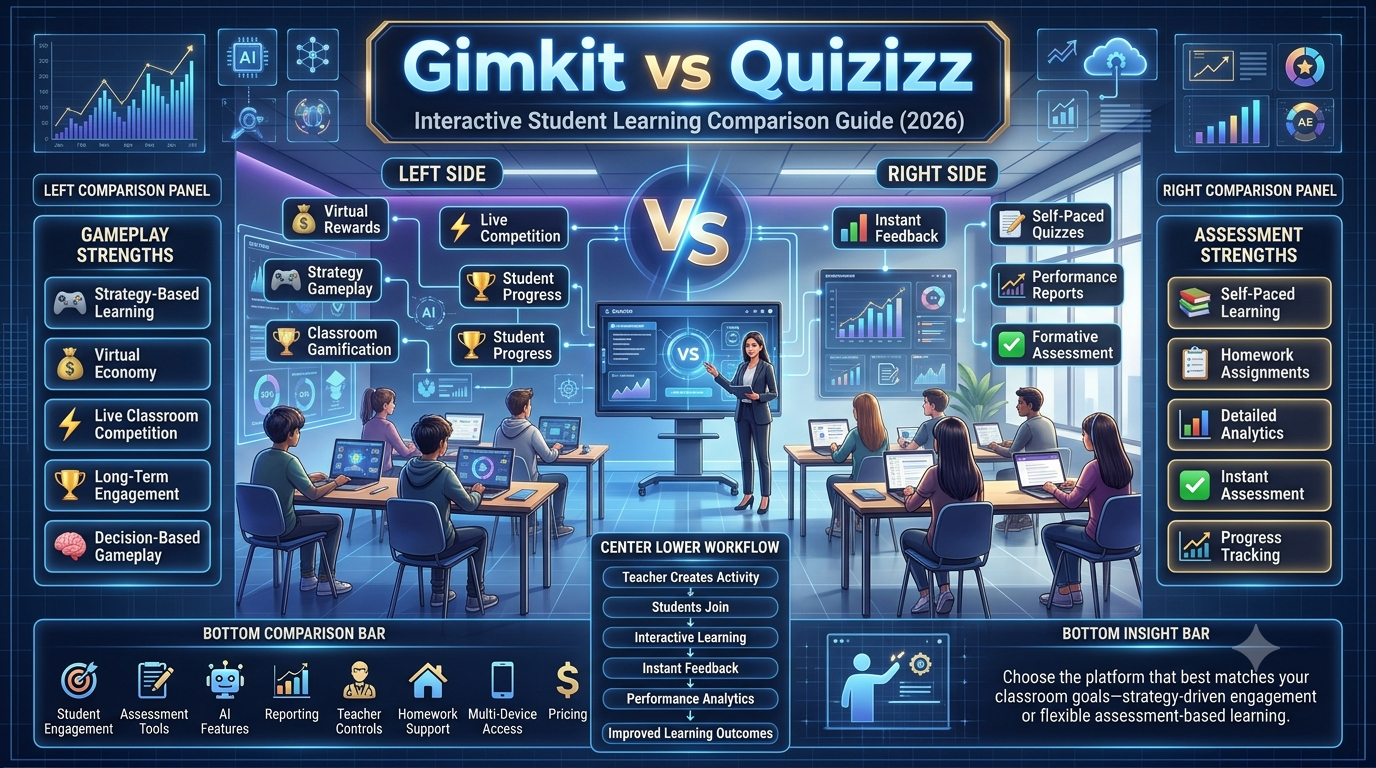
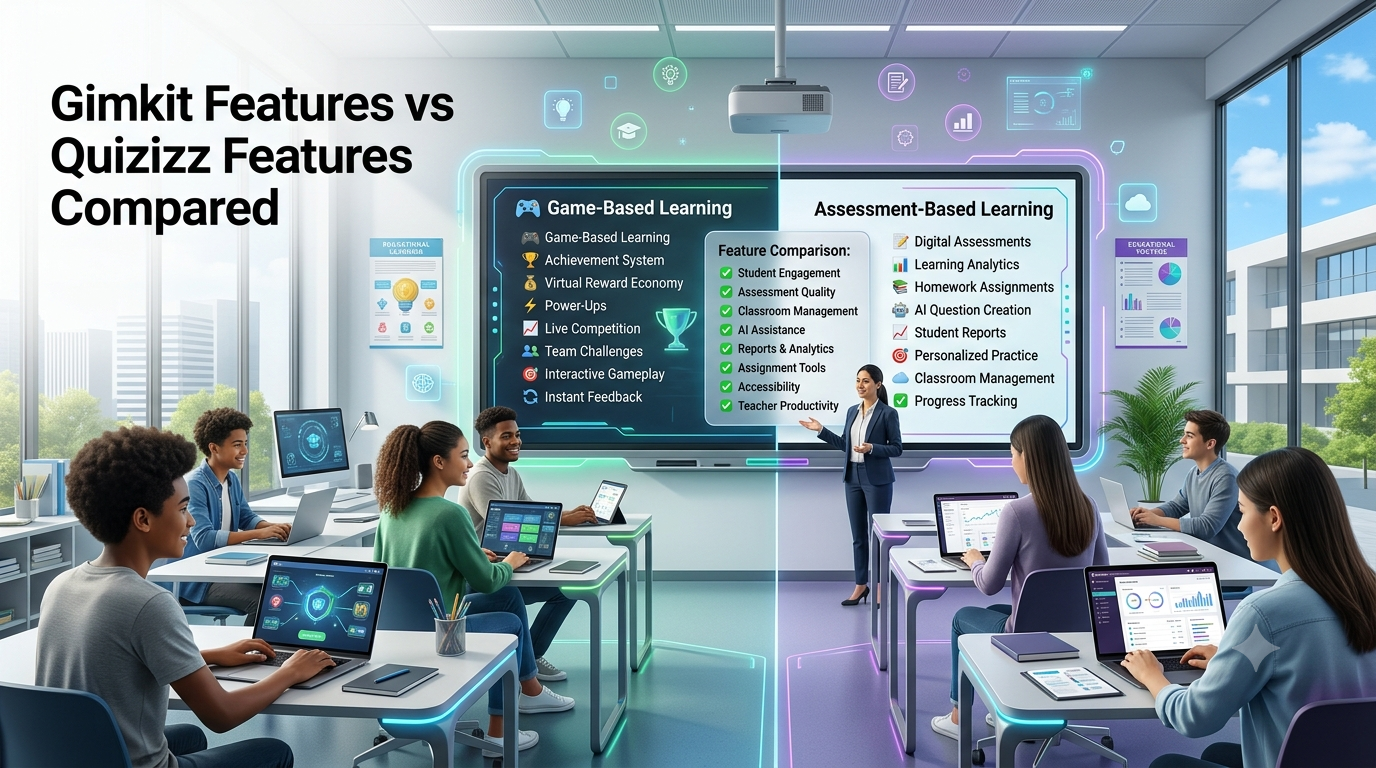
Teachers often compare Gimkit vs Quizizz because each platform addresses different instructional needs. Quizizz focuses on self-paced quizzes, immediate feedback, and flexible assessments that work equally well in live classrooms and homework environments. Gimkit, however, introduces a strategy-driven economy system where students earn virtual cash, purchase upgrades, and make decisions that influence their performance throughout the game. This unique approach keeps learners engaged for extended periods while reinforcing subject knowledge.
Whether you’re hosting a Gimkit Host session, assigning homework through Gimkit Login, joining a Gimkit Live activity, or exploring new ways to improve classroom participation, understanding the strengths of both platforms will help you make the right decision for your students.
This comprehensive guide compares Gimkit vs Quizizz for Interactive Student Learning, covering classroom engagement, game mechanics, AI features, assessment tools, reporting, homework capabilities, teacher controls, accessibility, pricing, collaboration, learning effectiveness, and expert recommendations to determine which platform performs best in 2026.
What Are Gimkit and Quizizz?
Although both platforms are designed to make learning more engaging, they approach classroom instruction from different educational perspectives.
Quizizz is an interactive assessment platform that allows students to answer questions at their own pace while receiving immediate feedback. Teachers can conduct live quizzes, assign homework, create lessons, and analyze detailed performance reports without requiring every student to progress simultaneously.
Gimkit transforms educational quizzes into strategy-based games. Correct answers generate virtual currency that students invest in upgrades, creating an ongoing gameplay loop that rewards knowledge, planning, and consistent participation.
Platform Overview
Feature
Gimkit
Quizizz
Learning Style
Strategy-Based Learning
Self-Paced Interactive Learning
Gameplay
Economy & Upgrades
Quiz-Based Challenges
Student Progress
Continuous
Individual Pace
Homework Support
Excellent
Excellent
Classroom Engagement
Very High
Very High
Assessment Tools
Advanced
Advanced
Replay Value
Excellent
High
Rather than competing only through speed, both platforms encourage participation, but they motivate students in fundamentally different ways.
Why Teachers Compare Gimkit vs Quizizz
Both platforms increase classroom participation, improve review sessions, and simplify formative assessment. However, educators often choose between them based on teaching style, classroom objectives, and student age groups.
Teachers who prioritize detailed assessments, flexible assignments, and independent learning frequently appreciate Quizizz. Those seeking longer classroom engagement, strategic gameplay, and immersive learning experiences often prefer Gimkit.
Main Evaluation Areas
Evaluation Category
Importance
Student Engagement
⭐⭐⭐⭐⭐
Assessment Quality
⭐⭐⭐⭐⭐
Classroom Management
⭐⭐⭐⭐⭐
Homework Flexibility
⭐⭐⭐⭐⭐
Learning Retention
⭐⭐⭐⭐⭐
Ease of Use
⭐⭐⭐⭐⭐
Teacher Analytics
⭐⭐⭐⭐⭐
Student Motivation
⭐⭐⭐⭐⭐
Why This Comparison Matters
✔ Every classroom learns differently.
✔ Teaching goals vary by subject.
✔ Assessment needs differ across grade levels.
✔ Student motivation is influenced by gameplay style.
✔ Schools have different technology requirements.
Selecting the right platform helps educators maximize engagement while supporting meaningful learning outcomes.
Learning Philosophy: Strategy-Based Gaming vs Self-Paced Assessment
The biggest distinction between Gimkit vs Quizizz lies in how students experience learning.
Quizizz emphasizes independent progress. Students answer questions at their own pace, reducing pressure while allowing teachers to evaluate understanding through detailed reports and immediate feedback. This format supports differentiated instruction because learners are not forced to match the speed of the rest of the class.
Gimkit focuses on continuous progression. Students earn virtual currency for correct answers, unlock upgrades, improve efficiency, and develop strategies that influence their overall success. Every decision affects future gameplay, making knowledge application feel more rewarding.
Educational Philosophy Comparison
Category
Gimkit
Quizizz
Learning Focus
Strategy & Progression
Independent Mastery
Student Pace
Flexible
Self-Paced
Economy System
Yes
No
Upgrade Mechanics
Yes
No
Assessment Emphasis
Moderate
Strong
Long-Term Engagement
Outstanding
Excellent
Educational Benefits
✔ Encourages active participation.
✔ Supports different learning styles.
✔ Reinforces subject knowledge.
✔ Promotes critical thinking.
✔ Increases classroom motivation.
While Quizizz excels in assessment-driven instruction, Gimkit creates a more game-like learning environment that keeps students engaged over longer classroom sessions.
User Interface and Overall Learning Experience
A classroom platform should be simple enough for first-time users while remaining powerful enough for experienced educators. Both Gimkit and Quizizz have modern interfaces, but they prioritize different teaching experiences.
Quizizz is built around speed, accessibility, and straightforward lesson management. Teachers can quickly create quizzes, assign homework, launch live sessions, and review reports with minimal setup. Navigation is intuitive, making it especially appealing for educators who want to spend more time teaching than configuring software.
Gimkit offers a richer gaming environment. Beyond quiz creation, teachers manage multiple game modes, assignments, classroom settings, strategy mechanics, and student progression. Although it takes slightly longer to learn, many educators appreciate the additional flexibility once they become familiar with the platform.
Whether students join through Gimkit Live, access assignments using Gimkit Login, or participate in a Gimkit Host session, the interface is designed to remain organized while supporting extended gameplay.
Teacher Dashboard Comparison
The teacher dashboard serves as the control center for lesson preparation, classroom management, assignments, and reporting.
Dashboard Features
Feature
Gimkit
Quizizz
Interface Design
Modern
Modern
Lesson Organization
Excellent
Excellent
Assignment Creation
Excellent
Excellent
Classroom Controls
Advanced
Advanced
Navigation
Very Good
Excellent
Report Access
Excellent
Excellent
Mobile Compatibility
Yes
Yes
Why Teachers Appreciate Both Platforms
✔ Organized lesson libraries.
✔ Quick access to reports.
✔ Efficient classroom management.
✔ Easy assignment scheduling.
✔ Cloud-based accessibility.
Quizizz generally offers a shorter learning curve, while Gimkit provides more advanced gameplay management tools.
Student Experience During Learning
Student engagement determines whether educational technology becomes a meaningful learning tool or simply another digital activity.
Quizizz encourages independent progress. Students answer questions at their own pace while receiving immediate feedback after each response. This reduces pressure and allows learners to concentrate on understanding concepts rather than racing classmates.
Gimkit creates continuous engagement through its in-game economy. Every correct answer contributes toward upgrades, encouraging students to remain active for the entire session rather than only focusing on individual questions.
Student Experience Comparison
Experience
Gimkit
Quizizz
Independent Learning
Excellent
Outstanding
Strategic Thinking
Outstanding
Moderate
Immediate Feedback
Excellent
Excellent
Motivation
Outstanding
Excellent
Long-Term Engagement
Outstanding
Excellent
Replay Value
Outstanding
High
Educational Advantages
✔ Continuous participation.
✔ Higher motivation.
✔ Better classroom interaction.
✔ Reduced passive learning.
✔ Increased knowledge retention.
Both platforms successfully engage students, but they achieve this through different instructional strategies.
Classroom Engagement: Which Platform Keeps Students Interested Longer?
Keeping students engaged throughout an entire lesson is often more difficult than capturing their attention at the beginning.
Quizizz maintains engagement by allowing every learner to progress independently. Students can carefully read questions without feeling rushed, making it especially effective for mixed-ability classrooms.
Gimkit sustains motivation through progression mechanics. Students remain invested because every correct answer contributes to future rewards, encouraging continuous participation throughout longer review sessions.
Engagement Comparison
Factor
Gimkit
Quizizz
First Impression
Excellent
Excellent
Long Lesson Engagement
Outstanding
Excellent
Independent Learning
Excellent
Outstanding
Competitive Motivation
Outstanding
Moderate
Strategic Gameplay
Outstanding
Limited
Student Retention
Outstanding
Excellent
Why Engagement Improves
✔ Active participation.
✔ Immediate rewards.
✔ Continuous learning.
✔ Reduced classroom boredom.
✔ Higher lesson completion rates.
Teachers conducting 40–60 minute review sessions often find Gimkit particularly effective for maintaining student attention from beginning to end.
Quiz Creation and Lesson Development
Creating educational content should be efficient without sacrificing quality.
Both platforms provide powerful quiz builders that allow teachers to write original questions, edit existing content, include multimedia, and organize materials into reusable libraries.
Quizizz places greater emphasis on assessment flexibility, while Gimkit integrates quizzes directly into strategy-driven gameplay.
Content Creation Comparison
Feature
Gimkit
Quizizz
Manual Quiz Builder
Excellent
Excellent
Question Library
Excellent
Excellent
Multimedia Support
Yes
Yes
AI Assistance
Growing
Growing
Content Organization
Excellent
Excellent
Editing Tools
Excellent
Excellent
Preparation Benefits
✔ Faster lesson creation.
✔ Reusable question banks.
✔ Flexible editing.
✔ Organized content.
✔ Efficient workflow.
Well-designed content remains the foundation of successful classroom learning regardless of platform choice.
Homework and Independent Learning
Modern education increasingly extends beyond classroom walls.
Quizizz has long been recognized for its flexible homework capabilities. Students complete assignments independently while teachers monitor completion, accuracy, and overall progress.
Gimkit enhances homework by incorporating gameplay mechanics that encourage students to continue answering questions because they remain invested in earning virtual currency and unlocking upgrades.
Homework Comparison
Homework Feature
Gimkit
Quizizz
Independent Assignments
Excellent
Excellent
Student Progress Tracking
Advanced
Advanced
Flexible Deadlines
Yes
Yes
Motivation System
Outstanding
Excellent
Replay Opportunities
Excellent
Excellent
Teacher Monitoring
Excellent
Excellent
Homework Advantages
✔ Supports remote learning.
✔ Encourages independent study.
✔ Provides measurable progress.
✔ Flexible scheduling.
✔ Easy teacher oversight.
Both platforms successfully support homework, but Gimkit adds an additional layer of motivation through game progression.
Reporting and Performance Analytics
Data helps educators identify strengths, weaknesses, and opportunities for instructional improvement.
Quizizz is particularly strong in assessment analytics, offering detailed reports that help teachers analyze individual questions, student accuracy, class averages, and learning trends.
Gimkit also provides comprehensive reports while emphasizing long-term participation, assignments, and classroom engagement alongside academic performance.
Analytics Comparison
Reporting Feature
Gimkit
Quizizz
Student Accuracy
Excellent
Excellent
Individual Reports
Excellent
Excellent
Assignment Reports
Excellent
Excellent
Question Analysis
Excellent
Outstanding
Classroom Trends
Excellent
Excellent
Export Options
Yes
Yes
Why Analytics Matter
✔ Identify learning gaps.
✔ Improve lesson planning.
✔ Monitor student progress.
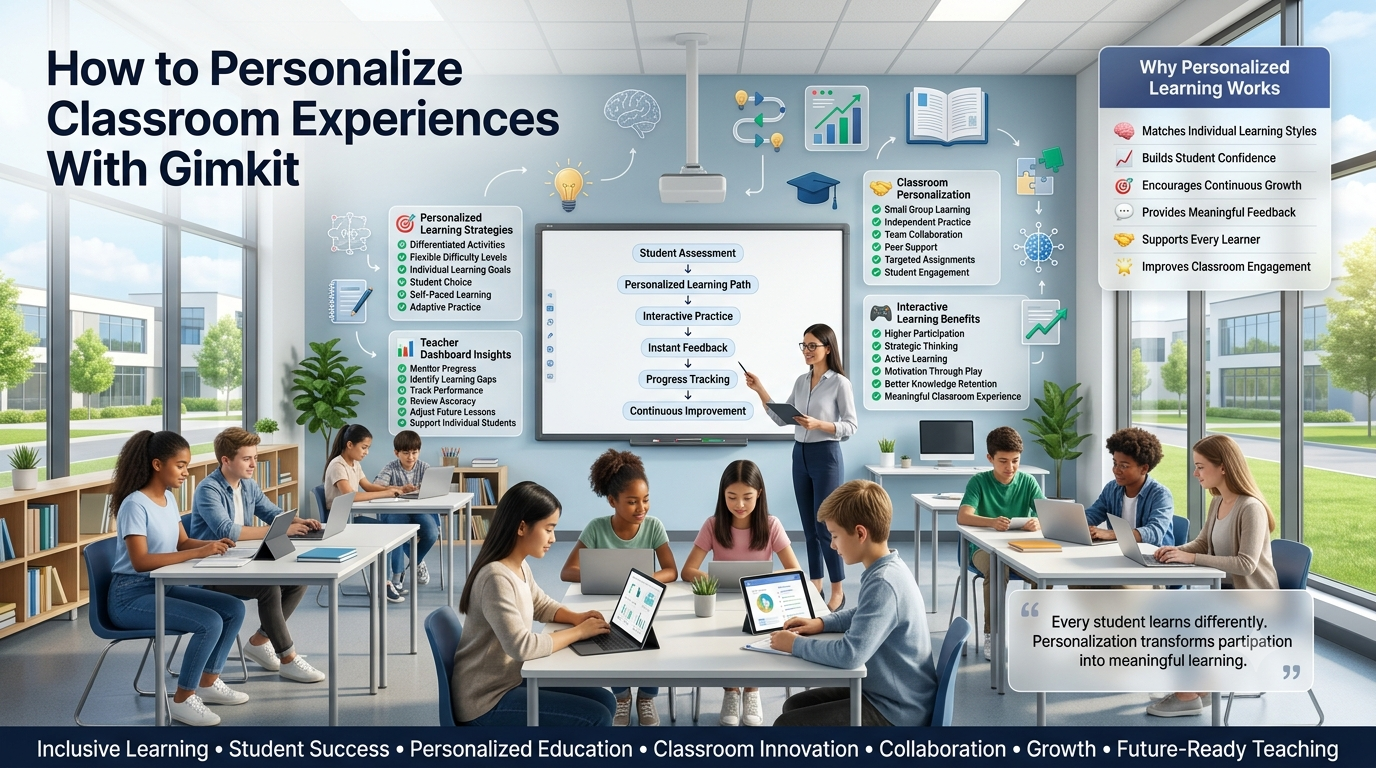
✔ Support personalized instruction.
✔ Guide curriculum improvements.
Meaningful reporting enables educators to make informed instructional decisions based on actual classroom performance rather than assumptions.
Device Compatibility and Accessibility
Educational technology should work reliably across the devices students already use.
Both Gimkit and Quizizz are browser-based platforms compatible with desktops, laptops, Chromebooks, tablets, and smartphones, making them suitable for classrooms with diverse hardware.
Device Compatibility
Device
Gimkit
Quizizz
Windows
Excellent
Excellent
Mac
Excellent
Excellent
Chromebook
Excellent
Excellent
iPad
Excellent
Excellent
Android Tablet
Excellent
Excellent
Smartphone
Excellent
Excellent
Accessibility Benefits
✔ Cross-platform support.
✔ Browser-based access.
✔ Responsive interface.
✔ Classroom flexibility.
✔ Remote learning compatibility.
Reliable accessibility ensures students can participate regardless of device availability.
Artificial Intelligence Features: How Smart Are Gimkit and Quizizz in 2026?
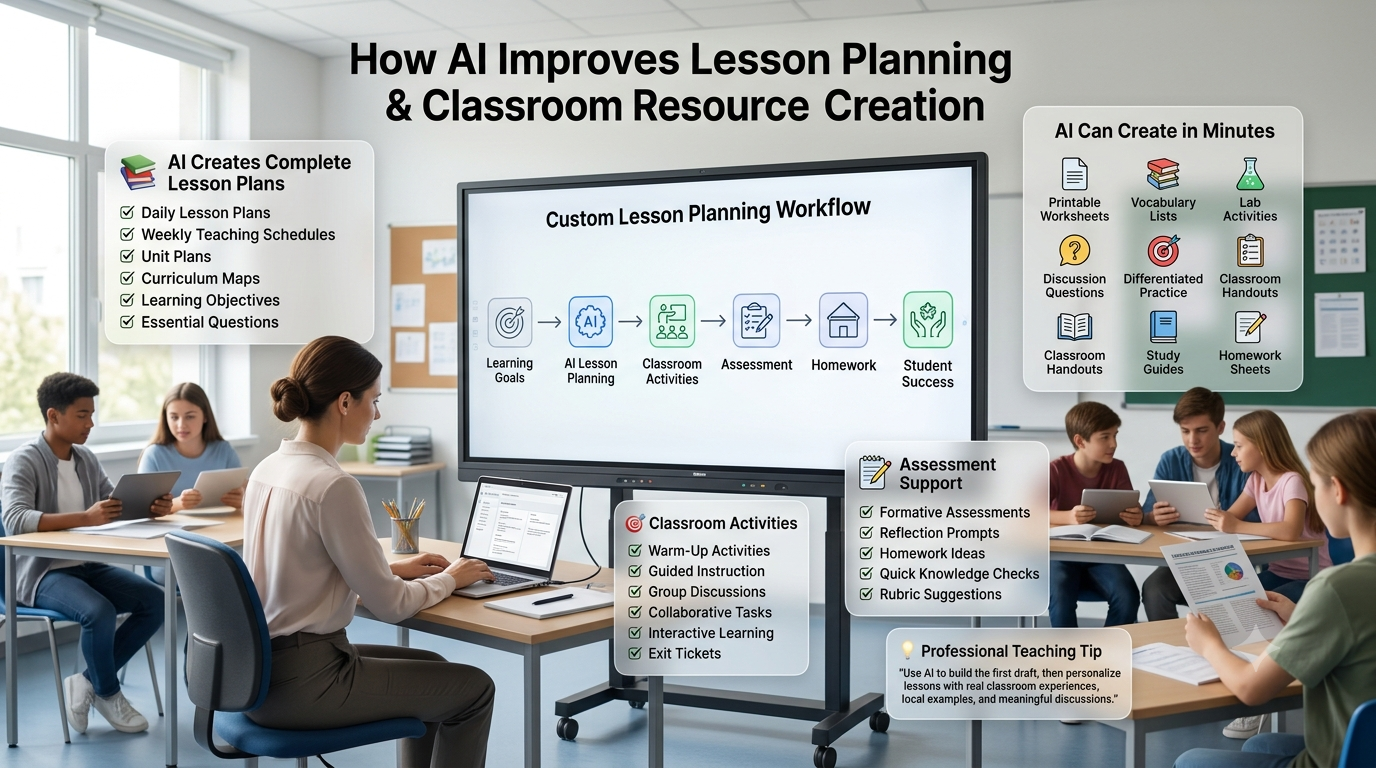
Artificial intelligence is transforming the way teachers prepare lessons, generate assessments, and personalize learning experiences. Instead of spending hours creating quizzes manually, educators can now use AI-assisted tools to generate questions, organize lessons, improve existing content, and reduce repetitive administrative work.
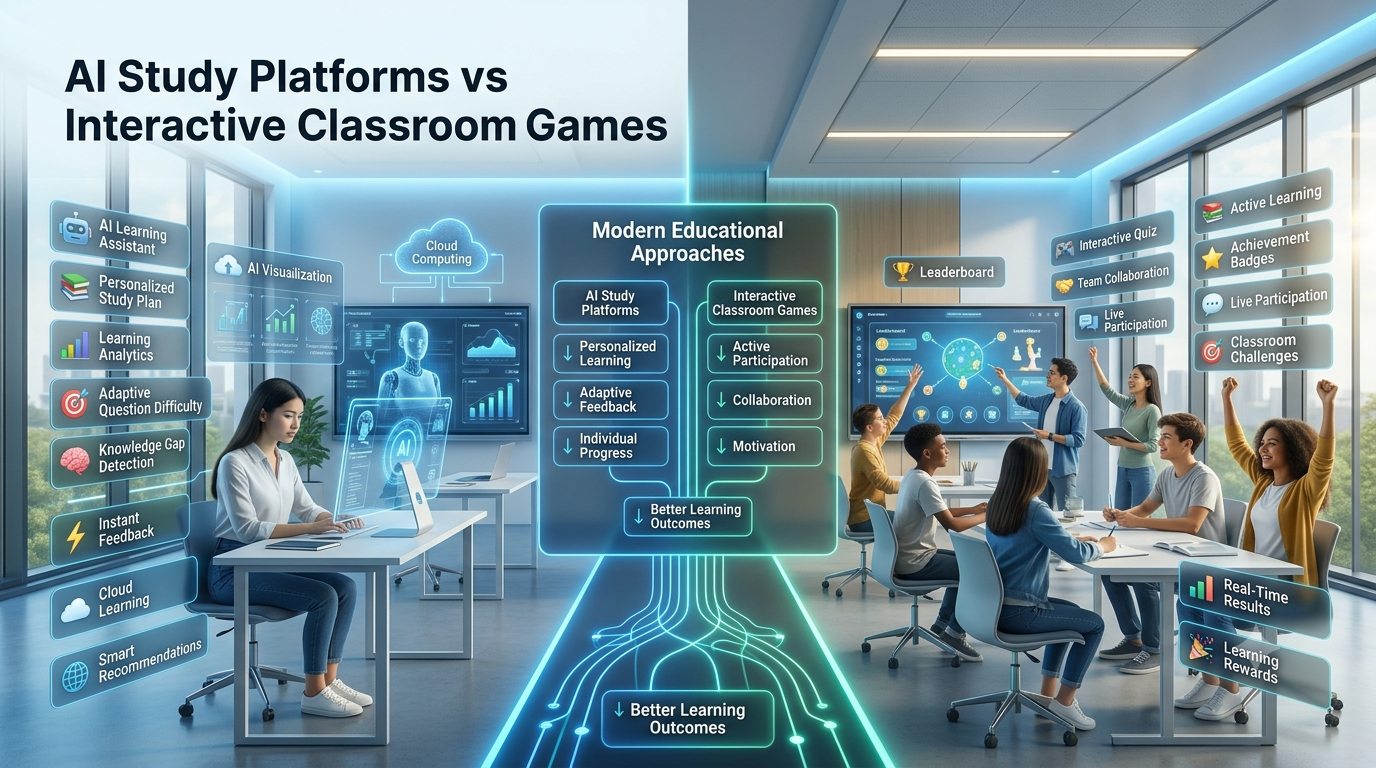
Both Gimkit and Quizizz continue expanding their AI capabilities, but they focus on different classroom priorities. Quizizz has invested heavily in AI-powered quiz generation, lesson creation, and assessment support, while Gimkit integrates AI into content creation while maintaining its primary emphasis on immersive game-based learning.
Teachers should remember that AI is designed to support instructional planning rather than replace professional judgment. Reviewing generated content before presenting it to students remains an important best practice.
AI Feature Comparison
AI Capability
Gimkit
Quizizz
AI Question Generation
Excellent
Outstanding
Lesson Creation
Very Good
Excellent
Quiz Enhancement
Excellent
Excellent
Content Editing
Excellent
Excellent
Teacher Productivity
High
Very High
Human Review Recommended
Yes
Yes
Benefits of AI for Educators
✔ Faster lesson preparation.
✔ Reduced repetitive work.
✔ Easier content creation.
✔ Greater classroom flexibility.
✔ More time for teaching.
As AI continues to evolve, both platforms are expected to introduce even more intelligent classroom assistance and personalized learning recommendations.
Pricing Comparison: Free Plans vs Premium Features
Budget is an important consideration for individual teachers, schools, and educational institutions. Fortunately, both Gimkit and Quizizz provide free versions that allow educators to experience their core functionality before upgrading.
The free plans support classroom learning, but premium subscriptions unlock additional reporting tools, advanced assignments, expanded customization, and more sophisticated classroom management capabilities.
Pricing Overview
Feature
Gimkit Free
Gimkit Premium
Quizizz Free
Quizizz Premium
Live Activities
Yes
Yes
Yes
Yes
Homework
Limited
Full
Excellent
Expanded
Reports
Basic
Advanced
Strong
Advanced
AI Features
Limited
Expanded
Good
Expanded
Premium Content
Limited
Yes
Limited
Yes
Teacher Controls
Good
Advanced
Very Good
Advanced
Choosing the Right Plan
✔ Evaluate classroom size.
✔ Compare reporting needs.
✔ Consider homework requirements.
✔ Review premium features carefully.
✔ Start with the free version before upgrading.
Most educators can successfully begin using either platform without immediate subscription costs.
Collaboration and Classroom Interaction
Modern classrooms increasingly emphasize collaboration, discussion, and peer learning rather than individual memorization alone.
Quizizz supports collaborative learning through instructor-led activities, homework assignments, and classroom discussions built around assessment results. Students can review questions, analyze mistakes, and participate at comfortable learning speeds.
Gimkit encourages collaboration differently by combining teamwork with strategic gameplay. Many game modes require students to coordinate decisions, making communication an important part of classroom success.
Collaboration Comparison
Collaboration Area
Gimkit
Quizizz
Team Activities
Excellent
Very Good
Classroom Discussion
Excellent
Excellent
Independent Learning
Excellent
Outstanding
Cooperative Learning
Outstanding
Very Good
Student Participation
Outstanding
Excellent
Classroom Interaction
Outstanding
Excellent
Collaboration Benefits
✔ Builds teamwork.
✔ Encourages communication.
✔ Improves classroom participation.
✔ Supports peer learning.
✔ Creates inclusive learning environments.
Collaborative activities often strengthen both academic understanding and essential communication skills.
Integration With Educational Platforms
Teachers frequently use multiple digital tools throughout the school day. Smooth integration helps simplify classroom management and reduces administrative workload.
Both platforms integrate well with popular educational ecosystems, making assignment distribution and classroom organization more efficient.
Integration Comparison
Integration
Gimkit
Quizizz
Google Classroom
Excellent
Excellent
Microsoft Education
Supported
Supported
Browser-Based Access
Excellent
Excellent
Assignment Sharing
Yes
Yes
Student Management
Excellent
Excellent
Cross-Platform Compatibility
Excellent
Excellent
Advantages
✔ Faster classroom setup.
✔ Simplified assignments.
✔ Easy student access.
✔ Improved organization.
✔ Better workflow efficiency.
These integrations help teachers spend less time managing technology and more time supporting student learning.
Advantages and Limitations
Every educational platform has unique strengths depending on classroom goals.
Gimkit Advantages
✔ Outstanding long-term engagement.
✔ Strategy-based learning.
✔ Highly motivating progression system.
✔ Creative game modes.
✔ Excellent replay value.
✔ Strong classroom participation.
Gimkit Limitations
• Slightly longer learning curve.
• Some advanced features require a paid subscription.
• Strategy mechanics may require additional explanation for younger learners.
Quizizz Advantages
✔ Excellent assessment platform.
✔ Self-paced learning.
✔ Outstanding homework support.
✔ Detailed reporting.
✔ Easy classroom implementation.
✔ Beginner-friendly interface.
Quizizz Limitations
• Less strategic gameplay.
• Lower replay variety than Gimkit.
• Fewer game mechanics focused on long-term progression.
Which Platform Is Best for Different Age Groups?
Students at different educational levels benefit from different instructional approaches.
Recommended Platform by Education Level
Grade Level
Best Choice
Primary Reason
Elementary
Quizizz
Self-paced simplicity
Upper Elementary
Both
Balanced learning
Middle School
Gimkit
Increased engagement
High School
Gimkit
Strategic thinking
College
Quizizz & Gimkit
Flexible implementation
Professional Training
Quizizz
Assessment-focused learning
Many educators successfully combine both platforms throughout the school year depending on lesson objectives.
Feature-by-Feature Comparison
Feature
Gimkit
Quizizz
Winner
Student Engagement
⭐⭐⭐⭐⭐
⭐⭐⭐⭐☆
Gimkit
Assessment Tools
⭐⭐⭐⭐☆
⭐⭐⭐⭐⭐
Quizizz
Homework
⭐⭐⭐⭐⭐
⭐⭐⭐⭐⭐
Tie
AI Features
⭐⭐⭐⭐☆
⭐⭐⭐⭐⭐
Quizizz
Game Variety
⭐⭐⭐⭐⭐
⭐⭐⭐⭐☆
Gimkit
Classroom Analytics
⭐⭐⭐⭐☆
⭐⭐⭐⭐⭐
Quizizz
Long-Term Motivation
⭐⭐⭐⭐⭐
⭐⭐⭐⭐☆
Gimkit
Ease of Use
⭐⭐⭐⭐☆
⭐⭐⭐⭐⭐
Quizizz
Strategy-Based Learning
⭐⭐⭐⭐⭐
⭐⭐⭐☆☆
Gimkit
Independent Learning
⭐⭐⭐⭐☆
⭐⭐⭐⭐⭐
Quizizz
Best Choice for Different Goals
Choose Gimkit if you want:
✔ Long classroom sessions.
✔ Maximum engagement.
✔ Strategy-driven learning.
✔ Higher replay value.
✔ Gamified classroom experiences.
Choose Quizizz if you want:
✔ Strong formative assessments.
✔ Self-paced student learning.
✔ Excellent homework management.
✔ Detailed analytics.
✔ Quick lesson implementation.
30+ Expert Tips for Using Gimkit and Quizizz More Effectively
Owning a powerful classroom platform does not automatically improve learning outcomes. The greatest impact comes from how teachers design lessons, encourage participation, and use assessment data to improve future instruction. Whether you choose Gimkit or Quizizz, thoughtful implementation will always produce better results than relying on technology alone.
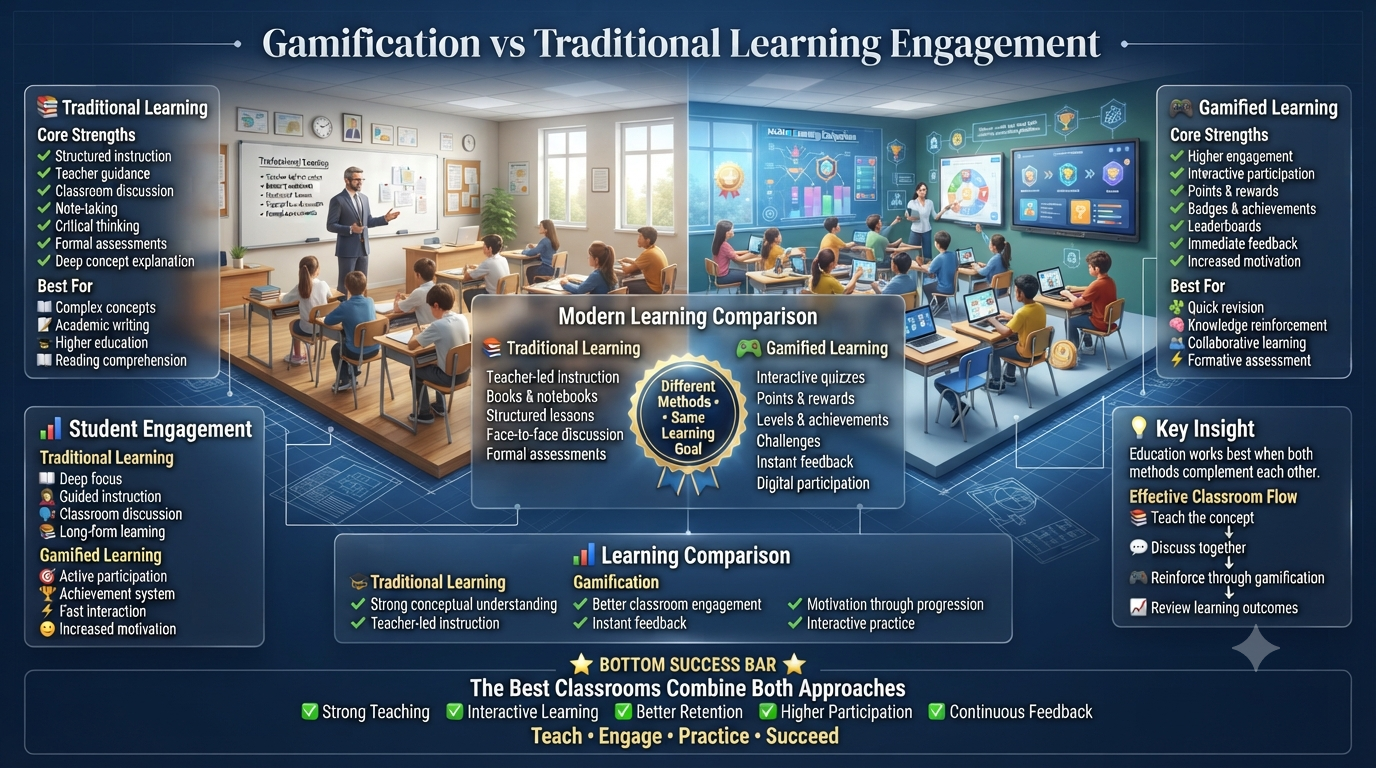
Experienced educators use game-based learning as one part of a balanced teaching strategy. Interactive quizzes should reinforce concepts, identify misconceptions, encourage discussion, and provide meaningful feedback instead of replacing direct instruction altogether.
Lesson Planning Tips
Define clear learning objectives before creating activities.
Align every question with curriculum standards.
Mix factual, conceptual, and analytical questions.
Include real-world examples whenever possible.
Review incorrect answers after each activity.
Student Engagement Tips
Rotate between live games and homework assignments.
Encourage teamwork for selected activities.
Reward improvement instead of only top scores.
Allow students time to explain their reasoning.
Keep classroom competition positive and respectful.
Assessment Tips
Use quizzes as formative assessments.
Analyze reports after every lesson.
Revisit topics students struggle with.
Track progress across multiple activities.
Adjust lesson difficulty based on performance.
Technology Tips
Test internet connections before class.
Verify student devices are ready.
Keep browsers updated.
Organize quizzes into folders.
Create backup lesson plans.
Classroom Management Tips
Explain game rules clearly.
Set realistic time limits.
Minimize classroom distractions.
Encourage collaboration.
Balance gaming with discussion.
Long-Term Improvement Tips
Collect student feedback regularly.
Refresh quizzes throughout the year.
Experiment with different game modes.
Continuously improve question quality.
Focus on learning rather than rankings.
Best Practices
✔ Keep activities varied.
✔ Encourage curiosity.
✔ Promote critical thinking.
✔ Use reports to personalize instruction.
✔ Celebrate progress consistently.
Strong instructional design remains the most important factor behind successful game-based learning.
Common Mistakes Teachers Should Avoid
Interactive learning platforms are most effective when used strategically. Overusing the same activity format or focusing exclusively on competition can gradually reduce student engagement.
Frequent Mistakes
Mistake
Better Approach
Repeating identical quizzes
Introduce new activities regularly
Making every lesson competitive
Balance collaboration and competition
Ignoring assessment reports
Review student performance consistently
Using only factual questions
Include analytical thinking
Skipping post-game discussion
Reflect on learning outcomes
Relying only on games
Combine with traditional teaching
Recommendations
✔ Encourage discussion after activities.
✔ Rotate instructional methods.
✔ Review misconceptions together.
✔ Personalize future lessons.
✔ Maintain classroom variety.
Small adjustments often produce significant improvements in student participation and knowledge retention.
The Future of Interactive Student Learning
Educational technology continues evolving at a remarkable pace. Artificial intelligence, adaptive learning, learning analytics, and personalized instruction are becoming increasingly integrated into classroom platforms.
Future learning environments will likely recommend individualized practice activities, automatically adjust question difficulty, identify learning gaps earlier, and provide teachers with more detailed instructional insights.
Emerging Trends
Innovation
Educational Impact
Adaptive Learning
Personalized instruction
AI Lesson Planning
Faster preparation
Predictive Analytics
Early intervention
Intelligent Feedback
Better learning support
Personalized Assessments
Individual learning paths
Enhanced Accessibility
More inclusive classrooms
While technology will continue advancing, effective teaching, meaningful discussion, and strong educator-student relationships will remain the foundation of successful education.
Instant Guidance for you
Gimkit vs Quizizz is a popular comparison among educators looking for the most effective game-based learning platform for classroom engagement, formative assessment, and long-term knowledge retention.
Gimkit vs Quizizz highlights that Gimkit transforms quizzes into strategy-based games where students earn virtual cash, while Quizizz focuses on self-paced and teacher-paced assessments with instant feedback.
Gimkit vs Quizizz demonstrates that Gimkit keeps students engaged through interactive game mechanics, whereas Quizizz emphasizes structured quizzes with colorful visuals and detailed performance reports.
Gimkit vs Quizizz shows that Gimkit rewards students for every correct answer with in-game currency, allowing them to purchase upgrades that influence gameplay and maintain motivation.
Gimkit vs Quizizz explains that Quizizz is widely used for homework, classroom practice, and formal assessments because students can complete quizzes independently at their own pace.
Gimkit vs Quizizz reveals that Gimkit offers a stronger gaming experience by combining academic questions with strategic decision-making throughout each session.
Gimkit vs Quizizz highlights that Quizizz provides extensive question customization, allowing teachers to create engaging assessments with images, explanations, and flexible timing options.
Gimkit vs Quizizz demonstrates that both platforms support multiple academic subjects, making them suitable for mathematics, science, history, language arts, vocabulary, and exam preparation.
Gimkit vs Quizizz shows that Gimkit encourages repeated practice through continuous gameplay, helping students strengthen memory and improve concept retention over time.
Gimkit vs Quizizz explains that Quizizz delivers comprehensive classroom analytics, making it easy for teachers to identify strengths, weaknesses, and learning gaps after every assessment.
Gimkit vs Quizizz shows that Gimkit encourages strategic thinking through gameplay mechanics, while Quizizz focuses on delivering structured assessments with a strong emphasis on academic performance.
Gimkit vs Quizizz highlights that Gimkit keeps students engaged with virtual rewards and upgrades, whereas Quizizz motivates learners through instant feedback, rankings, and achievement-based progress.
Gimkit vs Quizizz demonstrates that Gimkit is ideal for teachers who want to turn classroom review into an immersive game, while Quizizz is well suited for regular quizzes and homework assignments.
Gimkit vs Quizizz reveals that Quizizz allows students to work comfortably at their own pace, making it an excellent option for differentiated instruction and independent learning.
Gimkit vs Quizizz explains that Gimkit rewards continuous participation throughout the session, encouraging students to remain focused from the beginning of the game until the final results.
Gimkit vs Quizizz shows that Quizizz provides detailed answer reports, enabling teachers to analyze student performance and identify topics requiring additional classroom attention.
Gimkit vs Quizizz highlights that Gimkit introduces a competitive economy where students make strategic decisions about earning and spending virtual currency during gameplay.
Gimkit vs Quizizz demonstrates that Quizizz is particularly effective for preparing students for tests because it offers flexible quiz settings, review options, and detailed performance tracking.
Gimkit vs Quizizz reveals that Gimkit creates a more dynamic learning environment by combining educational content with engaging game mechanics that encourage repeated participation.
Gimkit vs Quizizz shows that both platforms support remote learning, allowing teachers to assign educational activities that students can complete both inside and outside the classroom.
Gimkit vs Quizizz shows that Gimkit keeps students motivated through in-game progression, while Quizizz focuses on helping learners improve through detailed feedback after each question.
Gimkit vs Quizizz highlights that Gimkit encourages students to build strategies as they play, whereas Quizizz allows teachers to conduct organized assessments with flexible timing and pacing.
Gimkit vs Quizizz demonstrates that Gimkit is highly effective for reinforcing concepts through repeated gameplay, while Quizizz supports consistent academic practice with customizable quizzes and assignments.
Gimkit vs Quizizz reveals that both platforms simplify classroom management by providing teachers with real-time insights into student participation, accuracy, and learning progress.
Gimkit vs Quizizz explains that Gimkit creates a highly competitive learning atmosphere where students stay engaged through rewards, while Quizizz promotes focused learning with structured assessment features.
Gimkit vs Quizizz shows that educators can use Gimkit to increase classroom excitement during review sessions, whereas Quizizz works exceptionally well for measuring individual understanding before exams.
Gimkit vs Quizizz highlights that both platforms encourage active learning by replacing passive worksheets with interactive digital activities that improve student engagement and participation.
Gimkit vs Quizizz demonstrates that teachers who value game-based motivation often prefer Gimkit, while those requiring comprehensive analytics and assessment flexibility frequently choose Quizizz.
Gimkit vs Quizizz reveals that integrating both platforms into the same classroom provides students with a balanced learning experience that combines entertainment, assessment, revision, and continuous academic improvement.
Gimkit vs Quizizz confirms that each platform offers unique educational strengths, allowing teachers to select the most appropriate solution based on lesson objectives, student learning styles, classroom needs, and overall instructional goals.
Gimkit vs Quizizz highlights that Gimkit offers greater gameplay variety through multiple interactive modes, helping maintain student interest across different lessons.
Gimkit vs Quizizz demonstrates that Quizizz supports a wide range of question formats, allowing educators to create assessments tailored to different learning objectives.
Gimkit vs Quizizz explains that Gimkit reinforces memory through repeated exposure to questions, while Quizizz strengthens understanding through detailed explanations and review opportunities.
Gimkit vs Quizizz reveals that teachers often use Gimkit during revision sessions to increase classroom energy, while Quizizz is commonly selected for formal progress monitoring.
Gimkit vs Quizizz shows that both platforms encourage active participation, reducing passive learning and increasing student involvement during instructional activities.
Gimkit vs Quizizz highlights that Gimkit appeals to students who enjoy interactive gaming experiences, whereas Quizizz is ideal for learners who prefer organized, self-paced assessments.
Gimkit vs Quizizz demonstrates that both educational platforms integrate well into modern classrooms by supporting digital learning, formative assessment, and collaborative teaching strategies.
Gimkit vs Quizizz reveals that classroom engagement improves when educators alternate between both platforms, giving students a balance of competitive games and structured academic assessments.
Gimkit vs Quizizz explains that choosing between the two depends on whether the lesson requires extended game-based interaction or efficient assessment with comprehensive reporting.
Gimkit vs Quizizz confirms that both platforms are excellent educational resources, with Gimkit leading in gamified engagement and Quizizz excelling in flexible assessments, performance analytics, and personalized learning experiences.
Gimkit vs Quizizz highlights that Gimkit performs exceptionally well during live classroom sessions where competition and engagement are important learning objectives.
Gimkit vs Quizizz demonstrates that Quizizz supports asynchronous learning, allowing students to complete assignments from home without requiring a live classroom session.
Gimkit vs Quizizz reveals that Gimkit includes multiple game modes that provide variety, helping students remain interested even after repeated classroom activities.
Gimkit vs Quizizz shows that Quizizz offers a simple interface that allows students to begin assessments quickly with minimal instructions or setup.
Gimkit vs Quizizz explains that teachers often choose Gimkit when they want to maximize classroom excitement, while Quizizz is preferred for structured learning and detailed progress tracking.
Gimkit vs Quizizz highlights that both platforms provide immediate feedback, enabling students to recognize mistakes and improve their understanding during the learning process.
Gimkit vs Quizizz demonstrates that Gimkit motivates learners through rewards, competition, and strategy, whereas Quizizz emphasizes independent learning and academic accuracy.
Gimkit vs Quizizz reveals that educators frequently use both platforms together, selecting Gimkit for interactive review sessions and Quizizz for homework, assessments, and exam preparation.
Gimkit vs Quizizz shows that both educational tools improve classroom participation by replacing traditional worksheets with engaging digital learning experiences.
Gimkit vs Quizizz confirms that the better platform depends on instructional goals, with Gimkit excelling in game-based engagement and Quizizz standing out for flexible assessments, detailed reporting, and self-paced learning.
Frequently Asked Questions
1. What Was the Major Rebranding Change for Quizizz?
One of the biggest developments in Quizizz’s evolution was its transition from being viewed primarily as a quiz platform to becoming a much broader instructional learning platform. Over time, Quizizz expanded beyond simple multiple-choice games by introducing interactive lessons, homework assignments, AI-assisted content creation, detailed analytics, presentation tools, and instructional resources that support the entire teaching process rather than only classroom review sessions.
This shift reflected the growing demand for platforms capable of supporting lesson planning, formative assessment, independent learning, and classroom instruction from a single dashboard.
How Quizizz Evolved
Before
After the Rebranding Direction
Quiz-focused activities
Complete instructional platform
Live classroom games
Lessons, homework, and assessments
Basic review sessions
Comprehensive learning experiences
Limited instructional workflow
End-to-end teaching support
Classroom quizzes
Curriculum-aligned learning resources
Simple engagement tool
Daily teaching companion
For teachers, the change means Quizizz can now support much more than review games, making it useful throughout an entire lesson cycle.
2. Which Platform Keeps Students More Engaged Over Long Periods?
Both platforms successfully capture student attention, but they maintain engagement using different methods.
Quizizz encourages participation through self-paced learning, instant feedback, memes, power-ups, and interactive question formats. Students remain focused because they can progress comfortably without the pressure of matching classmates’ speed.
Gimkit, however, is specifically designed to sustain engagement during extended sessions. Every correct answer contributes toward earning virtual currency, unlocking upgrades, and improving long-term performance. Because students continually make strategic decisions throughout gameplay, motivation often remains high even during lessons lasting 40–60 minutes or longer.
Long-Term Engagement Comparison
Engagement Factor
Gimkit
Quizizz
Long Sessions
Outstanding
Excellent
Strategic Gameplay
Outstanding
Moderate
Student Motivation
Outstanding
Excellent
Replay Value
Outstanding
Very Good
Continuous Participation
Outstanding
Excellent
Learning Persistence
Outstanding
Excellent
Teachers conducting extended classroom review sessions frequently find Gimkit more effective for maintaining consistent participation from beginning to end.
3. How Do Their AI Generation Tools Compare for Teacher Preparation?
Artificial intelligence has significantly reduced the amount of time teachers spend preparing classroom materials. Both Gimkit and Quizizz continue expanding AI-assisted features, but they emphasize different instructional workflows.
Quizizz places stronger emphasis on AI-powered lesson generation, quiz creation, question improvement, and instructional planning. Teachers can quickly generate classroom activities from topics, documents, or existing learning materials, making preparation highly efficient.
Gimkit also supports AI-assisted content creation while maintaining its primary focus on transforming educational content into engaging game experiences. Teachers benefit from faster quiz development, but much of Gimkit’s strength remains centered on gameplay rather than comprehensive lesson design.
AI Preparation Comparison
AI Feature
Gimkit
Quizizz
Quiz Generation
Excellent
Outstanding
Lesson Creation
Very Good
Excellent
Question Enhancement
Excellent
Excellent
Classroom Preparation
High
Very High
Productivity Improvement
High
Outstanding
Teacher Workflow Support
Excellent
Outstanding
Regardless of platform, AI-generated content should always be reviewed to ensure accuracy, curriculum alignment, and age appropriateness before classroom use.
4. Which Platform Handles State Test Preparation and Strict Testing Environments Better?
Teachers preparing students for standardized assessments often require structured practice, detailed reporting, independent pacing, and consistent performance tracking.
Quizizz is generally better suited for formal assessment preparation because its self-paced environment, comprehensive reporting, flexible assignments, and detailed analytics closely align with many classroom testing objectives. Students can work independently while teachers analyze learning gaps using detailed performance data.
Gimkit remains valuable for reinforcing knowledge before examinations, particularly when teachers want to increase motivation during revision sessions. Its game mechanics help reduce review fatigue by encouraging students to answer large numbers of questions through engaging gameplay.
Assessment Preparation Comparison
Assessment Area
Gimkit
Quizizz
Practice Tests
Excellent
Outstanding
Independent Testing
Excellent
Outstanding
Formal Assessment
Very Good
Excellent
Performance Reports
Excellent
Outstanding
Revision Sessions
Outstanding
Excellent
Test Readiness
Excellent
Outstanding
Many educators combine both platforms by using Gimkit during revision weeks and Quizizz for structured assessment practice.
5. How Do They Handle Multilingual or Diverse Classrooms?
Modern classrooms often include students with different language backgrounds, learning speeds, and educational needs. Both Gimkit and Quizizz provide flexible learning environments that support inclusive instruction, although they do so in different ways.
Quizizz’s self-paced format naturally accommodates students who require additional reading time or who are learning in a second language. Immediate feedback allows learners to understand mistakes without feeling pressured by the pace of the rest of the class.
Gimkit supports diverse classrooms by encouraging participation through gameplay rather than relying solely on speed. Because students remain engaged through progression systems and repeated practice, many learners become more willing to participate even if they initially lack confidence.
When thoughtfully implemented, both platforms help teachers create inclusive classrooms where students with varying abilities, language backgrounds, and learning styles can participate confidently and meaningfully.
Final Verdict: Which Platform Is Better for Interactive Student Learning?
After comparing classroom engagement, assessment capabilities, game mechanics, reporting, AI features, homework support, accessibility, collaboration, pricing, and instructional flexibility, both platforms clearly excel in different educational areas.
Gimkit stands out for educators who want to maximize engagement through strategy-driven gameplay. Its progression system, virtual economy, diverse game modes, and long-term motivation create an immersive classroom experience that encourages students to remain actively involved throughout longer lessons.
Quizizz, however, remains one of the strongest assessment platforms available. Its self-paced learning model, detailed analytics, excellent homework features, and beginner-friendly interface make it an outstanding choice for formative assessment, differentiated instruction, and independent learning.
Rather than declaring a universal winner, the best choice depends on your teaching objectives. If your priority is deep gamification and sustained classroom excitement, Gimkit offers a unique learning experience. If you need flexible assessments, detailed reporting, and efficient lesson delivery, Quizizz provides exceptional value.
Conclusion
The comparison between Gimkit vs Quizizz for Interactive Student Learning demonstrates that both platforms have become essential tools in modern education by addressing different instructional needs. Quizizz empowers teachers with powerful assessments, flexible homework, and comprehensive reporting that supports evidence-based teaching. Gimkit transforms traditional review sessions into immersive, strategy-based experiences that motivate students through continuous progression and meaningful gameplay. Educators who understand the strengths of each platform can select the right tool for every lesson, combining assessment, engagement, collaboration, and active learning to create more effective classroom experiences. As educational technology continues to evolve through artificial intelligence and personalized learning, both Gimkit and Quizizz are well positioned to remain among the most influential platforms shaping interactive education in 2026 and beyond.