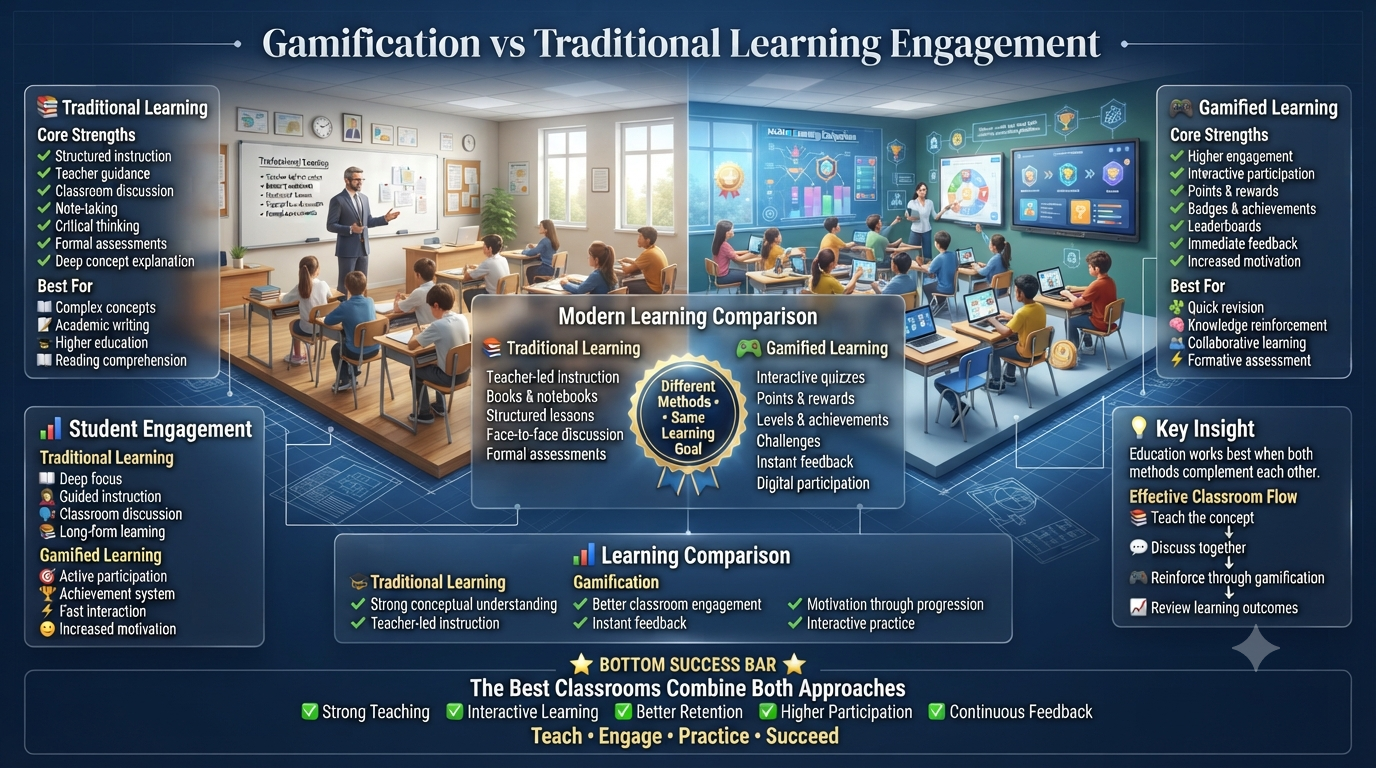
Gimkit vs Kahoot for Elementary Students-Smart Review No.1.Elementary classrooms have changed dramatically over the last few years. Teachers are no longer relying only on worksheets, flashcards, and traditional quizzes to keep young learners engaged. Game-based learning platforms have become a major part of modern education because they transform ordinary lessons into exciting challenges. Among the most searched educational tools today, Gimkit and Kahoot consistently appear at the top of the list when educators look for ways to improve classroom participation and knowledge retention.
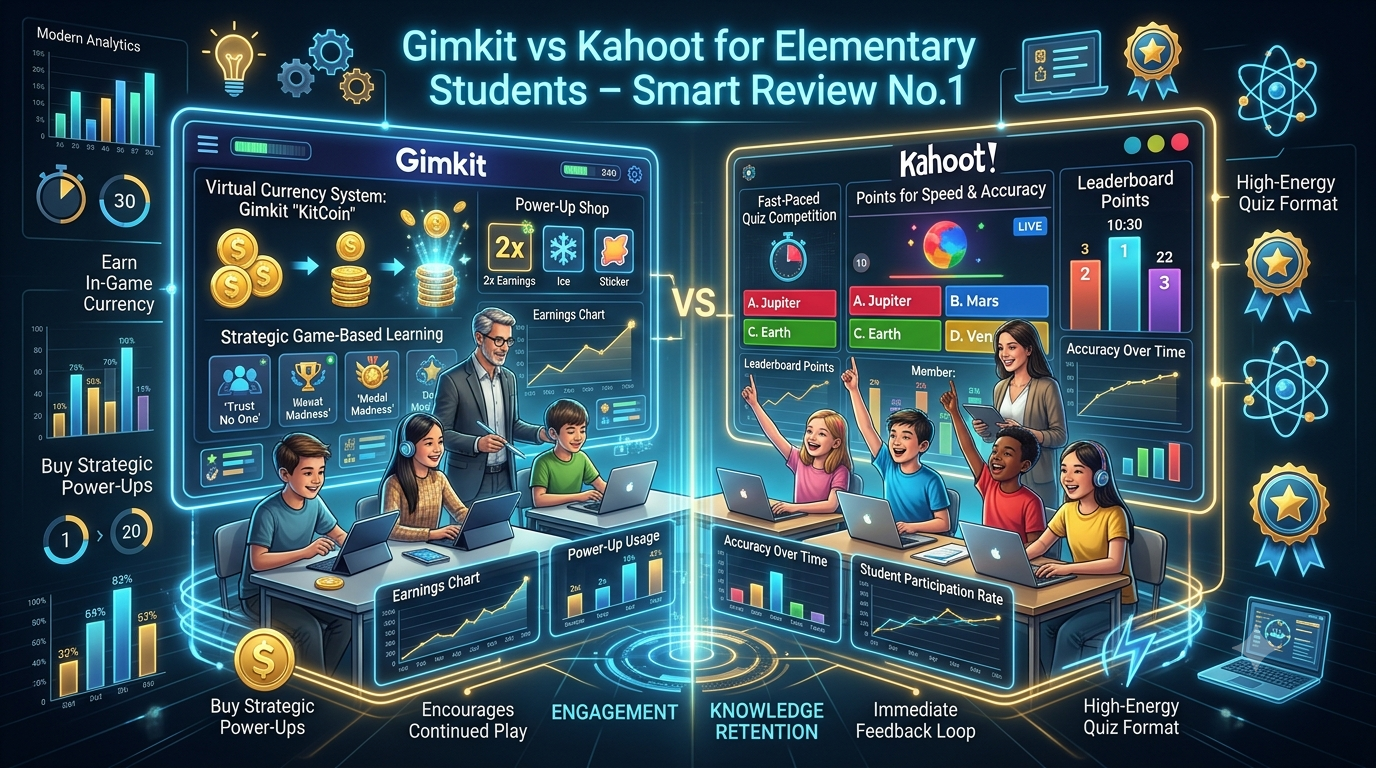
For elementary students, engagement is often the deciding factor between successful learning and lost attention. Both platforms offer interactive quiz experiences, but they approach learning in very different ways. While Kahoot focuses on fast-paced competition and quick responses, Gimkit introduces a unique reward economy that allows students to earn virtual currency and strategically use it during gameplay. This distinction has made many teachers question which platform delivers better educational outcomes for younger learners.
The growing popularity of game-based learning is supported by increasing demand for classroom technology that promotes participation, critical thinking, and repeated practice. Parents, teachers, and school administrators frequently search for solutions that improve motivation without sacrificing academic value. As a result, understanding the differences between Gimkit and Kahoot has become important for anyone responsible for elementary education.
Many educators discover Gimkit through resources such as
Gimkit Guide articles and classroom recommendations. They often compare it directly against Kahoot because both tools promise to make learning enjoyable while reinforcing key concepts. However, the experience students receive from each platform can vary significantly depending on classroom goals and teaching methods.
This review examines how Gimkit and Kahoot perform specifically for elementary students. Rather than focusing only on popularity, the analysis explores engagement levels, learning effectiveness, classroom management, student motivation, and practical educational value. The goal is to help teachers determine which platform aligns best with their instructional objectives.
Explanation
Gimkit is a game-based learning platform designed to transform traditional quizzes into interactive educational experiences. Created by a high school student who wanted more engaging classroom review activities, the platform has evolved into one of the most innovative educational technology tools available today. Unlike ordinary quiz systems, Gimkit introduces a virtual economy where correct answers generate in-game cash that students can spend on upgrades and strategic advantages.
Teachers create a Gimkit Kit containing questions related to a lesson, topic, or unit of study. Students then participate in live games or complete assignments independently. The combination of learning and strategy encourages repeated question exposure, which can improve memory retention and concept mastery over time.
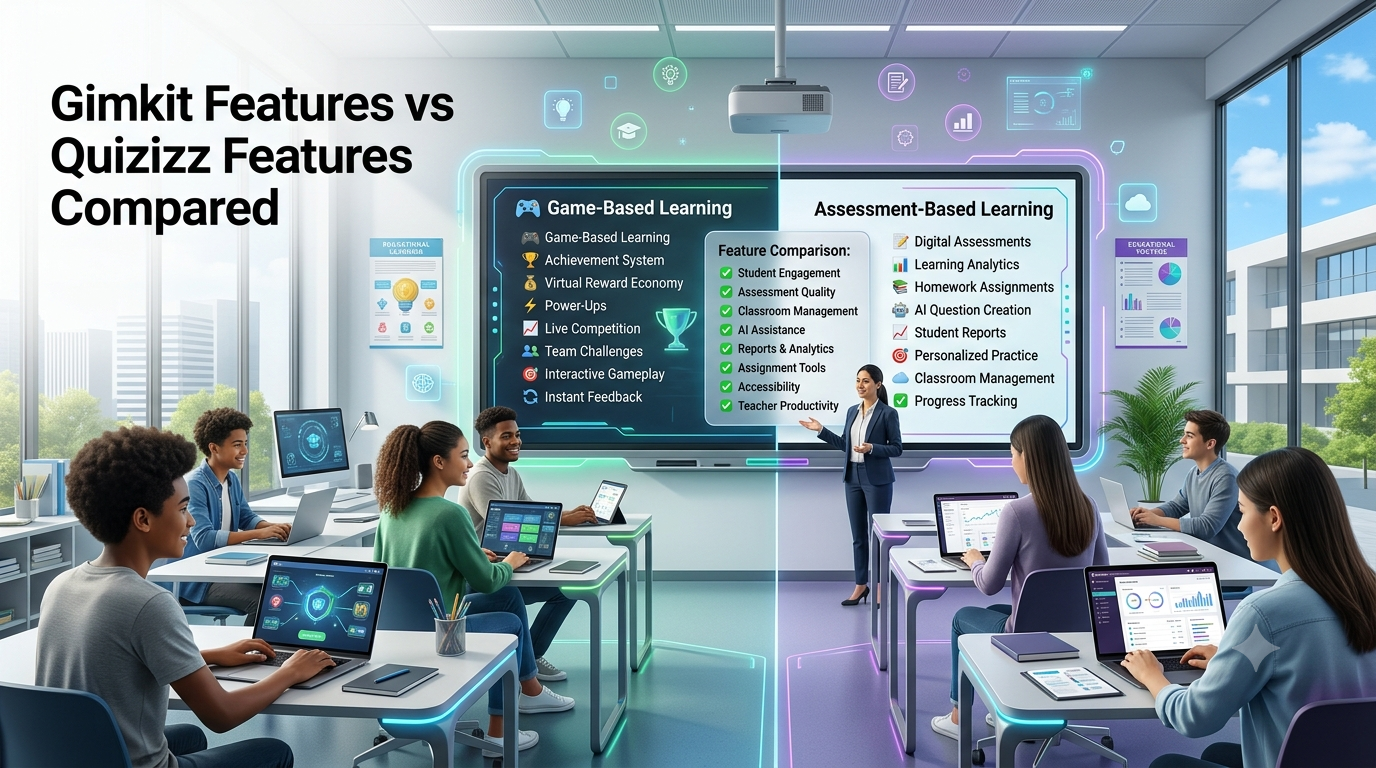
Kahoot, on the other hand, operates as a rapid-response quiz platform. Students answer questions as quickly as possible while competing on a live leaderboard. The excitement comes from speed, ranking positions, and visual competition. For many elementary classrooms, this creates a lively atmosphere that captures attention immediately.
The primary difference lies in learning philosophy. Kahoot rewards speed and accuracy, whereas Gimkit rewards accuracy, strategy, and persistence. Young learners often find Gimkit appealing because they remain engaged beyond simply answering questions. They actively make decisions about upgrades, earning potential, and game progression.
Teachers frequently explore resources about Gimkit Learning because the platform combines educational review with game mechanics that resemble popular video games. This familiar environment helps students feel comfortable while practicing academic content.
Another reason for Gimkit’s growth is its flexibility. Whether used for vocabulary review, mathematics practice, science reinforcement, or reading comprehension activities, the platform adapts to different educational needs. Combined with multiple gameplay formats, it offers an experience that feels fresh even when reviewing similar content repeatedly.
How It Works
The process begins when a teacher creates a question set using the platform’s content builder. This collection of questions becomes a learning package known as a kit. Many educators manage their resources through the >Gimkit Dashboard , where they organize subjects, assignments, and classroom activities.
After preparation, the teacher selects a game mode and launches a session. Students receive access through a unique Gimkit Code , allowing them to enter the game quickly from their devices. The joining process is simple, which makes classroom setup efficient even for younger students.
Students can access sessions through Gimkit Join options that require minimal technical knowledge. Once connected, they begin answering questions related to the lesson. Every correct answer generates virtual currency that becomes part of the gameplay strategy.
As students accumulate earnings, they can purchase upgrades that increase their performance. This system introduces decision-making elements rarely found in traditional educational quizzes. Instead of merely answering questions, learners actively manage resources and plan future actions.
Teachers who frequently run live sessions often use Gimkit Host tools to monitor participation, track scores, and evaluate classroom understanding in real time. This immediate visibility helps identify students who may need additional support.
For students, the experience resembles an educational game rather than a conventional assessment. Through , learners repeatedly encounter important concepts while remaining motivated by rewards, competition, and progression systems.
The platform also supports independent assignments. Teachers can distribute activities through a Gimkit Classroom environment, allowing students to practice outside regular lesson hours while maintaining engagement.
Benefits
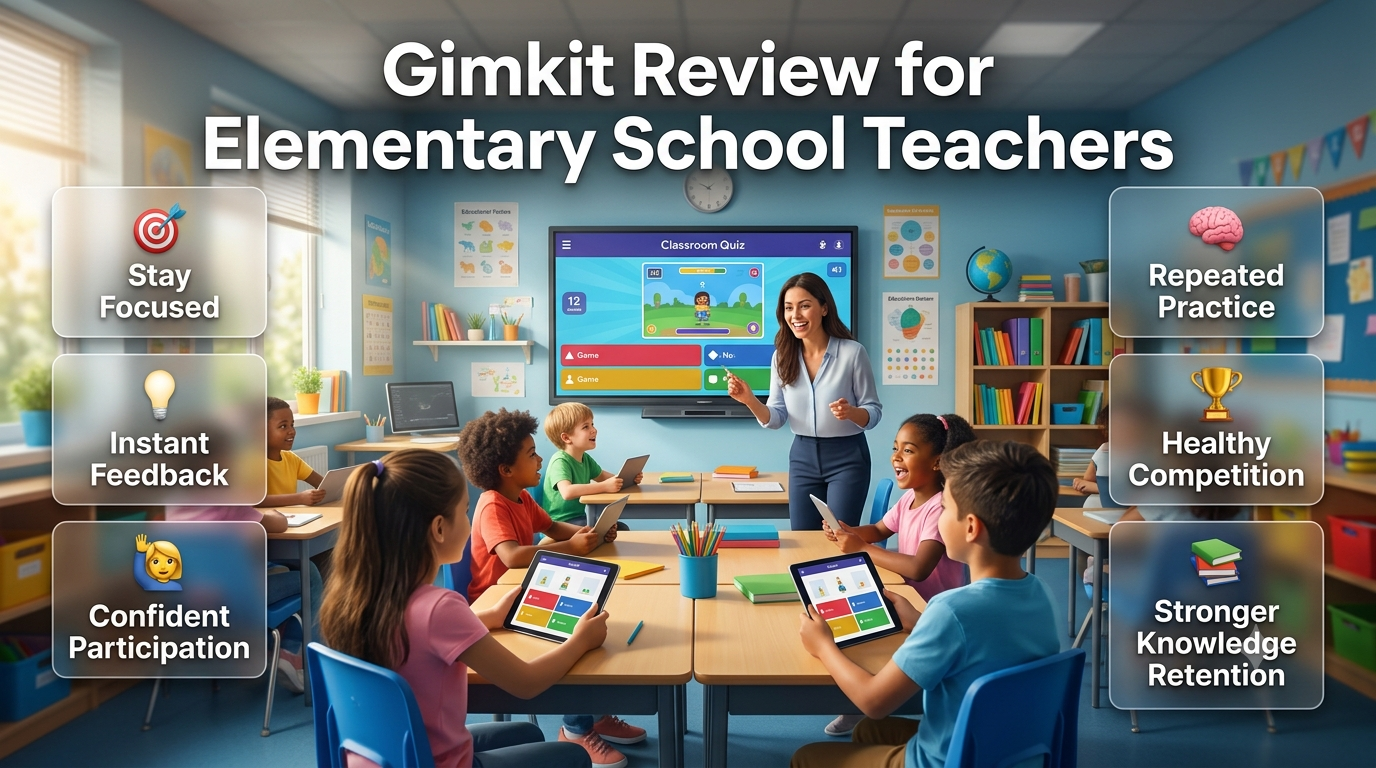
One of the strongest advantages of Gimkit for elementary students is increased motivation. Young learners naturally respond to rewards and achievement systems. Because every correct answer contributes to progress, students remain invested in the learning experience for longer periods.
Memory retention improves through repeated exposure. Questions appear multiple times during gameplay, encouraging reinforcement without making practice feel repetitive. This repetition supports long-term understanding while maintaining student interest.
Another benefit is immediate feedback. Students instantly learn whether answers are correct, allowing them to adjust their understanding before misconceptions become deeply established. This feature strengthens learning efficiency and promotes self-correction.
Teachers gain valuable classroom insights through performance tracking. By reviewing data generated from Gimkit Teachers tools, educators can identify weak areas, monitor participation, and adjust future lessons accordingly.
The strategic gameplay component encourages critical thinking. Students are not simply recalling facts; they are making choices about how to use resources and maximize success. This additional layer creates a more dynamic learning experience.
Collaboration opportunities also exist through various Gimkit Mode options. Team-based formats allow students to work together, communicate effectively, and build classroom relationships while reinforcing academic concepts.
For younger learners, visual engagement is another major advantage. The interactive environment feels familiar and entertaining, helping maintain focus during review sessions that might otherwise seem routine.
Many educators also appreciate the variety of Gimkit Activities available across different subjects. This flexibility makes the platform suitable for daily practice, unit review, homework assignments, and test preparation.
Process
Step
Action
Educational Purpose
1
Teacher creates a question set
Aligns content with curriculum goals
2
Questions are organized into a kit
Provides structured learning material
3
Teacher launches a live game
Creates an interactive learning environment
4
Students enter using a game code
Ensures quick classroom participation
5
Students answer questions
Reinforces lesson concepts
6
Correct answers generate virtual cash
Increases motivation and engagement
7
Students purchase upgrades
Encourages strategic thinking
8
Teacher monitors performance
Identifies strengths and weaknesses
9
Data is collected automatically
Supports instructional decisions
10
Students review content repeatedly
Improves retention and mastery
Proof + Case Study + Comparisons
Classroom Performance Evidence
Evaluation Area
Gimkit
Kahoot
Elementary Classroom Impact
Average Engagement Duration
High due to reward system
Moderate to high during live sessions
Gimkit often keeps students focused longer
Question Repetition
Built into gameplay naturally
Usually limited to session questions
Gimkit strengthens long-term retention
Strategic Thinking
Strong emphasis
Minimal emphasis
Gimkit develops decision-making skills
Excitement Level
Consistent throughout activity
Very high at the beginning
Both perform well but differently
Learning Reinforcement
Continuous
Session-based
Gimkit provides more repeated practice
Student Participation
High among various skill levels
Often dominated by fast responders
Gimkit creates more balanced involvement
Homework Effectiveness
Excellent through assignments
Limited compared with Gimkit
Better for independent practice
Progress Monitoring
Detailed analytics
Strong but less focused on repetition
Gimkit offers deeper learning insights
Elementary School Case Study Comparison
Category
Classroom A (Using Gimkit)
Classroom B (Using Kahoot)
Grade Level
4th Grade
4th Grade
Subject
Vocabulary Development
Vocabulary Development
Review Period
4 Weeks
4 Weeks
Student Engagement
Consistently high across sessions
High during live competitions
Homework Completion
Increased due to game incentives
Moderate participation
Knowledge Retention
Strong improvement after repeated exposure
Good short-term recall
Student Motivation
Sustained through rewards and upgrades
Driven mainly by leaderboard competition
Teacher Feedback
Easier identification of weak concepts
Faster whole-class review sessions
Overall Outcome
Better long-term reinforcement
Better rapid assessment experience
Detailed Gimkit vs Kahoot Comparison
Feature
Gimkit
Kahoot
Core Learning Model
Earn virtual money through correct answers
Earn points through speed and accuracy
Learning Style
Strategic game-based learning
Fast-paced quiz competition
Student Focus
Accuracy, repetition, upgrades
Speed, ranking, competition
Live Gameplay
Yes
Yes
Self-Paced Assignments
Strong support
Available but less central
Classroom Analytics
Detailed
Detailed
Team Modes
Multiple options
Multiple options
Memory Reinforcement
Excellent
Good
Motivation System
Virtual economy and upgrades
Leaderboards and scores
Best Elementary Use
Ongoing practice and revision
Quick classroom reviews
Why Elementary Students Often Prefer Gimkit
Elementary learners tend to enjoy environments that provide continuous rewards. The structure of Gimkit Games keeps students involved because every correct answer contributes toward a larger objective. Instead of simply finishing a quiz, they feel like they are progressing through a meaningful challenge.
Young students also benefit from having control over their experience. Through strategic upgrades and earning opportunities, learners feel ownership of their progress. This sense of control increases motivation and often encourages longer participation periods compared with traditional review activities.
Another important factor is reduced pressure. In many quiz competitions, students who answer slowly can become discouraged. Gimkit minimizes this issue because success depends on sustained accuracy and strategy rather than pure reaction speed.
The platform’s design naturally supports repeated practice. Students may answer the same concept multiple times without feeling bored because each interaction contributes to game advancement. This makes concept reinforcement more effective while preserving engagement.
Stay updated with the latest video game news, expert reviews, walkthroughs, and industry coverage by visiting IGN, one of the world’s leading gaming and entertainment websites.
Real Classroom Use Cases
Mathematics Review
Teachers frequently use Gimkit Quiz activities to reinforce multiplication facts, fractions, geometry concepts, and basic problem-solving skills. Students practice repeatedly while remaining focused on gameplay objectives.
Vocabulary Development
Vocabulary instruction is one of the strongest use cases. Through repeated exposure, students encounter words multiple times, helping strengthen recognition, comprehension, and long-term recall.
Science Reinforcement
Elementary science lessons often contain terminology that requires repetition. Interactive review sessions allow students to revisit concepts such as ecosystems, weather patterns, and life cycles in a more engaging format.
Reading Comprehension
Teachers can create question sets based on passages, stories, and reading assignments. This encourages students to apply comprehension skills while participating in a game-based environment.
Homework Assignments
Using the Gimkit App , educators can assign independent review tasks outside classroom hours. Students complete activities at their own pace while continuing to receive immediate feedback.
Test Preparation
Many teachers use Gimkit before assessments because it transforms revision into an enjoyable activity. Students often review larger amounts of content when the process feels entertaining rather than repetitive.
Pricing and Plans
Cost is often an important factor when schools and teachers evaluate educational technology. Both platforms offer free access, but premium subscriptions unlock additional features that can significantly affect classroom usage.
Pricing Factor
Gimkit
Kahoot
Free Version
Available
Available
Live Games
Yes
Yes
Basic Question Creation
Yes
Yes
Advanced Game Modes
Mostly Premium
Varies by Plan
Homework Assignments
Strong Support
Available in Higher Plans
Analytics Features
More Detailed in Premium
More Detailed in Premium
Classroom Customization
Extensive
Moderate
Best Value For
Ongoing classroom learning
Quick assessment sessions
For teachers who plan to use game-based learning regularly, premium features can provide additional flexibility and engagement opportunities. Schools looking for long-term learning reinforcement often find value in Gimkit’s expanded game modes and assignment options. Many educators explore the platform thoroughly before deciding whether advanced functionality justifies the investment.
Why Gimkit Is Popular Among Elementary Teachers
The popularity of Gimkit continues to grow because it addresses one of the biggest challenges in education: maintaining student attention. Young learners often struggle to stay focused during repetitive review activities, but the reward-driven structure creates a reason to remain engaged.
Many teachers report that students actively request additional review sessions when learning activities are delivered through game-based systems. This level of enthusiasm is uncommon with traditional worksheets and quizzes.
The platform also supports differentiated learning. Students who need extra practice can continue answering questions and earning rewards without feeling singled out. At the same time, advanced learners remain challenged through strategy and optimization mechanics.
Another factor behind its success is flexibility. Whether educators need quick review activities, independent assignments, or full-class competitions, the system adapts to different instructional goals. Students with different learning styles and academic abilities can participate effectively and remain motivated throughout the learning process.
The combination of engagement, repetition, competition, and instant feedback creates an environment where learning feels rewarding rather than obligatory. This balance is a major reason why many elementary classrooms continue adopting Gimkit each year.
Honest Limitations
A trustworthy evaluation should acknowledge limitations alongside strengths.
Limitation
Impact on Elementary Classrooms
Internet Dependency
Reliable connectivity is required for smooth gameplay
Device Access
Students need individual devices for participation
Premium Features
Some advanced modes require a paid subscription
Learning Curve
New teachers may need time to explore all options
Subject Suitability
Works best for review-based content rather than deep instruction
Competitive Elements
Some students may prefer less competitive activities
Screen Time
Should be balanced with other teaching methods
Teachers should view Gimkit as a learning enhancement tool rather than a complete instructional replacement. Direct teaching, discussion, hands-on activities, and collaborative projects still play essential roles in elementary education.
Some users search for shortcuts or methods to improve performance, but educational value is strongest when students engage honestly with the learning process. Consistent participation and thoughtful practice produce far better outcomes than attempting to bypass the intended learning experience.
Advanced Teacher Insights
Educators who achieve the best results with Gimkit typically integrate it strategically rather than using it for every lesson. The most effective classrooms use game-based review to reinforce concepts after initial instruction has already occurred.
For vocabulary development, repeated exposure through gameplay helps strengthen recall. For mathematics, frequent practice sessions support fluency. For science and social studies, review activities help students retain terminology and key facts over longer periods.
Teachers often find that shorter, focused games produce better engagement than excessively long competitions. Rotating different game formats also helps maintain novelty throughout the school year.
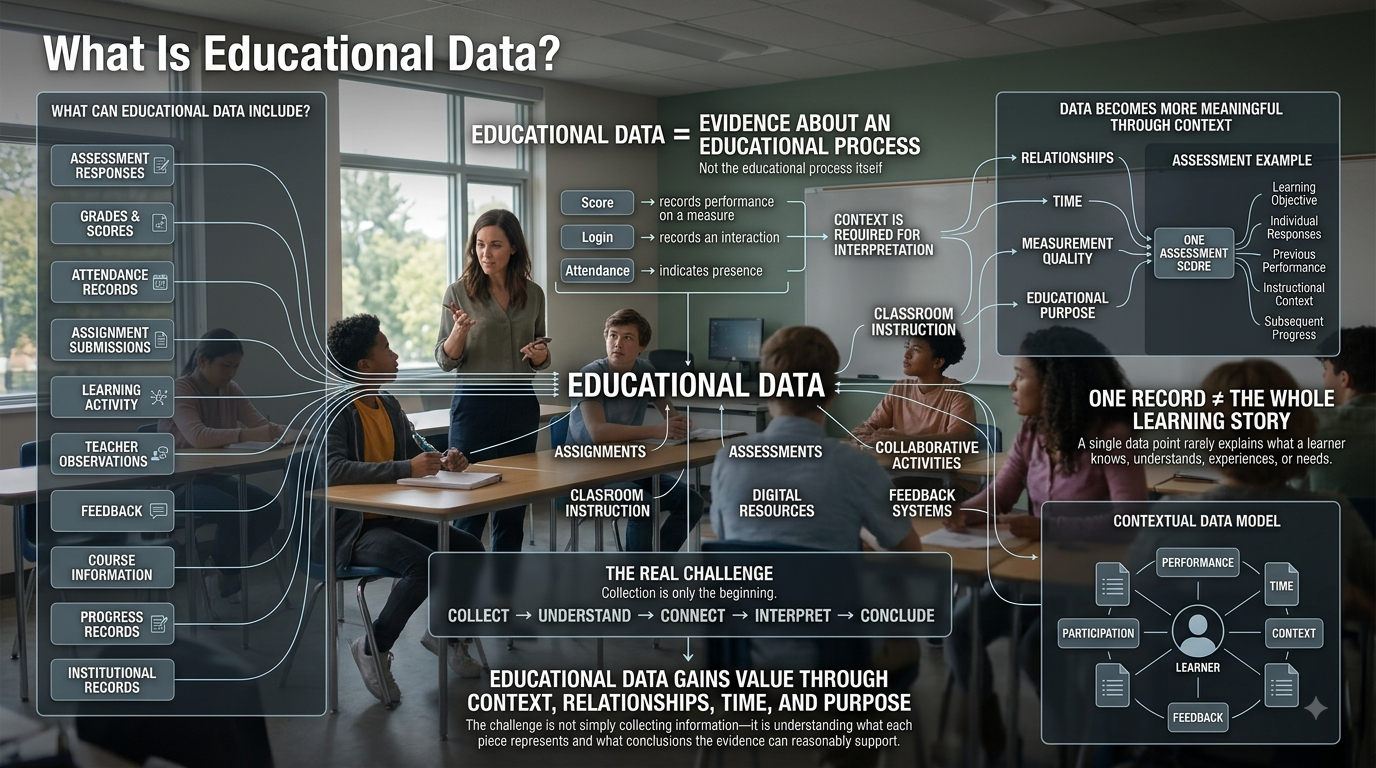
Data collected through classroom reports can guide instructional decisions. When patterns emerge showing students consistently missing specific questions, teachers gain valuable information about learning gaps that may require additional instruction.
Many successful educators also combine multiple approaches. They may use direct instruction first, collaborative activities second, and game-based reinforcement last. This layered approach maximizes both understanding and retention.
Top Hacks
Gimkit vs Kahoot for Elementary Students offers a more strategic learning experience because students earn virtual currency and use it to purchase upgrades, while Kahoot mainly focuses on answering questions quickly to climb the leaderboard.
Gimkit vs Kahoot for Elementary Students highlights a major difference in learning style, as Gimkit emphasizes repetition and mastery, whereas Kahoot prioritizes fast-paced competition and instant results.
Gimkit vs Kahoot for Elementary Students shows that Gimkit is often better for long-term retention because students repeatedly encounter important concepts throughout a game session.
Gimkit vs Kahoot for Elementary Students reveals that Kahoot is generally more suitable for quick classroom reviews, while Gimkit is designed for deeper learning reinforcement.
Gimkit vs Kahoot for Elementary Students demonstrates how Gimkit rewards accuracy and consistency, whereas Kahoot rewards both speed and correctness when calculating scores.
Gimkit vs Kahoot for Elementary Students indicates that students who enjoy video game mechanics may find Gimkit more engaging because of its progression system and in-game rewards.
Gimkit vs Kahoot for Elementary Students shows that Kahoot creates excitement through live competition, while Gimkit maintains engagement through strategy, upgrades, and continuous goals.
Gimkit vs Kahoot for Elementary Students proves that Gimkit can reduce pressure on slower learners because success depends on persistence rather than answering first.
Gimkit vs Kahoot for Elementary Students highlights that Kahoot is easier to use for spontaneous quizzes, while Gimkit offers more advanced gameplay features for extended learning sessions.
Gimkit vs Kahoot for Elementary Students demonstrates that teachers can use Gimkit effectively for homework assignments because students remain motivated even outside the classroom.
Gimkit vs Kahoot for Elementary Students reveals that Gimkit provides stronger opportunities for independent practice, while Kahoot performs best during teacher-led activities.
Gimkit vs Kahoot for Elementary Students shows that vocabulary review often becomes more effective in Gimkit because repeated exposure helps students remember key terms more easily.
Gimkit vs Kahoot for Elementary Students explains that Kahoot delivers immediate classroom energy, whereas Gimkit focuses on sustained engagement throughout the learning process.
Gimkit vs Kahoot for Elementary Students illustrates how Gimkit encourages decision-making skills by requiring students to choose the best upgrades and earning strategies.
Gimkit vs Kahoot for Elementary Students demonstrates that students with different learning speeds can participate more comfortably in Gimkit because the platform is less dependent on rapid responses.
Gimkit vs Kahoot for Elementary Students shows that Kahoot works exceptionally well as a lesson starter, while Gimkit is often stronger for comprehensive review and practice.
Gimkit vs Kahoot for Elementary Students highlights the fact that Gimkit’s game modes provide more variety, helping teachers keep classroom activities fresh and engaging.
Gimkit vs Kahoot for Elementary Students reveals that performance data from Gimkit can help teachers identify learning gaps through detailed reports and student progress tracking.
Gimkit vs Kahoot for Elementary Students demonstrates that younger learners often remain focused longer in Gimkit because every correct answer contributes to meaningful in-game progress.
Gimkit vs Kahoot for Elementary Students ultimately shows that Gimkit is generally the stronger choice for long-term learning and retention, while Kahoot remains one of the best platforms for fast, energetic classroom competitions.
Gimkit vs Kahoot for Elementary Students shows that Gimkit encourages students to stay engaged even after making mistakes because they can continue earning rewards and improving their performance throughout the game.
Gimkit vs Kahoot for Elementary Students highlights that Kahoot relies heavily on leaderboard competition, while Gimkit motivates learners through progression, upgrades, and achievement-based rewards.
Gimkit vs Kahoot for Elementary Students demonstrates that math practice often feels more enjoyable in Gimkit because students remain focused on both solving problems and advancing within the game.
Gimkit vs Kahoot for Elementary Students reveals that Gimkit provides a more personalized experience since students can choose different strategies to maximize their success.
Gimkit vs Kahoot for Elementary Students shows that classroom participation tends to be more balanced in Gimkit because students are not penalized as heavily for slower response times.
Gimkit vs Kahoot for Elementary Students explains that Kahoot is excellent for checking immediate understanding, while Gimkit is more effective for reinforcing concepts over multiple learning sessions.
Gimkit vs Kahoot for Elementary Students highlights how Gimkit transforms ordinary quizzes into interactive challenges that encourage students to remain active participants rather than passive learners.
Gimkit vs Kahoot for Elementary Students demonstrates that teachers can use Gimkit to support differentiated instruction because students can progress at different speeds while remaining engaged.
Gimkit vs Kahoot for Elementary Students reveals that many elementary students prefer Gimkit because the reward system creates a stronger sense of accomplishment after every correct answer.
Gimkit vs Kahoot for Elementary Students ultimately proves that both platforms are valuable educational tools, but Gimkit often delivers greater learning reinforcement and retention, while Kahoot excels at creating fast-paced excitement and classroom energy.
Gimkit vs Kahoot for Elementary Students demonstrates that Gimkit encourages continuous learning because students remain motivated to answer more questions in order to earn additional rewards and upgrades.
Gimkit vs Kahoot for Elementary Students highlights that Kahoot sessions usually end when the quiz is completed, whereas Gimkit keeps students engaged through ongoing gameplay and progression mechanics.
Gimkit vs Kahoot for Elementary Students shows that students often spend more time reviewing educational content in Gimkit because the game structure makes practice feel entertaining rather than repetitive.
Gimkit vs Kahoot for Elementary Students reveals that Gimkit can be particularly effective for test preparation since repeated question exposure helps reinforce important concepts before assessments.
Gimkit vs Kahoot for Elementary Students explains that Kahoot focuses on instant competition, while Gimkit balances competition with learning strategies that encourage thoughtful participation.
Gimkit vs Kahoot for Elementary Students demonstrates that Gimkit provides stronger opportunities for skill reinforcement because students encounter similar concepts multiple times during a single session.
Gimkit vs Kahoot for Elementary Students highlights that younger learners often appreciate Gimkit’s game-like environment because it resembles the progression systems found in many popular video games.
Gimkit vs Kahoot for Elementary Students shows that teachers can use Gimkit for both live classroom activities and independent assignments, giving it greater flexibility across different learning situations.
Gimkit vs Kahoot for Elementary Students reveals that Gimkit helps maintain student focus by providing clear goals, rewards, and incentives that encourage continued participation from beginning to end.
Gimkit vs Kahoot for Elementary Students proves that while Kahoot remains an excellent tool for quick reviews and classroom excitement, Gimkit frequently delivers stronger long-term educational benefits through repetition, strategy, and sustained engagement.
Gimkit vs Kahoot for Elementary Students shows that Gimkit supports deeper conceptual understanding because students repeatedly interact with the same ideas in different gameplay situations, strengthening long-term learning.
Gimkit vs Kahoot for Elementary Students highlights that Kahoot is best suited for instant feedback and quick revision sessions, while Gimkit is more effective for extended practice and skill building over time.
Gimkit vs Kahoot for Elementary Students demonstrates that both platforms improve classroom engagement, but Gimkit often creates more consistent motivation throughout the entire learning activity due to its reward-based system and interactive progression.
Final Insight
For elementary students, both Gimkit and Kahoot successfully transform traditional review activities into engaging learning experiences. However, their strengths serve different educational purposes.
Decision Area
Better Choice
Long-Term Retention
Gimkit
Repeated Practice
Gimkit
Homework Assignments
Gimkit
Strategic Learning
Gimkit
Fast Classroom Reviews
Kahoot
Instant Excitement
Kahoot
Quick Assessments
Kahoot
Competitive Energy
Kahoot
Overall Elementary Learning Reinforcement
Gimkit
Overall Live Quiz Experience
Kahoot
When the goal is deeper reinforcement, sustained engagement, repeated practice, and meaningful progression, Gimkit generally provides greater value for elementary learners. The virtual economy, upgrade system, and continuous interaction help students remain invested in academic content for longer periods. Teachers seeking stronger retention and ongoing review often find that Gimkit delivers advantages that extend beyond simple quiz competition.
For educators prioritizing rapid classroom assessments and energetic live competitions, Kahoot remains an excellent option. Yet for long-term educational impact in elementary environments, Gimkit’s combination of learning science, repetition, strategy, and engagement frequently gives it the edge.
Most Frequently Asked Faqs
Which Is Better, Gimkit or Kahoot?
The better choice depends on the learning goal, but for most elementary classrooms, Gimkit offers a deeper learning experience than Kahoot. Kahoot excels at creating excitement through fast-paced quizzes and live competition, making it ideal for quick reviews and classroom energizers. Gimkit, however, goes beyond simple quizzes by allowing students to earn virtual money, purchase upgrades, and make strategic decisions while learning.
Because students answer questions repeatedly throughout a game, Gimkit often leads to stronger memory retention and concept reinforcement. It also keeps learners engaged for longer periods since progress depends on both knowledge and strategy. If the goal is long-term learning and practice, Gimkit generally has the advantage. If the goal is a fast, energetic review session, Kahoot remains an excellent choice.
Is Gimkit Appropriate for Kids?
Yes, Gimkit is highly appropriate for kids, especially elementary and middle school students. The platform was designed as an educational learning tool that combines academic content with game mechanics. Students answer curriculum-based questions, receive instant feedback, and stay motivated through rewards and progression systems.
Teachers control the content, making it suitable for different age groups and subjects. The game environment encourages participation, repeated practice, and active learning without exposing students to inappropriate material. Many educators use Gimkit for vocabulary development, math practice, science review, reading comprehension, and homework assignments because it makes learning feel more enjoyable and interactive.
Is Kahoot for Elementary Students?
Absolutely. Kahoot is one of the most popular educational platforms for elementary students worldwide. Its colorful design, simple interface, and competitive gameplay make it easy for younger learners to understand and enjoy. Students answer multiple-choice questions while competing for points, creating an exciting classroom atmosphere.
Elementary teachers frequently use Kahoot to introduce lessons, review concepts, assess understanding, and increase participation. Because questions are presented in a game-show format, students often remain focused and enthusiastic throughout the activity. The platform works particularly well for short review sessions and whole-class engagement.
What Game Is Better Than Kahoot?
Several educational games can outperform Kahoot depending on the classroom objective, but Gimkit is often considered the strongest alternative. Unlike Kahoot’s speed-based scoring system, Gimkit rewards accuracy, repetition, and strategic thinking. This creates a learning experience that many teachers believe leads to better knowledge retention.
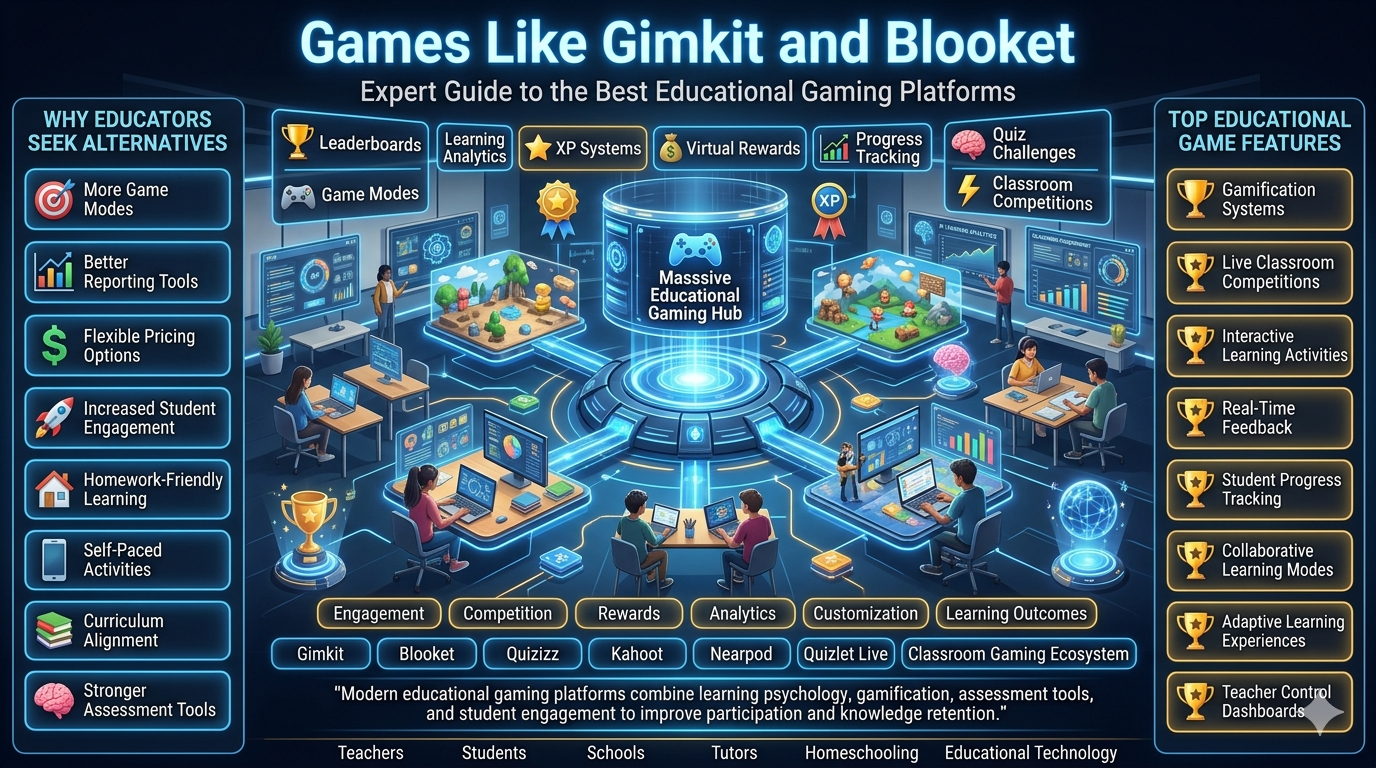
Other strong alternatives include:
Platform
Why It Can Be Better Than Kahoot
Gimkit
Stronger learning reinforcement, rewards system, homework support
Blooket
Multiple game modes, highly engaging for younger students
Excellent for vocabulary and collaborative learning
For elementary education specifically, Gimkit is often viewed as the most powerful Kahoot alternative because it combines engagement, repetition, competition, and long-term learning reinforcement in a single platform.