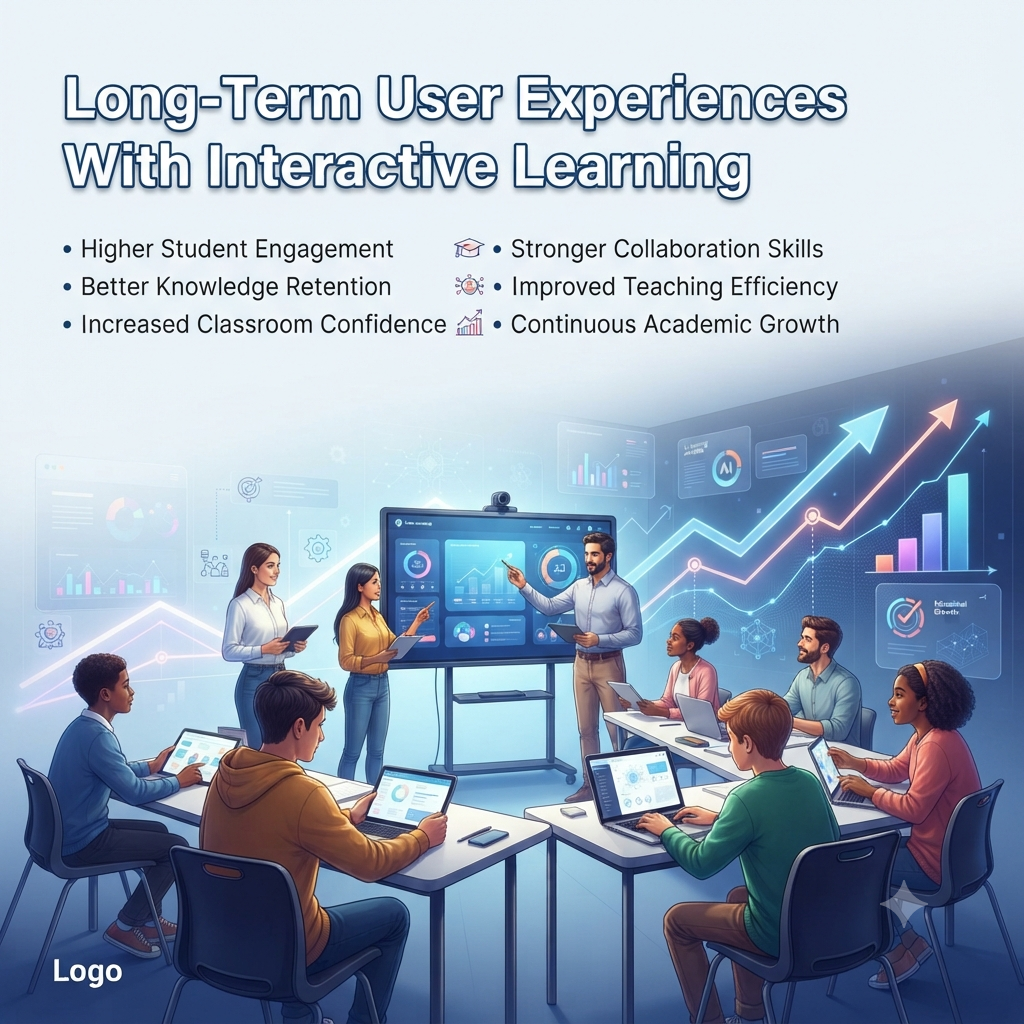
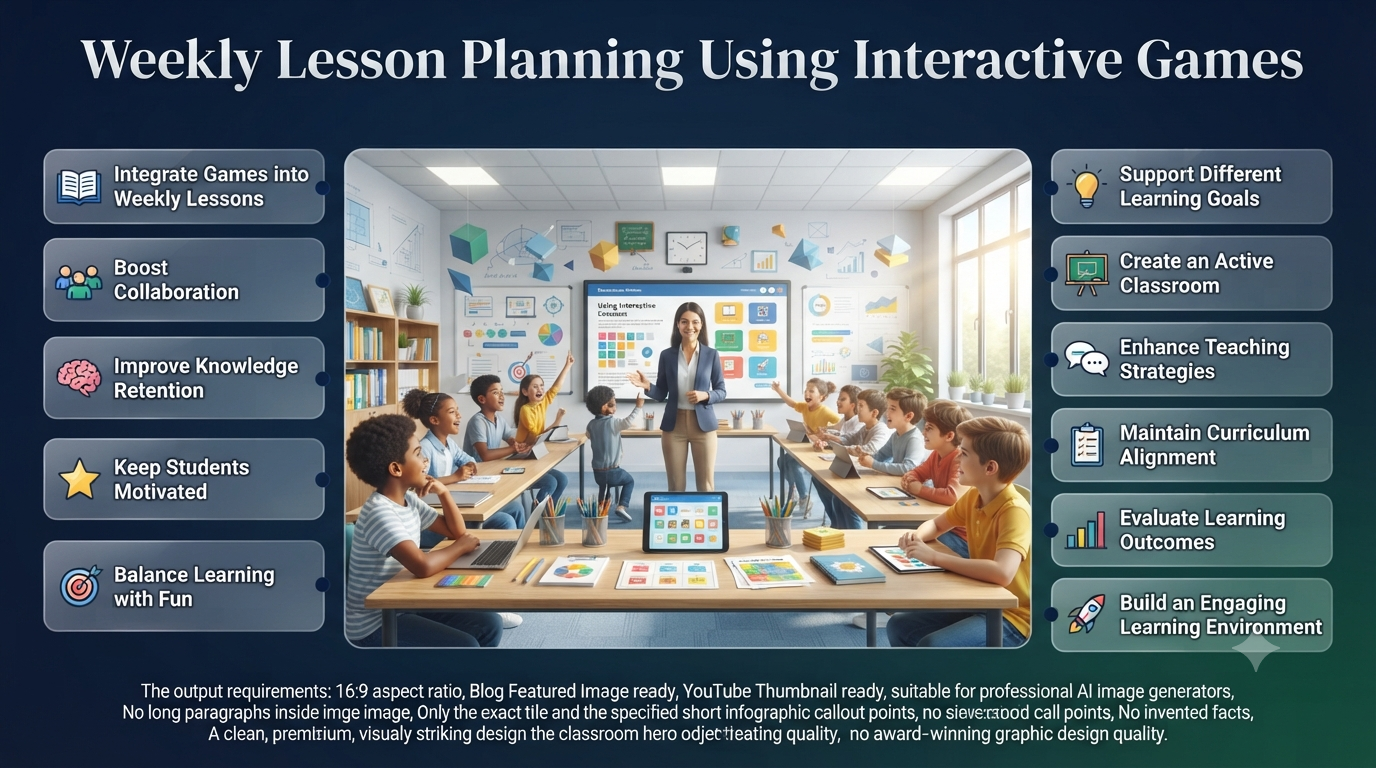
Long-Term User Experiences With Interactive Learning | Interactive learning often creates an immediate sense of excitement, but its real educational value becomes clear only after weeks or months of consistent use. While short-term engagement can capture students’ attention, long-term implementation reveals whether interactive activities genuinely improve participation, knowledge retention, classroom confidence, and teaching efficiency. Teachers who integrate interactive learning into regular instruction frequently observe that the biggest benefits emerge gradually as students become comfortable with active participation rather than passive listening.
🎯 How Interactive Learning Shapes Long-Term Growth
Looking for comprehensive classroom resources and educational technology insights? Explore GimkitApp for expert guides, teaching strategies, game modes, and the latest updates to enhance student engagement.
Why Long-Term Experiences Matter More Than First Impressions
Many educational tools leave a strong first impression because they introduce novelty into the classroom. Students naturally become excited when lessons include quizzes, competitions, collaborative activities, or technology-enhanced participation. However, experienced educators know that initial enthusiasm does not automatically translate into meaningful learning outcomes.
Long-term user experiences provide a much clearer picture of educational effectiveness because they answer questions such as:
Do students remain engaged after the novelty wears off?
Does knowledge retention actually improve over time?
Are teachers able to integrate interactive learning into everyday lessons without increasing workload?
Does classroom participation become more inclusive?
Can interactive learning support different learning styles throughout an academic term?
These questions cannot be answered after a single lesson. They require repeated classroom use across different topics, student groups, and learning objectives.
💡 Expert Insight: Sustainable engagement is a stronger indicator of educational success than short-term excitement. A classroom that remains actively involved throughout an entire semester demonstrates deeper learning habits than one that experiences only occasional bursts of enthusiasm.
How Student Engagement Evolves Over Time
One of the most consistent long-term observations is that student engagement changes in stages rather than remaining constant. The way learners interact during their first week is often very different from how they participate after several months.
Stage 1: Curiosity and Excitement
During the initial weeks, students are attracted by the interactive nature of lessons. Activities feel different from traditional lectures, making participation more appealing.
At this stage, motivation is often driven by:
Competition
Curiosity
Immediate feedback
Classroom energy
Visual interaction
Gamified activities
While these elements increase attention, they should not be mistaken for lasting educational impact.
Stage 2: Building Consistent Participation
As interactive learning becomes a regular part of classroom routines, students begin shifting their focus from entertainment toward learning itself.
Instead of participating only because an activity feels exciting, many students start engaging because they understand that active involvement helps them:
Remember concepts more effectively
Identify knowledge gaps quickly
Learn from classmates
Receive immediate correction
Build confidence before formal assessments
Participation gradually becomes a learning habit rather than a reaction to novelty.
✅ Best Practice: Consistency matters more than frequency. A well-planned interactive activity every week often produces stronger long-term engagement than several activities concentrated into a short period.
Stage 3: Active Learning Becomes the Classroom Norm
After extended implementation, classrooms often experience a cultural shift.
Students no longer wait passively for information. Instead, they begin expecting to contribute through discussions, collaborative tasks, questioning, peer learning, and interactive review sessions.
Teachers frequently notice improvements in behaviors such as:
Volunteering answers more confidently
Asking thoughtful questions
Supporting classmates during activities
Remaining attentive for longer periods
Taking greater ownership of learning
Rather than viewing lessons as information delivery, students increasingly see learning as an active process.
Long-Term Effects on Knowledge Retention
One of the strongest reasons educators continue using interactive learning is its influence on long-term memory.
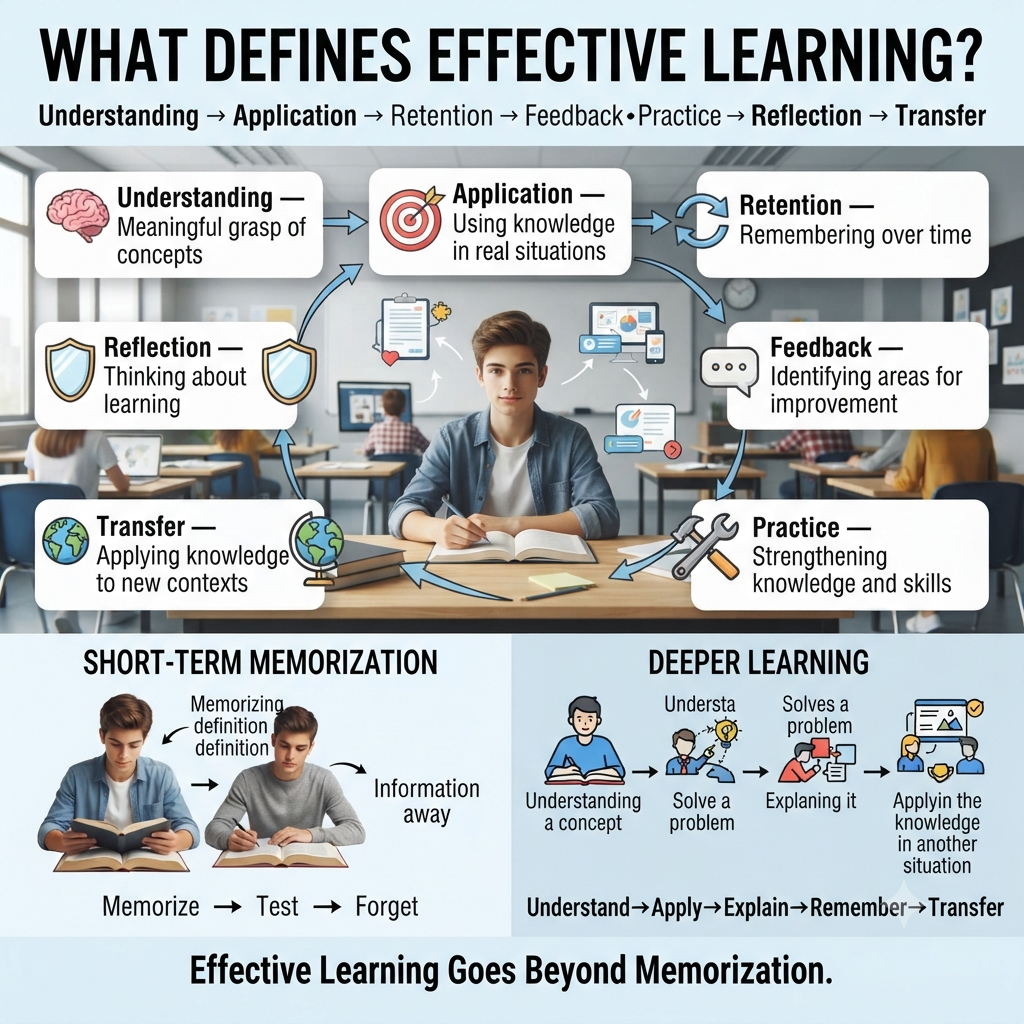
Traditional instruction sometimes encourages short-term memorization before assessments. Interactive learning, by contrast, repeatedly asks students to retrieve, apply, discuss, and explain information. This repeated mental effort strengthens memory over time.
Instead of simply recognizing correct answers, learners repeatedly practice recalling information from memory—a process widely associated with stronger long-term retention.
Why Information Stays Longer
Several classroom experiences contribute to better memory formation:
Interactive Learning Practice
Long-Term Learning Benefit
Active participation
Stronger understanding instead of passive exposure
Immediate feedback
Misconceptions corrected before becoming habits
Repeated retrieval
Better long-term recall
Peer discussion
Multiple ways of understanding the same concept
Practical application
Easier transfer of knowledge into real situations
The cumulative effect becomes increasingly noticeable across an academic term as students revisit concepts in different contexts rather than relying solely on last-minute revision.
Confidence Grows Through Repeated Participation
Confidence rarely develops after one successful classroom activity. It grows gradually through repeated opportunities to participate without fear of failure.
Interactive learning environments often reduce the pressure associated with traditional classroom questioning because students receive regular chances to contribute, practice, and improve.
Over time, teachers commonly observe that previously quiet learners begin participating more frequently as they realize mistakes are treated as part of learning rather than as public failures.
This gradual increase in confidence can influence several areas of learning:
Classroom discussions become more balanced.
Students ask for clarification sooner.
Group collaboration improves.
Independent problem-solving increases.
Assessment anxiety may decrease because learners have practiced retrieving knowledge throughout regular lessons.
⭐ Professional Observation: Confidence built through continuous participation often extends beyond interactive activities. Students who become comfortable expressing ideas during classroom exercises are frequently more willing to contribute during projects, presentations, and collaborative assignments as well.
The Shift From Passive Learning to Active Learning Habits
Perhaps the most significant long-term change is not higher quiz scores or increased participation—it is the development of better learning habits.
Students who regularly experience interactive instruction begin approaching learning differently.
Instead of asking:
“Will this be on the test?”
They increasingly ask:
“Can I try solving it?”
That subtle shift reflects a deeper change in mindset. Learning becomes something students actively do rather than something they simply receive.
Over time, these habits can contribute to:
Greater curiosity during lessons
More independent thinking
Better preparation before class
Improved willingness to experiment with solutions
Increased resilience when facing challenging topics
These behavioral changes are often more valuable than any single assessment result because they support continuous learning long after a specific lesson has ended.
How Teachers’ Experiences Change After Long-Term Interactive Learning Implementation
Teachers often notice that their experience with interactive learning evolves just as much as their students’ experience. During the first few lessons, the focus is usually on learning the teaching approach, managing classroom participation, and understanding how students respond. After months of consistent implementation, however, many educators begin refining their instructional strategies rather than simply using interactive activities.
Instead of asking, “How do I run this activity?” experienced teachers begin asking, “How can this activity improve learning outcomes?” That shift reflects a move from using interactive learning as a classroom activity to treating it as an integrated teaching methodology.
⭐ Expert Insight: Long-term success rarely comes from using interactive learning more often. It comes from using it more intentionally, with each activity supporting a specific learning objective rather than serving as entertainment.
Classroom Management Becomes More Predictable
One concern many educators have before adopting interactive learning is classroom management. They often assume that increased participation will automatically lead to distractions or reduced discipline.
In practice, many classrooms experience the opposite effect over time.
As students become familiar with classroom expectations, activity routines become increasingly organized. Learners understand when to collaborate, when to compete, when to discuss ideas, and when to focus independently. Less time is spent explaining activity rules, allowing more time for meaningful learning.
Several positive classroom management changes may develop through consistent implementation:
Classroom Before Long-Term Interactive Learning
Classroom After Consistent Implementation
Students wait for teacher instructions
Students understand classroom routines
Participation comes from only a few learners
More students contribute naturally
Teachers manage constant attention loss
Students remain engaged for longer periods
Classroom discussions feel unbalanced
Broader participation becomes common
Review sessions require frequent prompting
Students participate with minimal encouragement
These improvements usually develop gradually through repeated classroom practice rather than appearing immediately.
Lesson Planning Becomes More Purposeful
Teachers who regularly use interactive learning often change how they prepare lessons.
Initially, activities may be added simply to increase engagement. Over time, experienced educators begin designing lessons where interaction supports specific educational goals.
Instead of asking students to participate for the sake of participation, teachers align activities with outcomes such as:
Reviewing previous lessons
Checking understanding before introducing new topics
Reinforcing difficult concepts
Encouraging critical thinking
Identifying misconceptions early
Measuring progress during instruction
This approach transforms interactive learning into an instructional strategy instead of an occasional classroom exercise.
✅ Best Practice: Begin lesson planning with the learning objective—not the activity. Once the educational goal is clear, choose an interactive method that naturally supports that objective.
Continuous Feedback Improves Teaching Decisions
One of the most valuable long-term benefits for educators is the ability to gather ongoing feedback throughout the learning process.
Traditional teaching methods often reveal learning gaps only after quizzes, assignments, or exams have been completed. Interactive learning creates opportunities to identify misunderstandings much earlier.
Over time, teachers become more confident in making instructional decisions because they receive regular insight into how students are progressing.
Continuous classroom feedback helps educators:
Detect misconceptions before they become long-term problems
Adjust lesson pacing based on student understanding
Revisit difficult topics before assessments
Differentiate instruction for learners with varying needs
Rather than waiting until the end of a unit, teachers can make smaller, timely adjustments that improve overall learning.
For the latest gaming news, expert reviews, and walkthroughs, readers can also visit IGN, one of the world’s leading gaming websites.
Student Collaboration Becomes More Meaningful
During the first few interactive activities, collaboration often focuses on completing tasks or participating in games. As students gain experience working together, collaboration tends to become more thoughtful and productive.
Learners gradually improve their ability to:
Explain ideas to classmates
Defend their reasoning respectfully
Listen to different viewpoints
Share responsibilities during group work
Solve problems collectively
Support peers who need additional help
These collaborative behaviors are valuable beyond individual lessons because they strengthen communication and teamwork—skills that remain useful across subjects and future learning environments.
Example Classroom Scenario
Imagine a science classroom where students regularly work through interactive concept reviews.
During the first month, discussions may revolve around choosing the correct answer.
Several months later, the conversation often changes. Students begin explaining why one answer is stronger than another, questioning assumptions, and helping classmates understand complex ideas before asking the teacher for assistance.
The activity itself has not changed dramatically—but the quality of learning has.
Interactive Learning Encourages More Reflective Teaching
Long-term implementation benefits teachers as well as students.
As educators observe patterns in participation, mistakes, and classroom discussions, they naturally become more reflective about their instructional methods.
Many teachers begin asking questions such as:
Which activities consistently improve understanding?
Which topics require additional discussion?
Which students participate less frequently?
Where do misconceptions repeatedly occur?
Which teaching approaches generate deeper thinking?
This reflection supports continuous professional growth rather than relying solely on intuition.
💡 Pro Tip: Keep brief notes after major interactive lessons. Recording common misconceptions, participation patterns, and successful teaching strategies creates a valuable reference for future lesson planning.
Long-Term Challenges Teachers Commonly Encounter
Interactive learning offers significant benefits, but experienced educators also recognize that long-term implementation brings practical challenges. Understanding these challenges helps teachers adapt instead of becoming discouraged.
Some of the most common issues include:
Challenge
Why It Happens
Practical Response
Engagement begins to decline
Students become familiar with repetitive activity formats
Introduce varied instructional approaches and question styles
Uneven participation
Confident learners dominate discussions
Rotate participation methods and encourage quieter students
Activity fatigue
The same routines are used too frequently
Balance interactive lessons with discussions, projects, and independent work
Time management
Activities extend beyond planned schedules
Set clear time limits and prioritize learning objectives
Surface-level participation
Students focus only on quick answers
Include follow-up questions that require explanation and reasoning
Recognizing these challenges early allows teachers to maintain the effectiveness of interactive learning without abandoning it.
⚠ Common Mistake: Treating every lesson as a game can reduce educational value over time. Interactive learning is most effective when it complements sound instructional design rather than replacing it.
Preventing Engagement Fatigue Over Time
One of the biggest misconceptions is that interactive learning automatically keeps students engaged forever.
In reality, any teaching strategy can lose its impact if used without variation.
Experienced educators maintain engagement by changing not only activities but also instructional goals, discussion formats, collaborative structures, and assessment techniques.
Effective long-term strategies include:
Rotating between individual, paired, and group activities
Combining discussion-based and problem-solving exercises
Using interactive reviews only when they genuinely reinforce learning
Introducing real-world scenarios that require critical thinking
Encouraging students to explain their reasoning instead of selecting answers alone
Balancing technology-supported learning with face-to-face interaction
These adjustments help preserve curiosity while preventing routines from becoming predictable.
Building a Sustainable Interactive Learning Culture
The most successful classrooms rarely depend on one activity or one platform. Instead, they develop a learning culture where interaction becomes an expected part of everyday education.
In these classrooms:
Students feel comfortable asking questions.
Mistakes are treated as opportunities to learn.
Feedback becomes a normal part of instruction.
Collaboration is encouraged rather than forced.
Participation is viewed as a shared responsibility.
Over time, this environment supports stronger engagement, better communication, and a greater willingness to explore new ideas—outcomes that extend well beyond individual lessons or assessments.
Long-Term Academic Outcomes of Interactive Learning
The true value of interactive learning is measured by what students continue to understand, remember, and apply long after an activity has ended. While immediate engagement is easy to observe, long-term academic outcomes become visible through consistent classroom performance, stronger conceptual understanding, and improved confidence when approaching unfamiliar problems.
Educators who integrate interactive learning into regular instruction often find that students rely less on short-term memorization and more on understanding relationships between ideas. Instead of recalling isolated facts, learners gradually develop the ability to connect concepts across lessons, making future learning more efficient.
Long-term academic improvements are often reflected in areas such as:
Academic Area
Potential Long-Term Outcome
Conceptual understanding
Stronger connections between related topics
Knowledge retention
Better recall over extended periods
Problem-solving
Increased ability to apply concepts in new situations
Critical thinking
More analytical responses during discussions and assessments
Classroom participation
Higher willingness to contribute ideas and ask questions
Independent learning
Greater confidence in exploring unfamiliar concepts
Although individual results vary depending on teaching quality, curriculum design, and student needs, consistent interactive learning can support deeper educational growth when paired with clear instructional goals.
How Interactive Learning Supports Long-Term Cognitive Development
Interactive learning encourages students to actively process information instead of passively receiving it. Repeated opportunities to discuss, analyze, explain, compare, and apply ideas strengthen the mental processes involved in meaningful learning.
Over time, learners often improve their ability to:
Analyze information rather than simply memorize it.
Connect new concepts with existing knowledge.
Explain ideas using their own understanding.
Evaluate different solutions before making decisions.
Transfer classroom learning to practical situations.
These cognitive improvements are particularly valuable because they continue supporting learning across multiple subjects rather than remaining limited to one lesson or assessment.
⭐ Expert Insight: Long-term cognitive development is usually built through consistent practice, meaningful feedback, and repeated opportunities to think critically—not through isolated high-engagement activities.
Student Motivation Becomes More Self-Directed
Early motivation is often driven by novelty, competition, or rewards. With continued exposure to interactive learning, many students gradually become motivated by the learning process itself.
Instead of participating only to earn points or complete an activity, learners begin recognizing the personal value of active engagement. They become more comfortable asking questions, testing ideas, correcting mistakes, and contributing during discussions.
Signs of more sustainable motivation include:
Voluntarily participating in classroom discussions.
Preparing before lessons to contribute confidently.
This transition from external motivation to internal motivation is one of the most meaningful long-term developments an educator can encourage.
Recognizing the Limitations of Long-Term Interactive Learning
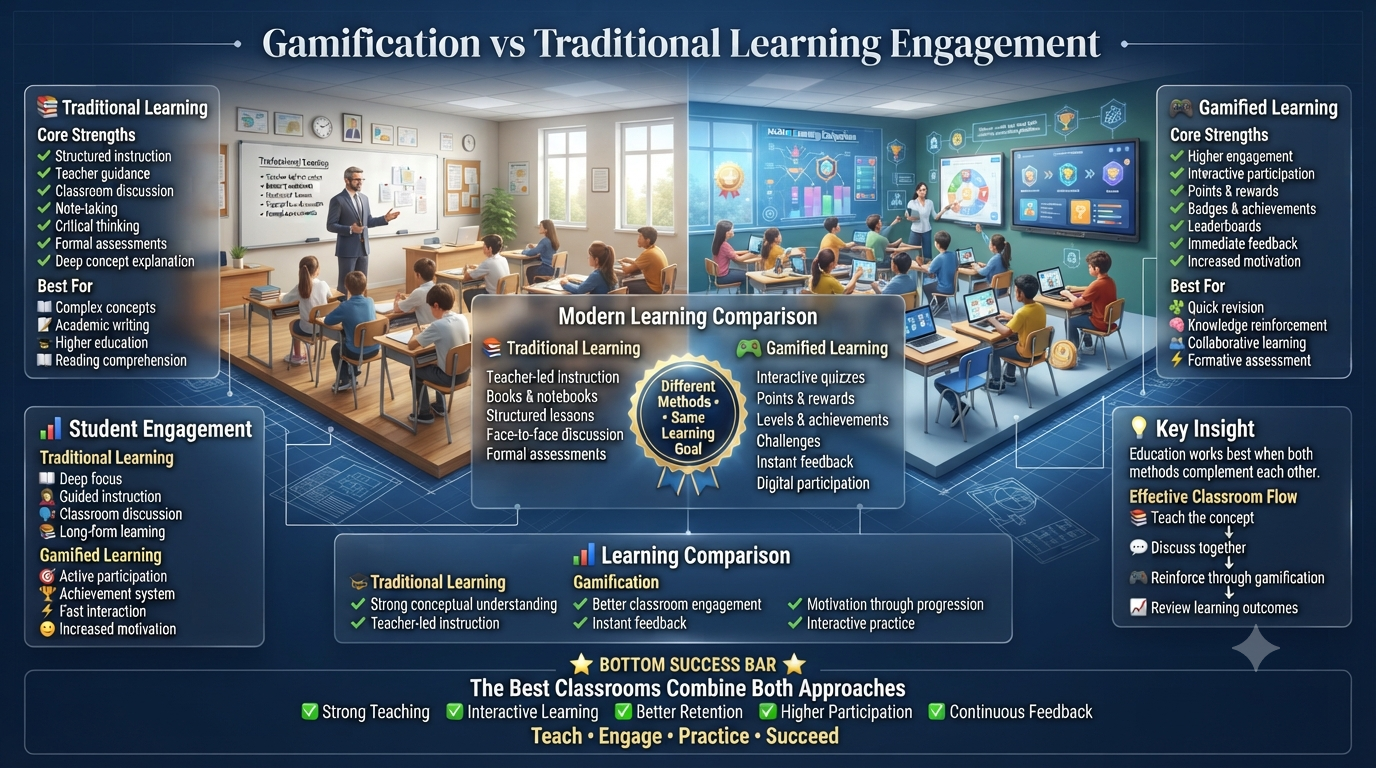
Interactive learning is highly effective in many educational settings, but it is not a complete replacement for every teaching method. Understanding its limitations helps educators create balanced learning experiences instead of relying on a single instructional approach.
Some common limitations include:
Limitation
Why It Matters
Recommended Approach
Overuse reduces novelty
Repetition can decrease engagement
Rotate instructional strategies throughout the term
Not every topic requires interaction
Some concepts benefit from direct explanation
Match teaching methods to learning objectives
Different learners respond differently
Students have varied learning preferences
Combine interactive, visual, written, and discussion-based instruction
Preparation requires planning
Poorly designed activities reduce learning value
Align every activity with clear educational outcomes
Participation is not always equal
Confident students may dominate discussions
Use structured participation strategies to include all learners
Recognizing these limitations strengthens rather than weakens interactive learning because teachers can adjust their methods before problems become long-term obstacles.
⚠ Common Mistake: Assuming that high participation automatically means deep learning. Students may appear engaged while still holding misconceptions, making thoughtful questioning and ongoing feedback essential.
Best Practices for Sustaining Long-Term Success
Successful long-term implementation depends less on technology and more on thoughtful instructional design. Educators who achieve lasting results typically focus on consistency, reflection, and purposeful learning experiences rather than simply increasing the number of interactive activities.
Practical Recommendations
✅ Align every activity with a clear learning objective.
✅ Use interaction to deepen understanding—not merely to increase classroom energy.
✅ Regularly vary instructional formats to prevent routine fatigue.
✅ Encourage students to explain their reasoning instead of selecting answers alone.
✅ Use classroom feedback to adjust instruction before formal assessments.
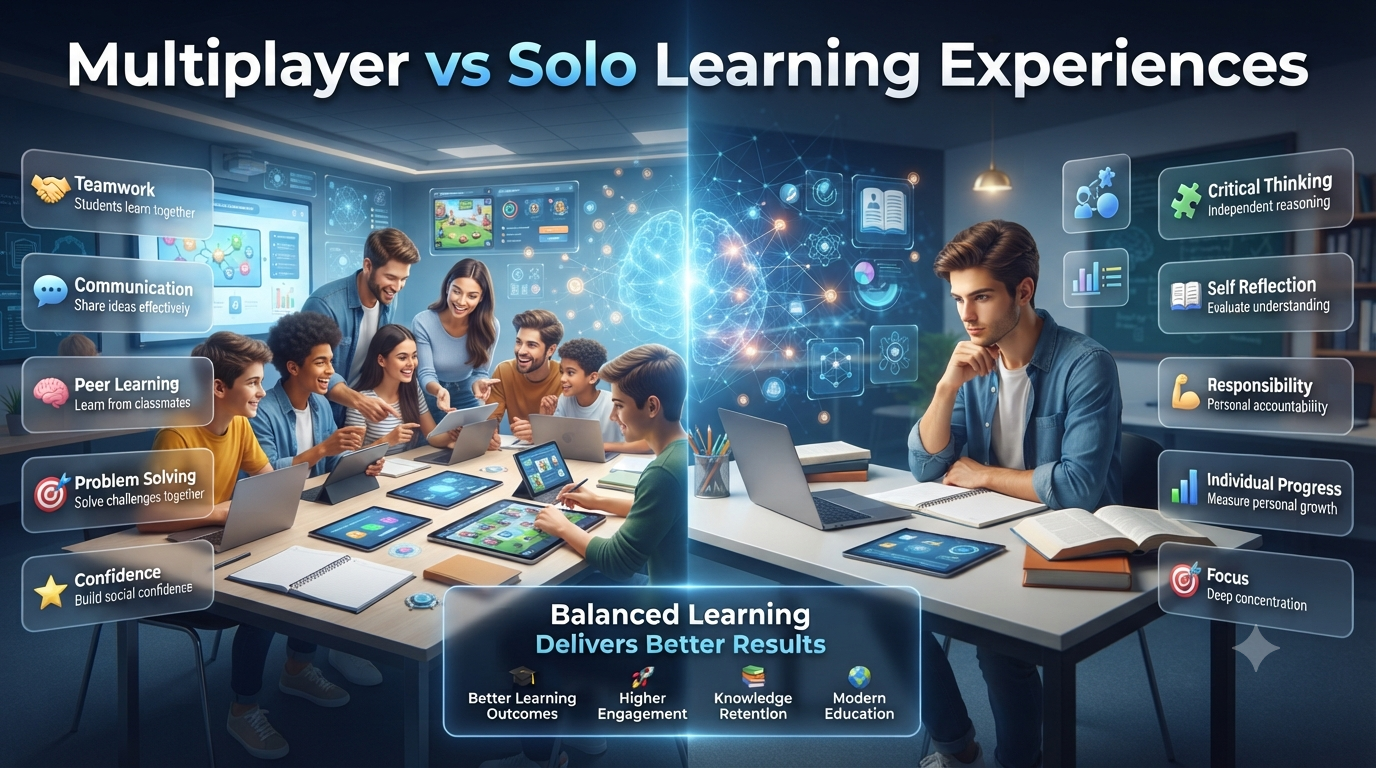
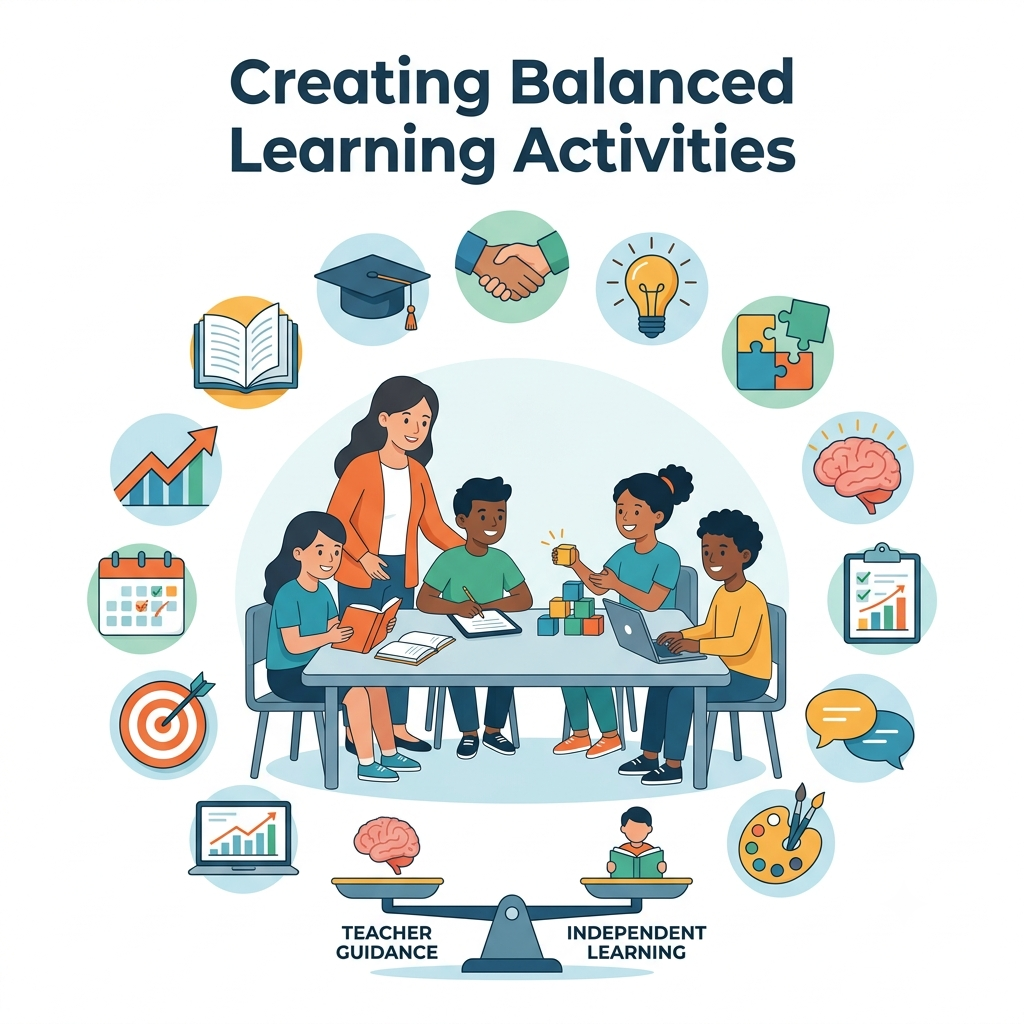
✅ Balance collaborative learning with opportunities for independent thinking.
✅ Review participation patterns to ensure every learner has opportunities to contribute.
✅ Reflect on classroom outcomes and refine future lessons based on student progress.
Small improvements applied consistently often have a greater educational impact than occasional large changes.
What Educators Should Realistically Expect Over Time
Interactive learning is most successful when expectations are realistic.
Teachers should not expect every lesson to generate perfect participation or immediate academic transformation. Instead, long-term progress is typically gradual and cumulative.
During sustained implementation, educators are more likely to notice:
Increased confidence among hesitant learners.
Stronger classroom communication.
Better retention of previously learned concepts.
More thoughtful classroom discussions.
Improved collaboration between students.
Greater willingness to solve unfamiliar problems.
More consistent engagement throughout the academic year.
These improvements often emerge through repeated practice, ongoing reflection, and continuous refinement rather than dramatic short-term changes.
Indicators That Interactive Learning Is Delivering Long-Term Value
Rather than measuring success solely through test scores, educators can evaluate long-term effectiveness using a broader set of indicators.
Classroom Indicators
Students actively participate without frequent prompting.
Learners ask more meaningful questions.
Discussions become increasingly analytical rather than factual.
Students confidently explain concepts to peers.
Collaboration feels natural instead of forced.
Misconceptions are identified and corrected earlier.
Classroom routines become more efficient over time.
Learning Indicators
Concepts are retained across multiple units.
Students apply knowledge in unfamiliar contexts.
Independent problem-solving improves.
Reflection and self-assessment become more common.
Learners require less repetition before mastering key ideas.
Together, these indicators provide a more complete picture of educational progress than any single assessment.
Long-Term User Experiences With Interactive Learning: Key Takeaways
Interactive learning creates its greatest educational value through consistent, purposeful implementation rather than isolated classroom activities. Initial excitement may encourage participation, but long-term success depends on how effectively interactive experiences support meaningful learning, critical thinking, collaboration, and continuous improvement.
For students, sustained interactive learning can strengthen engagement, knowledge retention, confidence, communication, and independent thinking. These benefits often become more noticeable as active participation evolves into everyday learning habits that extend beyond individual lessons.
For teachers, long-term use provides continuous insight into student understanding, enabling more informed instructional decisions, earlier intervention when misconceptions arise, and more responsive lesson planning. Interactive learning also encourages reflective teaching practices, helping educators refine their strategies based on classroom evidence instead of assumptions.
At the same time, lasting success requires balance. Interactive learning should complement—not replace—other effective instructional methods. Varying classroom activities, aligning interaction with clear learning objectives, encouraging deeper reasoning, and regularly evaluating outcomes help prevent engagement fatigue while preserving educational value.
Ultimately, long-term user experiences show that interactive learning is not defined by the technology or activity itself. Its impact depends on thoughtful implementation, consistent practice, and a classroom culture where participation, feedback, collaboration, and curiosity become integral parts of everyday learning. When these elements work together, interactive learning evolves from an engaging teaching strategy into a sustainable approach that supports meaningful academic growth over time.
Professional Recommendations & Expert Reviews
Long-Term User Experiences With Interactive Learning show that consistent participation strengthens academic confidence.
Long-Term User Experiences With Interactive Learning highlight improved classroom engagement over time.
Long-Term User Experiences With Interactive Learning demonstrate better knowledge retention through repeated practice.
Long-Term User Experiences With Interactive Learning encourage students to participate more actively in lessons.
Long-Term User Experiences With Interactive Learning support stronger collaboration between classmates.
Long-Term User Experiences With Interactive Learning help teachers maintain consistent student motivation.
Long-Term User Experiences With Interactive Learning demonstrate lasting improvements in classroom participation.
Long-Term User Experiences With Interactive Learning support gradual development of critical thinking skills.
Long-Term User Experiences With Interactive Learning encourage learners to become more independent.
Long-Term User Experiences With Interactive Learning help students gain confidence through regular success.
Long-Term User Experiences With Interactive Learning support better communication during classroom activities.
Long-Term User Experiences With Interactive Learning highlight the value of consistent educational routines.
Long-Term User Experiences With Interactive Learning encourage steady academic growth throughout the school year.
Long-Term User Experiences With Interactive Learning support stronger classroom relationships.
Long-Term User Experiences With Interactive Learning help improve long-term learning habits.
Long-Term User Experiences With Interactive Learning encourage greater enthusiasm for classroom activities.
Long-Term User Experiences With Interactive Learning support meaningful collaboration across different subjects.
Long-Term User Experiences With Interactive Learning help reinforce important educational concepts.
Long-Term User Experiences With Interactive Learning encourage students to enjoy continuous learning.
Long-Term User Experiences With Interactive Learning support positive classroom culture.
Long-Term User Experiences With Interactive Learning help reduce hesitation when answering questions.
Long-Term User Experiences With Interactive Learning encourage stronger classroom confidence.
Long-Term User Experiences With Interactive Learning support improved teamwork through repeated collaboration.
Long-Term User Experiences With Interactive Learning help teachers create engaging classroom environments.
Long-Term User Experiences With Interactive Learning encourage regular review and knowledge reinforcement.
Long-Term User Experiences With Interactive Learning support balanced instruction and interactive practice.
Long-Term User Experiences With Interactive Learning help students become more resilient learners.
Long-Term User Experiences With Interactive Learning encourage active learning instead of passive observation.
Long-Term User Experiences With Interactive Learning support better classroom organization.
Long-Term User Experiences With Interactive Learning help strengthen problem-solving abilities.
Long-Term User Experiences With Interactive Learning encourage continuous improvement through feedback.
Long-Term User Experiences With Interactive Learning support meaningful educational experiences.
Long-Term User Experiences With Interactive Learning help students remain motivated over extended periods.
Long-Term User Experiences With Interactive Learning encourage flexible thinking during classroom challenges.
Long-Term User Experiences With Interactive Learning support stronger learning consistency.
Long-Term User Experiences With Interactive Learning help learners build lasting study habits.
Long-Term User Experiences With Interactive Learning encourage productive classroom participation.
Long-Term User Experiences With Interactive Learning support improved academic performance through regular engagement.
Long-Term User Experiences With Interactive Learning help strengthen communication and leadership skills.
Long-Term User Experiences With Interactive Learning encourage students to collaborate confidently.
Long-Term User Experiences With Interactive Learning support meaningful classroom discussions.
Long-Term User Experiences With Interactive Learning help teachers identify long-term learning progress.
Long-Term User Experiences With Interactive Learning encourage greater responsibility for personal learning.
Long-Term User Experiences With Interactive Learning support engaging review throughout the academic year.
Long-Term User Experiences With Interactive Learning help improve classroom morale through shared success.
Long-Term User Experiences With Interactive Learning encourage students to remain curious about new topics.
Long-Term User Experiences With Interactive Learning support stronger educational outcomes through consistent interaction.
Long-Term User Experiences With Interactive Learning help learners develop confidence in challenging subjects.
Long-Term User Experiences With Interactive Learning encourage balanced participation among all students.
Long-Term User Experiences With Interactive Learning support effective use of educational technology.
Long-Term User Experiences With Interactive Learning help create enjoyable classroom experiences that students remember.
Long-Term User Experiences With Interactive Learning encourage continuous classroom engagement.
Long-Term User Experiences With Interactive Learning support meaningful academic development.
Long-Term User Experiences With Interactive Learning help reinforce positive learning behaviors.
Long-Term User Experiences With Interactive Learning encourage lifelong interest in learning.
Long-Term User Experiences With Interactive Learning support stronger collaboration between teachers and students.
Long-Term User Experiences With Interactive Learning help classrooms maintain consistent learning momentum.
Long-Term User Experiences With Interactive Learning encourage students to embrace new learning opportunities.
Long-Term User Experiences With Interactive Learning support better preparation for future academic challenges.
Long-Term User Experiences With Interactive Learning help learners improve both academic and social skills.
Frequently Asked Questions (FAQs)
1. Does interactive learning remain effective after the initial excitement fades?
Yes, when implemented purposefully, interactive learning can remain highly effective long after the novelty wears off. While initial engagement is often driven by curiosity, long-term success comes from consistent participation, meaningful feedback, collaborative learning, and activities that reinforce clear educational objectives. Teachers who regularly adapt their instructional strategies are more likely to sustain student interest throughout the academic year.
2. What long-term benefits do students gain from interactive learning?
Students can develop several lasting academic and personal benefits through consistent interactive learning, including improved knowledge retention, stronger critical thinking, greater classroom confidence, enhanced collaboration, and better problem-solving skills. Over time, many learners also become more independent, participate more actively in discussions, and demonstrate a deeper understanding of concepts rather than relying on short-term memorization.
3. Can interactive learning improve long-term knowledge retention?
Yes. Interactive learning supports long-term knowledge retention by encouraging students to actively retrieve, discuss, apply, and reinforce information instead of passively receiving it. Repeated practice, immediate feedback, and collaborative learning experiences help strengthen memory and make it easier for students to recall and apply concepts weeks or even months after they are first introduced.
4. What challenges do teachers face when using interactive learning for a long time?
Long-term implementation can present challenges such as engagement fatigue, repetitive classroom routines, unequal student participation, and additional lesson planning requirements. These issues can usually be managed by varying instructional approaches, rotating activity formats, aligning every interactive session with specific learning objectives, and regularly reviewing classroom outcomes to refine teaching strategies.
5. What makes long-term interactive learning successful?
Long-term success depends on thoughtful implementation rather than frequent use alone. Interactive learning is most effective when educators use it consistently, connect activities to curriculum goals, encourage critical thinking instead of simple participation, provide continuous feedback, and balance interactive experiences with other evidence-based teaching methods. A well-planned learning environment focused on active participation and meaningful understanding delivers the greatest long-term educational value.