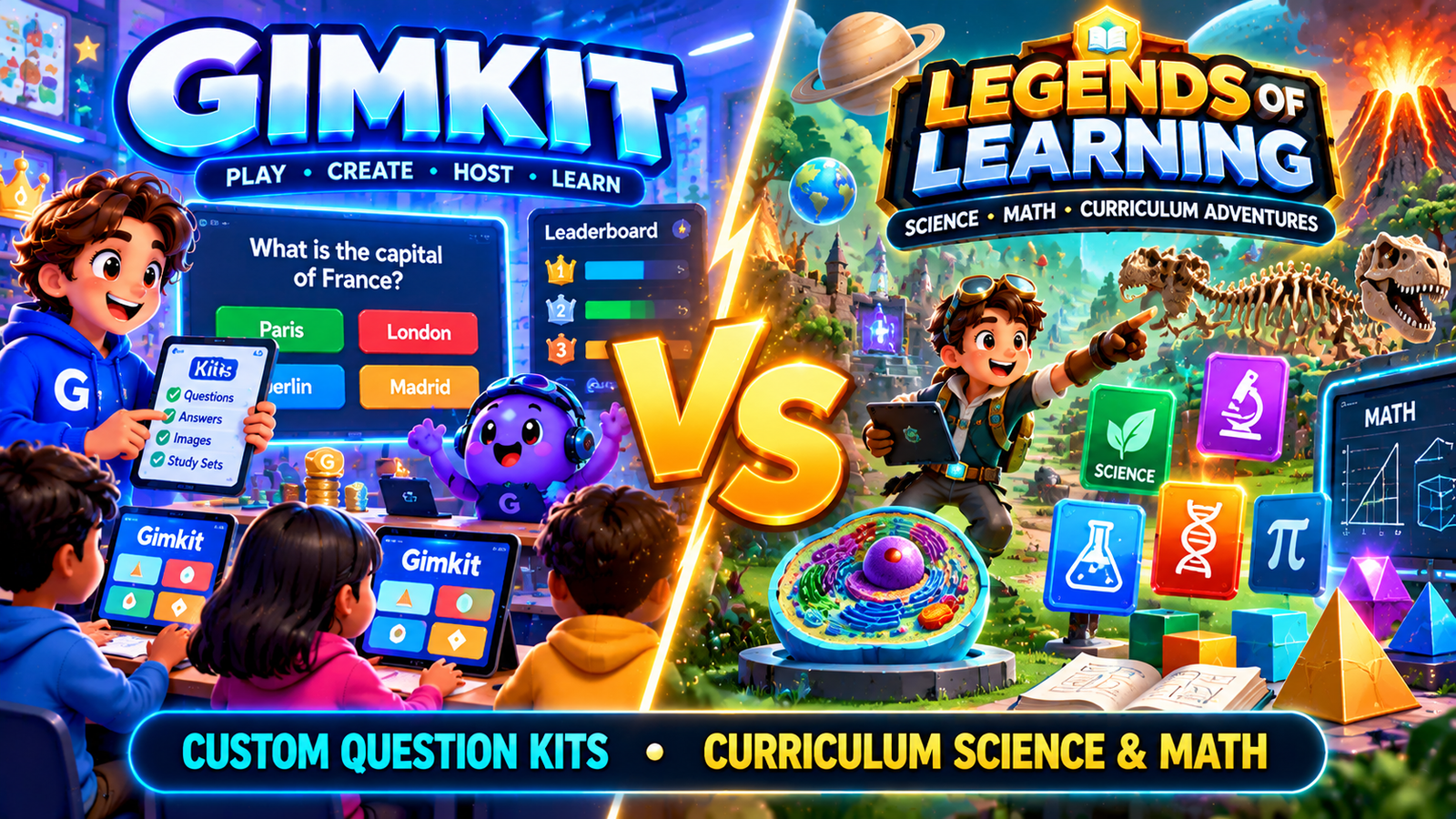
Gimkit vs Legends of Learning
Game Modes or Curriculum-Aligned Learning?
Gimkit vs Legends of Learning
is more than a comparison of two educational
gaming platforms. Gimkit organizes
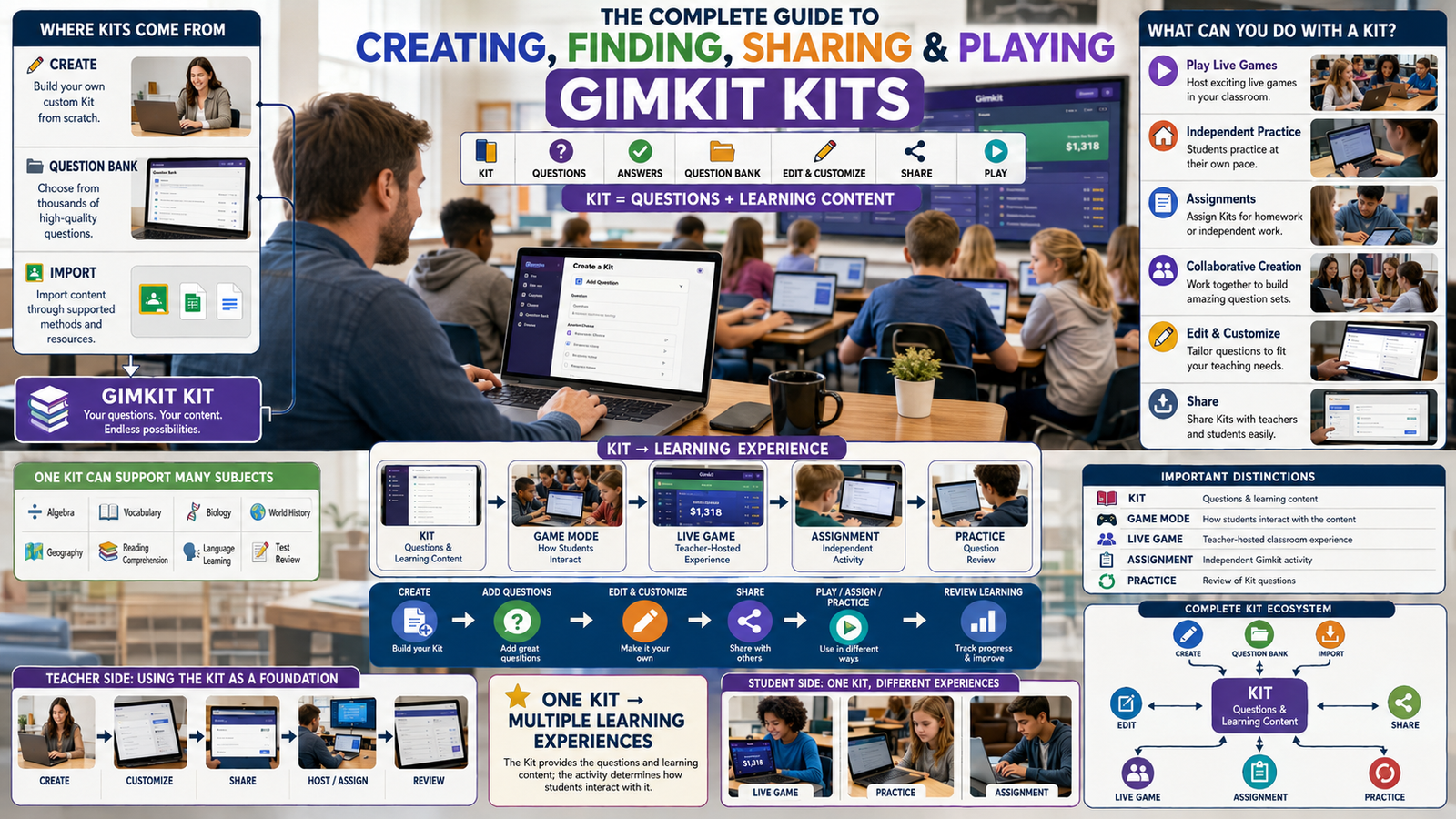
teacher-selected questions into reusable
Kits that become different game experiences.
Legends of Learning offers a searchable
curriculum-oriented collection including
instructional games, quiz games,
PhET simulations, video lessons and
selected hands-on learning resources.
The important difference is how educators
select content, verify curriculum alignment,
match an activity to the point of instruction
and interpret the evidence it produces.
Our exclusive
Curriculum Crosswalk & Resource
Verification Lab lets you build
a documented comparison of real candidate
resources without fabricating standards
certifications or student results.
Standards & objectives
Math & science
Instructional games
PhET simulations
Gimkit Kits
GimkitApp.com is independent and not
affiliated with either platform.
The resource workbench stores teacher-entered
observations in this browser. It cannot query
the platforms' private catalogs, confirm
that a game matches a standard, retrieve
student performance or publish assignments.
CURRICULUM FIT · TWO LEARNING PATHS
🧪
Legends of Learning
Explore.
Investigate.
Practise.
Search standards and topics.
Preview instructional games,
assessments and simulations.
🎮
Gimkit
Choose a Kit.
Select a Mode.
Play.
Prepare teacher-chosen questions
and use an appropriate
practice or gameplay pathway.
Direct Answer
Which is better:
Gimkit or Legends of Learning?
Each provides a different route
from academic content to interactive activity.
The stronger choice depends on
the learning objective and what
the teacher needs students to do.
🧪
Choose Legends of Learning for
curriculum-resource discovery.
Legends of Learning offers content
that teachers can search by topic,
grade and educational standards.
Its different resource types
include instructional games intended
to introduce learning, quiz games
for review and selected PhET
simulations supporting inquiry.
Teachers can preview a candidate,
examine its concepts and features,
then construct or share
an official learning activity.
A standard appearing in search
is an initial alignment signal,
not a substitute for checking
what learners actually do.
This architecture can be particularly
useful when educators need
subject-specific activities
linked to mathematics, science
or currently supported
social studies topics.
🎮
Choose Gimkit for
teacher-authored Kit practice
and game modes.
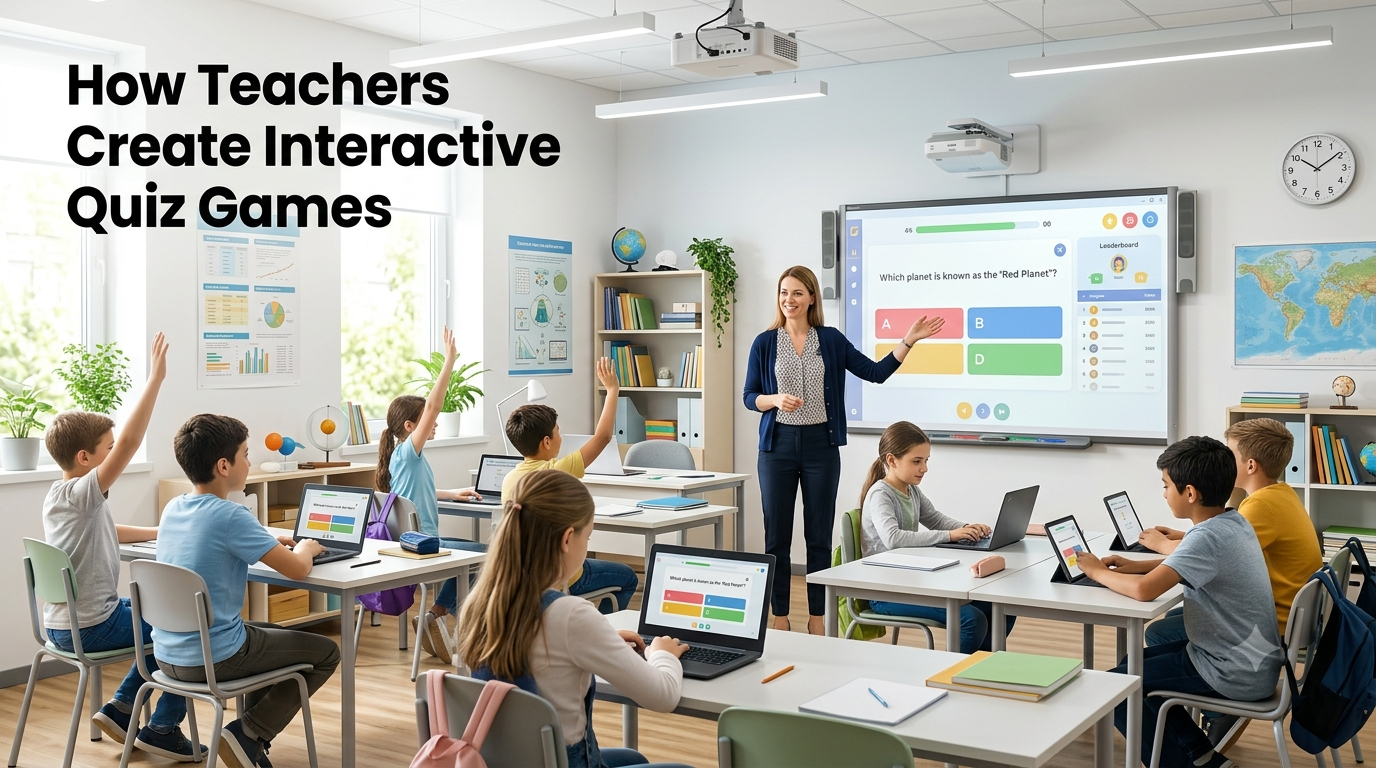
Gimkit begins with a teacher-selected
Kit containing academic questions.
The educator can host a live session,
select a supported mode,
configure relevant options
and share the game's joining route.
This design is useful when
a class has already developed
the targeted knowledge and
the teacher wants repeated
question practice within
an interactive game.
The mode's mechanics can change
the learner experience
without necessarily changing
the underlying Kit.
Gimkit can be used for
many curriculum topics,
but selecting a Kit does not
automatically certify its
alignment to a specific
academic standard.
Important distinction: Legends of Learning
documents instructional games,
quiz games and simulations as
different content types.
It would be inaccurate to describe
every Legends activity as a quiz
or every Gimkit session
as an instructional simulation.
Platform Architecture
One platform starts with
a searchable learning resource.
The other starts with a Kit.
Understanding this difference
helps teachers compare real workflows,
rather than counting unrelated features.
🔍
Curriculum discovery
Legends of Learning permits
searching a topic, standard
or game title and filtering
by content type, grade
and available features.
🧩
Instructional function
Instructional games,
quiz games and PhET simulations
are documented as supporting
different kinds of
learner activity.
🎯
Question ownership
Gimkit allows teachers
to create or select
question Kits
and pair them with
available gameplay modes.
Curriculum Intelligence
Five distinctions every teacher
should investigate before assigning.
These factors describe how content
relates to the task, rather than
promising an unsupported universal winner.
🧭
Standards Search
Can the resource be located
using a specified
curriculum expectation?
🔬
Concept Exploration
Does the learner investigate
a relationship or mainly
retrieve a known answer?
🧠
Practice Format
Is knowledge introduced
through gameplay or
reviewed after instruction?
📊
Evidence Availability
Which performance details
are available in the
school's actual plan,
and what do they measure?
♿
Accessibility & Implementation
Preview device support,
text-to-speech, saved progress
and translation features
where applicable to each resource.
Exclusive Functional Application
Curriculum Crosswalk &
Resource Verification Lab
Build a transparent comparison
between actual candidate
Legends of Learning resources
and Gimkit Kits.
Mark what each resource
is intended to support,
record teacher preview evidence,
separate unverified claims
from checked observations,
and identify uncovered
learning requirements.
Evidence rule:
Only the teacher may mark
a candidate as previewed.
A preview status is a record
of that teacher's inspection,
not certification by this site.
The example candidates below
are hypothetical search leads,
not confirmed titles in the
official catalogs.
Define the curriculum question
before browsing games
Enter your own curriculum
standard or objective.
This tool does not verify
the official wording or match
resources automatically.
It uses your target as
the comparison reference.
Standards codes are entered
and verified by users.
The tool cannot certify
NGSS, Common Core,
state-specific or district-specific
alignment. An activity's
actual gameplay must be
inspected to establish
the precise skill it practises.
Record one candidate resource
at a time
Search the real platforms separately.
Enter the actual resource name
and what you observed during preview.
Use the six learning facets
to describe the proposed role.
Mark a resource previewed only
after personally inspecting it.
Which learner actions does this resource support?
Your curriculum resource inventory
Compare verified learning facets,
not feature-count scores
Each cell shows how many
non-rejected candidates
are associated with a facet.
Only teacher-previewed resources
count as documented coverage.
Unpreviewed candidates remain
visible as possibilities.
Click a cell to inspect its
relevant inventory entries.
A documented facet is not
a verified learning outcome.
It means the teacher recorded
an observed resource connection.
The matrix does not award
an arbitrary universal winner
or claim a resource's standard
was verified by the platform.
Export the cross-platform
curriculum verification record
Preserve your curriculum target,
candidate resources,
teacher observations,
coverage and unresolved checks.
Use the official platforms
to create real assignments
or Gimkit games.
Exports are independent records,
not vendor import formats.
Studio ready.
Fictional resource candidates
can be replaced with
teacher-verified examples.
Feature Comparison
Gimkit vs Legends of Learning:
the practical classroom differences.
Comparison factor
Legends of Learning
Gimkit
Implication
Primary content structure
Searchable educational games,
simulations and other
instructional resources
Reusable question Kits
used with available game modes
Resource discovery differs
from Kit authoring.
Curriculum search
Topic, game name and
standard-code searching
Teacher-selected or created
Kit question content
Standards mapping must be checked
against actual learner actions.
Instructional games
Dedicated games designed
to introduce content during play
Game modes use questions
supplied through a Kit
An introduction activity and
a review game serve different purposes.
Quiz games
Embedded academic questions
used for practice and review
Question responses integrated
with mode mechanics
Compare a specific activity,
not the general word "quiz".
PhET simulations
Documented inquiry-based
simulation category
Not a native equivalent
of the PhET simulation catalogue
Variable manipulation is distinct
from recalling an explanation.
Other instructional resources
Video lessons,
selected hands-on activities
and game-aligned worksheets
Kit questions and
associated game experiences
Different resources can contribute
to different stages of teaching.
Live hosting
Teacher assignment and
supported student-access workflows
Kit, Mode Picker,
options, lobby and live game
Setup and participant experience differ.
Independent gameplay
Assigned activities and
Awakening learning experiences
Kit Practice links;
separate Pro Assignments
Avoid treating all independent modes
as equivalent accounts or reports.
Performance evidence
Resource-dependent assessment;
detailed reporting under
premium school/district licenses
Kit-based game reports
where applicable
Check licensing and
which academic response was measured.
Accessibility checks
Search filters can include
text-to-speech, translation,
device and progress features
Access depends on the
specific supported game
and joining environment
Test the actual resource
on classroom devices.
01 · The Core Search Intent
Why Gimkit and Legends of Learning
are not interchangeable educational games
Both Gimkit and Legends of Learning
use digital games to create opportunities
for students to participate in academic
activities. That common description,
however, hides a substantial difference
in the way the learning content is selected
and delivered. Gimkit is built around
reusable question Kits and selectable
gameplay modes. Legends of Learning
provides a catalogue of learning resources
organized around subjects, topics,
grade levels and curriculum standards.
These starting points influence
what the teacher prepares
and what students experience.
In Gimkit, the educator typically decides
which academic questions belong
in the Kit before selecting a game mode.
The mode then supplies a particular
gameplay environment or set of mechanics.
Two Gimkit sessions using the same Kit
can look and feel different
because the mode changes.
A teacher might choose
a more energetic experience,
a collaborative mode
or a different supported pathway,
but the academic content still begins
with the selected questions.
Legends of Learning asks a different
resource-selection question:
which existing content type and game
fit the subject being taught?
Its official documentation describes
instructional games, quiz games,
simulations and other educational
activities that support
different purposes.
An instructional game may introduce
a concept during gameplay.
A quiz game can provide practice
after teaching.
A simulation can give students
an opportunity to investigate
relationships within a model.
The practical decision is therefore
more precise than asking
which website has more games.
Teachers should decide
whether they need a game
designed around a curriculum concept,
a controlled question bank,
an exploratory simulation
or a separate review experience.
The correct platform follows
from the intended learning action.
Neither platform's feature catalogue
can prove that every activity
will improve academic outcomes
for every classroom.
02 · Curriculum Alignment
Why a standards-search result
is only the beginning of verification
Curriculum alignment is one of
Legends of Learning's distinguishing
characteristics. Teachers can search
for resources using topic names
or standard codes.
The official assignment documentation
describes filters for standards,
resource categories, grade levels
and features. This can help
narrow a large content collection
to activities that may correspond
to the teacher's current unit.
It does not remove the need
to examine the individual activity.
A standard may contain several
expectations within a single statement.
Students might be required
to interpret a model,
explain a causal relationship,
perform a calculation
or support a conclusion
with evidence.
A game that uses relevant vocabulary
may not address the performance
demanded by the full standard.
Search relevance and
academic alignment are related,
but they are not identical.
Teachers should read
the actual curriculum wording
from the appropriate authority
and identify the observable
learner action.
They can then preview
a candidate game and determine
whether that action occurs
in gameplay.
For example, a game featuring
pictures of fractions
may support recognition
of equivalent representations.
It may not require
students to justify why
two representations are equivalent.
Gimkit Kits can be aligned
to standards through teacher authoring.
The educator is responsible
for making that connection.
A Gimkit question may require
identifying a correct fraction,
but a standard requiring
an original explanation
may need additional evidence.
The crosswalk tool records
the teacher's target and
the observed resource actions
separately so an unsupported
alignment claim cannot silently
turn into a certified result.
03 · Instructional Games
Learning a concept through gameplay
is not the same as reviewing a known concept
Legends of Learning's official
Types of Games documentation
distinguishes instructional games
from quiz games.
Instructional games are described
as experiences that can teach
content during play rather than
requiring learners to know
the material in advance.
This matters when a teacher
is deciding what students should do
at the beginning of a new unit.
The educational role is not
simply repeating a fact.
A learner encountering
an unfamiliar science process
may need an initial representation
before answering formal questions.
An instructional game could provide
examples, a model or a sequence
of actions that helps establish
the concept.
The teacher still needs
to inspect the game
and decide what content
is explained and what the
learner must discover independently.
The official category describes
the intended function,
not an automatic guarantee
of comprehension.
Gimkit's Kit-based design
commonly suits a different moment:
the educator prepares relevant
questions and uses them
in a chosen mode.
Students may encounter content
through repeated questions
and gameplay actions,
but the platform does not
automatically transform every Kit
into a full instructional model.
If students lack the prerequisite
understanding needed to answer,
a game may require teaching
or explanation before
productive practice can occur.
The comparison becomes useful
when a teacher asks
which resource should establish
meaning and which should provide
later retrieval opportunities.
A Legends instructional game
might introduce a difficult
visual relationship.
A Gimkit Kit could later
review the relevant definitions
and interpretations.
This is a possible teaching sequence,
not a native integration
between the two platforms.
04 · Quiz Games and Review
Where Legends quiz games
and Gimkit Kits become more directly comparable
Legends of Learning documents
quiz games as a category
intended for learners who have
already encountered the academic content.
These games can embed questions
in an arcade-style experience.
Teachers can use them
for revision, informal assessment
and other practice situations.
This function is closer
to common Gimkit use
than an instructional game
designed to teach a new idea.
Even in this closer comparison,
the content workflow remains different.
A Legends quiz game is selected
from an existing content library.
The teacher should inspect
which topic, question format
and level of challenge it presents.
In Gimkit, a teacher can choose
or create the Kit itself
and then host it through
a supported game mode.
Direct control of the
exact question set
can be especially important
when a class has studied
a locally defined curriculum.
The best comparison should look
at a particular resource
rather than assuming
that all quiz games behave alike.
Teachers can preview
whether feedback is immediate,
whether students encounter
different question sets
and whether the game
requires extra actions
beyond academic responses.
These details influence
both the student experience
and the interpretation
of any results.
A teacher using a Gimkit Kit
can inspect question content
directly before hosting.
That does not guarantee
well-designed items,
but it makes the author's
responsibility clear.
Legends quiz games
require the same principle
of content inspection.
The decisive question is
not whether the screen
looks like a quiz,
but whether the underlying
academic task fits the objective.
05 · PhET Simulations
Manipulating a model is a distinct
learning action that ordinary recall cannot replace
One significant feature
of Legends of Learning
is its documented support
for PhET simulations
within selected learning assignments.
Simulations can permit students
to change variables,
observe the resulting behavior
and explore relationships
through an interactive model.
This is a different activity
from choosing the correct answer
to a previously written question.
It can support inquiry
when the simulation is suitable
for the target concept.
Imagine a science teacher
studying motion or forces.
A simulation might let
students alter a variable
and observe a modeled outcome.
The important academic action
is making a prediction,
manipulating a condition,
observing the response
and explaining the relationship.
A question about that relationship
can provide later recall,
but answering the question
does not itself reproduce
the exploratory experiment.
Legends of Learning's official
Types of Games guide
describes its PhET simulation
assignment experience as
allowing a ten-minute exploration
period before progressing
to the next assigned activity.
Teachers should verify
the current behavior
in their own account
and inspect which simulations
are actually available.
A classroom investigation
may need more time
or a different arrangement
than the default assignment flow.
Gimkit has interactive game modes,
including experiences with
movement, team objectives
and resource mechanics.
Those mechanics should not
automatically be presented
as equivalent to
a scientific simulation.
The crosswalk separates
Explore / manipulate
from Retrieve knowledge
because the two actions
can support different
learning expectations.
06 · Mathematics Representations
A fraction model can reveal something
a correct numerical answer cannot
Mathematics is often discussed
as though every game
is simply a vehicle
for faster calculations.
Yet a mathematics lesson
can ask students to understand
representations, relationships
and explanations.
A learner may compute
a fraction correctly
while misunderstanding
the visual relationship
between the numerator,
denominator and the whole.
Such a lesson might benefit
from a game with manipulable
or visual representations.
Legends of Learning's
curriculum-oriented resources
can include games
that approach mathematics
through a specific concept.
The educator should preview
how fractions are represented,
which decisions students make
and whether feedback helps
them notice an important relationship.
A colorful picture of a fraction
is not enough by itself
to establish conceptual teaching.
A Gimkit Kit
might ask students
to identify an equivalent fraction
or select a correct calculation.
That can be relevant
for practice after
the concept is introduced.
But a correct selection
does not necessarily show
whether the learner
can construct the equivalence
using a visual model.
The teacher needs
to decide which evidence
the learning objective requires.
The crosswalk's fictional example
uses equivalent fractions
as a curriculum target.
Candidate resources are deliberately
left unverified
so a visitor must record
what was actually found.
The resulting coverage matrix
can distinguish a resource
that introduces a representation
from one that supports
later question retrieval.
That distinction is about
instructional purpose,
not an invented math achievement score.
07 · Scientific Evidence
Observing a phenomenon and
describing an explanation are separate skills
Science education frequently requires
more than the recall
of vocabulary or named processes.
Students may need to explain
why a system behaves
in a particular way,
connect observations to a model
or evaluate whether evidence
supports a claim.
A game that mentions
the correct science topic
does not necessarily
give learners the opportunity
to perform those actions.
Consider a lesson
on energy transfer
in an ecosystem.
A learner may need
to identify producers,
consumers and decomposers.
A short question-based game
can review those terms.
A more demanding activity
might ask students
to trace energy through
a system and explain
what happens
when one population changes.
That requires attention
to relationships rather than
isolated definitions.
A Legends instructional game
may offer a specific model
or challenge related
to the target concept.
The teacher should inspect
whether the required relationships
are actually represented.
A Gimkit Kit could then
ask questions about
the model or explanations.
The two resources
might contribute different
parts of the learning process.
Neither should be credited
with a skill it does not
require students to demonstrate.
The comparison workbench
makes that difference
a visible field.
Educators enter
the required learner demonstration
and then record
which observable facet
a resource supports.
If the standard requires
exploration and explanation
but the candidate inventory
contains only retrieval questions,
the matrix exposes
those unresolved requirements.
It cannot determine
scientific correctness automatically.
08 · Assignment Builder
Why Legends of Learning assignments
are more than one shared game link
Legends of Learning's
official assignment documentation
describes a teacher workflow
for finding and selecting
different kinds of content.
A teacher can create
an assignment,
choose resources
and manage the resulting
activity sequence.
Supported content categories
can include games,
assessments and videos.
The selected materials
become part of a structured
student experience.
This differs from
a Gimkit live hosting workflow.
In Gimkit, the teacher
selects a Kit,
chooses a game mode,
configures game settings
and shares a joining route.
Students enter the selected
game session.
The process is focused
on the Kit and its
game experience,
not on building
the same type of multi-resource
academic assignment sequence.
Teachers should be especially
careful about the word
assignment.
Both products use
independent learning workflows,
but their capabilities,
account entitlements
and reporting arrangements differ.
The presence of a shareable link
does not prove identical
due-date controls,
performance tracking
or student progress reports.
The independent tool
on this page is not
an assignment builder
connected to either provider.
It is a resource-verification
workbench.
Its output records
which candidate content
might serve a defined
curriculum need and
which claims still
require inspection.
Actual assignment creation
belongs in the official
Legends of Learning
or Gimkit interface.
09 · Awakening
Legends of Learning Awakening
is a separate consideration
from the mini-game catalogue
Legends of Learning
also documents Awakening,
a game-based environment
for curriculum-related practice.
Its official support material
describes grade-based activity
in mathematics, science
and supported social studies
areas, along with
learning progression,
challenges and rewards.
This means a comparison
that describes Legends
solely as a static
list of mini-games
misses an important part
of the experience.
Awakening includes
a broader progression structure
than opening one isolated
instructional mini-game.
Students can encounter
academic questions
and supported activities
within that environment.
The teacher should inspect
how the content,
progression and student choices
relate to the lesson
rather than assuming
a game environment
automatically teaches
the required standard.
Gimkit also provides
modes in which gameplay
includes more than
selecting academic answers.
Some involve movement,
team objectives
or collaborative challenges.
Those structural similarities
do not establish
that Gimkit and Awakening
contain identical academic content,
reporting or progression systems.
The exact selected experience
remains the appropriate
unit of comparison.
For teachers,
the relevant question
is what student actions
the chosen Awakening activity
demands and whether
they match the learning goal.
A Gimkit Kit
may provide one form
of targeted practice;
Awakening may provide
another form of
curriculum-oriented progression.
The resource crosswalk
can record these
as separate candidates
without inventing
a universal progression score.
10 · Teacher Reporting
Premium licensing changes
what Legends student data
a school can actually use
Reporting can sound simple
in a marketing comparison,
but the details matter.
Legends of Learning's
official support articles
identify student performance
reporting as available
for schools or districts
with a premium Learning Universe
license. Those reporting views
can include assignment progress,
student responses,
assessment results
and standards-based summaries
under the relevant
account and feature conditions.
Teachers should not assume
that every feature
shown in a support article
is included in every
free or individual account.
Before promising
detailed classroom analytics,
the school should check
its actual subscription,
district integration
and permissions.
The information available
in a purchased platform
can differ significantly
from what a new visitor
sees on a public product page.
Gimkit also provides
game reports.
Its official Help Center
describes student,
general and question-level
report views
after appropriate live sessions
using a Kit the host owns.
Those reports should be interpreted
in relation to the questions
and the conditions of gameplay.
A game report is not
automatically the same thing
as a standards-based
district reporting dashboard.
Neither platform's reporting
should be treated
as a universal measure
of conceptual understanding.
A question result
may identify a correct
or incorrect response.
Completion data may indicate
an activity was finished.
A standards report
summarizes results
under its own rules.
Teachers need to know
which observation
supports which instructional
conclusion before making
decisions about students.
11 · Pre/Post Assessments
Built-in instructional game checks
need careful interpretation
Legends of Learning's
official Types of Games documentation
states that instructional games
include a built-in
four-question pre-assessment
and post-assessment,
and that the assessment
can be disabled.
This can provide
a convenient snapshot
of responses before
and after a learning activity.
However, a small group
of questions has limitations
that should remain visible
when evaluating its results.
Four questions may touch
several important concepts,
but they cannot necessarily
represent everything
in a broad curriculum standard.
Performance can also
be affected by
the question format,
guessing, familiarity
and the exact content
of the selected game.
A difference between
pre- and post-responses
is an observation,
not automatic proof
of a durable learning gain.
Teachers should examine
the assessment content,
its relationship
to the game and
whether the results
are available under
their actual licensing.
If an academic objective
requires explaining
an experimental relationship,
a short selected-answer
check may not provide
enough evidence
of the full skill.
Gimkit's Kit questions
can be reused
for classroom practice,
but a game report
should not be confused
with the specific built-in
pre/post structure
described by Legends.
Each platform's response
evidence belongs
to its own workflow.
The crosswalk can record
which candidate
appears to offer
a checkable learning action
without inventing
an assessment comparison
from nonexistent student data.
12 · Resource Search Filters
Device features and reading supports
should be checked before assigning
Legends of Learning's
assignment creation guide
documents search filters
including content type,
grade level, subject,
Lexile level for applicable games
and selected features
such as text-to-speech,
saved progress,
iPad support and
available translations.
These filters can help
a teacher narrow
the candidate list,
especially when a classroom
has varied access conditions.
The presence of a filter
does not guarantee
that all available games
possess the corresponding feature.
A teacher planning
to use an iPad
should inspect the exact
game's compatibility.
A teacher who needs
text-to-speech
should verify how
the selected activity
delivers that support
and whether it functions
in the school's
actual environment.
Gimkit modes likewise
differ in their controls
and student experiences.
A browser that can open
the joining page
may still encounter
mode-specific interaction demands.
A two-dimensional game
may use movement
and navigation
in addition to
academic questions.
Educators should avoid
interpreting basic access
as a complete guarantee
of usability for
every learner.
The resource-verification workbench
includes a limitation field
for documenting these concerns.
It deliberately does not
assign an automated
accessibility certification.
Real accessibility depends
on the resource,
learner needs,
device and context.
A responsible evaluation
identifies required accommodations
and tests supported
alternatives before
the lesson begins.
13 · Preview Before Assignment
Why the teacher should experience
the actual resource
before recommending it
Official Legends of Learning
guidance encourages teachers
to open a game's tile,
review its overview,
watch previews
and try the game
before assigning it.
This is a valuable
part of the selection process
because the title
and standards tags
cannot fully describe
what students
will have to do
during gameplay.
A preview should focus
on learner actions.
Does the game teach
terminology before testing it?
Does it let students
manipulate a model?
Does it provide feedback
that explains an error?
Does it ask students
to apply the idea
in a new example?
These observations
are more informative
than deciding
that a resource
looks entertaining.
Gimkit Kits require
their own content inspection.
Teachers should review
question wording,
answer choices
and academic correctness.
They should also understand
how the selected game mode
affects the activity.
A question set
suitable for a short
fact-retrieval round
may not capture
the reasoning required
by a larger assignment.
The lab separates
a candidate lead
from a teacher-previewed
entry for this reason.
A resource begins
as unverified until
the teacher records
what was observed.
Even a previewed status
remains a local
user declaration.
It is not an official
platform endorsement
or evidence that
an academic standard
has been fully mastered.
14 · Resource Breadth
A large library is useful
only when individual resources
are evaluated carefully
Legends of Learning
describes a large collection
of educational games.
A broad catalogue
can offer teachers
several possible approaches
to a single concept,
but breadth introduces
a selection problem.
Two resources tagged
with the same standard
may require different actions,
present different representations
or vary substantially
in challenge and usability.
A teacher should not
equate the number
of search results
with effective
curriculum coverage.
The important question
is whether one
or more suitable resources
address the specific
learner demonstration.
A small set
of well-matched activities
can be more useful
than a much larger
list whose instructional
purposes are unclear.
Gimkit presents
a different authoring situation.
Educators can control
the academic content
of a Kit
and select supported
game modes for its use.
That control can help
when the teacher
needs to address
a precise local objective
or particular class material.
It also requires
the educator to check
the accuracy and quality
of those questions.
The crosswalk does not
reward a platform
for having more
candidate entries.
Its matrix highlights
which learning facets
have at least one
documented candidate
and which remain
unverified or uncovered.
Adding many nearly
identical resources
does not automatically
solve an unexplored
instructional requirement.
This prevents
quantity from masquerading
as alignment quality.
15 · Math Word Problems
The difference between
calculating correctly
and explaining a method
Mathematics questions
can require several
different forms
of understanding.
A student may calculate
a correct numerical result,
recognize an equivalent
representation
or explain why
an operation is appropriate.
These are related skills,
but they produce
different kinds of evidence.
A teacher comparing
resources should specify
which one matters
for the current objective.
For example,
a word problem
involving fractions
may ask a learner
to divide a quantity
into equal parts.
An instructional game
might let students
manipulate representations
to discover the relationship.
A Gimkit Kit
might later ask
which calculation
is correct.
Both could be useful,
but the first action
is not identical
to the second.
An explanation standard
creates an additional requirement.
A multiple-choice response
may show recognition
of one correct answer
without demonstrating
the reasoning behind it.
A teacher might need
a written justification,
oral explanation
or work sample
to evaluate the full skill.
The resource-selection decision
should preserve
that distinction.
This page does not
reproduce the 99math
comparison's timed
mathematics fluency analysis.
Its unique task
is to inspect
how different resource
types cover
an explicitly stated
curriculum performance.
The tool records
whether a candidate
provides conceptual modeling,
retrieval,
exploration or evidence,
rather than simulating
student calculation speed.
16 · Hands-On and Printable Resources
Not every curriculum activity
should remain inside a screen
Legends of Learning's
official assignment documentation
includes selected hands-on
activities and game-aligned
printable worksheets.
These resources may support
classroom tasks
that involve physical materials,
written practice
or differentiated follow-up.
Their educational value
depends on the selected activity
and how it connects
with the target concept.
A teacher studying
three-dimensional shapes
might need students
to construct,
rotate or compare
physical models.
A digital game
can support aspects
of that learning,
but the performance
requirement may include
handling real objects.
The teacher should distinguish
between recognizing
a shape on screen
and manipulating
a model directly.
A Gimkit Kit
can ask questions
about a hands-on activity,
but answering those questions
is not automatically
a substitute
for performing
the original task.
Similarly,
a game-aligned worksheet
is not a guaranteed
measure of deeper understanding
simply because it accompanies
a digital resource.
The teacher must inspect
its questions and purpose.
The crosswalk's
learning facets
allow educators
to record exploratory,
representational
and evidence-related actions.
When a resource does not
support a required
hands-on performance,
the limitation field
can preserve
that observation.
The tool does not
pretend to turn
any selected game
into a physical experiment
or automatically deliver
official worksheets.
17 · Lesson Stages
A good resource depends
on what students know
before they open it
The same topic can be taught
through different activities
at different stages.
Before instruction,
students may need
to notice a phenomenon,
build vocabulary
or form an initial
mental model.
During guided practice,
they may need support
applying an idea.
After instruction,
they may benefit
from retrieval,
review and opportunities
to explain their decisions.
Legends of Learning's
documented instructional games
are intended to teach
content through gameplay.
Its quiz games
generally assume
that students
have already learned
relevant material.
This distinction
provides a useful
starting framework,
but the teacher should
still preview the
particular activity.
A game's category
does not establish
that it perfectly
fits every lesson stage.
Gimkit Kits
are often useful
for practising
selected questions
after some teaching
has occurred.
Students may still
learn from feedback
and repeated answers,
but educators should
not rely on an unexamined
question set
to replace every
needed explanation
or representation.
A carefully selected
preparatory experience
may improve readiness
for subsequent review.
The workbench is deliberately
not a generic lesson
timeline builder.
Its purpose is
to check whether
candidate resources
are suitable for
particular learner actions.
Once gaps are visible,
a teacher can decide
where resources belong
within the lesson.
That decision should
be made using
subject expertise
and actual classroom evidence,
not an automatic sequence
generated from platform names.
18 · Feedback Quality
A correct-answer notification
and an explanatory learning signal
are not equivalent
Feedback is an important
feature in many
educational games,
but different feedback
can serve different purposes.
A simple right-or-wrong
indicator tells students
whether their response
matched the configured answer.
An explanatory example
can help identify
why the answer
is appropriate.
An interactive model
may let learners
see the consequences
of an incorrect assumption.
These experiences
can affect how students
respond to mistakes.
Teachers should preview
the actual feedback
provided by
a Legends of Learning resource.
Does the game
explain the academic idea?
Does the learner
receive another
meaningful opportunity
to apply it?
Does the content
remain stable
during repeated attempts?
The answers depend
on the specific
instructional or quiz game.
Gimkit uses
question responses
in a game environment.
Correctness feedback
can be combined
with mode mechanics.
Students may be motivated
to continue,
but the teacher
still needs to inspect
whether the academic
question and answer
explain the concept
sufficiently.
Gameplay progression
is not itself
an explanation
of a misconception.
The crosswalk records
an observation field
for each candidate.
A teacher can document
whether feedback
was explanatory,
procedural or limited
to correctness.
This descriptive record
is more meaningful
than giving one platform
an unsupported feedback
score without identifying
the specific resource
that produced it.
19 · Independent Practice
Student access and independent play
have different account implications
Legends of Learning's
official documentation
describes sharing links
to selected games.
The resulting assignment
can have a defined
availability period,
and students may need
to sign in
or create accounts
through the supported route.
School and district
integrations can introduce
additional conditions.
The teacher should verify
the actual classroom
access process.
Gimkit provides
live joining by
supported codes and links,
and separate
independent practice pathways.
Each Kit can have
a Practice Mode link,
while formal Assignments
are documented
as a Gimkit Pro
feature.
The presence
of an independent
activity in each
product does not
imply the same
participant account
or reporting structure.
A teacher planning
independent work
needs to consider
whether students
can access the activity
outside class,
which devices
are available
and what completion
information can
legitimately be reviewed.
A student may finish
an activity
without fully understanding
the academic objective.
That is why
any follow-up
should match
the intended learning.
The comparison tool
records resource links
only when the user
enters them.
It does not
check student credentials,
issue official assignments
or claim to know
account permissions.
A teacher should
test the actual
access route
before assigning
a resource,
especially when
a class uses
managed school devices.
20 · Data Boundaries
Completion, accuracy,
proficiency and engagement
answer different questions
Digital learning platforms
often display several
performance indicators.
Completion can show
that an activity
has reached
its defined endpoint.
Accuracy can summarize
how many responses
matched an answer key.
A proficiency label
may apply a specified
threshold to
accumulated question results.
Engagement indicators
can describe
participation or time.
These measurements
should not be treated
as interchangeable.
Legends of Learning's
standards-based reporting
documentation describes
proficiency indicators
and question-count thresholds
under particular
reporting workflows.
Awakening reporting
also has its
own progression rules.
A teacher should inspect
which report
is being viewed,
when it updates
and which licensing
requirements apply.
A proficiency symbol
is meaningful only
within the system
that generated it.
Gimkit reports
concern question responses
and game activities
under its own
available reporting
structure.
A Gimkit game result
should not be translated
directly into
a Legends standards
proficiency classification
without a defensible
mapping and relevant
student evidence.
Different question pools,
task conditions
and reporting rules
make such comparisons
more complicated
than a shared percentage.
The independent crosswalk
avoids collecting
student scores entirely.
It records teacher-entered
candidate descriptions
and verification states.
The matrix shows
coverage of intended
learning actions,
not student mastery.
This is a necessary
distinction because
resource selection
and performance assessment
are separate tasks.
21 · Classroom Pilot
How to evaluate a candidate resource
without relying on marketing claims
A practical classroom pilot
begins with
a narrowly defined objective.
The teacher selects
a resource
and records the
precise student action
it is supposed
to support.
The educator previews
the game,
examines the academic content
and identifies
what evidence
could reasonably
be collected afterward.
This process is
more defensible
than selecting
the resource
with the most
visually impressive trailer.
Suppose a science teacher
wants learners
to explain
how changing
an environmental variable
affects a system.
A suitable resource
should make
that variable
and relationship
visible or actionable.
A quiz asking
only for
the definition
of the relevant
scientific term
may contribute
useful preparation
but not demonstrate
the full performance.
A Legends simulation
may help learners
investigate the relationship.
A Gimkit Kit
may offer
later retrieval practice.
The teacher can
compare these
as complementary
or alternative
candidates according
to the target skill.
Actual student work
and explanation
would still be needed
to evaluate
whether learning occurred.
The workbench
supports the
preparation phase
by preserving
preview notes,
learning facets,
possible limitations
and unresolved checks.
It does not
conduct the pilot
or simulate participants.
That honesty
makes the exported
teacher handoff
suitable as
a planning record
rather than
a fabricated
evidence report.
22 · Common Comparison Mistakes
Five errors that make
Gimkit versus Legends reviews unreliable
The first mistake
is assuming
that every Legends resource
serves the same purpose.
Its official documentation
makes clear distinctions
between instructional games,
quiz games
and simulations.
A resource that introduces
a scientific concept
is not simply
another way
of presenting
the same quiz.
Teachers need
to compare
the required learner actions.
The second mistake
is treating
Gimkit's game modes
as if they were
equivalent to
a complete
curriculum standards catalogue.
Gimkit's strength
includes reusable Kits
and different
gameplay experiences.
A teacher can align
questions to
a curriculum objective,
but that process
requires academic
selection and review.
The third mistake
is assuming
that all Legends
student analytics
are available
without premium licensing.
The official reporting
documentation identifies
school and district
license conditions.
The fourth mistake
is confusing
activity completion
with academic proficiency.
The fifth is
treating entertainment
or student engagement
as direct proof
of learning improvement.
A credible comparison
avoids all five.
It identifies
the resource type,
checks the
exact learner action,
confirms account access,
evaluates what
the output measures
and distinguishes
gameplay from
academic evidence.
This allows
a useful verdict
without inventing
a numerical winner
or copying
the same scoring calculator
from another
comparison page.
23 · Curriculum Crosswalk Method
Why this page's resource
verification application is different
A resource crosswalk
is not simply
a list of games.
It connects
a defined
curriculum objective
to the
actual learner actions
a candidate
resource makes possible.
The teacher begins
with the required
demonstration rather than
the platform name.
The comparison then asks
whether a resource
can introduce,
model, explore,
retrieve, explain
or produce evidence
related to the objective.
These learning facets
are intentionally descriptive.
They do not
represent an official
educational standard,
and they should not
be interpreted
as universal
pedagogical stages.
A task may
legitimately require
only one or two
of the facets.
The educator decides
which ones are relevant
and records
actual preview observations
before using
the matrix
to examine coverage.
The application
separates three states:
an unpreviewed lead,
a teacher-previewed candidate
and a rejected candidate.
An unpreviewed lead
remains visible
but cannot silently
become verified coverage.
Rejected resources
remain in
the inventory
for reference
without being counted
as usable candidates.
This prevents
a speculative resource list
from looking like
a completed
curriculum audit.
The resulting
coverage matrix
is therefore
neither a quiz
nor an assessment
of student achievement.
It is a
resource-verification tool
for the teacher.
It provides
a specific contribution
to this comparison
without repeating
the homepage Knowledge Arena,
the Factile turn-equity board
or the Funbrain
textual-evidence studio.
24 · Standards Evidence and Uncertainty
A documented candidate is not
a certified curriculum match
The crosswalk's
most important safeguard
is its distinction
between what
the teacher entered
and what
an official platform
has verified.
A candidate name,
topic label
and chosen facet
are declarations
made by
the person using
the tool.
The software
can organize
those declarations,
but it cannot
prove they are
academically accurate.
If a visitor
enters an official
curriculum code,
the tool
stores the text
exactly as supplied.
It does not
query a standards
registry or
determine which
version of
a state's curriculum
applies.
The educator
should verify
that code
and its wording
against the
appropriate
official source.
If a candidate
resource is marked
previewed,
the matrix counts
its selected facets
as documented
teacher observations.
This does not
establish that
the source's
academic claims
are correct.
The observation
field is meant
to preserve
concrete details:
a visible model,
an example question,
a simulation variable
or a particular
feedback behavior.
Teachers should use
that documentation
to decide
what further checks
are needed.
They may need
to try
a different game,
inspect an assessment,
confirm device support
or examine
original curriculum wording.
The value
of the crosswalk
is making
those gaps visible,
not pretending
uncertainty has disappeared.
25 · Final Verdict
Choose the resource
that performs the required
learning task
Legends of Learning
is a strong candidate
when an educator
needs to discover
specific math,
science or
supported social studies
learning activities
organized around
standards and topics.
Instructional games
may introduce concepts,
quiz games
can support review,
and selected simulations
can provide
inquiry-oriented exploration.
The precise resource
still requires preview
and alignment checking.
Gimkit is a strong candidate
when the educator
wants to prepare
or select
academic questions
and turn them
into a supported
gameplay experience.
A Kit can be used
through different
modes or
appropriate practice pathways.
The teacher
has direct responsibility
for question quality,
and the chosen
mode influences
the student's experience.
These two products
may be alternatives
for a particular
review activity,
or they may
support different
parts of instruction.
A teacher
could use
a suitable
instructional resource
before a Gimkit review,
but that is
a deliberately
designed lesson sequence,
not automatic
platform integration.
Neither product
guarantees understanding
merely because
the activity
is completed.
The most defensible
final choice
identifies
the curriculum objective,
learner action,
actual resource behavior,
account limitations
and evidence
available afterward.
The Curriculum Crosswalk
& Resource Verification Lab
exists for that purpose:
it turns an
imprecise product debate
into a documented
resource-selection decision,
without inventing
a universal score.
Choose Legends of Learning
when the task depends
on locating and verifying
a curriculum-oriented
instructional game,
simulation or assignment resource.
Choose Gimkit
when teacher-selected
Kit questions and
supported gameplay modes
fit the objective.
Evaluate the actual
student action,
not the brand alone.
Frequently Asked Questions
Gimkit vs Legends of Learning:
classroom questions answered
Is Legends of Learning better
than Gimkit for science?
Legends of Learning offers
a curriculum-oriented
science resource library,
including instructional games
and selected simulations.
Gimkit can provide
teacher-selected science
question practice.
The better choice
depends on whether
the task is
exploration, instruction
or question review.
Does Legends of Learning
support math?
Yes. Mathematics is
one of its main
curriculum areas.
Teachers can search
for relevant topics
and standards
and preview
the available resources.
What is an instructional game
in Legends of Learning?
Official documentation describes
instructional games
as experiences intended
to teach content
during gameplay,
rather than assuming
students already know
the material.
Does Legends of Learning
have quiz games?
Yes. Quiz Games
are a documented category,
suited to practice
and review after
students have encountered
the relevant content.
Does Legends of Learning
include PhET simulations?
Yes. Official documentation
describes PhET simulations
as inquiry-based
virtual lab experiences
within relevant assignments.
Available topics and
the activity workflow
should be checked
in the actual account.
Does Gimkit automatically
match Kits to standards?
A teacher can select
or create questions
for a specified
curriculum objective.
This page does not
claim automatic
official standards
certification for
those Kits.
Can Legends of Learning
introduce a new concept?
That is an intended role
of its instructional
game category.
The specific game
must still be previewed
to determine
what it actually teaches.
Can I host a live Gimkit game
using a Kit?
Yes. Official Gimkit
hosting involves
selecting a Kit,
choosing a mode,
setting game options,
sharing a joining route
and starting the session.
Is detailed Legends of Learning
reporting free for everyone?
No such universal claim
should be made.
Official student-performance
reporting documentation
identifies premium
school and district
licensing conditions.
Check your actual access.
Does Gimkit provide reports?
Yes. Gimkit's Help Center
documents reports
after supported live games,
including student,
general and
question breakdown views.
What is Awakening?
Awakening is
a Legends of Learning
game-based environment
supporting structured
academic practice
and progression
in documented subjects.
Are completion reports
the same as learning mastery?
No. Activity completion,
question performance
and platform-specific
proficiency indicators
represent different
measurements.
Interpret each according
to its documented meaning.
Does this page's lab
connect to either platform?
No. It is an independent
browser-based resource
verification tool.
It does not retrieve
official resources,
assess students
or publish assignments.
Can I import the resource
crosswalk into Gimkit?
The JSON and CSV files
are independent
planning records.
They are not
official Gimkit
or Legends of Learning
import formats.
Can both platforms
be useful in one unit?
Yes. An educator
might use an appropriate
instructional resource
to establish a concept,
then a Gimkit Kit
for question review.
The activities must be
connected manually
through lesson design.
What does the crosswalk
actually measure?
It counts teacher-entered
resource associations
with six learning facets
and distinguishes
previewed from
unpreviewed candidates.
It does not measure
student mastery
or certify
a standards match.
Official Documentation
Verify each platform's
current resource types,
account access and
reporting features
The comparison distinguishes
official vendor claims
from independent educational
interpretation.
Independent review, October 2026.
Official products, plans, grades,
features and reporting permissions
may change. This page does not
guarantee superior learning outcomes
or search rankings.
Stop guessing which game fits.
Verify the learning action.
Enter a curriculum target,
document actual candidate
resources and preserve
a teacher-ready comparison.