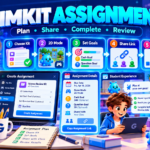
Learn how Gimkit's historical Floor Is Lava mode
turns question earnings into collective construction.
Discover the rising-lava mechanic, building shop,
difficulty settings, tower planning and survival
decisions that make this unusual non-2D mode distinctive.
Gimkit The Floor Is Lava is a historical cooperative
survival game mode released in October 2020.
Instead of moving individual characters through a
2D obstacle course, the class works together to
construct an increasingly tall structure.
Lava rises automatically, and the group must build
quickly enough to remain above it.
Historical community documentation describes a
Build Shop containing structures that provide
dramatically different quantities of blocks.
The more advanced buildings require more money
and longer construction times. The game's central
challenge is balancing how quickly the class earns
resources, how long building takes and how rapidly
the lava rises.
Historical verification:
The community Gimkit Wiki identifies this as
a non-2D mode released October 6, 2020.
It describes five difficulty settings and
a host-controlled option that raises lava
by 10%. Current availability and exact rules
must be checked in the official Mode Picker.
PRIMARY THREAT
🌋 Rising Lava
Lava rises over time. The class must
increase the height of its constructed
tower to remain above the changing
danger level.
TEAM OBJECTIVE
🤝 Collective Survival
Participants contribute to one
shared construction goal rather
than independently finishing
separate obstacle courses.
RESOURCE SYSTEM
💰 Cash for Buildings
Question-driven earnings
provide spending power
for purchasing structures
from the historical Build Shop.
PRODUCTION DELAY
⏱️ Construction Time
Larger structures can deliver
huge height increases, but
construction takes time.
Delayed completion matters
when lava keeps rising.
DIFFICULTY
🎚️ Five Historical Levels
Community records identify Easy,
Normal, Hard, Ludicrous
and Gimpossible as five
rising-lava difficulty options.
HOST EVENT
⚠️ Lava Surge
Historical descriptions include
a host button for increasing
lava by 10%. This adds
uncertainty to survival planning.
02 / Historical Construction Catalogue
All eight recorded Floor Is Lava structures
Unlike a conventional question-score contest,
the historical Floor Is Lava economy turns
earned cash into construction. Buildings vary
not only in cost but also in the number of
blocks they contribute and the time needed
for construction.
Structure
Blocks
Historical Cost
Build Time
🪵 Plank
1
$5
1 sec
🧱 Brick
20
$50
3 sec
🪜 Staircase
400
$500
8 sec
🏠 House
7,500
$5,000
15 sec
🏬 Shopping Mall
150,000
$50,000
25 sec
🏙️ Skyscraper
3,000,000
$500,000
35 sec
⛰️ Mountain
50,000,000
$5,000,000
45 sec
🚀 Space Elevator
1,000,000,000
$50,000,000
60 sec
Historical data: These costs, block counts
and build times come from a fan-maintained historical
reference. They are not independently verified
as current official game values.
Small structures buy immediate progress
Planks and Bricks offer relatively
inexpensive construction. Their smaller
block increases mean they can be useful
for understanding the mechanics without
committing large amounts of cash.
However, repeatedly choosing small
structures can be inefficient once
the lava threat demands very large
height increases.
Large structures bring delayed benefits
Shopping Malls, Skyscrapers, Mountains
and Space Elevators offer dramatically
greater recorded block outputs.
They also require significant cash
and longer waiting periods.
Buying a large structure is not
sufficient for immediate safety
when the class must survive
the construction delay first.
03 / Exclusive Interactive Application
Rising Lava & Tower Survival Engineering Lab
Operate a simplified tower-building survival system.
Configure lava difficulty, answer-based cash income,
purchase structures and advance time. Buildings join
the construction queue and contribute blocks only
when their build time has elapsed.
Independent simulation:
Historical building costs, block outputs and
durations are used as a reference.
Starting tower height, lava height, cash,
lava speed and the visualization's logarithmic
scale are original educational assumptions.
No official Gimkit game session is connected.
🌋 Cooperative Tower Survival Studio
Build ahead of the rising hazard,
monitor construction delays and test
whether your next structure can finish
before the lava overtakes the tower.
🧱 Tower Blocks
100
🌋 Lava Blocks
0
💰 Team Cash
$0
⏱️ Time
0s
🛡️ Safety Margin
100
1. Simulation Setup
Fictional lava-speed settings are 2, 5, 10,
20 and 40 blocks per simulation second.
These are not official difficulty values.
Changing difficulty takes effect immediately.
2. Earn Cash and Build
The construction queue operates sequentially:
only one structure is built at a time.
Cash is deducted when an item enters the queue;
its blocks are added when construction finishes.
This queue rule is an explicit simulator assumption.
3. Advance the Survival Scenario
This is a deterministic step-by-step simulation.
Lava does not advance while the page is idle.
The host-style +10% control raises the current
lava value by 10%, rounding up to a whole block.
This rounding rule is not an official specification.
Simulation ready.
4. Tower vs Lava Visualization
Blue tower height versus orange rising lava
TEAM TOWER
The illustration compresses very large block values
on a logarithmic scale; the exact numeric comparison
uses the actual simulated block counts.
It is not a to-scale architectural diagram.
5. Construction Queue
No structures in queue.
Completed Buildings
0
Queued Buildings
0
Cash Spent
$0
Fictional Answers
0
Queue forecast appears here.
6. Activity Record
No activity recorded.
04 / Survival Mechanics
Why tower height must stay ahead of lava
The defining constraint in The Floor Is Lava
is that the dangerous environment changes
even when players are not building.
The group cannot treat construction as a
task with unlimited time.
A tower that is safe now may become unsafe
later because lava continues rising.
The amount of height separating the tower
from the lava can be understood as
a temporary safety margin.
Safety margin as a practical planning concept
In the educational model, safety margin
equals tower blocks minus lava blocks.
When the value is positive, the tower
remains above the simulated danger.
When it reaches zero or less, the model
declares that lava has caught the tower.
This numerical approach simplifies
the historical game into a clear
engineering-style constraint.
It is useful for understanding how
a growing tower and a rising threat
interact over time.
Construction has a delay
A common mistake in survival planning
is assuming that a purchased structure
provides its complete benefit immediately.
Historical shop data includes a build
time for each construction choice.
A building requiring 35 seconds
may offer an impressive block increase,
but it cannot solve an immediate hazard
if the lava reaches the current tower
before construction completes.
The simulation uses a sequential
construction queue to make that
delay visible. When a building
is purchased, its cost is deducted.
It becomes an addition to the
tower only after its timer finishes.
Why the shortest building is not always best
Small structures generally finish sooner.
That provides a short-term advantage.
However, their recorded block outputs
are far lower than advanced buildings.
A class repeatedly purchasing tiny
structures may temporarily extend
its survival while failing to create
enough height for later stages.
The choice depends on immediate
danger, cash availability,
construction time and the
scale of the needed height increase.
Why the largest building is not always best
The opposite mistake is always
selecting the structure with
the greatest block output.
A Space Elevator has an enormous
historical block value, but also
a very large price and a
comparatively long build time.
A team that cannot acquire enough
cash or survive the construction
period gains no immediate protection
from planning a structure it
cannot finish.
The importance of a changing environment
In a static construction challenge,
a team can compare structures using
cost and block output alone.
When the environment becomes
more dangerous over time,
timing joins cost and output
as a central decision variable.
This is what makes The Floor Is Lava
a distinct cooperative survival
economy rather than merely a
cash-earning building catalog.
05 / Building Strategy
How to compare construction options intelligently
The eight historical structures
create an unusual economic scale.
Their prices, build times and block
outputs rise dramatically as
players move toward the
largest structures.
Blocks per dollar
One useful comparison is the
number of blocks produced
for each dollar spent.
Using historical reference values,
a Plank produces one block for
five dollars, while a Brick
produces twenty blocks for
fifty dollars.
The Brick therefore yields
more blocks per dollar
than the Plank.
However, economic efficiency
does not directly establish
whether the Brick is better
in an emergency.
The Brick takes longer
to construct.
Blocks per construction second
Another comparison considers
the amount of height generated
per unit of build time.
Larger structures provide
vastly more recorded blocks
per construction second
than smaller structures.
This can make advanced
buildings attractive
when sufficient cash
is available and the
tower has enough
existing safety margin.
Why block efficiency is not the whole strategy
A highly efficient
building can still
be unaffordable.
A building that
is affordable
can still take
too long to
complete safely.
Strategic construction
must therefore
examine three
interacting constraints:
cost, output
and time.
Maintaining an emergency buffer
When the tower
is only slightly
above the lava,
a long construction
period may be
especially dangerous.
A group may
benefit from
improving its
immediate safety
margin before
attempting a much
larger purchase.
This is a
conceptual planning
approach, not
an officially
guaranteed winning
strategy.
Planning for the next danger increase
The historical
host-controlled
lava surge
introduces uncertainty
into the environment.
The team should
not assume
that the rising
hazard will
remain exactly
predictable
throughout every
session.
A decision
based on
a narrow
safety margin
may fail
when a
sudden increase
occurs.
Coordinating earning and construction
Cooperative modes
can involve
several participants
contributing earnings
to a common
objective.
Building choices
become more useful
when the group
understands whether
the next priority
is acquiring
cash or completing
a construction
project.
This mode-specific
planning problem
differs from
other team modes
because the
environment itself
imposes a
rising survival
threshold.
06 / Difficulty and Escalation
What the five historical difficulty labels mean
Historical community
documentation lists
five difficulty
levels for
The Floor Is Lava.
Their broad distinction
is the rate
at which
the lava rises.
Easy
Easy is the
lowest recorded
difficulty level.
Its slower hazard
escalation allows
a greater
relative opportunity
to develop
the tower
before the
environment
catches up.
Normal
Normal represents
the next stage
of the
documented difficulty
sequence.
It increases
the survival
pressure relative
to Easy.
Hard
Hard raises
the challenge
further.
Construction choices
must respond
to a faster
changing threat.
Ludicrous
Ludicrous indicates
a substantially
more demanding
historical difficulty.
Maintaining enough
height becomes
increasingly time-sensitive.
Gimpossible
Gimpossible is
the highest
difficulty listed
in the historical
community reference.
The name signals
an especially
challenging experience,
but the available
reference does
not establish
an exact modern
numerical lava
speed in
blocks per second.
Why the lab uses fictional speeds
A useful
simulator requires
numerical values
to calculate
when lava
reaches the tower.
Rather than
inventing official
speed values,
this application
explicitly assigns
its own
increasing speeds.
Users can
compare how
the same
building sequence
behaves under
those different
assumptions.
07 / Practical Experiments
Five meaningful tower-survival experiments
Experiment 1: Build with cheap structures
Start with
the default
Normal difficulty.
Purchase a
few low-cost
structures and
advance the
simulated clock.
Observe when
completed buildings
add blocks
to the tower.
Compare those
increases with
the growing
lava level.
Experiment 2: Queue a House
Record sufficient
hypothetical
question earnings
to afford
a House.
Purchase the
structure and
advance time
one second
at a time.
Its historical
construction duration
is fifteen seconds.
In the lab,
tower blocks
increase only
after the
queued work
completes.
Experiment 3: Change difficulty during construction
Add a
structure to
the construction
queue.
Change the
lava difficulty
before advancing
the clock.
The new
modeled lava
speed takes
effect without
changing the
building's
remaining construction
time.
This demonstrates
how greater
environmental pressure
can turn
an existing
plan into
an unsafe
one.
Experiment 4: Trigger a host-style lava surge
Increase
the lava
using the
dedicated
10% surge
control.
The simulation
increases the
current lava
block value.
Observe the
immediate decrease
in the
safety margin.
This experiment
separates continuous
rising from
an additional
sudden hazard
event.
Experiment 5: Compare building scale
Restart the
model and
accumulate
enough fictional
cash for
a very
large structure.
Compare its
historical block
output with
those of
several smaller
buildings.
Explain how
one purchase
can generate
a dramatically
different height
increase even
though its
construction delay
is longer.
08 / Classroom Applications
Using the rising-lava system to explain constraints
The historical
Floor Is Lava
mechanics can
support discussion
about resource
constraints, time,
growth rates
and cooperation.
These are
possible instructional
connections rather
than evidence
that playing
the mode
automatically
improves learning.
Comparing two rates of change
Tower height
can increase
through completed
building projects.
Lava height
increases as
simulation time
advances.
Learners can
reason about
the relationship
between these
two changing
quantities.
Understanding delayed results
A purchase
can be
made now
but produce
its benefit
later.
This demonstrates
that the
timing of
an action
and the
timing of
its outcome
are not
always identical.
Working with very large numbers
The historical
block catalogue
ranges from
individual blocks
to one
billion.
It provides
a context
for place
value, ratios
and comparing
numbers across
several orders
of magnitude.
Estimating shortfalls
If a
structure costs
more money
than the
fictional team
currently holds,
students can
calculate the
difference.
This is
a simple
but useful
budgeting
relationship.
Explaining cooperative choices
The group
faces one
shared hazard.
Its members
benefit when
decisions support
the same
survival objective.
A short
discussion can
compare why
the team
selected a
particular building
instead of
a competing
alternative.
Separating game success from mastery
Survival outcomes
reflect the
selected mode
economy,
the team's
participation
and its
construction decisions.
A successful
tower alone
does not
establish that
every learner
understands
the academic
questions.
Using the lab without official gameplay
The independent
application works
as a
numerical exploration
tool.
It does
not require
students to
access an
official game
or provide
identifying information.
09 / Historical Mode vs Custom Maps
Why modern Gimkit Creative lava maps are different
Gimkit Creative
allows community
members to
design custom
game experiences
using available
map tools
and devices.
Some community-created
maps involve
rising hazard
zones or
lava-style
obstacles.
Those experiences
may look
similar in
theme to
The Floor
Is Lava,
but they
are not
necessarily copies
of its
original rules.
Original non-2D cooperative construction
The historical
game emphasizes
buying structures
to increase
a collective
tower height.
Its central
economic decision
concerns construction
timing and
output.
Custom 2D or platformer hazard maps
Community-made
Creative experiences
may involve
character movement,
platforms,
triggers,
barriers and
hazardous zones.
Their mechanics
are determined
by their
creators and
can differ
substantially from
the original
historical mode.
Why separating these concepts matters
Someone searching
for the
original Floor
Is Lava
might want
to understand
historical building
prices and
rising-lava
difficulties.
Someone building
a custom
Creative map
has a
different task:
configuring devices,
zones and
player interactions.
This article
owns the
original
cooperative tower
survival concept,
rather than
serving as
a tutorial
on custom
Creative map
engineering.
10 / FAQs
Gimkit The Floor Is Lava frequently asked questions
What is Gimkit The Floor Is Lava?
A historical cooperative non-2D Gimkit mode
in which the class builds structures
to remain above rising lava.
When was The Floor Is Lava released?
The community Gimkit Wiki records
October 6, 2020 as its release date.
Is it a platform-jumping mode?
The documented original game was
a non-2D cooperative building
mode, not a conventional
2D platformer.
What is the main objective?
Keep the class's constructed
tower above the continuously
rising lava.
How do players increase tower height?
Historical documentation describes
buying structures from the
Build Shop using earned cash.
What difficulty levels were available?
Easy, Normal, Hard,
Ludicrous and Gimpossible
are the five levels
listed in community records.
Could the host increase the lava?
Historical community documentation
describes an option to increase
the lava by 10%.
What is the largest recorded structure?
The historical Build Shop lists
the Space Elevator with
one billion blocks.
How much did a Space Elevator cost?
The community historical reference
lists a $50,000,000
purchase price.
Did structures take time to build?
Yes. Historical shop records
include construction durations
ranging from one second
to sixty seconds.
Does this simulator use official lava speeds?
No. The five numerical
lava speeds are original
educational assumptions.
Does the simulation build structures instantly?
No. Structures join a
sequential construction queue
and contribute blocks
after their simulated
build time finishes.
Can I use the tower lab in a real Gimkit match?
No. It does not connect
to official games
or player accounts.
Are Creative lava maps the same as the original mode?
Not necessarily. Custom Creative
games may use different
platforms, devices and
hazard mechanics.
Is The Floor Is Lava available today?
Check the current official
Gimkit Mode Picker.
Historical documentation alone
does not guarantee
access for every account.
11 / Sources
Historical references and official documentation
Gimkit Wiki — The Floor Is Lava
.
Unofficial historical reference for
release date, cooperative tower building,
five difficulty levels, construction
values and the lava surge.
For a distinct gameplay experience
centered on vertical character movement,
see the
Gimkit Don't Look Down guide
.
For another historical mode
using environmental pressure
in a different setting,
see
Gimkit Humans vs Zombies
.
FINAL PERSPECTIVE
In Floor Is Lava, a good tower is a race against time.
The original Gimkit The Floor Is Lava
combines cooperative question earnings
with construction delays and a continuously
escalating environmental threat.
Its defining strategic challenge is
not simply buying the most blocks,
but completing the right structure
before the lava reaches the class.
Use the independent lab to test
that timing relationship and
official Gimkit documentation
to check current mode availability.